A family divided
Later accounts place five-year-old Alexander in the Heydorn household at Blankenese in 1933; Chapter 6 retains the family and legal history.11Allyn Jackson, “Comme Appelé Du Néant—As If Summoned from the Void: The Life of Alexandre Grothendieck, Part I,” Notices of the American Mathematical Society, October 2004, https://webusers.imj-prg.fr/~leila.schneps/grothendieckcircle/allyn1.pdf.
Blankenese
Blankenese stood within Hamburg but had its own physical and social character, facing the Elbe on slopes west of the city center. Alexander lived there from approximately age five to eleven, attended primary school, and began secondary education. Grothendieck later recalled that he liked school as a young child. One teacher taught reading, writing, arithmetic, singing, prehistoric humanity, and the discovery of fire, accompanying songs on a small violin. He did not associate those first school years with the boredom he later attached to secondary education.22Alexandre Grothendieck, Récoltes et Semailles: Réflexions et témoignage sur un passé de mathématicien (Université des Sciences et Techniques du Languedoc and Centre National de la Recherche Scientifique, 1986), 13, Typescript, https://webusers.imj-prg.fr/~leila.schneps/grothendieckcircle/RS0orig.pdf.
The recollection is valuable partly because it is not a prodigy story. Its subjects are mixed: letters and numbers, songs and prehistory, signs and sounds. He remembered discovering rules inside forms that had first seemed mysterious. Once someone explained rhyme through matching terminal sounds, he began making verses and, for a time, spoke in rhyme. Crosswords gave him another field in which form, signs, and language fit together. An older friend who had reached the lycée showed him negative numbers, which Grothendieck later described as an enjoyable but more quickly exhausted game.33Grothendieck, Récoltes et Semailles (Université des Sciences et Techniques du Languedoc and Centre National de la Recherche Scientifique, 1986), 13.
Nothing in this catalog proves that the child would become a mathematician. Many children enjoy rules, puzzles, and verbal play. In his retrospective account, some interests passed without a later role. The passage nevertheless records a specific pattern of attention: an explanation of rhyme generated further play, and a new class of numbers arrived as an extension of possible operations rather than as a school obligation.
At some point he moved from elementary school into the German secondary system. In Récoltes et Semailles he recalled that the first of his lycée years was in Germany and the later ones in France. He described himself as a good rather than exceptionally brilliant pupil, ready to invest heavily in what interested him and to neglect what did not. This late self-portrait gains specificity from the school episodes he supplied, but it does not establish an immutable childhood personality.44Grothendieck, Récoltes et Semailles (Université des Sciences et Techniques du Languedoc and Centre National de la Recherche Scientifique, 1986), 13.
The household in which he learned was politically anomalous under Nazism. Wilhelm Heydorn’s small party had been banned, and the family’s record placed it outside compliance with the regime. It also remained a Christian household unlike the anarchist and anticlerical world of Alexander’s parents. Scharlau has suggested that the stricter atmosphere may have chafed after his early Berlin home. That is a biographer’s hypothesis, not a documented confession from the child. The responsible account leaves the difference visible without populating it with invented quarrels.55Jackson, “As If Summoned from the Void, I”.
Grothendieck’s later contacts complicate the hypothesis of simple unhappiness. He wrote to people from the Blankenese years and revisited Hamburg. Continued contact does not prove an untroubled foster childhood; neither does later anger at his parents prove that every day with the Heydorns was oppressive. The record contains relationships rather than a verdict. This is especially important in writing about a child whose surviving voice comes mainly from immense autobiographical works written decades later, works in which family decisions became part of a searching moral and spiritual reckoning.
Parents elsewhere
While Alexander attended school near Hamburg, Schapiro and Hanka lived precariously in France. They had left a dictatorship but had not obtained a secure national home. Schapiro made a living chiefly as a street photographer. Hanka found work where she could, including domestic work; Grothendieck later described her years in France as physically exhausting. Both remained attached to radical politics. When civil war began in Spain in July 1936, they became involved on the anti-Franco side and in the anarchist hopes invested in the Spanish revolution.66Alexandre Grothendieck, La Clef des Songes — ou Dialogue avec le Bon Dieu (1987), 90–91, Manuscript, https://webusers.imj-prg.fr/~leila.schneps/grothendieckcircle/ClefI-II-III.pdf; Jackson, “As If Summoned from the Void, I”; Koordinierungsstelle Stolpersteine Berlin, “Alexander Schapiro,” https://www.stolpersteine-berlin.de/en/brunnenstrasse/165/alexander-schapiro.
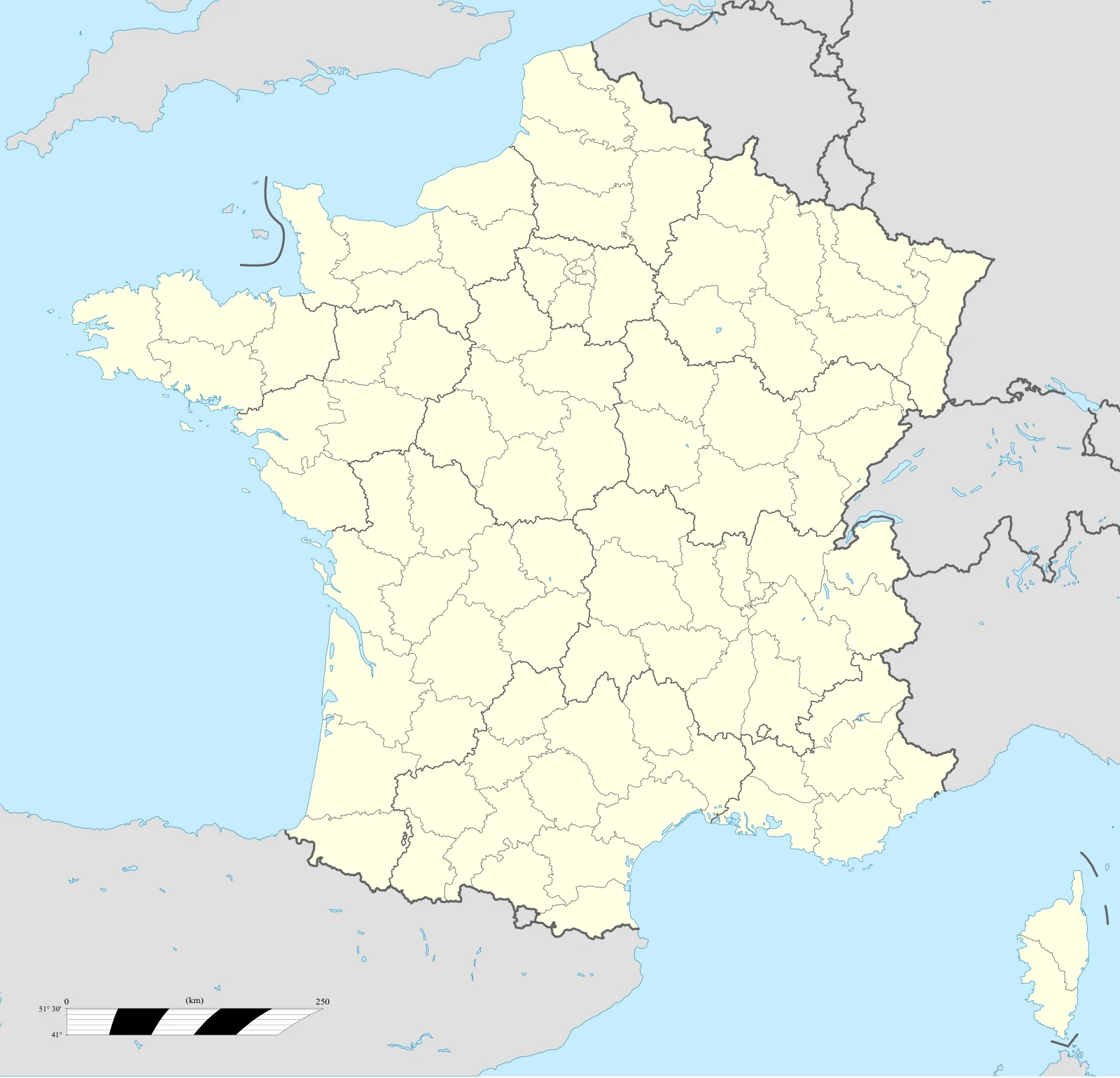
The exact itinerary is less certain than the general commitment. Schapiro was seen and remembered within anarchist activity in Spain; as a one-armed man, his role should not be casually described as conventional combat. Hanka also spent time there, but the dates and locations are not completely established in the sources inspected. Grothendieck, then still in Germany, wrote later of the great hopes Spain awakened in anarchist militants in 1936 and 1937. He judged that his parents returned to France only when defeat had become undeniable. That is both family memory and an adult interpretation of their political faith.77Grothendieck, La Clef des Songes (1987), 91.
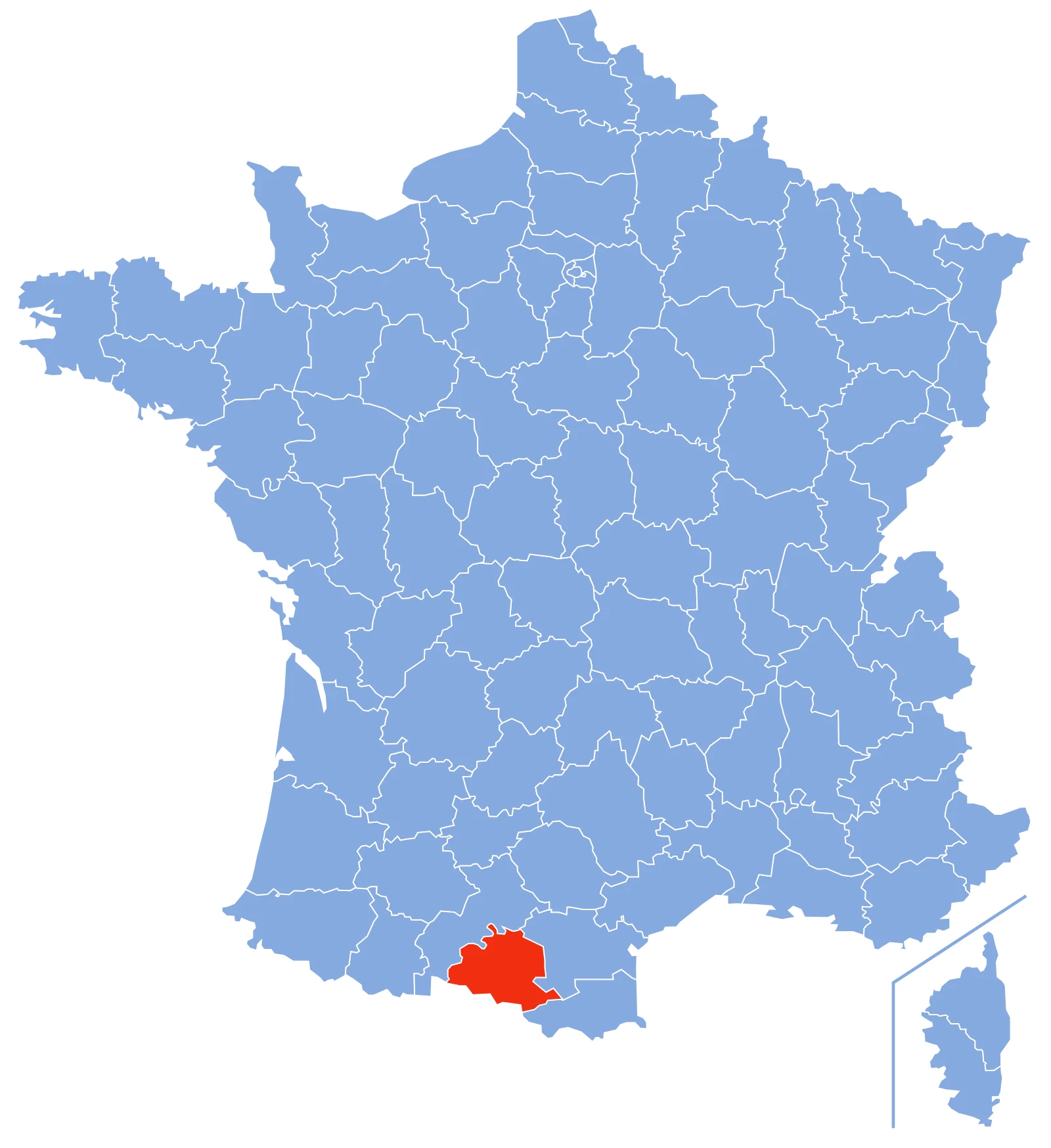
Spain belonged to the boy’s life through absence. The sources establish his parents’ commitments there but do not record what the child knew or imagined about their activity. He was connected to the political history of Europe through the consequences of adult choices, not through surviving records of his participation in political discussion. His father’s revolutionary past, his mother’s rebellion against bourgeois convention, Nazism, exile, and the Spanish conflict all shaped where he lived. None supplied him with a stable civic status.
By early 1939 the Spanish Republic had been defeated. Refugees crossed into France in the Retirada, and French authorities confined many in improvised and then more permanent camps. Schapiro and Hanka also returned to France. The policies that would soon imprison them were already developing. The Rieucros memorial association dates a law concerning undesirable foreigners to November 1938 and the camp’s opening to January 1939, before France’s military defeat and Vichy.88Association pour le souvenir du camp de Rieucros, “Synthèse,” https://camp-rieucros.com/.
This chronology resists a comforting national contrast. Grothendieck later described France as a temporary place of asylum and liberty after 1933. It was also a state constructing administrative mechanisms for confinement. The same country could contain people who helped refugees and laws that reduced them to categories of suspicion. Grothendieck’s route south in 1939 crossed into both Frances.99Grothendieck, La Clef des Songes (1987), 90.
The pressure of 1939
By spring 1939, continuing to keep foster children had become more dangerous for the Heydorns. Jackson reports that political pressure on the family had increased and that Alexander was especially exposed because he appeared Jewish to those who classified people by racialized appearance. The phrasing must be handled carefully. It describes the danger imposed by antisemitic perception, not an objective human type. His father was Jewish; the Nazi state and its social environment made descent and appearance grounds for persecution.1010Jackson, “As If Summoned from the Void, I,” 1041.
The whereabouts of his parents were not initially clear to the Heydorns. According to Dagmar Heydorn’s account as relayed by Jackson, she contacted the French consulate in Hamburg and succeeded in getting messages to Schapiro in Paris and Hanka in Nîmes. Once contact had been established, arrangements were made for the eleven-year-old to go to France.1111Jackson, “As If Summoned from the Void, I,” 1041.
The chapter stops with those arrangements in April. It makes no claim about travel mode, route, escort, station, border crossing, or reception. Later biographies describe the completed journey and repeat Grothendieck’s retrospective May date, but no contemporary travel paper has been inspected. Chapter 8 takes up that later testimony.
The surviving evidence therefore fixes a change in status rather than a scene: the Heydorn household was preparing to end, the parents had been located in France, and consular contact had entered the process. The precise document remains missing.
Names needed for the record
As Chapter 6 established, Alexander’s nationality history remains unresolved; here only the names and papers needed to identify him matter. His father appears as Schapiro and Tanaroff in later records, while family sources report the forms Sasha, Sascha, and Schurik. Those variants belong in the authority file rather than a new legal-status synthesis.
The missing consular or travel file could show which form identified Alexander when departure was arranged. Until it is found, the chapter does not infer citizenship, passport type, or allegiance from a surname.
School interests without prophecy
Grothendieck later recalled school, rhyme, crosswords, and an older pupil showing him negative numbers. These are reported childhood interests, not a technical window or evidence that later mathematics was already formed. No equation, definition, worked example, priority claim, or analogy to his mature method belongs here.
The mix of verbal and numerical activities matters because it resists a selective prodigy portrait. His memoir remembers interests that continued and others that passed. The chapter records the range and leaves later mathematical significance to the chapters that treat the mathematics.
France as destination and warning
By April 1939 France was both the parents’ reported location and a state that had already created administrative machinery for undesirable foreigners. The Rieucros memorial association dates the relevant law to November 1938 and the camp’s opening to January 1939.1212Association pour le souvenir du camp de Rieucros, “Synthèse”.
That context belongs here because it defines the destination being arranged, not because the chapter narrates arrival or internment. Chapter 8 follows the later French chronology.
What the sources cannot recover
No surviving source inspected here supplies the precise words with which the Heydorns ended the placement. No source authorizes a departure or reunion scene. Such details would convert preparation into a completed movement that this chapter does not own.
The restraint is especially necessary because later mathematics creates a powerful aura around early life. Once a child is known to have become Grothendieck, every puzzle looks prophetic and every displacement seems to announce a philosophy. The record is more irregular. He enjoyed school, rhyme, crosswords, and numbers, and he received care from a politically dissident foster family. These facts do not need a hidden theorem connecting them.
His autobiographical prose offers strong language, but it also shows the passage of time. In the extant La Clef des songes, the history of his parents forms part of a spiritual inquiry into faithfulness, vocation, failure, and self-knowledge. In the extant Récoltes et Semailles, school memories introduce a survey of his mathematical work. Both works show how the older Grothendieck organized the past. Neither removes the need for contemporary records.
The distinction can be stated as three layers. First is event: Hanka placed him at Blankenese, and he lived there about five years. Second is memory: he liked early school, played with rhyme and negative numbers, and later described the separation as abandonment. Third is bounded interpretation: imposed categories and first-hand discovery coexist without establishing a causal relation. Each layer has a different evidentiary status.
Education under a dictatorship
Alexander’s years at Blankenese coincided with the transformation of German schools under National Socialism. That public context is certain; his individual encounters with it are not. A schoolchild in Hamburg learned within institutions whose curricula, organizations, and personnel were being subjected to the regime’s racial and political demands. Yet no exercise book, report, or teacher file in the available record records what was said in his classroom about Hitler, Jews, political loyalty, or war.
The distinction guards against a familiar device: placing a historically typical lesson in the mouth of an unnamed teacher and allowing it to stand as Alexander’s experience. General histories can establish what the regime required. Only a school record or testimony can establish how a particular requirement entered his day. The chapter therefore does not describe him saluting, refusing to salute, joining or avoiding a youth organization, or arguing with a teacher. Silence on those points is not evidence of compliance or resistance.
What can be linked to the dictatorship is his exposure. His father was Jewish under a regime making descent a basis for exclusion. The Heydorns’ political project had been prohibited. By 1939, according to the household account, pressure made the foster arrangement unsustainable, and Alexander’s appearance was perceived through antisemitic categories. The political context entered his life through the decision that he had to leave, even where classroom detail is missing.1313Jackson, “As If Summoned from the Void, I”.
School also provided an arena not wholly consumed by ideology. Grothendieck remembered arithmetic, language, songs, prehistory, rhyme, and negative numbers. Those subjects belonged to an education he could later recall without making the regime its sole content. It would be wrong to infer that school was untouched by Nazism; it would also be wrong to let the state appropriate every remembered instance of intellectual pleasure.
This double perspective matters for the biography’s mathematical line. The pleasure of a concept does not require political innocence. Negative numbers could be interesting in a compromised institution. A teacher could communicate reading and music while working inside a system being brought under dictatorship. Human relations do not align neatly with institutional verdicts.
Grothendieck’s later criticism of authority has sometimes encouraged a backward portrait of the child as naturally immune to indoctrination. The sources do not support such immunity. Children learn from adults, peers, fear, reward, repetition, and silence. His later independence cannot prove what he believed at seven or nine. The defensible claim is narrower: he remembered some early discoveries as his own play, and the foster household itself stood at odds with aspects of Nazi rule.
Language added another layer. German was the language of his earliest schooling and of the household at Blankenese. French became the language in which he completed secondary education, studied, taught, and wrote the two retrospective works used here. When he recalled a German childhood in French, he also translated school categories, names, and family vocabulary. School categories such as Gymnasium and lycée did not align perfectly; names changed form; family speech and public terminology moved between languages.
The later French prose describes his first secondary year in Germany through the French category lycée. That is intelligible retrospective equivalence, not the exact German institutional title. A precise educational history needs the Hamburg school register. Until then, the chapter can establish level and sequence without naming a school it has not found.1414Grothendieck, Récoltes et Semailles (Université des Sciences et Techniques du Languedoc and Centre National de la Recherche Scientifique, 1986).
Translation also affects the word gosse, which Grothendieck used for himself and the children at camp. “Child” is accurate but more neutral; “kid” catches informality but can sound contemporary or American. His prose moves easily between colloquial memory and abstract reflection. The English narrative should preserve that movement without imitating a voice it cannot reproduce exactly.
The household seen from several dates
The Heydorn home appears at three temporal distances. First there was the lived household of the 1930s, for which only fragments have been inspected. Second came Dagmar and Wilhelm Heydorn’s memoir record and later family memory. Third came Grothendieck’s autobiographical reckoning and his biographers’ attempts to compare sources. Each distance produces different knowledge.
Jackson relays personal descriptors from the Heydorn memoir, but that memoir has not been consulted directly, and the descriptors are too thinly sourced for a character portrait. This account therefore withholds those adjectives. A 1934 photograph, if one were located, could document appearance and setting but not happiness or abandonment.
Grothendieck’s later account gives moral structure. Parents left, children were placed apart, contact was sparse, and the decision remained painful in the story he told about them. His prose in La Clef des songes is not a neutral household report. It belongs to an inquiry that asks whether people were faithful to vocation, love, and truth. He judged his parents’ account of their love in light of its consequences for their children.1515Grothendieck, La Clef des Songes (1987), 90–92.
Biographers then face a choice of emphasis. A rescue-centered account may present the Heydorns as courageous foster parents who protected a vulnerable child. A family-centered account may present the same years as abandonment. Both descriptions are supported if each retains its object: the Heydorns’ action and the parents’ action were not the same act. The first does not acquit the second; the second does not erase the care supplied by the first.
The household also contained other children. Alexander was neither an only child nor the only foster child. That fact limits the temptation to reconstruct every rule or conflict as a special response to him. Foster care unfolded within a working family system, with finite attention and resources. The exact number and identities of residents by year should come from the Heydorn records before being stated.
Jackson reports later correspondence with people who lived near the Heydorns, but the underlying letters have not been checked. This is an important but nonspecific clue. It shows that the social map exceeded the foster household; it does not identify a substitute parent or authorize intimate scenes.
His adult return to Hamburg likewise resists simple interpretation. A visit can express affection, inquiry, obligation, or an effort to revisit the past. Correspondence can preserve connection without resolving old hurt. Unless letters are read, the existence of contact should not be translated into forgiveness or reconciliation.
The method required here resembles the mathematical demand made elsewhere in the chapter: do not infer more than the data determine. Several emotional configurations are compatible with the known contacts. The biography must leave them compatible rather than selecting the most satisfying.
Revolution at a distance
In Grothendieck’s later account, the Spanish conflict carried a revolutionary political meaning, generated great hope among militants, and drew his parents into the struggle. The same text interprets defeat as a decisive blow to their political faith; that judgment belongs to the son’s retrospective account.1616Grothendieck, La Clef des Songes (1987), 91.
This account belongs to the son’s mature interpretation of two adults whose papers he had studied. It should not be compressed into a claim that both parents performed the same kind of wartime work and returned disappointed. Their roles differed; their movement in and out of Spain is not completely mapped; political participation included organization, speech, support, photography, care, and combat. Schapiro’s missing arm makes casual imagery of front-line fighting especially suspect.
The account of their commitment also sits beside the fact that their son remained in Germany. Political commitment and parental obligation are not commensurable quantities, but the family experienced their collision. An admiring political biography might treat leaving children as a regrettable necessity of antifascist struggle. Grothendieck did not. He regarded the parents as responsible for what their passion displaced.
The history still requires context. Antifascist volunteers and activists faced a movement whose victory would strengthen dictatorship in Europe. Hanka and Schapiro were not pursuing private adventure detached from the crisis. Their cause had urgent public stakes. Moral clarity about Francoism does not settle the ethics of every personal decision made in opposition to it.
Alexander’s distance from Spain was geographical and informational. He was at school near Hamburg and, according to Jackson, received little communication. The sources do not place maps of Spain on the Heydorn table or record adults explaining anarchism to him. What Spain did verifiably was prolong parental absence and shape their return to France in 1939.
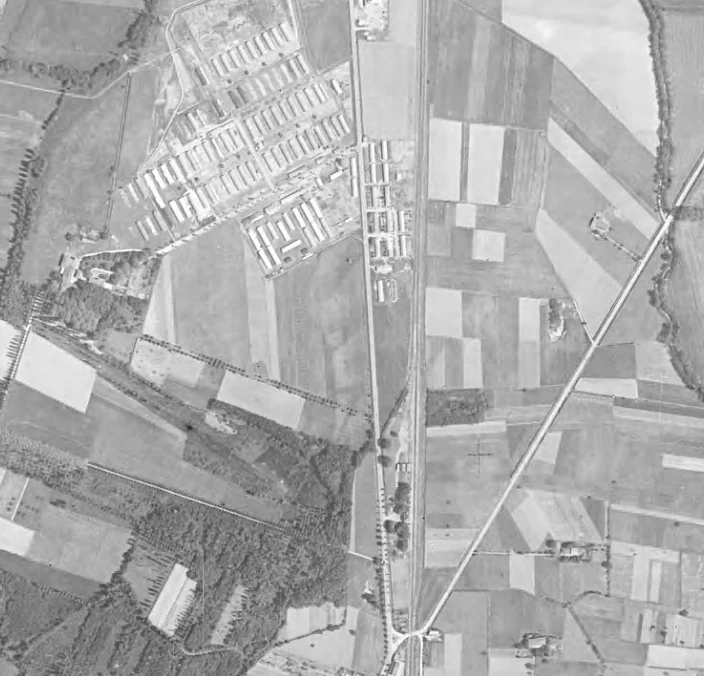
The Republic’s defeat also changed French policy and capacity. The mass arrival of refugees in the Retirada intensified a camp system already justified through the category of undesirable foreigners. Le Vernet, later his father’s camp, first held Spanish Republican soldiers. Thus the conflict connected family and institution at two levels: his parents participated in the struggle, and its defeated population became part of the French internment history that would enclose them.
Grothendieck’s later thought about political faith should not be moved backward wholesale. In La Clef des songes he judged that both parents failed to confront what defeat revealed about their vision. Those judgments arose after his own decades of political engagement, disillusionment, and spiritual writing. The boy in Blankenese did not yet possess the retrospective argument.
Still, the parents’ story supplied one durable question: what happens when devotion to a universal cause damages particular relations? That question would recur in many forms across Grothendieck’s life—mathematical communities, political movements, family, spiritual mission—but recurrence is not proof of a single origin. In this chapter it belongs first to the documented family decision of 1933 and the prolonged absence that followed.
Correspondence and consular contact
The documentary window is a gap rather than an image claim. Jackson relays a Heydorn account of consular contact, but the household memoir pages, correspondence, and consular file have not been inspected for this account. They could establish dates, names used, and the administrative steps taken before departure.
The same missing records prevent claims about the frequency or emotional meaning of family correspondence. This account does not repeat private contact counts or infer attachment from later visits. It records only that the parents were located and departure was arranged.
The spring of 1939
Early in 1939 the Spanish Republic collapsed in Catalonia, and refugees crossed into France. The French internment system expanded in that context. At Blankenese, the principal biographies report that the Heydorns arranged Alexander’s departure by the end of April because danger had increased, but the underlying correspondence has not been checked.1717Jackson, “As If Summoned from the Void, I”; J. J. O’Connor and E. F. Robertson, “Alexander Grothendieck,” MacTutor History of Mathematics Archive, November 2014, https://mathshistory.st-andrews.ac.uk/Biographies/Grothendieck/; Association pour le souvenir du camp de Rieucros, “Synthèse”.
The chronology stops there. No platform, compartment, border, escort, or reunion belongs to this chapter. The absence of those details is not an invitation to infer them from common travel practice.
The title Flight therefore names pressure and preparation as well as completed movement. Schapiro and Hanka had already left Germany; the child’s departure was being arranged. Chapter 8 begins with the later retrospective testimony about May.
Schooling at the point of departure
By April 1939 Grothendieck had completed years of German primary schooling and begun secondary study, according to his later account. That educational continuity is secure even though the school register and exact institution remain missing.1818Grothendieck, Récoltes et Semailles (Université des Sciences et Techniques du Languedoc and Centre National de la Recherche Scientifique, 1986); Jackson, “As If Summoned from the Void, I”.
German remained the language of the Heydorn household and school. The French vocabulary in which Grothendieck later described those years does not supply the German school’s exact administrative category. A future register must decide the institutional name.
The point of departure was therefore not educational zero. It was the end of one household and school setting, with another not yet documented in this chapter. The narrative records acquired schooling without predicting later achievement.
Three kinds of certainty
The chapter’s principal movements do not rest on one kind of evidence. Schapiro’s departure from Berlin in 1933 appears in Grothendieck’s later chronology and in researched biographies. The placement at Blankenese is established, while its private emotional consequences are known only from a later, personal account. The April departure arrangements come from later household and biographical accounts; their paperwork remains unseen.
Those differences matter because a smooth itinerary can conceal uneven certainty. The proposed map therefore stops at Blankenese and labels Paris and Nîmes only as reported parental locations.
The same discipline applies to names. Schapiro and Tanaroff are linked by the deportation memorial; Sasha and Schurik belong to family usage reported in biographies; Alexandre is the French public form. Each variant should be searchable without suggesting that all appeared on every wartime document.
At this chapter boundary, the strongest conclusion is limited. Nazi rule and the parents’ decisions placed Grothendieck in a foster household, and later accounts say increasing danger prompted arrangements for departure. The completed movement belongs to Chapter 8.
This sequence fixes the chapter interface: German schooling and foster care end as the dominant institutions; completed travel begins the next period.
The unresolved papers remain part of that interface rather than details to be supplied from narrative convention.
The documented route alone supports no further conclusion about motive, feeling, or family intimacy.
The elementary school remembered later
The primary-school passage in Récoltes et Semailles is unusually concrete. Grothendieck remembered one teacher moving among reading, writing, arithmetic, singing, prehistoric humanity, and the discovery of fire, with a small violin used for accompaniment. The memory comes from a manuscript written more than four decades later, not a timetable or school report, but it gives the early school a breadth absent from later summaries that select mathematics alone.1919Grothendieck, Récoltes et Semailles (Université des Sciences et Techniques du Languedoc and Centre National de la Recherche Scientifique, 1986), 13.
Rhyme entered the account as a rule discovered inside language. After someone explained how matching sounds worked, he recalled making verses and, for a time, speaking in rhyme. Crosswords joined words to constrained form. An older pupil introduced negative numbers, which Grothendieck remembered as a game that did not hold him as long. These are activities reported by the adult witness; the chapter does not convert them into a theory of childhood cognition.
His later self-description is similarly bounded. He called himself a good pupil rather than an exceptionally brilliant one and said he invested heavily in subjects that interested him. The statement helps explain how he wanted the school years read, but it is not a contemporaneous assessment and cannot replace grades or a teacher’s report.
What the passage securely adds is continuity. Grothendieck did not arrive at French secondary education without earlier schooling. He had learned basic subjects, begun secondary study, and encountered both verbal and numerical play. The missing Hamburg register would provide the institution, dates, class, and formal result; the memoir provides only the later remembered texture.
This broader school memory also corrects the usual selection effect around a famous mathematician. A biographer can easily retain numbers and discard songs, verse, prehistory, and crosswords. Grothendieck’s own ordering does not justify that narrowing. The early record is mixed, and its later mathematical role remains unstated.
The Heydorn household in public record
Jackson’s researched biography supplies the principal public outline of Wilhelm and Dagmar Heydorn’s household. Wilhelm had been a Lutheran pastor and an army officer, later worked as a teacher and Heilpraktiker, and founded a small Humanity Party that the Nazi regime prohibited. The family had children of its own and received foster children during the political disruptions before the war.2020Jackson, “As If Summoned from the Void, I,” 1040–41.
Those facts establish a politically nonconforming household; they do not establish what Alexander heard at the table, what religious practices he followed, or how family rules were enforced. The direct Heydorn memoir has not been inspected for this account, so personal descriptors relayed through a biography remain outside the character portrait.
The household’s public history also prevents two opposite simplifications. It was not a neutral placement untouched by Nazi politics, and it was not evidence that every day there constituted resistance. Wilhelm’s banned party and the family’s foster care are documented activities. Alexander’s private responses require different sources.
The same distinction applies to care and abandonment. The Heydorns gave him a residence and schooling for roughly five years. Hanka and Schapiro had placed the children separately and remained elsewhere. One statement concerns the foster household’s work; the other concerns a parental decision. Neither supplies a complete emotional history.
Later visits and correspondence could clarify the relationship, but the underlying letters have not been checked. This account therefore does not count contacts, infer reconciliation, or use adult visits to diagnose childhood happiness. It leaves the relationship as a documented placement with a later, still incomplete paper trail.
The reported 1934 photograph belongs to the same evidentiary category. Jackson says the Heydorn memoir reproduces it, but the page, original holder, photographer, caption, rights, resolution, and master file remain unknown. It can guide archive work and cannot carry the chapter visually.
The parents’ exile at a distance
While Alexander remained near Hamburg, Schapiro and Hanka lived in France under precarious conditions described in later family and biographical sources. Schapiro continued work as a street photographer. Grothendieck’s 1987 text says Hanka took domestic work and characterizes those years as physically difficult. The financial and private details remain attributed testimony rather than an independently reconstructed household.2121Grothendieck, La Clef des Songes (1987), 90–91; Jackson, “As If Summoned from the Void, I”.
The Spanish Civil War added political movement to that separation. Grothendieck later wrote that the conflict generated hope among anarchist militants and drew both parents into the anti-Franco struggle. Sources do not fix Hanka’s itinerary or duration, and Schapiro’s missing arm makes a generic combat description especially unreliable. The chapter therefore records participation or support without assigning identical roles.
Defeat returned the parents to France within a larger refugee crisis. The Retirada brought Spanish Republican refugees across the border, while French authorities expanded administrative confinement. This institutional context is documented at the level of camps and policy; it does not prove the family’s individual route after every crossing.2222Association pour le souvenir du camp de Rieucros, “Synthèse”; Amicale des anciens internés politiques et résistants du camp du Vernet d’Ariège, “Le camp du Vernet,” https://www.campduvernet.eu/.
The distance between parent history and child history must remain visible. The parents’ political causes shaped where they lived and why the foster arrangement continued. No surviving child letter or diary shows how Alexander understood Spain, anarchism, or their absence at the time. Later family interpretation cannot be projected backward as childhood knowledge.
Later biographies report a separate placement for Maidi, but this chapter does not specify its location or use her experience to infer Alexander’s psychology.
April 1939 as an administrative threshold
The Heydorn account relayed by Jackson says Dagmar Heydorn contacted the French consulate after the parents’ whereabouts had become uncertain. Messages reached Schapiro in Paris and Hanka in Nîmes, and departure was arranged. The direct consular correspondence, if it survives, has not been inspected.2323Jackson, “As If Summoned from the Void, I,” 1041.
That missing file could establish which office acted, which name and nationality appeared, what guarantee or consent was required, and when the arrangement became effective. It could also distinguish an application, authorization, ticket, escort instruction, and border document—items later biography tends to compress into one journey.
The April endpoint is therefore an editorial boundary rather than a claim that every administrative step finished on a known day. This chapter covers the foster years and the preparations; Chapter 8 follows the completed movement. No chapter turns the gap between them into a travel scene.
This boundary also prevents later events from pulling the narrative forward. The outbreak of war, Schapiro’s internment, and Rieucros belong to Chapter 8. At the end of this chapter, the documented state is narrower: the foster placement was ending, the parents had been located, and departure from Germany was being arranged.
The division preserves narrative proportion as well as chronology. Five years of foster residence should not become a preface to one undocumented day of travel. The chapter’s weight remains on the household, school, parental absence, political pressure, and the documentary steps that ended the placement. The later reunion can then carry its own source, date, and consequences without repeating the Blankenese years.
This is also the harm-minimizing choice. It avoids converting family separation into suspense and keeps an eleven-year-old’s unrecorded reactions outside the narrator’s reach.
The resulting exit state is complete despite the gap: the foster placement has a documented duration, the school memories have an attributed witness, the parents have reported locations, and departure has entered an administrative process whose final papers remain missing.
Nothing further is inferred about the crossing, reunion, or emotional meaning of leaving the household that had raised him there.
The foster years in sequence
The foster period can be dated in broad stages even though daily records remain sparse. Schapiro left Berlin in 1933. Grothendieck’s later chronology and Jackson’s synthesis place Hanka’s move and the children’s separate placements around the end of that year and the beginning of 1934. The exact handover day is not established.2424Grothendieck, La Clef des Songes (1987); Jackson, “As If Summoned from the Void, I”.
Jackson dates the Heydorn residence from early 1934 to spring 1939. A reported photograph from 1934 could provide an early fixed object, but its source page and provenance remain unavailable. The chronology therefore rests on biography and retrospective testimony rather than a continuous household register.
During the middle years, school supplies the clearest line. Grothendieck later remembered primary teaching across several subjects and said his first secondary year was in Germany. No grades, class lists, or annual reports have been inspected, so the chapter does not create a term-by-term progression.
The parents’ Spanish involvement belongs to 1936–1939 in broad outline. Grothendieck’s later text names the political hopes of 1936 and 1937, while biographies place both parents in the anti-Franco struggle. Their distinct roles and movements remain unresolved.
The external political chronology tightened in 1938 and early 1939. France expanded powers over undesirable foreigners; Rieucros opened; the Spanish Republic collapsed; and refugee movement into France increased. At Blankenese, later accounts describe rising pressure on the foster household. These facts converge on April 1939 without supplying a private conversation or exact administrative order.
This chronology is intentionally uneven. Some dates come from public institutions, some from an adult witness, and some from biographies that may share the same family sources.
What schooling preserved
Schooling supplied continuity that residence and family contact did not. The child remained in one household for roughly five years, learned across a primary curriculum, and entered secondary study. That record does not make the placement emotionally simple; it establishes a durable educational setting.
Grothendieck’s remembered teacher joined subjects that later institutions would separate: language, arithmetic, music, and prehistory. The small violin is one of the few physical objects in the school memory and comes from the witness himself. The chapter preserves it because it is sourced, not because it symbolizes harmony.
Rhyme and crosswords show the same breadth without becoming mathematical omens. The memoir describes rule-based play in language and signs. Negative numbers appear beside those activities as another game. The later writer himself says some interests passed without visible consequence.
Secondary education changed the tone of his recollection. He described himself as selective about subjects and later contrasted early school with more programmatic teaching. That contrast is his mature organization of memory; the missing school files could complicate it.
The continuity also has a practical consequence for the next chapter. The pupil who later attended the Mende lycée had already begun secondary study in Germany. His French education did not start from an empty curriculum, even though language, institutions, and conditions changed.
No causal line is drawn from this persistence to later mathematical work. School kept reading, calculation, and examination pathways available. The later use of those pathways belongs to subsequent chapters and to different evidence.
The household record and its limits
The Heydorn household enters the biography through layers created at different times. Jackson’s article is a later synthesis. It identifies the foster parents, describes Wilhelm’s occupations and banned political party, and points to a Heydorn memoir and 1934 photograph. The memoir and original photograph are not present for this account.2525Jackson, “As If Summoned from the Void, I”.
That source structure matters to ordinary details. Jackson can support a provisional account of the household and its political position. It cannot turn an unseen memoir page into a direct quotation or an unseen photograph into a cleared illustration. Each layer must retain its own locator and status.
The foster arrangement itself has stronger convergence than its private texture. Grothendieck’s later writing says he was left at Blankenese; Jackson and Scharlau identify Wilhelm and Dagmar Heydorn and the approximate years. The evidence supports residence and schooling. It does not meet the threshold for a stable portrait of temperament, affection, resentment, or family intimacy.
The parents’ locations have a similar layered record. Later biographies place Schapiro in Paris and Hanka in Nîmes when consular contact was made. A consular file could independently connect the addresses and departure arrangement.
The missing letters could change the account in either direction. They might confirm sparse contact, reveal communications that the receiving household did not preserve, or show only administrative exchange. Until they are inspected, the chapter does not use frequency as evidence of motive or feeling.
The record also distinguishes foster care from adoption, guardianship, and citizenship. None of the inspected sources shows that the Heydorns became Alexander’s legal parents or that the placement resolved nationality. Those legal questions remain with Chapter 6.
The April endpoint follows from this documentary balance. The household account supports preparation, while no contemporary travel object completes the movement. A clean chapter boundary preserves the gap without creating a continuous scene.
The institutional horizon in France
France appeared in the family story as refuge before it appeared as confinement. Grothendieck later described his parents’ move in the language of asylum and liberty. The Rieucros memorial association, however, dates the law on undesirable foreigners to November 1938 and the opening of the camp to January 1939. Both facts belong to the destination being prepared.2626Grothendieck, La Clef des Songes (1987), 90; Association pour le souvenir du camp de Rieucros, “Synthèse”.
This juxtaposition does not make asylum and internment identical. It shows that the French state and French society contained different institutions and choices at the same time. Later chapters will distinguish state confinement, school access, relief organizations, and local protection rather than making France a single moral actor.
At the end of April, none of that later sequence is assigned to Alexander in this chapter. The institutional context explains why arrival in France cannot be narrated as arrival at uncomplicated safety, but the completed journey and subsequent classifications belong to Chapter 8.
The source boundary is clear. Public camp history can describe the legal environment before Alexander entered it. It cannot prove his individual movement, paperwork, knowledge, or treatment. Those claims require personal records or attributed retrospective testimony.
April is therefore an interface date rather than a claim about the day of departure. It marks the point at which the Heydorn account had moved from long-term foster care to arrangements for leaving. Keeping the boundary explicit prevents both chapters from narrating the same event and prevents a missing travel record from being hidden inside a smooth transition.
The distinction also preserves the scale of this chapter. Its subject is five years of foster residence and schooling under Nazi rule, not the later French camp system. The chapter can end with pressure and preparation while remaining a complete account of that period.
The remaining uncertainty is concrete rather than atmospheric: a consular file, travel paper, or household letter could refine the account of the departure. Until one appears, the prose stops before movement and lets the next chapter begin from Grothendieck’s dated recollection.
No descriptive bridge is needed between those two evidence states; the documented gap is itself the correct transition.
This ending also avoids retrospective irony. In April 1939 neither the camp history nor the later mathematical career belongs to the documented child’s perspective. The chapter leaves both outside the frame and closes on the administrative fact of departure being arranged by the foster household and consulate.
Five years in political time
The foster placement lasted from the first consolidation of Nazi rule to the months before European war. That duration matters more than a list of dramatic incidents. Alexander remained in one household while the public conditions around the household changed and his parents’ exile continued.2727Grothendieck, La Clef des Songes (1987); Jackson, “As If Summoned from the Void, I”.
The beginning and end were produced by different pressures. In late 1933 and early 1934, the parents’ departure and political commitments separated the children into different placements. By spring 1939, later accounts describe the Heydorns as unable to continue the arrangement under increasing pressure. The sources do not reduce either decision to one motive.
Five years also gave schooling a temporal weight that disappears when biography jumps from Berlin to France. Grothendieck completed primary years and began secondary education in Germany. His later recollections range across language, arithmetic, music, prehistory, puzzles, and numbers.2828Grothendieck, Récoltes et Semailles (Université des Sciences et Techniques du Languedoc and Centre National de la Recherche Scientifique, 1986), 13.
The household therefore did more than hold a place until reunion. It provided the setting in which a substantial part of childhood and formal education occurred. That statement describes duration and institutional function; it does not settle the quality of intimate relations.
The parents lived in another political time. Their French exile, precarious work, and engagement with Spain moved through shorter crises. Alexander’s school calendar and their political calendar overlapped without becoming one narrative.
This difference in pace explains why the chapter resists montage. A paragraph that alternated every school day with every parental movement would imply connections the child record does not show. The sources support parallel histories joined by placement, kinship, later correspondence leads, and the preparations of 1939.
The Berlin memorial records, Grothendieck’s manuscripts, and Jackson’s biography were all made after the period. Each looks backward from a different institution or purpose. Their convergence supports the broad placement, while daily household chronology remains absent.2929Grothendieck, La Clef des Songes (1987); Jackson, “As If Summoned from the Void, I”; Koordinierungsstelle Stolpersteine Berlin, “Alexander Grothendieck,” https://www.stolpersteine-berlin.de/en/brunnenstrasse/165/alexander-grothendieck; Koordinierungsstelle Stolpersteine Berlin, “Alexander Schapiro”.
A classroom remembered by its range
Grothendieck’s primary-school memory is valuable because it does not begin with exceptional mathematics. One teacher appears across several subjects, and the remembered curriculum includes reading, writing, arithmetic, song, prehistory, and fire. The violin is an ordinary teaching object in the account rather than a relic of later fame.3030Grothendieck, Récoltes et Semailles (Université des Sciences et Techniques du Languedoc and Centre National de la Recherche Scientifique, 1986), 13.
That range provides a concrete answer to the question of what “schooling” meant before exile in France. It meant literacy and calculation, but also temporal narratives about human origins and shared musical activity. The memoir does not identify the school, class, year, or teacher, so the chapter cannot place these memories on a timetable.
Rhyme and crosswords show rules operating in language. Negative numbers show rules extending arithmetic beyond the positive quantities familiar in elementary work. The adult author grouped these memories together, but he did not claim that one domain caused another.
The distinction between remembered activity and later selection is important. A biography of a poet might emphasize rhyme; a biography of a mathematician might emphasize negative integers. The source contains both, and its integrity requires both.
His statement that the numbers were treated as a game also fixes a boundary. It records an encounter and a mode of presentation, not mastery of algebra or a general philosophical doctrine. No equation or reconstructed lesson is needed.
The missing school register would add a different kind of knowledge. It could identify the institution, entry and leaving dates, grade levels, and name under which Alexander was enrolled. A teacher’s report might document performance. Neither object would reproduce the remembered violin or explain why a particular activity remained in memory.
This is why later testimony and contemporary administration cannot be ranked as if one must displace the other. They preserve different dimensions of education. The chapter needs the memoir for remembered range and a future register for exact placement.
The consulate as a missing institution
The reported French-consular contact joins the foster household to the parents without supplying a travel scene. Jackson’s account says Dagmar Heydorn approached the consulate, messages reached Schapiro in Paris and Hanka in Nîmes, and departure was arranged.3131Jackson, “As If Summoned from the Void, I,” 1041.
A consular process could generate several objects: inquiry, identity record, parental consent, authorization, correspondence, or instruction. No such object has been opened for this account, and the chapter does not assume that all existed.
The distinction among them matters. Locating a parent is not the same act as obtaining permission; permission is not a ticket; a ticket is not evidence of an escort; and an arrangement is not a completed crossing. Later biography can compress the sequence because its outcome is known.
Keeping the consulate visible adds institutional substance without pretending to know the procedure. The departure was not a private decision between two households alone. Borders, names, documents, and public offices conditioned whether the decision could be carried out.
The missing file might also record a nationality or legal father different from later narrative usage. Such a question belongs to Chapter 6’s legal synthesis. This chapter would use it only to explain the departure paperwork.
No official file can supply Alexander’s unrecorded thoughts about leaving. Administrative precision and emotional restraint answer different questions. Recovering one would not license invention in the other.
What April left open
By the chapter boundary, four facts travel forward. The Heydorn placement was ending; the parents had reported locations in France; consular contact had been made; and departure was being arranged.3232Jackson, “As If Summoned from the Void, I”.
Several facts do not travel forward. The mode, route, escort, border, station, reception, and exact paperwork remain unknown. Chapter 8 begins with Grothendieck’s later statement that reunion occurred in May, not with a reconstructed bridge.
Education also crosses the boundary. He had completed primary schooling and begun secondary study in Germany. The next educational institution would operate in another language and, soon, inside confinement.
The political contrast crosses with it. France had offered exile to the parents while expanding powers over foreigners. Rieucros had opened before Alexander’s attributed May reunion, but this chapter does not write that later camp into his documented knowledge.
This exit state avoids prophecy. Nothing in the school memory announces a future theory, and nothing in the departure arrangement announces the exact form of French internment. Both developments are visible to the later historian and withheld from the child’s unrecorded perspective.
The chapter is therefore complete without a journey. It has followed a placement through its duration, described education from the available witness, placed the parents’ political history at a documented distance, and reached the public process by which the placement ended.
A departure arranged
By April 1939 the Heydorn years were ending. The parents had been located, consular contact was reported, and departure was being arranged. The mode, route, escort, crossing, and reception remain outside this chapter because no contemporary travel record has been inspected.
Chapter 8 begins with Grothendieck’s later reunion statement. That division gives the event one prose owner and preserves the gap between preparation and completed travel.
Notes
- Allyn Jackson, “Comme Appelé Du Néant—As If Summoned from the Void: The Life of Alexandre Grothendieck, Part I,” Notices of the American Mathematical Society, October 2004, https://webusers.imj-prg.fr/~leila.schneps/grothendieckcircle/allyn1.pdf. ↩
- Alexandre Grothendieck, Récoltes et Semailles: Réflexions et témoignage sur un passé de mathématicien (Université des Sciences et Techniques du Languedoc and Centre National de la Recherche Scientifique, 1986), 13, Typescript, https://webusers.imj-prg.fr/~leila.schneps/grothendieckcircle/RS0orig.pdf. ↩
- Grothendieck, Récoltes et Semailles (Université des Sciences et Techniques du Languedoc and Centre National de la Recherche Scientifique, 1986), 13. ↩
- Grothendieck, Récoltes et Semailles (Université des Sciences et Techniques du Languedoc and Centre National de la Recherche Scientifique, 1986), 13. ↩
- Jackson, “As If Summoned from the Void, I”. ↩
- Alexandre Grothendieck, La Clef des Songes — ou Dialogue avec le Bon Dieu (1987), 90–91, Manuscript, https://webusers.imj-prg.fr/~leila.schneps/grothendieckcircle/ClefI-II-III.pdf; Jackson, “As If Summoned from the Void, I”; Koordinierungsstelle Stolpersteine Berlin, “Alexander Schapiro,” https://www.stolpersteine-berlin.de/en/brunnenstrasse/165/alexander-schapiro. ↩
- Grothendieck, La Clef des Songes (1987), 91. ↩
- Association pour le souvenir du camp de Rieucros, “Synthèse,” https://camp-rieucros.com/. ↩
- Grothendieck, La Clef des Songes (1987), 90. ↩
- Jackson, “As If Summoned from the Void, I,” 1041. ↩
- Jackson, “As If Summoned from the Void, I,” 1041. ↩
- Association pour le souvenir du camp de Rieucros, “Synthèse”. ↩
- Jackson, “As If Summoned from the Void, I”. ↩
- Grothendieck, Récoltes et Semailles (Université des Sciences et Techniques du Languedoc and Centre National de la Recherche Scientifique, 1986). ↩
- Grothendieck, La Clef des Songes (1987), 90–92. ↩
- Grothendieck, La Clef des Songes (1987), 91. ↩
- Jackson, “As If Summoned from the Void, I”; J. J. O’Connor and E. F. Robertson, “Alexander Grothendieck,” MacTutor History of Mathematics Archive, November 2014, https://mathshistory.st-andrews.ac.uk/Biographies/Grothendieck/; Association pour le souvenir du camp de Rieucros, “Synthèse”. ↩
- Grothendieck, Récoltes et Semailles (Université des Sciences et Techniques du Languedoc and Centre National de la Recherche Scientifique, 1986); Jackson, “As If Summoned from the Void, I”. ↩
- Grothendieck, Récoltes et Semailles (Université des Sciences et Techniques du Languedoc and Centre National de la Recherche Scientifique, 1986), 13. ↩
- Jackson, “As If Summoned from the Void, I,” 1040–41. ↩
- Grothendieck, La Clef des Songes (1987), 90–91; Jackson, “As If Summoned from the Void, I”. ↩
- Association pour le souvenir du camp de Rieucros, “Synthèse”; Amicale des anciens internés politiques et résistants du camp du Vernet d’Ariège, “Le camp du Vernet,” https://www.campduvernet.eu/. ↩
- Jackson, “As If Summoned from the Void, I,” 1041. ↩
- Grothendieck, La Clef des Songes (1987); Jackson, “As If Summoned from the Void, I”. ↩
- Jackson, “As If Summoned from the Void, I”. ↩
- Grothendieck, La Clef des Songes (1987), 90; Association pour le souvenir du camp de Rieucros, “Synthèse”. ↩
- Grothendieck, La Clef des Songes (1987); Jackson, “As If Summoned from the Void, I”. ↩
- Grothendieck, Récoltes et Semailles (Université des Sciences et Techniques du Languedoc and Centre National de la Recherche Scientifique, 1986), 13. ↩
- Grothendieck, La Clef des Songes (1987); Jackson, “As If Summoned from the Void, I”; Koordinierungsstelle Stolpersteine Berlin, “Alexander Grothendieck,” https://www.stolpersteine-berlin.de/en/brunnenstrasse/165/alexander-grothendieck; Koordinierungsstelle Stolpersteine Berlin, “Alexander Schapiro”. ↩
- Grothendieck, Récoltes et Semailles (Université des Sciences et Techniques du Languedoc and Centre National de la Recherche Scientifique, 1986), 13. ↩
- Jackson, “As If Summoned from the Void, I,” 1041. ↩
- Jackson, “As If Summoned from the Void, I”. ↩