Association with La Guespy
Later biographical materials associate Grothendieck with La Guespy and the Collège Cévenol during the last war years. The one-page La Guespy note supports residence association but does not provide an intake date, sending camp, intermediary, travel authorization, or wartime identity.11“Note by the director of the La Guespy children’s home on Alexander Grothendieck,” n.d., https://webusers.imj-prg.fr/~leila.schneps/grothendieckcircle/alexguespy.pdf; Jackson, “As If Summoned from the Void, I”.
Grothendieck’s two 1980s manuscripts refer to a Swiss relief children’s home, but they form one witness dependency group rather than independent corroboration. Because no intake register or case file has been inspected, this version omits the claimed admission year and route.22Grothendieck, Récoltes et Semailles (Université des Sciences et Techniques du Languedoc and Centre National de la Recherche Scientifique, 1986); Grothendieck, La Clef des Songes (1987).
Institutional records identify Juliette Usach as La Guespy’s director and document the home before and during the war. They do not show that OSE, Swiss relief, or another named body handled Grothendieck’s individual case.33Comité français pour Yad Vashem, “Juliette Usach, dossier 4186,” https://yadvashem-france.org/dossier/nom/4186/; United States Holocaust Memorial Museum, “Photographs and Records of the La Guespy Children’s Home,” Collections search records, https://collections.ushmm.org/search/catalog/pa20963.
The 1941 photographs establish the building, Usach, and other residents. None identifies Grothendieck. The incompletely provenanced note also does not support a character portrait of a minor.
A town and a plateau
Le Chambon-sur-Lignon lies in Haute-Loire on a high plateau extending toward Ardèche. Wartime rescue did not fit inside the municipal boundary. Refugees lodged in the town, in neighboring villages, on farms, in boarding houses, in schools, in children’s homes, and in temporary hiding places across what historians call the Plateau Vivarais-Lignon. The French state’s memorial portal organizes the history around civil, spiritual, and armed forms of resistance. The European Heritage Label describes the inhabitants of Le Chambon and surrounding villages as sheltering an estimated three thousand Jewish refugees between December 1940 and September 1944, along with Spanish Republicans, anti-Nazi Germans, resistance members, and others. Estimates vary because shelter can refer to a night, several years, transit toward Switzerland, false papers, food, schooling, or concealment.44European Commission, “Lieu de Mémoire Au Chambon-Sur-Lignon (France),” European Heritage Label, https://culture.ec.europa.eu/cultural-heritage/initiatives-and-success-stories/european-heritage-label/european-heritage-label-sites/lieu-de-memoire-au-chambon-sur-lignon-france; Ministère des Armées, “Lieu de Mémoire au Chambon-sur-Lignon,” Chemins de mémoire, https://www.cheminsdememoire.gouv.fr/fr/lieu-de-memoire-au-chambon-sur-lignon-0.
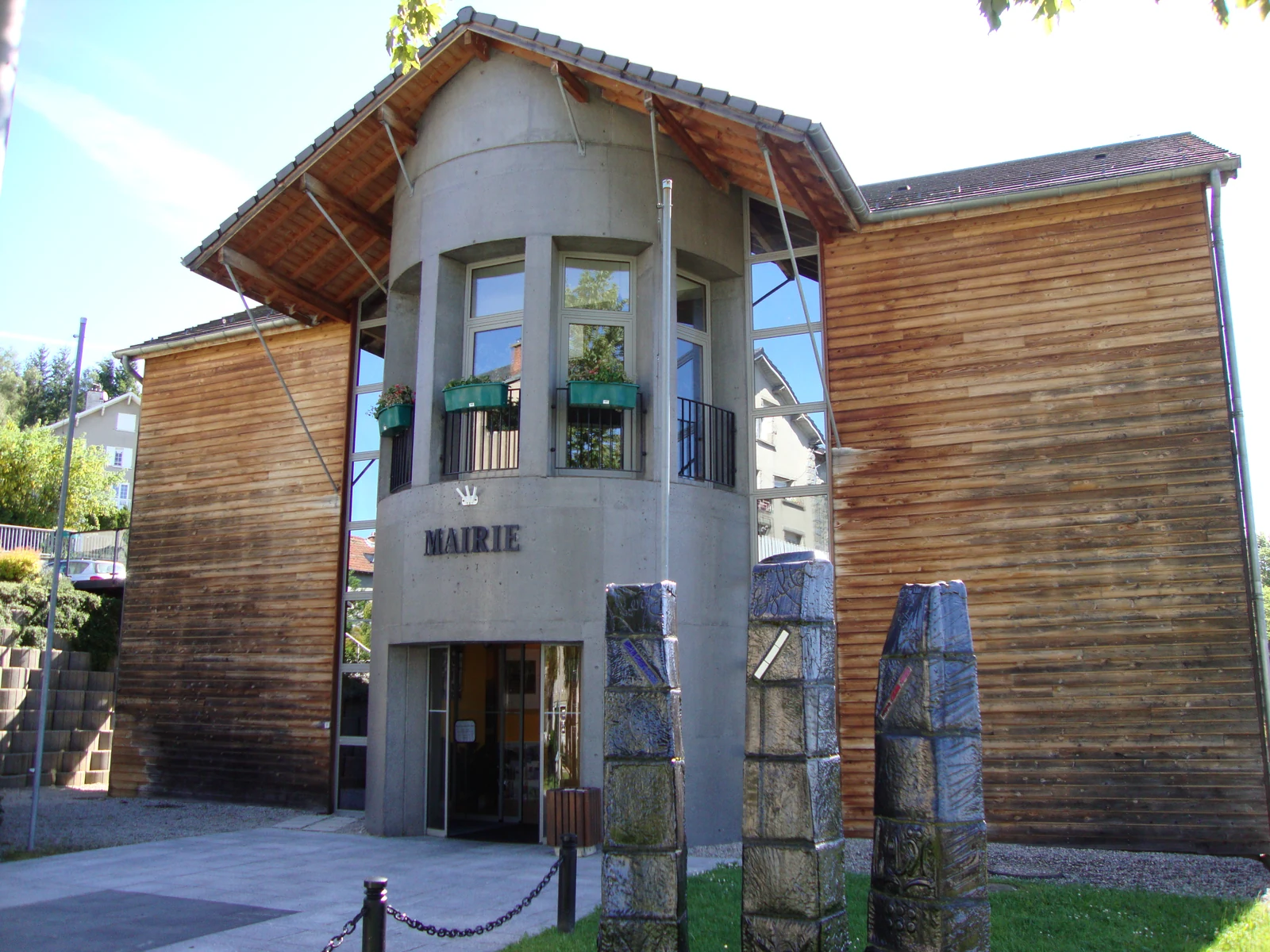
Yad Vashem’s institutional account centers André and Magda Trocmé and Édouard Theis while also describing shelter in homes, farms, schools, and public institutions. That account supports their documented leadership but does not make the town or the Plateau a single actor.55Yad Vashem, Le Chambon-Sur-Lignon (n.d.), https://www.yadvashem.org/odot_pdf/Microsoft%20Word%20-%206403.pdf.
The inspected institutional records identify local households, pastors, schools, municipal contacts, Swiss relief, Quakers, OSE, Cimade, and other participants. They do not establish a single shared motive or equal participation. The chapter therefore attributes actions to named people or organizations and leaves private motives unassigned.66Comité français pour Yad Vashem, “Juliette Usach, dossier 4186”; United States Holocaust Memorial Museum, “Photographs and Records of the La Guespy Children’s Home”.
The word Protestant nevertheless matters because the inspected sources identify Protestant pastors, institutions, and international contacts among the actors. The broader claim that inherited Huguenot memory helped cause rescue remains a historiographical question; the scholarship on it would have to be examined before that interpretation could enter the narrative.
Grothendieck’s own later judgment was measured. At Rieucros, because his mother came from a Protestant family, they had contact with pastors and Cimade workers helping Protestant internees. At Le Chambon he saw the devotion of local pastors and of the mainly Protestant population toward Jews hiding from deportation and death. He did not conclude that believers as a class possessed superior human qualities. He wrote that belief sometimes appeared to stimulate solidarity and devotion. The distinction fits the record: faith was a resource for action, not a certificate of virtue.77Grothendieck, La Clef des Songes (1987), 100–101.
This is also why Grothendieck’s retrospective statement about local solidarity should not be expanded into a claim of unanimous rescue by an entire village. His statement credits action without assigning a precise total. It names the scale he later said he perceived from within a children’s home: many Jews were hidden in the region, and local people made survival possible.88Grothendieck, Récoltes et Semailles (Université des Sciences et Techniques du Languedoc and Centre National de la Recherche Scientifique, 1986), 14.
Organizations with doors
Refuge required authorization or removal, transport, a destination, food, clothing, ration access, supervision, schooling, and a response when police arrived. The USHMM event history and Yad Vashem dossier identify Cimade, Secours suisse aux enfants, the American Friends Service Committee, OSE, the Éclaireurs israélites de France, churches, homes, and local contacts among the organizations and settings involved. Those records do not show that every body handled Grothendieck’s case.99Comité français pour Yad Vashem, “Juliette Usach, dossier 4186”; United States Holocaust Memorial Museum, “Photographs and Records of the La Guespy Children’s Home”.
The list can create an illusion of a coordinated agency chart. Actual cooperation was uneven, changing, and often deliberately obscure. Organizations had formal names, but action traveled through personal trust. A caseworker needed to know which home had space. A director needed supplies and papers. A household needed confidence that a stranger asking for a bed was not an informer. Information had to move far enough to protect people and not so far that it exposed them.
La Guespy was one door in this ecology. Yad Vashem’s dossier on Usach names Rudy Appel, Lilly Braun, and Joseph Atlas among children saved there. Their later testimony remembered her kindness and the home’s religious tolerance. Jewish holidays were observed when possible; for Hanukkah, survivors recalled candles and “Maoz Tsur” played on the piano. This evidence should be attributed to the named survivors, not generalized into a daily program for every year. It demonstrates that the home did not require safety to be purchased through erasure of Jewish practice.1010Comité français pour Yad Vashem, “Juliette Usach, dossier 4186”.
The dossier also says children at La Guespy possessed false papers and identities. Such papers were protective in a state that used civil identity to persecute. The dossier does not establish which identity, if any, Grothendieck used.1111Comité français pour Yad Vashem, “Juliette Usach, dossier 4186”.
False papers should not be romanticized as clever props. Producing and using them carried risk. They also required the bearer, including a child, to answer to another name or history under inspection. No source in the available record gives the false identity Grothendieck used, if any. The chapter therefore does not invent one. The question mark in the note marks the limit.
Usach’s own status complicates any simple division between French hosts and foreign refugees. She was a displaced Spanish physician directing a home in France within a Swiss relief structure and sheltering children from several countries. Help moved across national categories even as the state hardened them. Local solidarity included residents rooted on the Plateau, but refuge also depended on newcomers who had themselves crossed borders.
Institutions without a single chain
The Plateau’s rescue history involved homes, schools, churches, farms, municipal contacts, Jewish organizations, Swiss relief, and Quakers. The inspected sources identify those institutional types but do not supply one coordinated chain for Grothendieck.1212Comité français pour Yad Vashem, “Juliette Usach, dossier 4186”; United States Holocaust Memorial Museum, “Photographs and Records of the La Guespy Children’s Home”.
The chapter therefore avoids a technical network analogy and avoids drawing person-to-person links. A later museum synthesis can describe overlapping organizations without proving which body handled one resident’s case.
Institutional plurality also does not equal source independence. The same case file or testimony can pass through several later organizations and websites.
The school founded before the emergency
The Collège Cévenol existed before the wartime residence associated with Grothendieck and continued to provide secondary education during the war. The reported 1938 founding date and attribution to André Trocmé and Édouard Theis stay outside the narrative until the founding document is examined.
The war transformed the scale and stakes of that project. Refugee pupils and teachers arrived, and education, boarding, relief, and resistance overlapped. A school could offer curriculum, social contact, and examination preparation while participating in a wider protective setting.
Later sources associate Grothendieck with enrollment at the Collège, but the exact term register has not been checked. This chapter keeps that association of residence and school and leaves curriculum, Friedel, mathematics, warnings, and concealment to Chapter 10.1313Grothendieck, Récoltes et Semailles (Université des Sciences et Techniques du Languedoc and Centre National de la Recherche Scientifique, 1986); Grothendieck, La Clef des Songes (1987); Jackson, “As If Summoned from the Void, I”; Institut des Hautes Études Scientifiques, “The Scientific Heritage of IHÉS”.
November 1942
In November 1942 German forces occupied the southern zone of France after the Allied landings in North Africa. The distinction between occupied and nominally unoccupied France, never a guarantee against Vichy persecution, ended. This institutional change belongs to the regional context.
The chapter does not attach Grothendieck to a named raid, warning episode, hiding route, or occupation-to-admission sequence. Those details either appear in Chapter 10 as attributed memory or remain unsupported.
Rescue and its later story
Le Chambon became a prominent site of Holocaust memory in France. Yad Vashem honored individual rescuers and, in 1990, gave a diploma to the people of Le Chambon and surrounding communities. A memorial opened in 2013 and is now managed by the Mémorial de la Shoah.1414Yad Vashem, Le Chambon-Sur-Lignon; European Commission, “Lieu de Mémoire Au Chambon-Sur-Lignon (France)”; Ministère des Armées, “Lieu de Mémoire au Chambon-sur-Lignon”.
Commemoration preserved testimony and also selected protagonists and boundaries. The official sources themselves use both town and Plateau as frames and publish different estimates. Scholarship on Le Chambon debates scale, participation, and Protestant exceptionalism, but those works have not been examined for this account and are not summarized here as verified conclusions.
Grothendieck’s later testimony credits local solidarity and Protestant assistance without claiming unanimous action. The detailed warning and concealment memory belongs to Chapter 10; here the testimony serves only as a broad regional attribution.
The language of heroism can separate named rescuers from the institutional and material work around them. The Yad Vashem dossier records that Juliette Usach accepted Jewish children equipped with false papers, an action that exposed her and the home to danger. The present evidence does not support ranking every participant’s risk or motive.1515Comité français pour Yad Vashem, “Juliette Usach, dossier 4186”.
The proper narrative scale moves between named people and institutions. Usach managed a home; relief organizations supplied resources; pastors articulated resistance; and residents provided rooms. The records do not document every child’s conduct, so the narrative avoids assigning unrecorded strategies or emotions.
The house as evidence
La Guespy appears in photographs as a building and group setting. The images are dated 1941, while Grothendieck’s intake date remains unknown. None identifies him. No caption may imply that a pictured child is Grothendieck or that the image represents his own daily experience.1616United States Holocaust Memorial Museum, “Photographs and Records of the La Guespy Children’s Home”.
The La Guespy note could offer a more direct document if its original is located. At present the public PDF appears to be a transcription or reproduction supplied through the Grothendieck Circle, with only an editorial statement about authorship. A document’s intimacy does not waive provenance.
Hospitality without possession
To receive a refugee child is to enter an asymmetrical relation. The home controls space and rules; the child depends on admission. Hospitality can protect while also demanding conformity. The evidence from La Guespy suggests an effort to limit that demand: Jewish holidays were observed, children came from varied backgrounds, and the directress herself was a refugee. This does not prove an absence of conflict. It shows that religious identity could be accommodated inside a Christian- and Swiss-supported institution.1717Comité français pour Yad Vashem, “Juliette Usach, dossier 4186”.
The sources do not license a parable connecting hospitality to Grothendieck’s later philosophy. They support a narrower institutional point: La Guespy sheltered children whose papers and origins exposed them to danger.
That form of welcome had practical boundaries. Food and beds were finite. Authorities could search. Directors had to decide whom they could receive. Relief agencies classified need in order to allocate aid, even as persecuting authorities classified origin in order to exclude. Administration itself was not the enemy; purpose mattered. A list could organize a deportation, a parcel, an admission, or a warning. The moral history lies partly in what institutions made their records do.
A school day not recovered
No timetable or term register has been inspected. This chapter establishes only the association of shelter and school. Chapter 10 takes up the later memories of curriculum, Friedel, mathematics, warnings, and concealment.
What Le Chambon changed—and what cannot be claimed
Later records place Grothendieck within a home-and-school setting on the Plateau, but no intake chain establishes the transition into it. The chapter therefore describes the institutions without narrating a move.
No later theorem or personal philosophy is derived from residence at Le Chambon. That continuity would exceed the evidence and anticipate later chapters.
Juliette Usach and the work of direction
Juliette Usach enters Grothendieck’s biography not because his memoir names her in the childhood passage, but because institutional history identifies her as La Guespy’s director. The Yad Vashem dossier calls her a physician and records her recognition as Righteous Among the Nations in 1989. Survivor testimony supports the award.1818Comité français pour Yad Vashem, “Juliette Usach, dossier 4186”.
Direction involved administrative work as well as personal kindness. A home required admissions, staff, supplies, health decisions, rules, relations with schools, explanations to authorities, and emergency responses. Under antisemitic law, accepting children with false papers placed the director at risk. The work was administrative and ethical at once.
The postwar La Guespy note may have originated with Usach or another woman who ran the home, but the public copy does not identify the writer securely. The chapter must not sign her name to it by assumption. If the original archive establishes authorship, the note will become unusually direct evidence of what she observed in him. Until then, “a La Guespy note” is accurate.
Yad Vashem’s account is centered on named survivors whose testimony described Usach. Their memories include religious practice, music, and a tolerant atmosphere. They do not need Alexander’s later fame to establish her importance. In fact, the proper direction of credit runs away from the famous resident: his survival becomes one among the home’s outcomes, not the reason the work mattered.
The title “Righteous Among the Nations” belongs to postwar recognition criteria and a later date. It should appear with 1989 in a caption, not as a wartime job title. During the war she was a displaced physician and children’s-home director making decisions under danger.
Her Spanish origin also widens the geography of rescue. The French Plateau received a woman displaced by the victory of Franco, who then received children displaced by Nazi and Vichy persecution. Political refugees were not only beneficiaries of French hospitality; they became providers of it. This circulation challenges national narratives in which a settled French community alone saves foreign strangers.
Usach’s home did not eliminate hierarchy. Adults set schedules and controlled files. A full account should seek residents’ testimony alongside directors’ papers so that institutional benevolence is not narrated only from above.
The Yad Vashem dossier says that children at La Guespy were supplied with false names and papers. It does not list Grothendieck’s cover identity. If the admission file is found, privacy and rights review remain necessary even for a historical subject.
School and wartime danger
The official memorial distinguishes civil, spiritual, and armed forms of resistance across the Plateau; it does not establish Grothendieck’s wartime position in debates over resistance methods.1919Ministère des Armées, “Lieu de Mémoire au Chambon-sur-Lignon”.
The official memorial’s categories show that regional resistance was not institutionally uniform. This chapter does not attribute a wartime position in those debates to Grothendieck.
The school itself joined openness and concealment. Its educational aim was to welcome pupils across national and confessional lines. Its wartime protective work required hiding identities and controlling information. Openness concerned who could belong; secrecy concerned what persecuting authorities could know. The two were not contradictory.
The school’s wartime role joined education with shelter. Exact curriculum, Friedel, classroom life, and Grothendieck’s mathematical work remain for Chapter 10. The reported founding date remains outside documented prose until the founding document is opened.
Counting rescue
Numbers attached to Le Chambon range widely in public accounts. Some refer to Jews sheltered at one time or another on the Plateau. Some include non-Jewish political refugees. Some count those helped onward to Switzerland. Some use “saved” for anyone receiving aid; others reserve it for people whose survival can be directly linked to the region. Records were intentionally incomplete, and people moved repeatedly.
The European Heritage Label’s estimate of about three thousand people of Jewish origin sheltered from December 1940 to September 1944 offers an official reference point. It should remain an estimate with its geographic and temporal frame. The Yad Vashem educational page gives a broader range of three to five thousand. A biography does not improve accuracy by choosing the larger number for dramatic force.2020Yad Vashem, Le Chambon-Sur-Lignon; European Commission, “Lieu de Mémoire Au Chambon-Sur-Lignon (France)”.
Counting is necessary. It shows that refuge was not an isolated favor and allows comparison with population, capacity, and other regions. Counting is also morally dangerous when totals become a contest for exceptional virtue. A village does not become “better” in proportion to a number detached from definitions.
The unit of action matters. If a person slept one night in a barn before moving on, the shelter may have been decisive. If a child lived for three years in a home, the labor and relationship differed. Both can belong to rescue without becoming identical cases.
Grothendieck’s case is counted here only as an attributed residence-and-school association. The intake route and concealment details are not part of this chapter.
Historiography also asks who receives credit. André Trocmé’s leadership is richly documented and narratively compelling. A farmer whose name never entered an archive is harder to see. Jewish organizations that extracted children from camps can disappear when the final Christian home receives attention. Women’s daily management can disappear behind male public speech. Refugees who later helped others can disappear behind a host/guest division.
Correcting imbalance does not require diminishing a documented leader. It requires expanding the frame and specifying action. “Trocmé called for aid,” “Usach directed La Guespy,” “OSE removed children,” and “local households provided rooms” are stronger than a single sentence in which a village collectively decided.
Grothendieck’s later testimony credits local solidarity but does not establish a regional total. His mathematical fame gives that testimony no additional historical authority.
Children in institutional records
Relief records often describe children through adult decisions: admission, placement, papers, schooling, and transfer. The Yad Vashem dossier adds named survivor testimony about religious observance at La Guespy.2121Comité français pour Yad Vashem, “Juliette Usach, dossier 4186”.
Those records do not authorize a personality portrait of Grothendieck. The La Guespy note’s context-poor labels and its remarks on chess, music, reading, writing, and other minor matters are left out of this account.
Where photographs use the institutional category children, captions should preserve known ages and names when the catalog supplies them. They should not identify an unknown adolescent through resemblance or use later fame to center one resident.
The limits of collective virtue
Collective recognition poses a problem of scale. Yad Vashem’s 1990 diploma honored the people of Le Chambon and neighboring communities. The honor acknowledges that rescue reached beyond isolated individuals and depended on a social environment. It does not certify every resident’s conduct.
Communities act through institutions, norms, and many decisions, but they do not possess a single mind. The inspected sources document different forms and durations of aid; they do not establish participation by every resident. A narrative of total unanimity therefore exceeds the evidence and makes rescue seem culturally automatic.
The opposite correction can also distort. Emphasizing every ambiguity until collective achievement dissolves would ignore the unusual density and duration of refuge. The official estimate, multiple homes, school, and extensive testimony establish sustained, distributed activity.
The term “solidarity” is useful because it describes relation and action without requiring moral perfection. Solidarity can be built, uneven, and situational. It can link people who disagree about doctrine. It can fail at one point and hold at another.
Grothendieck’s own observation that believers did not generally possess superior qualities places a limit on exceptionalism. He credited what faith sometimes stimulated, not an essence of Protestant people. This distinction protects the history from becoming a story of inherited virtue.
It also connects rescue to responsibility in the present without a formula. If the Plateau acted only because of unique religious ancestry, its example becomes admirable and unavailable. If action arose through institutions, teaching, networks, choices, and local knowledge, some conditions can be studied without pretending they guarantee courage.
For the biography, collective virtue should remain external to Alexander’s later fame. People sheltered a refugee adolescent among others. The moral fact would be the same if none had become famous.
The material basis of welcome
Hospitality required resources. A bed occupied space; food required ration access; winter clothing, medicine, fuel, and school materials had to be obtained. International relief organizations mattered partly because moral willingness without supply could not sustain a home.
The present sources do not provide La Guespy’s annual budget or Alexander’s ration file. Such records should be sought in Swiss relief and USHMM collections. They may show donors, procurement, staffing, and the number of residents by month.
Money complicates the ideal of spontaneous goodness. Some hosts may have received board payments or ration support. Payment does not make shelter mercenary; it can make long-term care possible. Conversely, financial arrangement does not remove risk. The narrative should avoid assuming that all aid was unpaid or that compensation invalidated solidarity.
Scarcity also generated choices about admission. A director could not receive every endangered child. Organizations developed categories of urgency, age, health, and available placement. These protective classifications differed in purpose from persecutory racial categories but still shaped lives.
The material history gives photographs new meaning. A building exterior shows capacity and upkeep rather than atmosphere alone. A group size can be compared with registers. Clothing may indicate season or aid without authorizing conclusions about individual poverty from appearance alone.
Secrecy, trust, and partial knowledge
Rescue depended on information being distributed unevenly. A home director, relief organization, household, and local contact could hold different parts of an institutional process.
Partial knowledge protected against interrogation and betrayal. It also means later witnesses naturally give incomplete accounts. One person may sincerely remember a spontaneous local act while another documents an organization behind it. The accounts need not contradict.
Trust had to cross differences of nationality, religion, class, and politics. It was not abstract social harmony. It was a judgment that a specific person could receive a name, deliver a parcel, shelter a child, or remain silent.
The archival record overrepresents events that generated police, trial, or administrative files. Absence must therefore be used cautiously without converting it into a specific hidden episode.
Partial knowledge also affects how courage was perceived. A child might know that a household received him without knowing who secured funds or forged papers. Later public recognition can attach the whole chain to the most visible person. Archival reconstruction should widen credit without claiming secret coordination that participants themselves did not possess.
German occupation changed authority in the southern zone, and institutional arrangements changed over time. A static diagram cannot reconstruct person-level movement without dated records.
This balance also governs source disagreement. If one witness credits a pastor and another a relief agency, the claims may refer to different links. Before declaring contradiction, the researcher should ask what action, date, and institutional level each witness describes.
Memory can compress distributed labor into a place-name. “Le Chambon” may stand for the town, Plateau, school, home, pastors, or whole period of refuge. The chapter expands the place-name when making historical claims and preserves it when reporting personal memory.
This editorial practice avoids another false dispute. A testimony that credits Le Chambon need not claim that the municipal government alone acted. Place can name an ecology in ordinary speech. Historical notes can supply the institutional precision that testimony does not seek.
Grothendieck’s broader regional wording is cultural and geographic rather than a cadastral boundary. Maps should label the Plateau and departments while noting the broader historical name. Precision should clarify lived place, not correct it out of existence.
The same principle applies to “La Guespy.” The name can denote a building, an administrative home, a staff community, or a period of residence. Photograph, note, and relief file each capture a different version. A full account should not assume they describe identical resident populations.
Institutional names also changed across languages. Secours Suisse, Swiss Relief, and Red Cross labels appear in sources.
Precise wording will matter if intake files are found. A logo or letterhead could establish the responsible body at a particular moment more securely than later memory. Until then, year-specific organizational equivalence remains unstated.
What the catalogs establish
The opened USHMM records establish several facts about La Guespy independently of Grothendieck’s later prose. Catalog pa20963 dates an exterior view of the home to October 1941 and credits the photograph through Elizabeth Kaufmann Koenig. Catalog pa28022 dates a group with Juliette Usach to September 1941 and credits Hanne Liebmann. Other cataloged groups come through Koenig and Jack Lewin. These records establish the home, director, date, place, and donor chain for particular images.2222United States Holocaust Memorial Museum, “Photographs and Records of the La Guespy Children’s Home”.
They do not establish Grothendieck’s presence in any photographed group, and no catalog description names him. The correct visual relation is institutional association, not identification by facial resemblance.
The USHMM event-history field adds institutional context about Cimade, Swiss relief, Quakers, OSE, and the Éclaireurs israélites de France. That field is a later museum synthesis rather than a contemporaneous case file. It supports a general account of overlapping organizations, not a claim that each organization handled Grothendieck’s transfer.
The Yad Vashem dossier on Juliette Usach draws on named survivor testimony. It identifies Usach as a physician and director, names Rudy Appel, Lilly Braun, and Joseph Atlas among children sheltered at La Guespy, and records testimony about Jewish observance and false papers. The dossier does not name Grothendieck among those witnesses or establish his cover identity.2323Comité français pour Yad Vashem, “Juliette Usach, dossier 4186”.
Grothendieck’s retrospective manuscripts refer to a Swiss relief home and the Collège during the last war years. The Grothendieck Circle identifies the home as La Guespy, but the intake register has not been found. The association is retained without an admission year or route.
The records permit a precise institutional statement: La Guespy operated at Le Chambon under Usach, and later biographical records associate Grothendieck with it. They do not permit a first-day scene, room assignment, companion list, or transfer route.
A photograph can document the institution while its caption states that Grothendieck is not shown. The missing intake card remains the object needed to connect his name, admission date, sending institution, and any wartime identity to La Guespy.
Catalog metadata and event history also serve different purposes. The date, locale, donor, and object identifier belong to a particular photograph. The museum’s event-history field is a later synthesis attached to many records. A caption can rely on the first set for the image itself and use the second only for attributed context.
The same separation applies to people. Usach is identified in cataloged photographs and in the Yad Vashem dossier. Named residents belong to the records that identify them. Grothendieck belongs to his own retrospective account and later biographical identification of La Guespy, not to any face selected from a 1941 group.
This evidence structure prevents a common visual error. An authentic photograph can still produce a false biographical claim if the caption assigns the wrong person, date, or relationship. Authenticity of the object and accuracy of its use are separate questions.
It also clarifies why the regional map must remain schematic. The map may locate documented institutions and settlements, but it cannot draw person-to-person links or hiding routes that the records do not establish. Its graph-like lines explain institutional types; they do not reconstruct clandestine movement.
Rights review forms a separate evidentiary layer. The USHMM catalog gives copyright and donor provenance, but online visibility is not permission to reproduce.
The caption must also preserve temporal distance. A 1941 image documents La Guespy, but it cannot imply that the pictured residents knew Grothendieck or that the photograph represents his own daily experience.
The same temporal rule applies to the 1944 Yad Vashem image of Usach and two refugees. It can document the director and wartime home only if its catalog identities, date, donor, and rights are complete. It cannot become a substitute portrait of Grothendieck.
La Guespy without an intake record
The USHMM catalog dates an exterior photograph of La Guespy to October 1941 and several group photographs to 1941. These records establish that the home operated before the undated residence association used for Grothendieck. They also identify donors and, in some cases, named people.2424United States Holocaust Memorial Museum, “Photographs and Records of the La Guespy Children’s Home”.
The photographs cannot supply an intake date. A building can be documented before a resident’s arrival without showing when that resident entered. The chapter therefore uses the images to establish institutional existence and leaves the person-level chronology blank.
Yad Vashem’s Usach dossier adds a different record type. It identifies the director, names survivors who testified, and describes Jewish observance and false papers at the home. That testimony establishes aspects of La Guespy’s operation for those witnesses, not an individual file for Grothendieck.2525Comité français pour Yad Vashem, “Juliette Usach, dossier 4186”.
The one-page note naming Grothendieck provides the residence association and little secure administration. Its author, exact date, original holder, and object identifier remain incomplete. Personality labels from the note are excluded; its heading cannot function as an intake register.
Taken together, the records establish a home, a director, resident testimony, and a later association with Grothendieck. The missing intake card remains the document needed to add year, sending institution, intermediary, authorization, or identity used.
Relief organizations and their roles
The USHMM event history and Yad Vashem dossier identify organizations performing different kinds of work in the region. OSE sought to remove Jewish children from camps; Swiss relief operated homes; Quakers, Cimade, Protestant bodies, local households, and schools supplied other forms of assistance.2626Comité français pour Yad Vashem, “Juliette Usach, dossier 4186”; United States Holocaust Memorial Museum, “Photographs and Records of the La Guespy Children’s Home”.
This division of labor explains why several organizations can appear around one home without proving that each handled the same child. Extraction, transport, documentation, lodging, food, health, and education generated different files and could involve different people.
The main version therefore avoids a compressed sentence in which one organization takes Grothendieck from a named camp to La Guespy. No inspected case file joins those steps. Institutional history remains in the chapter because it explains how the regional system functioned; person-level attribution remains unknown.
Organizational names also require date control. Secours Suisse, Swiss relief, Red Cross, OSE, and other labels cannot be treated as interchangeable without year-specific letterhead or records.
The Plateau as the unit of context
Official heritage sources describe Le Chambon together with surrounding villages. The European Heritage Label gives an estimate of about three thousand Jewish refugees sheltered from December 1940 to September 1944; the Yad Vashem educational page gives a broader range. The figures differ because the geographic unit and the acts counted are not identical.2727Yad Vashem, Le Chambon-Sur-Lignon; European Commission, “Lieu de Mémoire Au Chambon-Sur-Lignon (France)”; Ministère des Armées, “Lieu de Mémoire au Chambon-sur-Lignon”.
A person sheltered for years, a traveler given a night, and someone helped toward Switzerland can all enter a broad rescue total. The chapter retains estimates with their definitions and does not convert them into an exact number saved by one village.
The Plateau frame also distributes attention beyond famous leaders. Homes, farms, schools, pastors, municipal contacts, and international organizations appear in the institutional record. The evidence does not establish unanimous participation or one shared motive.
Grothendieck’s later statement about local solidarity fits that regional frame but does not count participants. It is used as attributed testimony about the setting, not as a statistical source or proof of Protestant exceptionalism.
School and shelter
Later sources associate Grothendieck with the Collège Cévenol, and the school formed part of the Plateau’s wartime institutional landscape. The exact enrollment term and baccalauréat register remain missing.2828Grothendieck, Récoltes et Semailles (Université des Sciences et Techniques du Languedoc and Centre National de la Recherche Scientifique, 1986); Grothendieck, La Clef des Songes (1987); Jackson, “As If Summoned from the Void, I”; Institut des Hautes Études Scientifiques, “The Scientific Heritage of IHÉS”.
That association is sufficient for this chapter. Curriculum, classroom disorder, Friedel, self-directed mathematics, warnings, and concealment are not repeated here. Chapter 10 treats those memories and their limitations.
The division preserves the school’s institutional importance without turning this chapter into a second hidden-schooling chapter. It also leaves room for a future register to refine dates without rewriting the regional rescue history.
What the record types can answer
A catalog record, a memoir, a recognition dossier, and an administrative register answer different questions. The photographs show that La Guespy operated in 1941 and preserve the names assigned by catalogers. They do not record Grothendieck’s arrival.2929United States Holocaust Memorial Museum, “Photographs and Records of the La Guespy Children’s Home”.
Usach’s recognition dossier establishes her wartime action through named testimony. It can describe the home as survivors experienced it, but it is not a roster of every resident.3030Comité français pour Yad Vashem, “Juliette Usach, dossier 4186”.
Grothendieck’s retrospective manuscripts place a Swiss relief home and the Collège in his remembered wartime landscape. Because the manuscripts share an author and period, they count as one witness dependency group.3131Grothendieck, Récoltes et Semailles (Université des Sciences et Techniques du Languedoc and Centre National de la Recherche Scientifique, 1986); Grothendieck, La Clef des Songes (1987).
The later La Guespy note names the residence but lacks a complete chain of custody. It supports association, not the administrative path into the home.3232“Note by the director of the La Guespy children’s home on Alexander Grothendieck”.
An intake ledger could answer the missing questions: date, sending institution, authorization, intermediary, and registered identity. Until that object is inspected, no combination of surrounding sources may simulate it.
This separation is not clerical caution added after the story. It determines the shape of the story. The chapter can establish a wartime home in a documented rescue region and an attributed resident without inventing the journey that connected them.
The distinction also governs negative evidence. Failure to find a name in an opened catalog is not proof that the person was absent. A catalog may describe a photograph without identifying every face, and a recognition dossier may have been assembled for a rescuer rather than for each child. The proper conclusion is that the inspected object does not answer the intake question.
Conversely, a later name on a note does not backfill the missing administrative fields. Residence, enrollment, transport, and legal identity are separate claims. Each requires the source appropriate to it.
This method leaves a visible seam in the biography. Before the seam stand Rieucros and the general transfer to Brens. After it stand the attributed associations with La Guespy and the Collège. The movement between them remains unknown.
Leaving the seam open prevents the reader from mistaking a plausible institutional route for a documented personal journey. It also tells future researchers what evidence would change the text.
The seam does not erase continuity. The relief ecology documented around the Plateau makes the later association historically intelligible, while the absence of a person-level file blocks a narrower claim. Context explains possibility; it does not certify itinerary.
For a biography, that division is productive. It permits a full account of institutions and conditions without borrowing certainty from the subject’s fame. It also keeps every named helper attached to the evidence that names that person, rather than absorbing individual work into an anonymous rescue legend.
The unknown remains part of the historical record.
Residence as an institutional condition
Living in a relief home required material provision. The regional sources document organizations concerned with food, clothing, medical aid, lodging, papers, and education. They do not allocate every item to Grothendieck.3333Comité français pour Yad Vashem, “Juliette Usach, dossier 4186”; United States Holocaust Memorial Museum, “Photographs and Records of the La Guespy Children’s Home”.
The distinction matters because ordinary maintenance disappears easily behind the dramatic language of rescue. A home had to remain heated, supplied, staffed, and accountable. Children had to be fed repeatedly, not saved once.
Institutional continuity depended on adults whose work ranged from direction to cooking and procurement. The sources consulted name Usach but do not provide a full La Guespy staff list for Grothendieck’s period. Unnamed labor is acknowledged as a documentary gap rather than assigned to invented figures.
Residence also created relations among children whose legal positions and histories differed. The photographs document groups, while survivor testimony documents particular experiences. Neither permits a composite child or a generalized scene standing for all residents.
For Grothendieck, the secure statement remains narrow: later evidence associates him with this setting. The chapter does not claim his dormitory, ration card, room, chores, roommates, or daily schedule.
The geography of incomplete knowledge
The Plateau system worked through distributed knowledge. A school could know a student, a home a resident, an aid body a case number, and an official a set of papers. The general record supports that institutional pattern. It does not reveal who knew every fact about Grothendieck.
No private conversation is reconstructed from the pattern. No official is credited with intentional protection unless a source says so. No resident is made to understand the whole network.
This limit helps resist retrospective coherence. The institutions later grouped under “Le Chambon” did not leave one master file that explains every movement. Their surviving records are dispersed among archives, memorial databases, memoirs, and recognition dossiers.
That dispersion is itself historical evidence. It explains why the regional setting can be well documented while a single intake remains uncertain. The narrative holds those two conditions together instead of choosing between confidence and silence.
Counting without possession
Estimates of shelter on the Plateau describe collective outcomes, not institutional ownership of lives. The official figures are retained as ranges with their geographic and temporal frames.3434Yad Vashem, Le Chambon-Sur-Lignon; European Commission, “Lieu de Mémoire Au Chambon-Sur-Lignon (France)”; Ministère des Armées, “Lieu de Mémoire au Chambon-sur-Lignon”.
The phrase “saved by Le Chambon” can be useful shorthand, but it compresses households, routes, temporary stays, schools, homes, and outside organizations. This chapter uses “sheltered” or “assisted” when those are the terms the source can sustain.
Grothendieck’s association does not enlarge the region’s moral standing because he later became famous. It places one later-known life inside a system built for people whose future importance was unknowable.
Recognition came after the acts
The Plateau’s current public meaning was assembled after the war. The European Heritage Label account notes a Yad Vashem diploma awarded in 1990, while the French memorial portal describes the present site and its testimony holdings. Management by the Mémorial de la Shoah dates from 2020.3535European Commission, “Lieu de Mémoire Au Chambon-Sur-Lignon (France)”; Ministère des Armées, “Lieu de Mémoire au Chambon-sur-Lignon”.
Those dates belong to commemoration, not to Grothendieck’s wartime knowledge. A diploma can recognize collective action decades later; it cannot show how one resident described the network while living inside it.
The gap between act and recognition matters because commemoration creates a coherent name. “Le Chambon” now identifies a memorial place, a moral example, and a body of research. Wartime assistance was distributed across the town and surrounding Plateau.
The museum and heritage descriptions preserve testimony that might refine institutional history. Their public summaries, however, remain syntheses. A future claim about one house, warning, teacher, or child requires the underlying testimony and locator.
Recognition also selects scale. Honoring a locality can make a regional ecology appear to have one institutional center. The official sources themselves correct that simplification by referring to the surrounding Plateau and multiple forms of resistance.
The temporal sequence therefore has three layers: wartime action, later testimony and recognition, and current historical presentation. The chapter marks the layer supporting each claim.
Grothendieck’s later manuscripts belong to the second layer. They preserve his assessment of local solidarity but were written decades after the shelter period. The present heritage institutions belong to the third. Neither is a contemporaneous La Guespy intake register.
This distinction permits commemoration to enter the biography without becoming evidence for every wartime detail. It also prevents present moral vocabulary from being placed into an adolescent’s unrecorded voice.
Civil, spiritual, and armed resistance
The French memorial portal distinguishes civil, spiritual, and armed resistance on the Plateau. The categories describe different forms of action and prevent the word resistance from meaning only combat.3636Ministère des Armées, “Lieu de Mémoire au Chambon-sur-Lignon”.
Sheltering a refugee, providing papers, maintaining a school, preaching against submission, gathering intelligence, and joining an armed group were not the same act. They involved different risks, institutions, and evidence.
Grothendieck’s attributed association with a home and school belongs primarily to the civil and institutional history of shelter. His later reference to pastors belongs to religious and moral action. The chapter does not attach him to armed activity.
The categories can overlap in a region without overlapping in every person. A household might offer a bed and know nothing of a route. A pastor might preach, organize assistance, or do both. A local official might issue papers, warn a home, enforce policy, or act differently at different moments.
This complexity is one reason the Plateau should not be presented as a unified character. Collective nouns conceal decisions made by particular people under changing conditions.
The official vocabulary also disciplines images. A photograph of armed resisters cannot illustrate La Guespy merely because both belong to Plateau history. A church image cannot stand for every form of shelter. Each object requires a caption tied to the action it documents.
For Grothendieck’s chapter, civil shelter and schooling provide the documented frame. The later hiding account belongs to Chapter 10 and remains his retrospective testimony. No resistance category fills the missing intake chain.
Named witnesses and cataloged photographs
The Usach dossier and USHMM catalogs preserve names around La Guespy that are not dependent on Grothendieck’s fame. Named survivors testified about Usach, while catalog records identify donors associated with specific photographs.3737Comité français pour Yad Vashem, “Juliette Usach, dossier 4186”; United States Holocaust Memorial Museum, “Photographs and Records of the La Guespy Children’s Home”.
This source structure matters ethically. A photograph is not anonymous “refugee atmosphere.” It is an object donated or credited through a collection, often with people identified by catalogers and sometimes with identities still incomplete.
The exterior view dated October 1941 establishes a building in operation. Group images dated to 1941 establish residents and adults at the home during that period. None identifies Grothendieck.3838United States Holocaust Memorial Museum, “Photographs and Records of the La Guespy Children’s Home”.
The dates cannot be placed before or after his arrival, for which no date is known.
The donor names are part of provenance. They help trace albums, testimony, and original holders.
The Usach dossier performs a different task. Survivor testimony supports recognition of her conduct and records features of the home, including Jewish observance and protective documentation. It does not list every resident or prove that one organization handled Grothendieck’s movement.3939Comité français pour Yad Vashem, “Juliette Usach, dossier 4186”.
Together, the sources give La Guespy historical density without a staged scene. There was a building, a director, groups of young residents, survivor testimony, and an institutional collection. The missing fields are Grothendieck’s date, administrative path, and registered identity.
A regional history without a master file
The Plateau record is dispersed. Memorial institutions hold testimony; museums catalog photographs; relief organizations preserve case files; school and municipal archives may hold registers; Grothendieck’s manuscripts preserve a later personal account.
Dispersal does not mean the history is unknowable. It means claims must be built at the scale each record supports.
Official heritage sources establish regional chronology and estimates. The Usach dossier establishes her recognized actions through named testimony. The photographs establish objects, dates, donors, and some identities. The memoirs establish what Grothendieck later remembered.4040Grothendieck, Récoltes et Semailles (Université des Sciences et Techniques du Languedoc and Centre National de la Recherche Scientifique, 1986); Grothendieck, La Clef des Songes (1987); Comité français pour Yad Vashem, “Juliette Usach, dossier 4186”; Yad Vashem, Le Chambon-Sur-Lignon; European Commission, “Lieu de Mémoire Au Chambon-Sur-Lignon (France)”; Ministère des Armées, “Lieu de Mémoire au Chambon-sur-Lignon”; United States Holocaust Memorial Museum, “Photographs and Records of the La Guespy Children’s Home”.
No source in that set is a master roster joining every resident to a sending camp, escort, paper, school term, and family contact. Combining them into such a roster would create a document that never existed.
The missing intake record has therefore remained the central person-level gap even as institutional context expanded. This correction does not disguise the gap with a likely year or a generalized relief route.
That choice preserves narrative continuity in another way. Chapter 8 ends at Rieucros’s closure; this chapter begins with an attributed association of residence; Chapter 10 begins with remembered school and hiding details. Each chapter starts from its own evidence rather than borrowing a bridge from the next.
The full regional account is not filler around an absent journey. It explains the institutions that made shelter possible, the forms of work required, the limits of collective memory, and the later production of public recognition.
The result is a biography that can say where Grothendieck was associated without claiming how he arrived. That difference is the evidentiary center of the chapter.
Solidarity in the conditional mood
Grothendieck’s sentence about local solidarity uses no superlative. Many survived because people helped. The sentence is strong enough to withstand the corrections of historiography because it does not depend on a perfect village. Solidarity can be substantial without being unanimous, religiously inspired without being exclusive to believers, locally rooted while depending on international organizations.
La Guespy was not “Le Chambon” in miniature, but one point where the region’s capacities met: a displaced physician, Swiss relief, Jewish child-rescue work, Protestant surroundings, teachers, donors, and young residents. Grothendieck’s association with that setting remains attributed and undated.
In photographs from 1941, children stand before the building. An accurate caption cannot insert him among them. An incompletely provenanced note names Grothendieck but cannot yet support the personal details it records. The visual and textual records remain separate until identities and provenance are complete.
Chapter 10 takes up the later memories of warnings, concealment, curriculum, Friedel, and mathematics. This chapter closes with the institutional setting and the intake record still missing.
Notes
- “Note by the director of the La Guespy children’s home on Alexander Grothendieck,” n.d., https://webusers.imj-prg.fr/~leila.schneps/grothendieckcircle/alexguespy.pdf; Jackson, “As If Summoned from the Void, I”. ↩
- Grothendieck, Récoltes et Semailles (Université des Sciences et Techniques du Languedoc and Centre National de la Recherche Scientifique, 1986); Grothendieck, La Clef des Songes (1987). ↩
- Comité français pour Yad Vashem, “Juliette Usach, dossier 4186,” https://yadvashem-france.org/dossier/nom/4186/; United States Holocaust Memorial Museum, “Photographs and Records of the La Guespy Children’s Home,” Collections search records, https://collections.ushmm.org/search/catalog/pa20963. ↩
- European Commission, “Lieu de Mémoire Au Chambon-Sur-Lignon (France),” European Heritage Label, https://culture.ec.europa.eu/cultural-heritage/initiatives-and-success-stories/european-heritage-label/european-heritage-label-sites/lieu-de-memoire-au-chambon-sur-lignon-france; Ministère des Armées, “Lieu de Mémoire au Chambon-sur-Lignon,” Chemins de mémoire, https://www.cheminsdememoire.gouv.fr/fr/lieu-de-memoire-au-chambon-sur-lignon-0. ↩
- Yad Vashem, Le Chambon-Sur-Lignon (n.d.), https://www.yadvashem.org/odot_pdf/Microsoft%20Word%20-%206403.pdf. ↩
- Comité français pour Yad Vashem, “Juliette Usach, dossier 4186”; United States Holocaust Memorial Museum, “Photographs and Records of the La Guespy Children’s Home”. ↩
- Grothendieck, La Clef des Songes (1987), 100–101. ↩
- Grothendieck, Récoltes et Semailles (Université des Sciences et Techniques du Languedoc and Centre National de la Recherche Scientifique, 1986), 14. ↩
- Comité français pour Yad Vashem, “Juliette Usach, dossier 4186”; United States Holocaust Memorial Museum, “Photographs and Records of the La Guespy Children’s Home”. ↩
- Comité français pour Yad Vashem, “Juliette Usach, dossier 4186”. ↩
- Comité français pour Yad Vashem, “Juliette Usach, dossier 4186”. ↩
- Comité français pour Yad Vashem, “Juliette Usach, dossier 4186”; United States Holocaust Memorial Museum, “Photographs and Records of the La Guespy Children’s Home”. ↩
- Grothendieck, Récoltes et Semailles (Université des Sciences et Techniques du Languedoc and Centre National de la Recherche Scientifique, 1986); Grothendieck, La Clef des Songes (1987); Jackson, “As If Summoned from the Void, I”; Institut des Hautes Études Scientifiques, “The Scientific Heritage of IHÉS”. ↩
- Yad Vashem, Le Chambon-Sur-Lignon; European Commission, “Lieu de Mémoire Au Chambon-Sur-Lignon (France)”; Ministère des Armées, “Lieu de Mémoire au Chambon-sur-Lignon”. ↩
- Comité français pour Yad Vashem, “Juliette Usach, dossier 4186”. ↩
- United States Holocaust Memorial Museum, “Photographs and Records of the La Guespy Children’s Home”. ↩
- Comité français pour Yad Vashem, “Juliette Usach, dossier 4186”. ↩
- Comité français pour Yad Vashem, “Juliette Usach, dossier 4186”. ↩
- Ministère des Armées, “Lieu de Mémoire au Chambon-sur-Lignon”. ↩
- Yad Vashem, Le Chambon-Sur-Lignon; European Commission, “Lieu de Mémoire Au Chambon-Sur-Lignon (France)”. ↩
- Comité français pour Yad Vashem, “Juliette Usach, dossier 4186”. ↩
- United States Holocaust Memorial Museum, “Photographs and Records of the La Guespy Children’s Home”. ↩
- Comité français pour Yad Vashem, “Juliette Usach, dossier 4186”. ↩
- United States Holocaust Memorial Museum, “Photographs and Records of the La Guespy Children’s Home”. ↩
- Comité français pour Yad Vashem, “Juliette Usach, dossier 4186”. ↩
- Comité français pour Yad Vashem, “Juliette Usach, dossier 4186”; United States Holocaust Memorial Museum, “Photographs and Records of the La Guespy Children’s Home”. ↩
- Yad Vashem, Le Chambon-Sur-Lignon; European Commission, “Lieu de Mémoire Au Chambon-Sur-Lignon (France)”; Ministère des Armées, “Lieu de Mémoire au Chambon-sur-Lignon”. ↩
- Grothendieck, Récoltes et Semailles (Université des Sciences et Techniques du Languedoc and Centre National de la Recherche Scientifique, 1986); Grothendieck, La Clef des Songes (1987); Jackson, “As If Summoned from the Void, I”; Institut des Hautes Études Scientifiques, “The Scientific Heritage of IHÉS”. ↩
- United States Holocaust Memorial Museum, “Photographs and Records of the La Guespy Children’s Home”. ↩
- Comité français pour Yad Vashem, “Juliette Usach, dossier 4186”. ↩
- Grothendieck, Récoltes et Semailles (Université des Sciences et Techniques du Languedoc and Centre National de la Recherche Scientifique, 1986); Grothendieck, La Clef des Songes (1987). ↩
- “Note by the director of the La Guespy children’s home on Alexander Grothendieck”. ↩
- Comité français pour Yad Vashem, “Juliette Usach, dossier 4186”; United States Holocaust Memorial Museum, “Photographs and Records of the La Guespy Children’s Home”. ↩
- Yad Vashem, Le Chambon-Sur-Lignon; European Commission, “Lieu de Mémoire Au Chambon-Sur-Lignon (France)”; Ministère des Armées, “Lieu de Mémoire au Chambon-sur-Lignon”. ↩
- European Commission, “Lieu de Mémoire Au Chambon-Sur-Lignon (France)”; Ministère des Armées, “Lieu de Mémoire au Chambon-sur-Lignon”. ↩
- Ministère des Armées, “Lieu de Mémoire au Chambon-sur-Lignon”. ↩
- Comité français pour Yad Vashem, “Juliette Usach, dossier 4186”; United States Holocaust Memorial Museum, “Photographs and Records of the La Guespy Children’s Home”. ↩
- United States Holocaust Memorial Museum, “Photographs and Records of the La Guespy Children’s Home”. ↩
- Comité français pour Yad Vashem, “Juliette Usach, dossier 4186”. ↩
- Grothendieck, Récoltes et Semailles (Université des Sciences et Techniques du Languedoc and Centre National de la Recherche Scientifique, 1986); Grothendieck, La Clef des Songes (1987); Comité français pour Yad Vashem, “Juliette Usach, dossier 4186”; Yad Vashem, Le Chambon-Sur-Lignon; European Commission, “Lieu de Mémoire Au Chambon-Sur-Lignon (France)”; Ministère des Armées, “Lieu de Mémoire au Chambon-sur-Lignon”; United States Holocaust Memorial Museum, “Photographs and Records of the La Guespy Children’s Home”. ↩