Biographies place Grothendieck at Montpellier in 1945, where later accounts report his mathematics enrollment that November.11Jackson, “As If Summoned from the Void, I,” 1040–44; El Haj Laamri, Alexander Grothendieck: période 1928–1956, HAL preprint hal-01314594 (2016), 69–72, https://hal.science/hal-01314594; Winfried Scharlau, “Who Is Alexander Grothendieck?” trans. D. Kotschick, Notices of the American Mathematical Society, September 2008, 931–33, https://www.ams.org/notices/200808/tx080800930p.pdf.
Enrollment and local setting
Published accounts give variant spellings for the small settlement in the Montpellier region where he and Hanka first lived: Maisargues, Mairargues, and Mayrargues all appear. Because later accounts may derive from common testimony, the variants are not independent votes. Until an enrollment form, residence card, scholarship dossier, or equally direct record fixes the name, the chapter uses only “the Montpellier region.” Later accounts describe a modest student scholarship and seasonal agricultural work. No contemporaneous household or employment record has yet been located, so the account goes no further.22Grothendieck, Récoltes et Semailles (Université des Sciences et Techniques du Languedoc and Centre National de la Recherche Scientifique, 1986); Jackson, “As If Summoned from the Void, I,” 1040–44; Laamri, Alexander Grothendieck: période 1928–1956, 69–79; Scharlau, “Who Is Alexander Grothendieck?” 931–33; Luca Barbieri Viale, “Alexander Grothendieck: Enthusiasm and Creativity,” in Mathematical Lives (Springer, 2011), 171–72, https://doi.org/10.1007/978-3-642-13606-1_25; O’Connor and Robertson, “Alexander Grothendieck”, sections beginning 1945, 1948, 1949, and thesis defense.
Montpellier was not a blank space on the intellectual map. Its university traced a long history, and the city possessed faculties, hospitals, libraries, examinations, and professors. Nor is there evidence that every class Grothendieck attended was useless. The harsher judgment found in later accounts concerns the mathematics available to him at that faculty at that moment. Jean Dieudonné, writing with the authority and limitations of a later mentor, called Montpellier one of the most backward French universities in mathematical teaching at the time. Grothendieck’s own recollection was less comparative and more concrete: lectures and textbooks followed a program, offered methods of calculation, and did not address the questions he had made his own. Those two judgments overlap, but they are not identical. One is an institutional ranking; the other describes a mismatch between a curriculum and a particular student’s inquiry.33Grothendieck, Récoltes et Semailles (Université des Sciences et Techniques du Languedoc and Centre National de la Recherche Scientifique, 1986); Jackson, “As If Summoned from the Void, I,” 1040–44; Laamri, Alexander Grothendieck: période 1928–1956, 69–79; Scharlau, “Who Is Alexander Grothendieck?” 931–33; Barbieri Viale, “Alexander Grothendieck: Enthusiasm and Creativity,” 171–72; O’Connor and Robertson, “Alexander Grothendieck”, sections beginning 1945, 1948, 1949, and thesis defense.
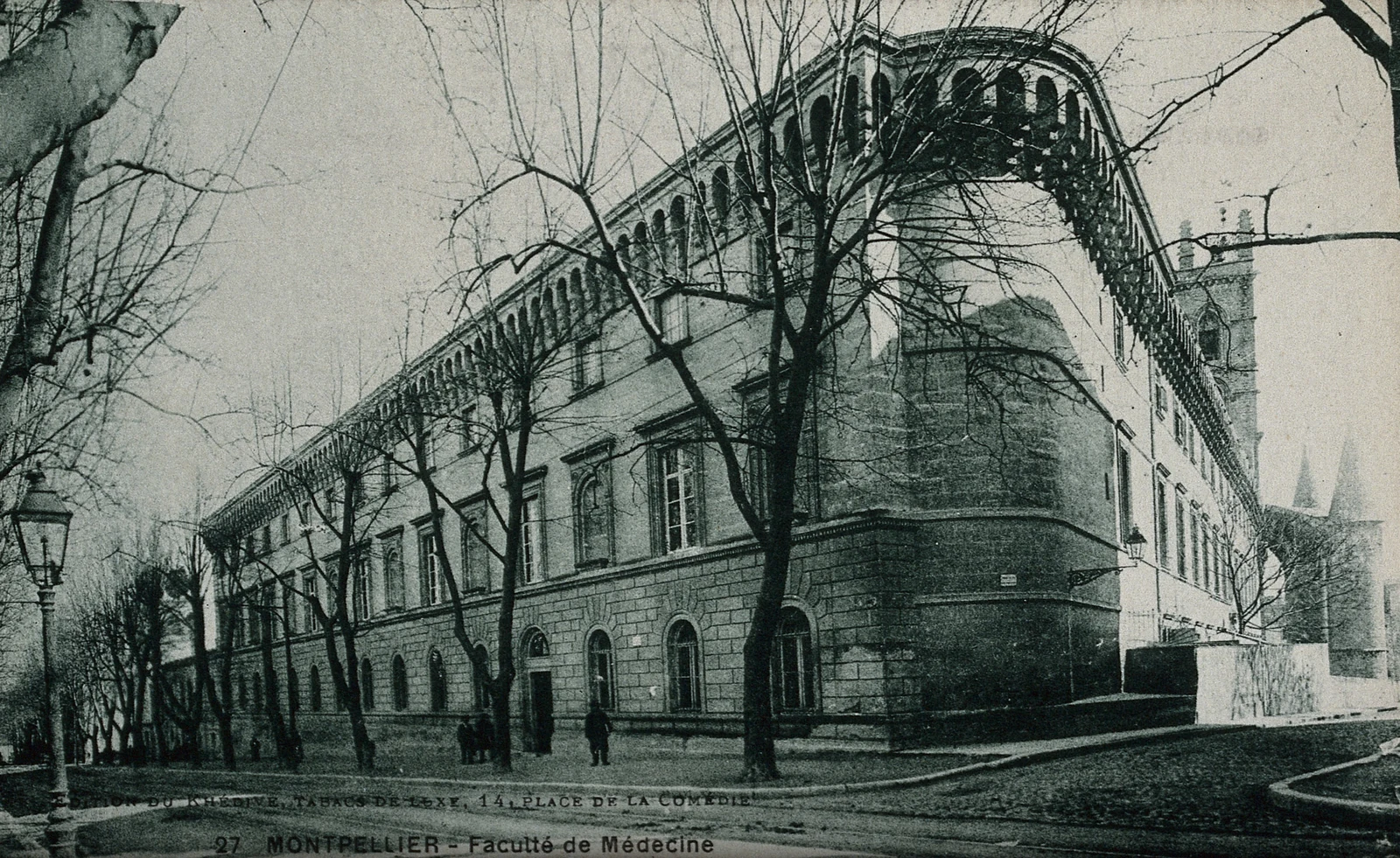
That distinction matters because a heroic version is tempting: the university failed an exceptional student, the student rejected it, and isolation produced originality. The sources support no such clean triangle. Grothendieck remained enrolled, pursued the required certificates, used books to keep abreast of the program, spoke to at least one professor about his questions, received advice about Paris, and ultimately obtained the licence ès sciences. His independence operated inside a credentialing system on which he still depended. Montpellier gave him too little of the mathematics he sought, but it gave him an address within French higher education, access to examinations, and eventually the qualification with which he could approach Paris. Alienation and assistance were present together.44Grothendieck, Récoltes et Semailles (Université des Sciences et Techniques du Languedoc and Centre National de la Recherche Scientifique, 1986); Jackson, “As If Summoned from the Void, I,” 1040–44; Laamri, Alexander Grothendieck: période 1928–1956, 69–79; Scharlau, “Who Is Alexander Grothendieck?” 931–33; Barbieri Viale, “Alexander Grothendieck: Enthusiasm and Creativity,” 171–72; O’Connor and Robertson, “Alexander Grothendieck”, sections beginning 1945, 1948, 1949, and thesis defense.
A provincial faculty and a national hierarchy
French mathematical education in the 1940s was sharply stratified. The faculties of sciences awarded university degrees; the grandes écoles, above all the École Normale Supérieure, selected students through competitive preparatory routes and supplied a dense network of peers, teachers, and future appointments. A licence ès sciences was assembled through certificates and examinations rather than being simply equivalent to a present-day four-year degree. Paris concentrated seminars, libraries, and mathematicians who were reconstructing research after the Occupation. A student in Montpellier could be registered in the same national discipline while remaining far from the conversations that defined its research frontier. This structure, rather than an imagined opposition between “the provinces” and intelligence, explains part of what happened next.55Grothendieck, Récoltes et Semailles (Université des Sciences et Techniques du Languedoc and Centre National de la Recherche Scientifique, 1986); Jackson, “As If Summoned from the Void, I,” 1040–44; Laamri, Alexander Grothendieck: période 1928–1956, 69–79; Scharlau, “Who Is Alexander Grothendieck?” 931–33; Barbieri Viale, “Alexander Grothendieck: Enthusiasm and Creativity,” 171–72; O’Connor and Robertson, “Alexander Grothendieck”, sections beginning 1945, 1948, 1949, and thesis defense.
Grothendieck did not enter this system by its normal elite channel. He had not passed through a Parisian lycée and the classes préparatoires. He had not sat the entrance competition for the École Normale Supérieure. His schooling had moved across countries, households, camps, and places of refuge. Even his command of the standard undergraduate vocabulary was uneven. Later, when he described arriving in Paris, he listed words—group, field, ring, module, complex, homology—that descended on him almost at once. The list should not be read as a transcript of what Montpellier never taught, for it was written decades later and shaped to make a point about entering a mathematical world. It does show that possession of a licence did not imply possession of the shared language assumed by Parisian specialists.66Grothendieck, Récoltes et Semailles (Université des Sciences et Techniques du Languedoc and Centre National de la Recherche Scientifique, 1986); Jackson, “As If Summoned from the Void, I,” 1040–44; Laamri, Alexander Grothendieck: période 1928–1956, 69–79; Scharlau, “Who Is Alexander Grothendieck?” 931–33; Barbieri Viale, “Alexander Grothendieck: Enthusiasm and Creativity,” 171–72; O’Connor and Robertson, “Alexander Grothendieck”, sections beginning 1945, 1948, 1949, and thesis defense.
The postwar university also had ordinary tasks to perform. Students needed syllabuses, lectures, examinations, and marks; the institution had to certify competence across required subjects. Grothendieck’s later testimony records that he attended the faculty only intermittently and relied on books for the program. This was not a romantic exemption. He still had to satisfy examiners. At the end of his second year he failed an examination in spherical trigonometry after, as he remembered it, a simple numerical error. The failure kept him in Montpellier for a third year. Because the story comes from Récoltes et Semailles, written nearly four decades later, it is best used for what it securely shows: his independent priorities did not cancel curricular consequences.77Grothendieck, Récoltes et Semailles (Université des Sciences et Techniques du Languedoc and Centre National de la Recherche Scientifique, 1986); Jackson, “As If Summoned from the Void, I,” 1040–44; Laamri, Alexander Grothendieck: période 1928–1956, 69–79; Scharlau, “Who Is Alexander Grothendieck?” 931–33; Barbieri Viale, “Alexander Grothendieck: Enthusiasm and Creativity,” 171–72; O’Connor and Robertson, “Alexander Grothendieck”, sections beginning 1945, 1948, 1949, and thesis defense.
The episode also corrects a common simplification about abstraction. Grothendieck would later become famous for conceptual structures of extraordinary reach. That does not mean he was uniformly effortless at every manipulation, or that abstraction was a ladder on which he simply stood above calculation. His own amused admission that numerical calculation was not his strength distinguishes several mathematical capacities: computational reliability, examination technique, conceptual persistence, memory for a syllabus, and the invention of definitions. Institutions often bundle these capacities into one mark. His career would demonstrate that they can diverge dramatically. It would be equally false, however, to turn one failed examination into proof that calculation never mattered to his work. His later arguments required exact estimates as well as concepts.88Grothendieck, Récoltes et Semailles (Université des Sciences et Techniques du Languedoc and Centre National de la Recherche Scientifique, 1986); Jackson, “As If Summoned from the Void, I,” 1040–44; Laamri, Alexander Grothendieck: période 1928–1956, 69–79; Scharlau, “Who Is Alexander Grothendieck?” 931–33; Barbieri Viale, “Alexander Grothendieck: Enthusiasm and Creativity,” 171–72; O’Connor and Robertson, “Alexander Grothendieck”, sections beginning 1945, 1948, 1949, and thesis defense.
Hanka shared the household, but the available sources do not meet the evidentiary threshold for further claims here about her health, income, or private life. Her German autobiographical manuscript, Eine Frau, was a substantial work in its own right rather than background to her son’s mathematics. The German dedication in the published version of his thesis later acknowledged her with reverence and gratitude. These public facts establish that intellectual independence did not mean social or material isolation. They do not establish either person’s private motives.99Grothendieck, Récoltes et Semailles (Université des Sciences et Techniques du Languedoc and Centre National de la Recherche Scientifique, 1986); Jackson, “As If Summoned from the Void, I,” 1040–44; Laamri, Alexander Grothendieck: période 1928–1956, 69–79; Scharlau, “Who Is Alexander Grothendieck?” 931–33; Barbieri Viale, “Alexander Grothendieck: Enthusiasm and Creativity,” 171–72; O’Connor and Robertson, “Alexander Grothendieck”, sections beginning 1945, 1948, 1949, and thesis defense.
The question beneath the recipe
The mathematical problem Grothendieck later remembered carrying from school into Montpellier began with an elementary dissatisfaction. Textbooks stated formulas for the length of a circumference, the area of a surface, or the volume of a familiar solid. They taught single, double, and triple integrals as calculational devices. What made those computations measurements of anything? The associated problems concerned arbitrary curves, surfaces, and bodies outside the catalog of standard shapes. In his retrospective account, he said that he devoted most of his energy between 1945 and 1948 to closing this gap.1010Grothendieck, Récoltes et Semailles (Université des Sciences et Techniques du Languedoc and Centre National de la Recherche Scientifique, 1986); Jackson, “As If Summoned from the Void, I,” 1040–44; Laamri, Alexander Grothendieck: période 1928–1956, 69–79; Scharlau, “Who Is Alexander Grothendieck?” 931–33; Barbieri Viale, “Alexander Grothendieck: Enthusiasm and Creativity,” 171–72; O’Connor and Robertson, “Alexander Grothendieck”, sections beginning 1945, 1948, 1949, and thesis defense.
For a general reader, the difference can be put without symbolism. A formula answers a question after the objects have been admitted to the problem. If the object is a rectangular box with side lengths , , and , the rule returns a number. A definition must do more. It must say which objects count as measurable, how a complicated object can be approximated by simpler ones, whether rearranging or decomposing it changes the result, and what happens under a limiting process. It must also disclose the cases in which no measurement is assigned. Recipes can remain correct while leaving all those questions untouched.
The request for a definition of volume is not a request for a synonym. If a region is cut into two non-overlapping pieces, its volume is expected to equal the sum of theirs. A rigid motion should leave volume unchanged. If increasingly large simple regions fill a complicated one, their volumes should approach the volume of the limit. These expectations form an interacting system: some are algebraic, some geometric, and some topological or analytic. The work begins when the indispensable conditions have been selected and a rule satisfying them has been proved to exist.
The question is subtler still because length, area, and volume are not one construction repeated in three dimensions. The length of a continuous curve may be defined as the supremum of lengths of inscribed polygonal paths; some curves then have infinite length. Surface area can be approached through parametrizations or measure-theoretic constructions, and naive polyhedral approximation can behave unexpectedly. Volume in Euclidean space can be represented by Lebesgue measure, but extending ordinary box volume to a large collection of sets requires choices about measurability. Modern distinctions among these theories were not supplied by the textbooks Grothendieck later described.
It is therefore safer to say that Grothendieck later described an independent approach to measure and integration than to assert, without inspecting his manuscript, that he reproduced every theorem of Lebesgue measure. Later witnesses also used the language of rediscovery. His account says that he handled sets he called measurable and almost-everywhere convergence, while not encountering a set that failed to be measurable and not yet knowing what a topological space was. The testimony presents substantial construction and acknowledged gaps, but the manuscript has not independently confirmed either scope. A theorem-by-theorem comparison requires the authenticated object and specialist review.1111Grothendieck, Récoltes et Semailles (Université des Sciences et Techniques du Languedoc and Centre National de la Recherche Scientifique, 1986); Jackson, “As If Summoned from the Void, I,” 1040–44; Laamri, Alexander Grothendieck: période 1928–1956, 69–79; Scharlau, “Who Is Alexander Grothendieck?” 931–33; Barbieri Viale, “Alexander Grothendieck: Enthusiasm and Creativity,” 171–72; O’Connor and Robertson, “Alexander Grothendieck”, sections beginning 1945, 1948, 1949, and thesis defense.
A definition is a contract
Let be a collection of subsets of , and let . A first attempt at “volume” might require:
- for rectangular boxes;
- for rigid motions ;
- for disjoint ;
- if and , then .
Condition 4, together with finite additivity, points toward countable additivity, but the list is not a completed theory. The class must have specified closure properties, and not every subset of space can belong to it while all four requirements remain true. The modern construction chooses a sigma-algebra of measurable sets and a countably additive measure. Even then, normalization on boxes does not describe the construction by itself. One standard route defines an outer measure by countable coverings and then uses the Carathéodory criterion to select measurable sets.
The analogy with a legal contract is useful only up to a point. A definition specifies obligations that later arguments may invoke; it prevents a proof from silently changing what its words mean. But mathematical definitions are not negotiated conventions unconstrained by reality. They are judged by consistency, existence, fit with prior examples, power in proofs, and stability under operations. Different definitions can agree on ordinary boxes and diverge on difficult objects. The work of analysis is partly to discover which contract survives the demands placed upon it. The analogy stops where a mathematical existence proof begins: no agreement among readers can make an inconsistent package realizable.
The precision window also shows why first principles are not the same as “starting with no knowledge.” To formulate useful axioms, one must notice invariances, decompositions, and limits. To prove that an extension exists, one needs techniques accumulated by predecessors. Independent reconstruction can reveal the architecture of a subject to the person reconstructing it, but it does not erase that subject’s history. Lebesgue’s 1902 thesis, Intégrale, longueur, aire, and the work around it had already changed integration. Grothendieck’s achievement at Montpellier was not priority. It was the sustained discovery, for himself and with limited guidance, of why a theory was needed.1212Grothendieck, Récoltes et Semailles (Université des Sciences et Techniques du Languedoc and Centre National de la Recherche Scientifique, 1986); Jackson, “As If Summoned from the Void, I,” 1040–44; Laamri, Alexander Grothendieck: période 1928–1956, 69–79; Scharlau, “Who Is Alexander Grothendieck?” 931–33; Barbieri Viale, “Alexander Grothendieck: Enthusiasm and Creativity,” 171–72; O’Connor and Robertson, “Alexander Grothendieck”, sections beginning 1945, 1948, 1949, and thesis defense.
Monsieur Soula
The professor who appears most clearly in the Montpellier recollections is Jacques Soula, identified as Grothendieck’s teacher of differential calculus. Later narratives sometimes turn Soula into a comic guardian of obsolete learning: he supposedly announced that a certain Lebesgue had solved the last problems in mathematics. The line comes through Grothendieck’s deliberately ironic retrospective prose. It should not be treated as a stenographic record or as a fair summary of Soula’s mathematical beliefs. What can be retained is that Soula told him Lebesgue had developed a theory of measure and integration and advised him to seek contact in Paris with Cartan, under whom Soula had studied.1313Grothendieck, Récoltes et Semailles (Université des Sciences et Techniques du Languedoc and Centre National de la Recherche Scientifique, 1986); Jackson, “As If Summoned from the Void, I,” 1040–44; Laamri, Alexander Grothendieck: période 1928–1956, 69–79; Scharlau, “Who Is Alexander Grothendieck?” 931–33; Barbieri Viale, “Alexander Grothendieck: Enthusiasm and Creativity,” 171–72; O’Connor and Robertson, “Alexander Grothendieck”, sections beginning 1945, 1948, 1949, and thesis defense.
Grothendieck wrote that he did not then go and find Lebesgue’s book. This refusal is one of the best-documented features of the Montpellier period, yet it too needs care. It did not mean that he refused books altogether; he used them for the examination program. It did not mean that consultation is inferior to invention; his Paris and Nancy years would depend on seminars, papers, and teachers. It meant that, for this particular inquiry, he experienced the work he was doing and the answer in an established book as belonging to different activities. He wanted to follow his question until its internal demands had disclosed a structure.1414Grothendieck, Récoltes et Semailles (Université des Sciences et Techniques du Languedoc and Centre National de la Recherche Scientifique, 1986); Jackson, “As If Summoned from the Void, I,” 1040–44; Laamri, Alexander Grothendieck: période 1928–1956, 69–79; Scharlau, “Who Is Alexander Grothendieck?” 931–33; Barbieri Viale, “Alexander Grothendieck: Enthusiasm and Creativity,” 171–72; O’Connor and Robertson, “Alexander Grothendieck”, sections beginning 1945, 1948, 1949, and thesis defense.
There are costs to that method. A solitary investigator can spend years proving what is known, miss counterexamples, choose cumbersome definitions, or mistake a partial construction for a universal one. Grothendieck’s later recollection openly contains such limits: he had not found nonmeasurable sets, and his vocabulary was narrow. There are benefits as well. Reconstructing a theory can make its joints visible. Instead of learning a definition as the place where a textbook begins, one learns which failure forced the definition to take that form. In later work Grothendieck repeatedly asked not only whether a theorem was true but what setting made it natural. Montpellier does not predetermine that career, but it supplies an early, documented instance of the habit.1515Grothendieck, Récoltes et Semailles (Université des Sciences et Techniques du Languedoc and Centre National de la Recherche Scientifique, 1986); Jackson, “As If Summoned from the Void, I,” 1040–44; Laamri, Alexander Grothendieck: période 1928–1956, 69–79; Scharlau, “Who Is Alexander Grothendieck?” 931–33; Barbieri Viale, “Alexander Grothendieck: Enthusiasm and Creativity,” 171–72; O’Connor and Robertson, “Alexander Grothendieck”, sections beginning 1945, 1948, 1949, and thesis defense.
Soula’s advice also complicates the image of institutional neglect. A professor unable or unwilling to supervise the project at the level the student needed nevertheless recognized that another mathematical center could. The recommendation did not solve Grothendieck’s financial or educational problems. It named a route. Because “Cartan” could mean Élie Cartan, then elderly, or his son Henri, Grothendieck later remembered not even knowing which one was intended. The uncertainty is plausible in a student outside the networks for whom those names carried immediate coordinates. Once in Paris, it was Henri Cartan who received him.1616Grothendieck, Récoltes et Semailles (Université des Sciences et Techniques du Languedoc and Centre National de la Recherche Scientifique, 1986); Jackson, “As If Summoned from the Void, I,” 1040–44; Laamri, Alexander Grothendieck: période 1928–1956, 69–79; Scharlau, “Who Is Alexander Grothendieck?” 931–33; Barbieri Viale, “Alexander Grothendieck: Enthusiasm and Creativity,” 171–72; O’Connor and Robertson, “Alexander Grothendieck”, sections beginning 1945, 1948, 1949, and thesis defense.
Learning without a seminar
For most of the Montpellier years Grothendieck had no research seminar around his problem. The record provides no reliable daily account of where he wrote, how many hours he worked, or whom he saw. His later testimony supplies only the duration: a problem he initially expected to take weeks occupied three years. That span required repeated revision and distinctions between local devices and general principles, but the sequence of false starts remains unknown.1717Grothendieck, Récoltes et Semailles (Université des Sciences et Techniques du Languedoc and Centre National de la Recherche Scientifique, 1986); Jackson, “As If Summoned from the Void, I,” 1040–44; Laamri, Alexander Grothendieck: période 1928–1956, 69–79; Scharlau, “Who Is Alexander Grothendieck?” 931–33; Barbieri Viale, “Alexander Grothendieck: Enthusiasm and Creativity,” 171–72; O’Connor and Robertson, “Alexander Grothendieck”, sections beginning 1945, 1948, 1949, and thesis defense.
His distance from classes increased, according to his own account, because the lectures repeated material available in textbooks and the books did not see his questions. There is an obvious danger in taking this as a universal educational program. Most beginners cannot reconstruct whole subjects efficiently, and even Grothendieck arrived in Paris with major gaps. The value of the episode lies elsewhere. He acquired direct evidence that a question can remain legitimate when a syllabus has no place for it, and that prolonged attention can produce mathematical structure before social recognition arrives. Those lessons concern agency, not a contempt for teaching.1818Grothendieck, Récoltes et Semailles (Université des Sciences et Techniques du Languedoc and Centre National de la Recherche Scientifique, 1986); Jackson, “As If Summoned from the Void, I,” 1040–44; Laamri, Alexander Grothendieck: période 1928–1956, 69–79; Scharlau, “Who Is Alexander Grothendieck?” 931–33; Barbieri Viale, “Alexander Grothendieck: Enthusiasm and Creativity,” 171–72; O’Connor and Robertson, “Alexander Grothendieck”, sections beginning 1945, 1948, 1949, and thesis defense.
The phrase “solitary work” also needs a social perimeter. His scholarship came from an organization; faculty members administered courses and examinations; Soula supplied information and a recommendation; Hanka shared the household; books conveyed the official program; and the mathematical concepts he reconstructed had a history he did not yet know. Solitude here means the absence of a local research community engaged with the same project, not independence from every human support. Paris and Nancy later added shared languages, public problems, correction, and interlocutors.1919Grothendieck, Récoltes et Semailles (Université des Sciences et Techniques du Languedoc and Centre National de la Recherche Scientifique, 1986); Jackson, “As If Summoned from the Void, I,” 1040–44; Laamri, Alexander Grothendieck: période 1928–1956, 69–79; Scharlau, “Who Is Alexander Grothendieck?” 931–33; Barbieri Viale, “Alexander Grothendieck: Enthusiasm and Creativity,” 171–72; O’Connor and Robertson, “Alexander Grothendieck”, sections beginning 1945, 1948, 1949, and thesis defense.
The physical and political world outside mathematics did not disappear while he worked. France was recovering from occupation, rationing continued into the late 1940s, and displaced people faced paperwork that victory had not simplified. Jackson and Scharlau later link a statelessness description to constraints on travel and employment, but no period administrative file for this account establishes onset, continuity, or the exact legal mechanism. No source links the content of his measure theory causally to legal status or war. The secure relation is chronological: the mathematical work occurred under those conditions.2020Jackson, “As If Summoned from the Void, I,” 1040–44; Scharlau, “Who Is Alexander Grothendieck?” 931–33.
The certificate and the manuscript
By June 1948 Grothendieck had completed the licence ès sciences. The credential recorded approved subjects and marks but not the independent problem that had occupied much of his attention. In Récoltes et Semailles, written decades later, he described tightly written pages, recto and verso, without margins because paper was expensive. The description is retrospective material testimony, not a basis for visual reconstruction. No secure page count has been established.2121Grothendieck, Récoltes et Semailles (Université des Sciences et Techniques du Languedoc and Centre National de la Recherche Scientifique, 1986); Jackson, “As If Summoned from the Void, I,” 1040–44; Laamri, Alexander Grothendieck: période 1928–1956, 69–79; Scharlau, “Who Is Alexander Grothendieck?” 931–33; Barbieri Viale, “Alexander Grothendieck: Enthusiasm and Creativity,” 171–72; O’Connor and Robertson, “Alexander Grothendieck”, sections beginning 1945, 1948, 1949, and thesis defense.
The manuscript’s fate and contents remain uncertain. Secondary accounts say that he showed the work in Paris and learned that its central territory was known. It was not the dissertation he later defended, and no authenticated table of contents supports a theorem-by-theorem reconstruction. Claims that it contained the Carathéodory construction, the Radon–Nikodym theorem, or particular convergence theorems require the pages themselves. The bounded description is an independent approach to measure and integration.2222Grothendieck, Récoltes et Semailles (Université des Sciences et Techniques du Languedoc and Centre National de la Recherche Scientifique, 1986); Jackson, “As If Summoned from the Void, I,” 1040–44; Laamri, Alexander Grothendieck: période 1928–1956, 69–79; Scharlau, “Who Is Alexander Grothendieck?” 931–33; Barbieri Viale, “Alexander Grothendieck: Enthusiasm and Creativity,” 171–72; O’Connor and Robertson, “Alexander Grothendieck”, sections beginning 1945, 1948, 1949, and thesis defense.
The distinction between priority and formation is decisive. Credit for a historically new result requires evidence of priority; mathematical formation is a different question. Later retrospective accounts place the Montpellier work in territory already associated with Lebesgue’s measure and integration theory. Without an authenticated manuscript, its theorem-level scope and any historically new result cannot be determined. Grothendieck’s later account nevertheless presents the work as a sustained encounter with building definitions and following them through.2323Grothendieck, Récoltes et Semailles (Université des Sciences et Techniques du Languedoc and Centre National de la Recherche Scientifique, 1986); Jackson, “As If Summoned from the Void, I,” 1040–44; Laamri, Alexander Grothendieck: période 1928–1956, 69–79; Scharlau, “Who Is Alexander Grothendieck?” 931–33; Barbieri Viale, “Alexander Grothendieck: Enthusiasm and Creativity,” 171–72; O’Connor and Robertson, “Alexander Grothendieck”, sections beginning 1945, 1948, 1949, and thesis defense.
Why formulas do not extend themselves
Take finite unions of half-open boxes in . One can assign a volume by subdividing until the boxes are disjoint and summing their products of side lengths. Proving that the answer does not depend on the subdivision is already a theorem. Now try to assign volume to an open set. It may be a countable union of boxes in many ways. One wants the supremum of volumes of compact elementary sets inside it, or the infimum of volumes of open coverings around a general set, to behave consistently. Passing from finite to countable operations introduces limiting questions that no single formula answers.
For a nonnegative measurable function , the Lebesgue integral is built from simple functions rather than from antiderivatives. If with and measurable , define
Then define
This construction turns approximation into the definition itself. Monotone convergence is not an optional computational trick added afterward; it expresses the compatibility between the integral and increasing limits. For an integrable signed function, one writes and requires both nonnegative parts to have finite integral.
The human problem is to obtain the total of a complicated quantity from manageable pieces without making the answer depend on arbitrary choices. Simple functions provide stepped approximations with unambiguous totals. This picture has a boundary: a measurable function is not necessarily close to a staircase in a geometric sense, and the defining supremum ranges over an ordered family rather than one preferred sequence unless additional hypotheses are imposed. Measure theory controls approximation through closure and convergence properties, not through the picture alone.
Nothing in the evidence establishes that Grothendieck’s student construction followed this modern presentation. The account identifies the mathematical territory of his question rather than transcribing his route through it. The distinction prevents a later polished theory from being assigned anachronistically to a seventeen-year-old while preserving the precision needed to understand the problem.
An education in mismatch
Montpellier taught Grothendieck through mismatch. The official course and the private problem ran beside one another. The examination system compelled breadth of a kind; the volume problem compelled depth of another. Soula’s information introduced a predecessor; Grothendieck’s refusal to consult that predecessor prolonged the reconstruction. A failed certificate delayed departure; the delay supplied another year of work. None of these relations is simply positive or negative. Together they made visible the difference between knowing how to satisfy a program and knowing why a concept is built as it is.2424Grothendieck, Récoltes et Semailles (Université des Sciences et Techniques du Languedoc and Centre National de la Recherche Scientifique, 1986); Jackson, “As If Summoned from the Void, I,” 1040–44; Laamri, Alexander Grothendieck: période 1928–1956, 69–79; Scharlau, “Who Is Alexander Grothendieck?” 931–33; Barbieri Viale, “Alexander Grothendieck: Enthusiasm and Creativity,” 171–72; O’Connor and Robertson, “Alexander Grothendieck”, sections beginning 1945, 1948, 1949, and thesis defense.
Later admirers have sometimes treated his sparse library as a badge of purity. The evidence supports a more modest conclusion. He often preferred to reconstruct material, and Paulo Ribenboim would remember the same habit in Nancy. But Grothendieck learned intensively from people, correspondence, seminars, and texts throughout his career. Originality did not require ignorance. At Montpellier, ignorance was partly imposed by his route through education and partly maintained, in the case of Lebesgue, by choice. Paris would expose both the strength and the inefficiency of that position.2525Grothendieck, Récoltes et Semailles (Université des Sciences et Techniques du Languedoc and Centre National de la Recherche Scientifique, 1986); Jackson, “As If Summoned from the Void, I,” 1040–44; Laamri, Alexander Grothendieck: période 1928–1956, 69–79; Scharlau, “Who Is Alexander Grothendieck?” 931–33; Barbieri Viale, “Alexander Grothendieck: Enthusiasm and Creativity,” 171–72; O’Connor and Robertson, “Alexander Grothendieck”, sections beginning 1945, 1948, 1949, and thesis defense.
The evidence therefore does not support a heroic isolation narrative. Grothendieck’s retrospective testimony instead presents a question that remained active when his books did not answer it. Such work could produce understanding even when the public answer already existed, but its value depended on later correction.2626Grothendieck, Récoltes et Semailles (Université des Sciences et Techniques du Languedoc and Centre National de la Recherche Scientifique, 1986); Jackson, “As If Summoned from the Void, I,” 1040–44; Laamri, Alexander Grothendieck: période 1928–1956, 69–79; Scharlau, “Who Is Alexander Grothendieck?” 931–33; Barbieri Viale, “Alexander Grothendieck: Enthusiasm and Creativity,” 171–72; O’Connor and Robertson, “Alexander Grothendieck”, sections beginning 1945, 1948, 1949, and thesis defense.
The Montpellier period also establishes a rhythm that will recur in the mathematical chapters of this biography: an intuitive demand, a long enlargement of language, and a later encounter with a community that tests the result. But recurrence must not become destiny. In 1948 Grothendieck had not conceived schemes, topoi, or motives. He was not secretly practising algebraic geometry. His subject was analysis, and his immediate need was to discover what contemporary mathematicians already knew. The future should not be used to flatten this uncertainty.2727Grothendieck, Récoltes et Semailles (Université des Sciences et Techniques du Languedoc and Centre National de la Recherche Scientifique, 1986); Jackson, “As If Summoned from the Void, I,” 1040–44; Laamri, Alexander Grothendieck: période 1928–1956, 69–79; Scharlau, “Who Is Alexander Grothendieck?” 931–33; Barbieri Viale, “Alexander Grothendieck: Enthusiasm and Creativity,” 171–72; O’Connor and Robertson, “Alexander Grothendieck”, sections beginning 1945, 1948, 1949, and thesis defense.
Toward Paris
Leaving Montpellier required more than finishing the degree. Grothendieck’s means were limited, and Paris was expensive. André Magnier, associated with the Entraide Universitaire de France, later recalled interviewing him for support. Magnier’s published reminiscence describes a conversation planned for twenty minutes that extended as Grothendieck explained his independent constructions. Because this is a recollection published decades later, the duration and wording should remain attributed to Magnier, not narrated as an observed scene. Its documentary significance is that the application succeeded: Grothendieck received assistance that enabled the move.2828Grothendieck, Récoltes et Semailles (Université des Sciences et Techniques du Languedoc and Centre National de la Recherche Scientifique, 1986); Jackson, “As If Summoned from the Void, I,” 1040–44; Laamri, Alexander Grothendieck: période 1928–1956, 69–79; Scharlau, “Who Is Alexander Grothendieck?” 931–33; Barbieri Viale, “Alexander Grothendieck: Enthusiasm and Creativity,” 171–72; O’Connor and Robertson, “Alexander Grothendieck”, sections beginning 1945, 1948, 1949, and thesis defense.
Soula supplied a letter of recommendation connected with Cartan. In autumn 1948 Grothendieck went north carrying the licence and, by his later account, the densely written manuscript. The journey altered his access to mathematics more abruptly than any theorem he had proved. In Paris he learned that Lebesgue had preceded him and encountered a mathematical community with compressed speech, common references, seminar customs, reputations, friendships, and thresholds of entry. The same independence that had sustained him in Montpellier now had to coexist with being a beginner among experts.2929Grothendieck, Récoltes et Semailles (Université des Sciences et Techniques du Languedoc and Centre National de la Recherche Scientifique, 1986); Jackson, “As If Summoned from the Void, I,” 1040–44; Laamri, Alexander Grothendieck: période 1928–1956, 69–79; Scharlau, “Who Is Alexander Grothendieck?” 931–33; Barbieri Viale, “Alexander Grothendieck: Enthusiasm and Creativity,” 171–72; O’Connor and Robertson, “Alexander Grothendieck”, sections beginning 1945, 1948, 1949, and thesis defense.
Grothendieck later recalled reaching the capital after having known almost no one else engaged in research mathematics. The retrospective claim conveys the scale of the transition but supplies no travel scene or family conversation. The documentary record at departure consists of a degree completed in June, a recommendation, scholarship support, and a manuscript whose exact contents remain unaudited.3030Grothendieck, Récoltes et Semailles (Université des Sciences et Techniques du Languedoc and Centre National de la Recherche Scientifique, 1986); Jackson, “As If Summoned from the Void, I,” 1040–44; Laamri, Alexander Grothendieck: période 1928–1956, 69–79; Scharlau, “Who Is Alexander Grothendieck?” 931–33; Barbieri Viale, “Alexander Grothendieck: Enthusiasm and Creativity,” 171–72; O’Connor and Robertson, “Alexander Grothendieck”, sections beginning 1945, 1948, 1949, and thesis defense.
The three years had not made him a fully trained research mathematician. They had done something both less and more specific. They had shown him that a definition could be sought as the answer to an experienced lack; that a long problem could educate the person pursuing it; and that official competence and mathematical understanding could come apart. Paris would measure the gaps in his knowledge. It would also reveal that the method formed in those gaps was not a provincial eccentricity to be discarded. Under correction and in company, it could become a research practice.
A memory written almost forty years later
The main first-person source for Montpellier is not a student diary. It is the opening autobiographical movement of Récoltes et Semailles, composed in 1985 and 1986, when Grothendieck was looking back across a mathematical career from which he had publicly withdrawn. The pages are exceptionally valuable because they identify the question, the duration of the work, the names Soula and Lebesgue, the missed examination, the sparse manuscript, and the shock of Paris. They are also literary pages with an argument. Grothendieck was contrasting the creative child, who trusts a question, with a professional world he believed had lost contact with such trust. Every use of the recollection has to preserve both its information and its retrospective design.3131Grothendieck, Récoltes et Semailles (Université des Sciences et Techniques du Languedoc and Centre National de la Recherche Scientifique, 1986); Jackson, “As If Summoned from the Void, I,” 1040–44; Laamri, Alexander Grothendieck: période 1928–1956, 69–79; Scharlau, “Who Is Alexander Grothendieck?” 931–33; Barbieri Viale, “Alexander Grothendieck: Enthusiasm and Creativity,” 171–72; O’Connor and Robertson, “Alexander Grothendieck”, sections beginning 1945, 1948, 1949, and thesis defense.
A memoir can report a durable fact more accurately than a contemporary administrative file. An enrollment register may establish a date but never explain why volume mattered. A later witness can also compress, sharpen, or arrange events so that a pattern becomes visible. Grothendieck’s phrase “three years” probably names the span of his Montpellier studies; it does not prove that every month was devoted to one project. His description of a faculty program can convey his dissatisfaction without cataloguing every lecture he attended. Source criticism here is not suspicion applied from outside. It is the method by which testimony remains useful without becoming omniscient.3232Grothendieck, Récoltes et Semailles (Université des Sciences et Techniques du Languedoc and Centre National de la Recherche Scientifique, 1986); Jackson, “As If Summoned from the Void, I,” 1040–44; Laamri, Alexander Grothendieck: période 1928–1956, 69–79; Scharlau, “Who Is Alexander Grothendieck?” 931–33; Barbieri Viale, “Alexander Grothendieck: Enthusiasm and Creativity,” 171–72; O’Connor and Robertson, “Alexander Grothendieck”, sections beginning 1945, 1948, 1949, and thesis defense.
The documentary record is asymmetrical. Grothendieck’s mature account describes Soula, but no account by Soula has been located. Hanka shared these years, but no securely located passage in her manuscript describes the same household. The faculty certified the degree, while its registers remain uninspected. These absences prevent equal access to each person’s perspective and leave private reactions unknown.
The surviving published work also changes how the memoir is read. By 1952 Grothendieck was writing technical papers whose precision is directly inspectable. Those papers prove the scale of his subsequent analytical power; they do not retroactively certify every detail of the Montpellier manuscript. Conversely, any incompleteness in the student project would not diminish the later work. Biography often lets the famous future act as a witness for the obscure past. In mathematics that shortcut is especially dangerous, because a correct later theorem cannot establish an earlier theorem’s contents.3333Grothendieck, Récoltes et Semailles (Université des Sciences et Techniques du Languedoc and Centre National de la Recherche Scientifique, 1986); Jackson, “As If Summoned from the Void, I,” 1040–44; Laamri, Alexander Grothendieck: période 1928–1956, 69–79; Scharlau, “Who Is Alexander Grothendieck?” 931–33; Barbieri Viale, “Alexander Grothendieck: Enthusiasm and Creativity,” 171–72; O’Connor and Robertson, “Alexander Grothendieck”, sections beginning 1945, 1948, 1949, and thesis defense.
Three evidentiary levels remain distinct. Enrollment, completion of the licence, and arrival in Paris are chronological claims supported across sources. Phrases such as “he later remembered” identify autobiographical testimony. Modern mathematical explanations identify the content of a problem without claiming to reproduce his pages. This separation blocks retrospective assignment of the adult oeuvre to an adolescent notebook.
The sources also stand at different distances from the events. A university register, once located, can establish an administrative date but may say nothing about a student’s mathematical priorities. Récoltes et Semailles, written almost four decades later, describes those priorities in detail but arranges them within a mature argument about creation and professional life. Mentor memoirs add assessments formed after Grothendieck’s later career was known.3434Grothendieck, Récoltes et Semailles (Université des Sciences et Techniques du Languedoc and Centre National de la Recherche Scientifique, 1986); Jackson, “As If Summoned from the Void, I,” 1040–44; Laamri, Alexander Grothendieck: période 1928–1956, 69–79; Scharlau, “Who Is Alexander Grothendieck?” 931–33; Barbieri Viale, “Alexander Grothendieck: Enthusiasm and Creativity,” 171–72; O’Connor and Robertson, “Alexander Grothendieck”, sections beginning 1945, 1948, 1949, and thesis defense.
These records do not cancel one another; they answer different questions. Administrative files are strongest on dates and status. The memoir is strongest on Grothendieck’s later understanding of his formation. Published mathematics establishes what a later paper proves, not what an earlier manuscript contained. A sentence that crosses those boundaries needs explicit qualification rather than one undifferentiated citation.
The result is a chronology with calibrated gaps. November 1945 and June 1948 can be tested against institutional files. The duration and meaning of the volume project remain retrospective testimony. The manuscript’s theorem content remains unknown until the object is authenticated and read. Precision consists in preserving those differences rather than forcing every source into one level of certainty.
Source dependence matters as much as source count. Three later biographies that repeat one interview do not provide three independent confirmations. A university register, a dated letter, and a later memoir may disagree, but they arise from different documentary processes and can therefore test one another. This prevents repetition across books or websites from creating an appearance of certainty that the underlying evidence does not possess.
What a university could and could not certify
The licence mattered because French institutions recognized it. A research community cannot evaluate every unknown applicant by reading years of private work; credentials are devices for making competence portable. Yet portability comes through standardization. The certificates tested subjects that examiners could compare across candidates. Later retrospective accounts place the Montpellier work in territory associated with established measure and integration theory and support an independent formative route. Without an authenticated manuscript, its theorem-level scope, degree of overlap, outcome of any comparison, and any historically new result cannot be determined. The credential and manuscript thus represented two economies of value: one national and comparable, the other personal and intellectually formative.3535Grothendieck, Récoltes et Semailles (Université des Sciences et Techniques du Languedoc and Centre National de la Recherche Scientifique, 1986); Jackson, “As If Summoned from the Void, I,” 1040–44; Laamri, Alexander Grothendieck: période 1928–1956, 69–79; Scharlau, “Who Is Alexander Grothendieck?” 931–33; Barbieri Viale, “Alexander Grothendieck: Enthusiasm and Creativity,” 171–72; O’Connor and Robertson, “Alexander Grothendieck”, sections beginning 1945, 1948, 1949, and thesis defense.
This tension helps explain why the failed spherical-trigonometry examination belongs to more than anecdote. Spherical trigonometry has real mathematical content: on a sphere the angles of a triangle need not sum to , and relations among sides and angles differ from those in the Euclidean plane. The examination was not necessarily a meaningless obstacle. But a numerical mistake in that subject delayed a student whose deepest effort lay elsewhere. The institution registered the mistake because reliability under the examination’s conditions was what it had been asked to measure. It had no instrument for crediting a private reconstruction that was outside the assignment.
Consider a spherical triangle on the unit sphere with angles . Its area is
the spherical excess. This formula joins the two kinds of mathematics at issue in Montpellier. It gives a computable answer, but its meaning depends on a prior definition of area on the sphere and a theorem connecting area to angle. If taught only as a rule, it can look like one more recipe; when derived, it reveals curvature through measurement. The record does not identify Grothendieck’s examination problem or locate his numerical error.
Passing a sequence of certificates also demanded scheduling: attention had to be distributed among fields rather than absorbed by one question. In Montpellier, Grothendieck remained for a third year after the failed examination. Retrospectively, the delay gave more time to the measure project and ended with a degree. No source records how either Grothendieck or Hanka evaluated that extra year.
The word “student” can hide simultaneous obligations. Grothendieck was a learner, an examinee, a scholarship recipient, a seasonal worker according to later accounts, and a person governed by nationality and residence documents. Mathematical concentration did not abolish those roles. Reported material hardship adds historical context but no mathematical warrant; the proofs still stand or fall by mathematical reasons.3636Grothendieck, Récoltes et Semailles (Université des Sciences et Techniques du Languedoc and Centre National de la Recherche Scientifique, 1986); Jackson, “As If Summoned from the Void, I,” 1040–44; Laamri, Alexander Grothendieck: période 1928–1956, 69–79; Scharlau, “Who Is Alexander Grothendieck?” 931–33; Barbieri Viale, “Alexander Grothendieck: Enthusiasm and Creativity,” 171–72; O’Connor and Robertson, “Alexander Grothendieck”, sections beginning 1945, 1948, 1949, and thesis defense.
Three measurements that do not coincide automatically
Grothendieck grouped length, area, and volume in his recollection because textbooks offered formulas for all three. A precise reader should nevertheless separate them. For a continuous curve , one standard definition of length is
The supremum runs over all finite partitions. This definition agrees with the familiar integral
when is sufficiently regular, but the supremum makes sense for every continuous curve and may be infinite. The integral formula is therefore a theorem under hypotheses, not the primary meaning in all cases.
The definition also distinguishes the traced geometric image from its parametrization. A curve that runs over the same segment twice has twice the parametrized length under the usual variation definition, even though its image as a set is unchanged. If one asks for the one-dimensional measure of the image, multiplicity is treated differently. Thus the apparently innocent phrase “length of a curve” can name more than one object. Before calculating, the mathematician must decide whether a curve is a map, an image, an oriented path, or an equivalence class of parametrizations. This is exactly the kind of hidden choice that a formula may conceal.
Surface area brings another warning. Approximating a curved surface with inscribed polyhedra seems analogous to approximating a curve with polygons, but the analogy can fail. In the classical Schwarz lantern construction, triangulated polyhedral surfaces inscribed in a cylinder can have areas that converge to different limits or diverge, depending on how the mesh is refined. The example shows that “take finer flat approximations” is not a definition until the allowed approximations and mode of convergence are controlled. It illuminates why an intrinsic demand is serious. It does not show that Grothendieck encountered the Schwarz lantern in Montpellier.
For subsets of , Lebesgue measure supplies an -dimensional volume. But a two-dimensional surface sitting in has three-dimensional Lebesgue measure zero. Its area requires a measure of a different dimension, often built today through Hausdorff measure or through parametrized integration under regularity conditions. Likewise, a curve in the plane generally has planar area zero while possessing positive or infinite one-dimensional length. “Measure” is not one universal number attached to an object independently of dimensional question. It is a framework within which dimension and admissible sets must be specified.
These distinctions clarify the student’s dissatisfaction without overstating its solution. Wanting one intrinsic foundation beneath length, area, and volume points toward measure theory, but modern geometric measure theory shows how much remains after Lebesgue integration is constructed. A later claim to have closed the gap can mark the removal of a personal conceptual obstacle without implying that every later technical boundary had vanished.
Outer measure and the boundary of measurability
For a set , define its Lebesgue outer measure by
This assigns a number in to every subset. Yet is not countably additive on all subsets. Carathéodory calls measurable if, for every ,
The measurable sets form a sigma-algebra, and the restriction of to it is a complete countably additive measure. Intervals receive their usual lengths, and the construction is invariant under translations.
The decisive move is not attaching an outer size to every set; it is selecting the sets that divide every test set without creating a deficit. That criterion explains why “measurable” is a mathematical property rather than a declaration that an object can be pictured. It also explains a limitation Grothendieck later acknowledged: if one develops calculations only with familiar sets, one may never be forced to confront a nonmeasurable subset. The axiom of choice permits constructions such as a Vitali set for which translation invariance and countable additivity cannot coexist with assigning every subset a measure.
No ordinary physical region requires a Vitali set. Its role is to test the definition. It shows that the desired contract for volume cannot cover all subsets of the line while preserving the standard properties. The theory has to mark a boundary. An independent reconstruction that has not met this obstruction may still contain a rich integration theory, but its domain has not been tested at that edge. Grothendieck later wrote that every set he encountered seemed measurable; the statement identifies a precise limit of the reconstruction he remembered.
Outer measure also displays a pattern that recurs in later work without establishing a line of influence. It first defines a broad object on every set, then identifies the subcollection on which the desired operations become exact. Similar patterns occur throughout mathematics because they answer a common structural need. Resemblance alone does not establish genealogy.
A curve that fills a square
One modern example shows why the elementary words in Grothendieck’s question do not line up automatically. A Peano curve is a continuous surjection
Its parameter space is a one-dimensional interval, but its image is the entire unit square. The example separates notions that a picture of a smooth arc tends to merge: the dimension of a parameter domain, the topology of an image, the length of a parametrized path, and the planar measure of the image.
No rectifiable curve can fill the square. A rectifiable image in the plane has two-dimensional Lebesgue measure zero, whereas the square has measure one. A space-filling curve therefore has infinite variation under the usual definition of path length. Continuity alone places no finite bound on length and does not force the image to be thin in area.
The measure-zero statement has a concrete estimate behind it. A rectifiable curve of total length can be divided into subarcs of small diameter. Cover each subarc by a disk whose radius is comparable to that diameter. As the maximum diameter tends to zero, the sum of the disk areas can be bounded by a constant times , which tends to zero. Finite length thus constrains planar area even though the curve may bend without a uniform curvature bound.
This is later mathematical context, not evidence that Grothendieck encountered Peano’s construction in Montpellier. It tests the textbook vocabulary. If a curve means a continuous map, its length definition must allow infinity. If the geometric image rather than the traversal is measured, multiplicity changes. If area is assigned to the image, a continuous curve can have positive area. A single school formula cannot decide among these objects.
Multiplicity can be seen on an ordinary segment. A parametrization that travels from zero to one and back has total variation two, although its image is still the unit segment and has one-dimensional Hausdorff measure one. Neither answer is wrong; they measure different objects. The notation must state whether the subject is a map with traversal or an unparametrized subset.
Length is unchanged under an orientation-preserving reparametrization that changes speed without retracing the path. This invariance is one reason variation gives a satisfactory path length: the number does not depend on how fast the parameter moves. Retracing is different because it changes multiplicity, not speed alone.
The contrast also separates topology from measurement. Two parametrizations can have the same image and hence the same topological subset while carrying different total variation. Topology records continuity and connectedness; a length functional requires additional metric structure. The elementary word curve does not specify which layer is intended.
The example also sets a boundary on polygonal approximation. For rectifiable curves, polygonal lengths approach a finite supremum. For a space-filling curve, refinement does not stabilize at a finite length. Approximation remains useful, but the definition must allow divergence and specify whether it measures the map or its image.
The direct records still needed for Montpellier answer different questions. An enrollment register can establish dates and the residence spelling; examination registers can establish the sequence of certificates; a scholarship file can identify the institution and terms of support. None of these records can prove what the mathematical manuscript contained. Conversely, the manuscript cannot establish household finances or administrative status. Each document type has a limited evidentiary competence.
This separation also guards against circular corroboration. Two biographies that derive the village spelling from the same memoir do not count as independent witnesses. A faculty register and a municipal residence record would be independent only if each was created from its own administrative process. The same test applies to Magnier’s later recollection: later writers who repeat it remain one testimonial lineage unless another contemporaneous file supports the event.
The mathematical and administrative files may eventually disagree in harmless ways. A register may use a legal name that differs from the name in a manuscript, or a publication may regularize a date supplied by memory. Such differences require an authority record and source genealogy rather than an invented reconciliation. The aim is not one frictionless dossier but an account that preserves what each record can establish.
The danger of the origin story
Biographies of mathematicians often search childhood or student years for a miniature of the mature method. Here the temptation is unusually strong. Later Grothendieck enlarged categories of geometric objects until old problems became natural; at seventeen he enlarged the question of volume beyond textbook solids. Later he emphasized simple, general structures; at Montpellier he sought an intrinsic definition. These parallels are real at the level of description. They do not establish an unchanged inner program. Between measure and schemes lay Paris, Nancy, São Paulo, Kansas, Bourbaki, Serre, homological algebra, and years of technical work.3737Grothendieck, Récoltes et Semailles (Université des Sciences et Techniques du Languedoc and Centre National de la Recherche Scientifique, 1986); Jackson, “As If Summoned from the Void, I,” 1040–44; Laamri, Alexander Grothendieck: période 1928–1956, 69–79; Scharlau, “Who Is Alexander Grothendieck?” 931–33; Barbieri Viale, “Alexander Grothendieck: Enthusiasm and Creativity,” 171–72; O’Connor and Robertson, “Alexander Grothendieck”, sections beginning 1945, 1948, 1949, and thesis defense.
An origin story can distort in two opposite directions. It can make later greatness inevitable, treating every early frustration as prophecy. Or it can make early work valuable only because of what came after, denying the student project its own analytical subject. The better account allows contingency. In 1948 Grothendieck could reasonably have remained an analyst. Functional analysis, not geometry, would dominate his first publications and dissertation. Measure and integration were not metaphors awaiting their true realization in schemes; they were mathematics he was trying to understand.
The same caution applies to personality. Persistence for three years is evidence of persistence on this project. Sparse attendance is evidence of his relation to this curriculum. Refusal to consult Lebesgue is evidence of a methodological choice at this time. None proves that he always worked alone, always ignored literature, or was constitutionally unable to accept authority. Nancy would show him responding rapidly to problems posed by Dieudonné and Schwartz. His mature seminars would be collective enterprises. A life is not a list of traits extracted once and reused.
What does persist in the record is a distinction between an answer accepted from outside and an answer made intelligible from within. Grothendieck later described the Montpellier labor as teaching him the essential practice that no master can simply transfer. The statement does not make masters irrelevant. A teacher can pose problems, offer counterexamples, correct errors, and transmit techniques. The irreducible part is the learner’s act of seeing why the pieces cohere. This philosophical claim is grounded in his retrospective text; whether it applies to all learners is a separate question.3838Grothendieck, Récoltes et Semailles (Université des Sciences et Techniques du Languedoc and Centre National de la Recherche Scientifique, 1986); Jackson, “As If Summoned from the Void, I,” 1040–44; Laamri, Alexander Grothendieck: période 1928–1956, 69–79; Scharlau, “Who Is Alexander Grothendieck?” 931–33; Barbieri Viale, “Alexander Grothendieck: Enthusiasm and Creativity,” 171–72; O’Connor and Robertson, “Alexander Grothendieck”, sections beginning 1945, 1948, 1949, and thesis defense.
Paper, time, and abstraction
The remembered detail that paper was expensive deserves a restrained reading. Writing on both sides and leaving little margin may record economy, but it also affected the object that reached Paris. A densely written manuscript by an unknown student is difficult to assess. Notation, organization, and exposition mediate whether a private understanding can become public mathematics. The later Grothendieck would produce enormous manuscripts and demand systematic exposition. At Montpellier he had already encountered the first threshold: a proof exists socially only when another reader can follow it.3939Grothendieck, Récoltes et Semailles (Université des Sciences et Techniques du Languedoc and Centre National de la Recherche Scientifique, 1986); Jackson, “As If Summoned from the Void, I,” 1040–44; Laamri, Alexander Grothendieck: période 1928–1956, 69–79; Scharlau, “Who Is Alexander Grothendieck?” 931–33; Barbieri Viale, “Alexander Grothendieck: Enthusiasm and Creativity,” 171–72; O’Connor and Robertson, “Alexander Grothendieck”, sections beginning 1945, 1948, 1949, and thesis defense.
Abstraction is sometimes described as escape from material constraint, yet its transmission depends on material forms. Paper, libraries, travel funds, seminar rooms, printing, and institutional posts all mattered in this period. Printing does not make a theorem true, but it permits criticism and use. A scholarship does not produce an idea, but it can provide time in which an idea is pursued. Mathematical agency worked through supports that remained unevenly distributed.
Time was the largest support. Three years spent on questions that later accounts place in established territory may look inefficient from the perspective of a research race. From the perspective of formation, efficiency is not the only value. By encountering obstacles before receiving standard solutions, Grothendieck learned reasons behind some of those solutions, according to his later account. The manuscript’s exact comparison with existing theory remains unknown. First-principles learning has an opportunity cost, and the Paris chapters show it in the breadth he still lacked.
Later accounts place seasonal work beside scholarship-supported study, but no schedule quantifies either. They support the bounded statement that the project persisted across the enrollment period while Grothendieck also worked. They do not support scenes of nighttime calculation or mathematical work in the fields.4040Grothendieck, Récoltes et Semailles (Université des Sciences et Techniques du Languedoc and Centre National de la Recherche Scientifique, 1986); Jackson, “As If Summoned from the Void, I,” 1040–44; Laamri, Alexander Grothendieck: période 1928–1956, 69–79; Scharlau, “Who Is Alexander Grothendieck?” 931–33; Barbieri Viale, “Alexander Grothendieck: Enthusiasm and Creativity,” 171–72; O’Connor and Robertson, “Alexander Grothendieck”, sections beginning 1945, 1948, 1949, and thesis defense.
The first public test
Later retrospective accounts place the Montpellier work in territory associated with established measure and integration theory and support an independent formative route. Without an authenticated manuscript, its theorem-level scope, degree of overlap, outcome of any comparison, and any historically new result cannot be determined. Magnier’s later recollection concerns his assessment of the scholarship explanation, not a theorem-level novelty verdict.4141Grothendieck, Récoltes et Semailles (Université des Sciences et Techniques du Languedoc and Centre National de la Recherche Scientifique, 1986); Jackson, “As If Summoned from the Void, I,” 1040–44; Laamri, Alexander Grothendieck: période 1928–1956, 69–79; Scharlau, “Who Is Alexander Grothendieck?” 931–33; Barbieri Viale, “Alexander Grothendieck: Enthusiasm and Creativity,” 171–72; O’Connor and Robertson, “Alexander Grothendieck”, sections beginning 1945, 1948, 1949, and thesis defense.
Grothendieck later wrote that discovering the earlier theory did not defeat him. The Montpellier work had given him knowledge of how he responded to a self-chosen problem, which a public priority date could not remove. Theorems belong to a shared chronology; confidence may arise from a private chronology of obstacles overcome. The two meet in research but are not identical.
Still, entry into research required accepting the public chronology. An independent formative route cannot by itself establish historical priority. In Paris Grothendieck had to learn names, statements, and languages rapidly. His later account presents the manuscript as evidence of formation, not as a basis for displacing Lebesgue. First principles authorize questioning, not historical erasure.
The move north therefore did not end solitude by simply putting people in a room. It changed the standards under which a question and answer circulated. A seminar audience could ask which hypotheses were used. A teacher could point to a known theorem. A peer could recognize an analogy. A journal could demand a stable proof. Montpellier had formed the inward side of mathematical practice—the sustained effort to make a question one’s own. Paris and Nancy would form its outward side: making that understanding answerable to others.
A university judged by the route it enabled
The sharpest later descriptions of Montpellier focus on what its teaching lacked. A complete assessment should also ask what route the institution enabled. The faculty admitted a student with a disrupted international education, administered scholarship-linked study, examined him across a national degree, and included a professor who directed him toward Cartan. These functions did not amount to a research school, but they were not nothing.4242Grothendieck, Récoltes et Semailles (Université des Sciences et Techniques du Languedoc and Centre National de la Recherche Scientifique, 1986); Jackson, “As If Summoned from the Void, I,” 1040–44; Laamri, Alexander Grothendieck: période 1928–1956, 69–79; Scharlau, “Who Is Alexander Grothendieck?” 931–33; Barbieri Viale, “Alexander Grothendieck: Enthusiasm and Creativity,” 171–72; O’Connor and Robertson, “Alexander Grothendieck”, sections beginning 1945, 1948, 1949, and thesis defense.
Universities serve different layers of mathematics. Undergraduate certification requires dependable teaching across established subjects; frontier research requires seminars, current literature, and concentrated specialists. A small or under-resourced department may perform the first while failing at the second. Grothendieck needed the second earlier than the local structure could supply it.
The distinction avoids blaming individual lecturers for not anticipating one exceptional student’s trajectory. It also avoids excusing a curriculum that, by the accounts, left modern algebra and analysis remote. Institutional history should eventually compare syllabuses, staffing, library holdings, and postwar constraints rather than rely only on the judgments of Grothendieck and Dieudonné.
Library access is a particularly important unknown. Grothendieck said he did not seek Lebesgue’s book, which makes availability irrelevant to that choice. For other subjects, however, holdings and current journals would determine what self-study could reach. No claim about an empty or inadequate library should be made until catalogs are checked.
The degree’s portability ultimately worked. Parisian mathematicians did not treat the Montpellier licence as proof of research preparation, but it established formal study. Magnier’s interview and the manuscript supplied the additional evidence that standardized marks could not. The route combined credential and exceptional assessment rather than choosing one.
Montpellier was neither the cradle of Grothendieck’s mathematics nor only an obstacle. It was a limited institutional platform from which he worked privately and then departed through help offered inside the same system.
No theorem about adversity
Jackson and Scharlau describe Grothendieck as stateless during this period, but original records do not establish onset, continuous status, or the precise legal mechanism. Their later accounts place legal uncertainty, reported material constraints, and mathematical persistence in the same chronology; they do not establish that deprivation produced abstraction or originality.4343Jackson, “As If Summoned from the Void, I,” 1040–44; Scharlau, “Who Is Alexander Grothendieck?” 931–33.
Disrupted education and legal uncertainty can close opportunities. Grothendieck’s continued work does not make those conditions beneficial. Counterfactual claims that security would have weakened his independence, or elite schooling would have made him conventional, remain unknowable.
The same discipline applies to later philosophical language. Grothendieck would write about the child, the mother, solitude, and creation. Those concepts illuminate how he interpreted his life in the 1980s. They should not be inserted as conscious doctrines of the seventeen-year-old unless contemporary evidence appears.
What remains after causal restraint is substantial. Under difficult conditions he preserved a question long enough to build mathematics around it. People and institutions supplied enough support for the work to continue and enough correction for it to change direction. That combination, not adversity alone, closes Montpellier.
Notes
- Jackson, “As If Summoned from the Void, I,” 1040–44; El Haj Laamri, Alexander Grothendieck: période 1928–1956, HAL preprint hal-01314594 (2016), 69–72, https://hal.science/hal-01314594; Winfried Scharlau, “Who Is Alexander Grothendieck?” trans. D. Kotschick, Notices of the American Mathematical Society, September 2008, 931–33, https://www.ams.org/notices/200808/tx080800930p.pdf. ↩
- Grothendieck, Récoltes et Semailles (Université des Sciences et Techniques du Languedoc and Centre National de la Recherche Scientifique, 1986); Jackson, “As If Summoned from the Void, I,” 1040–44; Laamri, Alexander Grothendieck: période 1928–1956, 69–79; Scharlau, “Who Is Alexander Grothendieck?” 931–33; Luca Barbieri Viale, “Alexander Grothendieck: Enthusiasm and Creativity,” in Mathematical Lives (Springer, 2011), 171–72, https://doi.org/10.1007/978-3-642-13606-1_25; O’Connor and Robertson, “Alexander Grothendieck”, sections beginning 1945, 1948, 1949, and thesis defense. ↩
- Grothendieck, Récoltes et Semailles (Université des Sciences et Techniques du Languedoc and Centre National de la Recherche Scientifique, 1986); Jackson, “As If Summoned from the Void, I,” 1040–44; Laamri, Alexander Grothendieck: période 1928–1956, 69–79; Scharlau, “Who Is Alexander Grothendieck?” 931–33; Barbieri Viale, “Alexander Grothendieck: Enthusiasm and Creativity,” 171–72; O’Connor and Robertson, “Alexander Grothendieck”, sections beginning 1945, 1948, 1949, and thesis defense. ↩
- Grothendieck, Récoltes et Semailles (Université des Sciences et Techniques du Languedoc and Centre National de la Recherche Scientifique, 1986); Jackson, “As If Summoned from the Void, I,” 1040–44; Laamri, Alexander Grothendieck: période 1928–1956, 69–79; Scharlau, “Who Is Alexander Grothendieck?” 931–33; Barbieri Viale, “Alexander Grothendieck: Enthusiasm and Creativity,” 171–72; O’Connor and Robertson, “Alexander Grothendieck”, sections beginning 1945, 1948, 1949, and thesis defense. ↩
- Grothendieck, Récoltes et Semailles (Université des Sciences et Techniques du Languedoc and Centre National de la Recherche Scientifique, 1986); Jackson, “As If Summoned from the Void, I,” 1040–44; Laamri, Alexander Grothendieck: période 1928–1956, 69–79; Scharlau, “Who Is Alexander Grothendieck?” 931–33; Barbieri Viale, “Alexander Grothendieck: Enthusiasm and Creativity,” 171–72; O’Connor and Robertson, “Alexander Grothendieck”, sections beginning 1945, 1948, 1949, and thesis defense. ↩
- Grothendieck, Récoltes et Semailles (Université des Sciences et Techniques du Languedoc and Centre National de la Recherche Scientifique, 1986); Jackson, “As If Summoned from the Void, I,” 1040–44; Laamri, Alexander Grothendieck: période 1928–1956, 69–79; Scharlau, “Who Is Alexander Grothendieck?” 931–33; Barbieri Viale, “Alexander Grothendieck: Enthusiasm and Creativity,” 171–72; O’Connor and Robertson, “Alexander Grothendieck”, sections beginning 1945, 1948, 1949, and thesis defense. ↩
- Grothendieck, Récoltes et Semailles (Université des Sciences et Techniques du Languedoc and Centre National de la Recherche Scientifique, 1986); Jackson, “As If Summoned from the Void, I,” 1040–44; Laamri, Alexander Grothendieck: période 1928–1956, 69–79; Scharlau, “Who Is Alexander Grothendieck?” 931–33; Barbieri Viale, “Alexander Grothendieck: Enthusiasm and Creativity,” 171–72; O’Connor and Robertson, “Alexander Grothendieck”, sections beginning 1945, 1948, 1949, and thesis defense. ↩
- Grothendieck, Récoltes et Semailles (Université des Sciences et Techniques du Languedoc and Centre National de la Recherche Scientifique, 1986); Jackson, “As If Summoned from the Void, I,” 1040–44; Laamri, Alexander Grothendieck: période 1928–1956, 69–79; Scharlau, “Who Is Alexander Grothendieck?” 931–33; Barbieri Viale, “Alexander Grothendieck: Enthusiasm and Creativity,” 171–72; O’Connor and Robertson, “Alexander Grothendieck”, sections beginning 1945, 1948, 1949, and thesis defense. ↩
- Grothendieck, Récoltes et Semailles (Université des Sciences et Techniques du Languedoc and Centre National de la Recherche Scientifique, 1986); Jackson, “As If Summoned from the Void, I,” 1040–44; Laamri, Alexander Grothendieck: période 1928–1956, 69–79; Scharlau, “Who Is Alexander Grothendieck?” 931–33; Barbieri Viale, “Alexander Grothendieck: Enthusiasm and Creativity,” 171–72; O’Connor and Robertson, “Alexander Grothendieck”, sections beginning 1945, 1948, 1949, and thesis defense. ↩
- Grothendieck, Récoltes et Semailles (Université des Sciences et Techniques du Languedoc and Centre National de la Recherche Scientifique, 1986); Jackson, “As If Summoned from the Void, I,” 1040–44; Laamri, Alexander Grothendieck: période 1928–1956, 69–79; Scharlau, “Who Is Alexander Grothendieck?” 931–33; Barbieri Viale, “Alexander Grothendieck: Enthusiasm and Creativity,” 171–72; O’Connor and Robertson, “Alexander Grothendieck”, sections beginning 1945, 1948, 1949, and thesis defense. ↩
- Grothendieck, Récoltes et Semailles (Université des Sciences et Techniques du Languedoc and Centre National de la Recherche Scientifique, 1986); Jackson, “As If Summoned from the Void, I,” 1040–44; Laamri, Alexander Grothendieck: période 1928–1956, 69–79; Scharlau, “Who Is Alexander Grothendieck?” 931–33; Barbieri Viale, “Alexander Grothendieck: Enthusiasm and Creativity,” 171–72; O’Connor and Robertson, “Alexander Grothendieck”, sections beginning 1945, 1948, 1949, and thesis defense. ↩
- Grothendieck, Récoltes et Semailles (Université des Sciences et Techniques du Languedoc and Centre National de la Recherche Scientifique, 1986); Jackson, “As If Summoned from the Void, I,” 1040–44; Laamri, Alexander Grothendieck: période 1928–1956, 69–79; Scharlau, “Who Is Alexander Grothendieck?” 931–33; Barbieri Viale, “Alexander Grothendieck: Enthusiasm and Creativity,” 171–72; O’Connor and Robertson, “Alexander Grothendieck”, sections beginning 1945, 1948, 1949, and thesis defense. ↩
- Grothendieck, Récoltes et Semailles (Université des Sciences et Techniques du Languedoc and Centre National de la Recherche Scientifique, 1986); Jackson, “As If Summoned from the Void, I,” 1040–44; Laamri, Alexander Grothendieck: période 1928–1956, 69–79; Scharlau, “Who Is Alexander Grothendieck?” 931–33; Barbieri Viale, “Alexander Grothendieck: Enthusiasm and Creativity,” 171–72; O’Connor and Robertson, “Alexander Grothendieck”, sections beginning 1945, 1948, 1949, and thesis defense. ↩
- Grothendieck, Récoltes et Semailles (Université des Sciences et Techniques du Languedoc and Centre National de la Recherche Scientifique, 1986); Jackson, “As If Summoned from the Void, I,” 1040–44; Laamri, Alexander Grothendieck: période 1928–1956, 69–79; Scharlau, “Who Is Alexander Grothendieck?” 931–33; Barbieri Viale, “Alexander Grothendieck: Enthusiasm and Creativity,” 171–72; O’Connor and Robertson, “Alexander Grothendieck”, sections beginning 1945, 1948, 1949, and thesis defense. ↩
- Grothendieck, Récoltes et Semailles (Université des Sciences et Techniques du Languedoc and Centre National de la Recherche Scientifique, 1986); Jackson, “As If Summoned from the Void, I,” 1040–44; Laamri, Alexander Grothendieck: période 1928–1956, 69–79; Scharlau, “Who Is Alexander Grothendieck?” 931–33; Barbieri Viale, “Alexander Grothendieck: Enthusiasm and Creativity,” 171–72; O’Connor and Robertson, “Alexander Grothendieck”, sections beginning 1945, 1948, 1949, and thesis defense. ↩
- Grothendieck, Récoltes et Semailles (Université des Sciences et Techniques du Languedoc and Centre National de la Recherche Scientifique, 1986); Jackson, “As If Summoned from the Void, I,” 1040–44; Laamri, Alexander Grothendieck: période 1928–1956, 69–79; Scharlau, “Who Is Alexander Grothendieck?” 931–33; Barbieri Viale, “Alexander Grothendieck: Enthusiasm and Creativity,” 171–72; O’Connor and Robertson, “Alexander Grothendieck”, sections beginning 1945, 1948, 1949, and thesis defense. ↩
- Grothendieck, Récoltes et Semailles (Université des Sciences et Techniques du Languedoc and Centre National de la Recherche Scientifique, 1986); Jackson, “As If Summoned from the Void, I,” 1040–44; Laamri, Alexander Grothendieck: période 1928–1956, 69–79; Scharlau, “Who Is Alexander Grothendieck?” 931–33; Barbieri Viale, “Alexander Grothendieck: Enthusiasm and Creativity,” 171–72; O’Connor and Robertson, “Alexander Grothendieck”, sections beginning 1945, 1948, 1949, and thesis defense. ↩
- Grothendieck, Récoltes et Semailles (Université des Sciences et Techniques du Languedoc and Centre National de la Recherche Scientifique, 1986); Jackson, “As If Summoned from the Void, I,” 1040–44; Laamri, Alexander Grothendieck: période 1928–1956, 69–79; Scharlau, “Who Is Alexander Grothendieck?” 931–33; Barbieri Viale, “Alexander Grothendieck: Enthusiasm and Creativity,” 171–72; O’Connor and Robertson, “Alexander Grothendieck”, sections beginning 1945, 1948, 1949, and thesis defense. ↩
- Grothendieck, Récoltes et Semailles (Université des Sciences et Techniques du Languedoc and Centre National de la Recherche Scientifique, 1986); Jackson, “As If Summoned from the Void, I,” 1040–44; Laamri, Alexander Grothendieck: période 1928–1956, 69–79; Scharlau, “Who Is Alexander Grothendieck?” 931–33; Barbieri Viale, “Alexander Grothendieck: Enthusiasm and Creativity,” 171–72; O’Connor and Robertson, “Alexander Grothendieck”, sections beginning 1945, 1948, 1949, and thesis defense. ↩
- Jackson, “As If Summoned from the Void, I,” 1040–44; Scharlau, “Who Is Alexander Grothendieck?” 931–33. ↩
- Grothendieck, Récoltes et Semailles (Université des Sciences et Techniques du Languedoc and Centre National de la Recherche Scientifique, 1986); Jackson, “As If Summoned from the Void, I,” 1040–44; Laamri, Alexander Grothendieck: période 1928–1956, 69–79; Scharlau, “Who Is Alexander Grothendieck?” 931–33; Barbieri Viale, “Alexander Grothendieck: Enthusiasm and Creativity,” 171–72; O’Connor and Robertson, “Alexander Grothendieck”, sections beginning 1945, 1948, 1949, and thesis defense. ↩
- Grothendieck, Récoltes et Semailles (Université des Sciences et Techniques du Languedoc and Centre National de la Recherche Scientifique, 1986); Jackson, “As If Summoned from the Void, I,” 1040–44; Laamri, Alexander Grothendieck: période 1928–1956, 69–79; Scharlau, “Who Is Alexander Grothendieck?” 931–33; Barbieri Viale, “Alexander Grothendieck: Enthusiasm and Creativity,” 171–72; O’Connor and Robertson, “Alexander Grothendieck”, sections beginning 1945, 1948, 1949, and thesis defense. ↩
- Grothendieck, Récoltes et Semailles (Université des Sciences et Techniques du Languedoc and Centre National de la Recherche Scientifique, 1986); Jackson, “As If Summoned from the Void, I,” 1040–44; Laamri, Alexander Grothendieck: période 1928–1956, 69–79; Scharlau, “Who Is Alexander Grothendieck?” 931–33; Barbieri Viale, “Alexander Grothendieck: Enthusiasm and Creativity,” 171–72; O’Connor and Robertson, “Alexander Grothendieck”, sections beginning 1945, 1948, 1949, and thesis defense. ↩
- Grothendieck, Récoltes et Semailles (Université des Sciences et Techniques du Languedoc and Centre National de la Recherche Scientifique, 1986); Jackson, “As If Summoned from the Void, I,” 1040–44; Laamri, Alexander Grothendieck: période 1928–1956, 69–79; Scharlau, “Who Is Alexander Grothendieck?” 931–33; Barbieri Viale, “Alexander Grothendieck: Enthusiasm and Creativity,” 171–72; O’Connor and Robertson, “Alexander Grothendieck”, sections beginning 1945, 1948, 1949, and thesis defense. ↩
- Grothendieck, Récoltes et Semailles (Université des Sciences et Techniques du Languedoc and Centre National de la Recherche Scientifique, 1986); Jackson, “As If Summoned from the Void, I,” 1040–44; Laamri, Alexander Grothendieck: période 1928–1956, 69–79; Scharlau, “Who Is Alexander Grothendieck?” 931–33; Barbieri Viale, “Alexander Grothendieck: Enthusiasm and Creativity,” 171–72; O’Connor and Robertson, “Alexander Grothendieck”, sections beginning 1945, 1948, 1949, and thesis defense. ↩
- Grothendieck, Récoltes et Semailles (Université des Sciences et Techniques du Languedoc and Centre National de la Recherche Scientifique, 1986); Jackson, “As If Summoned from the Void, I,” 1040–44; Laamri, Alexander Grothendieck: période 1928–1956, 69–79; Scharlau, “Who Is Alexander Grothendieck?” 931–33; Barbieri Viale, “Alexander Grothendieck: Enthusiasm and Creativity,” 171–72; O’Connor and Robertson, “Alexander Grothendieck”, sections beginning 1945, 1948, 1949, and thesis defense. ↩
- Grothendieck, Récoltes et Semailles (Université des Sciences et Techniques du Languedoc and Centre National de la Recherche Scientifique, 1986); Jackson, “As If Summoned from the Void, I,” 1040–44; Laamri, Alexander Grothendieck: période 1928–1956, 69–79; Scharlau, “Who Is Alexander Grothendieck?” 931–33; Barbieri Viale, “Alexander Grothendieck: Enthusiasm and Creativity,” 171–72; O’Connor and Robertson, “Alexander Grothendieck”, sections beginning 1945, 1948, 1949, and thesis defense. ↩
- Grothendieck, Récoltes et Semailles (Université des Sciences et Techniques du Languedoc and Centre National de la Recherche Scientifique, 1986); Jackson, “As If Summoned from the Void, I,” 1040–44; Laamri, Alexander Grothendieck: période 1928–1956, 69–79; Scharlau, “Who Is Alexander Grothendieck?” 931–33; Barbieri Viale, “Alexander Grothendieck: Enthusiasm and Creativity,” 171–72; O’Connor and Robertson, “Alexander Grothendieck”, sections beginning 1945, 1948, 1949, and thesis defense. ↩
- Grothendieck, Récoltes et Semailles (Université des Sciences et Techniques du Languedoc and Centre National de la Recherche Scientifique, 1986); Jackson, “As If Summoned from the Void, I,” 1040–44; Laamri, Alexander Grothendieck: période 1928–1956, 69–79; Scharlau, “Who Is Alexander Grothendieck?” 931–33; Barbieri Viale, “Alexander Grothendieck: Enthusiasm and Creativity,” 171–72; O’Connor and Robertson, “Alexander Grothendieck”, sections beginning 1945, 1948, 1949, and thesis defense. ↩
- Grothendieck, Récoltes et Semailles (Université des Sciences et Techniques du Languedoc and Centre National de la Recherche Scientifique, 1986); Jackson, “As If Summoned from the Void, I,” 1040–44; Laamri, Alexander Grothendieck: période 1928–1956, 69–79; Scharlau, “Who Is Alexander Grothendieck?” 931–33; Barbieri Viale, “Alexander Grothendieck: Enthusiasm and Creativity,” 171–72; O’Connor and Robertson, “Alexander Grothendieck”, sections beginning 1945, 1948, 1949, and thesis defense. ↩
- Grothendieck, Récoltes et Semailles (Université des Sciences et Techniques du Languedoc and Centre National de la Recherche Scientifique, 1986); Jackson, “As If Summoned from the Void, I,” 1040–44; Laamri, Alexander Grothendieck: période 1928–1956, 69–79; Scharlau, “Who Is Alexander Grothendieck?” 931–33; Barbieri Viale, “Alexander Grothendieck: Enthusiasm and Creativity,” 171–72; O’Connor and Robertson, “Alexander Grothendieck”, sections beginning 1945, 1948, 1949, and thesis defense. ↩
- Grothendieck, Récoltes et Semailles (Université des Sciences et Techniques du Languedoc and Centre National de la Recherche Scientifique, 1986); Jackson, “As If Summoned from the Void, I,” 1040–44; Laamri, Alexander Grothendieck: période 1928–1956, 69–79; Scharlau, “Who Is Alexander Grothendieck?” 931–33; Barbieri Viale, “Alexander Grothendieck: Enthusiasm and Creativity,” 171–72; O’Connor and Robertson, “Alexander Grothendieck”, sections beginning 1945, 1948, 1949, and thesis defense. ↩
- Grothendieck, Récoltes et Semailles (Université des Sciences et Techniques du Languedoc and Centre National de la Recherche Scientifique, 1986); Jackson, “As If Summoned from the Void, I,” 1040–44; Laamri, Alexander Grothendieck: période 1928–1956, 69–79; Scharlau, “Who Is Alexander Grothendieck?” 931–33; Barbieri Viale, “Alexander Grothendieck: Enthusiasm and Creativity,” 171–72; O’Connor and Robertson, “Alexander Grothendieck”, sections beginning 1945, 1948, 1949, and thesis defense. ↩
- Grothendieck, Récoltes et Semailles (Université des Sciences et Techniques du Languedoc and Centre National de la Recherche Scientifique, 1986); Jackson, “As If Summoned from the Void, I,” 1040–44; Laamri, Alexander Grothendieck: période 1928–1956, 69–79; Scharlau, “Who Is Alexander Grothendieck?” 931–33; Barbieri Viale, “Alexander Grothendieck: Enthusiasm and Creativity,” 171–72; O’Connor and Robertson, “Alexander Grothendieck”, sections beginning 1945, 1948, 1949, and thesis defense. ↩
- Grothendieck, Récoltes et Semailles (Université des Sciences et Techniques du Languedoc and Centre National de la Recherche Scientifique, 1986); Jackson, “As If Summoned from the Void, I,” 1040–44; Laamri, Alexander Grothendieck: période 1928–1956, 69–79; Scharlau, “Who Is Alexander Grothendieck?” 931–33; Barbieri Viale, “Alexander Grothendieck: Enthusiasm and Creativity,” 171–72; O’Connor and Robertson, “Alexander Grothendieck”, sections beginning 1945, 1948, 1949, and thesis defense. ↩
- Grothendieck, Récoltes et Semailles (Université des Sciences et Techniques du Languedoc and Centre National de la Recherche Scientifique, 1986); Jackson, “As If Summoned from the Void, I,” 1040–44; Laamri, Alexander Grothendieck: période 1928–1956, 69–79; Scharlau, “Who Is Alexander Grothendieck?” 931–33; Barbieri Viale, “Alexander Grothendieck: Enthusiasm and Creativity,” 171–72; O’Connor and Robertson, “Alexander Grothendieck”, sections beginning 1945, 1948, 1949, and thesis defense. ↩
- Grothendieck, Récoltes et Semailles (Université des Sciences et Techniques du Languedoc and Centre National de la Recherche Scientifique, 1986); Jackson, “As If Summoned from the Void, I,” 1040–44; Laamri, Alexander Grothendieck: période 1928–1956, 69–79; Scharlau, “Who Is Alexander Grothendieck?” 931–33; Barbieri Viale, “Alexander Grothendieck: Enthusiasm and Creativity,” 171–72; O’Connor and Robertson, “Alexander Grothendieck”, sections beginning 1945, 1948, 1949, and thesis defense. ↩
- Grothendieck, Récoltes et Semailles (Université des Sciences et Techniques du Languedoc and Centre National de la Recherche Scientifique, 1986); Jackson, “As If Summoned from the Void, I,” 1040–44; Laamri, Alexander Grothendieck: période 1928–1956, 69–79; Scharlau, “Who Is Alexander Grothendieck?” 931–33; Barbieri Viale, “Alexander Grothendieck: Enthusiasm and Creativity,” 171–72; O’Connor and Robertson, “Alexander Grothendieck”, sections beginning 1945, 1948, 1949, and thesis defense. ↩
- Grothendieck, Récoltes et Semailles (Université des Sciences et Techniques du Languedoc and Centre National de la Recherche Scientifique, 1986); Jackson, “As If Summoned from the Void, I,” 1040–44; Laamri, Alexander Grothendieck: période 1928–1956, 69–79; Scharlau, “Who Is Alexander Grothendieck?” 931–33; Barbieri Viale, “Alexander Grothendieck: Enthusiasm and Creativity,” 171–72; O’Connor and Robertson, “Alexander Grothendieck”, sections beginning 1945, 1948, 1949, and thesis defense. ↩
- Grothendieck, Récoltes et Semailles (Université des Sciences et Techniques du Languedoc and Centre National de la Recherche Scientifique, 1986); Jackson, “As If Summoned from the Void, I,” 1040–44; Laamri, Alexander Grothendieck: période 1928–1956, 69–79; Scharlau, “Who Is Alexander Grothendieck?” 931–33; Barbieri Viale, “Alexander Grothendieck: Enthusiasm and Creativity,” 171–72; O’Connor and Robertson, “Alexander Grothendieck”, sections beginning 1945, 1948, 1949, and thesis defense. ↩
- Grothendieck, Récoltes et Semailles (Université des Sciences et Techniques du Languedoc and Centre National de la Recherche Scientifique, 1986); Jackson, “As If Summoned from the Void, I,” 1040–44; Laamri, Alexander Grothendieck: période 1928–1956, 69–79; Scharlau, “Who Is Alexander Grothendieck?” 931–33; Barbieri Viale, “Alexander Grothendieck: Enthusiasm and Creativity,” 171–72; O’Connor and Robertson, “Alexander Grothendieck”, sections beginning 1945, 1948, 1949, and thesis defense. ↩
- Grothendieck, Récoltes et Semailles (Université des Sciences et Techniques du Languedoc and Centre National de la Recherche Scientifique, 1986); Jackson, “As If Summoned from the Void, I,” 1040–44; Laamri, Alexander Grothendieck: période 1928–1956, 69–79; Scharlau, “Who Is Alexander Grothendieck?” 931–33; Barbieri Viale, “Alexander Grothendieck: Enthusiasm and Creativity,” 171–72; O’Connor and Robertson, “Alexander Grothendieck”, sections beginning 1945, 1948, 1949, and thesis defense. ↩
- Jackson, “As If Summoned from the Void, I,” 1040–44; Scharlau, “Who Is Alexander Grothendieck?” 931–33. ↩