A theorem changes its subject
Hirzebruch’s 1953 theorem had carried Riemann–Roch from curves to nonsingular complex projective varieties. In results presented in 1957 and first expounded by Borel and Serre in 1958, Grothendieck reformulated the theorem for proper morphisms between nonsingular quasi-projective varieties, with the rational Chow-theoretic qualifications stated below.11Borel and Serre, “Le théorème de Riemann–Roch,” 97.
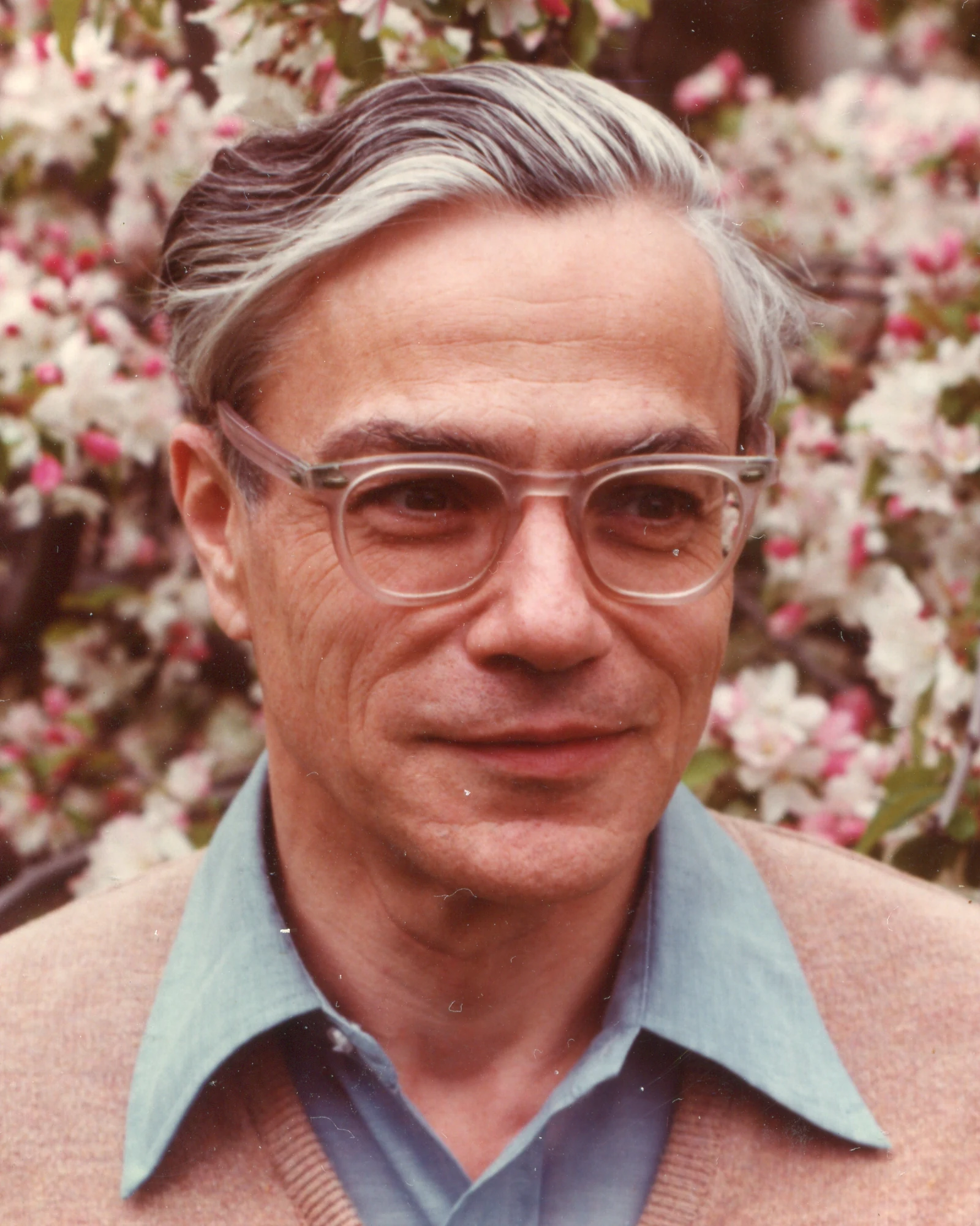
The first page of the 1958 Borel–Serre exposition records an exact division of labor. Le théorème de Riemann–Roch appeared under their names with a parenthetical subtitle attributing it to unpublished results of A. Grothendieck. The introduction says the text grew from a seminar held at Princeton in autumn 1957 and assigns the new results to Grothendieck.22Borel and Serre, “Le théorème de Riemann–Roch,” 97.
This page prevents two opposite distortions. The published paper did not bear Grothendieck’s name as author, so it should not be cited as though he wrote its exposition. Yet Borel and Serre did not leave the origin of the result ambiguous. Their acknowledgment is not a later correction; it is printed at the beginning. Authorship of a text and authorship of a theorem overlap here without being identical.
The paper was received on May 9, 1958. Grothendieck’s own appendix, La théorie des classes de Chern, follows it on pages 137–154 and was received on June 1. Those are publication-history dates. The work had been presented in Bonn in July 1957, outlined in a letter to Serre dated November 1, 1957, and studied in the Princeton seminar that autumn.33Jackson, “As If Summoned from the Void, I,” 1045–46; Grothendieck and Serre, Correspondance Grothendieck–Serre; Borel and Serre, “Le théorème de Riemann–Roch,” 136; Alexandre Grothendieck, “La théorie des classes de Chern,” Bulletin de la Société Mathématique de France 86 (1958): 154, https://doi.org/10.24033/bsmf.1501.
The theorem’s name carries a still longer chronology. Riemann and Roch worked in the nineteenth century on curves. Friedrich Hirzebruch made a major generalization in 1953 and published a monograph in 1956. Grothendieck did not replace an elementary old formula untouched for a century. He transformed a theorem that Hirzebruch had recently carried to higher-dimensional complex varieties through characteristic classes and topology.44Jackson, “As If Summoned from the Void, I,” 1045; Friedrich Hirzebruch, Neue topologische Methoden in der algebraischen Geometrie, Ergebnisse der Mathematik und ihrer Grenzgebiete, Neue Folge 9 (Springer, 1956).

From functions on a curve
On a compact Riemann surface, a divisor assigns integer orders to finitely many points. One asks for meromorphic functions whose poles are bounded by . These functions form a vector space , and its dimension is constrained by the degree of and the genus of the curve.55Borel and Serre, “Le théorème de Riemann–Roch”.
Riemann’s inequality and Roch’s correction lead to the formula where is a canonical divisor. In sheaf language, if , the formula becomes with
The reformulation already shifts attention. Rather than isolate the dimension of meromorphic functions, take an alternating sum of cohomology dimensions. Exact sequences make this Euler characteristic additive. Serre duality identifies the correction term with the dual cohomology of . The classical formula becomes part of a cohomological system.
For a point, vector bundles have ranks. For a curve, line bundles have degrees. In higher dimensions, no single degree can capture the interaction of a bundle with the geometry of the variety. Chern classes and the Todd class supply a hierarchy of characteristic data. Integrating the appropriate top-degree component produces an Euler characteristic.
The problem required the correct invariant language in which dimension, curvature-like characteristic classes, intersections, and cohomology belonged to one statement, rather than additional variables in the curve formula.
Reading the curve formula through sheaves
The classical divisor notation can be translated into exact sequences. If an effective divisor is added to a line bundle, there is a sequence comparing , , and a sheaf supported on . Euler-characteristic additivity records the degree contributed by those points.66Serre, “Faisceaux algébriques cohérents”.
This gives an inductive route to Riemann–Roch on a curve. Begin with a base case and add one point at a time. Each point changes degree by one and, through the exact sequence, changes Euler characteristic predictably. Duality supplies the correction controlling . The numerical formula reflects the exact category of sheaves even before is named.
On the projective line the calculation is explicit. For , and higher cohomology behaves by duality. The Euler characteristic is for every integer after the positive and negative cases are combined. Degree and Euler characteristic are linear, making the simplest testing ground for the higher-dimensional formula.77Borel and Serre, “Le théorème de Riemann–Roch,” secs. 7–9.
In higher dimensions, twisting by again produces a polynomial Euler characteristic, now of degree equal to the dimension of the variety. Its leading coefficients encode intersection numbers. Characteristic classes package all coefficients uniformly. Riemann–Roch becomes a theorem explaining the entire polynomial rather than one count.
The sheaf viewpoint also removes the need to start with a divisor. Any coherent sheaf has an Euler characteristic. Ideal sheaves encode subvarieties; quotient sheaves encode their structure; vector bundles encode families of coefficients. A theorem stated for coherent sheaves can recover divisor formulas and extend beyond locally free objects.
This is the route from Roch’s correction term to Grothendieck’s K-group. Exact sequences have been present all along, but the group makes their additivity universal. Instead of proving separately that each numerical invariant is additive, one sends the sheaf first to a universal additive class and defines invariants on that group.
The movement is a lesson in what “recast” means. The original theorem is not discarded. Its divisor, dimension, and genus survive as images of richer objects. The recasting explains why the old terms appear and predicts which replacements should exist in higher dimensions.
Hirzebruch’s advance
Hirzebruch’s Riemann–Roch theorem treated a holomorphic vector bundle on a nonsingular complex projective variety . In modern notation it states The Chern character packages the Chern classes of in a form additive under direct sum and multiplicative under tensor product. The Todd class supplies the correction contributed by the tangent bundle.88Hirzebruch, Neue topologische Methoden in der algebraischen Geometrie; Borel and Serre, “Le théorème de Riemann–Roch,” sec. 7.
The formula was a tour de force linking complex geometry, topology, and algebra. It generalized the curve theorem and included substantial characteristic-class machinery. Its very power made a further reformulation nonobvious. One could reasonably see it as a theorem about the invariants of a variety and a bundle on it.
Grothendieck asked the theorem to behave under a map. Rather than collapsing a variety to a point to obtain an Euler characteristic, a proper morphism carries higher direct images of a sheaf or bundle on to . Cycle classes can also be pushed forward.99Borel and Serre, “Le théorème de Riemann–Roch,” 113; Jackson, “As If Summoned from the Void, I,” 1045–46.
Nicholas Katz later summarized the conceptual reversal by saying that Grothendieck treated Riemann–Roch as a theorem about morphisms rather than varieties. The formulation is retrospective testimony, not a verbatim sentence recovered from the 1957 talk. Its mathematical content can be checked directly in the 1958 statement: the main variable is a proper map .1010Jackson, “As If Summoned from the Void, I,” 1045; Borel and Serre, “Le théorème de Riemann–Roch,” 113.
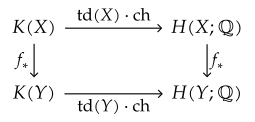
When is a point, the pushforward of a sheaf is its alternating cohomology and the general theorem reduces to Hirzebruch’s formula. The absolute theorem becomes one component of a relative compatibility.
Bonn, a letter, a seminar
The first Arbeitstagung took place in Bonn in July 1957 under Hirzebruch’s leadership. Later reconstruction places Grothendieck there speaking about his Riemann–Roch work. No program page has been inspected for this account, so the event is stated through the sourced reconstruction rather than expanded into a lecture scene.1111Jackson, “As If Summoned from the Void, I,” 1045–46.
On November 1, 1957, Grothendieck sent Serre a letter containing an outline of the proof. Serre was then visiting the Institute for Advanced Study. He and Borel organized a Princeton seminar to understand the argument. Their printed introduction dates that seminar to autumn 1957. These records show a proof crossing forms: oral presentation, letter, collaborative seminar, article.1212Jackson, “As If Summoned from the Void, I,” 1046; Grothendieck and Serre, Correspondance Grothendieck–Serre; Borel and Serre, “Le théorème de Riemann–Roch,” 97.
The collective passage mattered because Grothendieck did not supply the final published exposition. Borel later speculated that busyness was not the only reason. Grothendieck’s proof used an ingenious device, whereas he preferred a succession of natural steps that exposed why a theorem was true. Borel thought this may have reduced his interest in writing it up. The account is a named later speculation, not an established private motive.1313Jackson, “As If Summoned from the Void, I,” 1046.
The speculation fits a documented mathematical contrast. Grothendieck’s 1958 Chern-class appendix says that a first algebraic proof used the detailed theory of -rings and gave finer characteristic-zero results, while a second method used blowups and worked in broader characteristic with rational coefficients. The proof history was not a single immaculate derivation. Different methods traded conceptual refinement, technical devices, and scope.1414Grothendieck, “La théorie des classes de Chern,” 149–50; Borel and Serre, “Le théorème de Riemann–Roch,” secs. 11–16.
The publication arrangement should therefore be read neither as neglect nor as a simple preference for collaboration. Borel and Serre turned seminar understanding into a forty-page article. Grothendieck contributed a separate Chern-class treatment. The resulting pair of papers displays a mathematical community dividing exposition while preserving attribution.
The group made from exact sequences
Riemann–Roch needs an additive object that can receive coherent sheaves. A vector bundle can be added by direct sum, but a coherent sheaf need not be locally free. Exact sequences express how sheaves are assembled. Grothendieck imposed those relations algebraically.
Start with formal symbols for coherent sheaves on . For every short exact sequence impose The resulting abelian group is a Grothendieck group, an early -type construction.1515Borel and Serre, “Le théorème de Riemann–Roch,” secs. 4–5.
On a nonsingular quasi-projective variety, coherent sheaves admit finite resolutions by locally free sheaves under the hypotheses used in the paper. Therefore the coherent-sheaf group can be identified with the group built from vector bundles: for a finite locally free resolution . Independence from the chosen resolution follows from exact-sequence relations.1616Borel and Serre, “Le théorème de Riemann–Roch,” sec. 4.
Tensor product gives multiplication on vector-bundle classes. For coherent sheaves, ordinary tensor product is not exact, so a correct product uses alternating Tor classes or resolves one factor by locally free sheaves. The resulting ring records both additive and multiplicative geometry.
Group completion forgets information. Two nonisomorphic bundles can have the same class. A short exact sequence and a split direct sum become the same equation even when the extension is nontrivial. This forgetting is deliberate. Riemann–Roch sees an additive shadow of the category, and is designed to retain exactly that shadow.
The construction also makes Euler characteristics linear. A long exact cohomology sequence shows Thus factors through the K-group. Grothendieck’s move was to keep the K-class before collapsing it to an integer, so the theorem could operate over a nontrivial target variety.
Later topological and algebraic K-theory grew from this starting point. Atiyah and Hirzebruch developed topological K-theory; higher algebraic K-groups came later through different constructions. Those fields are consequences, not content silently present in the 1957 proof. Here the group’s purpose is exact-sequence bookkeeping for Riemann–Roch.
Two K-groups that coincide under hypotheses
The 1958 exposition distinguishes a group made from locally free sheaves—vector bundles—from a group made from all coherent sheaves. There is an evident map from bundle classes to coherent-sheaf classes.1717Borel and Serre, “Le théorème de Riemann–Roch,” secs. 4–5.
On a nonsingular quasi-projective variety, every coherent sheaf has a finite locally free resolution. This makes the map surjective. If is such a resolution, send back to the alternating sum of the . Comparison of resolutions shows the resulting class is well defined and gives an inverse.
Smoothness enters here through finite homological dimension of regular local rings. At a singular point, a coherent sheaf can require an infinite locally free resolution. Thus the nonsingularity assumption supports the K-theoretic identification used in 1958.1818Borel and Serre, “Le théorème de Riemann–Roch,” sec. 4.
Quasi-projectivity supplies enough global locally free sheaves and projective embeddings for the resolution arguments used. Later theories weakened or changed hypotheses, but the historical proof should be read with its actual environment.
The two groups support different functorialities naturally. Vector bundles pull back along arbitrary morphisms. Coherent sheaves push forward through higher direct images along proper morphisms. Identifying the groups on smooth varieties lets one place contravariant multiplication and covariant proper pushforward on one object.
This meeting is essential to Riemann–Roch. The Chern character is easiest to define on vector bundles because exterior powers and Chern classes are available. Proper pushforward is easiest to define on coherent sheaves because is coherent. The resolution theorem lets the characteristic transformation and the pushforward inhabit the same K-group.
In modern language, this is one reason K-theory is naturally both multiplicative and connected to derived categories. The 1958 construction obtains what it needs through exact sequences and resolutions. It should not be described as already containing the later homotopy-theoretic definitions of the K-theory spectrum.
The notational simplicity conceals this bridge. A reader should ask which exact category supplies the generators, which resolution theorem identifies alternatives, and which hypotheses make operations well defined. Grothendieck chose a group in which the theorem’s different operations could meet; naming it was secondary.
Tensor product, Tor, and multiplication
For vector bundles and , tensor product is exact in each variable and defines The product distributes over exact-sequence addition. Together with the trivial line bundle as unit, the bundle K-group becomes a ring.1919Borel and Serre, “Le théorème de Riemann–Roch,” sec. 5.
For coherent sheaves, tensor product need not preserve a short exact sequence. If one tensors with , injectivity on the left can fail. The derived correction is Tor. A locally free resolution of one sheaf produces sheaves and the alternating class defines the product compatible with exact sequences.2020Borel and Serre, “Le théorème de Riemann–Roch,” sec. 5.
This is Tôhoku’s language reappearing inside K-theory. The failure of exact tensor product becomes a graded family; the alternating sum becomes multiplication in the decategorified group. Derived information is not discarded before being used. It is combined in the particular way needed for additivity.
When one factor is locally free, higher Tor vanishes, and the product reduces to ordinary tensor product. Flatness is the condition that kills the correction. The formula therefore extends the familiar operation rather than replacing it.
Intersections of subvarieties provide a geometric interpretation. Tensoring their structure sheaves reflects intersection; higher Tor sheaves record excess or nontransverse intersection. For transverse smooth intersections, the higher corrections simplify. In general, the alternating Tor class carries the right K-theoretic intersection multiplicity.
The relation anticipates the Chern-character side. Multiplication in K-theory should map to intersection product in the Chow ring. The Chern character is constructed to be a ring homomorphism after rational coefficients. The theorem can then compare multiplicative as well as additive data.
Grothendieck’s early tensor-product expertise has a mathematical echo here, but one should not claim a documented psychological transfer. Topological tensor products and sheaf tensor products are different constructions. What persists in the written mathematics is attention to exactness, comparison maps, and the conditions under which derived correction terms vanish.
The class of one point on a curve
Let be a smooth projective curve and a closed point of degree one. Its ideal sheaf is the line bundle , and there is a short exact sequence The quotient is a coherent sheaf supported at the point.2121Borel and Serre, “Le théorème de Riemann–Roch,” secs. 4–7.
In the Grothendieck group, The sheaf at a point is not a vector bundle on the curve, but the exact sequence expresses its class as a difference of line-bundle classes. This is the finite-resolution bridge between coherent sheaves and vector bundles in its smallest geometric form.
Apply the Chern character. On a curve, because terms of codimension greater than one vanish. Therefore The K-class of a sheaf supported at one point becomes the cycle class of that point.
Push the curve to a point. The cohomology of is concentrated in degree zero and has dimension one, so its Euler characteristic is one. On the cycle side, the Todd class has constant term one; multiplying by the point class leaves the point class, whose degree is one. Riemann–Roch reads .
The calculation demonstrates several parts of the general theorem. Exact-sequence additivity admits a non-locally-free sheaf into . The Chern character turns its virtual resolution into a cycle. Proper pushforward takes both Euler characteristic and cycle degree to the same integer.
It also supplies a boundary. On a higher-dimensional variety, the Chern character of a structure sheaf supported on a subvariety can contain several codimension terms and normal-bundle corrections. If the embedding is singular, a short two-term line-bundle resolution need not exist. The one-point curve case does not model every immersion.
Dévissage extends the pattern. A zero-dimensional coherent sheaf has a filtration whose successive quotients are residue-field sheaves at points. Additivity reduces its K-class and Euler characteristic to lengths and degrees. Higher-dimensional support requires longer filtrations and more geometry.2222Borel and Serre, “Le théorème de Riemann–Roch,” secs. 4–5; Grothendieck, “La théorie des classes de Chern,” 137–54.
Historically, this calculation shows why coherent sheaves enlarged a theory stated only for bundles. A point, divisor, or singular subvariety has a structure sheaf that can enter exact sequences. The K-group records it without requiring the object itself to be locally free.
For the biography, the example shows what Grothendieck’s recasting retained from the classical curve theorem. Divisors and points became coherent sheaves and cycle classes linked by exactness. The larger language explains the old calculation and allows the same operations to persist under proper maps.2323Serre, “Faisceaux algébriques cohérents,” 197–278; Borel and Serre, “Le théorème de Riemann–Roch,” secs. 4–7.
Pull back, push forward
For a morphism , a vector bundle on pulls back to on . Pullback respects direct sum and tensor product, so it induces a ring homomorphism Direction reverses: K-theory is contravariant for pullback.2424Borel and Serre, “Le théorème de Riemann–Roch,” sec. 5.
Pushforward requires more. If is proper and coherent on , the higher direct images are coherent under the paper’s hypotheses and vanish above a finite range. Define This is covariant for proper maps.2525Borel and Serre, “Le théorème de Riemann–Roch,” sec. 3 and 5.
The exclamation mark distinguishes the alternating derived pushforward from ordinary . If higher direct images vanish, the two agree at the level of classes. In general the correction terms are the theorem, not an inconvenience.
For proper maps , the composite-functor spectral sequence shows after taking alternating classes. Differentials and filtrations cancel in . The Tôhoku machinery makes pushforward composable.
The projection formula relates multiplication and pushforward: under the appropriate conditions. It says that a class pulled from the base can be moved outside the pushforward. This compatibility is one of the algebraic joints in the Riemann–Roch diagram.
Cycle or Chow groups carry their own proper pushforward and flat or suitably defined pullback. The theorem compares operations in two different functorial theories. It requires a transformation from K-theory to cycles that respects enough of their structures.
Cycles, rational equivalence, and the Chow ring
An algebraic cycle on a variety is a formal integer combination of irreducible subvarieties. Cycles are factored by rational equivalence, where a family over the projective line identifies two fibers.2626Borel and Serre, “Le théorème de Riemann–Roch,” sec. 6; Grothendieck, “La théorie des classes de Chern”.
The resulting groups , now usually written , form the Chow groups. On a nonsingular variety, intersection gives the structure of a graded ring. Proper morphisms push cycles forward, accounting for degrees of field extensions on images. Suitable pullbacks and intersection products supply contravariant operations.2727Borel and Serre, “Le théorème de Riemann–Roch,” sec. 6; Grothendieck, “La théorie des classes de Chern,” 137–54.
Rational equivalence is finer than homological equivalence. Two cycles can determine the same cohomology class and remain distinct in the Chow group. By stating Riemann–Roch in the Chow ring with rational coefficients, Grothendieck obtained an algebraic theorem meaningful over fields where ordinary complex cohomology is unavailable.
This target is one reason the arbitrary-characteristic statement was possible. Chern classes can be built algebraically in Chow groups. Proper pushforward of cycles is algebraic. No embedding into the complex numbers is required. The theorem changes the receiving cohomology-like theory as it extends Hirzebruch’s formula.
The Chern character and Todd series involve factorials and Bernoulli-number denominators. Passing to allows the power-series identities and discards torsion information.2828Borel and Serre, “Le théorème de Riemann–Roch,” secs. 6–7, especially p. 113.
Grothendieck had finer integral formulas in characteristic zero through -ring methods, according to the 1958 texts, but the general published theorem uses rational coefficients. A later reader accustomed to rational Chow rings may miss that this was a scope decision: broader characteristic at the price of torsion information.
The Chow ring differs from a general cohomology theory. It records algebraic cycles directly, can be large, and depends on rational equivalence.
The theorem thus compares two universal additivizations. K-theory makes exact sequences additive. Chow theory makes rationally moving cycles equivalent. The Chern character translates between them, corrected by tangent geometry under pushforward.
Chern classes as a translation
A vector bundle has Chern classes in the Chow ring or in cohomology, depending on the setting. The total Chern class is multiplicative in short exact sequences of vector bundles: 2929Grothendieck, “La théorie des classes de Chern,” 137–45.
This multiplicativity does not directly match addition in . The Chern character is designed to do so. Formally write the total Chern class in terms of Chern roots ; then It satisfies Because exponential series introduce denominators, the target is usually tensored with .3030Borel and Serre, “Le théorème de Riemann–Roch,” sec. 6.
The Todd class is the multiplicative characteristic class associated with the power series For a bundle with formal roots , In Riemann–Roch, is the tangent bundle of the variety.
These formulas use formal roots as a calculation device. A bundle need not literally split globally into line bundles. The splitting principle says that after passing to a suitable auxiliary space, characteristic-class identities can be checked as though it did. A valid identity then descends.
Grothendieck’s appendix developed an axiomatic algebraic theory of Chern classes in the Chow ring for nonsingular quasi-projective varieties. It credited Hirzebruch’s formal properties and an idea of Shiing-Shen Chern, while seeking to avoid reliance on the Grassmannian in the presentation. The acknowledgment again places novelty within inheritance.3131Grothendieck, “La théorie des classes de Chern,” 137–38 and 149–50.
The appendix also emphasized -operations arising from exterior powers: These operations enrich K-theory and allow universal polynomial identities among characteristic classes. Grothendieck wrote that -rings had supplied the key to the first algebraic proof of Riemann–Roch in characteristic zero.
Exterior powers and the -ring
For a vector bundle of rank , the exterior powers assemble into the polynomial If is exact, then This multiplicative response to additive K-theory relations extends to virtual bundle classes.3232Grothendieck, “La théorie des classes de Chern,” 147–50.
A -ring is a commutative ring equipped with operations satisfying identities modelled on exterior powers. The identities governing exterior powers of sums and tensor products are universal polynomial identities. Once abstracted, they can be manipulated without splitting every bundle.
Symmetric powers and Adams operations can be derived from the -structure. Chern classes can be expressed through related universal operations after passing to a filtered or graded target. The formalism gives precise control over how characteristic classes behave on virtual differences , objects that have no literal underlying bundle.
This last point is central. contains negative classes. A formula defined only for actual bundles cannot automatically act on the group. Additivity or -ring identities provide the extension. The Chern character sends a virtual class to the difference of Chern characters; the Todd class turns virtual sums into products.
Grothendieck’s Chern appendix says that detailed study of -rings and examples such as representation rings furnished the key to his first algebraic Riemann–Roch proof. It also calls the formalism highly manageable and recommends its use. This is direct evidence of his methodological preference in 1958: encode geometric constructions as operations in a universal algebraic structure.
The appendix is careful about predecessors. Hirzebruch had isolated the formal properties of Chern classes. Chern had supplied an idea using the projective bundle . Chow had developed an unpublished satisfactory theory using Grassmannians. Grothendieck’s stated aim was to provide an axiomatic construction avoiding the Grassmannian in the exposition.
Avoiding an auxiliary object did not mean rejecting it as wrong. It meant reducing dependence on a heavy classifying construction and exposing axioms sufficient for the result. This aligns with the later recollection that he wanted proofs to proceed through small natural steps, though the primary appendix is stronger evidence than the recollection.
The -ring proof and the blowup proof demonstrate two kinds of generality. The first has refined formal structure and stronger characteristic-zero conclusions. The second reaches arbitrary characteristic rationally through geometric reduction. No single notion of “more general” orders them in every respect.
Constructing Chern classes from a projective bundle
Let be a rank- vector bundle on . The associated projective bundle carries a tautological line bundle, with quotient/subspace convention stated separately.3333Grothendieck, “La théorie des classes de Chern,” 137–45.
The projective-bundle formula says that is a free -module with basis , subject to one degree- relation. The coefficients of that relation define the Chern classes , with signs determined by convention.
This construction is effective because line bundles have a simple first Chern class, while every bundle becomes linked to a line bundle on its projectivization. The relation records how the tautological line sits inside or receives a quotient from the pulled-back bundle.
Naturality follows from base change: pulling back pulls its projective bundle and tautological line bundle back. The defining relation pulls back, so . The Whitney sum formula for an exact sequence of bundles requires further argument but becomes one of the axioms or theorems governing the construction.
The splitting principle then allows universal identities to be checked after passing to a space where the bundle has a filtration with line-bundle quotients. Formal Chern roots stand for their first Chern classes. Symmetric polynomials in the roots descend because they can be expressed in the elementary symmetric Chern classes.
The roots are bookkeeping devices, not globally existing classes on in general. The formula must ultimately be rewritten as a universal rational polynomial in the .
The projective-bundle construction exemplifies Grothendieck’s layered method. Human problem: translate bundles into cycles. Faithful intuition: over a space where the bundle splits, use line bundles. Precise window: define classes through the tautological relation and prove independence and naturality. The analogy stops before pretending a nonsplit bundle literally has global eigenlines.
The formula
Let be a proper morphism between nonsingular quasi-projective varieties. For , the Grothendieck–Riemann–Roch formula is 3434Borel and Serre, “Le théorème de Riemann–Roch,” sec. 7, p. 113.
Borel and Serre use the opposite letters for source and target. The mathematical content is a commutative square after the Todd correction: move a K-class through proper pushforward and then apply the characteristic transformation, or transform first and push the cycle class.3535Borel and Serre, “Le théorème de Riemann–Roch,” 113.
The Todd factor is necessary because the Chern character alone does not commute with pushforward. The tangent geometry of source and target contributes a correction. One can rewrite the formula using the relative tangent class when that language is available, but the 1958 statement displays the two absolute Todd classes.
When is a point, is the alternating sum of cohomology vector spaces. Its Chern character is the integer Euler characteristic. Pushing a cycle class to a point takes its top-degree component. The formula becomes Hirzebruch–Riemann–Roch.
When is a curve and is a line bundle, the characteristic-class expansion reduces to the classical degree-plus-genus formula. The succession changes the theorem’s natural subject at each stage; the progression concerns more than dimension.
The 1958 article states the rational formula over an algebraically closed field of arbitrary characteristic under its hypotheses. It notes finer formulas without torsion in characteristic zero that Grothendieck could then prove by another method. Later versions expanded scope further. The rational qualification and smoothness assumptions belong to the historical theorem and must not be silently removed.
Reading the equation one operation at a time
The left side begins with , applies the Chern character and Todd class on , and pushes the resulting rational cycle class to .3636Borel and Serre, “Le théorème de Riemann–Roch,” sec. 7.
The right side first pushes through coherent-sheaf cohomology: Apply the Chern character on , then multiply by . The theorem says the two procedures give the same class.
Each operation has a different origin. belongs to derived sheaf theory. on cycles belongs to intersection theory. belongs to characteristic classes and K-theory. supplies the correction. The equation is powerful because no one operation dominates the others.
For the identity map , the formula is tautological. For a composite, functoriality follows from the composition of both pushforwards and the theorem at each stage. For the structure map , it becomes an index formula. For a closed immersion, it relates the ambient and intrinsic tangent data through the normal bundle.
Suppose is a smooth closed immersion with normal bundle . The tangent classes satisfy, in K-theory, Multiplicativity of the Todd class rewrites the correction in terms of . The immersion formula therefore concentrates on how interacts with the characteristic class of the normal bundle.
For a smooth projection , the relative tangent bundle comes from projective space. The calculation reduces to the known Euler characteristics and characteristic classes of on . These are the two generators of the proof: embedding and projection.
The equation can also be presented as a natural transformation between covariant functors on a category of smooth varieties and proper maps, after incorporating the Todd class. This modern packaging captures Grothendieck’s conceptual move. One must still respect that the 1958 article writes the formula concretely in K-groups and Chow/cohomology rings rather than in every later categorical refinement.
The theorem’s correction term is a reminder that naturality can require changing the proposed map. The bare Chern character is natural for pullback but not for proper pushforward. Multiply by Todd classes, and a pushforward-compatible transformation emerges. The right natural statement is not always the simplest uncorrected one.
Why the Todd class has this shape
Characteristic classes built from a power series form a multiplicative sequence. If a bundle is treated formally as a sum of line bundles with first Chern classes , choose a series with constant term one and set Symmetry ensures the result can be rewritten in the actual Chern classes of .
For the Todd class, The coefficients are rational and involve Bernoulli numbers. The series is not selected because it looks elegant. It is the one making holomorphic or algebraic Euler characteristic agree with characteristic-class integration.
The curve case shows the constraint. Let be a smooth projective curve and a line bundle. Since the dimension is one, only codimension-zero and codimension-one terms contribute. and the Todd class is The top-degree part of their product is 3737Borel and Serre, “Le théorème de Riemann–Roch,” sec. 7.
Integration over the curve sends to the degree of . The tangent bundle has degree . Therefore the integral is the classical Riemann–Roch Euler characteristic. The coefficient one-half is already forced by the genus term.
For a surface, the next coefficient enters. The Todd class begins The Euler characteristic now depends on intersection numbers of divisor classes and on both tangent Chern classes. Higher dimensions force further universal coefficients.3838Hirzebruch, Neue topologische Methoden in der algebraischen Geometrie.
Projective spaces provide enough tests to determine the sequence. Their tangent bundles are controlled by the Euler sequence, and the Euler characteristics of line-bundle twists are known. Requiring the characteristic integral to reproduce those polynomials fixes the relevant power series.
The Todd class also behaves correctly with exact sequences of bundles. If a tangent class splits in K-theory into base and relative parts, the Todd class multiplies. For a smooth map, this allows an absolute formula involving source and target tangent bundles to be rewritten through a relative tangent bundle.
For a closed immersion, the normal-bundle exact sequence gives in K-theory. Multiplicativity yields a quotient by the Todd class of the normal bundle. The same characteristic series therefore governs projection and embedding cases.
This dual role explains why the correction is geometrically natural. It is compatible with addition of tangent data and calibrated by projective-space indices. Another arbitrary multiplicative class would fail one of those tests.
The series also explains rational coefficients. Even when Chern classes are integral cycles, one-half, one-twelfth, and later denominators appear. The final Euler characteristic is an integer after integration, but the intermediate class lives naturally over the rationals.
This integrality has mathematical content. A rational polynomial in Chern classes has an integral degree because it equals an alternating dimension. Riemann–Roch turns cohomological integrality into a consequence of geometry, while later work investigates which stronger integral statements survive.
The Todd class should therefore not be described as a tax paid for changing languages. It records the tangent contribution that the K-theory pushforward and cycle pushforward encode differently. The corrected Chern character is the true pushforward-compatible transformation.
Grothendieck’s formulation makes this visible at the level of maps. Hirzebruch’s formula had already displayed the class for a map to a point. The relative theorem shows that the same power series is coherent under every proper morphism in the historical setting.
An algebraic theorem in positive characteristic
Hirzebruch’s theorem used complex varieties and topological characteristic classes. Grothendieck’s rational formula was stated for nonsingular quasi-projective varieties over an algebraically closed field of arbitrary characteristic.3939Borel and Serre, “Le théorème de Riemann–Roch,” 97.
The Chow ring replaces topological cohomology as the receiving theory. Algebraic cycles, rational equivalence, projective bundles, and proper pushforward all make sense over the base field. Chern classes are constructed algebraically. Coherent-sheaf cohomology is defined through sheaves in the Zariski topology and homological algebra.
The theorem therefore demonstrates a program before the Weil conjectures are solved: important characteristic-class identities can be detached from complex topology and rebuilt algebraically. It does not yet supply the cohomology theory required for Weil’s zeta functions. Chow groups are too different from the desired finite-dimensional Weil cohomology. The achievement and the gap coexist.
Characteristic also tests proofs. Arguments using differential forms, division by integers, or analytic deformation may fail. Passing to rational Chow groups permits denominators not divisible in the coefficient field because the coefficients belong to , but geometric constructions must remain algebraic.
The Borel–Serre introduction emphasizes arbitrary characteristic and identifies Hirzebruch’s complex theorem as a special case. The order matters. Grothendieck found a statement whose natural domain exceeded the complex case, rather than proving only the complex result by algebraic means.
This scope helps explain the theorem’s place on the road to schemes. Varieties over fields were already central, but a fully relative geometry would allow bases more general than fields and would handle arithmetic families. Riemann–Roch for a proper morphism makes the base visible. Extending the theorem presses toward a language in which base change is fundamental.
The 1958 assumptions retain smoothness and quasi-projectivity. Singularities and nonprojective behavior were not wished away by algebraic formulation. Later work introduced new K-theories, operational Chow groups, and derived corrections. The historical result is both broader than Hirzebruch in characteristic and narrower than its descendants in geometric scope.
The distinction between algebraic and topological proof also prevents a false hierarchy. An algebraic proof is not automatically more conceptual; the blowup device may be technically intricate. A topological proof is not automatically less general in every direction; topology can retain integral information lost after rationalization. The methods reveal different structures.
Grothendieck’s appendix acknowledges this plurality. Its axiomatic Chern theory works in several contexts, including topology, while its primary application is algebraic. The same formal identities travel because they have been separated from one construction, not because the contexts have become identical.
What the alternating sum forgets
The pushforward retains only It forgets the individual higher direct images as separate graded objects. Two very different cohomological patterns can have the same alternating K-class. Riemann–Roch is correspondingly powerful and coarse.4040Borel and Serre, “Le théorème de Riemann–Roch,” sec. 5.
This coarseness is what makes the formula possible at its level. Spectral-sequence differentials may rearrange groups, but Euler characteristics and K-classes remain stable. Complicated filtrations cancel. The theorem extracts the invariant insensitive to those changes.
A derived category would retain the complex rather than only its alternating class. Verdier’s derived-category framework came later. Higher K-theory would retain additional homotopical information beyond . Those later refinements answer questions the 1958 formula does not ask.
The loss should not be treated as a defect. A useful invariant is defined partly by what it forgets. Degree forgets the location of points in a divisor and keeps their total multiplicity. Euler characteristic forgets separate Betti numbers and keeps an alternating sum. forgets extension classes and keeps exact-sequence additivity.
Grothendieck’s skill lay in matching the forgetfulness to the theorem. The Chern character can translate an additive K-class into cycles; proper pushforward can be compared after higher cohomology has been alternated. Trying to preserve every extension and differential in the same 1958 equation would require a different target and a different theorem.
This calibrated forgetting also explains why the statement feels inevitable once formulated. Both sides have been reduced to the level where composition and exactness are stable. The proof remains difficult because showing the two reductions agree requires geometry.
How the proof moves
Any proper morphism of quasi-projective varieties can be factored as a closed immersion into a product with projective space followed by a projection: Because both K-theoretic and cycle pushforwards compose, it is enough to prove Riemann–Roch for these two kinds of map.4141Borel and Serre, “Le théorème de Riemann–Roch,” sec. 2 and 7; Borel and Serre, “Le théorème de Riemann–Roch,” secs. 7–16, especially the projection/immersion reduction at pp. 113–14.
The projection case can be reduced to calculations for projective space. Coherent sheaves admit finite resolutions by sums of twists , and the cohomology of those twists is known. Exactness and K-theory extend the result from generators.
The closed-immersion case is harder. The normal bundle measures how sits inside the ambient variety. The formula involves characteristic classes of that normal bundle. Borel and Serre’s account proves special cases, then uses the blowup of the ambient variety along the subvariety to reduce the general immersion to a divisor-like situation and projective-bundle calculations.
A blowup replaces the subvariety by an exceptional divisor recording normal directions. It is a geometric transformation rather than formal category theory. This is where Borel’s characterization of the proof as relying on an ingenious device finds a mathematical referent. The proof makes a difficult immersion more manageable by altering the ambient geometry.
The result displays the partnership of language and device. Functoriality reduces a general proper map to generators. Homological algebra makes pushforward compose. Characteristic classes organize corrections. Projective-space calculations handle projections. Blowups handle embeddings. No single layer proves the theorem alone.
The proof also explains why Grothendieck could admire a theorem and remain dissatisfied with a proof. A reduction through blowup may be correct and powerful without making every step feel inevitable from the final statement. His later work returned to intersection theory and Riemann–Roch with more elaborate machinery. The 1958 proof was an achievement and, for him, not necessarily the final conceptual home.
The projection case in more detail
For the projection , the relevant K-group is generated over by twists of the tautological line bundle. Projective resolutions reduce coherent sheaves to these generators.4242Borel and Serre, “Le théorème de Riemann–Roch,” sec. 9.
The cohomology of on is explicitly known. For sufficiently positive , only degree zero remains; for negative twists, higher degrees appear according to duality. Their alternating dimensions form a polynomial in .
On the characteristic-class side, the Euler sequence computes the tangent bundle of projective space in K-theory. Its Chern and Todd classes can be expressed through the hyperplane class. Pushing to extracts the coefficient of the top power along the projective-space fiber.
Because both sides are additive in K-theory, verify the formula on the generating twists. The general projection case follows. This is dévissage and generation operating together: a large category of coherent sheaves is reduced to a finite algebraic pattern.
The calculation is a generating case because every quasi-projective proper map factors through a projective-space bundle. Projective space serves as the universal finite coordinate environment in which equations and sheaves can be resolved.
The role of explicit computation should be emphasized. Grothendieck’s reputation for abstraction can make it seem that the theorem emerged from diagrams alone. The projection proof depends on concrete cohomology of projective space and universal power-series identities. Formalism determines where the computation goes; it does not remove the need to do it.
The calculation also displays why rational coefficients appear. Expanding the Todd series and Chern character introduces denominators. Integrating the resulting polynomial yields an integer Euler characteristic only after nontrivial cancellation. Riemann–Roch is partly the theorem that a rational characteristic expression has the exact integral shadow predicted by cohomology.
For a reader trained on the curve formula, projective space provides continuity. gives . Higher replaces the linear polynomial by a binomial polynomial. The Todd class is the uniform mechanism producing these coefficients.
The Euler sequence on projective space
Projective space has a concrete tangent-bundle resolution. In a standard convention, the Euler sequence is It expresses tangent directions through copies of the hyperplane line bundle, with one trivial direction removed.4343Borel and Serre, “Le théorème de Riemann–Roch,” secs. 9–10.
In , exactness gives The total Chern class is therefore after truncation above degree , where .
The same K-class determines the Todd class multiplicatively. If , then formally with the trivial summand contributing one. Integration extracts the coefficient of , since the degree of the top power is one.
For the line bundle , Riemann–Roch to a point becomes the extraction of the coefficient of in The result is the Euler-characteristic polynomial interpreted polynomially for all integers .
This is a true example of the general formula, not a proof for every coherent sheaf. The projective-space K-group must first be generated by suitable twists, and exact resolutions then extend the calculation. The Borel–Serre proof performs that reduction in its projection case.4444Borel and Serre, “Le théorème de Riemann–Roch,” sec. 9.
The example also marks a boundary of the splitting language. The Euler sequence does not say the tangent bundle globally splits into line bundles. It gives an exact sequence and therefore an equality in , which is enough for multiplicative characteristic classes. Treating the formal summands as literal subbundles would be false.
Historically, this calculation links Hirzebruch’s characteristic series to Grothendieck’s exact-sequence language. The tangent correction can be calculated from a short exact sequence; the line-bundle twists generate the projection case; the result then enters a theorem about arbitrary proper morphisms under the 1958 hypotheses.
Biographically, projective space shows that Grothendieck’s recasting did not remove calculation. It placed a finite, explicit calculation at a generator of the functorial proof. The surrounding framework explains why that one calculation propagates.4545Grothendieck, “La théorie des classes de Chern,” 137–50; Borel and Serre, “Le théorème de Riemann–Roch,” sec. 9.
The immersion case and blowup
A closed immersion can be studied through its ideal sheaf. For a regular immersion, the conormal sheaf and Koszul resolution control the K-class.4646Borel and Serre, “Le théorème de Riemann–Roch,” secs. 10–12.
In K-theory, the alternating Koszul class is a -operation: after the appropriate pullback/pushforward interpretation. Its Chern character yields the normal-bundle correction in the immersion formula.
For a general smooth closed subvariety of higher codimension, Borel and Serre use the blowup of along . The exceptional divisor is the projectivized normal bundle.4747Borel and Serre, “Le théorème de Riemann–Roch,” secs. 13–16.
The blowup is an isomorphism away from ; all new geometry is concentrated over the center. This localization makes comparison possible. One tracks K-classes and cycles through a diagram involving the exceptional divisor, proves identities for simpler embeddings, and descends the result.
Calling this a trick need not belittle it. Blowup is a canonical and powerful geometric construction. Borel’s recollection concerns Grothendieck’s standard of explanation: a proof can use an ingenious reduction and still leave him wanting a theory in which the reduction is forced.
The immersion case also exposes the theorem’s sensitivity to singularities. A smooth embedding has a vector-bundle normal object and a finite Koszul resolution. A singular embedding may require a normal cone or derived correction. Later Riemann–Roch theories generalized the normal-bundle formula. The 1958 proof works within the nonsingular setting where these finite constructions are available.
The factorization proof therefore has a conceptual boundary. Every proper map is reduced to projection plus immersion, but each generator is tractable because smoothness, quasi-projectivity, and coherent finiteness hold. The theorem is general inside that world, not beyond every geometric pathology.
The proof’s architecture resembles a presentation by generators and relations. Proper maps are generated by projections and closed immersions under composition. K-theory is generated by manageable sheaves under exact sequences. Chow groups are generated by cycles under rational equivalence. Verify compatibilities on generators and show relations are respected.
This is a precise sense in which the statement preceded the proof. Once the theorem is framed as naturality under proper maps, factorization suggests what has to be checked. The proof problem becomes structural: choose generators for the category of maps.
Credit, exposition, and the proof device
The published record distributes names carefully. The theorem is now called Grothendieck–Riemann–Roch. Borel and Serre wrote the first full exposition of the new result. Hirzebruch’s name remains attached to the predecessor theorem. Chern, Chow, Cartan, Eilenberg, and Serre appear in the machinery. Naming one theorem cannot carry the whole network.
Borel and Serre’s introduction is exemplary because it distinguishes editorial from mathematical contribution without devaluing either. Turning a letter and seminar into a reliable article required reconstruction, checking, and organization. Grothendieck’s appendix added a component under his own name. The two texts were printed consecutively so a reader could move from the theorem to its Chern-class foundation.
Borel’s later explanation of Grothendieck’s reluctance should remain explicitly speculative. There may have been many reasons: other projects, dislike of the proof’s device, confidence that colleagues could write it, or no single decisive motive. The archive establishes the choice and the attribution, not a private monologue.
The episode also warns against a modern assumption that authorship must map one-to-one onto discovery. Seminars and letters were active publication channels. A theorem could be known, presented, and taught before a journal article fixed it. The formal paper matters because it stabilizes the result; it does not monopolize its life.
Two consecutive papers
The Borel–Serre article ends on page 136; Grothendieck’s Chern-class appendix begins on page 137.4848Borel and Serre, “Le théorème de Riemann–Roch,” 97–136; Grothendieck, “La théorie des classes de Chern,” 137–54.
The appendix calls itself an appendix to Borel and Serre’s memoir. Its scope is not a full reproof of every section. It isolates an axiomatic theory of Chern classes and records the -ring route to the first algebraic proof. The division lets the main exposition concentrate on Riemann–Roch while the adjacent paper develops one foundational component.
The received dates—May 9 and June 1, 1958—show the order in which manuscripts entered the journal, not necessarily the order in which ideas were found. The Princeton seminar belonged to autumn 1957; the Chern and -ring work had developed in relation to the proof. Bibliographic sequence should not be mistaken for intellectual sequence.
The title pages also preserve a naming variation. The journal prints “Alexander Grothendieck,” while French contexts often use “Alexandre.” The biography uses the canonical book title “Alexander Grothendieck” and refers to him by surname, avoiding a false inference from the variation.
The pairing offers an image program grounded in documents rather than portraiture. Page 97 records attribution; page 137 records Grothendieck’s own voice and the term “appendix.” Reproducing either requires rights review, but their metadata can guide captions and notes without inventing a historical scene.
The journal object counters another myth: that Grothendieck cared only for vast unpublished programs. Here a major theorem reached print through colleagues, and he supplied a tightly related article. The form was distributed, but the result was public and citable.
It also shows Serre in two roles. He had transmitted problems and geometric knowledge to Grothendieck. He now joined Borel in transmitting Grothendieck’s proof to readers. The direction of explanation reversed without ending the collaboration.
Later developments
The K-group introduced here became a source for later topological and algebraic K-theory; the Atiyah–Singer index theorem later generalized the index pattern.4949Jackson, “As If Summoned from the Void, I,” 1045–46; Jackson, “As If Summoned from the Void, I,” 1045–46.
Gerard Washnitzer gave an independent proof in 1959. Later Grothendieck and collaborators developed far more general Riemann–Roch theories, including the work eventually published as SGA 6. Singular varieties required new formulations. Higher K-theory retained information forgets. None of these developments belongs inside the 1957 theorem as latent completed content.
The classical numerical formula became a compatibility between K-theory, Chow groups, Chern character, Todd class, derived pushforward, and proper maps. The categorical language reorganized an established subject around one equation.
The achievement of the statement
Borel later emphasized the advance contained in the statement itself. The 1958 formula chooses operations that compose and the correction that makes the diagram commute.5050Jackson, “As If Summoned from the Void, I,” 1045–46, reporting Borel’s retrospective assessment; Borel and Serre, “Le théorème de Riemann–Roch,” 113.
An incorrect generalization might have replaced a variety by a morphism while retaining only ordinary direct image. Higher cohomology would break composition. Another might have used the total Chern class, whose multiplicativity does not match K-theory’s addition. Another might have omitted the Todd factor and found pushforward incompatibility.
The right statement therefore embodies several discoveries before the proof begins. Coherent sheaves must be grouped by exact sequences. Pushforward must be derived and alternated. Chern classes must be repackaged as the additive Chern character. Tangent geometry must appear through the Todd class. Cycles must be pushed in a rational Chow ring.
This is not proof by notation. Each choice is constrained by examples. The structure morphism to a point demands Euler characteristic. Composition demands the Grothendieck spectral sequence. Direct sums demand additivity. Projective space fixes the characteristic series. Closed embeddings expose the normal-bundle correction.
Once these constraints converge, the formula can look inevitable. That appearance is a historical effect of successful formulation. Before the transformation, there was no reason every reader of Hirzebruch’s theorem should ask for this particular square.
Grothendieck’s contribution here was architectural in the strict sense. He redrew the blueprint so that the classical theorem occupied one boundary case instead of solving for an unknown inside an accepted blueprint. The proof certified the architecture; the statement made it visible.
Integration along a fiber
Proper pushforward of cycles is often described as integration along the fiber. The analogy connects algebraic pushforward with differential-geometric fiber integration while leaving their constructions distinct.5151Borel and Serre, “Le théorème de Riemann–Roch,” sec. 17.
In algebraic geometry there may be no literal analytic integral. A proper map sends an irreducible cycle to its image, weighted by the appropriate degree when dimensions match, and to zero when the dimension drops in the relevant grading. Chow pushforward is the algebraic operation playing the integrative role.
K-theoretic pushforward performs a parallel integration of sheaves through cohomology along the fibers. Higher direct images collect how sections vary over the base. Their alternating class is the index of the family. Riemann–Roch compares these two integrations.
The family language is important. For a map to a point, integration returns a number and K-pushforward returns an Euler characteristic. For a map to a positive-dimensional base, the answers vary and remain classes on that base. The relative theorem retains information that the numerical index would lose.
This perspective explains the need for properness. Analytic integration over a noncompact fiber may diverge or require support conditions. Algebraic cycle pushforward and coherent higher images likewise need a finiteness condition. Properness is the map-level hypothesis that makes the operation stable.
It also clarifies composition. Integrating along the fibers of one map and then the next should agree with integration along the composite. For cycles this is built into proper pushforward. For sheaves it follows only after higher cohomology is organized through a spectral sequence and alternated in K-theory.
The Todd class measures the mismatch between the two integrative languages. It is not an arbitrary correction added to save an equation. Its characteristic power series is forced by projective-space calculations and tangent data.
Later index theory would make the family interpretation even more explicit. In 1957–58, Grothendieck’s formulation already moved from one Euler characteristic to a transformation compatible with every proper map in its category.
The word integration remains an analogy with limits. Chow pushforward is algebraic, and is derived categorical. The analogy illuminates their shared variance and degree shift; it does not identify their constructions.
It also pointed directly toward algebraic geometry as Grothendieck’s principal field. To state the theorem at full strength, one needed varieties over arbitrary fields, coherent sheaves, proper morphisms, intersection theory, and characteristic classes. To generalize it further, one would need better foundations for families, singularities, and base change.
Homological algebra supplied the pushforward machinery, and functorial language supplied the statement. In August 1958, Grothendieck’s Edinburgh lecture placed the cohomology of abstract algebraic varieties on the public program.5252Alexander Grothendieck, “The Cohomology Theory of Abstract Algebraic Varieties,” Proceedings of the International Congress of Mathematicians, Edinburgh 1958 (Cambridge), 1960, 103–18, https://webusers.imj-prg.fr/~leila.schneps/grothendieckcircle/CohomologyVarieties.pdf.
Notes
- Borel and Serre, “Le théorème de Riemann–Roch,” 97. ↩
- Borel and Serre, “Le théorème de Riemann–Roch,” 97. ↩
- Jackson, “As If Summoned from the Void, I,” 1045–46; Grothendieck and Serre, Correspondance Grothendieck–Serre; Borel and Serre, “Le théorème de Riemann–Roch,” 136; Alexandre Grothendieck, “La théorie des classes de Chern,” Bulletin de la Société Mathématique de France 86 (1958): 154, https://doi.org/10.24033/bsmf.1501. ↩
- Jackson, “As If Summoned from the Void, I,” 1045; Friedrich Hirzebruch, Neue topologische Methoden in der algebraischen Geometrie, Ergebnisse der Mathematik und ihrer Grenzgebiete, Neue Folge 9 (Springer, 1956). ↩
- Borel and Serre, “Le théorème de Riemann–Roch”. ↩
- Serre, “Faisceaux algébriques cohérents”. ↩
- Borel and Serre, “Le théorème de Riemann–Roch,” secs. 7–9. ↩
- Hirzebruch, Neue topologische Methoden in der algebraischen Geometrie; Borel and Serre, “Le théorème de Riemann–Roch,” sec. 7. ↩
- Borel and Serre, “Le théorème de Riemann–Roch,” 113; Jackson, “As If Summoned from the Void, I,” 1045–46. ↩
- Jackson, “As If Summoned from the Void, I,” 1045; Borel and Serre, “Le théorème de Riemann–Roch,” 113. ↩
- Jackson, “As If Summoned from the Void, I,” 1045–46. ↩
- Jackson, “As If Summoned from the Void, I,” 1046; Grothendieck and Serre, Correspondance Grothendieck–Serre; Borel and Serre, “Le théorème de Riemann–Roch,” 97. ↩
- Jackson, “As If Summoned from the Void, I,” 1046. ↩
- Grothendieck, “La théorie des classes de Chern,” 149–50; Borel and Serre, “Le théorème de Riemann–Roch,” secs. 11–16. ↩
- Borel and Serre, “Le théorème de Riemann–Roch,” secs. 4–5. ↩
- Borel and Serre, “Le théorème de Riemann–Roch,” sec. 4. ↩
- Borel and Serre, “Le théorème de Riemann–Roch,” secs. 4–5. ↩
- Borel and Serre, “Le théorème de Riemann–Roch,” sec. 4. ↩
- Borel and Serre, “Le théorème de Riemann–Roch,” sec. 5. ↩
- Borel and Serre, “Le théorème de Riemann–Roch,” sec. 5. ↩
- Borel and Serre, “Le théorème de Riemann–Roch,” secs. 4–7. ↩
- Borel and Serre, “Le théorème de Riemann–Roch,” secs. 4–5; Grothendieck, “La théorie des classes de Chern,” 137–54. ↩
- Serre, “Faisceaux algébriques cohérents,” 197–278; Borel and Serre, “Le théorème de Riemann–Roch,” secs. 4–7. ↩
- Borel and Serre, “Le théorème de Riemann–Roch,” sec. 5. ↩
- Borel and Serre, “Le théorème de Riemann–Roch,” sec. 3 and 5. ↩
- Borel and Serre, “Le théorème de Riemann–Roch,” sec. 6; Grothendieck, “La théorie des classes de Chern”. ↩
- Borel and Serre, “Le théorème de Riemann–Roch,” sec. 6; Grothendieck, “La théorie des classes de Chern,” 137–54. ↩
- Borel and Serre, “Le théorème de Riemann–Roch,” secs. 6–7, especially p. 113. ↩
- Grothendieck, “La théorie des classes de Chern,” 137–45. ↩
- Borel and Serre, “Le théorème de Riemann–Roch,” sec. 6. ↩
- Grothendieck, “La théorie des classes de Chern,” 137–38 and 149–50. ↩
- Grothendieck, “La théorie des classes de Chern,” 147–50. ↩
- Grothendieck, “La théorie des classes de Chern,” 137–45. ↩
- Borel and Serre, “Le théorème de Riemann–Roch,” sec. 7, p. 113. ↩
- Borel and Serre, “Le théorème de Riemann–Roch,” 113. ↩
- Borel and Serre, “Le théorème de Riemann–Roch,” sec. 7. ↩
- Borel and Serre, “Le théorème de Riemann–Roch,” sec. 7. ↩
- Hirzebruch, Neue topologische Methoden in der algebraischen Geometrie. ↩
- Borel and Serre, “Le théorème de Riemann–Roch,” 97. ↩
- Borel and Serre, “Le théorème de Riemann–Roch,” sec. 5. ↩
- Borel and Serre, “Le théorème de Riemann–Roch,” sec. 2 and 7; Borel and Serre, “Le théorème de Riemann–Roch,” secs. 7–16, especially the projection/immersion reduction at pp. 113–14. ↩
- Borel and Serre, “Le théorème de Riemann–Roch,” sec. 9. ↩
- Borel and Serre, “Le théorème de Riemann–Roch,” secs. 9–10. ↩
- Borel and Serre, “Le théorème de Riemann–Roch,” sec. 9. ↩
- Grothendieck, “La théorie des classes de Chern,” 137–50; Borel and Serre, “Le théorème de Riemann–Roch,” sec. 9. ↩
- Borel and Serre, “Le théorème de Riemann–Roch,” secs. 10–12. ↩
- Borel and Serre, “Le théorème de Riemann–Roch,” secs. 13–16. ↩
- Borel and Serre, “Le théorème de Riemann–Roch,” 97–136; Grothendieck, “La théorie des classes de Chern,” 137–54. ↩
- Jackson, “As If Summoned from the Void, I,” 1045–46; Jackson, “As If Summoned from the Void, I,” 1045–46. ↩
- Jackson, “As If Summoned from the Void, I,” 1045–46, reporting Borel’s retrospective assessment; Borel and Serre, “Le théorème de Riemann–Roch,” 113. ↩
- Borel and Serre, “Le théorème de Riemann–Roch,” sec. 17. ↩
- Alexander Grothendieck, “The Cohomology Theory of Abstract Algebraic Varieties,” Proceedings of the International Congress of Mathematicians, Edinburgh 1958 (Cambridge), 1960, 103–18, https://webusers.imj-prg.fr/~leila.schneps/grothendieckcircle/CohomologyVarieties.pdf. ↩