During the 1973–74 academic year Alexander Grothendieck took up a professorship at the University of Montpellier. The statement is plain enough to fit in an appointment register, and that plainness is its value. Three years after resigning from the Institut des hautes études scientifiques, after temporary appointments at the Collège de France and Orsay, he did not vanish from paid academic life. He entered another part of it. The archive-based chronology prepared by Sébastien Maronne and Bertrand Toën gives 1973 as the beginning of the appointment and 1973–1984 as the professorship range; the University of Montpellier itself now records that he both studied and taught there. No checked personnel instrument fixes the effective day or first class meeting.11Sébastien Maronne and Bertrand Toën, Grothendieck mathématicien: Le temps des réflexions 1973–1991, Exhibition catalog, ill. Philomène Longchamp (2024), 8–14, https://hal.science/hal-04901028; Université de Montpellier, “Campus Triolet: un parvis dénommé Alexander Grothendieck (1928–2014),” May 21, 2024, https://www.umontpellier.fr/articles/campus-triolet-un-parvis-denomme-alexander-grothendieck-1928-2014.
The appointment returned Grothendieck to a city of earlier study, now with a professor’s responsibilities rather than a student’s. The surviving course and authority records belong to that later institutional setting.22Alexandre Grothendieck, “En guise de programme pour le cours de C4 « Introduction à la recherche » 1978/79,” Institutional course document, Université des Sciences et Techniques du Languedoc, 1978, https://webusers.imj-prg.fr/~leila.schneps/grothendieckcircle/Guise1.jpg; Université de Montpellier, “Campus Triolet: un parvis dénommé Alexander Grothendieck (1928–2014)”; IdRef, “Université des sciences et techniques de Montpellier 2 (1969–2014),” IdRef, accessed August 23, 2026, https://www.idref.fr/026404214.
What the appointment evidence establishes
The archive exhibition dates the appointment to the 1973 academic year and calls Grothendieck a professor. A later University statement confirms that he taught at Montpellier. The surviving 1978–79 course sheet verifies the institution’s contemporary name. These sources establish the year, role, and institutional setting at the resolution needed for the chapter.33Maronne and Toën, Le temps des réflexions, 8–15; Université de Montpellier, “Campus Triolet: un parvis dénommé Alexander Grothendieck (1928–2014)”.
They do not yet establish an effective day, the wording of a ministerial decree, a chair title, or the first class meeting. No personnel instrument has been inspected. The academic-year wording therefore stays at the resolution of the checked record instead of converting a plausible autumn start into an appointment fact.
The archive chronology ends the professorship in 1984, when he moved to a CNRS research position. That later endpoint corroborates a sustained university role; it does not mean that teaching intensity remained constant across all eleven academic years. The once-weekly campus schedule documented in May 1983 is treated as a late snapshot, not a rule for the 1970s.
“University of Montpellier” is a readable historical shorthand, while USTL is the more exact contemporary institution. The chapter gives both at first use. It does not project the structure of the University reconstituted in 2015 back onto 1973.
This calibrated wording matters because appointment facts can carry more narrative weight than their sources support. The verified record shows a return to salaried university teaching. It does not show that Grothendieck intended Montpellier to replace the IHÉS, that the University recruited him for a specified ideological reason, or that he arrived with the later surface program already formed.
The remaining personnel-file check is documentary rather than interpretive. Until it is completed, the chapter states only what the archive study, the University’s public record, and the course object independently support.
The distinction matters because the best-known story of Grothendieck’s life is often told as a single clean break. On one side stand the years at the IHÉS: seminars, collaborators, EGA and SGA, the Fields Medal, the reconstruction of algebraic geometry. On the other side stands “withdrawal,” a word capacious enough to make almost eighteen years of employment disappear. The documentary record is less symmetrical. He had left a research institute whose rhythms and resources were built around a small international elite. In Montpellier he joined a public university where teaching, examinations, degree structures, and students of very unequal preparation were unavoidable. He was still a professor, but the ecology of his work had changed.44Alexandre Grothendieck, “Esquisse d’un Programme,” in Geometric Galois Actions 1: Around Grothendieck’s Esquisse d’un Programme, ed. Leila Schneps and Pierre Lochak, London Mathematical Society Lecture Note Series 242 (Cambridge University Press, 1997), secs. 1–2, 8–10, https://doi.org/10.1017/CBO9780511758874.003; Maronne and Toën, Le temps des réflexions, 7–16; O’Connor and Robertson, “Alexander Grothendieck”.
“Return” also names a biographical loop. Between 1945 and 1948, while living with his mother in a hamlet outside Montpellier and supporting himself in part through seasonal work, he had studied for his licence at the city’s university. He later remembered those undergraduate courses as insufficient for the question that preoccupied him: what length, area, and volume really were. Whether every detail of the celebrated story should be taken literally is less important here than the pattern he himself emphasized. As a young student he had responded to unsatisfactory instruction by reconstructing a theory for himself. In 1973 he came back as an instructor responsible for students who might also find the official curriculum inert.55Grothendieck, Récoltes et Semailles, ed. Carmona (1985), “Promenade à travers une œuvre, ” pp. P3–P5; O’Connor and Robertson, “Alexander Grothendieck”; Barbieri Viale, “Alexander Grothendieck: Enthusiasm and Creativity,” 171–73.
The same city therefore held two contrary memories. Montpellier had been the place where he had first worked in mathematical solitude; it was now to be the place where he was paid to make mathematical work possible for others. Nothing guarantees that a person who learned by refusing the available pedagogy will know how to teach students who have not made the same refusal. That tension belongs to the evidence, not to invented psychology. In later assessments Grothendieck would describe the university encounter as intellectually fertile and his research-level teaching as a failure. Both judgments have to remain in view. The first prevents the Montpellier years from becoming a blank. The second prevents retrospective celebration from making the classroom easier than it was.66Grothendieck, “Esquisse d’un Programme,” secs. 2, 8–10; Grothendieck, Récoltes et Semailles, ed. Carmona (1985), 221–28, 282–84; Maronne and Toën, Le temps des réflexions, 14–16.
Two Montpelliers
The biographical loop can be made too perfect. The young Grothendieck who studied in Montpellier and the professor who returned a quarter-century later did not meet the same city under opposite names on a classroom register. Between the two moments came Nancy, São Paulo, Kansas, the CNRS, Bourbaki, the IHÉS, two decades of mathematical work, political protest, and resignation. A return after so much change is not repetition. It is an encounter between an old place and a person whose public standing had changed.
The first Montpellier had been materially precarious. Grothendieck and his mother lived outside the city; he held a scholarship and did agricultural work. His intellectual complaint concerned definitions that the curriculum did not supply. The second Montpellier offered a secure professional title and put him on the supplying side of the curriculum. The first situation allowed him to abandon an assigned route and spend long periods on one foundational question. The second required him to decide what routes other people should be offered and how their work could be judged within a year.77Grothendieck, Récoltes et Semailles, ed. Carmona (1985), “Promenade, ” pp. P3–P5; O’Connor and Robertson, “Alexander Grothendieck”; Barbieri Viale, “Alexander Grothendieck: Enthusiasm and Creativity,” 171–73.
These differences make the familiar undergraduate anecdote newly relevant. In its usual telling, a gifted student independently reconstructs measure theory because his teachers cannot answer him. The story celebrates autonomy and treats later distinction as its natural sequel. Read from 1973, however, it poses a pedagogical problem. An institution cannot prescribe independent rediscovery to every student. It cannot know in advance which refusal of instruction will be fertile and which will leave a student without necessary tools. A teacher who prizes autonomous vision must still teach enough common language for visions to be tested and shared.
Grothendieck’s later course plans tried to hold both requirements together. Students would begin from questions they could see and would develop technical language in response. Their work would remain personal, but sessions would be shared. The eventual program for “Introduction to Research” made room for topics chosen by students and for situations in which their intuition might outrun the teacher’s. The plan can be read as an institutional answer to his own student experience: personally owned questions brought into common inquiry rather than prescribed solitary rediscovery.88Grothendieck, “En guise de programme pour le cours de C4 « Introduction à la recherche » 1978/79”.
There is no evidence that he formulated this answer fully in 1973. It grew through practice, and the practice often disappointed him. That chronology protects the chapter from making every later sentence a hidden intention at the moment of appointment. The young man’s dissatisfaction did not contain a ready-made pedagogy. It supplied a recurring standard—understanding rather than compliance—that the professor would struggle to realize.
The two Montpelliers also differed institutionally. The postwar faculty of science in which he studied belonged to the older university structure; the authority record identifies Montpellier II as a distinct university founded in 1969. New legal names did not erase older departments or buildings, but they changed which establishment issued course papers and degrees. The heading “Université des Sciences et Techniques du Languedoc” on a later course sheet is therefore more than decoration: it is contemporary evidence of the name under which Grothendieck’s teaching entered course codes, levels, and examination files.99Grothendieck, “En guise de programme pour le cours de C4 « Introduction à la recherche » 1978/79”; IdRef, “Université des sciences et techniques de Montpellier 2 (1969–2014)”, authority-history paragraph.
An irony followed. Grothendieck had spent the late 1960s and early 1970s questioning the authority of established science at the moment when French universities were being reshaped after student revolt. At Montpellier he became a senior professor inside one of the new institutions. He was neither an external critic nor a conventional institutional loyalist. He occupied the contradiction in public: drawing a salary, examining students, and at the same time challenging the passivity and credentialism he believed the university produced.
This position is more historically informative than accounts that erase his timetable. A professor who disputed the meaning of teaching while continuing to teach belonged to a conflict inside the university. The surviving documents trace that conflict from appointment to course design. They do not show a clean victory for either side.
A position after protest
The path to Montpellier ran through political engagement, but the appointment should not be narrated as a conversion back from politics to mathematics. The two did not line up in successive sealed compartments. Grothendieck had resigned from the IHÉS in 1970 after objecting to defense funding. He helped create Survivre, soon renamed Survivre et vivre, a group and bulletin concerned with militarism, ecological danger, and the social responsibilities of science. He used some of his lectures during the early 1970s to question the continuation and purposes of scientific research. The bulletin outlived the moment of its founding and reached a nineteenth and final issue in spring 1975. Thus the first Montpellier years overlapped the final phase of a movement with which his name remained publicly associated.1010Pessis, “Les années 1968 et la science: Survivre … et Vivre, des mathématiciens critiques à l’origine de l’écologisme,” 154–63 and appendix inventory; Leila Schneps, “A Brief Timeline of Grothendieck’s Life,” The Grothendieck Circle, accessed August 23, 2026, https://webusers.imj-prg.fr/~leila.schneps/grothendieckcircle/timeline.html; O’Connor and Robertson, “Alexander Grothendieck”.
Overlap does not mean that every later issue expressed his position, or that his daily work in Montpellier was an extension of the group. Céline Pessis’s history shows a shifting collective whose editors, participants, and arguments changed. By the final issue Denis Guedj, not Grothendieck, was publication director. A responsible chronology can say that the movement’s journal ended in 1975 and that Grothendieck’s move south occurred during its dispersal. It cannot turn that coincidence into a documented motive without more evidence.1111Pessis, “Les années 1968 et la science: Survivre … et Vivre, des mathématiciens critiques à l’origine de l’écologisme”, appendix, entry for no. 19, spring 1975.
The professorship supplied a salary and a defined public function. Years later Grothendieck mocked the rumor that he spent his days tending sheep and digging wells. In the autobiographical “letter” prefacing part of Récoltes et Semailles, he wrote that he continued ordinary faculty teaching and relied on the job for his livelihood. The passage is retrospective and playful. Its factual center is nevertheless firm: classes continued through the years in which conventional publication did not.1212Grothendieck, Récoltes et Semailles, ed. Carmona (1985), “Une lettre, ” p. L3 (digital text pp. 82–83); Maronne and Toën, Le temps des réflexions, 8.
The rumor he answered is itself evidence of how quickly public narratives lose ordinary labor. Sheep and wells made a vivid counter-image to the IHÉS seminar. Timetables and marked papers did not. Once a famous mathematician ceased to appear regularly in journals and conferences, observers filled the space with emblematic acts. Grothendieck’s correction did not deny rural work or other occupations; it rejected the substitution of those images for his university job.
His description of ordinary teaching should not flatten differences of rank. He was not an anonymous temporary instructor. His reputation traveled ahead of him, and the university could present the appointment as exceptional even when the weekly obligations were familiar. Students entering his room knew, or soon learned, that their professor had received a Fields Medal and had names attached to major structures. Colleagues knew that mathematical departments elsewhere treated his earlier work as foundational. Familiar duties were performed under unusual professional authority.
That authority had practical limits. It could not supply a student with years of missing preparation. It could not create research posts in a tightening employment market. It could not make an experimental course exempt from assessment. It could attract interest, but attraction was not the same as a durable research group. In his later accounting he spoke of about twenty research-level students over more than a decade, two particularly substantial cases in the mid-1970s, and no place where a common adventure took institutional form. The numbers came from his own retrospective report, but they describe a scale far smaller than the network around SGA.1313Grothendieck, “Esquisse d’un Programme,” sec. 9, pp. 42–43.
One can therefore describe the professorship through two registers at once. Administratively, it was stable employment. Mathematically, it did not automatically furnish a school. Politically, it did not end his critique. Biographically, it was neither disappearance nor restoration. The complexity is not an interpretive luxury; it is what the sources require.
Paid routine did not cancel his critique of the scientific institution. Rather, it moved that critique into a setting where the people in front of him were no longer selected participants in an advanced seminar. He had asked whether research should continue under the conditions of industrial civilization. At Montpellier the issue took a local form: the meaning of research teaching within examinations, credentials, crowded curricula, scarce posts, and uneven preparation. Accepting the job did not solve the larger problem; it changed its scale.1414Grothendieck, “Esquisse d’un Programme,” secs. 1–2, 9–10; Grothendieck, “En guise de programme pour le cours de C4 « Introduction à la recherche » 1978/79”.
This is one reason to resist a heroic story in which a famous mathematician nobly chose “ordinary students” over an elite. The checked sources do not show such a program at the moment of appointment, nor do they show an institution conspiring to bury him. They show a professor entering a recently reorganized science university with established mathematical authority, a recent record of public dissent, and a strong suspicion of standard academic roles. The results were mixed from the beginning.1515Maronne and Toën, Le temps des réflexions, 13–16; Grothendieck, Récoltes et Semailles, ed. Carmona (1985).
Province is not absence
Grothendieck later described himself ironically as almost lost to view in an unspecified provincial university. The self-description records his distance from the Parisian mathematical center, but it should not be adopted as the narrator’s geography. Montpellier was an old university city, and its science campus belonged to an expanding national system. His use of “province” identifies a hierarchy inside French academic life; it does not show that no mathematical culture existed there.1616Grothendieck, Récoltes et Semailles, ed. Carmona (1985), “Une lettre, ” p. L3; Université de Montpellier, “Patrimoine documentaire et Archives,” accessed August 23, 2026, https://www.umontpellier.fr/universite/patrimoine/patrimoine-documentaire-et-archives.
Yet institutional hierarchy was real. The IHÉS had offered time, international visitors, and a seminar structured around Grothendieck’s current program. Montpellier required him to fit work into a university calendar. Later course sheets preserve examinations, levels, and named offerings. His advanced interlocutors were fewer. The students who undertook research with him generally worked at the level of the diplôme d’études approfondies, the third-cycle doctorate, or—more rarely—the older doctorat d’État. In Récoltes et Semailles he distinguished this group sharply from the cohort of highly trained young researchers who had surrounded him before 1970. That contrast was his own and sometimes harshly drawn, but the difference in institutional scale is independently visible.1717Grothendieck, “En guise de programme pour le cours de C4 « Introduction à la recherche » 1978/79”; Grothendieck, Récoltes et Semailles, ed. Carmona (1985), 221–23; Maronne and Toën, Le temps des réflexions, 14–15.
To say that he moved toward the margin is therefore accurate only if “margin” remains relational. He was marginal to the main channels through which research prestige was reproduced: central seminars, journal publication, regular conference circulation, and the formation of a large school. He was not marginal in rank, historical reputation, or salary. He was a Fields medalist holding a professorship. Nor was he cut off from all former colleagues. Letters, visits, students, and exchanged manuscripts continued to connect him to Paris, Bangor, and other centers.1818Alexandre Grothendieck and Ronald Brown, Correspondance Alexandre Grothendieck – Ronald Brown, ed. Matthias Künzer (n.d.), accessed August 22, 2026, https://webusers.imj-prg.fr/~leila.schneps/grothendieckcircle/Letters/LettersGrothendieckRBrown.pdf; Maronne and Toën, Le temps des réflexions, 8–23; Université de Montpellier, “À la recherche d’Alexandre Grothendieck,” LUM, January 19, 2016, https://www.umontpellier.fr/articles/lum1-a-la-recherche-dalexandre-grothendieck; Université de Montpellier, “28 000 pages d’Alexandre Grothendieck,” May 10, 2017, https://www.umontpellier.fr/articles/28-000-pages-dalexandre-grothendieck.
Some distance was chosen. In Esquisse d’un programme, written just beyond this Part’s chronology, he said that he had ceased publishing scientific articles in 1970. The statement describes an act, not a universal embargo imposed upon him. It also needs qualification. Volumes of SGA based on earlier seminars continued to appear, often through the labor of editors and collaborators, and older work remained intensely active in the discipline. What ceased was his own ordinary submission of new mathematical articles. He kept making mathematics but no longer routinely converted it into the forms by which the profession could read, referee, cite, and teach it.1919Grothendieck, “Esquisse d’un Programme,” sec. 1, p. 7; The Grothendieck Circle, “Bibliographie d’Alexandre Grothendieck,” accessed August 23, 2026, https://webusers.imj-prg.fr/~leila.schneps/grothendieckcircle/GrothBiblio.pdf; Maronne and Toën, Le temps des réflexions, 10–11.
Some distance was structural: regular teaching far from the Paris networks created a different environment from the IHÉS. Some was chosen, as shown by his cessation of ordinary article submission and selective correspondence. Some was political: he had publicly attacked the military connections and social authority of science. Some emerged through the communication failures that he and students later described. No personality mechanism or single cause is inferred.2020Grothendieck, “Esquisse d’un Programme,” secs. 1, 9–10; Grothendieck, “En guise de programme pour le cours de C4 « Introduction à la recherche » 1978/79”; Grothendieck, Récoltes et Semailles, ed. Carmona (1985), 221–28, 282–84; Maronne and Toën, Le temps des réflexions, 14–19.
The word “marginalization” can otherwise smuggle in a passive story: first the mathematical establishment excludes a dissenter, then silence follows. The record is more difficult. Grothendieck left one institution, accepted others, criticized his new setting, stopped publishing, circulated some manuscripts selectively, sought readers when he wanted them, and sometimes rejected the forms of exchange available to him. Other mathematicians, for their part, did not all react alike. Some remained close; some developed his earlier ideas; some did not engage with his new ones; some became targets of his later accusations. This chapter will not decide those later disputes in advance.2121Grothendieck, Récoltes et Semailles, ed. Carmona (1985); Grothendieck and Brown, Correspondance Grothendieck–Brown; Maronne and Toën, Le temps des réflexions.
Four measures of a margin
The period becomes clearer if four different measures are kept apart.
The first is location. Paris and its southern research corridor concentrated institutions, seminars, journals, and visitors. Montpellier lay outside that concentration. Trains and letters connected it; they did not erase distance. The later move from Villecun to the Vaucluse increased the practical distance between home and campus. Location made spontaneous participation in metropolitan mathematical life less likely, but it did not make correspondence impossible.
The second is institutional function. At the IHÉS Grothendieck’s principal function had been research. At Montpellier it included teaching at several levels and directing degree work. This did not lower the mathematical dignity of the work; it redistributed time and changed which questions could become collective. A problem that required a large technical apparatus might remain private, while a problem about a surface could enter a course.
The third is circulation. A journal article reaches a profession through editors, referees, indexing, libraries, and citation. A manuscript in a box reaches no one until copied, lent, transcribed, or deposited. A letter reaches named correspondents. An oral explanation reaches those present and survives only if remembered or written down. Grothendieck shifted heavily from the first channel toward the other three. “Silence” in print could coexist with dense private writing.
The fourth is recognition. His earlier name retained immense value. Deligne’s proof, the publication of SGA, and the spread of schemes continually renewed it. Recognition of past work did not guarantee attention to an unpublished new program. Conversely, lack of attention to a new note did not erase his status. The oddity of Montpellier lies partly in this divergence: historical fame rising while current work became harder to see.2222Grothendieck and Brown, Correspondance Grothendieck–Brown; Maronne and Toën, Le temps des réflexions, 10–23; Deligne, “La conjecture de Weil I”; The Grothendieck Circle, “Bibliographie d’Alexandre Grothendieck”.
These measures can move independently. A person may be geographically peripheral and institutionally powerful, famous for old work and unread in new work, socially connected by letters and absent from conferences. Grothendieck occupied all of these combinations. The phrase “at the margin” is useful only as shorthand for the combination, not as a verdict on worth or a claim about victimhood.
It is also necessary to separate contemporary position from later rhetoric. In Récoltes et Semailles he contrasted the prominent mathematical institutions he had left with the provincial university in which rumor lost track of him. By then he was composing a moral and intellectual account of his past. His language sharpened contrasts in order to make an argument. Course sheets and letters offer a different register. Neither cancels the other. The memoir shows how he made sense of the period; the administrative papers show what he did within it.
The historian’s task is not to choose the dry document over the passionate witness. It is to prevent the passionate witness from supplying facts the dry document does not contain, and to prevent the dry document from erasing the significance the witness experienced. This chapter uses the memoir for self-description, the course record for employment and pedagogy, the archive map for location, and mathematical publications for chronology. Each source answers a different question.
Villecun
The appointment brought another change of scale: between the university and his home lay a rural route. The archive exhibition’s map assigns Villecun to 1973–79, La Gardette to 1979–80, and Les Aumettes near Mormoiron from 1980. Other biographical timelines round the first interval through 1980. These are reported ranges rather than one independently verified residence chronology. The chapter therefore says only that he lived at Villecun, near Lodève, through most of the 1970s.2323Maronne and Toën, Le temps des réflexions, 8–9; Schneps, “A Brief Timeline of Grothendieck’s Life”; O’Connor and Robertson, “Alexander Grothendieck”.
Villecun should not be turned into a stage set. The sources establish an address and a rural location; they do not license a cinematic arrival, a description of weather on the first morning, or an inventory of a household assembled from rumor. A dated letter to Jean Malgoire survives from Villecun in August 1978, and later correspondence carries the Les Aumettes address. Those artifacts let geography enter the narrative on its proper terms: as the places from which mathematical paper traveled.2424Maronne and Toën, Le temps des réflexions, 31–32; Grothendieck and Brown, Correspondance Grothendieck–Brown, letters of May 5, 1982, May 23, 1983.
The checked sources do not include the contemporary direct evidence required for claims about intimate relationships or household chronology. Such details are therefore omitted rather than repeated from secondary accounts. The relevant public evidence establishes addresses and mathematical correspondence, not a domestic explanation for his work.
That restraint is not a loss to the mathematical story. The documents richest in detail are course papers, letters, scratchwork, examination subjects, and manuscript boxes. They show travel between home and campus, rhythms of intermittent concentration, and a widening distance from daily metropolitan exchange. They do not show that rural life caused a particular theorem, or that a private relationship explains a change of subject. Geography set conditions; it did not dictate ideas.2525Grothendieck, “En guise de programme pour le cours de C4 « Introduction à la recherche » 1978/79”; Grothendieck and Brown, Correspondance Grothendieck–Brown; Maronne and Toën, Le temps des réflexions, 8–23.
The landscape around Lodève also belonged to a region alive with post-1968 experiments, ecological politics, anti-nuclear mobilization, and the long struggle over the Larzac plateau. It is tempting to attach every nearby movement to Grothendieck. Evidence does not permit that. His ecological and antimilitarist commitments were explicit, and his hospitality would soon become a matter of public prosecution, but proximity is not participation. The regional background belongs in the frame only where a source places him in it.2626Pessis, “Les années 1968 et la science: Survivre … et Vivre, des mathématiciens critiques à l’origine de l’écologisme”; Pierre Cartier, “La folle journée, de Grothendieck à Connes et Kontsevich,” Publications Mathématiques de l’IHÉS S88 (1998): 27, https://www.numdam.org/item/PMIHES_1998__S88__23_0.pdf.
The appointment file
The evidence for the return comes in layers, and each layer answers a different question. The 2024 archive exhibition supplies a curator’s chronology: it places Grothendieck’s arrival as a professor in the 1973 academic year and follows the appointment to 1984. The University’s later public commemoration confirms the durable institutional fact that he studied and taught at Montpellier. The 1978–79 course sheet, a contemporary object, bears his name and the USTL heading. Taken together, these records establish appointment, continued service, and institutional identity. They do not become a civil-service decree merely by agreeing. None gives the decree number, administrative category, chair wording, date of acceptance, or first day on which salary and service legally began.2727Grothendieck, “En guise de programme pour le cours de C4 « Introduction à la recherche » 1978/79,” 1; Maronne and Toën, Le temps des réflexions, 8–15; Université de Montpellier, “Campus Triolet: un parvis dénommé Alexander Grothendieck (1928–2014)”.
That distinction changes the verbs a biography may use. A university can decide to recruit, a candidate can accept, an administration can appoint, a contract or decree can take effect, and a professor can begin teaching. Those events often cluster, but they need not share a date. The sources consulted securely support “took up a professorship during the 1973–74 academic year.” They do not support a day, a month, or even the assumption that the first recorded class coincided with the legal effective date. The wording is deliberately less picturesque than “arrived that autumn.” It preserves the difference between a curatorial chronology and an unopened personnel instrument, rather than disguising the absence of the latter as fluent narrative.2828Maronne and Toën, Le temps des réflexions, 8–14; Université de Montpellier, “Campus Triolet: un parvis dénommé Alexander Grothendieck (1928–2014)”.
For a general reader, the file is best imagined as several transparent sheets laid over one another: a later chronology, a public institutional memory, and a surviving course object. Where their marks coincide, the outline is strong; where only one sheet carries a mark, precision remains limited. The analogy stops there. Documents are not interchangeable overlays, because each was created for a different purpose and at a different time. A commemorative article cannot certify payroll language, and a course sheet four years later cannot date the appointment. Only the missing service or personnel record could settle those administrative particulars. Until it is opened, unresolved precision remains part of the factual result, not an invitation to infer.2929Grothendieck, “En guise de programme pour le cours de C4 « Introduction à la recherche » 1978/79,” 1; Maronne and Toën, Le temps des réflexions, 8–15; Université de Montpellier, “Campus Triolet: un parvis dénommé Alexander Grothendieck (1928–2014)”.
The IdRef object is a corporate-authority record rather than a history essay. Its authorized heading is “Université des sciences et techniques de Montpellier 2 (1969–2014),” and it lists USTL, Université des Sciences et Techniques du Languedoc, Université Montpellier II, and UM2 among variant access points. This explains why contemporary papers and later catalogs can use different names for the same corporate body. It does not justify replacing the name printed on a 1978 course sheet with the institution’s later preferred abbreviation.3030Grothendieck, “En guise de programme pour le cours de C4 « Introduction à la recherche » 1978/79,” 1; IdRef, “Université des sciences et techniques de Montpellier 2 (1969–2014)”.3131Grothendieck, “En guise de programme pour le cours de C4 « Introduction à la recherche » 1978/79,” 1; Université de Montpellier, “Campus Triolet: un parvis dénommé Alexander Grothendieck (1928–2014)”; IdRef, “Université des sciences et techniques de Montpellier 2 (1969–2014)”.
The same authority record identifies a predecessor and a successor. It points backward to the University of Montpellier’s Faculty of Sciences for 1808–1969 and forward to the recombined University of Montpellier after 2014. Grothendieck’s student years and professorial years therefore belong to related but legally distinct establishments. “Return to Montpellier” is geographically and biographically true; it is not proof that he resumed a post in the unchanged faculty of the 1940s.3232IdRef, “Université des sciences et techniques de Montpellier 2 (1969–2014)”.
A university after 1968
The campus evidence is modest but concrete. The University’s 2024 naming of a Triolet forecourt after Grothendieck identifies the place in its current public memory. The course sheet identifies the institution as it named itself in 1978–79. The archive exhibition reproduces examination and course objects from the science faculty collections. These records put his professorship inside classrooms, degree levels, and assessed work rather than in a free-standing circle gathered around a celebrated visitor. They also show why a retrospective phrase such as “provincial university” must remain attributed to Grothendieck: administratively, he held a senior post in a public scientific institution, not an informal position beyond the academic system.3333Grothendieck, “En guise de programme pour le cours de C4 « Introduction à la recherche » 1978/79,” 1; Grothendieck, Récoltes et Semailles, ed. Carmona (1985), 3; Maronne and Toën, Le temps des réflexions, 13–15; Université de Montpellier, “Campus Triolet: un parvis dénommé Alexander Grothendieck (1928–2014)”.
The founding record does not explain Grothendieck’s appointment or pedagogy. The opened materials do not show a 1973 faculty vote, an official ideological purpose, or Grothendieck’s role in local governance. What they show is narrower: a university founded under the new national framework, a professor with a documented history of criticizing scientific institutions, and later course papers that tried to redistribute initiative between teacher and students. The juxtaposition supplies context, not motive.3434Grothendieck, “En guise de programme pour le cours de C4 « Introduction à la recherche » 1978/79,” 1–2; Maronne and Toën, Le temps des réflexions, 8–15; Céline Pessis, Survivre et vivre: Critique de la science, naissance de l’écologie, Frankenstein (L’Échappée, 2014); IdRef, “Université des sciences et techniques de Montpellier 2 (1969–2014)”.
The useful institutional question is therefore practical: what kinds of work became legible once he occupied this office? A course could acquire a code and an academic year. An examination could enter faculty archives. A student project could move toward a degree and a deposited thesis. A professor could be publicly present while his current research remained mostly absent from journals. USTL did not explain the mathematics, but it furnished the administrative forms through which parts of it became visible. That is the chapter’s bounded claim about a university after 1968: the institution was neither a blank backdrop nor a complete cause. It was the framework that recorded some activities and left others in letters and boxes.3535Grothendieck, “En guise de programme pour le cours de C4 « Introduction à la recherche » 1978/79,” 1–2; Maronne and Toën, Le temps des réflexions, 13–16; Yves Ladegaillerie, “Classification topologique des plongements des 1-complexes compacts dans les surfaces,” Comptes rendus de l’Académie des sciences. Série A 279 (July 1974): 129–32.
Degree vocabulary is one place where that framework resists easy translation. The surviving objects refer to a maîtrise, a DEA, third-cycle work, and a doctorat d’État within the pre-reform French system. These labels locate levels and institutional expectations in their own period; they should not be replaced one for one by current bachelor’s, master’s, or doctoral terminology. The C4 code on the 1978–79 program likewise identifies a formal course object without, by itself, defining admission rules or credit weight for an international reader. A future catalog or regulations file could clarify those relations. For now, period names remain in the evidence record, with plain-language descriptions used only where their function is secure. This is more than terminological caution: a false modern equivalence can make a state thesis look like an ordinary dissertation or make an advanced course appear introductory in today’s sense, distorting both student achievement and the professor’s institutional task.3636Grothendieck, “En guise de programme pour le cours de C4 « Introduction à la recherche » 1978/79,” 1; Maronne and Toën, Le temps des réflexions, 13–15.
The University patrimony page says that science-faculty archives were deposited with the Hérault departmental archives in 2014 and that more recent records remain within the faculty. It supports custody and access history only; it does not date Montpellier II’s foundation or operation.3737Université de Montpellier, “Patrimoine documentaire et Archives”.
IdRef gives November 24, 1969, as the corporate body’s authority date and identifies the official record as the arrêté constituting Montpellier I, II, and III. The title of that linked act establishes constitution; it does not specify when each laboratory, course, payroll, or office began operating. The corporate record also gives December 31, 2014, as the end date before the January 1 merger. These dates frame the institution that employed Grothendieck without inventing a 1970 operational threshold.3838IdRef, “Université des sciences et techniques de Montpellier 2 (1969–2014)”.3939Grothendieck, “En guise de programme pour le cours de C4 « Introduction à la recherche » 1978/79,” 1; IdRef, “Université des sciences et techniques de Montpellier 2 (1969–2014)”.
The address field adds a modest spatial fact: Place Eugène-Bataillon, 34060 Montpellier Cedex. That institutional address agrees with the science-campus setting preserved in later University memory. It does not locate Grothendieck’s first office, classroom, or route to work. The evidence places the employer at its scientific campus while leaving room-level geography unknown.4040Université de Montpellier, “Campus Triolet: un parvis dénommé Alexander Grothendieck (1928–2014)”; IdRef, “Université des sciences et techniques de Montpellier 2 (1969–2014)”.
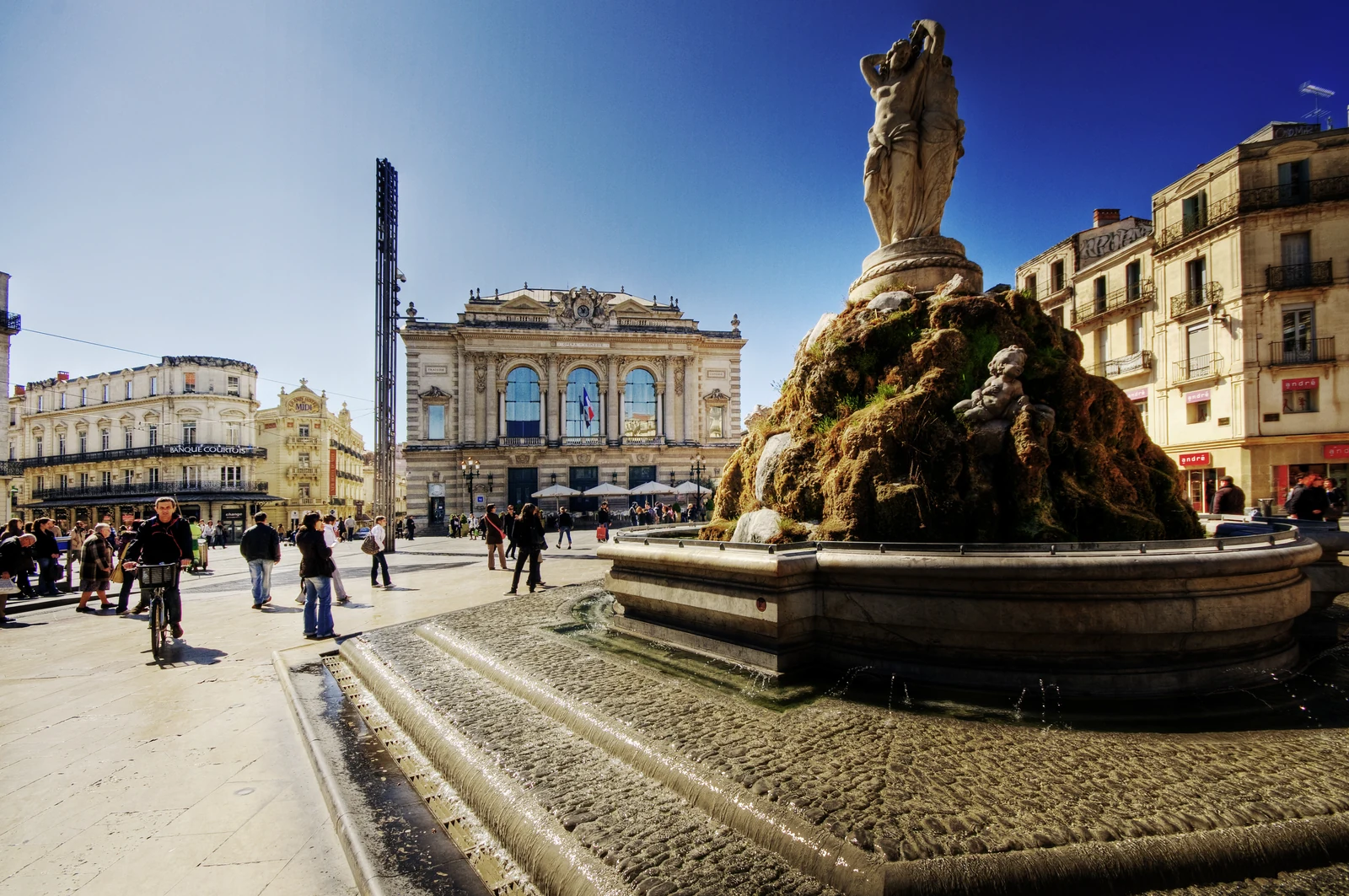
The authority notice is itself later than the appointment. It was created in 1984 and subsequently enriched from University history and official records, including the 1969 arrêté and the 2014 decree creating the successor University. Its competence is corporate identity across changing names, not eyewitness description of Grothendieck’s first year. The 1978 course heading is the contemporary check: its USTL wording appears among IdRef’s authorized variants. Later authority control and period paper converge on the employer’s identity while retaining different dates and purposes.4141Grothendieck, “En guise de programme pour le cours de C4 « Introduction à la recherche » 1978/79,” 1; IdRef, “Université des sciences et techniques de Montpellier 2 (1969–2014)”.
IdRef also links the corporate body to VIAF 122698976, ROR 00wh4bp03, and BnF cb11865786m. These identifiers align one institution across catalogs; they add no operation date and no personnel fact. Their function is authority control, not independent corroboration of the 1969 act.4242IdRef, “Université des sciences et techniques de Montpellier 2 (1969–2014)”.
The 1973–74 academic year
No opened timetable or course catalog reconstructs Grothendieck’s first Montpellier year week by week. The surviving continuous teaching sequence begins later: an examination in surface theory from 1976, the recorded 1977–78 DEA title, and the two-leaf 1978–79 research-introduction program. Those artifacts prove that teaching became sustained and formally classified. They do not allow the later titles to be copied backward into 1973–74. The responsible first-year account therefore begins with a negative inventory: no inspected timetable, room assignment, enrollment list, examination paper, faculty minute, workload return, or student notebook has yet fixed what he taught, to whom, or on which days.4343Grothendieck, “En guise de programme pour le cours de C4 « Introduction à la recherche » 1978/79,” 1–2; Maronne and Toën, Le temps des réflexions, 13–15.
Absence of those records does not make the year empty. The appointment chronology and later course objects establish that the move was into ordinary university service, while Grothendieck’s retrospective account describes teaching as his regular livelihood. At minimum, a professorship placed him within an academic calendar and a degree system. Preparation, scheduled contact with students, assessment, and administrative obligations are normal components of such service, but the chapter does not assign him a particular load without a document. The distinction is between the institutional kind of labor the post entailed and the exact tasks one individual performed in a given semester. Only the first is presently secure.4444Grothendieck, Récoltes et Semailles, ed. Carmona (1985), 3; Maronne and Toën, Le temps des réflexions, 8–15.
Students also remain plural rather than becoming a representative audience invented for 1973. Grothendieck later counted roughly twenty research-level students over a decade and singled out two substantial mid-1970s projects. That retrospective scale cannot yield the size, preparation, or response of his first class. It can show why “students” should not be treated as a new mass following him south. Degree level, enrollment, persistence, and publication were different measures. Later chapters can name people where work and records survive; this first-year section preserves the unknown cohort rather than filling it with composite characters.4545Leila Schneps and Pierre Lochak, eds., Geometric Galois Actions 1: Around Grothendieck’s Esquisse d’un Programme, London Mathematical Society Lecture Note Series 242 (Cambridge University Press, 1997), 7–48, 42–43, https://doi.org/10.1017/CBO9780511758874; Maronne and Toën, Le temps des réflexions, 14–15.
Until those traces are found, the academic year remains an envelope rather than a reconstructed schedule. It contains a supported professorial start and precedes the first dated surface project, but it does not contain invented course titles, student numbers, or weekly habits. This bounded envelope is enough to connect Part VIII’s destination to Part IX’s institutional return without repeating either chapter’s evidence.4646Maronne and Toën, Le temps des réflexions, 8–15.
The exhibition’s phrase à la rentrée 1973 gives the first year an academic, rather than civil-calendar, resolution. In the French university setting, rentrée identifies the opening of the teaching year; it is not a day on an appointment decree. The same exhibition timeline gives 1973–84 for the professorship. Read together, those entries support a start at the 1973 academic opening and continuing status through the later course sequence, while the precise legal effective date remains unknown.4747Maronne and Toën, Le temps des réflexions, 13.
Later objects show what ordinary service eventually left in the archive. The 1976 maîtrise examination has a course level and assessed form; the 1977–78 DEA title has an advanced-program identity; the 1978–79 program has an institution, year, course code, and named teacher. None belongs to 1973–74, but together they prove that the professorship generated recognizable university documents over time. The absence of an equivalent first-year object is therefore a local gap, not evidence that the appointment was honorary or inactive.4848Grothendieck, “En guise de programme pour le cours de C4 « Introduction à la recherche » 1978/79,” 1; Maronne and Toën, Le temps des réflexions, 13–15.
The 1978–79 sheet’s header is especially useful because it joins fields later sources often separate: corporate name, mathematics division, academic year, course level, title, and teacher. It proves that USTL was not just a retrospective alias and that Grothendieck’s work entered a formal course document. It does not prove that the same code or title existed five years earlier. Contemporary administrative specificity strengthens the later checkpoint while sharpening the first-year gap.4949Grothendieck, “En guise de programme pour le cours de C4 « Introduction à la recherche » 1978/79,” 1.
The exhibition’s 1973–84 professorship span likewise identifies continuity at role level rather than uniformity of workload. Within that span the archive displays different institutional objects—an examination, a DEA label, a course program, and an activity report—created for different purposes. Their variety is evidence of sustained university attachment, not a basis for assigning the same class format, enrollment, or schedule to every year. The first academic year remains anchored by appointment, not reconstructed from an average of later documents.5050Maronne and Toën, Le temps des réflexions, 13–15.
This distinction also gives “professor” its proper weight. The exhibition uses the title for the appointment and separately reproduces artifacts of teaching and assessment. The title establishes institutional rank; the objects establish selected acts performed within the post. Neither alone is a complete service record. Their convergence supports a real academic role while leaving chair wording, annual teaching load, and personnel classification to the unopened administrative file.5151Maronne and Toën, Le temps des réflexions, 13–15.
Return without reenactment
The earlier Montpellier period supplies a comparison, not a scene to replay. Grothendieck’s later account places the student outside the city, dissatisfied with the available treatment of length, area, and volume, and working independently on the question. Secondary biographies corroborate the broad educational chronology. In 1973 the relevant public facts are different: he returned with a professor’s title, a long publication record, and responsibility inside a curriculum. The contrast can be stated without imagining him recognizing a street, entering a familiar lecture room, or consciously measuring the new appointment against a particular day in the 1940s.5252Grothendieck, Récoltes et Semailles, ed. Carmona (1985), 5; “Alexander Grothendieck,” Wikiquote, accessed August 22, 2026, https://en.wikiquote.org/wiki/Alexander_Grothendieck; Barbieri Viale, “Alexander Grothendieck: Enthusiasm and Creativity,” 171–80, 171–73.
The two periods also leave different archives. The undergraduate episode survives chiefly through autobiography and later biography; the professorship leaves institutional headings, examinations, thesis records, letters, and eventually thousands of manuscript pages. That asymmetry affects narrative confidence. A later self-account can explain what the young mathematician believed the episode meant. An administrative object can show how the older mathematician’s labor was classified. Neither source type is intrinsically superior, but each has a proper use. The biography compares the meanings only after keeping witness, document, and inference separate.5353Grothendieck, “En guise de programme pour le cours de C4 « Introduction à la recherche » 1978/79,” 1; Grothendieck, Récoltes et Semailles, ed. Carmona (1985), 5; Maronne and Toën, Le temps des réflexions, 13–15; Ladegaillerie, “Classification topologique des plongements des 1-complexes compacts dans les surfaces,” 129–32.
“Return” consequently has a limited, defensible content. It means return to a city of earlier study and return to public university employment after the temporary posts that followed IHÉS. It does not mean restoration of a lost identity, repetition of youthful solitude, or fulfillment of a plan formed in 1948. Those would be claims about inner continuity for which the record supplies no direct evidence. The historical comparison is stronger: one city held two institutional positions separated by twenty-five years, and the second position made the former student answerable for other people’s learning.5454Grothendieck, Récoltes et Semailles, ed. Carmona (1985), 5; Maronne and Toën, Le temps des réflexions, 8–15; Barbieri Viale, “Alexander Grothendieck: Enthusiasm and Creativity,” 171–73.
The comparison also depends on unequal retrospective distance. Grothendieck wrote about his undergraduate question after it had become part of an origin story for a famous career. He assessed the Montpellier professorship while seeking a different research position and reviewing a decade of teaching. Both accounts select from experience under later purposes. The biography can use them because self-interpretation is historical evidence, but it must resist making the two narratives click together like a prepared pair. Contemporary institutional objects break that symmetry: they show titles, dates, and assessed work that neither origin story nor later disappointment can wholly absorb. Return without reenactment therefore means holding three times at once—the 1940s episode as later remembered, the 1970s service as partially documented, and the 1984 assessment as a dated act of interpretation. No one layer is allowed to narrate the others from inside Grothendieck’s mind.5555Grothendieck, “Esquisse d’un Programme,” 42–43; Grothendieck, Récoltes et Semailles, ed. Carmona (1985), 5; Maronne and Toën, Le temps des réflexions, 8–15.
The restraint extends to place. A confirmed city and campus do not justify a route of arrival, a first view of Triolet, or an encounter with a room remembered from student days. Villecun enters only through a qualified residence range and a later dated letter. The University enters through its contemporary name and surviving papers. These coordinates can be mapped, but a map is not an eyewitness. The chapter’s spatial movement is consequently administrative and documentary: from former student status to professorial service, from an older faculty structure to USTL, and between an address and a campus connected by work. This supplies historical geography without using weather, architecture, travel time, or domestic detail as borrowed atmosphere.5656Grothendieck, “En guise de programme pour le cours de C4 « Introduction à la recherche » 1978/79,” 1; Maronne and Toën, Le temps des réflexions, 8–15, 31–32; Université de Montpellier, “Campus Triolet: un parvis dénommé Alexander Grothendieck (1928–2014)”.
An intellectual margin inside an institution
The office and the margin were not opposites. A university title placed Grothendieck inside a salary system, a curriculum, and public accountability. His cessation of ordinary article submission placed much of his current work outside the profession’s routine circulation. Letters and later manuscript boxes created narrower channels. The same person could therefore be institutionally established, historically famous, geographically distant from Paris, and difficult to read in his newest work. The evidence supports this combination better than either of the simple alternatives—complete exclusion or complete reintegration.5757Grothendieck, “Esquisse d’un Programme,” 7; Grothendieck, Récoltes et Semailles, ed. Carmona (1985), 3; “Alexandre Grothendieck,” Wikiquote, accessed August 22, 2026, https://fr.wikiquote.org/wiki/Alexandre_Grothendieck; Maronne and Toën, Le temps des réflexions, 8–23.
The institution also imposed a test on independent work: could a question become shareable enough for a student, a course, or an examined thesis? A private page could range without limit; a degree project needed an object, a statement, and a result attributable to its author. That difference did not make institutional mathematics less original. It made responsibility visible. The first documented answer took the form of a surface problem given to Yves Ladegaillerie in 1974. Here the named project shows office and independent thought meeting in collaborative work without importing its theorem.5858Grothendieck, “Esquisse d’un Programme,” 13–15; Maronne and Toën, Le temps des réflexions, 13–15; Ladegaillerie, “Classification topologique des plongements des 1-complexes compacts dans les surfaces,” 129–32.
The university, the mathematical press, and private correspondence recorded different parts of the same working life. USTL papers make courses and examinations visible; the Comptes rendus later makes a student’s announcement public; letters preserve selected exchanges; manuscript boxes preserve work that publication did not stabilize. In the first Montpellier years those channels did not yield one synchronized portrait. Grothendieck could be a salaried professor and a famous name while his newest pages remained difficult to inspect. That divergence, rather than a claim of exile or reintegration, is the institutional meaning of the margin.5959Grothendieck, “En guise de programme pour le cours de C4 « Introduction à la recherche » 1978/79,” 1; Grothendieck and Brown, Correspondance Grothendieck–Brown; Maronne and Toën, Le temps des réflexions, 10–15; The Grothendieck Circle, “Bibliographie d’Alexandre Grothendieck”.
The institution’s own record also changed after the fact. Course sheets remained with science-faculty materials, part of the faculty archive was deposited with the departmental archives in 2014, and the successor University later commemorated Grothendieck at Triolet. These are three later custodial or memorial acts concerning an earlier professorship. They make the appointment increasingly visible today without proving that the same records were easy to find, centrally cataloged, or publicly available in 1973.6060Grothendieck, “En guise de programme pour le cours de C4 « Introduction à la recherche » 1978/79,” 1–2; Université de Montpellier, “Campus Triolet: un parvis dénommé Alexander Grothendieck (1928–2014)”; Université de Montpellier, “Patrimoine documentaire et Archives”.
The documentary problem of an ordinary year
No diary gives a continuous account of 1973–74. Later course and thesis artifacts establish continued university work, not a weekly timetable.6161Grothendieck, “En guise de programme pour le cours de C4 « Introduction à la recherche » 1978/79”; Maronne and Toën, Le temps des réflexions, 13–15.
The surface problem as dated evidence
In 1974 he gave Ladegaillerie an embedding-isotopy project; Chapter 50 follows its mathematical development.6262Grothendieck, “Esquisse d’un Programme,” sec. 3; Yves Ladegaillerie, “Découpes et isotopies de surfaces topologiques” (Thèse de doctorat d’État, 1976); Yves Ladegaillerie, “Classes d’isotopie de plongements de 1-complexes dans les surfaces,” Topology 23, no. 3 (1984): 303–11, https://doi.org/10.1016/0040-9383(84)90013-2.
Evidence against the vanishing point
Later course sheets, a thesis record, and dated correspondence refute disappearance without supplying a continuous diary.6363Grothendieck, “En guise de programme pour le cours de C4 « Introduction à la recherche » 1978/79”; Maronne and Toën, Le temps des réflexions, 13–15; Ladegaillerie, “Découpes et isotopies de surfaces topologiques”; Ladegaillerie, “Classes d’isotopie de plongements de 1-complexes dans les surfaces”.
SGA volumes appearing after 1970 largely materialized earlier collective work and do not establish Grothendieck’s current Montpellier agenda.6464The Grothendieck Circle, “Bibliographie d’Alexandre Grothendieck”; Maronne and Toën, Le temps des réflexions, 10–13.
A name on a timetable
The archive exhibition fixes the appointment year and professorship range; the University confirms that Grothendieck taught there; a later course sheet fixes the contemporary institutional heading. No inspected personnel instrument fixes an effective day, chair title, or first lecture.6565Maronne and Toën, Le temps des réflexions, 8–15; Université de Montpellier, “Campus Triolet: un parvis dénommé Alexander Grothendieck (1928–2014)”; Grothendieck, “En guise de programme pour le cours de C4 « Introduction à la recherche » 1978/79”.
Notes
- Sébastien Maronne and Bertrand Toën, Grothendieck mathématicien: Le temps des réflexions 1973–1991, Exhibition catalog, ill. Philomène Longchamp (2024), 8–14, https://hal.science/hal-04901028; Université de Montpellier, “Campus Triolet: un parvis dénommé Alexander Grothendieck (1928–2014),” May 21, 2024, https://www.umontpellier.fr/articles/campus-triolet-un-parvis-denomme-alexander-grothendieck-1928-2014. ↩
- Alexandre Grothendieck, “En guise de programme pour le cours de C4 « Introduction à la recherche » 1978/79,” Institutional course document, Université des Sciences et Techniques du Languedoc, 1978, https://webusers.imj-prg.fr/~leila.schneps/grothendieckcircle/Guise1.jpg; Université de Montpellier, “Campus Triolet: un parvis dénommé Alexander Grothendieck (1928–2014)”; IdRef, “Université des sciences et techniques de Montpellier 2 (1969–2014),” IdRef, accessed August 23, 2026, https://www.idref.fr/026404214. ↩
- Maronne and Toën, Le temps des réflexions, 8–15; Université de Montpellier, “Campus Triolet: un parvis dénommé Alexander Grothendieck (1928–2014)”. ↩
- Alexandre Grothendieck, “Esquisse d’un Programme,” in Geometric Galois Actions 1: Around Grothendieck’s Esquisse d’un Programme, ed. Leila Schneps and Pierre Lochak, London Mathematical Society Lecture Note Series 242 (Cambridge University Press, 1997), secs. 1–2, 8–10, https://doi.org/10.1017/CBO9780511758874.003; Maronne and Toën, Le temps des réflexions, 7–16; O’Connor and Robertson, “Alexander Grothendieck”. ↩
- Grothendieck, Récoltes et Semailles, ed. Carmona (1985), “Promenade à travers une œuvre, ” pp. P3–P5; O’Connor and Robertson, “Alexander Grothendieck”; Barbieri Viale, “Alexander Grothendieck: Enthusiasm and Creativity,” 171–73. ↩
- Grothendieck, “Esquisse d’un Programme,” secs. 2, 8–10; Grothendieck, Récoltes et Semailles, ed. Carmona (1985), 221–28, 282–84; Maronne and Toën, Le temps des réflexions, 14–16. ↩
- Grothendieck, Récoltes et Semailles, ed. Carmona (1985), “Promenade, ” pp. P3–P5; O’Connor and Robertson, “Alexander Grothendieck”; Barbieri Viale, “Alexander Grothendieck: Enthusiasm and Creativity,” 171–73. ↩
- Grothendieck, “En guise de programme pour le cours de C4 « Introduction à la recherche » 1978/79”. ↩
- Grothendieck, “En guise de programme pour le cours de C4 « Introduction à la recherche » 1978/79”; IdRef, “Université des sciences et techniques de Montpellier 2 (1969–2014)”, authority-history paragraph. ↩
- Pessis, “Les années 1968 et la science: Survivre … et Vivre, des mathématiciens critiques à l’origine de l’écologisme,” 154–63 and appendix inventory; Leila Schneps, “A Brief Timeline of Grothendieck’s Life,” The Grothendieck Circle, accessed August 23, 2026, https://webusers.imj-prg.fr/~leila.schneps/grothendieckcircle/timeline.html; O’Connor and Robertson, “Alexander Grothendieck”. ↩
- Pessis, “Les années 1968 et la science: Survivre … et Vivre, des mathématiciens critiques à l’origine de l’écologisme”, appendix, entry for no. 19, spring 1975. ↩
- Grothendieck, Récoltes et Semailles, ed. Carmona (1985), “Une lettre, ” p. L3 (digital text pp. 82–83); Maronne and Toën, Le temps des réflexions, 8. ↩
- Grothendieck, “Esquisse d’un Programme,” sec. 9, pp. 42–43. ↩
- Grothendieck, “Esquisse d’un Programme,” secs. 1–2, 9–10; Grothendieck, “En guise de programme pour le cours de C4 « Introduction à la recherche » 1978/79”. ↩
- Maronne and Toën, Le temps des réflexions, 13–16; Grothendieck, Récoltes et Semailles, ed. Carmona (1985). ↩
- Grothendieck, Récoltes et Semailles, ed. Carmona (1985), “Une lettre, ” p. L3; Université de Montpellier, “Patrimoine documentaire et Archives,” accessed August 23, 2026, https://www.umontpellier.fr/universite/patrimoine/patrimoine-documentaire-et-archives. ↩
- Grothendieck, “En guise de programme pour le cours de C4 « Introduction à la recherche » 1978/79”; Grothendieck, Récoltes et Semailles, ed. Carmona (1985), 221–23; Maronne and Toën, Le temps des réflexions, 14–15. ↩
- Alexandre Grothendieck and Ronald Brown, Correspondance Alexandre Grothendieck – Ronald Brown, ed. Matthias Künzer (n.d.), accessed August 22, 2026, https://webusers.imj-prg.fr/~leila.schneps/grothendieckcircle/Letters/LettersGrothendieckRBrown.pdf; Maronne and Toën, Le temps des réflexions, 8–23; Université de Montpellier, “À la recherche d’Alexandre Grothendieck,” LUM, January 19, 2016, https://www.umontpellier.fr/articles/lum1-a-la-recherche-dalexandre-grothendieck; Université de Montpellier, “28 000 pages d’Alexandre Grothendieck,” May 10, 2017, https://www.umontpellier.fr/articles/28-000-pages-dalexandre-grothendieck. ↩
- Grothendieck, “Esquisse d’un Programme,” sec. 1, p. 7; The Grothendieck Circle, “Bibliographie d’Alexandre Grothendieck,” accessed August 23, 2026, https://webusers.imj-prg.fr/~leila.schneps/grothendieckcircle/GrothBiblio.pdf; Maronne and Toën, Le temps des réflexions, 10–11. ↩
- Grothendieck, “Esquisse d’un Programme,” secs. 1, 9–10; Grothendieck, “En guise de programme pour le cours de C4 « Introduction à la recherche » 1978/79”; Grothendieck, Récoltes et Semailles, ed. Carmona (1985), 221–28, 282–84; Maronne and Toën, Le temps des réflexions, 14–19. ↩
- Grothendieck, Récoltes et Semailles, ed. Carmona (1985); Grothendieck and Brown, Correspondance Grothendieck–Brown; Maronne and Toën, Le temps des réflexions. ↩
- Grothendieck and Brown, Correspondance Grothendieck–Brown; Maronne and Toën, Le temps des réflexions, 10–23; Deligne, “La conjecture de Weil I”; The Grothendieck Circle, “Bibliographie d’Alexandre Grothendieck”. ↩
- Maronne and Toën, Le temps des réflexions, 8–9; Schneps, “A Brief Timeline of Grothendieck’s Life”; O’Connor and Robertson, “Alexander Grothendieck”. ↩
- Maronne and Toën, Le temps des réflexions, 31–32; Grothendieck and Brown, Correspondance Grothendieck–Brown, letters of May 5, 1982, May 23, 1983. ↩
- Grothendieck, “En guise de programme pour le cours de C4 « Introduction à la recherche » 1978/79”; Grothendieck and Brown, Correspondance Grothendieck–Brown; Maronne and Toën, Le temps des réflexions, 8–23. ↩
- Pessis, “Les années 1968 et la science: Survivre … et Vivre, des mathématiciens critiques à l’origine de l’écologisme”; Pierre Cartier, “La folle journée, de Grothendieck à Connes et Kontsevich,” Publications Mathématiques de l’IHÉS S88 (1998): 27, https://www.numdam.org/item/PMIHES_1998__S88__23_0.pdf. ↩
- Grothendieck, “En guise de programme pour le cours de C4 « Introduction à la recherche » 1978/79,” 1; Maronne and Toën, Le temps des réflexions, 8–15; Université de Montpellier, “Campus Triolet: un parvis dénommé Alexander Grothendieck (1928–2014)”. ↩
- Maronne and Toën, Le temps des réflexions, 8–14; Université de Montpellier, “Campus Triolet: un parvis dénommé Alexander Grothendieck (1928–2014)”. ↩
- Grothendieck, “En guise de programme pour le cours de C4 « Introduction à la recherche » 1978/79,” 1; Maronne and Toën, Le temps des réflexions, 8–15; Université de Montpellier, “Campus Triolet: un parvis dénommé Alexander Grothendieck (1928–2014)”. ↩
- Grothendieck, “En guise de programme pour le cours de C4 « Introduction à la recherche » 1978/79,” 1; IdRef, “Université des sciences et techniques de Montpellier 2 (1969–2014)”. ↩
- Grothendieck, “En guise de programme pour le cours de C4 « Introduction à la recherche » 1978/79,” 1; Université de Montpellier, “Campus Triolet: un parvis dénommé Alexander Grothendieck (1928–2014)”; IdRef, “Université des sciences et techniques de Montpellier 2 (1969–2014)”. ↩
- IdRef, “Université des sciences et techniques de Montpellier 2 (1969–2014)”. ↩
- Grothendieck, “En guise de programme pour le cours de C4 « Introduction à la recherche » 1978/79,” 1; Grothendieck, Récoltes et Semailles, ed. Carmona (1985), 3; Maronne and Toën, Le temps des réflexions, 13–15; Université de Montpellier, “Campus Triolet: un parvis dénommé Alexander Grothendieck (1928–2014)”. ↩
- Grothendieck, “En guise de programme pour le cours de C4 « Introduction à la recherche » 1978/79,” 1–2; Maronne and Toën, Le temps des réflexions, 8–15; Céline Pessis, Survivre et vivre: Critique de la science, naissance de l’écologie, Frankenstein (L’Échappée, 2014); IdRef, “Université des sciences et techniques de Montpellier 2 (1969–2014)”. ↩
- Grothendieck, “En guise de programme pour le cours de C4 « Introduction à la recherche » 1978/79,” 1–2; Maronne and Toën, Le temps des réflexions, 13–16; Yves Ladegaillerie, “Classification topologique des plongements des 1-complexes compacts dans les surfaces,” Comptes rendus de l’Académie des sciences. Série A 279 (July 1974): 129–32. ↩
- Grothendieck, “En guise de programme pour le cours de C4 « Introduction à la recherche » 1978/79,” 1; Maronne and Toën, Le temps des réflexions, 13–15. ↩
- Université de Montpellier, “Patrimoine documentaire et Archives”. ↩
- IdRef, “Université des sciences et techniques de Montpellier 2 (1969–2014)”. ↩
- Grothendieck, “En guise de programme pour le cours de C4 « Introduction à la recherche » 1978/79,” 1; IdRef, “Université des sciences et techniques de Montpellier 2 (1969–2014)”. ↩
- Université de Montpellier, “Campus Triolet: un parvis dénommé Alexander Grothendieck (1928–2014)”; IdRef, “Université des sciences et techniques de Montpellier 2 (1969–2014)”. ↩
- Grothendieck, “En guise de programme pour le cours de C4 « Introduction à la recherche » 1978/79,” 1; IdRef, “Université des sciences et techniques de Montpellier 2 (1969–2014)”. ↩
- IdRef, “Université des sciences et techniques de Montpellier 2 (1969–2014)”. ↩
- Grothendieck, “En guise de programme pour le cours de C4 « Introduction à la recherche » 1978/79,” 1–2; Maronne and Toën, Le temps des réflexions, 13–15. ↩
- Grothendieck, Récoltes et Semailles, ed. Carmona (1985), 3; Maronne and Toën, Le temps des réflexions, 8–15. ↩
- Leila Schneps and Pierre Lochak, eds., Geometric Galois Actions 1: Around Grothendieck’s Esquisse d’un Programme, London Mathematical Society Lecture Note Series 242 (Cambridge University Press, 1997), 7–48, 42–43, https://doi.org/10.1017/CBO9780511758874; Maronne and Toën, Le temps des réflexions, 14–15. ↩
- Maronne and Toën, Le temps des réflexions, 8–15. ↩
- Maronne and Toën, Le temps des réflexions, 13. ↩
- Grothendieck, “En guise de programme pour le cours de C4 « Introduction à la recherche » 1978/79,” 1; Maronne and Toën, Le temps des réflexions, 13–15. ↩
- Grothendieck, “En guise de programme pour le cours de C4 « Introduction à la recherche » 1978/79,” 1. ↩
- Maronne and Toën, Le temps des réflexions, 13–15. ↩
- Maronne and Toën, Le temps des réflexions, 13–15. ↩
- Grothendieck, Récoltes et Semailles, ed. Carmona (1985), 5; “Alexander Grothendieck,” Wikiquote, accessed August 22, 2026, https://en.wikiquote.org/wiki/Alexander_Grothendieck; Barbieri Viale, “Alexander Grothendieck: Enthusiasm and Creativity,” 171–80, 171–73. ↩
- Grothendieck, “En guise de programme pour le cours de C4 « Introduction à la recherche » 1978/79,” 1; Grothendieck, Récoltes et Semailles, ed. Carmona (1985), 5; Maronne and Toën, Le temps des réflexions, 13–15; Ladegaillerie, “Classification topologique des plongements des 1-complexes compacts dans les surfaces,” 129–32. ↩
- Grothendieck, Récoltes et Semailles, ed. Carmona (1985), 5; Maronne and Toën, Le temps des réflexions, 8–15; Barbieri Viale, “Alexander Grothendieck: Enthusiasm and Creativity,” 171–73. ↩
- Grothendieck, “Esquisse d’un Programme,” 42–43; Grothendieck, Récoltes et Semailles, ed. Carmona (1985), 5; Maronne and Toën, Le temps des réflexions, 8–15. ↩
- Grothendieck, “En guise de programme pour le cours de C4 « Introduction à la recherche » 1978/79,” 1; Maronne and Toën, Le temps des réflexions, 8–15, 31–32; Université de Montpellier, “Campus Triolet: un parvis dénommé Alexander Grothendieck (1928–2014)”. ↩
- Grothendieck, “Esquisse d’un Programme,” 7; Grothendieck, Récoltes et Semailles, ed. Carmona (1985), 3; “Alexandre Grothendieck,” Wikiquote, accessed August 22, 2026, https://fr.wikiquote.org/wiki/Alexandre_Grothendieck; Maronne and Toën, Le temps des réflexions, 8–23. ↩
- Grothendieck, “Esquisse d’un Programme,” 13–15; Maronne and Toën, Le temps des réflexions, 13–15; Ladegaillerie, “Classification topologique des plongements des 1-complexes compacts dans les surfaces,” 129–32. ↩
- Grothendieck, “En guise de programme pour le cours de C4 « Introduction à la recherche » 1978/79,” 1; Grothendieck and Brown, Correspondance Grothendieck–Brown; Maronne and Toën, Le temps des réflexions, 10–15; The Grothendieck Circle, “Bibliographie d’Alexandre Grothendieck”. ↩
- Grothendieck, “En guise de programme pour le cours de C4 « Introduction à la recherche » 1978/79,” 1–2; Université de Montpellier, “Campus Triolet: un parvis dénommé Alexander Grothendieck (1928–2014)”; Université de Montpellier, “Patrimoine documentaire et Archives”. ↩
- Grothendieck, “En guise de programme pour le cours de C4 « Introduction à la recherche » 1978/79”; Maronne and Toën, Le temps des réflexions, 13–15. ↩
- Grothendieck, “Esquisse d’un Programme,” sec. 3; Yves Ladegaillerie, “Découpes et isotopies de surfaces topologiques” (Thèse de doctorat d’État, 1976); Yves Ladegaillerie, “Classes d’isotopie de plongements de 1-complexes dans les surfaces,” Topology 23, no. 3 (1984): 303–11, https://doi.org/10.1016/0040-9383(84)90013-2. ↩
- Grothendieck, “En guise de programme pour le cours de C4 « Introduction à la recherche » 1978/79”; Maronne and Toën, Le temps des réflexions, 13–15; Ladegaillerie, “Découpes et isotopies de surfaces topologiques”; Ladegaillerie, “Classes d’isotopie de plongements de 1-complexes dans les surfaces”. ↩
- The Grothendieck Circle, “Bibliographie d’Alexandre Grothendieck”; Maronne and Toën, Le temps des réflexions, 10–13. ↩
- Maronne and Toën, Le temps des réflexions, 8–15; Université de Montpellier, “Campus Triolet: un parvis dénommé Alexander Grothendieck (1928–2014)”; Grothendieck, “En guise de programme pour le cours de C4 « Introduction à la recherche » 1978/79”. ↩