At the end of the report, after more than 40 printed pages of proposals, recollections, provocations, and later notes, the final line supplies one documentary datum: “Janvier 1984.” A curated archive catalog, however, labels Esquisse d’un programme 1983. The basis of that label has not been reopened, so this chapter does not pretend that the conflict is resolved. It retains January 1984 as the report’s printed terminal date, not as proof that every stage of composition occurred or ended then. The mathematical reflections summarized in the report had resumed earlier; the text itself says that a series called Réflexions Mathématiques had begun in February 1983. The letter to Gerd Faltings that set out an anabelian program was dated June 27, 1983. Pursuing Stacks had occupied much of 1983. The CNRS research statement therefore carries a January 1984 close while the catalog assigns it a 1983 label. It was not formally published in either year. It circulated as a research statement before its formal publication on July 10, 1997. 11Grothendieck, “Esquisse d’un Programme”; Alexander Grothendieck, “Sketch of a Programme,” in Geometric Galois Actions 1: Around Grothendieck’s Esquisse d’un Programme, ed. Leila Schneps and Pierre Lochak, London Mathematical Society Lecture Note Series 242 (Cambridge University Press, 1997), https://doi.org/10.1017/CBO9780511758874.017; Alexander Grothendieck, “Brief an G. Faltings,” in Geometric Galois Actions 1: Around Grothendieck’s Esquisse d’un Programme, ed. Leila Schneps and Pierre Lochak, London Mathematical Society Lecture Note Series 242 (Cambridge University Press, 1997), https://doi.org/10.1017/CBO9780511758874.004.
That distinction changes the way the document enters a life. It was not a triumphant announcement from an institute, nor the inaugural lecture of a new school. Grothendieck wrote because he wanted to leave regular university teaching for a research position. His first paragraph says that the prospect of teaching at research level in the university had become, for him, increasingly illusory. The phrase is evidence of his judgment, not an objective census of Montpellier’s students. It must be kept in quotation marks, conceptually if not typographically. He thought no student—and apparently no mathematical colleague—was likely to develop the perspectives in his place. The application therefore carried a paradox: it sought public support for work whose author described himself as without a local mathematical community capable of sharing it. 22Grothendieck, “Esquisse d’un Programme,” 7–8.
The administrative request was also a declaration of intellectual continuity. Attached to it was a thematic sketch of his earlier work, written in 1972, and a publication list. The new report would indicate what had occupied him since. He observed that he had ceased publishing scientific articles after 1970, but he did not equate nonpublication with mathematical inactivity. The intervening reflections existed in boxes of difficult manuscript notes, after successive stages of settling and reconsideration. His proposed “redaction” would not copy those notes into clean form. It would continue the act of discovery. This description is a warning against treating the late manuscripts as finished books awaiting typesetting. For Grothendieck, writing could be the laboratory in which an idea changed shape. 33Grothendieck, “Esquisse d’un Programme,” 7–8.
In conventional applications, a research program usually narrows the field: these are the questions; these are the methods; these are the likely results. Esquisse widens it. Its contents pass from a “Lego-Teichmüller game” and the absolute Galois group, to number fields attached to dessins d’enfants, regular polyhedra over finite fields, a proposed “tame” topology, differentiable theories, Pursuing Stacks, two-dimensional geometry, an assessment of teaching, and an epilogue. That range is not a miscellany produced by careless assembly. A recurrent problem ties it together: the organization of geometry so that elementary constructions retain enough structure to reveal arithmetic and homotopy. 44Grothendieck, “Esquisse d’un Programme”.
The route into that problem began with surfaces. During the Montpellier years, teaching students with modest technical preparation had pushed Grothendieck toward forms that could be apprehended before a large formal apparatus was built. Real surfaces, their cuts, markings, maps, and combinatorics offered such a ground. He dated his sustained attention to surface geometry from about 1975 and the link with algebraic curves over fields such as , , and finite-type extensions of from about 1977. The report marks the return of algebraic geometry with an affectionate aside and connects it to objects simple enough to be encountered in play. 55Grothendieck, “Esquisse d’un Programme,” 8–9.
“Simple” did not mean shallow. A compact oriented surface can be cut into elementary pieces, but the possible gluings, symmetries, marked points, and deformations quickly generate a disciplined complexity. The same surface can be described topologically, conformally, or as a complex algebraic curve. Each language preserves something and hides something. Grothendieck’s renewed program depended on moving among them without reducing one to decorative illustration for another. The combinatorial map on a surface was not a childish preface to the serious algebra; under the right conditions, it could be the finite record through which arithmetic acted.66Grothendieck, “Esquisse d’un Programme”; Scharlau, Spirituality.
The pivotal objects were moduli. Rather than study one curve at a time, one studies the organized family of all smooth curves of genus with marked points. This is written , with a compactification that admits stable nodal curves at the boundary. The notation compresses an important change of scale. A point of the moduli problem represents a curve with markings, but such a curve can possess automorphisms. A coarse parameter space tends to erase those symmetries; a moduli stack retains them. Grothendieck had spent earlier decades insisting that a geometric object should be understood through the families it classifies. Here that relative viewpoint returned in a system whose elementary operations could be drawn. 77Grothendieck, “Esquisse d’un Programme,” 9–12.
Marked curves can be related in several ways. A marked point can be forgotten, followed by stabilization when necessary. Two curves can be glued at marked points. A surface can degenerate to a nodal one, placing it on the boundary of a compactified moduli space. These operations connect different pairs . They do not form a single ladder with one rung above another; they form a network. Grothendieck called the corresponding system, together with its fundamental groupoids and structural operations, the Teichmüller tower. The word “tower” should therefore not be pictured as a stack of identical floors. It is closer to a connected construction set in which every allowed joining and forgetting operation is part of the data.
The “Lego” metaphor enters at this point. It illuminates assembly from standard pieces and the hope that a large structure can be controlled by a small repertoire of moves. It fails if it suggests rigid plastic blocks with no automorphisms, deformation, or coherence problems. Curves vary continuously; boundary components meet; gluing operations must agree in different orders. A mathematical reconstruction requires not only pieces but relations among relations. Grothendieck was looking for a presentation economical enough to expose the whole tower’s symmetry without pretending that its geometry was elementary in the sense of effortless. 88Grothendieck, “Esquisse d’un Programme,” secs. 2–3.
Chapter 53 follows the arithmetic reconstruction in detail; this chapter keeps only the result that Galois acts faithfully on all dessins.99Grothendieck, “Esquisse d’un Programme,” 9–15.
The most memorable finite objects in the report arose from Belyi’s theorem. In its standard form, the theorem says that a smooth projective complex algebraic curve can be defined over if and only if it admits a nonconstant map1010Grothendieck, “Esquisse d’un Programme”; Belyi, “On Galois Extensions of a Maximal Cyclotomic Field”; Leila Schneps, ed., The Grothendieck Theory of Dessins d’Enfants, London Mathematical Society Lecture Note Series 200 (Cambridge University Press, 1994).
ramified only over , , and . 1111Belyi, “On Galois Extensions of a Maximal Cyclotomic Field”.
The phrase “only three branch values” can sound like a drastic impoverishment. It is the opposite. A map with all branching over three points can still have arbitrarily high degree and intricate monodromy. The miracle is that every algebraic curve over has some such presentation. The theorem converts arithmetic definability into a tightly normalized covering problem. Existence is not uniqueness: one curve may carry many Belyi maps, and the theorem does not promise that finding one will be computationally easy.1212Grothendieck, “Esquisse d’un Programme”; Belyi, “On Galois Extensions of a Maximal Cyclotomic Field”; Schneps, The Grothendieck Theory of Dessins d’Enfants.
Draw the real interval from to on the target sphere and take its inverse image under . The result on the source surface is a finite graph. Vertices over can be colored black and vertices over white; edges run between opposite colors. The orientation of the surface gives a cyclic order to the half-edges around each vertex. This embedded bipartite graph is a dessin d’enfant. Faces correspond to behavior above . The graph, with its embedding data, recovers the covering up to the appropriate equivalence. 1313Grothendieck, “Esquisse d’un Programme,” secs. 2–3.
The name can mislead twice. A dessin is not any drawing made by a child, and its mathematical value does not lie in visual charm alone. Nor does its finiteness make it a crude approximation to the curve. In the Belyi correspondence, the finite combinatorial object encodes the branched covering exactly up to isomorphism. It can be described by permutations: loops around and permute the sheets, producing and , with the permutation around determined by the product relation. Transitivity expresses connectedness. Vertex valencies and face degrees record cycle types. The drawing, the permutation triple, and the Belyi pair are different presentations of connected data.1414Grothendieck, “Esquisse d’un Programme”; Belyi, “On Galois Extensions of a Maximal Cyclotomic Field”; Schneps, The Grothendieck Theory of Dessins d’Enfants.
Because the coefficients of a Belyi pair lie in , an element of transforms it into another Belyi pair, hence another dessin. Basic combinatorial quantities such as degree and cycle profiles are preserved, but the dessin may move to a nonisomorphic one. Across all dessins the action is faithful. Thus the most inaccessible-looking symmetry group in elementary number theory can be observed acting on finite graphs on surfaces. Grothendieck saw not an amusing illustration but a possible experimental field for the absolute Galois group. 1515V. G. Drinfeld, “On Quasitriangular Quasi-Hopf Algebras and on a Group That Is Closely Connected with Gal($\overline{\mathbb{Q}}/\mathbb{Q}$),” Leningrad Mathematical Journal 2, no. 4 (1991): 829–60.
A small dessin
Suppose a connected Belyi map has degree . Choose labels for its sheets over a base point in . Analytic continuation around and gives permutations . With a consistent convention, . The subgroup generated by is transitive exactly when the covering is connected. Cycles of correspond to black vertices, cycles of to white vertices, and cycles of to faces. The genus follows from the Euler characteristic:1616Grothendieck, “Esquisse d’un Programme”; Belyi, “On Galois Extensions of a Maximal Cyclotomic Field”; Schneps, The Grothendieck Theory of Dessins d’Enfants.
where is the number of cycles. This formula faithfully explains the dessin/permutation interface. The example is generic: it is not a historically studied Belyi pair, and no polynomial is assigned to it without computation.
Grothendieck’s report also proposed attaching number fields to dessins. A dessin has a field of moduli, roughly the fixed field of Galois elements preserving its isomorphism class. Questions about whether it can be defined over that field, how its Galois orbit is organized, and which invariants separate orbits made the finite drawing a carrier of arithmetic information. Here too one must resist a simplistic slogan. A picture does not visibly display its field. Two dessins can share conspicuous combinatorial invariants while lying in different Galois orbits, and subtle invariants may be required. The point was to make arithmetic available to a combinatorial attack, not to claim it had become immediately transparent.1717Grothendieck, “Esquisse d’un Programme”; Belyi, “On Galois Extensions of a Maximal Cyclotomic Field”; Schneps, The Grothendieck Theory of Dessins d’Enfants.
Alongside dessins, Esquisse named anabelian geometry as a distinct reconstruction program. The June 27, 1983, Faltings letter is the dated primary anchor; the report records program scope rather than a completed theorem family.1818Grothendieck, “Brief an G. Faltings”.1919Grothendieck, “Esquisse d’un Programme”; Scharlau, Spirituality.
Later theorems justified substantial portions of the forecast. The chronological sequence remains distinct: Grothendieck’s anabelian letter is dated June 27, 1983; Esquisse carries the printed terminal date “Janvier 1984,” alongside the unresolved 1983 catalog label; Mochizuki’s closed-curve result appeared in 1996; and Tamagawa’s affine-curve result appeared in 1997. These later results belong to the reception of the program, not to the inventory of theorems available when Esquisse was written. They should neither be withheld nor moved backward in time, which would transform conjectures into achievements already present in the original program. Nor should the varied anabelian program be reduced to one sentence saying it was “proved.” 2020Akio Tamagawa, “The Grothendieck Conjecture for Affine Curves,” Compositio Mathematica 109, no. 2 (1997): 135–94, https://doi.org/10.1023/A:1000114400142; Shinichi Mochizuki, “The Profinite Grothendieck Conjecture for Closed Hyperbolic Curves over Number Fields,” Journal of Mathematical Sciences, the University of Tokyo 3, no. 3 (1996): 571–627.
The dessin and anabelian directions were related but not identical. Dessins turn Belyi coverings into finite embedded graphs with a faithful Galois action; anabelian geometry remained a distinct reconstruction program. The Teichmüller tower supplies the organizing system of marked curves, gluing, boundary maps, and groupoids.2121Grothendieck, “Esquisse d’un Programme”; Belyi, “On Galois Extensions of a Maximal Cyclotomic Field”; Schneps, The Grothendieck Theory of Dessins d’Enfants.
There was another major current in the report: “tame topology.” Grothendieck objected to a general topology capacious enough to include pathological phenomena but insufficiently adapted to the finite stratified forms encountered in geometry. He imagined categories of tame spaces stable under the operations geometers require, with a robust theory of stratification, tubular neighborhoods, gluing, fibrations, and isotopy. He did not present a completed axiomatic theory. The report is openly heuristic, testing what such a foundation should make possible. 2222Grothendieck, “Esquisse d’un Programme,” secs. 5–6.
The aspiration helps explain why dessins did not stand alone. A combinatorial map is finite, but it lives on a surface. Moduli compactifications have boundary strata. Degenerations require controlled gluing. A satisfactory “tame” setting might connect combinatorial forms, smooth or analytic geometry, and stratified spaces without importing every wild phenomenon admitted by unrestricted topology. Grothendieck’s language here can be emphatic, even polemical, but the mathematics must be reported at the right modal level: he proposed, expected, and sought foundations. He did not prove in Esquisse all the stability and equivalence statements he listed.
His attack on “general topology” also illustrates a persistent method. When a field’s accepted foundations produced too many objects of the wrong kind, he did not begin by excluding them one at a time. He looked for a new category in which desirable operations were native and the troublesome cases became boundaries rather than norms. Earlier, schemes had enlarged algebraic geometry to make nilpotents, base change, and arithmetic fibers systematic. Topoi had reorganized the setting for sheaves and cohomology. Tame topology was another attempt to choose a world in which the intended geometry could breathe. The analogy is methodological, not a claim that the late proposal reached the completeness or adoption of schemes or topoi.
The section on Pursuing Stacks points toward a different foundational landscape. Its title promised stacks, but the manuscript had expanded into homotopical algebra and models of homotopy types. Esquisse calls it part of a projected series of mathematical reflections and admits that the intended stacks had been deferred far into a work whose “Modelizing Story” had become an unforeseen digression. This self-description is useful. It appears in the report whose printed terminal date is January 1984, despite the unresolved 1983 catalog label, and records that the sprawling 1983 manuscript was still understood as work in progress, not a finished volume silently rejected by publishers. 2323Grothendieck, “Esquisse d’un Programme,” 37–39.
The report’s autobiographical sections make institutional context part of mathematical content. Grothendieck reviewed his teaching in Montpellier and judged that continuing under the same conditions would waste both human effort and public funds. He acknowledged that CNRS positions were scarce and that appointing him might mean one less position for a younger researcher, while his university post would in turn become available. These remarks complicate the image of someone demanding exemption without regard for cost. He stated the cost of the request and gave an argument for it. Whether the committee agreed with all his judgments is separate from the documentary fact that he made them. 2424Grothendieck, “Esquisse d’un Programme,” 40–42.
He also distinguished renewal from rupture. Surface geometry had changed his route, but he did not represent it as repudiating algebraic geometry. It led back to motives, Galois actions, moduli, and fundamental groups by another path. The distinction matters biographically. A narrative built around disappearance tends to divide his work into a canonical “before” and an eccentric “after.” Esquisse does not permit such a clean break. Its central objects emerge from concepts developed during the IHÉS years, yet its emphasis on elementary forms, explicit combinatorics, and solitary written exploration belongs to the later setting.
This continuity can be seen in the relative point of view. A curve is not isolated; it belongs to a family. A family is not represented only by a set of isomorphism classes; automorphisms require a stack. A fundamental group is not only one group after an arbitrary base point has been chosen; a groupoid with several base points may preserve the geometry’s symmetries. A dessin includes its embedding, cyclic orders, and Galois orbit as well as its graph. At every stage, the object becomes intelligible by recording the relations that a cruder classification would discard.
The change is equally visible in scale. Earlier Grothendieck had often aimed for languages valid in broad dimension and over arbitrary bases. The late program concentrated attention on curves and surfaces, seemingly the smallest nontrivial worlds. But small dimension was not retreat. Curves over number fields sit at a junction of topology, complex analysis, algebraic geometry, and arithmetic. Their moduli spaces form a laboratory for deformation and symmetry. A three-punctured sphere is simple enough to organize low-level tower data. “Elementary” here means concentrated, not exhausted.
One of Esquisse’s boldest hopes was that much of the Teichmüller tower could be controlled from its first levels. Low-genus, few-marked-point cases would generate higher structure through gluing and relations. This “reconstruction principle” later became influential in Grothendieck–Teichmüller theory. But the program’s own language of tasks and hot points shows its incompletion. It proposed a combinatorial construction of the tower and a search for compatibility relations among its levels. A list of tasks is evidence of vision and of work still to do.
The reception came in stages. During the 1980s, copies and ideas moved through correspondence and personal networks. The document was known, but it had no standard published edition. In 1994, Leila Schneps edited The Grothendieck Theory of Dessins d’Enfants, a collective volume whose existence signaled that the finite drawings had become a research area. In 1997, Schneps and Pierre Lochak edited Geometric Galois Actions 1. The volume formally published the French Esquisse on pages 7–48, the 1983 letter to Faltings on pages 49–58, and an English translation of the program on pages 243–284. These are publication dates, not new dates of authorship. 2525Schneps, The Grothendieck Theory of Dessins d’Enfants; Schneps and Lochak, Geometric Galois Actions 1.
Formal publication changed accessibility and citation. A manuscript known through photocopies can be influential, but page references vary and access depends on networks. A Cambridge volume fixes pagination, places the document beside responses, and allows later articles to cite a stable object. It can also create a retrospective illusion that the research community of 1997 existed around the text in 1984. The 15-year interval is part of the history. Some later developments grew from direct acquaintance with copies; others met the program through the organized field that formed afterward.2626Grothendieck, “Esquisse d’un Programme”; Grothendieck, “Sketch of a Programme”; Schneps, The Grothendieck Theory of Dessins d’Enfants; Schneps and Lochak, Geometric Galois Actions 1.
The delay also complicates the word “return.” Grothendieck had returned to sustained mathematical writing before a mainstream publisher returned his name to ordinary bibliographies. Pursuing Stacks and the Faltings letter belong to 1983. Esquisse has a 1983 catalog label and a printed January 1984 terminal date; their relation remains unresolved. The dessins conference literature and edited volumes belong to the 1990s. If all are collapsed into “his late work,” causality disappears. The order is the story: private and semi-private mathematical production; a report addressed first to a committee and selected colleagues; correspondence-based circulation; then collective appropriation, proof, reformulation, and publication.2727Grothendieck, “Esquisse d’un Programme”; Belyi, “On Galois Extensions of a Maximal Cyclotomic Field”; Schneps, The Grothendieck Theory of Dessins d’Enfants.
The grammar of a research statement
Read as an administrative artifact, Esquisse repeatedly changes grammatical mood. Some sentences report completed work: he had studied surfaces, written notes, or begun mathematical reflections. Some describe known theorems, including Belyi’s result. Others say “I expect,” “it should be,” “one may hope,” or “one of the tasks.” Those modal verbs are part of the evidence. Removing them in summary turns a proposal into an achievement report.
The report also has two initial audiences. One was the National Committee deciding his application. The other consisted of selected colleagues, former students, and friends who might find an idea worth taking up. The first audience required an account of credible work; the second invited collaboration without establishing a seminar. A sentence can therefore function simultaneously as evidence of activity and as a seed offered to someone else. 2828Grothendieck, “Esquisse d’un Programme,” 7–8.
The contents page reveals editorial layering. Numbered notes at the end were added after the main report. They extend claims and respond to developments that followed quickly, including further thoughts on anabelian reconstruction. A reader citing the report terminal-dated January 1984 should identify whether a statement belongs to the dated body or to a later-added note, and should not use that terminal line to suppress the catalog’s conflicting 1983 label. The 1997 publication preserves both textual layers but does not make them simultaneous.2929Grothendieck, “Brief an G. Faltings”; Tamagawa, “The Grothendieck Conjecture for Affine Curves”; Mochizuki, “The Profinite Grothendieck Conjecture for Closed Hyperbolic Curves over Number Fields”.
The attached 1972 thematic sketch creates another layer. Grothendieck used an earlier self-assessment as the “titles and works” portion of his application, then placed the new program beside it. This arrangement allowed continuity to be seen without rewriting the 1972 account in the light of 1984. It also means that a statement found in the combined application may have a 1972 composition date even though the available record was submitted later.3030Grothendieck, “Esquisse d’un Programme”; Scharlau, Spirituality.
Such distinctions affect mathematical claims as well as bibliography. A late note can contain a more confident conjecture than the main text. A later editor can stabilize notation unknown to the committee. An English translation can select one meaning for a deliberately suggestive French term. The primary French pagination remains controlling for quotation, while the translation is an aid. The source files for this account record both editions so that fluency in English does not erase the original act of writing.
The document’s tone is unusual for an application. It frankly judges the local teaching situation, admits that the requested position may cost a younger researcher an opportunity, criticizes established topology, and describes multiple projects without a conventional timetable. Yet it is not careless about public resources. Grothendieck argues that his university post would be freed and that continuing to teach under present conditions would itself waste resources. The committee was asked to evaluate a difficult proposition: whether an applicant’s independence and record justified supporting work whose deliverables were intentionally open.
This administrative candor supplies a check against retrospective myth. The committee did not appoint an unknown outsider on the strength of an occult manuscript. It evaluated a Fields medalist and former CNRS director of research who provided a substantial report tied to recognizable areas. Nor did the appointment restore the Bois-Marie seminar. The document itself says that no successor or colleague seemed ready to develop the work in his place. Institutional validation and intellectual isolation could coexist.
The tower at low levels
The phrase “first floor of the tower” becomes clearer through the moduli of punctured spheres. A genus-zero curve with three ordered marked points has no moduli: by a projective transformation, the points can be placed at , , and . With four marked points, one parameter remains—the cross-ratio—so can be identified with . This is the first nontrivial genus-zero moduli space.
Its importance is disproportionate to its dimension: the faithful action on dessins is already visible at this low floor.
The next spaces and beyond record configurations of more marked points. Forgetting a point gives maps . Boundary divisors in compactifications correspond to stable ways of splitting marked points across nodal components. Gluing maps combine lower-dimensional moduli. Algebraically, topologically, and combinatorially, the operations constrain one another.
The report proposes a reconstruction principle: a small initial segment, together with natural operations and relations, might determine the tower. “Might” remains important. One must prove that proposed generators reach every required operation and that proposed relations are complete. The attraction lies in replacing an unbounded family of moduli spaces by finite or low-level organizing data.
Fundamental groupoids, rather than only groups, suit this system because moduli spaces have several natural tangential or boundary base points. Choosing paths that drag all of them to one base point introduces arbitrary conjugations and can obscure symmetries. A groupoid keeps many centers at once. Grothendieck’s correspondence with Brown reinforced this many-base-point perspective. 3131Ronald Brown, “The Origins of Alexander Grothendieck’s *Pursuing Stacks*,” https://groupoids.org.uk/pstacks.html.
The tower joins finite dessins with compatible finite-cover data. This does not make the acting group finite or supply its characterization.
A dessin as three simultaneous records
It is useful to hold one generic dessin in three languages without claiming a specific equation. First, as an embedded graph, it has black and white vertices, edges, faces, and cyclic order around each vertex. Second, after labeling sheets, it has a permutation triple with product one. Third, as algebraic geometry, it is a Belyi pair . Isomorphism in one language corresponds to an appropriate equivalence in the others.
The graph makes topology visible. The permutations make computation possible. The pair makes arithmetic action possible. No presentation is universally superior. Relabeling sheets conjugates the permutations simultaneously and changes no covering. Redrawing the graph without changing its embedding data changes no dessin. Applying a Galois automorphism can preserve elementary combinatorics while changing the algebraic isomorphism class.
The Galois orbit of a dessin is therefore subtler than its appearance. Degree, genus, vertex valencies, and face degrees are invariants, but they need not distinguish orbits. More refined invariants arise from monodromy groups, fields of moduli, and structures derived from the covering. A program based on dessins requires invention of such invariants and computation of examples; the faithful action theorem alone does not supply them.
The field of moduli is the fixed field of Galois elements that preserve the dessin’s isomorphism class. A field of definition is a field over which a representative Belyi pair can actually be written. These need not coincide in every moduli problem. Confusing them would turn an obstruction question into a tautology. Esquisse opened a field in which such distinctions became concrete research.
The phrase dessin d’enfant helped the subject travel because it gave a memorable visual object. It also risked trivialization. A reader may suppose the mathematics is recreational graph drawing. In fact, the cyclic order at vertices, branched covering, and arithmetic descent carry the content. The best illustration therefore labels what the eye cannot infer: which vertices lie over and , which face data lie over , and that the graph is schematic rather than a computed historical example.
Anabelian program and reception
The June 27, 1983, Faltings letter and the report terminal-dated January 1984 establish two distinct documentary moments. The letter names a reconstruction direction; Esquisse places that direction beside dessins and the Teichmüller tower. Neither source contains the later proofs, and the unresolved 1983 catalog label for Esquisse does not collapse the two documents into one composition event.
The reception chronology remains necessary. Mochizuki’s 1996 closed-curve result and Tamagawa’s 1997 affine-curve result concern different cases and rely on later tools. They cannot be moved backward into Grothendieck’s 1983–1984 theorem inventory, and they cannot be compressed into a claim that the entire anabelian program was proved.3232Tamagawa, “The Grothendieck Conjecture for Affine Curves”; Mochizuki, “The Profinite Grothendieck Conjecture for Closed Hyperbolic Curves over Number Fields”.
Attribution also remains distributed. Grothendieck named and organized a landscape; Faltings, Nakamura, Mochizuki, Tamagawa, Pop, and others supplied distinct methods and results. Chapter 55 records that lineage without reopening the full mathematical definition or assigning later proofs to the program’s author.
This division also protects independent credit. A programmatic source, a theorem proving one case, and a later formalism answer different historical questions. Keeping them in separate sentences prevents “influence” from absorbing proof and prevents a later proof from being narrated as if it were already present in 1984.
Tame spaces and other futures
The report’s tame-topology sections are less famous than dessins, but they pursue the same reconstruction of geometry from controlled forms. They propose stratified spaces with well-behaved gluing, neighborhoods, and proper maps, in categories stable under operations arising naturally in algebraic and analytic geometry.
Several established theories already addressed parts of this terrain: piecewise-linear topology, semi-algebraic and subanalytic sets, Whitney stratifications, and later o-minimal structures. It would be inaccurate to say Esquisse single-handedly created all “tame geometry.” The report acknowledged existing work selectively and proposed its own synthesis. Later similarity can indicate convergence rather than direct influence.
The target was not to ban wild topology from mathematics. Grothendieck noted that pathological phenomena can have their own beauty. The report seeks foundations that place them as limiting cases rather than force every geometric operation to carry their burden. This is a choice of ambient category, analogous to choosing smooth manifolds when differentiability is the relevant structure.
His proposed differentiable “theories” also sought flexibility across categories of tame spaces. Jets, de Rham complexes, fibrations, and stratified structures would need versions compatible with the new foundation. The scale again outran a job application’s ordinary promise. The document is strongest as an architectural brief and weakest if mined for finished definitions.
Reception followed no single line. Dessins acquired a named community quickly enough for a 1994 volume. Anabelian geometry developed theorem by theorem. Grothendieck–Teichmüller theory connected the tower to associators and quantum algebra. Tame topology diffused among neighboring languages without one universally adopted Grothendieck formalism. Pursuing Stacks seeded a separate homotopical lineage. A program’s afterlife can be uneven because its components differ in readiness, available techniques, and communities.3333Grothendieck, “Esquisse d’un Programme”; Belyi, “On Galois Extensions of a Maximal Cyclotomic Field”; Schneps, The Grothendieck Theory of Dessins d’Enfants.
This unevenness is itself historical evidence. The simplest visual object—the dessin—was easiest to communicate, but its Galois orbits remained deep. The anabelian conjectures were precise enough to attack but technically severe. Tame topology required a wholesale foundational choice among already active approaches. Higher stacks awaited adequate models. The report predicted subjects and exposed different kinds of mathematical obstacle.
What the sketch did not settle
The easiest way to exaggerate Esquisse is to retell every question in the past tense. The document did not compute the acting group, prove that a finite initial piece determines the whole tower, settle the arithmetic reconstruction problem treated in Chapter 53, finish a category of tame spaces, or supply a final theory of higher stacks.
Nor did it claim that Belyi’s theorem was Grothendieck’s. The report recounts his surprise at the result and its announcement. Belyi receives theorem credit. Grothendieck’s contribution was to recognize the theorem’s extraordinary implication for Galois action on embedded graphs and to build a program around it. 3434Grothendieck, “Esquisse d’un Programme,” 12–15; Belyi, “On Galois Extensions of a Maximal Cyclotomic Field”.
This distinction models responsible mathematical biography. Seeing the consequence of a theorem can be a major act. It is not the same as proving the theorem. A field often begins when someone juxtaposes known facts in a way that changes the available questions.
The report also did not originate moduli of curves. Riemann, Teichmüller, Deligne, Mumford, Knudsen, and others supplied essential structures and theorems. Grothendieck’s late contribution was an organizing vision of all , their groupoids, and arithmetic symmetries as one tower. The noun “tower” gives conceptual credit; the component mathematics retains its many authors.
Likewise, the phrase “Grothendieck–Teichmüller theory” names an afterlife involving Drinfeld’s independent constructions and many later authors. It should not be projected onto the report terminal-dated January 1984 as a completed field with modern definitions. Esquisse is one source; later work includes independent definitions and proofs.3535Grothendieck, “Esquisse d’un Programme”; Schneps and Lochak, Geometric Galois Actions 1; Drinfeld, “On Quasitriangular Quasi-Hopf Algebras and on a Group That Is Closely Connected with Gal($\overline{\mathbb{Q}}/\mathbb{Q}$)”.
The anabelian label was new and generative, but its mathematical machinery grew from earlier étale theory and belongs to Chapter 53’s explanation. Faltings’s work, including the proof of the Mordell conjecture, formed part of the context. Grothendieck’s letter proposed a different reconstruction direction. The absence of the hoped-for exchange, according to later accounts, does not establish opposition to the program.
Programmatic writing has a characteristic risk: every broad phrase can later be matched to a development. Some matches are direct, documented influence. Some are parallel response to common problems. Some are too vague to support priority. Evidence of reading, citation, or correspondence must accompany strong influence claims.
From copies to a research community
The 1994 dessins volume did more than reproduce a manuscript. Its contributors defined problems, computed examples, and placed the subject among number theory, algebraic geometry, and group theory. A collective volume is evidence that a program acquired many owners in the legitimate sense of participants.3636Grothendieck, “Esquisse d’un Programme”; Belyi, “On Galois Extensions of a Maximal Cyclotomic Field”; Schneps, The Grothendieck Theory of Dessins d’Enfants.
Conference and volume organization also standardized vocabulary. The French plural dessins d’enfants entered international mathematical speech. Belyi pairs, monodromy permutations, fields of moduli, and Galois orbits became a shared toolkit. Standardization increases access while smoothing the idiosyncrasies of the source.
The 1997 Geometric Galois Actions volume framed Esquisse “around” later work. Its contents place primary text, letter, translation, and responses in one codex. This is editorial argument: the program is best understood through the research it generated. The arrangement should not make later articles evidence for what the original pages literally contain.3737Grothendieck, “Esquisse d’un Programme”; Grothendieck, “Sketch of a Programme”; Schneps, The Grothendieck Theory of Dessins d’Enfants; Schneps and Lochak, Geometric Galois Actions 1.
Translation played a special role. The English “Sketch of a Programme” allowed readers without French to encounter the whole argument, but technical terms still carry choices. Champ becomes “stack,” revêtement becomes “covering,” and multiplicité may not align neatly with modern “manifold” or “stack.” For quotation and priority, French controls.
The field’s growth also changed the status of explicit examples. Grothendieck had earlier pursued maximal generality, often leaving examples to collaborators. Dessins invited computation of individual maps and orbits. Later practitioners made explicitness central. It would be false to say the founder performed all those computations; it is fair to say his program gave them a new conceptual home.
This shift has a biographical resonance without requiring psychology. Teaching surfaces to students had directed attention toward visual and combinatorial forms. Belyi’s theorem then made those forms arithmetic. The path from classroom material to research program is documented in Esquisse. It shows teaching influencing research even as the report argues for leaving teaching.
The paradox is productive. Grothendieck judged the institutional teaching situation a failure for research-level transmission, yet credits pedagogical necessity with renewing his mathematics. A job application can therefore criticize teaching conditions while acknowledging teaching as a source of ideas. The distinction is between the act of explanation and the institution in which it occurred.
Theorem, program, heuristic
Every mathematical statement in the chapter can be assigned a status. Belyi’s criterion and the faithful action on dessins are theorem-level results. Anabelian reconstruction statuses belong to Chapter 53. Tame topology is a heuristic program; later Grothendieck–Teichmüller theory is reception history.
This checklist keeps wonder compatible with accuracy. The finite graph truly does carry an arithmetic action; no embellishment is needed. The open problems truly are open or case-dependent; calling them solved would reduce rather than enlarge the achievement. A sketch gains stature when its blank spaces remain visible.
In October 1984, Grothendieck obtained the research position he had sought. Accounts describe him as a chercheur isolé, an isolated researcher, and note that he rarely attended the Montpellier institute. The designation was administrative as well as descriptive: CNRS research normally implied an attachment to a laboratory, while his work was largely conducted at home. It did not mean that no letters arrived or that no one knew his manuscripts. Brown’s network, his contacts with Mebkhout, and the recipients of later texts all contradict absolute isolation. The precise claim is narrower: he had left regular teaching and did not rebuild an ordinary seminar around the program. 3838Scharlau, Spirituality, ch. 15.
The appointment gave him time, but time did not force the program into the form a committee might have expected. The report had promised possible developments in dessins, tame topology, stacks, and anabelian geometry. Over the next years, much of his immense writing energy went into Récoltes et Semailles and La Clef des Songes. In 1986 he also wrote exploratory topological notes. The mathematical lines were not forgotten, but he did not deliver a sequence of polished CNRS papers. Later mathematicians would harvest parts of the program in forms he neither directed nor controlled.3939Grothendieck, “Esquisse d’un Programme”; Belyi, “On Galois Extensions of a Maximal Cyclotomic Field”; Schneps, The Grothendieck Theory of Dessins d’Enfants.
That outcome invites two opposite distortions. One calls the report a prophecy and credits its author with every subsequent theorem in dessins, anabelian geometry, and higher structures. The other calls it an unrealized application and treats the later work as unrelated. Both erase the collective history. A program can matter by naming objects, juxtaposing questions, and making a research landscape visible. It does not thereby prove the theorems of those who enter that landscape. Later authors deserve credit for definitions, methods, and proofs; Grothendieck deserves precise credit for the proposals and structures actually present in his text.
The program’s philosophical force lies in the conjunction of childhood and reconstruction. The “child” in the phrase about play is not a license for mystification. A child can encounter a map on a surface without knowing algebraic geometry; the mathematician’s task is to discover which elementary operations survive translation into moduli, profinite groups, and arithmetic. Simplicity is not achieved by suppressing structure. It is achieved by finding a small set of forms and relations that carries more structure than expected.
This is why the report repeatedly moves between the most concrete and the most abstract. A colored graph leads to a branched covering; a covering leads to permutations; permutations lead to fields of definition and Galois orbits. Cutting and gluing surfaces lead to relations among moduli spaces; those relations lead to automorphisms of profinite fundamental groupoids. The program seeks a passage in both directions. If the abstract theory cannot return to finite forms, it risks emptiness. If the finite forms are not placed in a coherent system, they remain a cabinet of examples.
The closing pages refuse the language of a career plan even while completing an application. Grothendieck wrote that the time of tasks was over for him and that age had brought lightness. The sentence should not be made into an announcement that he would cease work; the boxes and later manuscripts disprove that. It identifies a change in relation to assigned projects. The application asks the CNRS to support freedom to follow themes as they unfold, including digressions large enough to become books, rather than a predictable sequence of deliverables. 4040Grothendieck, “Esquisse d’un Programme,” 42.
The printed January 1984 terminal date therefore marks the documentary endpoint used here for an institutional petition and an unusual act of disclosure; it does not resolve the catalog’s 1983 label. The report exposed unfinished ideas to a national committee, former students, friends, and possible collaborators. It admitted uncertainty, named ambitions, and recorded why teaching had become intolerable to its author. Its later fame can obscure this first audience. Before it was a foundational text for dessins and geometric Galois actions, it was evidence submitted in support of a job request.4141Grothendieck, “Esquisse d’un Programme”; Belyi, “On Galois Extensions of a Maximal Cyclotomic Field”; Schneps, The Grothendieck Theory of Dessins d’Enfants.
The committee’s yes and the program’s unanswered invitation
The appointment gave one institutional answer: the application was credible enough to support. It did not answer the mathematical invitations. A committee can allocate a position; it cannot create the students and collaborators whom the applicant says are absent.
This difference explains why later influence developed elsewhere. Dessins found readers through conferences and edited volumes. Anabelian geometry grew through researchers in several countries. Homotopy ideas moved through Bangor and Paris. The CNRS post supported the author, but no “CNRS school of Esquisse” formed around him at Montpellier.
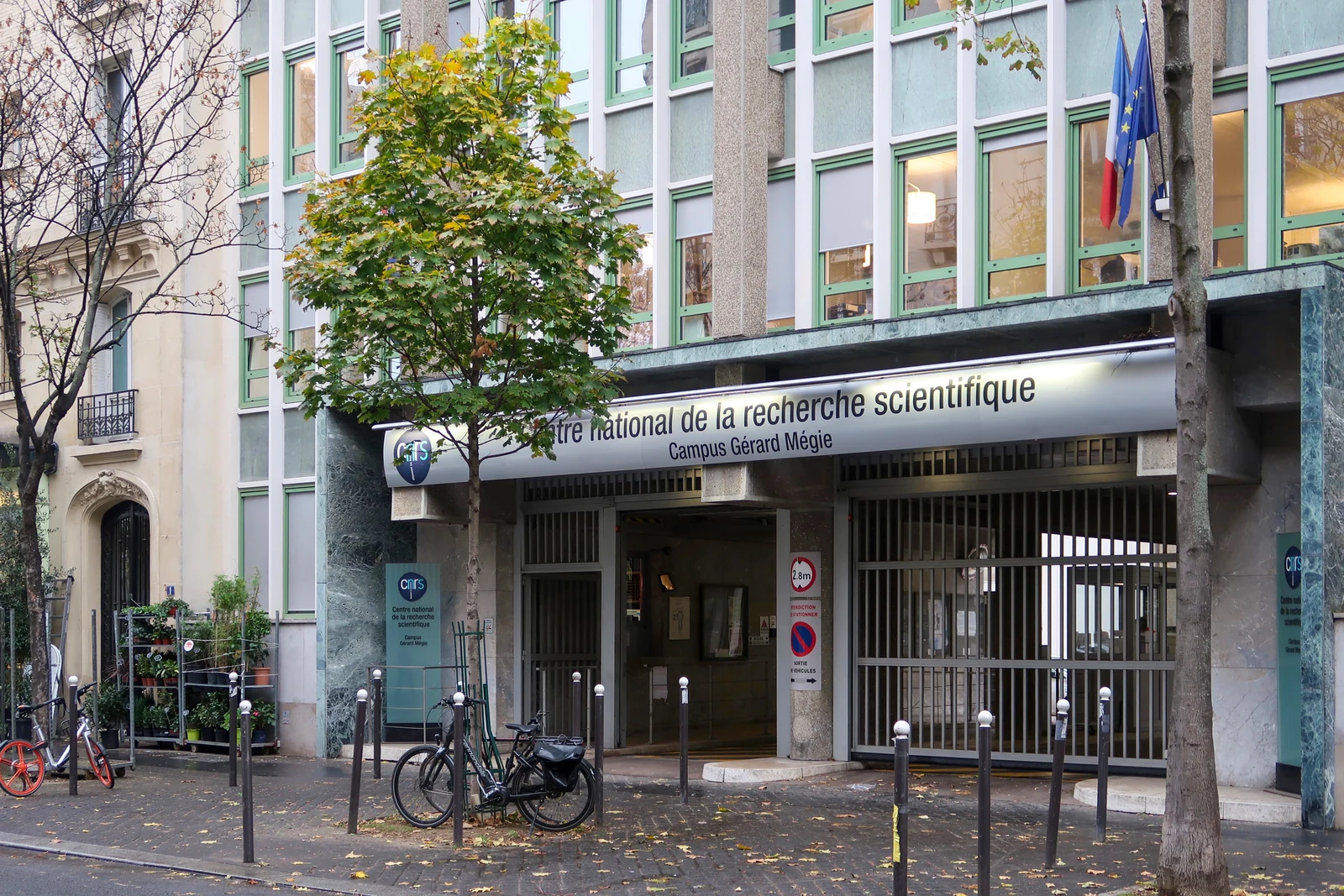
The word isolated should therefore be resolved into dimensions. Geographically, Les Aumettes lay away from major centers. Institutionally, he had a CNRS position. Socially, he maintained selected correspondence. Mathematically, his programs reached other researchers unevenly. No single yes/no label describes all four.
The report’s invitation also asked others to accept unfinishedness. A reader had to invest before proofs and standard definitions were available. Established mathematicians had their own programs; younger ones faced career risk. Lack of immediate uptake need not indicate contempt. It can reflect the cost of entering a vast architecture without a working seminar.
Later communities reduced that cost by supplying examples, survey articles, conferences, and stable editions. Once dessins had handbooks and computed cases, a student could enter through a local problem. This infrastructure is part of the harvest and deserves credit alongside the original sketch.
At the same time, later accessibility validates the sketch’s communicative power. Its images—children’s drawings, Lego, towers—made hard structures memorable across decades. Metaphor did not prove the conjectures, but it helped a dispersed community recognize that the conjectures belonged together.
The institutional and intellectual outcomes thus diverged. Grothendieck received the research time he requested. He did not produce the planned sequence of polished volumes. Other mathematicians developed several proposed fields. A truthful assessment can contain all three facts without turning one into excuse or indictment.
That first purpose did not diminish its mathematics. It sharpened the need to take stock. Grothendieck had to say what his activity since 1970 consisted of, how it connected to his recognized work, and what public value further time might have. His answer joined surfaces, children’s drawings, moduli, Galois groups, stacks, and tame spaces. It also joined proof with proposal: some statements were established theorems, some conjectures, some heuristics, and some architectural intuitions. Reading it responsibly means preserving those labels.4242Grothendieck, “Esquisse d’un Programme”; Schneps and Lochak, Geometric Galois Actions 1; Drinfeld, “On Quasitriangular Quasi-Hopf Algebras and on a Group That Is Closely Connected with Gal($\overline{\mathbb{Q}}/\mathbb{Q}$)”.
The document succeeded administratively; the CNRS position began in October. Its intellectual fate remained open. The drawings would attract a community. Anabelian conjectures would receive deep proofs in important cases. The Teichmüller tower would feed a theory bearing Grothendieck’s name alongside Drinfeld’s. Tame topology would have a more diffuse afterlife among several approaches to controlled geometry. Pursuing Stacks would circulate for decades before an edited volume appeared. The program had been sketched, not concluded.4343Grothendieck, “Brief an G. Faltings”; Tamagawa, “The Grothendieck Conjecture for Affine Curves”; Mochizuki, “The Profinite Grothendieck Conjecture for Closed Hyperbolic Curves over Number Fields”.
Restraint takes nothing from the subject. The subject is already astonishing: finite embedded graphs carry a faithful action of the absolute Galois group. Accuracy does not make the wonder smaller. It gives the reader something real to wonder at.
At almost the same moment, another manuscript was growing in a different direction. It too looked backward in order to address a future; it too treated writing as an unfolding investigation. But its objects were no longer primarily curves, groups, and moduli. They were memory, responsibility, friendship, authorship, transmission, abandonment, and the moral life of a community. Esquisse asked colleagues to take up mathematical seeds. Récoltes et Semailles would ask what had happened to the earlier harvest, who had reaped it, who had named it, and what remained capable of being sown.
Notes
- Grothendieck, “Esquisse d’un Programme”; Alexander Grothendieck, “Sketch of a Programme,” in Geometric Galois Actions 1: Around Grothendieck’s Esquisse d’un Programme, ed. Leila Schneps and Pierre Lochak, London Mathematical Society Lecture Note Series 242 (Cambridge University Press, 1997), https://doi.org/10.1017/CBO9780511758874.017; Alexander Grothendieck, “Brief an G. Faltings,” in Geometric Galois Actions 1: Around Grothendieck’s Esquisse d’un Programme, ed. Leila Schneps and Pierre Lochak, London Mathematical Society Lecture Note Series 242 (Cambridge University Press, 1997), https://doi.org/10.1017/CBO9780511758874.004. ↩
- Grothendieck, “Esquisse d’un Programme,” 7–8. ↩
- Grothendieck, “Esquisse d’un Programme,” 7–8. ↩
- Grothendieck, “Esquisse d’un Programme”. ↩
- Grothendieck, “Esquisse d’un Programme,” 8–9. ↩
- Grothendieck, “Esquisse d’un Programme”; Scharlau, Spirituality. ↩
- Grothendieck, “Esquisse d’un Programme,” 9–12. ↩
- Grothendieck, “Esquisse d’un Programme,” secs. 2–3. ↩
- Grothendieck, “Esquisse d’un Programme,” 9–15. ↩
- Grothendieck, “Esquisse d’un Programme”; Belyi, “On Galois Extensions of a Maximal Cyclotomic Field”; Leila Schneps, ed., The Grothendieck Theory of Dessins d’Enfants, London Mathematical Society Lecture Note Series 200 (Cambridge University Press, 1994). ↩
- Belyi, “On Galois Extensions of a Maximal Cyclotomic Field”. ↩
- Grothendieck, “Esquisse d’un Programme”; Belyi, “On Galois Extensions of a Maximal Cyclotomic Field”; Schneps, The Grothendieck Theory of Dessins d’Enfants. ↩
- Grothendieck, “Esquisse d’un Programme,” secs. 2–3. ↩
- Grothendieck, “Esquisse d’un Programme”; Belyi, “On Galois Extensions of a Maximal Cyclotomic Field”; Schneps, The Grothendieck Theory of Dessins d’Enfants. ↩
- V. G. Drinfeld, “On Quasitriangular Quasi-Hopf Algebras and on a Group That Is Closely Connected with Gal($\overline{\mathbb{Q}}/\mathbb{Q}$),” Leningrad Mathematical Journal 2, no. 4 (1991): 829–60. ↩
- Grothendieck, “Esquisse d’un Programme”; Belyi, “On Galois Extensions of a Maximal Cyclotomic Field”; Schneps, The Grothendieck Theory of Dessins d’Enfants. ↩
- Grothendieck, “Esquisse d’un Programme”; Belyi, “On Galois Extensions of a Maximal Cyclotomic Field”; Schneps, The Grothendieck Theory of Dessins d’Enfants. ↩
- Grothendieck, “Brief an G. Faltings”. ↩
- Grothendieck, “Esquisse d’un Programme”; Scharlau, Spirituality. ↩
- Akio Tamagawa, “The Grothendieck Conjecture for Affine Curves,” Compositio Mathematica 109, no. 2 (1997): 135–94, https://doi.org/10.1023/A:1000114400142; Shinichi Mochizuki, “The Profinite Grothendieck Conjecture for Closed Hyperbolic Curves over Number Fields,” Journal of Mathematical Sciences, the University of Tokyo 3, no. 3 (1996): 571–627. ↩
- Grothendieck, “Esquisse d’un Programme”; Belyi, “On Galois Extensions of a Maximal Cyclotomic Field”; Schneps, The Grothendieck Theory of Dessins d’Enfants. ↩
- Grothendieck, “Esquisse d’un Programme,” secs. 5–6. ↩
- Grothendieck, “Esquisse d’un Programme,” 37–39. ↩
- Grothendieck, “Esquisse d’un Programme,” 40–42. ↩
- Schneps, The Grothendieck Theory of Dessins d’Enfants; Schneps and Lochak, Geometric Galois Actions 1. ↩
- Grothendieck, “Esquisse d’un Programme”; Grothendieck, “Sketch of a Programme”; Schneps, The Grothendieck Theory of Dessins d’Enfants; Schneps and Lochak, Geometric Galois Actions 1. ↩
- Grothendieck, “Esquisse d’un Programme”; Belyi, “On Galois Extensions of a Maximal Cyclotomic Field”; Schneps, The Grothendieck Theory of Dessins d’Enfants. ↩
- Grothendieck, “Esquisse d’un Programme,” 7–8. ↩
- Grothendieck, “Brief an G. Faltings”; Tamagawa, “The Grothendieck Conjecture for Affine Curves”; Mochizuki, “The Profinite Grothendieck Conjecture for Closed Hyperbolic Curves over Number Fields”. ↩
- Grothendieck, “Esquisse d’un Programme”; Scharlau, Spirituality. ↩
- Ronald Brown, “The Origins of Alexander Grothendieck’s *Pursuing Stacks*,” https://groupoids.org.uk/pstacks.html. ↩
- Tamagawa, “The Grothendieck Conjecture for Affine Curves”; Mochizuki, “The Profinite Grothendieck Conjecture for Closed Hyperbolic Curves over Number Fields”. ↩
- Grothendieck, “Esquisse d’un Programme”; Belyi, “On Galois Extensions of a Maximal Cyclotomic Field”; Schneps, The Grothendieck Theory of Dessins d’Enfants. ↩
- Grothendieck, “Esquisse d’un Programme,” 12–15; Belyi, “On Galois Extensions of a Maximal Cyclotomic Field”. ↩
- Grothendieck, “Esquisse d’un Programme”; Schneps and Lochak, Geometric Galois Actions 1; Drinfeld, “On Quasitriangular Quasi-Hopf Algebras and on a Group That Is Closely Connected with Gal($\overline{\mathbb{Q}}/\mathbb{Q}$)”. ↩
- Grothendieck, “Esquisse d’un Programme”; Belyi, “On Galois Extensions of a Maximal Cyclotomic Field”; Schneps, The Grothendieck Theory of Dessins d’Enfants. ↩
- Grothendieck, “Esquisse d’un Programme”; Grothendieck, “Sketch of a Programme”; Schneps, The Grothendieck Theory of Dessins d’Enfants; Schneps and Lochak, Geometric Galois Actions 1. ↩
- Scharlau, Spirituality, ch. 15. ↩
- Grothendieck, “Esquisse d’un Programme”; Belyi, “On Galois Extensions of a Maximal Cyclotomic Field”; Schneps, The Grothendieck Theory of Dessins d’Enfants. ↩
- Grothendieck, “Esquisse d’un Programme,” 42. ↩
- Grothendieck, “Esquisse d’un Programme”; Belyi, “On Galois Extensions of a Maximal Cyclotomic Field”; Schneps, The Grothendieck Theory of Dessins d’Enfants. ↩
- Grothendieck, “Esquisse d’un Programme”; Schneps and Lochak, Geometric Galois Actions 1; Drinfeld, “On Quasitriangular Quasi-Hopf Algebras and on a Group That Is Closely Connected with Gal($\overline{\mathbb{Q}}/\mathbb{Q}$)”. ↩
- Grothendieck, “Brief an G. Faltings”; Tamagawa, “The Grothendieck Conjecture for Affine Curves”; Mochizuki, “The Profinite Grothendieck Conjecture for Closed Hyperbolic Curves over Number Fields”. ↩