Retirement is an administrative word. It names a change in salary, position, duties, and institutional belonging. It does not say whether a person stops thinking, writing, corresponding, or making plans. For Grothendieck, that distinction is indispensable. His CNRS research appointment ended in October 1988, when his pension began. A large editor-reported mathematical manuscript and opened 1991 letters show that retirement did not end work, without making the unreopened manuscript metadata independently verified. 11Grothendieck, “Lettre ouverte refusant le prix Crafoord”; Maltsiniotis, “Les Dérivateurs (The Derivators)”.
Even the month has been blurred. A brief online chronology renders the date as “January 10, 1988,” which may reflect conversion of the European notation 1.10.1988 into an English month-day phrase. Grothendieck’s April 19 letter says his retirement would begin in October, and the CNRS account gives the same month. This chapter therefore states October 1988 and does not assert an exact day. A small date error can create a false sequence in which retirement precedes his 60th birthday; source comparison prevents it. 22Schneps, “A Brief Timeline of Grothendieck’s Life”.
He turned 60 on March 28, 1988. That year returned him briefly to international notice through an honor he declined. The Royal Swedish Academy of Sciences awarded the Crafoord Prize in mathematics jointly to Grothendieck and Pierre Deligne for fundamental work in algebraic geometry, including étale cohomology and its consequences for the Weil conjectures. The joint citation placed teacher and former student together while Deligne remained a principal subject of dispute in Récoltes et Semailles. 33Scharlau, Spirituality, ch. 28.
On April 19, Grothendieck wrote to Tord Ganelius, the Academy’s permanent secretary, refusing the prize. A version appeared in Le Monde on May 4. His subsequent correspondence criticized small alterations in the newspaper text. Again, stages matter: private official letter, newspaper reproduction, later online scan. The refusal belongs to April 19; the wider public controversy followed. 44Grothendieck, “Lettre ouverte refusant le prix Crafoord”; Scharlau, Spirituality, ch. 28, p. 2.
The letter gave several reasons. He said his salary and approaching pension met his needs and those of people dependent on him. He argued that time, not an honor, tests the fertility of an idea. He objected to a distribution of money and prestige in which already established researchers received more while others lacked security. Most forcefully, he condemned what he regarded as a decline in the ethics of the scientific community, including tolerated appropriation.
These reasons are documentary facts because he wrote them. The letter’s broad accusation that theft had become nearly general is not established by being present in the letter. The distinction should remain visible even in paraphrase. A historian can say that Grothendieck refused partly because he believed the community’s ethics had deteriorated. It should not say the Crafoord Prize proved that deterioration.55Scharlau, Spirituality; Grothendieck, “Lettre ouverte refusant le prix Crafoord”.
A prize and its possible uses
Some correspondents admired the refusal. Others asked why he had not accepted the money and directed it toward a cause. The question had particular force because Grothendieck had spent earlier years arguing for ecological and antimilitarist action. Funds could support vulnerable researchers, peace work, or institutions he valued.66Scharlau, Spirituality; Maltsiniotis, “Les Dérivateurs (The Derivators)”.
His answer, where documented, was that accepting the prize under its conditions would itself be a betrayal. In his view, redirecting the money could not purify the instrument. This is an ethical position about complicity, not an arithmetic claim that money cannot help anyone. Readers may disagree. The biography should present the structure of the refusal rather than convert it into a test of integrity.
The refusal also resisted the prize’s temporal logic. Honors arrive after a community has decided which past work matters. Grothendieck insisted that fertility appears through offspring: later ideas, proofs, and fields. A prize freezes a portrait; a program continues to change in other hands. The irony is that the Crafoord citation joined him with Deligne, one of the clearest examples of such mathematical offspring and independent transformation.77Scharlau, Spirituality; Grothendieck, “Lettre ouverte refusant le prix Crafoord”.
One could read the joint award as reconciliation, provocation, or historical accuracy. No source establishes which meaning the Academy intended beyond its citation. Grothendieck’s refusal letter does not need an invented response from Deligne. The award went forward; Deligne accepted his share. Their different acts belong to two biographies.88Grothendieck, Lettre d’Alexandre Grothendieck à Robert Thomason; Alexandre Grothendieck, Letter to Luca Barbieri Viale, 1991, https://webusers.imj-prg.fr/~leila.schneps/grothendieckcircle/Letters/GrothBarbieri.pdf; Alexandre Grothendieck, Lettre à A. Y., 1991, https://csg.igrothendieck.org/wp-content/uploads/2025/10/L43d.pdf.
The controversy generated mail. Grothendieck answered many correspondents and rejected requests for interviews and appearances. He organized letters carefully, noting dates and replies. This practical exactness coexisted with the sweeping moral language of the refusal. The coexistence is more informative than a portrait of someone outside ordinary affairs.99Grothendieck, Lettre d’Alexandre Grothendieck à Robert Thomason; Grothendieck, Letter to Luca Barbieri Viale; Grothendieck, Lettre à A. Y.
The episode was his last major appearance in the mass press during the period. “Appearance” is itself indirect: he did not stand at a ceremony or give a broadcast. A letter appeared. The public encountered him through refusal, as it often had after 1970. Absence became an action with a text.1010Grothendieck, Lettre d’Alexandre Grothendieck à Robert Thomason; Grothendieck, Letter to Luca Barbieri Viale; Grothendieck, Lettre à A. Y.
Reading the refusal as a document
The letter’s sequence matters. It begins by acknowledging the honor and then states refusal. It does not open with abuse. The reasons proceed from personal sufficiency to a philosophy of recognition and then to communal ethics. A summary that quotes only the strongest accusation loses that construction.1111Grothendieck, Lettre d’Alexandre Grothendieck à Robert Thomason; Grothendieck, Letter to Luca Barbieri Viale; Grothendieck, Lettre à A. Y.
Material sufficiency is the narrowest reason. Grothendieck says that his income and pension cover his needs and those of dependents. He does not claim that money is irrelevant to everyone. The point is positional: giving more to someone already secure is not an obvious remedy for scientific inequality.1212Scharlau, Spirituality; Grothendieck, “Lettre ouverte refusant le prix Crafoord”; O’Connor and Robertson, “Alexander Grothendieck”.
The second reason concerns time. Honors are decisions made by committees under present conditions. Fertility is visible in consequences that unfold. A concept may be unfashionable when proposed and foundational later; a celebrated result may have limited offspring. This temporal argument grows directly from the harvest metaphor of Récoltes et Semailles.
It also has a limitation. “Time will tell” can excuse refusal to submit claims to current scrutiny. Mathematics cannot wait passively for reputation; proofs are checked now, and priorities require documents. Long-term fertility supplements rather than replaces contemporary evaluation.
The third reason widens from personal ethics to resource distribution. Prestigious researchers possess salaries, positions, networks, and the power to secure more. A large prize concentrates recognition. Grothendieck asks about those excluded from that circle. The argument anticipates modern debates over cumulative advantage.1313Scharlau, Spirituality; Grothendieck, “Lettre ouverte refusant le prix Crafoord”.
Yet prizes can fund research, signal neglected work, and give laureates a platform. The letter offers one side of a policy debate, not a theorem about every honor. Its biographical force comes from consistency with his suspicion of hierarchy and contrast with the honor he accepted in 1966. Changes over 22 years are part of a life.1414Scharlau, Spirituality; Grothendieck, “Lettre ouverte refusant le prix Crafoord”.
The final communal accusation reuses the vocabulary of Récoltes et Semailles: appropriation, tolerance of misconduct, and decline. Because the letter entered a newspaper, a bounded manuscript dispute became public shorthand. Readers who had not seen the evidence encountered the verdict first.1515Grothendieck, Lettre d’Alexandre Grothendieck à Robert Thomason; Grothendieck, Letter to Luca Barbieri Viale; Grothendieck, Lettre à A. Y.
Le Monde altered the letter slightly. Without a line-by-line consultation, this chapter does not specify every change. The fact of Grothendieck’s anger is reported; the exact justice of each complaint is not judged here. Newspaper publication always creates a second text with its own headline, cuts, and audience.1616Grothendieck, Lettre d’Alexandre Grothendieck à Robert Thomason; Grothendieck, Letter to Luca Barbieri Viale; Grothendieck, Lettre à A. Y.
The public response generated requests from journalists, activists, strangers, and institutions. The archive’s diversity prevents one phrase such as “universal admiration” or “general incomprehension.” People wrote for different reasons. Those who disagreed may have remained silent, making the surviving mail a biased sample.1717Scharlau, Spirituality; The Grothendieck Circle, “Unpublished Mathematical Texts,” https://webusers.imj-prg.fr/~leila.schneps/grothendieckcircle/unpubtexts.php; Schneps, “A Brief Timeline of Grothendieck’s Life”.
Grothendieck’s habit of answering and annotating letters shows an ethics of response alongside refusal. He could be attentive to a stranger’s practical difficulty and brusque toward an official. These differences should be documented case by case, not converted into a stable character trait.1818Grothendieck, Lettre d’Alexandre Grothendieck à Robert Thomason; Grothendieck, Letter to Luca Barbieri Viale; Grothendieck, Lettre à A. Y.
The prize also rejoined life periods. Correspondence touched Le Chambon, ecological activism, former colleagues, family, and mathematical recognition. An award for 1960s work activated the archive of later values. Retirement did not close accounts; it concentrated them.1919Scharlau, Spirituality; Grothendieck, “Lettre ouverte refusant le prix Crafoord”.
What ended in October
The CNRS arrangement had begun in October 1984 after the Esquisse application. It freed Grothendieck from regular university teaching and left him largely working from home. Retirement in October 1988 ended that institutional research status. It did not create his isolation, which had developed over years, and it did not immediately cause his move from Les Aumettes, which came in 1991.2020Scharlau, Spirituality; Grothendieck, “Lettre ouverte refusant le prix Crafoord”; O’Connor and Robertson, “Alexander Grothendieck”.
The four-year interval had not produced the conventional output the CNRS report might suggest. Récoltes et Semailles and La Clef des Songes absorbed immense labor. Mathematical notes on topology appeared, and correspondence continued, but no sequence of formally published research papers fulfilled the program chapter by chapter. This fact can be stated without pretending to audit a contract whose exact terms are not in the available record.2121Scharlau, Spirituality; Grothendieck, “Lettre ouverte refusant le prix Crafoord”; O’Connor and Robertson, “Alexander Grothendieck”.
Retirement also changed the meaning of institutional obligation. Before October 1988, one might ask what a publicly funded research position expected. Afterward, his manuscripts were private work in a stronger administrative sense, though they remained connected to mathematical communities by letters and circulation. Public value and private ownership did not become simple. Earlier employment, archive location, permissions, and later estate decisions all affected access.2222Scharlau, Spirituality; Grothendieck, “Lettre ouverte refusant le prix Crafoord”; O’Connor and Robertson, “Alexander Grothendieck”.
The word “pension” can suggest quiet closure. Grothendieck’s late 1980s were anything but textually quiet. Notes, spiritual letters, responses to prize mail, and mathematical questions continued. Retirement removed a title; it did not settle which kind of writing would dominate.2323Scharlau, Spirituality; Grothendieck, “Lettre ouverte refusant le prix Crafoord”.
Administrative retirement and four other withdrawals
Five different acts are often compressed into “he retired.” The first was leaving IHÉS in 1970. The second was moving from Paris-centered positions to Montpellier in 1973. The third was leaving regular teaching for CNRS research in 1984. The fourth was pension retirement in October 1988. The fifth was relocation and intensified privacy in 1991.2424Scharlau, Spirituality; Grothendieck, “Lettre ouverte refusant le prix Crafoord”; O’Connor and Robertson, “Alexander Grothendieck”.
Only the fourth is retirement in the strict administrative sense. The others are resignations, transfers, detachments, or withdrawals. Keeping them separate prevents a 21-year process from becoming one dramatic exit.
The 1984 CNRS move was not retirement because he remained salaried as a researcher. Esquisse was part of the application. Calling him “retired” while he held that post erases the institutional support and misdates the relation between program and pension.2525Scharlau, Spirituality; Grothendieck, “Lettre ouverte refusant le prix Crafoord”; O’Connor and Robertson, “Alexander Grothendieck”.
The 1991 move was not retirement because retirement had already occurred. It changed address, social accessibility, and custody of papers. Its motives cannot be inferred from pension status alone.
This vocabulary affects causality. If one says he retired “after refusing the prize,” the reader may infer the refusal caused retirement. His age and planned pension were already known; the letter itself mentions the coming October. The events coincide in a year but have different administrative mechanisms.2626Scharlau, Spirituality; Grothendieck, “Lettre ouverte refusant le prix Crafoord”.
Institutional files could refine the exact effective day, classification, pension rules, and attachment. Until those are examined, month-level wording is enough. False precision would add no narrative value.
Les Dérivateurs: the editors’ dates
Later secondary reports about 1990 spiritual and private events remain omitted. For the next mathematical route, Matthias Künzer’s transcription, Jean Malgoire’s consultation, and Georges Maltsiniotis’s editorial account assign Les Dérivateurs an October 1990 beginning and a span through the first half of 1991. The dates come from the editors’ page and from Malgoire’s account in the Montpellier finding aid, not from a dated title page, so they remain attributed rather than independently established.2727Université de Montpellier, “Archives Grothendieck”.2828Scharlau, Spirituality; Maltsiniotis, “Les Dérivateurs (The Derivators)”.
The same editors report 1,976 author-numbered pages and present a 19-chapter table. These are evidence about the editorial description and manuscript scale, not an author-final contents page or a theorem-level quality judgment. The electronic state required deciphering, transcription, comparison, and visible editorial intervention.2929Maltsiniotis, “Les Dérivateurs (The Derivators)”.3030Maltsiniotis, “Les Dérivateurs (The Derivators)”.
Chapter 59 is the sole Part X owner of the derivator seven-step explanation. Chapter 60 carries no definition, formula, Kan-extension account, worked example, or failure boundary; it records only dated retirement context, manuscript state, custody, correspondence, and later editing.3131Maltsiniotis, “Les Dérivateurs (The Derivators)”; Grothendieck, Lettre d’Alexandre Grothendieck à Robert Thomason.
The April 2, 1991, Thomason letter is opened primary evidence that Grothendieck remained in mathematical correspondence. It does not verify every manuscript date, count, chapter division, priority claim, or line of influence.3232Grothendieck, Lettre d’Alexandre Grothendieck à Robert Thomason.
Heller’s 1988 memoir remains an independent historical route. 3333Heller, Homotopy Theories.3434Maltsiniotis, “Les Dérivateurs (The Derivators)”; Grothendieck, Lettre d’Alexandre Grothendieck à Robert Thomason; Heller, Homotopy Theories.
The letter to Thomason
On April 2, 1991, from Les Aumettes, Grothendieck wrote Robert Thomason. The surviving edited French letter provides a comparatively compact introduction to derivators. Its heading and date are direct evidence that he remained in mathematical correspondence months before leaving the house. 3535Grothendieck, Lettre d’Alexandre Grothendieck à Robert Thomason, 2.
The letter matters for genre. The editors describe Les Dérivateurs as an exceptionally large manuscript; a letter must select. It identifies motivations and contrasts chosen for another expert. Letters can therefore serve as maps into large manuscripts, though they do not replace the manuscript’s definitions and proofs.
Thomason was a significant homotopy theorist and -theorist. Addressing him placed the project in a living mathematical conversation, not only an internal monologue. The record does not support a claim about Thomason’s agreement or influence unless his response is examined. The letter proves outreach, not reception.
Its 2011 typesetting date is another separate layer. Grothendieck wrote the letter in 1991. Matthias Künzer later edited it. Tim Hosgood later prepared an English translation hosted by the Circle. Citation should identify which layer supplies the wording.3636Grothendieck, Lettre d’Alexandre Grothendieck à Robert Thomason; Grothendieck, Letter to Luca Barbieri Viale; Grothendieck, Lettre à A. Y.
June 1991: correspondence before departure
On June 24, 1991, Grothendieck wrote separate letters to Luca Barbieri Viale and to a correspondent identified as “A.Y.” The first belongs to mathematical and personal correspondence; the second addresses physics and broader questions. 3737Grothendieck, Letter to Luca Barbieri Viale; Grothendieck, Lettre à A. Y.
Their shared date offers a documentary cross-section. Two months—or less—before leaving Les Aumettes, he was not silent. He was communicating across fields. The letters do not justify a claim that he had completed a unified theory of physics, nor that every speculative statement was mathematical. They show active writing and differentiated addressees.
Late correspondence also complicates the phrase “refused all contact.” Grothendieck reduced access, declined many invitations, and later protected his address. Yet contact persisted selectively. Absolutes erase both withdrawal and relationship. “Increasingly secluded and selective” is more accurate for this phase.
The world outside the manuscripts
The letters were written during the Gulf War year. Scharlau’s later account reports a last long telephone conversation with Mebkhout on January 17, 1991, hours before the war began, in which Grothendieck condemned political and military action. The detail is testimony and should not be embellished into dialogue.3838Grothendieck, Lettre d’Alexandre Grothendieck à Robert Thomason; Grothendieck, Letter to Luca Barbieri Viale; Grothendieck, Lettre à A. Y.
This political attention shows that late abstraction did not seal him from current events. Antimilitarism linked the 1991 reaction to the 1970 IHÉS break and earlier activism. Continuity of concern does not imply continuity of organization; there was no revived Survivre et Vivre movement around him.3939Scharlau, Spirituality; Maltsiniotis, “Les Dérivateurs (The Derivators)”.
Practical correspondence also continued. Bills, books, repairs, garden, and paper custody appear in accounts of the final letter. Such details matter because they resist the idea that every late act was symbolic. A move requires ordinary arrangements even when later narrative makes it mysterious.
The date shared by the Barbieri Viale and A.Y. letters suggests a day of concentrated correspondence, but nothing more should be inferred. It does not prove they were written in one sitting or mailed together. Documentary coincidence is not a scene.
The range of subjects—derivators in April, mathematics and personal matters in June, and physics in another June letter—shows differentiated correspondence rather than one undifferentiated form of address.4040Maltsiniotis, “Les Dérivateurs (The Derivators)”; Grothendieck, Lettre d’Alexandre Grothendieck à Robert Thomason; Heller, Homotopy Theories.
This selectivity helps define withdrawal. It was control over channels, not total muteness. The move of 1991 would intensify that control by removing a broadly known address.
Leaving Les Aumettes
The date of departure is reported with slight variation. Scharlau’s reconstruction gives July 24, 1991, as probable; brief timelines often say August. This account therefore says “late July 1991, probably July 24,” and notes that some chronologies round it to August.
Scharlau’s later account says Grothendieck left a practical letter with instructions about the rented house, books, and papers. It also says that he left his typewriter and large quantities of manuscripts. The underlying letter has not been independently checked for this account, so these details remain attributed testimony. A biographer cannot describe his final glance at the vineyards, the sound of the car, or thoughts on the road. Those would be invented.
The departure had been prepared to some degree. Mathematical material had been entrusted to Jean Malgoire, and practical arrangements were made. The exact sequence and destination contacts require archive-level verification. “Sudden” describes how the move appeared to some people; it should not imply that no preparation existed.
The phrase “he disappeared” entered popular accounts. It is useful only if defined. Grothendieck did not vanish legally or cease to exist. He relocated to a secluded setting in Ariège, eventually associated publicly with Lasserre, and kept the address from broad circulation. Selected people knew where he was and some visited or corresponded. Public accessibility diminished drastically.
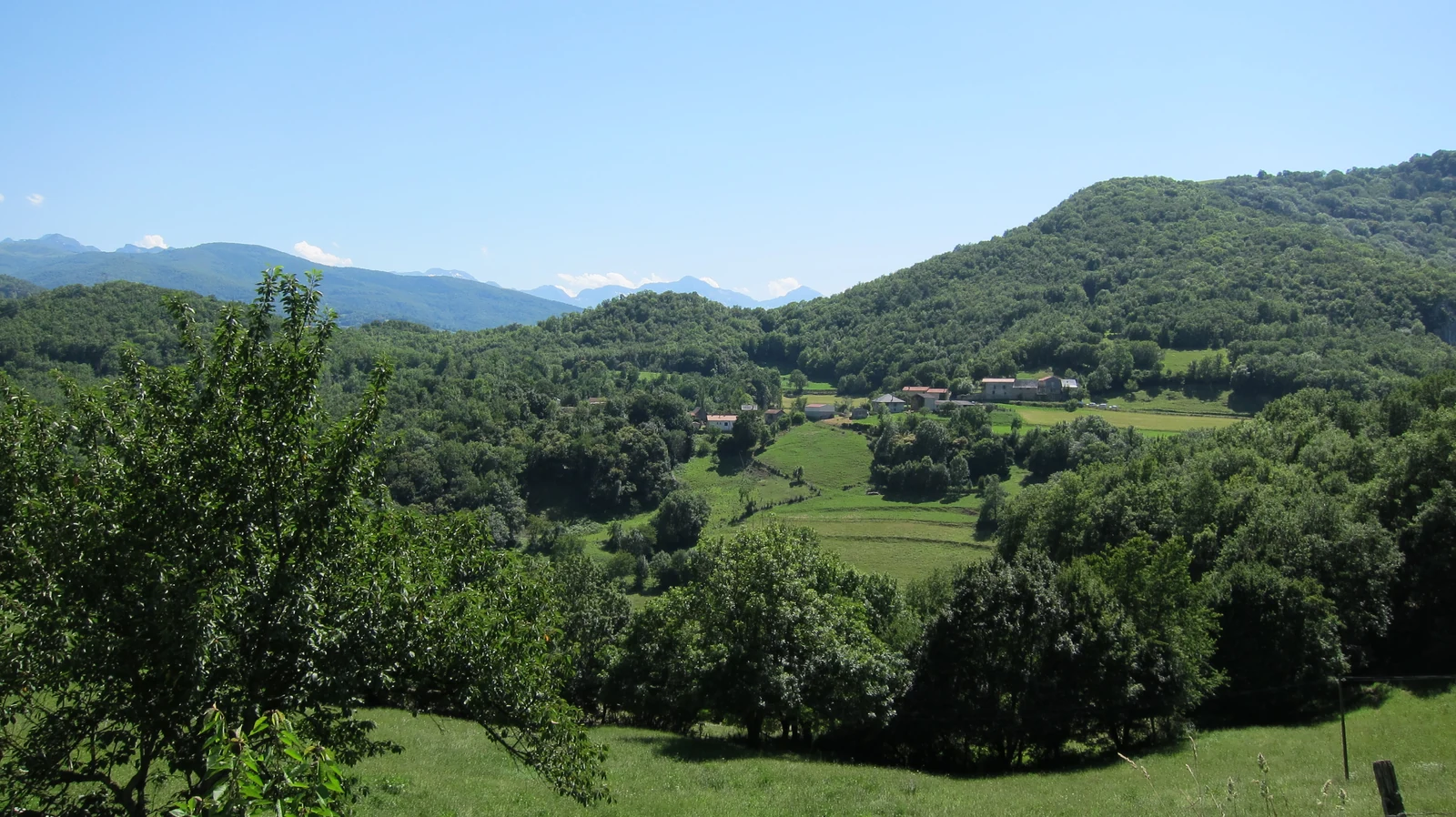
This distinction avoids turning seclusion into a magic trick. It also respects privacy. A hidden address can be an attempt to control intrusion. Later revelation of the village does not authorize a biography to reconstruct routes, identify neighbors unnecessarily, or stage a hunt.
At Les Aumettes remained what the Montpellier project later described as approximately 18,000 pages of mathematical writings. The number is an archival estimate and should be presented as such. It includes more than the six chapters in this Part: La Longue Marche, Pursuing Stacks, topology notes, Les Dérivateurs, and other material. 4141The Grothendieck Circle, “Unpublished Mathematical Texts”.
Archive and abandonment are not synonyms. Leaving papers behind can reflect practical limits, delegation, or a decision about custody. The sources report that material was left and later scanned; they do not authorize a single motive. Some personal documents were destroyed in an earlier period, while mathematical papers survived. The resulting archive is therefore both extensive and selective.
The papers as a second retirement record
Personnel files record titles and pension. Manuscripts record continued labor. Read together, they show why institutional biography alone fails. An October 1988 line can say “retired” while leaves dated 1991 say “working.”
The reported 18,000 pages are not one manuscript. They include projects at different stages, duplicates, calculations, drafts, correspondence, and perhaps material not yet classified. Counting pages does not count works. An archive inventory must identify units, dates, physical folders, and relations among versions.
Digital scanning changes preservation but not interpretation. A scan protects access to a leaf and enables remote consultation. It does not establish sequence, transcribe handwriting, or explain an abandoned notation. Metadata and finding aids are as important as pixels.
The University of Montpellier portal was unavailable during this account’s access check. The chapter therefore cites the Grothendieck Circle’s archival guide for the approximate count and uses no inaccessible leaf as evidence. An offline portal is not evidence that the archive vanished; it is a constraint on verification.
Custody carries ethical obligations. Mathematical manuscripts may have public scholarly value, while letters contain third-party privacy. A responsible archive can restrict sensitive correspondence, describe redactions, and make mathematical leaves available under clear terms. “Open everything” and “seal everything” are both inadequate universal rules.
Selection also shapes legacy. Editors naturally choose coherent or influential projects first. Pursuing Stacks and Les Dérivateurs attract specialists capable of the labor. Other notes may remain unknown, making later reputation reflect editability as much as authorial priority.
The archive is thus another community. Cataloguers, heirs, mathematicians, translators, rights holders, and readers negotiate what the retired writer left. Those later decisions lie beyond this chapter; the material basis existed before the departure from Les Aumettes.
The grammar of disappearance
Popular accounts favor a sharp sentence: in 1991 Grothendieck disappeared. The verb has narrative force and low precision. It can mean that journalists did not know his address, that colleagues stopped receiving replies, that he moved secretly, or that he ceased legal and social existence. Only the first three, with qualifications, approach the evidence.4242Scharlau, Spirituality; Maltsiniotis, “Les Dérivateurs (The Derivators)”.
“Withdrew” is better but still needs an object. He withdrew from public mathematical institutions long before 1991, from prize culture in 1988, and from a widely known address in 1991. He did not withdraw from all writing or all human contact.4343Scharlau, Spirituality; Grothendieck, “Lettre ouverte refusant le prix Crafoord”.
“Secluded himself” can imply one unilateral act. Scharlau’s later account indicates that other people helped with practical arrangements, and later records document selected visitors. Privacy was socially maintained. The hidden village was not outside society.
“Vanished into the Pyrenees” adds picturesque geography and erases residents. Ariège was a lived region, not an empty wilderness. Lasserre was a village, not a metaphysical elsewhere. A biography should not convert rural privacy into exotic backdrop.
The exact departure route is unnecessary. Scharlau’s reconstruction includes roads and imagined landscape, but the evidence supports only practical facts and a probable date. This chapter stops at the boundary of the record.
What retirement did not end
Between October 1988 and the departure of 1991, Grothendieck:
- maintained substantial correspondence;
- publicly circulated and qualified spiritual claims;
- wrote the editor-reported Dérivateurs manuscript;
- wrote to Thomason about its theory;
- wrote late letters on mathematics and physics;
- made practical arrangements for papers and departure.
This list is not an argument that all was well, nor a denial of withdrawal. It establishes activity.
Retirement did end a continuous formal relation to French research institutions. The later manuscript had no seminar apparatus like SGA and no publisher working beside the author. Its survival depended on personal custody and later editorial labor. That change helps explain why page count did not translate into contemporary influence.
It also changed the economy of answerability. An employed researcher may have colleagues, reports, students, and institutional mail. A retired private writer can choose recipients and ignore conventions. Freedom increases; shared correction can decrease. Grothendieck had sought lightness from assigned tasks in Esquisse. Retirement delivered the administrative fact of that freedom, with both fertile and isolating consequences.
The afterlife already beginning
Although this Part ends in 1991, later publication history illuminates what left the house. Maltsiniotis, Künzer, and Malgoire worked to decipher and typeset Les Dérivateurs. Large sections became electronically available. The editorial portal describes the method: corrections and editorial comments are marked; manuscript page numbers are preserved; uncertainty is signaled. This is not invisible cleanup. It is an accountable edition in progress. 4444Maltsiniotis, “Les Dérivateurs (The Derivators)”.
Pursuing Stacks followed another path to SMF Volume I in 2022. Récoltes et Semailles reached Gallimard the same year. These dates should not enter the 1991 narrative as fulfillment known in advance. They demonstrate that retiring from publication does not prevent later editors from making texts public, and that such publication raises consent and estate questions beyond composition.4545Scharlau, Spirituality; Maltsiniotis, “Les Dérivateurs (The Derivators)”.
The archive turns the ethics of credit back upon biographers. Editors deserve named credit for transcription and apparatus. The author remains author of the manuscript, including its errors. Later mathematical results should not be inserted silently. A facsimile and a corrected reading edition answer different needs. The history of the edition belongs beside the history of the text.
Three ways of counting the years
An institutional ledger records CNRS appointment in 1984, pension in October 1988, and no subsequent formal research post. On that ledger, retirement is clear.
A publication ledger records no conventional stream of articles during these years, typescript circulation for Récoltes et Semailles and Pursuing Stacks, and later editions produced long after composition. On that ledger, public output is irregular and delayed.
A manuscript ledger records thousands of pages, culminating in Les Dérivateurs. On that ledger, work intensifies rather than ends. The apparent contradiction disappears once the ledgers are kept separate.
Biographies often privilege the publication ledger because books and articles are easy to count. For Grothendieck’s late life, that choice creates a decade of silence where the manuscript ledger shows abundance. Privileging manuscript alone creates the opposite error: every page appears as an achievement equal to a reviewed theorem.
The three-ledger method supplies proportion. Employment establishes context, publication establishes contemporary availability, and manuscripts establish activity. Mathematical review establishes quality. None can substitute for the others.
The same method clarifies legacy. A later edition moves an item from manuscript ledger to publication ledger but does not change its composition date. An editor’s work creates a new publication event around an old authorial event.
For readers, the distinction explains why mathematicians did not respond uniformly. Some did not have the text; some had only copies; some faced unfinished thousands of pages; some chose other problems. Lack of uptake cannot be assessed without availability.
For the author, the distinction may have been painful. He could experience intense work and receive little public answer. The documentary account can recognize that experience without blaming a community for failing to absorb inaccessible material instantly.
Retirement seen from outside
For former colleagues, retirement may have changed little because Grothendieck had already left ordinary seminars. For administrators, it closed a personnel file. For correspondents, the known address and possibility of a reply mattered more than employment status. For later journalists, the prize refusal supplied the memorable date.
These viewpoints create competing chronologies. An institutional history chooses 1988. A popular mystery chooses 1991. A mathematical history might choose 1983 for Pursuing Stacks, 1984 for Esquisse, or 1990 for Les Dérivateurs. Part X holds them together without selecting one “true” retirement.4646Scharlau, Spirituality; Grothendieck, “Lettre ouverte refusant le prix Crafoord”; O’Connor and Robertson, “Alexander Grothendieck”.
The change also affected generations differently. Mathematicians who had attended Bois-Marie remembered a working leader. Younger researchers encountered printed EGA/SGA, stories, or photocopies. By 1991, “Grothendieck” could signify a person, a body of concepts, and a legend with little direct contact among them.4747Scharlau, Spirituality; Maltsiniotis, “Les Dérivateurs (The Derivators)”.
Later formal editions narrowed that distance but could not recreate dialogue. A reader can now study Volume I of Pursuing Stacks; she cannot ask its author which provisional definition he would keep. Editorial notes become the substitute, and their limits should be visible.
The archive likewise changes retirement retrospectively. Once thousands of pages are cataloged, an apparently silent period looks productive. But discovery of papers should not lead historians to claim contemporaries ought to have known them. Availability at the time remains decisive.
A chronology of 1988–1991
The sequence for this chapter is exact at month level only where the sources consulted support that precision. On March 28, 1988, Grothendieck turned sixty. On April 19, he declined the prize. On May 4, the letter reached Le Monde. In October pension retirement began. In 1989–1990 spiritual correspondence intensified. The editor-reported manuscript belongs between retirement and the opened 1991 letters, but its exact span is not repeated as primary chronology. On April 2, 1991, he wrote Thomason. On June 24, he wrote at least two other surviving letters. In late July, probably on July 24, he left Les Aumettes.4848Scharlau, Spirituality; Grothendieck, “Lettre ouverte refusant le prix Crafoord”; Maltsiniotis, “Les Dérivateurs (The Derivators)”; Grothendieck, Lettre d’Alexandre Grothendieck à Robert Thomason; Grothendieck, Letter to Luca Barbieri Viale; Grothendieck, Lettre à A. Y.
Every verb carries a source state. “Declined” comes from the signed letter. “Reached Le Monde” comes from publication history. “Began” is an editor-reported verb for the late manuscript. “Probably” marks the departure reconstruction. This hierarchy prevents a probable date from acquiring the certainty of a dated letter.
The chronology contains no claim that he stopped mathematics in 1988, recovered it after a diagnosis, or vanished without anyone knowing. Those common narrative links are not facts. What survives is more complex and sufficiently dramatic.4949Scharlau, Spirituality; Maltsiniotis, “Les Dérivateurs (The Derivators)”.
The retirement paradox
In the report with the printed January 1984 terminal date—and a conflicting 1983 catalog label—Grothendieck had sought release from assigned tasks. Retirement granted that release completely. The result was not leisure in the ordinary sense but writing without an agreed external form.
Freedom from deadlines allowed an exploration of exceptional reported scale. Freedom from seminar obligation reduced pressure to compress, answer, and publish. The same condition nourished abundance and limited transmission.
This paradox belongs to institutions as much as personality. Seminars constrain and support. Editors interrupt and clarify. Students demand examples. Solitary work protects long attention. A creative life may need both, and lose something when either becomes absolute.
The manuscript afterlife partially rebuilt the missing institution. Editors supplied tables, readers supplied questions, and later mathematicians tested concepts. They did so after the author had withdrawn from control. The fertility he valued emerged through a community he no longer inhabited publicly.
The status of unfinished labor
An unfinished manuscript is not a failed publication by definition. It may be exploratory work never intended for issue, a draft interrupted, or a source consciously left for others. Les Dérivateurs appears highly structured but lacks an author-approved final edition. Its status combines achievement and incompletion.
Calling it a “masterpiece” before full review would be promotional. Calling it “mere notes” would ignore organization and influence. The neutral phrase “major late mathematical manuscript” identifies scale and subject without deciding every theorem’s value.
Retirement changes how unfinished labor is judged. An employed scholar may be expected to publish reports; a private retired writer may write for discovery. Later editors should not impose a contractual standard retroactively, though earlier CNRS obligations remain a separate historical question.
Readers also need a stopping rule. No biography can summarize a manuscript at the editors’ reported scale responsibly without specialist syntheses. The chapter records the reported table of contents and leaves the rest to specialists; Chapter 59 explains the derivators. Clear boundaries are preferable to invented command.
Retirement in the final accounting
The chapter ends without a photograph of Lasserre. Part X’s evidence closes at departure and archive custody.
That boundary protects continuity as well as privacy. The man who left Les Aumettes did not become a blank. He entered another documented period with different sources and stricter limits on access. Ending here means handing the chronology forward, not declaring an absence.
Retirement, in the final accounting, is one true word among several. “Writer,” “correspondent,” “mathematician,” “religious witness,” and “private resident” remain true in different documented senses. Biography fails when the administrative noun erases the rest.
It also fails when page count erases retirement’s reality. Grothendieck no longer held the post, taught the students, or participated in a laboratory’s ordinary exchange. Continuing work did not make the institutional transition imaginary.
The balanced sentence therefore has two halves: he retired from formal research employment in October 1988, and he continued producing extensive manuscripts afterward. Neither half qualifies the other away.
Reaping, sowing, pursuing
The three verbs in the Part title now describe simultaneous acts rather than successive eras. Récoltes et Semailles reaped a mathematical past and tried to sow an ethical testimony. Esquisse sowed programs whose harvest came through other mathematicians. Pursuing Stacks followed one intended object into another foundational landscape. Retirement did not stop any of these motions; it changed their relation to institutions.
Reaping without community became grievance. Sowing without control became influence and misunderstanding. Pursuing without editorial limits became immense unfinished manuscripts. Each strength carried a risk visible in the documentary record. None can be reduced to a moral lesson about solitude.
The mathematics also forms a coherent arc. Dessins preserve finite combinatorial structure under Galois action. Anabelian geometry asks whether nonabelian covering data reconstructs geometry. Higher groupoids preserve paths and all higher homotopies. Chapter 59 supplies the derivator link; this chapter does not restate it. Across fields, Grothendieck resisted throwing information away too early.
The biographical method has followed that mathematical instinct. It preserves composition, circulation, transcription, and publication as different data. It preserves allegation and counterstatement. It preserves spiritual claim and public consequence without converting either into diagnosis. It preserves retirement and work.
Preservation is not accumulation for its own sake. The chapter still selects, paraphrases, and ends. What it refuses is premature quotienting: one date for several events, one author for collective labor, one label for spiritual writing, one disappearance for 23 later years.
The remaining archive will require further choices. Some pages deserve publication, some restriction, some mathematical correction, and some simple cataloging. The author’s wishes, rights of correspondents, scholarly value, and public fascination will not align automatically.
At the close of 1991’s Les Aumettes period, the most accurate image is therefore not an empty landscape. It is a separation of routes. The person travels to another address. Manuscripts remain in custody. Ideas travel through copies and students. Institutions retain records. Later editors have not yet begun the work by which many readers will meet the texts.5050Scharlau, Spirituality; The Grothendieck Circle, “Unpublished Mathematical Texts”; Schneps, “A Brief Timeline of Grothendieck’s Life”.
The separation makes later reunion possible but not inevitable. Papers can be lost; concepts can be independently reinvented; privacy can be violated; an edition can distort. The archive’s survival is a contingent achievement by many people. Its history will need the same differentiated credit demanded for mathematics.
One final distinction keeps the transition exact. A manuscript can survive physically while its argument remains unavailable; a scan can be available while its rights remain unsettled; an edition can be published while authorial approval is absent; a concept can be influential while its textual source is unread. “Legacy” is not one condition but the interaction of preservation, access, permission, understanding, and use.
In 1991 those conditions separated sharply. Preservation depended on papers left with or entrusted to others. Access narrowed with the change of address. Permission would later become contested. Understanding required editors able to read the mathematics. Use depended on communities finding questions in the pages. The conditions remained separate at the boundary.5151Scharlau, Spirituality; The Grothendieck Circle, “Unpublished Mathematical Texts”; Schneps, “A Brief Timeline of Grothendieck’s Life”.
This measured ending also respects chronology. Grothendieck was alive, writing, and choosing privacy. The University of Montpellier digitization, SMF edition, Gallimard volumes, and public debates lay ahead. They belong to later dates and other actors. Part X closes with work present on paper but not yet present in the forms through which 21st-century readers would eventually know it fully.
A boundary, not an ending
The title “Retirement” can now be heard in three registers. Institutionally, it occurred in October 1988. Publicly, the Crafoord refusal marked a retreat from honors. Geographically and socially, leaving Les Aumettes in 1991 marked a further withdrawal. These are related but separate transitions.5252Scharlau, Spirituality; Grothendieck, “Lettre ouverte refusant le prix Crafoord”.
None is the end of the life. Grothendieck lived until 2014. None is the end of writing; the later archive contains extensive work. None is the end of mathematical influence; dessins, anabelian geometry, higher categories, and derivators developed through other people. The end of Part X is the end of a mode of access.5353Maltsiniotis, “Les Dérivateurs (The Derivators)”; Grothendieck, Lettre d’Alexandre Grothendieck à Robert Thomason; Heller, Homotopy Theories.
Before 1991, a mathematician could at least address Les Aumettes, though a reply was uncertain. After the move, the address was guarded. Before retirement, a CNRS file connected Grothendieck to an institution. After retirement, manuscripts reached communities through personal custody. Before formal late editions, influence traveled by photocopy and rumor. These changes shaped what others could know.5454Scharlau, Spirituality; Grothendieck, “Lettre ouverte refusant le prix Crafoord”; O’Connor and Robertson, “Alexander Grothendieck”.
The life therefore moves from sowing to archive. Seeds had been scattered through reports, typescripts, letters, students, and disputes. Some grew publicly; others remained in boxes. Grothendieck no longer supervised the field. Loss of control had been one of the central complaints in Récoltes et Semailles. It was also the condition under which a collective mathematical afterlife became possible.
Retirement had not stopped the work. It had removed the last ordinary frame through which the work could be seen.
Part XI begins with a dated documentary callback after the move; it receives no arrival scene and no derivator explanation.
Notes
- Grothendieck, “Lettre ouverte refusant le prix Crafoord”; Maltsiniotis, “Les Dérivateurs (The Derivators)”. ↩
- Schneps, “A Brief Timeline of Grothendieck’s Life”. ↩
- Scharlau, Spirituality, ch. 28. ↩
- Grothendieck, “Lettre ouverte refusant le prix Crafoord”; Scharlau, Spirituality, ch. 28, p. 2. ↩
- Scharlau, Spirituality; Grothendieck, “Lettre ouverte refusant le prix Crafoord”. ↩
- Scharlau, Spirituality; Maltsiniotis, “Les Dérivateurs (The Derivators)”. ↩
- Scharlau, Spirituality; Grothendieck, “Lettre ouverte refusant le prix Crafoord”. ↩
- Grothendieck, Lettre d’Alexandre Grothendieck à Robert Thomason; Alexandre Grothendieck, Letter to Luca Barbieri Viale, 1991, https://webusers.imj-prg.fr/~leila.schneps/grothendieckcircle/Letters/GrothBarbieri.pdf; Alexandre Grothendieck, Lettre à A. Y., 1991, https://csg.igrothendieck.org/wp-content/uploads/2025/10/L43d.pdf. ↩
- Grothendieck, Lettre d’Alexandre Grothendieck à Robert Thomason; Grothendieck, Letter to Luca Barbieri Viale; Grothendieck, Lettre à A. Y. ↩
- Grothendieck, Lettre d’Alexandre Grothendieck à Robert Thomason; Grothendieck, Letter to Luca Barbieri Viale; Grothendieck, Lettre à A. Y. ↩
- Grothendieck, Lettre d’Alexandre Grothendieck à Robert Thomason; Grothendieck, Letter to Luca Barbieri Viale; Grothendieck, Lettre à A. Y. ↩
- Scharlau, Spirituality; Grothendieck, “Lettre ouverte refusant le prix Crafoord”; O’Connor and Robertson, “Alexander Grothendieck”. ↩
- Scharlau, Spirituality; Grothendieck, “Lettre ouverte refusant le prix Crafoord”. ↩
- Scharlau, Spirituality; Grothendieck, “Lettre ouverte refusant le prix Crafoord”. ↩
- Grothendieck, Lettre d’Alexandre Grothendieck à Robert Thomason; Grothendieck, Letter to Luca Barbieri Viale; Grothendieck, Lettre à A. Y. ↩
- Grothendieck, Lettre d’Alexandre Grothendieck à Robert Thomason; Grothendieck, Letter to Luca Barbieri Viale; Grothendieck, Lettre à A. Y. ↩
- Scharlau, Spirituality; The Grothendieck Circle, “Unpublished Mathematical Texts,” https://webusers.imj-prg.fr/~leila.schneps/grothendieckcircle/unpubtexts.php; Schneps, “A Brief Timeline of Grothendieck’s Life”. ↩
- Grothendieck, Lettre d’Alexandre Grothendieck à Robert Thomason; Grothendieck, Letter to Luca Barbieri Viale; Grothendieck, Lettre à A. Y. ↩
- Scharlau, Spirituality; Grothendieck, “Lettre ouverte refusant le prix Crafoord”. ↩
- Scharlau, Spirituality; Grothendieck, “Lettre ouverte refusant le prix Crafoord”; O’Connor and Robertson, “Alexander Grothendieck”. ↩
- Scharlau, Spirituality; Grothendieck, “Lettre ouverte refusant le prix Crafoord”; O’Connor and Robertson, “Alexander Grothendieck”. ↩
- Scharlau, Spirituality; Grothendieck, “Lettre ouverte refusant le prix Crafoord”; O’Connor and Robertson, “Alexander Grothendieck”. ↩
- Scharlau, Spirituality; Grothendieck, “Lettre ouverte refusant le prix Crafoord”. ↩
- Scharlau, Spirituality; Grothendieck, “Lettre ouverte refusant le prix Crafoord”; O’Connor and Robertson, “Alexander Grothendieck”. ↩
- Scharlau, Spirituality; Grothendieck, “Lettre ouverte refusant le prix Crafoord”; O’Connor and Robertson, “Alexander Grothendieck”. ↩
- Scharlau, Spirituality; Grothendieck, “Lettre ouverte refusant le prix Crafoord”. ↩
- Université de Montpellier, “Archives Grothendieck”. ↩
- Scharlau, Spirituality; Maltsiniotis, “Les Dérivateurs (The Derivators)”. ↩
- Maltsiniotis, “Les Dérivateurs (The Derivators)”. ↩
- Maltsiniotis, “Les Dérivateurs (The Derivators)”. ↩
- Maltsiniotis, “Les Dérivateurs (The Derivators)”; Grothendieck, Lettre d’Alexandre Grothendieck à Robert Thomason. ↩
- Grothendieck, Lettre d’Alexandre Grothendieck à Robert Thomason. ↩
- Heller, Homotopy Theories. ↩
- Maltsiniotis, “Les Dérivateurs (The Derivators)”; Grothendieck, Lettre d’Alexandre Grothendieck à Robert Thomason; Heller, Homotopy Theories. ↩
- Grothendieck, Lettre d’Alexandre Grothendieck à Robert Thomason, 2. ↩
- Grothendieck, Lettre d’Alexandre Grothendieck à Robert Thomason; Grothendieck, Letter to Luca Barbieri Viale; Grothendieck, Lettre à A. Y. ↩
- Grothendieck, Letter to Luca Barbieri Viale; Grothendieck, Lettre à A. Y. ↩
- Grothendieck, Lettre d’Alexandre Grothendieck à Robert Thomason; Grothendieck, Letter to Luca Barbieri Viale; Grothendieck, Lettre à A. Y. ↩
- Scharlau, Spirituality; Maltsiniotis, “Les Dérivateurs (The Derivators)”. ↩
- Maltsiniotis, “Les Dérivateurs (The Derivators)”; Grothendieck, Lettre d’Alexandre Grothendieck à Robert Thomason; Heller, Homotopy Theories. ↩
- The Grothendieck Circle, “Unpublished Mathematical Texts”. ↩
- Scharlau, Spirituality; Maltsiniotis, “Les Dérivateurs (The Derivators)”. ↩
- Scharlau, Spirituality; Grothendieck, “Lettre ouverte refusant le prix Crafoord”. ↩
- Maltsiniotis, “Les Dérivateurs (The Derivators)”. ↩
- Scharlau, Spirituality; Maltsiniotis, “Les Dérivateurs (The Derivators)”. ↩
- Scharlau, Spirituality; Grothendieck, “Lettre ouverte refusant le prix Crafoord”; O’Connor and Robertson, “Alexander Grothendieck”. ↩
- Scharlau, Spirituality; Maltsiniotis, “Les Dérivateurs (The Derivators)”. ↩
- Scharlau, Spirituality; Grothendieck, “Lettre ouverte refusant le prix Crafoord”; Maltsiniotis, “Les Dérivateurs (The Derivators)”; Grothendieck, Lettre d’Alexandre Grothendieck à Robert Thomason; Grothendieck, Letter to Luca Barbieri Viale; Grothendieck, Lettre à A. Y. ↩
- Scharlau, Spirituality; Maltsiniotis, “Les Dérivateurs (The Derivators)”. ↩
- Scharlau, Spirituality; The Grothendieck Circle, “Unpublished Mathematical Texts”; Schneps, “A Brief Timeline of Grothendieck’s Life”. ↩
- Scharlau, Spirituality; The Grothendieck Circle, “Unpublished Mathematical Texts”; Schneps, “A Brief Timeline of Grothendieck’s Life”. ↩
- Scharlau, Spirituality; Grothendieck, “Lettre ouverte refusant le prix Crafoord”. ↩
- Maltsiniotis, “Les Dérivateurs (The Derivators)”; Grothendieck, Lettre d’Alexandre Grothendieck à Robert Thomason; Heller, Homotopy Theories. ↩
- Scharlau, Spirituality; Grothendieck, “Lettre ouverte refusant le prix Crafoord”; O’Connor and Robertson, “Alexander Grothendieck”. ↩