What changed on 13 November
Alexandre Grothendieck died on 13 November 2014. The date closed a life; it did not close the documentary record. On the contrary, death altered the conditions under which that record could be handled. Papers that had belonged to an active, withholding, sometimes emphatically prohibitive author became the concern of children, legatees, librarians, archivists, editors, mathematicians, and readers who did not all hold the same authority or ask the same questions. The transformation was legal and material before it was intellectual. A sheet could be moved, numbered, conserved, or cataloged without anyone yet knowing how much evidentiary weight its sentences should bear. 11Grothendieck, “Déclaration d’intention de non-publication,” 1; Université de Montpellier, “28 000 pages d’Alexandre Grothendieck”; CNRS Le Journal, Disparition d’un génie des mathématiques.
The phrase the papers return is therefore only partly literal. There was no single lost archive making a single homeward journey. One substantial body of predominantly mathematical papers had already traveled from Grothendieck to his former student Jean Malgoire and from Malgoire to the University of Montpellier. A second, later body remained associated with Grothendieck’s years of withdrawal and ultimately entered the Bibliothèque nationale de France in Paris. The two holdings overlap in chronology at their edges and in the preoccupations of their author, but their provenance, contents, catalogs, and regimes of access are not interchangeable. To call all of them “the Grothendieck archive” without qualification is to begin with an error. 22Institut des Hautes Études Scientifiques, “Some of Grothendieck’s Archives Published Online by the University of Montpellier”; Bibliothèque nationale de France, “Les manuscrits du mathématicien Alexandre Grothendieck entrent à la BnF,” 1–2; Hartemann et al., “Les mille et une pages de Grothendieck”.
Nor did the manuscripts “speak” when their author no longer could. That familiar figure of speech conceals the work between a page and a historical claim. Handwriting must be deciphered. A physical sequence must be distinguished from a later arrangement. Dates written by the author must be checked against dates assigned by catalogers. A plan must not be reported as an achievement, a meditation as a diagnosis, or a polemic as a neutral chronicle of other people’s conduct. If a manuscript mentions a living or recently deceased third party, copyright is only one of the questions; privacy, fairness, and context accompany it. The opening of an archive enlarges the field of inquiry. It does not abolish method. 33Society of American Archivists, “SAA Core Values Statement and Code of Ethics,” https://www2.archivists.org/statements/saa-core-values-statement-and-code-of-ethics, Judgment, Privacy.
That is why the first posthumous fact is restraint. Obituaries quickly renewed superlatives about the mathematician who had rebuilt algebraic geometry, while reports also repeated the image of the hermit in the Pyrenees. Both descriptions point toward something real, and both can become substitutes for evidence. “Genius” may spare a writer from explaining a theorem; “hermit” may turn chosen distance, illness, family relations, and local circumstances into one picturesque pose. The manuscripts are valuable partly because they can complicate those ready-made forms. They must not be recruited merely to decorate them. 44CNRS Le Journal, Disparition d’un génie des mathématiques.
The first route: papers already in Montpellier
The earlier route began before the period covered by this Part. Grothendieck entrusted a large mathematical archive to Jean Malgoire. Here even official summaries require caution. The University of Montpellier’s 2017 account names 1990; an IHES notice says that Grothendieck made transfers in 1990 and again in 1995. The two sources agree that Malgoire preserved the material and deposited it at the university in 2010. Until the transfer instruments or a full provenance note settle the discrepancy, a biography should preserve it rather than choose the tidier date. 55Université de Montpellier, “28 000 pages d’Alexandre Grothendieck”; Institut des Hautes Études Scientifiques, “Some of Grothendieck’s Archives Published Online by the University of Montpellier”.
This collection was not a cache first discovered after the death. It was a body of working papers already entrusted, preserved, and institutionally deposited. What changed after 2014 was the public horizon around it. The university says that inventory and conservation preceded digitization beginning in 2016. On 10 May 2017 it launched an online archive comprising approximately 18,000 pages from a corpus described as approximately 28,000. The numbers are large enough to attract headlines and imprecise enough to demand the word approximately. They describe pages, not settled works, and certainly not 18,000 separate “documents,” despite occasional shorthand in announcements. 66Université de Montpellier, “28 000 pages d’Alexandre Grothendieck”; Université de Montpellier, “Grothendieck: 18,000 Pages Now Available,” May 11, 2017, https://sciences.edu.umontpellier.fr/en/2017/05/11/grothendieck-18000-pages-desormais-accessibles/; Institut des Hautes Études Scientifiques, “Some of Grothendieck’s Archives Published Online by the University of Montpellier”.
The Montpellier material is described as covering most of Grothendieck’s mathematical work from 1949 to 1991. It includes manuscripts, typescripts, printed matter, and letters. The portal’s own description says that, where an authorial arrangement existed, the online classification remains substantially faithful to it. The qualification matters twice. “Substantially” allows for archival intervention; “where it existed” refuses to invent a pristine order for papers that may have been fluid, reused, or only locally grouped. Original order is evidence of working practice, but it is not a mystical guarantee that the final position of every sheet expresses a final intention. 77Réseau national des bibliothèques de mathématiques, “Archives mathématiques d’Alexandre Grothendieck: 18 000 documents en libre accès,” 2017, https://www.rnbm.org/archives-mathematiques-dalexandre-grothendieck-18-000-documents-en-libre-acces/; Université de Montpellier, “28 000 pages d’Alexandre Grothendieck”; Institut des Hautes Études Scientifiques, “Some of Grothendieck’s Archives Published Online by the University of Montpellier”.
The university’s launch article called the archive a treasure and anticipated further discoveries. Jean Malgoire offered the more fertile image of seeds that mathematicians would have to make grow. Both formulations belong to the rhetoric of an opening, not to a report of results already obtained. No responsible account can inspect a page count and announce discoveries in advance. A notebook may preserve an abandoned approach, an error corrected elsewhere, an exposition of known material, a conjecture, a private mnemonic, or the seed of a later theory. Each possibility is historically useful; only some are mathematically new. 88Université de Montpellier, “28 000 pages d’Alexandre Grothendieck”; Université de Montpellier, “Grothendieck: 18,000 Pages Now Available”.
That distinction protects Grothendieck as much as it protects readers. To treat every line as revelation would deny him the ordinary freedom of a working mathematician to test language and discard it. His published architecture was famous for amplitude and control, but a private or semi-private page need not have passed through the same acts of checking. The scholarly task is not to polish every draft into a theorem the author “must have meant.” It is to establish what kind of object the page is, when it was made, how it relates to adjacent pages, whether its claim survives mathematical examination, and what later readers have actually done with it.
The second route: the late volumes
The late corpus followed another route. In September 2023 the BnF announced that unpublished Grothendieck manuscripts had entered its collections. Its concise formula is exact and important: material bequeathed by Grothendieck was completed by a gift from his children. A Grothendieck Institute account dates a handover ceremony to 28 September; the BnF press release is dated 29 September. “In late September 2023” is safer than forcing two event labels into a false conflict. The lasting fact is the institutional accession, not the attraction of a single ceremonial day. 99Bibliothèque nationale de France, “Les manuscrits du mathématicien Alexandre Grothendieck entrent à la BnF,” 1–2; Bibliothèque nationale de France, “Les manuscrits du mathématicien Alexandre Grothendieck entrent à la BnF”; Istituto Grothendieck, “Handover of Unpublished Manuscripts of A. Grothendieck to the BnF”.
Contemporary reports estimated this body at roughly 30,000 pages arranged in forty-one volumes. The stable catalog anchor is the BnF collection identifier NAF 29093. Those facts again require separation. Forty-one is the reported number of volumes in Réflexions sur la Vie et le Cosmos; “about 30,000” is a public estimate for the large late body. Neither figure should be silently merged with Montpellier’s “28,000,” as if institutions had counted the same archive twice. The resemblance of the numbers makes clarity more necessary, not less. 1010Bibliothèque nationale de France, NAF 29093. Fonds Alexandre Grothendieck; Bibliothèque nationale de France, “Les manuscrits du mathématicien Alexandre Grothendieck entrent à la BnF,” 1–2; Istituto Grothendieck, “Handover of Unpublished Manuscripts of A. Grothendieck to the BnF”.
The BnF press release provides a first map. One component is the corrected typescript of La Clef des Songes, composed in 1987 and 1988. Another is Réflexions sur la Vie et le Cosmos, the forty-one-volume manuscript. Within that sequence the library lists Géométrie élémentaire schématique from 1992; Structures de la Psyché, developed in 1992 and 1993; pages on Maxwell’s equations from 1992 to 1994; and Le Problème du Mal, dated 1993 to 1997 and assigned approximately 15,000 pages in the press notice. These are catalog-level descriptions and dates, not invitations to endorse the arguments, categories, or theological claims contained within them. 1111Bibliothèque nationale de France, “Les manuscrits du mathématicien Alexandre Grothendieck entrent à la BnF,” 1–2.
The combination resists the partition by which a conventional intellectual life is often filed. Mathematical notation enters reflections on psyche and physics. Autobiographical matter enters a spiritual inquiry. Terms such as structure, equation, and proof move between domains in which they do not necessarily retain the same force. It would be a serious mistake to infer, merely from a diagram’s algebraic appearance, that a psychological claim has acquired mathematical validation. It would be equally crude to say that every transfer of mathematical language is meaningless. The historian must first identify the use the writer made of it and then ask what kind of warrant, if any, that use supplies. 1212Bibliothèque nationale de France, “Les manuscrits du mathématicien Alexandre Grothendieck entrent à la BnF,” 1–2; Bibliothèque nationale de France and Société mathématique de France, “Alexandre Grothendieck, mathématicien et militant,” January 22, 2025, https://www.bnf.fr/fr/agenda/alexandre-grothendieck-mathematicien-et-militant-0.
The BnF accession notice states that the late corpus entered the national collection through Grothendieck’s bequest supplemented by a gift from his children. That institutional record establishes custody and transfer, not the private circumstances in which the manuscripts were first encountered. This chapter therefore limits the account to the repository, the documentary units, and the public transfer, and supplies no room, conversation, visit sequence, motive, feeling, or other reconstructed family detail. It makes no claim about discovery before formal institutional transfer. 1313Bibliothèque nationale de France, “Les manuscrits du mathématicien Alexandre Grothendieck entrent à la BnF,” 1–2; Bibliothèque nationale de France, “Les manuscrits du mathématicien Alexandre Grothendieck entrent à la BnF”.
Refusing to stage a discovery scene does not diminish the archive’s history. The catalog supplies dated works, component descriptions, and accession structure; it does not supply a private chronology behind them. The narrative can follow how manuscripts entered public custody while preserving the gap between institutional provenance and undocumented family circumstances, rather than filling that gap with plausible continuity at all. 1414Bibliothèque nationale de France, “Les manuscrits du mathématicien Alexandre Grothendieck entrent à la BnF,” 1–2; Bibliothèque nationale de France, NAF 29093. Fonds Alexandre Grothendieck.
That narrower account preserves the archival fact while refusing to convert one witness’s memory into a complete family chronology. It also separates two evidence classes: retrospective testimony supports the recollection, whereas BnF records support the later bequest and gift. Neither class supplies the missing private scene for any future reader.
A bequest is not an interpretation
The BnF accession answered the urgent material question of where a vast, fragile, singular body of paper could be preserved and described. It did not answer what the works mean, which of them Grothendieck regarded as finished, or how their parts should be published. A bequest can manifest an intention that a repository care for material and make research possible. It does not automatically prescribe an edition, settle the rights in every embedded letter, or instruct a biographer how to weigh statements about other people.
This difference can be stated as a sequence. Physical custody establishes who holds the object. Archival description establishes an accountable route to it. Reading-room access establishes who may consult it and under what conditions. Reproduction creates a copy under a further set of rules. Quotation, edition, translation, display, and commercial publication each add questions of copyright, moral right, contract, privacy, and scholarly fairness. The steps interact, but none can stand in for all the others. The BnF’s own reproduction guidance distinguishes technical reproduction from authorization by rights holders and from charges or permission associated with particular uses. 1515Bibliothèque nationale de France, “Reproduire une œuvre protégée au titre du droit d’auteur,” https://www.bnf.fr/fr/reproduire-une-oeuvre-protegee-au-titre-du-droit-dauteur; Bibliothèque nationale de France, “Reproduction des documents,” https://www.bnf.fr/fr/reproduction-des-documents; Code de la propriété intellectuelle, https://www.legifrance.gouv.fr/codes/texte_lc/LEGITEXT000006069414/, art. L121-1.
The same care applies to publicity photographs. A press release may show a leaf from Le Problème du Mal or a page headed by Maxwell’s equations. The page remains a protected work; the institutional photograph may carry a separate credit; the physical object has a shelfmark; the photographed leaf has a position in a volume. For a serious illustrated biography, “source: internet” is not provenance. The chain runs from collection, component, volume, and leaf to creator, photographer or scanner, and holding institution. 1616Bibliothèque nationale de France, “Les manuscrits du mathématicien Alexandre Grothendieck entrent à la BnF,” 1–2.
An archive, moreover, is never simply a transparent remainder. Grothendieck selected what to retain, discard, hand to Malgoire, leave in his house, or mention in a will. Malgoire performed preservation. University staff inventoried, conserved, scanned, described, and selected an online portion. BnF staff appraised and cataloged the late volumes. Heirs made decisions within the legal and familial situation they faced. Interfaces sort and display. Researchers request some boxes rather than others. The Society of American Archivists states the general point directly in its professional code: archival practices are not neutral. That code is not French law, but its warning helps the reader see the chain of actions that makes an apparent documentary given available. 1717Society of American Archivists, “SAA Core Values Statement and Code of Ethics”, Judgment, Privacy.
None of these interventions discredits the record. Transparency about them strengthens it. A reliable catalog does not pretend the archivist was absent; it documents the arrangement. A reliable edition does not present a normalized text as untouched; it describes transcription, corrections, omissions, and uncertain readings. A reliable biography does not conceal that the survival of evidence is uneven. The history of the papers is one of the facts a biographer must tell.
The first public soundings
On 22 January 2025 the BnF and the Société mathématique de France held a study day devoted to Grothendieck as mathematician and activist. Its program ranged across Survivre et Vivre, teaching and research in Montpellier, film, Récoltes et Semailles, and late writings on evil. Jean Malgoire was interviewed by Bertrand Toën; Leila Schneps addressed the late writings; an exhibition in the auditorium foyer drew on the large collection of manuscripts digitized by Montpellier. In the evening Toën spoke about Esquisse d’un Programme and dessins d’enfants. The program did not declare a unified verdict. Its plural form was the responsible fact. 1818Bibliothèque nationale de France and Société mathématique de France, “Alexandre Grothendieck, mathématicien et militant”; Bibliothèque nationale de France and Société mathématique de France, “Les mille et une pages mathématiques d’Alexandre Grothendieck,” January 22, 2025, https://www.bnf.fr/fr/agenda/les-mille-et-une-pages-mathematiques-dalexandre-grothendieck.
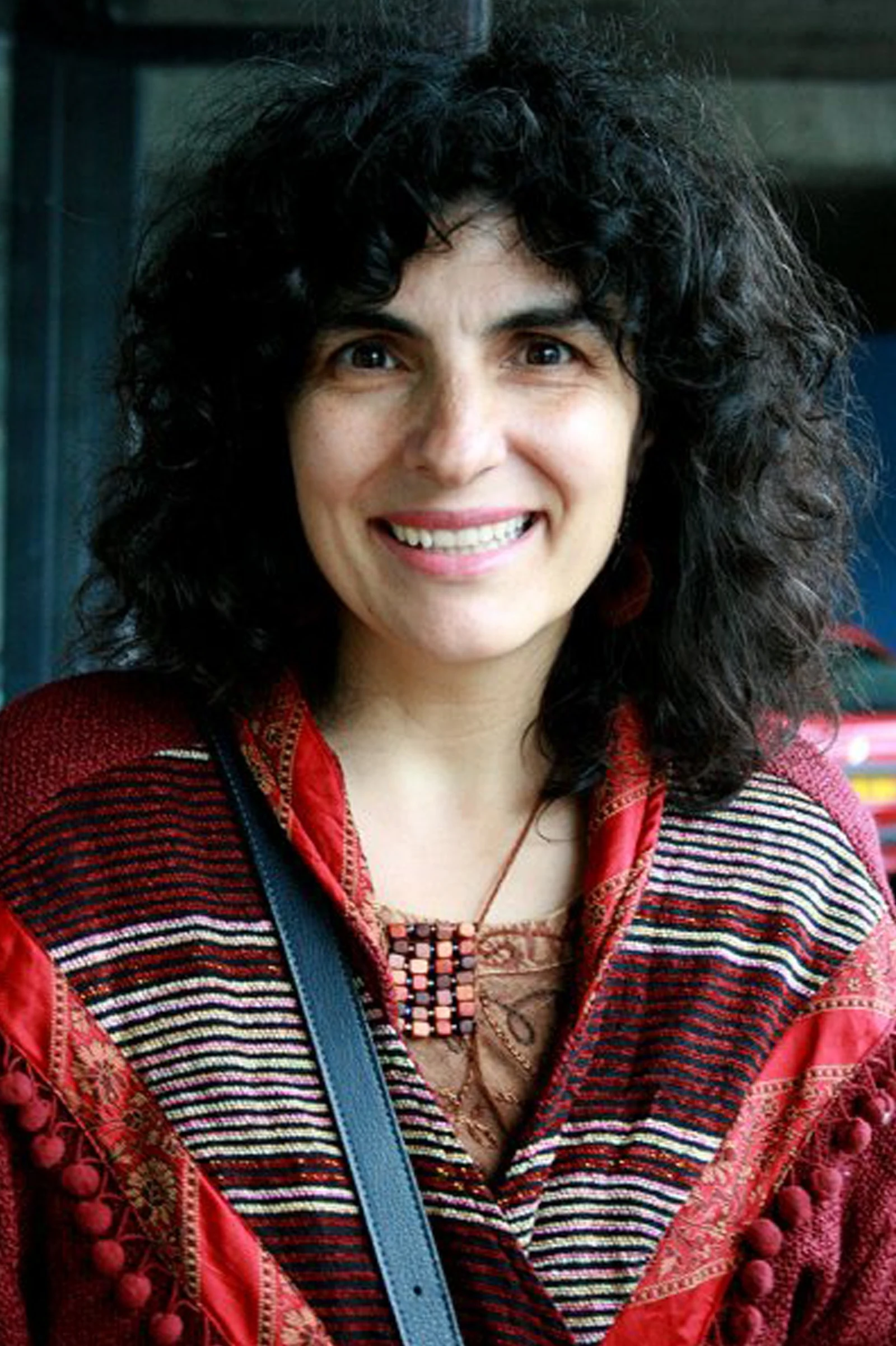
The public event marked neither the beginning nor the completion of scholarly attention. Mathematicians had circulated and studied late texts for decades; editions and online copies had appeared through uneven channels. What the BnF occasion made newly visible was an institutional conjunction: a recently accessioned late fonds, a long-established mathematical community, a university archive, historians of activism, readers of spiritual writing, and a national library’s commitment to preservation. It offered soundings into a mass of material whose cataloging and interpretation could continue for years.
The BnF’s 2025 article makes the two-repository structure especially clear. It directs readers to Montpellier for mathematical notes from 1949 to 1991 and announces the arrival at the national library of previously unavailable manuscripts from approximately 1987 to 1999 concerning mathematics, physics, and the moral problem of evil. That availability claim must be read institutionally: portions and transcriptions had circulated outside a formal archival setting. It describes a change in recognized custody and research access, not an absolute first sighting of every sentence. 1919Hartemann et al., “Les mille et une pages de Grothendieck”; Centre for Grothendieckian Studies, “*La Clef Des Songes* Published by Éditions Du Sandre”.
The papers had therefore “returned” in at least three senses. They returned to a university where Grothendieck had taught, through the stewardship of a former student. They entered a national collection through bequest and family gift. And they returned to collective discussion after an author who had often withdrawn consent, contact, and participation could no longer answer. The first two movements can be described through records. The third is an ethical problem as well as a cultural event.
The archive’s future tense
There is a temptation to end an archival chapter with revelation: boxes open, hidden work shines, history changes. The documents do not justify that grammar. Montpellier’s pages have been online in substantial number since 2017, yet “online” does not mean read in full, stable forever, or cleared for every reuse. The BnF’s late volumes have catalog descriptions, yet their scale and difficulty resist quick synthesis. A commercial edition can make one work purchasable while leaving textual and editorial questions disputed. A public exhibition can illuminate a route through selected pages while necessarily excluding thousands of others. 2020Hartemann et al., “Les mille et une pages de Grothendieck”; Bibliothèque nationale de France and Société mathématique de France, “Alexandre Grothendieck, mathématicien et militant”; École normale supérieure – PSL, “Exposition: Grothendieck, le temps des réflexions, 1973–1991,” 8, 2026, https://www.math.ens.psl.eu/bibliotheque/exposition-grothendieck-le-temps-des-reflexions-1973-1991/.
The accurate tense is the future imperfect. Researchers will be reading; descriptions will be refined; some claims will be confirmed and others withdrawn; access policies and interfaces may change; rights decisions may be documented more fully; mathematical pages may turn out to anticipate a later idea, repeat an existing one, or lead nowhere. None of those outcomes diminishes the archive. Failed routes, revisions, and repetitions disclose the duration of thought more faithfully than a collection of finished monuments.
For biography, the return of the papers does not promise final access to a private self. It provides dated acts of writing. It shows a person working across mathematics, memory, ethics, cosmology, and theology, sometimes carefully organizing the result. It supplies vocabulary, sequence, revision, and material form. Those are abundant gifts. They still leave intention partly inaccessible and other people’s testimony independent. A manuscript is evidence of what was written on a page, not a transparent scan of the writer’s mind.
The chapter closes, then, not at the moment of discovery but at the beginning of arrangement. In Montpellier, conservation staff and mathematicians had already converted boxes into an inventory and scans. In Paris, another corpus acquired a national shelfmark and a program of research. Between them runs no single key. There are two repositories, several legal relationships, many genres, and a growing body of readers. Before the mathematical inheritance can be traced, the boxes must be opened one leaf, one date, one claim, and one permission at a time.
Forty-one volumes are not one voice
The BnF’s description of Réflexions sur la Vie et le Cosmos as forty-one volumes gives the late work an imposing outline. Scale can mislead. A volume is first a physical and archival unit: a bounded sequence that can preserve authorial pagination, dates, headings, insertions, and changes of hand or ink. It is not necessarily a finished literary volume prepared for a reader. Some units may have stable titles and internal plans; others may continue, recapitulate, or interrupt earlier sequences. Only component-level examination can establish those relations.
Dating is equally layered. The BnF press release supplies ranges for named components: 1992 for Géométrie élémentaire schématique; 1992 to 1993 for Structures de la Psyché; 1992 to 1994 for the writing on Maxwell’s equations; 1993 to 1997 for Le Problème du Mal. Those ranges can orient a chronology. They do not establish that every leaf within a component was written continuously or that later annotations are absent. A responsible edition would identify dates written on pages, dates inferred from sequence, and dates supplied by the catalog. 2121Bibliothèque nationale de France, “Les manuscrits du mathématicien Alexandre Grothendieck entrent à la BnF,” 1–2.
The titles themselves can create premature boundaries. “Geometry,” “psyche,” “Maxwell,” and “evil” look like separate shelves in a library of knowledge. The BnF describes a corpus that crosses them. Before interpreting that crossing as unity, a reader must identify how it happens on the page: whether a mathematical structure serves as analogy, formal model, notation, or proof; whether an autobiographical episode tests an abstract claim or accompanies it; and whether a theological premise directs the argument. The same symbol can change epistemic role between sections.
That question protects against two opposite reductions. One reduction dismisses every late use of mathematics outside recognized research as evidence of decline. The other grants non-mathematical assertions authority because a major mathematician expressed them structurally. Neither response reads the argument. The proper sequence is descriptive before evaluative: transcribe the claim, identify its inferential steps, distinguish formal derivation from metaphor, and invite reviewers competent in the relevant domain.
The volume count also changes the practical scale of biography. No single writer can responsibly master thirty thousand densely handwritten pages across mathematics, physics, psychology, metaphysics, autobiography, and theology without collaboration. A claim to have read the archive would be implausible unless it specified which series, which version, which languages, and which forms of review. The archive demands a team not because teams guarantee truth but because errors become easier to expose when competencies and responsibilities are named.
The nation in the national library
The entry of the manuscripts into the BnF places them within a national institution. That fact can sound like a final homecoming, but Grothendieck’s biography unsettles the language of national possession. Born in Berlin, displaced across borders, stateless for much of his early life, educated and employed in France, and embedded in international mathematics, he cannot be reduced to a national figure returned to a national shelf.
The BnF press release naturally describes the scientific importance of the acquisition and situates Grothendieck among eminent figures in its manuscript department. Such institutional framing supports preservation and public recognition. A biography should repeat the concrete accession facts while treating rankings and comparisons as commemorative rhetoric. The release compares Grothendieck with Einstein, showing how the acquisition was presented; it supplies no metric by which two unlike bodies of work can be measured. 2222Bibliothèque nationale de France, “Les manuscrits du mathématicien Alexandre Grothendieck entrent à la BnF,” 1–2.
The national library’s real contribution is less theatrical and more durable. It can preserve paper under controlled conditions, produce a hierarchical description, maintain a stable collection identifier, govern consultation, and connect the fonds to other archives. Those capacities make comparison possible across time. They also expose the collection to a public mission broader than the circle that received private typescripts.
Yet institutional custody should not erase the route through family. The BnF explicitly thanks Grothendieck’s children for completing his bequest with a gift. The formula records two agencies: an author’s provision and successors’ act. Neither should be narrated as mere delivery of an inevitable public inheritance. Donation is a decision within legal and personal circumstances. Its terms, where not public, remain outside this book’s knowledge. 2323Bibliothèque nationale de France, “Les manuscrits du mathématicien Alexandre Grothendieck entrent à la BnF,” 1–2; Bibliothèque nationale de France, “Les manuscrits du mathématicien Alexandre Grothendieck entrent à la BnF”.
Nor does entry into a national collection nationalize every right. The BnF’s own guidance asks users of protected works to identify and obtain authorization from relevant authors or rights holders. The library’s custody and its public mission coexist with copyright and moral rights. That coexistence is not a contradiction to be solved by choosing “private” or “public.” It is the operating condition of many modern literary and scientific archives. 2424Bibliothèque nationale de France, “Reproduire une œuvre protégée au titre du droit d’auteur”; Bibliothèque nationale de France, “Reproduction des documents”.
The difference between preserving and endorsing
Libraries preserve works whose claims they do not endorse. That elementary principle becomes important when a celebrated author writes about evil, Satan, psyche, colleagues, or family. Accession means that trained custodians judged the material to possess enduring research value under their collection mandate. It does not mean that the BnF certifies its factual, medical, theological, or mathematical arguments.
The distinction should appear in captions and prose. “The BnF describes a component as…” is accurate when using catalog language. “Grothendieck proved…” requires mathematical verification. “Grothendieck believed…” requires evidence that the statement represents belief rather than a hypothetical exploration or quoted position. “The archive reveals…” is usually too strong unless the object and inference immediately follow.
Press coverage tends to compress those distinctions because a newly visible archive must be explained quickly. Reports emphasize range, scale, and singularity while combining institutional description, curator comment, and family testimony. Those elements can be valuable without carrying equal evidentiary weight. A source-critical biography separates each speaker’s remit instead of importing the article’s framing as a conclusion.
The same approach governs a BnF curator’s description of literary quality and architectural unity. That language identifies an informed early assessment after engagement with the manuscripts. It is not neutral metadata, and it need not be rejected. It belongs in reception history as one custodian’s characterization of the whole. Later textual scholarship may refine, contest, or pluralize that view.
Preservation also protects future disagreement. If the late writings are contradictory, unfinished, or offensive in places, stable custody allows those features to be studied rather than smoothed by selective quotation. If they contain mathematically valuable developments, stable cotes allow claims to be checked. The library’s value lies partly in making both outcomes possible.
A chronology of increasing mediation
The posthumous sequence can be read as increasing mediation. In 2014, public accounts announced the death and summarized an extraordinary career. In 2017, Montpellier placed a large set of page images behind an archival interface. In 2022, Gallimard made a long autobiographical work into a transcribed and designed edition. In 2023, the BnF accepted the late corpus. In 2024 and 2025, curators made a twelve-panel interpretation, and the BnF-SMF study day assembled different disciplinary readings. By 2026, the exhibition had traveled again. 2525Université de Montpellier, “28 000 pages d’Alexandre Grothendieck”; Université de Montpellier, “Grothendieck: 18,000 Pages Now Available”; Alexandre Grothendieck, Récoltes et semailles I, II: Réflexions et témoignage sur un passé de mathématicien, Tel (Gallimard, 2022).
Each stage carries the papers farther from exclusive authorial control and closer to readers through the work of intermediaries. That statement is descriptive, not accusatory. An unreadable manuscript needs mediation. Transcription chooses characters; edition chooses order; exhibition chooses scale; lecture chooses explanation; biography chooses sequence. The ethical question is not whether mediation can be eliminated but whether it is identified and accountable.
Digital access can conceal mediation most effectively because the page appears to arrive intact on a screen. Yet a scan has been lit, framed, color-managed, compressed, named, linked, and placed in a viewer. Its metadata can determine whether it is found. An absent thumbnail can function like a closed box even when the master file survives. The history of the online archive should therefore preserve technical decisions and interface versions where possible.
The study day made mediation audible. An historian of science could place activism in political ecology; a former student could describe teaching; a mathematician could explain dessins; a scholar of late writing could address the problem of evil; films could preserve recorded presence; a performer could read a literary text. None of these forms is reducible to the manuscript image. Together they demonstrate that access creates interpretations rather than a single transparent encounter. 2626Bibliothèque nationale de France and Société mathématique de France, “Alexandre Grothendieck, mathématicien et militant”; Bibliothèque nationale de France and Société mathématique de France, “Les mille et une pages mathématiques d’Alexandre Grothendieck”.
This plurality also supplies checks. A mathematician may detect that a curator has treated a conjecture as a result. An archivist may notice that a mathematician has cited a later folder title as authorial. A family witness may correct an institutional chronology. A historian may show that a political statement has been detached from its movement. Collaboration is not consensus; its value lies in structured disagreement around recoverable objects.
Return without recovery
The word return can promise recovery: the lost whole is restored, and the meaning of the life becomes available. No archive can fulfill that promise. The mathematical papers do not return the seminars as spoken, the pauses at a blackboard, or the unrecorded exchange that changed a definition. The late volumes do not restore conversations Grothendieck refused or relationships experienced differently by others. They preserve one formidable documentary presence among several absences.
What returns is narrower. Pages return to circulation. Titles return to bibliographies. Programs return to seminars. A handwriting that only a few people could see becomes available to a larger research community under institutional conditions. The return is consequential precisely because it is not resurrection.
This limit protects mourning from scholarship’s appetite. A person’s death can release documents into new procedures, but the documents do not make the person available for questioning. Where the record conflicts, there is no final interview. Where a permission is unclear, the absence of an answer is not consent. Where a mathematical claim is incomplete, reverence cannot finish the proof.
The papers return, finally, as obligations. They oblige repositories to preserve context, editors to disclose intervention, mathematicians to check claims, biographers to distinguish writing from mind, and institutions to state access and rights as they evolve. Those obligations are less dramatic than the opening of a treasure. They are the means by which the pages can remain useful after the excitement of accession has passed.
Cataloging as a second chronology
A life chronology orders public events by date. A fonds catalog creates another chronology: creation, accumulation, transfer, deposit, processing, description, restriction, and use. The two overlap without coinciding. A manuscript written in 1992 can enter a repository in 2023, receive a detailed description in 2024, and first shape public interpretation in 2025. Every date answers a different question.
Confusion among those dates creates false discovery stories. “Unknown until 2023” can mean unknown to a reporter, unavailable in an institutional catalog, unseen outside a family, or never mentioned anywhere. The late manuscripts had different degrees of prior circulation. La Clef des Songes had circulated in electronic forms before the BnF accession and before the 2024 commercial edition. The physical corpus’s arrival at the library remains significant without requiring absolute previous secrecy. 2727Centre for Grothendieckian Studies, “*La Clef Des Songes* Published by Éditions Du Sandre”.
Catalog revision should likewise be expected rather than treated as instability. Early collection-level descriptions orient researchers. Later work can separate components, identify hands, refine ranges, link related papers, and document restrictions. A citation to NAF 29093 should therefore include the component identifier when available and the date on which the description was consulted.
Researchers create a third chronology through use. The first request for a volume, first conference paper, first mathematical reconstruction, and first critical edition do not necessarily occur in archival order. Public attention may begin with the most sensational title rather than the work most central to Grothendieck’s activity. A biography can counter that distortion by stating why a selected item matters and what remains unread.
The chronology of rights can differ again. A work may be preserved before reproduction is authorized, described before a successor is identified, or quoted under an exception before a formal edition appears. Permission obtained for one exhibition can expire before a book is printed. Rights records need dates and scope just as manuscripts do.
These layered chronologies offer a final safeguard against the language of return. The papers never crossed one threshold from absence to presence. They moved through acts performed at different times by different people. The historian’s job is to keep those acts distinct enough that preservation is not mistaken for publication, publication for interpretation, or interpretation for proof.
The distinction also changes bibliography. A press release supports the fact of accession and its public framing. A catalog supports a shelfmark and current description. A manuscript supports the words visible on its leaf. An interview supports an attributed recollection. None should be cited as though it performs every function. Redundant citation is useful when independent records converge; decorative citation is not.
The archive’s first public summaries may be corrected by later cataloging without becoming worthless. Their dates preserve what institutions knew and chose to announce at the time. A later description can refine a title or range; the history of that refinement belongs to reception. Versioned catalog records, where available, would let historians distinguish a changed object from changed knowledge about the same object.
For Part XII, the return of the papers is thus an event and a method. The event is institutional transfer and access. The method is the disciplined movement from object to identifier, context, claim, review, and permission. Only the event makes headlines. The method determines whether those headlines can mature into history.
One practical consequence follows for citations made before full processing. The writer should preserve the repository’s current wording, record the access date, and avoid supplying a more definite title than the catalog. When later description improves, the citation can be updated without claiming that the object itself changed. This modest practice keeps the biography synchronized with archival knowledge while allowing readers to recover the earlier state. It also prevents a provisional press label from hardening into the permanent name of a work simply because it appeared first in public. The record of revision becomes part of the work’s posthumous chronology, not editorial debris.
Attributed memories remain testimony until independent records justify a stronger account of private events. The calibrated wording preserves value without claiming independent corroboration here.
Notes
- Grothendieck, “Déclaration d’intention de non-publication,” 1; Université de Montpellier, “28 000 pages d’Alexandre Grothendieck”; CNRS Le Journal, Disparition d’un génie des mathématiques. ↩
- Institut des Hautes Études Scientifiques, “Some of Grothendieck’s Archives Published Online by the University of Montpellier”; Bibliothèque nationale de France, “Les manuscrits du mathématicien Alexandre Grothendieck entrent à la BnF,” 1–2; Hartemann et al., “Les mille et une pages de Grothendieck”. ↩
- Society of American Archivists, “SAA Core Values Statement and Code of Ethics,” https://www2.archivists.org/statements/saa-core-values-statement-and-code-of-ethics, Judgment, Privacy. ↩
- CNRS Le Journal, Disparition d’un génie des mathématiques. ↩
- Université de Montpellier, “28 000 pages d’Alexandre Grothendieck”; Institut des Hautes Études Scientifiques, “Some of Grothendieck’s Archives Published Online by the University of Montpellier”. ↩
- Université de Montpellier, “28 000 pages d’Alexandre Grothendieck”; Université de Montpellier, “Grothendieck: 18,000 Pages Now Available,” May 11, 2017, https://sciences.edu.umontpellier.fr/en/2017/05/11/grothendieck-18000-pages-desormais-accessibles/; Institut des Hautes Études Scientifiques, “Some of Grothendieck’s Archives Published Online by the University of Montpellier”. ↩
- Réseau national des bibliothèques de mathématiques, “Archives mathématiques d’Alexandre Grothendieck: 18 000 documents en libre accès,” 2017, https://www.rnbm.org/archives-mathematiques-dalexandre-grothendieck-18-000-documents-en-libre-acces/; Université de Montpellier, “28 000 pages d’Alexandre Grothendieck”; Institut des Hautes Études Scientifiques, “Some of Grothendieck’s Archives Published Online by the University of Montpellier”. ↩
- Université de Montpellier, “28 000 pages d’Alexandre Grothendieck”; Université de Montpellier, “Grothendieck: 18,000 Pages Now Available”. ↩
- Bibliothèque nationale de France, “Les manuscrits du mathématicien Alexandre Grothendieck entrent à la BnF,” 1–2; Bibliothèque nationale de France, “Les manuscrits du mathématicien Alexandre Grothendieck entrent à la BnF”; Istituto Grothendieck, “Handover of Unpublished Manuscripts of A. Grothendieck to the BnF”. ↩
- Bibliothèque nationale de France, NAF 29093. Fonds Alexandre Grothendieck; Bibliothèque nationale de France, “Les manuscrits du mathématicien Alexandre Grothendieck entrent à la BnF,” 1–2; Istituto Grothendieck, “Handover of Unpublished Manuscripts of A. Grothendieck to the BnF”. ↩
- Bibliothèque nationale de France, “Les manuscrits du mathématicien Alexandre Grothendieck entrent à la BnF,” 1–2. ↩
- Bibliothèque nationale de France, “Les manuscrits du mathématicien Alexandre Grothendieck entrent à la BnF,” 1–2; Bibliothèque nationale de France and Société mathématique de France, “Alexandre Grothendieck, mathématicien et militant,” January 22, 2025, https://www.bnf.fr/fr/agenda/alexandre-grothendieck-mathematicien-et-militant-0. ↩
- Bibliothèque nationale de France, “Les manuscrits du mathématicien Alexandre Grothendieck entrent à la BnF,” 1–2; Bibliothèque nationale de France, “Les manuscrits du mathématicien Alexandre Grothendieck entrent à la BnF”. ↩
- Bibliothèque nationale de France, “Les manuscrits du mathématicien Alexandre Grothendieck entrent à la BnF,” 1–2; Bibliothèque nationale de France, NAF 29093. Fonds Alexandre Grothendieck. ↩
- Bibliothèque nationale de France, “Reproduire une œuvre protégée au titre du droit d’auteur,” https://www.bnf.fr/fr/reproduire-une-oeuvre-protegee-au-titre-du-droit-dauteur; Bibliothèque nationale de France, “Reproduction des documents,” https://www.bnf.fr/fr/reproduction-des-documents; Code de la propriété intellectuelle, https://www.legifrance.gouv.fr/codes/texte_lc/LEGITEXT000006069414/, art. L121-1. ↩
- Bibliothèque nationale de France, “Les manuscrits du mathématicien Alexandre Grothendieck entrent à la BnF,” 1–2. ↩
- Society of American Archivists, “SAA Core Values Statement and Code of Ethics”, Judgment, Privacy. ↩
- Bibliothèque nationale de France and Société mathématique de France, “Alexandre Grothendieck, mathématicien et militant”; Bibliothèque nationale de France and Société mathématique de France, “Les mille et une pages mathématiques d’Alexandre Grothendieck,” January 22, 2025, https://www.bnf.fr/fr/agenda/les-mille-et-une-pages-mathematiques-dalexandre-grothendieck. ↩
- Hartemann et al., “Les mille et une pages de Grothendieck”; Centre for Grothendieckian Studies, “*La Clef Des Songes* Published by Éditions Du Sandre”. ↩
- Hartemann et al., “Les mille et une pages de Grothendieck”; Bibliothèque nationale de France and Société mathématique de France, “Alexandre Grothendieck, mathématicien et militant”; École normale supérieure – PSL, “Exposition: Grothendieck, le temps des réflexions, 1973–1991,” 8, 2026, https://www.math.ens.psl.eu/bibliotheque/exposition-grothendieck-le-temps-des-reflexions-1973-1991/. ↩
- Bibliothèque nationale de France, “Les manuscrits du mathématicien Alexandre Grothendieck entrent à la BnF,” 1–2. ↩
- Bibliothèque nationale de France, “Les manuscrits du mathématicien Alexandre Grothendieck entrent à la BnF,” 1–2. ↩
- Bibliothèque nationale de France, “Les manuscrits du mathématicien Alexandre Grothendieck entrent à la BnF,” 1–2; Bibliothèque nationale de France, “Les manuscrits du mathématicien Alexandre Grothendieck entrent à la BnF”. ↩
- Bibliothèque nationale de France, “Reproduire une œuvre protégée au titre du droit d’auteur”; Bibliothèque nationale de France, “Reproduction des documents”. ↩
- Université de Montpellier, “28 000 pages d’Alexandre Grothendieck”; Université de Montpellier, “Grothendieck: 18,000 Pages Now Available”; Alexandre Grothendieck, Récoltes et semailles I, II: Réflexions et témoignage sur un passé de mathématicien, Tel (Gallimard, 2022). ↩
- Bibliothèque nationale de France and Société mathématique de France, “Alexandre Grothendieck, mathématicien et militant”; Bibliothèque nationale de France and Société mathématique de France, “Les mille et une pages mathématiques d’Alexandre Grothendieck”. ↩
- Centre for Grothendieckian Studies, “*La Clef Des Songes* Published by Éditions Du Sandre”. ↩