The name in the official list
The International Mathematical Union’s record for 1966 places four names beneath one year: Michael Francis Atiyah, Paul Joseph Cohen, Alexander Grothendieck, and Stephen Smale. Each short citation assigns a different revolution to a few lines. Grothendieck’s entry gives his birth date, March 28, 1928, and Berlin as his birthplace. At the Moscow congress in August he was thirty-eight.11International Mathematical Union, “Fields Medals 1966”.
The official citation says that he built on Weil and Zariski, made fundamental advances in algebraic geometry, introduced K-theory, and revolutionized homological algebra through the paper commonly called Tôhoku. It does not list schemes, topoi, descent, the étale fundamental group, or the unfinished cohomological program for Weil’s conjectures. An award citation is an act of compression, not a complete map of achievement.22International Mathematical Union, “Fields Medals 1966”.
The International Congress of Mathematicians met in Moscow from August 16 to 26, 1966. The event brought a global mathematical institution into the Soviet capital during the Cold War. Its ceremonies represented international universality; its location could not be separated from the political state hosting them. Grothendieck did not attend.33Actes du Congrès international des mathématiciens (Moscou, 1966) (Mir, 1968); Guillermo P. Curbera, Mathematicians of the World, Unite! The International Congress of Mathematicians—A Human Endeavor (A K Peters, 2009).
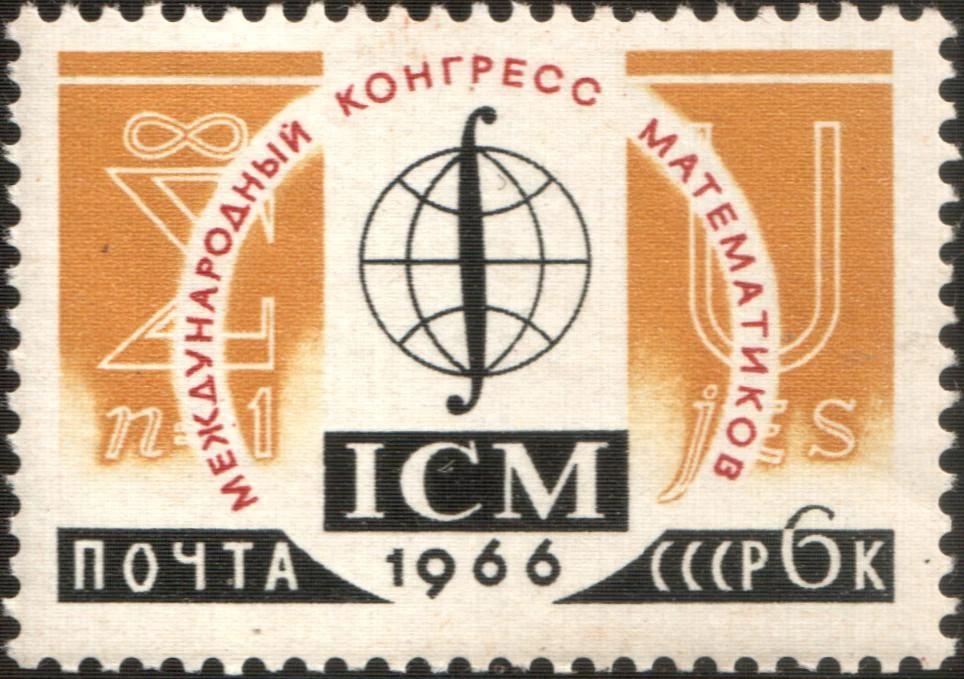
Multiple biographical and congress histories support Grothendieck’s nonattendance. The proxy receipt and the report that he issued no public explanation remain attributable to the MacTutor entry until the congress proceedings are checked at page level. Later biographies interpret the nonattendance as political protest consistent with his pacifism and opposition to military power. The distinction between fact and interpretation must remain visible.44Jackson, “As If Summoned from the Void, I”; Jackson, “As If Summoned from the Void, II”; Cartier, “A Mad Day’s Work”; O’Connor and Robertson, “Alexander Grothendieck”; Curbera, Mathematicians of the World, Unite! The International Congress of Mathematicians—A Human Endeavor; Actes du Congrès international des mathématiciens (Moscou, 1966); Scharlau, Anarchie.
It would be easy to supply a dramatic private decision: a newspaper on a table, a particular Soviet repression, a sentence spoken to a colleague. No source permits it. The source base records several political contexts but does not identify one as the trigger. Nonattendance is the established act, while the meaning Grothendieck intended it to carry is not documented. A biography gains nothing by pretending to know the unrecorded trigger.
The restraint does not empty the act of meaning. Biographical studies document other instances in which Grothendieck refused institutional demands, and his later activism became explicit. But later consistency cannot serve as a transcript of August 1966. The strongest contemporary statement is embodied rather than quoted: one of the four Fields medalists did not travel to the ceremony arranged to honor him.
Moscow and universality
An international congress presents mathematics as a practice able to cross national borders. In Moscow that ideal existed within a system of passports, permissions, official delegations, and state prestige. The Congress could gather thousands under a universal language while the movement and speech of individuals remained political facts.
Official records attached several locations to Grothendieck: Berlin as birthplace, the University of Paris on the IMU page, and IHES as his research post. Those labels did not explain his absence. This chapter makes no causal link among his border history, the relative viewpoint in his mathematics, and the Moscow decision.55International Mathematical Union, “Fields Medals 1966”; Institut des Hautes Études Scientifiques, “Alexander Grothendieck, Permanent Professor from 1958 to 1970”.
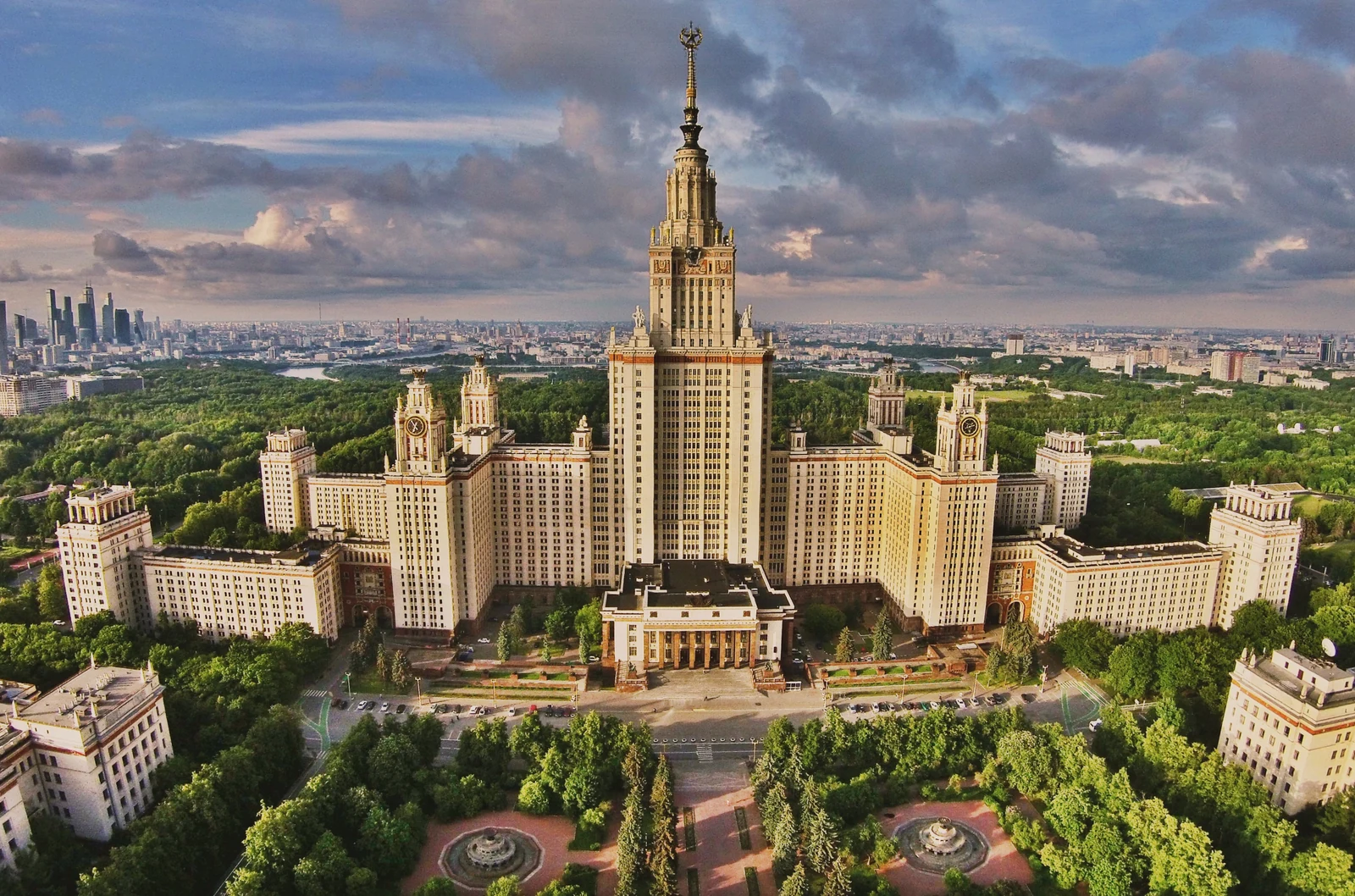
Nor should the Soviet setting be reduced to a stage for a Western protest. Soviet mathematicians had major research programs and worked under conditions that varied from privilege to restriction. The ICM was a mathematical event as well as a state occasion. Grothendieck’s nonattendance did not define the experience of those who attended.
The four medalists themselves represented different domains: index theory and topology, set theory, algebraic geometry, and differential topology and dynamics. The joint award was not a ranking. It marked a generation whose work had changed the conditions of several fields. Grothendieck’s absence singled him out socially even as the medal placed him within the group.
Motchane’s reported receipt of the medal carried another institutional irony. IHES had enabled Grothendieck’s sustained work through its director’s creation of a small, internationally oriented institute. In Moscow the director stood in for the mathematician. The institution accepted the material token while the person withheld his presence.
This should not be rewritten as a rejection of the medal itself. The source says he did not attend; later accounts distinguish this from his explicit refusal of the Crafoord Prize in 1988. A boycott of a venue, an absence from a ceremony, and a refusal of an award are not identical acts. The chapter uses the narrow verb supported by the record.
A congress under a state’s roof
The ICM is not a government, but it meets under roofs governments can provide or withhold. Visas, travel funds, exit permissions, translation, communications, and ceremonial venues enter the supposedly borderless exchange. Moscow in 1966 made these conditions conspicuous. The Soviet Union could celebrate mathematical achievement internationally while controlling civic and intellectual life at home.
The congress also gave foreign mathematicians access to Soviet colleagues whose work was sometimes difficult to encounter in person. Attendance did not amount to endorsement of the host state, and absence did not amount to rejection of its mathematicians. Scientific contact and state prestige occupied the same event, so the meaning of participation could not be reduced to one political sign.
Curbera’s institutional history places ICMs within wars, boycotts, visa exclusions, and national delegations. Moscow belonged to that longer tension. International mathematics had repeatedly declared universality while political systems determined who could gather and under what label.66Curbera, Mathematicians of the World, Unite! The International Congress of Mathematicians—A Human Endeavor.
Later biographies interpret Grothendieck’s nonattendance as a political refusal. Their accounts do not identify one contemporaneous statement fixing the exact object of protest.77Jackson, “As If Summoned from the Void, I”; Jackson, “As If Summoned from the Void, II”; Cartier, “A Mad Day’s Work”; O’Connor and Robertson, “Alexander Grothendieck”; Scharlau, Anarchie.
The source gap about his public explanation is therefore substantive. Later writers can fit the act to a known pacifist trajectory. The congress record can establish that he was absent. Neither documents a specific link between his politics and this invitation at this moment.
The setting also complicates a heroic Western dissident story. Soviet mathematicians were not props, and some faced risks a visiting medalist did not. His nonattendance should not be written as speaking for everyone living under the host state.
Mathematical exchange continued despite political disputes and nonattendance. Universality was not placeless harmony but continued relation under political strain.
Earlier refusals, limited evidence
Grothendieck’s biography contained institutional refusals before 1966. Accounts of a proposed Harvard visit in the 1950s describe his unwillingness to sign a loyalty oath, with the result that the visit did not proceed. The episode documents an earlier professional consequence of refusal; it does not establish his Moscow motive.88Jackson, “As If Summoned from the Void, I”; O’Connor and Robertson, “Alexander Grothendieck”.
Biographical sources discuss his legal status and travel documents, but this account lacks a dated primary record sufficient to fix his citizenship in August 1966. No such label enters the chapter.
Biographical studies describe Grothendieck’s pacifism as a continuing commitment, and later actions against war and military funding made it public. That later pattern does not prove the motive for Moscow by analogy.99Jackson, “As If Summoned from the Void, I”; Jackson, “As If Summoned from the Void, II”; Cartier, “A Mad Day’s Work”; O’Connor and Robertson, “Alexander Grothendieck”; Scharlau, Anarchie.
The earlier episode and later activism establish a chronology of public or professional consequences, not indifference to recognition. In 1966 Grothendieck held a permanent post at IHES, directed seminars, published, and engaged colleagues.
The Moscow absence therefore occurred within institutional participation, not outside professional mathematics. It marked a limit on one occasion rather than a complete withdrawal.
Four citations, four forms of change
The official IMU page gives a compact account for each medalist. Atiyah’s citation mentions work with Hirzebruch in K-theory, the index theorem with Singer, and a fixed-point theorem with Bott. Cohen’s names forcing and independence in set theory. Smale’s names the high-dimensional Poincaré conjecture and handle methods. Grothendieck’s names fields and one famous paper.1010International Mathematical Union, “Fields Medals 1966”.
The wording reflects different shapes of achievement. Cohen solved famous logical independence problems with a new method. Smale proved a celebrated conjecture in a range of dimensions and altered differential topology. Atiyah connected topology and analysis through index theory. Grothendieck changed foundations and interfaces across algebraic geometry and homological algebra.
The citations also reveal collaboration unevenly. Atiyah’s explicitly names Hirzebruch, Singer, and Bott. Grothendieck’s names predecessors Weil and Zariski but not the contemporary collaborators of EGA and SGA. This is not evidence that he collaborated less. It is a consequence of what one short citation selected.
Award language favors verbs of individual agency: introduced, proved, revolutionized. Such verbs are appropriate at the scale of recognition and dangerous at the scale of documentary history. The preceding chapter restored the network beneath them.
The four men’s work was still unfolding. A prize judged a trajectory through what was visible so far, not through its later end. The official page is therefore a 1966 assessment even when reproduced decades later. It cannot be used as a lifetime bibliography.
The joint year places Grothendieck’s K-theory beside Atiyah’s K-theory and index theorem, but the word does not denote one person’s isolated invention. Grothendieck groups from algebraic geometry and topological K-theory developed through related but distinct lines. The congress list itself hints at mathematics crossing citation boundaries.
Grothendieck’s absence meant the four-person ceremony lacked one of the forms of change it honored. The mathematics remained in the citation; the body that would personalize it did not.
Reading the citation sentence by sentence
The citation’s opening reference to Weil and Zariski locates inheritance. Weil had brought varieties and zeta functions into an arithmetic program; Zariski had established rigorous algebraic and local methods. Grothendieck did not replace their work with unrelated abstraction. He reorganized terrain they had made urgent.
The phrase about fundamental advances in algebraic geometry captures reception. By 1966 the scheme language, relative viewpoint, representable functors, and much of EGA were visible. “Advances” understates the change in vocabulary and correctly avoids assigning every new object to one line.
The K-theory sentence points to Grothendieck groups and rings. The construction begins with classes of vector bundles or coherent sheaves, imposes relations from exact sequences, and takes a group completion. Tensor products give multiplication in suitable settings. The construction let Riemann–Roch be expressed through functorial classes rather than only one numerical formula.
The homological-algebra sentence names the Tôhoku paper. Abelian categories, injectives, derived functors, and spectral sequences supplied a general environment for sheaf cohomology. The paper was not a preliminary he discarded. Its machinery operated inside SGA 4 and SGA 5.
The citation omits EGA and SGA titles. The source does not record the committee’s reason, so the final wording cannot support an inference about its deliberations.
Its silence about a completed proof of the Weil conjectures is more useful. The citation does not make that claim, and the mathematical chronology forbids it. The Riemann-hypothesis component remained open.
The exact English citation is in the note, and the passage is paraphrased here. Institutional words can be evidence without becoming the chapter’s voice.
Motchane as proxy
MacTutor’s account says Léon Motchane accepted the medal on Grothendieck’s behalf. Until the congress record is located, the claim retains that attribution. Careful sourcing does not require pretending that all facts arrive from sources of identical rank.1111O’Connor and Robertson, “Alexander Grothendieck”.
Motchane was not a random delegate. He had founded IHES and recruited its early permanent mathematicians. The institute’s official history presents him as creating a place for theoretical work modeled in part on advanced-study institutions. IHES supplied institutional conditions for Grothendieck’s work.1212Institut des Hautes Études Scientifiques, “The Foundation”.
The proxy relation condensed dependence. The medal honored an individual for work made possible by an institute; its director received the object because the individual did not attend the ceremony. No invented exchange is needed to make the relation visible.
Receiving a medal for someone is not accepting his political views or speaking in his voice. Without a transcript, the chapter gives Motchane no response. His role is documentary: he reportedly stood where Grothendieck did not.
Their relationship would later become conflictual when military funding at IHES became central to Grothendieck’s departure. Writing that dispute into Motchane’s 1966 act would turn proxy into foreshadowing. At this moment, the institute still supported the mathematical programs.
The medal’s physical path differed from the path of recognition. The profession had made its judgment through the award. Whether the object went first to Motchane, Grothendieck, or an archive did not alter a theorem. Ceremonies create symbols; mathematical reception had already occurred.
The congress without an acceptance speech
An acceptance speech can explain how a recipient wishes an award to be understood. It can thank collaborators, connect mathematics to politics, or reject the terms of celebration. Grothendieck left no Moscow speech because he was not there. The absence deprived historians of his public framing.
That void has invited replacement stories. A general account of his pacifism becomes the missing speech; a later episode becomes the immediate cause. The safer method is to let the missing genre remain missing. One may interpret an act without fabricating its self-interpretation.
The lack of speech also affects collaboration history. He did not use the occasion, so far as the record shows, to name Dieudonné, Serre, Artin, Verdier, or the SGA expositors. It would be unfair to treat that silence as failure to thank them. There was no platform speech in which thanks could appear.
Likewise, nonattendance establishes no judgment about Atiyah, Cohen, or Smale. A nonattendance at the hosted congress should not be expanded into undocumented personal relations with its other honorees.
The nonattendance is documented while its precise explanation is not. The biographer’s task is to preserve that asymmetry rather than use narrative fluency to erase it.
What the medal could see
The citation’s reference to Weil and Zariski placed Grothendieck in an intellectual genealogy. Zariski’s algebraic foundations and Weil’s arithmetic geometry were among the conditions he transformed. The phrase “built on” recognized inheritance without describing the scale of reconstruction. Schemes had changed what an algebraic variety could be; the relative viewpoint had changed how it varied; étale cohomology had opened a path between geometry and finite-field arithmetic.
K-theory referred back to Grothendieck’s reformulation of Riemann–Roch and the group completion of classes of vector bundles or coherent sheaves. The Tôhoku paper reframed homological algebra through abelian categories and derived functors. These achievements preceded the cohomological architecture of Part VI and supplied parts of it. The medal recognized a continuity of methods rather than one theorem.
What it could not see was the future proof. The Riemann-hypothesis component of the Weil conjectures remained open in 1966. Deligne’s proof came in 1974. The official citation did not claim otherwise. Later popular accounts that join “Grothendieck,” “étale cohomology,” and “proof of the Weil conjectures” in one sentence must restore the dates and the mathematician who closed the gap.1313Deligne, “La conjecture de Weil I”.
The citation also could not distribute credit through SGA. Its genre named one recipient. Artin and Verdier’s co-direction of SGA 4, Demazure’s co-direction of SGA 3, Dieudonné’s EGA collaboration, and the work of exposé authors remained outside the frame. Individual recognition was deserved and structurally incomplete.
This incompleteness is not hypocrisy. Prizes recognize persons because mathematical communities need names and occasions. Trouble begins when the occasion becomes a historical source more authoritative than the books. The medal establishes that Grothendieck’s impact was internationally recognized by 1966. It does not identify who proved each lemma or what stood open.
The object itself, with a name on its rim, converts a network into a possession. Grothendieck’s nonattendance interrupted that conversion. He did not prevent the award, but he denied the ceremony the image of recipient and institution joined. The absence became part of the biography precisely because the medal could not make him appear.
A shelf of 1966
The year’s mathematical record resists ceremonial finality. EGA IV’s third part appeared in Publications Mathématiques de l’IHÉS 28 in 1966. The fourth part appeared in 1967 and must remain outside the year’s shelf. The serial foundation was still being written.1414Grothendieck and Dieudonné, “Éléments de géométrie algébrique IV: Étude locale des schémas et des morphismes de schémas, troisième partie”; Grothendieck and Dieudonné, “Éléments de géométrie algébrique IV: Étude locale des schémas et des morphismes de schémas, quatrième partie”.
Grothendieck’s paper “On the de Rham cohomology of algebraic varieties” appeared in PMIHÉS 29, pages 95–103, in 1966. In characteristic zero, algebraic differential forms could compute a cohomology that compared, over the complex numbers under appropriate hypotheses, with classical cohomology. This was a separate article, not an SGA fascicle.1515Grothendieck, “On the de Rham Cohomology of Algebraic Varieties”.
Hartshorne’s Residues and Duality appeared as Lecture Notes in Mathematics 20 in 1966 after the 1963–64 work at Harvard on Grothendieck’s duality program. Seminar date and book date again diverged. The publication showed another mathematician turning the duality program into a durable text.1616Hartshorne, Residues and Duality: Lecture Notes of a Seminar on the Work of A. Grothendieck, Given at Harvard 1963/64.
Grothendieck’s Bourbaki exposé on the Lefschetz formula and rationality of L-functions was printed in 1966 after belonging to the 1964–65 session. SGA 5 carried the seminar label 1965–66 but would not be published as LNM 589 until 1977. A reader standing in 1966 saw active programs, contemporary articles, and scarce notes—not the later shelf in its final order.1717Grothendieck, “Formule de Lefschetz et rationalité des fonctions L”; Illusie, Cohomologie ℓ-adique et fonctions L (SGA 5).
SGA 6 began with the seminar year 1966–67 and was published in 1971 under the direction of Berthelot, Grothendieck, and Illusie. Its intersection theory and Riemann–Roch program continued questions already present in K-theory and the trace formula. The next machine was beginning while the medal honored the previous ones.1818Berthelot et al., Théorie des intersections et théorème de Riemann–Roch (SGA 6).
The publication ledger makes 1966 a hinge rather than a summit. Foundations entered print, cohomological programs remained under redaction, and a new seminar opened. Recognition looked backward; research did not.
The de Rham passage
Algebraic de Rham cohomology begins with the complex of algebraic differential forms Its hypercohomology is . For smooth algebraic varieties over characteristic zero in the appropriate setting, the algebraic complex carries the desired cohomology; over , comparison relates it to the cohomology of the associated analytic space.
The result belongs beside étale cohomology without being another version of the same coefficients. De Rham theory uses differential forms and is naturally characteristic-zero. Étale ℓ-adic theory uses towers of finite coefficients and works powerfully over finite fields when . Their agreement in shared settings and their differences elsewhere suggested that cohomology had several realizations.
This plurality contributed to the developing program of motives, which sought a common geometric source for different cohomology theories. In 1966 that program was not complete. The de Rham article is evidence of Grothendieck adding another realization, not of a finished universal comparison machine.
The paper’s brevity relative to EGA and SGA is instructive. Not every major result required an encyclopedic volume. Once the scheme and sheaf foundations existed, a short article could state a theorem whose meaning depended on them. Infrastructure made compression legitimate.
The de Rham result also widened the portrait recognized by the medal. Grothendieck was not only pursuing finite-field cohomology. He was comparing algebraic, analytic, formal, and étale methods, asking which operations survived in each. The architecture was plural before the profession had a settled word for all its realizations.
EGA IV.3: a foundation still arriving
The third part of EGA IV was a substantial fascicle, not an appendix to a completed foundation. Its 1966 imprint demonstrates that the local theory of schemes and morphisms was still entering print during the medal year. A reader could cite it as a contemporary publication; a speaker could not cite EGA IV.4, which belonged to 1967.1919Grothendieck and Dieudonné, “Éléments de géométrie algébrique IV: Étude locale des schémas et des morphismes de schémas, troisième partie”.
EGA IV studied properties that made every later cohomological theorem precise: finite presentation, flatness, smoothness, unramified and étale morphisms, constructibility, dimensions of fibers, and behavior under base change. The exact distribution of topics across the four fascicles should be checked at citation level, but the series as a whole supplied the grammar of the SGA machine.
The juxtaposition with the medal corrects a common image. Grothendieck was not receiving recognition after putting down his pen on a finished Elements. He and Dieudonné were still publishing the foundations. The profession honored an architecture partly while its reference manual was incomplete.
The serial form also created temporal asymmetry among users. A participant in the seminar could know a result before its EGA appearance; a distant reader might learn it from the fascicle. Once published, the proposition became a stable dependency. The year on the title page marks that conversion, not necessarily first discovery.
EGA IV.3’s presence on the 1966 shelf therefore records labor rather than culmination. Hundreds of local statements had to be proved so that words such as “étale” or “smooth” could travel without reinterpretation. The medal citation’s phrase “fundamental advances” rested on this less visible abundance.
The missing fourth part is equally important. Bibliographies often cite EGA IV as one object, suppressing 1964, 1965, 1966, and 1967. This chapter keeps the fascicles separate because historical actors read them separately. A complete modern reference is not a complete 1966 shelf.
De Rham as another realization
Over a smooth complex algebraic variety, differential forms can be read algebraically or analytically. Classical de Rham theory identifies the cohomology of the complex of smooth differential forms with singular cohomology over . The algebraic problem is to show that regular algebraic differential forms, assembled through sheaf hypercohomology, carry the same finite-dimensional information under the right hypotheses.
Grothendieck’s 1966 paper established the algebraic de Rham comparison in its setting. The theorem connected his scheme-theoretic language to a classical invariant without using ℓ-adic coefficients. It was another example of leaving familiar topology through algebra and returning by comparison.2020Grothendieck, “On the de Rham Cohomology of Algebraic Varieties”.
Hypercohomology matters because the de Rham complex is a complex of sheaves, not one global vector space. One must combine the differential with sheaf cohomology. Spectral sequences or derived categories organize the combination. The result depends on the same homological machinery celebrated in the medal citation.
The characteristic-zero condition is essential. In characteristic , ordinary algebraic de Rham cohomology behaves differently; the derivative of vanishes, and new phenomena appear. Crystalline cohomology would later offer a theory adapted to that world. The 1966 article should not be advertised as a universal characteristic-free comparison.
The coexistence of de Rham and étale cohomology raised a question of common source. For a smooth proper variety over a number field, one could obtain de Rham vector spaces at characteristic-zero places and ℓ-adic representations at finite primes. Their dimensions and cycle classes should correspond. This web would become a central motivic aspiration.
In 1966, however, “motives” named an emerging program rather than a completed category that automatically compared all realizations. The de Rham theorem added a strong bridge. It did not finish the map.
The paper’s shortness also reveals the power of infrastructure. A concise article could rely on EGA, sheaf cohomology, and comparison methods already in circulation. Its brevity was purchased by the long collective foundation, not evidence of a simple proof.
Duality in a Harvard volume
Hartshorne’s LNM 20 placed Residues and Duality on the 1966 shelf while identifying the underlying seminar as Harvard 1963–64. The object is an exact lesson in the chapter’s three clocks: Grothendieck’s program, a seminar period, and a later publication converge without becoming the same date.2121Hartshorne, Residues and Duality: Lecture Notes of a Seminar on the Work of A. Grothendieck, Given at Harvard 1963/64.
Duality seeks the object that makes cohomological pushforward have an adjoint form. For a proper morphism, traces and residues turn local differential information into global pairings. In a derived category, the exceptional inverse image and dualizing complex organize these relations. The theory generalized classical residues on curves and Serre duality.
This coherent duality is distinct from étale Poincaré duality, yet the architectures answer one another. Both require trace maps, supports, and complementary degrees. Both contribute to functional equations and intersection formulas in their domains. The simultaneous development made “duality” a system of functors rather than one isolated symmetry.
Hartshorne’s authorship is part of the theorem’s social life. The book carried Grothendieck’s work into an English-language seminar and durable publication. Calling it merely a transcription would erase the mathematical judgment needed to write it; calling it independent of Grothendieck would contradict its own title.
The Fields citation did not name Hartshorne or Verdier. It could not contain every layer. The nearby 1966 book restores the network hidden by the award genre.
From SGA 5 into SGA 6
The end of the SGA 5 seminar year did not mean its volume was finished. The 1977 edition lay eleven years ahead. Arguments, local terms, and cohomological operations would continue to be revised. The open weight problem remained untouched in general.
SGA 6 began in 1966–67 under Berthelot, Grothendieck, and Illusie. Its subject—intersection theory and Riemann–Roch—returned to the territory of the K-theory cited by the medal and the correspondences needed for trace formulas. The sequence was not a straight advance from “less” to “more” cohomology. It revisited foundations from a new height.2222Berthelot et al., Théorie des intersections et théorème de Riemann–Roch (SGA 6).
Intersection theory supplies products of cycles and classes such as Chern characters. Riemann–Roch compares pushforward in K-theory with pushforward in a cohomological theory after characteristic-class correction. These compatibilities belong to the same demand that operations commute across realizations.
The cotangent complex, developed in this surrounding program, would provide a derived measure of infinitesimal deformation. Its mature history extends beyond 1966, and Illusie’s role cannot be reduced to editing SGA 5. The new seminar created another place where a younger mathematician would extend the architecture.
The SGA 6 title therefore makes a better epigraph for this chapter than a medal slogan. It records work beginning while recognition was being conferred. Its 1971 publication date once again separates the research season from the book.
The transition also prevents a false end to Part VI. Cohomology had acquired an architecture, but intersection, motives, monodromy, and weights would strain it further. The next Part begins not after a rest but during continuation.
What was not yet on the shelf
No revised SGA 1 stood in LNM 224 until 1971. SGA 2’s North-Holland book would appear in 1968. The three SGA 3 volumes would appear in 1970. SGA 4’s three volumes would appear in 1972–73. SGA 5 would appear in 1977. The 1966 reader knew programs whose canonical physical forms were mostly future.
Nor was Deligne’s La conjecture de Weil I available; it would be published in PMIHÉS 43 in 1974. SGA 4½ was not a 1964–65 seminar waiting on a shelf; it would be Deligne’s 1977 compilation. Grothendieck’s printed standard conjectures belonged to 1968–69.2323Deligne, “La conjecture de Weil I”.
Listing absences is not a claim that the ideas did not exist in any form. Notes, letters, and seminars carried them. It is a claim about documentary availability and theorem status. The books later made provisional networks look simultaneous.
The absent volumes create a historiographical parallel to the absent medalist. Later images fill the shelf and tempt a corresponding completion of the ceremony. Accuracy requires resisting both completions. In 1966 the mathematics was partially circulated and the recipient was not in Moscow.
What was available remains formidable: six EGA fascicles through IV.3, contemporary Bourbaki texts, journal articles, early SGA notes, and an international network using the theory. The point of the list is not scarcity but temporal texture.
An intellectual history that distinguishes working knowledge from publication can describe this texture without choosing between “the theory existed” and “the book did not.” Both statements are true at their own level.
Nonattendance without a script
Later biographies often seek one sentence that explains Moscow. Pacifism, hostility to Soviet militarism, solidarity with dissidents, and a general refusal of state authority have all been invoked in broader retellings. The present source base supports political interpretation and does not support a unique quoted declaration from Grothendieck at the time.
This evidentiary gap should not be filled by probability. A motive can be highly plausible and still undocumented in its precise form. The chapter therefore says that he stayed away and that later accounts read the act through his pacifism. It does not assign an unrecorded motive or reaction to him.
The record does not establish whether one or several considerations governed the decision. Grothendieck’s nonattendance made the ceremony proceed without him, but the sources do not establish the symbolism he intended.
His later visit to North Vietnam in 1967, where he lectured during wartime bombing, documented a later antiwar action. His 1970 departure from IHES over military funding would create an institutional rupture. Those later events provide additional evidence of his antiwar and funding positions; neither may be written backward as the explanation of August 1966.2424Jackson, “As If Summoned from the Void, I”; Jackson, “As If Summoned from the Void, II”; Cartier, “A Mad Day’s Work”; O’Connor and Robertson, “Alexander Grothendieck”; Scharlau, Anarchie.
The chronological restraint matters for character. If every later action is latent in the earlier one, Grothendieck becomes a fixed type rather than a person making choices over time. In 1966 the nonattendance and his institutional mathematical role coexisted. The later break had not yet occurred.
Affiliation and recognition
Grothendieck’s official medal entry associated him with the University of Paris, while IHES records his permanent post. Institutional labels in award records do not settle citizenship or belonging.2525International Mathematical Union, “Fields Medals 1966”; Institut des Hautes Études Scientifiques, “Alexander Grothendieck, Permanent Professor from 1958 to 1970”.
This account lacks a dated primary record sufficient to state his precise citizenship in August 1966. It therefore does not use statelessness as a symbolic explanation. The documented contrast is narrower: an international institution sought his presence in a national capital, and he was absent.
Mathematics itself offered no escape from institutions. IHES supplied his post. Springer and North-Holland would publish seminar volumes. Bourbaki and the IMU organized communities with admission, prestige, and exclusions. Grothendieck’s work depended on such structures; his later conflicts with them belong to later dates.
The Moscow nonattendance therefore was not an exit from the mathematical world. He continued the seminar program after the award. The record establishes nonattendance at this event, not a general withdrawal.
A medal and an open problem
The ceremony’s narrative logic says culmination. The mathematics says continuation. SGA 5 had brought the trace machine to the Weil program, but weights remained uncontrolled. Motives were a horizon. The printed standard conjectures lay ahead. SGA 6 was beginning. EGA IV.4 was not yet published.
Grothendieck could be the field’s most honored architect while the central arch remained open. There is no contradiction. Awards recognize past transformation, not completion of every announced program. The contradiction appears only in a biography that needs the medal to close a plot.
The open problem also redistributed the future. A younger mathematician could enter the architecture and supply an argument its director did not have. Deligne’s later proof would not diminish the 1966 work; it would demonstrate that the language could support unforeseen creation. The school’s greatest success would resist possession by the founder.
At the same time, the future proof should not be treated as inevitable. No general proof existed in 1966, and Deligne’s route appeared later. The open status of the problem belongs to the chapter; unrecorded reactions do not.
The medal citation’s silence about the Weil conjectures is therefore apt. It honored work already secure: algebraic geometry, K-theory, homological algebra. The cohomological program strengthened the case for his stature, but the official words did not turn conjecture into theorem.
The person missing from the photograph
Ceremonies produce images: recipients together, medals presented, applause fixed in a caption. Grothendieck’s absence creates an image problem for this book. It would be unethical to fabricate him at Moscow or use a synthetic portrait to complete the group. The documentary truth is the empty position.
This discipline in images mirrors the narrative one. An invented image and an invented motive answer the same discomfort: history has left a gap. Grothendieck’s biography requires the opposite response. The evidentiary gap remains explicit.
After August, still 1966
No public ceremony reorganized the EGA references or completed the SGA fascicles. The ordinary work of proof, exposition, and correspondence continued. The medal added prestige to a network already attracting young mathematicians; it did not change the hypotheses of a theorem.
Prestige could nevertheless alter social relations. A Fields Medal concentrates attention, invites lectures, and strengthens the authority of a program. For a director whose influence was already substantial, any effect on disagreement or attribution would require evidence not present for this account. The chapter does not infer a private response.
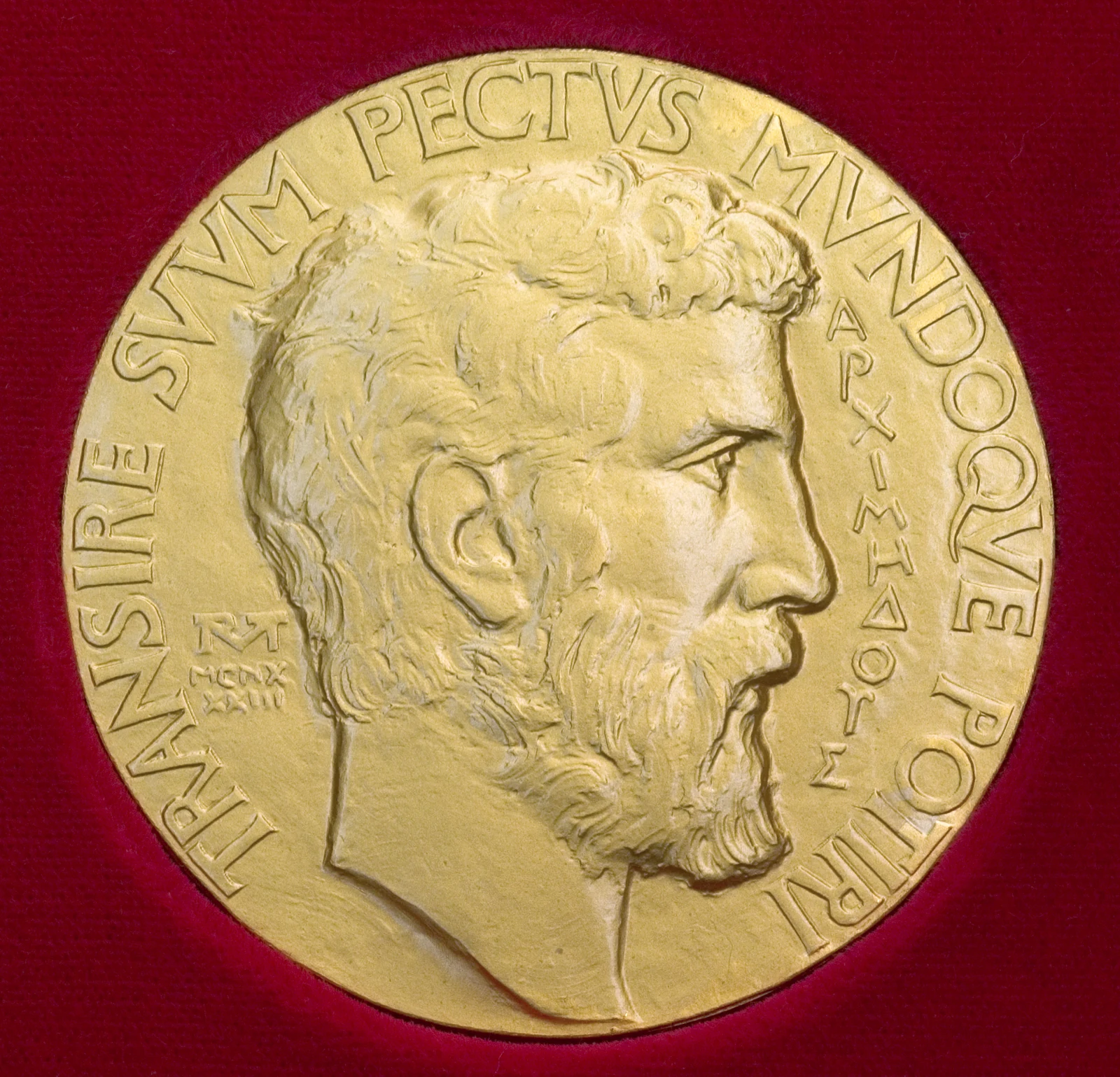
Grothendieck’s absence also made the award easier to read politically than personally. There was no acceptance speech to interpret. The official record and later histories carried the story. Later accounts joined the nonattendance to other documented antiwar and institutional acts.
That retrospective grouping can obscure chronology. In 1966 Grothendieck still worked at IHES, benefited from its resources, and directed large mathematical projects. His more comprehensive critique of scientific institutions would emerge later. The current record supports event-specific nonattendance, not a completed program of withdrawal.
A prize as compressed historiography
Every prize writes history before historians do. A committee selects a person, chooses a year, and supplies a citation. The ceremony repeats the selection through photographs and speeches. Later obituaries use the award as a hinge. Complexity is converted into a date that readers can remember.
This conversion has practical value. In 1966 the medal told mathematicians outside algebraic geometry that Grothendieck’s work belonged among the era’s decisive achievements. It also supplied institutional evidence that recognition was not invented retrospectively after later applications.
The compression becomes distortion when the cited person absorbs predecessors, collaborators, and successors. Weil and Zariski remain in the official text; Dieudonné, Artin, Verdier, and the SGA expositors do not. Deligne’s future proof can be mistakenly annexed because the prize year is treated as the program’s finish.
A historian should therefore use a prize twice: first as evidence of reception, then as an object requiring expansion. The audit asks what the citation included, what was in print, what remained conjectural, and who else appeared on the relevant title pages. The award is a source, not a synopsis to repeat.
Grothendieck’s nonattendance adds a third documentary fact: the ceremony lacked the recipient image normally associated with an award. The record does not establish what meaning he intended that absence to carry.
This is why the chapter does not end at the announcement. It reopens the compressed date into seminar years, publication years, collaborators, and open problems. The medal is one record among them.
Recognition and possession
To recognize work is not to own it. A mathematical theorem, once published and checked, becomes available for others to use. A medal belongs materially to a recipient, but the institution uses it to represent a collective judgment and its own authority to judge.
Grothendieck’s mathematics repeatedly weakened privileged possession. A universal property identified an object by its relations to every test object. A seminar distributed problems among expositors. A theory gained value through applications its originator did not control. These mathematical facts do not prove his political motive, but they make the ceremony’s possessive grammar worth noticing.
The medal put his name on an object and his career into a laureate list. Because he was absent, the ceremony contained no acceptance image or speech from him. The institution still named him a recipient.
He remained in the list; the medal existed; and the congress proceeded. Later commentators interpreted the nonattendance within the institution as political protest.2626Jackson, “As If Summoned from the Void, I”; Jackson, “As If Summoned from the Void, II”; Cartier, “A Mad Day’s Work”; O’Connor and Robertson, “Alexander Grothendieck”; Scharlau, Anarchie.
His later career would contain stronger withdrawals, including departure from IHES and eventual retreat from conventional mathematical publication. Those later acts must not be read as the hidden complete meaning of this nonattendance. In 1966 he continued to direct and publish.
The distinction also protects collaborators. If the medal does not own the work, neither does its recipient. Individual recognition can coexist with a mathematical commons whose particular discoveries retain particular authors.
The ethics of not going
Later ethical interpretations treat nonattendance at a medal ceremony in a politically charged capital as refusal. That is an interpretation of context, not the established event itself.2727Jackson, “As If Summoned from the Void, I”; Jackson, “As If Summoned from the Void, II”; Cartier, “A Mad Day’s Work”; O’Connor and Robertson, “Alexander Grothendieck”; Scharlau, Anarchie.
Nonattendance removed both an acceptance speech and a direct congress address from the record. No source used here states how Grothendieck weighed those consequences.
Because no sourced public statement specifies his calculation, the chapter cannot decide how he weighed those costs. It can establish that nonattendance meant foregoing the ceremony attached to a major professional honor.
Later biographers connect the act to Grothendieck’s documented pacifism. Pacifism alone does not establish why this particular congress was not attended.2828Jackson, “As If Summoned from the Void, I”; Jackson, “As If Summoned from the Void, II”; Cartier, “A Mad Day’s Work”; O’Connor and Robertson, “Alexander Grothendieck”; Scharlau, Anarchie.
The ethics also differ from proving a theorem. There is no formal criterion showing that absence was the uniquely correct response. Colleagues could reasonably value contact and attend. A biography should not convert admiration for Grothendieck into a moral judgment on every participant.
Later accounts interpret the nonattendance as evidence that he did not treat scientific honor as a domain sealed from politics. The interpretation gains support from later acts, provided those acts retain their later dates.
Mathematics and responsibility before Survivre
Grothendieck’s organized ecological and antimilitary activism through Survivre lay after his 1970 departure from IHES. It would be anachronistic to place that group’s full critique in his mouth in Moscow four years earlier. The vocabulary, allies, and urgency of the later movement developed over time.
Later biographies treat the nonattendance as evidence that political judgment had already affected professional behavior. The exact judgment remains undocumented; the later organization had not yet formed.2929Jackson, “As If Summoned from the Void, I”; Jackson, “As If Summoned from the Void, II”; Cartier, “A Mad Day’s Work”; O’Connor and Robertson, “Alexander Grothendieck”; Scharlau, Anarchie.
This distinction helps trace development. In 1966 the nonattendance occurred within an active career. By 1970 a separate military-funding dispute would contribute to a break with an employer. In the early 1970s it would reorganize the center of his public life. The stages should not be collapsed.
The mathematical program also continued between them. He did not leave SGA after Moscow. SGA 6 and SGA 7 lay ahead; motives and standard conjectures remained active programs. Antiwar actions and mathematical work overlapped chronologically.
This overlap resists a chronology that first completes the mathematics and only then introduces political action. The cohomological program remained unfinished.
No claim is made that his mathematics caused his politics or vice versa. The two histories share a person and institutions. Their relation should be established by documented acts, not symbolic resemblance.
Thirty-eight and already canonical
At thirty-eight, Grothendieck had moved from functional analysis through homological algebra and K-theory into a reconstruction of algebraic geometry. The speed invites an individual-prodigy account. That account can obscure the decade of collaboration, institutional support, and prior mathematics on which the work stood.
The age also explains why “lifetime achievement” is the wrong frame. EGA IV was not finished. SGA 5 awaited redaction. SGA 6 was opening. Motives and monodromy were future programs. The medal marked an already canonical body of work inside an active research period.
To be canonical so young altered authority. A conjecture or research direction from Grothendieck could mobilize people because the field had evidence of his judgment. The medal amplified a position the seminar and EGA had already created.
Authority can accelerate mathematics by concentrating attention on fertile questions. It can also narrow attention and make attribution gravitational. The network’s later independence would test whether the language remained open to revision.
Grothendieck’s nonattendance should not be described as withdrawal from professional authority. He returned to an institute where he exercised it.
This coexistence would become one source of later tension. In 1966 it was not a resolved contradiction but the condition in which the next work was done.
The 1967 boundary
The calendar after Moscow matters because later actions are often used to explain the absence. In 1967 Grothendieck traveled to North Vietnam and lectured during a war in which American bombing shaped the conditions of the visit. The episode documented his antiwar position publicly.3030Jackson, “As If Summoned from the Void, I”; Jackson, “As If Summoned from the Void, II”; Cartier, “A Mad Day’s Work”; O’Connor and Robertson, “Alexander Grothendieck”.
It occurred later and does not supply a missing Moscow statement. It documents a further antiwar action in 1967.
EGA IV.4 also appeared in 1967. SGA 6 continued through its 1966–67 seminar year, and SGA 7 on monodromy would belong to 1967–69. The mathematical calendar advanced beside the political one.
This parallel is important. Grothendieck did not move from mathematics to politics immediately after the medal. He pursued some of his most consequential later programs while undertaking public antiwar action. A clean break belongs neither to August 1966 nor to one moment.
Part VII will narrate those events in their own present tense. This chapter uses them only as boundary markers. The people in Moscow did not know the future visit, and Grothendieck’s choice not to attend did not announce its itinerary.
The 1970 boundary
Grothendieck’s departure from IHES in 1970 over military funding is often read as the later, more consequential expression of a principle also associated with Moscow. Biographical sources connect both events to opposition to military power.3131Jackson, “As If Summoned from the Void, I”; Jackson, “As If Summoned from the Void, II”; Cartier, “A Mad Day’s Work”; O’Connor and Robertson, “Alexander Grothendieck”; Scharlau, Anarchie.
The differences are equally real. Moscow concerned travel to and ceremonial participation in a Soviet-hosted congress. The IHES conflict concerned funding of his own employer and the response of colleagues. One was absence from a prize occasion; the other ended a permanent position and a central research arrangement.
Between them lay four years of mathematics, politics, and changing relationships. A later rupture cannot be treated as the inevitable theorem of an earlier premise. Institutions and people had choices.
This matters to Motchane’s role. In 1966 he reportedly represented Grothendieck at the ceremony. In 1970 the institute he founded became the object of Grothendieck’s protest. The contrast is historically powerful only if the two dates remain apart.
The seminar architecture also became less dependent on one institutional center by 1970. Collaborators and published volumes could carry it onward. Grothendieck’s departure would disrupt a living network without erasing its language.
The Moscow absence preceded the rupture but did not determine it. Later events changed how the absence was remembered. Contemporary evidence and retrospective interpretation must remain distinct.
The afterlife of an absence
Stories about Grothendieck often pair two prize episodes: Moscow in 1966 and the Crafoord Prize in 1988. The pairing is memorable and imprecise. In 1966 he did not attend the congress where the Fields Medal was awarded; in 1988 he explicitly declined a different prize and issued a public critique. The documentary forms are not the same.
Retelling tends to upgrade the earlier act into an explicit rejection because the later letter supplies words. This is backwards quotation. The 1988 document can show continuity in his criticism of scientific institutions, but its sentences cannot become his 1966 explanation.
The Moscow story also attracts specific political triggers. Some may be historically plausible, but without a contemporaneous statement or reliable identified testimony, precision becomes false confidence. The record preserves the dispute; this account does not select a vivid cause.
Later retellings can turn the 1966 nonattendance into an explicit rejection for which the located record supplies no statement. The simplification removes institutional dependence, ambiguity, and continued participation.
A fuller account retains simultaneous facts. Grothendieck continued to lead a large mathematical program and stayed away from its most visible award ceremony. His later withdrawal had not yet occurred.
Archives and the ethics of the gap
An archival program, congress proceedings, correspondence, or Motchane’s papers may refine the Moscow record. Until located and checked, their possible contents must not be narrated. The possibility of undiscovered correspondence is a research lead, not a source.
The same applies to images. A photograph labeled “ICM 1966” may show a crowd without identifying individuals. Cropping a generic congress audience beside a Grothendieck caption could imply presence. Provenance includes depicted subject, date, creator, and holding institution, not only URL.
A portrait from 1966 does not place him in Moscow unless its original record does. A portrait can establish what he looked like near the time and still be geographically unrelated to the congress. Caption precision is part of factual precision.
The gap is thus both subject and method. No speech, no Moscow portrait of the absent man, and no verified private trigger appear in the located record. A conventional ceremonial scene cannot be reconstructed from those materials.
Affiliation is not belonging
The IMU record associates Grothendieck with the University of Paris; the IHES record lists him as its permanent professor. Such labels are created for administrative clarity. They identify a professional location, not the whole institutional arrangement and still less a nationality.3232International Mathematical Union, “Fields Medals 1966”; Institut des Hautes Études Scientifiques, “Alexander Grothendieck, Permanent Professor from 1958 to 1970”.
Award lists often sort mathematicians by country, university, or place of birth. The IMU record gives Berlin as Grothendieck’s birthplace and the University of Paris as affiliation; IHES gives his permanent post. This account does not add a citizenship category because no dated primary legal record has been verified for August 1966.3333International Mathematical Union, “Fields Medals 1966”; Institut des Hautes Études Scientifiques, “Alexander Grothendieck, Permanent Professor from 1958 to 1970”.
The Congress’s international ideal relied on affiliation labels even as it claimed to transcend them. Delegates arrived through national systems; citations circulated globally. The record separates professional classification from attendance; it does not establish what Grothendieck intended that separation to mean.
Citizenship cannot be inferred from a medal page, attendance from affiliation, or political representation from a professional address. Each relation needs its own source.
What the other participants could know
The located records establish the award and Grothendieck’s absence. They do not establish what congress participants were told or how they interpreted it. No identified contemporary reception testimony was verified for this account.
No contemporary press packet, report of audience reaction, or private explanation was verified. Accordingly, the chapter does not supply headlines, applause, or a shared understanding of the absence.
Broad secondary sources support the description of political protest. A specific trigger requires stronger evidence, and any claim about the meaning he intended an audience to receive requires a statement or reliable witness. Grammar marks the boundary of knowledge.
Two universalities
Grothendieck’s mathematics sought statements valid after arbitrary base change and languages capable of joining arithmetic with geometry. The ICM sought an international community capable of joining mathematicians across political borders. Both are forms of universality, and neither is free of conditions.
A theorem is universal only under named hypotheses. Without flatness or properness, it may fail. A congress is international only through visas, host permissions, travel resources, and institutional recognition. Remove access and the universal assembly acquires a boundary.
Grothendieck’s absence does not establish a general verdict on political internationalism. It made the conditions of this gathering part of later interpretation, while the Congress and mathematical exchange continued.
The comparison has a further limit. Mathematical objects do not suffer from state violence; people do. Category-theoretic metaphors can clarify relations and also aestheticize politics. The biography keeps the Cold War setting human rather than describing it as a failed commutative diagram.
Still, the paired universalities explain why the event resonates. A mathematician identified with border-crossing abstraction confronted the institutional borders of science. The relation is symbolic and documented through circumstance, not through an invented private philosophy.
Silence is not withdrawal
Grothendieck’s nonattendance was local to the occasion. He did not stop publishing, directing seminars, or corresponding. The mathematical record after August contradicts any claim that the absence was already withdrawal from the field.
No Moscow acceptance speech exists in the located record. Bourbaki exposés, EGA fascicles, and seminars document other forms of public mathematical work that continued.
This selectivity would characterize later transitions as well. Even after leaving IHES, he taught, wrote, organized activism, and pursued mathematics in altered forms. The binary of public participation versus silence is too crude for the life.
The Moscow story became an emblem partly because it is simple: invitation, prize, absence. The rest of 1966 is complicated: ongoing redaction, multiple cohomologies, collaborators, and open conjectures. This chapter restores complexity around the emblem.
The record of 1966
At the end of Part VI, the verified political ledger is short. The ICM met in Moscow from August 16 to 26, 1966. Four Fields Medals were awarded. Grothendieck did not attend. The Motchane proxy report and absence of a public explanation remain attributed to MacTutor; later biographies interpret the nonattendance through pacifism.
The mathematical ledger is longer. EGA IV.3 and the algebraic de Rham paper appeared in 1966. Hartshorne’s duality volume appeared from a 1963–64 seminar. SGA 5 bore the year 1965–66 but awaited 1977 publication. SGA 6 began in 1966–67. EGA IV.4 belonged to 1967.
The open-problem ledger is decisive. The general Weil Riemann hypothesis was not proved. Deligne’s theorem belonged to 1974. The printed standard conjectures belonged to 1968–69. No award changed those dates.
The record also has limits: no Moscow statement verified by this account, no Moscow image of Grothendieck, no primary congress confirmation yet located for the proxy receipt, and no chapter-level assertion of his precise legal status.
These ledgers do not reduce a life to data. They establish the floor on which narrative can stand. Above it, interpretation remains possible; below it, invention begins.
Two official records
The current IMU page reproduces a short 1966 citation and identifies the four medalists. The congress proceedings, published in 1968, constitute a separate institutional record of the Moscow meeting. Their publication dates and purposes differ even though both concern the same award.3434International Mathematical Union, “Fields Medals 1966”; Actes du Congrès international des mathématiciens (Moscou, 1966).
The IMU page establishes the wording now presented by the awarding institution. It does not document Grothendieck’s private response or the committee’s deliberations. The proceedings can establish congress events but require page-level inspection before they support the reported proxy receipt.
That limitation is consequential. A later institutional account states that Motchane received the medal for Grothendieck, but the corresponding congress passage has not been verified. The prose therefore attributes the report instead of stating it without qualification.3535O’Connor and Robertson, “Alexander Grothendieck”.
The same distinction governs the absence of a public explanation. A secondary source reports no public statement, but no finite archive search can prove universal silence. The chapter states that the located record contains no such statement; it does not claim that none could exist.3636O’Connor and Robertson, “Alexander Grothendieck”.
Reading the two official records alongside the attributed secondary account thus produces a bounded result: award, nonattendance, citation, and unresolved details about receipt and explanation. The evidentiary boundary is part of the event’s history, not a gap to fill with motive.
This source structure also separates event from reception. The award and congress belong to 1966, the proceedings to 1968, and many biographical interpretations to later decades. A later interpretation can illuminate the act’s reception but cannot become a contemporaneous statement by Grothendieck.3737International Mathematical Union, “Fields Medals 1966”; Actes du Congrès international des mathématiciens (Moscou, 1966); Institut des Hautes Études Scientifiques, “Alexander Grothendieck, Permanent Professor from 1958 to 1970”; Institut des Hautes Études Scientifiques, “The Foundation”; Jackson, “As If Summoned from the Void, I”; Jackson, “As If Summoned from the Void, II”; Cartier, “A Mad Day’s Work”; O’Connor and Robertson, “Alexander Grothendieck”; Curbera, Mathematicians of the World, Unite! The International Congress of Mathematicians—A Human Endeavor.
The chapter therefore keeps three verbs distinct: the IMU awarded, Grothendieck did not attend, and later writers interpreted. None of those claims supplies the missing private explanation, and none requires one to establish the public chronology.
That distinction is sufficient for the chapter’s biographical work. It shows a public honor, a documented nonappearance, and an interpretation whose sources and date differ from the event. Stronger psychological closure would add confidence without adding evidence.
The record also prevents the award from becoming a substitute for the year’s mathematics. In 1966 EGA IV.3 and the de Rham paper entered print, SGA 5 completed its seminar year without its eventual book, and SGA 6 began. Those facts establish continuation without any inference about Grothendieck’s private reaction to the medal. They also separate professional recognition from theorem status: the IMU could honor work already visible while the weight problem remained open and several foundational volumes remained unpublished. This distinction is sufficient to connect the ceremony to the research program without turning either one into an explanation of the other or into a predetermined life transition.3838Grothendieck and Dieudonné, “Éléments de géométrie algébrique IV: Étude locale des schémas et des morphismes de schémas, troisième partie”; Illusie, Cohomologie ℓ-adique et fonctions L (SGA 5); Berthelot et al., Théorie des intersections et théorème de Riemann–Roch (SGA 6); Grothendieck, “On the de Rham Cohomology of Algebraic Varieties”; International Mathematical Union, “Fields Medals 1966”.
The morning after a medal
A ceremony gives a date the appearance of a boundary. The next morning, however, the open conjecture remains open, manuscripts still require correction, and collaborators retain their own work. A medal changes social knowledge about a mathematician more quickly than it changes mathematics.
For Grothendieck, the missing ceremony sharpened that difference. International recognition reached him without interrupting Moscow with his presence. At IHES the programs continued according to research time rather than ceremonial time.
The award could enlarge invitations, authority, and legend. It could not publish EGA IV.4 a year early or turn the 1977 SGA 5 edition into a 1966 book. Prestige has no power over chronology.
Nor could absence erase the award. His name remained in the official list and the profession continued to cite the medal. Nonattendance and recognition are both documented facts.
The mathematical record also documents continued work at IHES. The award did not finish the seminar programs, the EGA publication sequence, or the open Weil problem.
Recognition and continued work
The congress record concerns recognition in August 1966. The mathematical record shows that SGA 5 had completed its seminar year, SGA 6 had begun, EGA IV.3 had appeared while EGA IV.4 had not, and the de Rham paper had added another cohomological comparison. These are parallel dated facts, not stages of a ceremonial conclusion.3939Grothendieck and Dieudonné, “Éléments de géométrie algébrique IV: Étude locale des schémas et des morphismes de schémas, troisième partie”; Grothendieck and Dieudonné, “Éléments de géométrie algébrique IV: Étude locale des schémas et des morphismes de schémas, quatrième partie”; Illusie, Cohomologie ℓ-adique et fonctions L (SGA 5); Berthelot et al., Théorie des intersections et théorème de Riemann–Roch (SGA 6); Grothendieck, “On the de Rham Cohomology of Algebraic Varieties”.
Later biographies interpret the nonattendance as political protest. The present source base does not establish the precise motive, so that interpretation remains attributed rather than incorporated into the event record.4040Jackson, “As If Summoned from the Void, I”; Jackson, “As If Summoned from the Void, II”; Cartier, “A Mad Day’s Work”; O’Connor and Robertson, “Alexander Grothendieck”; Scharlau, Anarchie; Curbera, Mathematicians of the World, Unite! The International Congress of Mathematicians—A Human Endeavor.
The documentary sequence is therefore specific. The IMU page records the four medalists and citation; the congress history fixes Moscow and the dates; EGA IV.3 and the de Rham article record current publication; the SGA titles record seminar years whose books appeared later. None of these documents records a contemporaneous statement of Grothendieck’s precise reason for nonattendance. Read together, they support recognition, nonattendance, continued mathematical work, and later attributed political interpretation as distinct claims. That separation governs the outgoing interface. Chapter 37 begins from the bounded record and adds 1966–67 material without restating or strengthening the Moscow motive. The SGA 6 program, not the medal, supplies the documented chronological continuation for Part VII.4141Grothendieck and Dieudonné, “Éléments de géométrie algébrique IV: Étude locale des schémas et des morphismes de schémas, troisième partie”; Grothendieck and Dieudonné, “Éléments de géométrie algébrique IV: Étude locale des schémas et des morphismes de schémas, quatrième partie”; Grothendieck, Revêtements étales et groupe fondamental (SGA 1); Grothendieck, Cohomologie locale des faisceaux cohérents et théorèmes de Lefschetz locaux et globaux (SGA 2); Demazure and Grothendieck, Schémas en groupes I: Propriétés générales des schémas en groupes (SGA 3); Demazure and Grothendieck, Schémas en groupes II: Groupes de type multiplicatif, et structure des schémas en groupes généraux (SGA 3); Demazure and Grothendieck, Schémas en groupes III: Structure des schémas en groupes réductifs (SGA 3); Artin et al., Théorie des topos et cohomologie étale des schémas (SGA 4), Tome 1; Artin et al., Théorie des topos et cohomologie étale des schémas (SGA 4), Tome 2; Artin et al., Théorie des topos et cohomologie étale des schémas (SGA 4), Tome 3; Illusie, Cohomologie ℓ-adique et fonctions L (SGA 5); Berthelot et al., Théorie des intersections et théorème de Riemann–Roch (SGA 6); Grothendieck, “On the de Rham Cohomology of Algebraic Varieties”; International Mathematical Union, “Fields Medals 1966”; Actes du Congrès international des mathématiciens (Moscou, 1966); Institut des Hautes Études Scientifiques, “Alexander Grothendieck, Permanent Professor from 1958 to 1970”; Institut des Hautes Études Scientifiques, “The Foundation”; Jackson, “As If Summoned from the Void, I”; Jackson, “As If Summoned from the Void, II”; Cartier, “A Mad Day’s Work”; O’Connor and Robertson, “Alexander Grothendieck”; Scharlau, Anarchie; Curbera, Mathematicians of the World, Unite! The International Congress of Mathematicians—A Human Endeavor.
The work continued
Part VI began with the dates on SGA title pages and ends with a date on an award record. Neither is a complete account of the work. Seminar years name periods of creation; publication years name durable objects; the medal year names recognition. The chapter keeps those dates separate.
Between 1961 and 1966, descent had turned local compatibility into a construction method. The étale site had made algebraic maps into neighborhoods. Topoi had made sheaf worlds into objects. ℓ-adic cohomology had made Frobenius accessible to linear algebra. The trace formula had made point counts into determinants. Each achievement depended on a network whose names survive unevenly across title pages.
The general Weil weight problem remained open. Grothendieck did not attend the Moscow ceremony, and later sources supplied political interpretations without a verified contemporary statement of precise motive.
SGA 6’s 1966–67 title points forward. Intersection theory and Riemann–Roch would revisit K-theory and correspondences. Motives and standard conjectures would attempt to control the relation among cohomology theories. Meanwhile Grothendieck’s political commitments would become more public and more costly to his institutional position.
None of that was settled in Moscow. The medal existed; the recipient did not appear. At IHES the mathematical programs continued through collaborators, open problems, and an institution Grothendieck had not yet left. The award record and continuing mathematical work remain distinct.
Notes
- International Mathematical Union, “Fields Medals 1966”. ↩
- International Mathematical Union, “Fields Medals 1966”. ↩
- Actes du Congrès international des mathématiciens (Moscou, 1966) (Mir, 1968); Guillermo P. Curbera, Mathematicians of the World, Unite! The International Congress of Mathematicians—A Human Endeavor (A K Peters, 2009). ↩
- Jackson, “As If Summoned from the Void, I”; Jackson, “As If Summoned from the Void, II”; Cartier, “A Mad Day’s Work”; O’Connor and Robertson, “Alexander Grothendieck”; Curbera, Mathematicians of the World, Unite! The International Congress of Mathematicians—A Human Endeavor; Actes du Congrès international des mathématiciens (Moscou, 1966); Scharlau, Anarchie. ↩
- International Mathematical Union, “Fields Medals 1966”; Institut des Hautes Études Scientifiques, “Alexander Grothendieck, Permanent Professor from 1958 to 1970”. ↩
- Curbera, Mathematicians of the World, Unite! The International Congress of Mathematicians—A Human Endeavor. ↩
- Jackson, “As If Summoned from the Void, I”; Jackson, “As If Summoned from the Void, II”; Cartier, “A Mad Day’s Work”; O’Connor and Robertson, “Alexander Grothendieck”; Scharlau, Anarchie. ↩
- Jackson, “As If Summoned from the Void, I”; O’Connor and Robertson, “Alexander Grothendieck”. ↩
- Jackson, “As If Summoned from the Void, I”; Jackson, “As If Summoned from the Void, II”; Cartier, “A Mad Day’s Work”; O’Connor and Robertson, “Alexander Grothendieck”; Scharlau, Anarchie. ↩
- International Mathematical Union, “Fields Medals 1966”. ↩
- O’Connor and Robertson, “Alexander Grothendieck”. ↩
- Institut des Hautes Études Scientifiques, “The Foundation”. ↩
- Deligne, “La conjecture de Weil I”. ↩
- Grothendieck and Dieudonné, “Éléments de géométrie algébrique IV: Étude locale des schémas et des morphismes de schémas, troisième partie”; Grothendieck and Dieudonné, “Éléments de géométrie algébrique IV: Étude locale des schémas et des morphismes de schémas, quatrième partie”. ↩
- Grothendieck, “On the de Rham Cohomology of Algebraic Varieties”. ↩
- Hartshorne, Residues and Duality: Lecture Notes of a Seminar on the Work of A. Grothendieck, Given at Harvard 1963/64. ↩
- Grothendieck, “Formule de Lefschetz et rationalité des fonctions L”; Illusie, Cohomologie ℓ-adique et fonctions L (SGA 5). ↩
- Berthelot et al., Théorie des intersections et théorème de Riemann–Roch (SGA 6). ↩
- Grothendieck and Dieudonné, “Éléments de géométrie algébrique IV: Étude locale des schémas et des morphismes de schémas, troisième partie”. ↩
- Grothendieck, “On the de Rham Cohomology of Algebraic Varieties”. ↩
- Hartshorne, Residues and Duality: Lecture Notes of a Seminar on the Work of A. Grothendieck, Given at Harvard 1963/64. ↩
- Berthelot et al., Théorie des intersections et théorème de Riemann–Roch (SGA 6). ↩
- Deligne, “La conjecture de Weil I”. ↩
- Jackson, “As If Summoned from the Void, I”; Jackson, “As If Summoned from the Void, II”; Cartier, “A Mad Day’s Work”; O’Connor and Robertson, “Alexander Grothendieck”; Scharlau, Anarchie. ↩
- International Mathematical Union, “Fields Medals 1966”; Institut des Hautes Études Scientifiques, “Alexander Grothendieck, Permanent Professor from 1958 to 1970”. ↩
- Jackson, “As If Summoned from the Void, I”; Jackson, “As If Summoned from the Void, II”; Cartier, “A Mad Day’s Work”; O’Connor and Robertson, “Alexander Grothendieck”; Scharlau, Anarchie. ↩
- Jackson, “As If Summoned from the Void, I”; Jackson, “As If Summoned from the Void, II”; Cartier, “A Mad Day’s Work”; O’Connor and Robertson, “Alexander Grothendieck”; Scharlau, Anarchie. ↩
- Jackson, “As If Summoned from the Void, I”; Jackson, “As If Summoned from the Void, II”; Cartier, “A Mad Day’s Work”; O’Connor and Robertson, “Alexander Grothendieck”; Scharlau, Anarchie. ↩
- Jackson, “As If Summoned from the Void, I”; Jackson, “As If Summoned from the Void, II”; Cartier, “A Mad Day’s Work”; O’Connor and Robertson, “Alexander Grothendieck”; Scharlau, Anarchie. ↩
- Jackson, “As If Summoned from the Void, I”; Jackson, “As If Summoned from the Void, II”; Cartier, “A Mad Day’s Work”; O’Connor and Robertson, “Alexander Grothendieck”. ↩
- Jackson, “As If Summoned from the Void, I”; Jackson, “As If Summoned from the Void, II”; Cartier, “A Mad Day’s Work”; O’Connor and Robertson, “Alexander Grothendieck”; Scharlau, Anarchie. ↩
- International Mathematical Union, “Fields Medals 1966”; Institut des Hautes Études Scientifiques, “Alexander Grothendieck, Permanent Professor from 1958 to 1970”. ↩
- International Mathematical Union, “Fields Medals 1966”; Institut des Hautes Études Scientifiques, “Alexander Grothendieck, Permanent Professor from 1958 to 1970”. ↩
- International Mathematical Union, “Fields Medals 1966”; Actes du Congrès international des mathématiciens (Moscou, 1966). ↩
- O’Connor and Robertson, “Alexander Grothendieck”. ↩
- O’Connor and Robertson, “Alexander Grothendieck”. ↩
- International Mathematical Union, “Fields Medals 1966”; Actes du Congrès international des mathématiciens (Moscou, 1966); Institut des Hautes Études Scientifiques, “Alexander Grothendieck, Permanent Professor from 1958 to 1970”; Institut des Hautes Études Scientifiques, “The Foundation”; Jackson, “As If Summoned from the Void, I”; Jackson, “As If Summoned from the Void, II”; Cartier, “A Mad Day’s Work”; O’Connor and Robertson, “Alexander Grothendieck”; Curbera, Mathematicians of the World, Unite! The International Congress of Mathematicians—A Human Endeavor. ↩
- Grothendieck and Dieudonné, “Éléments de géométrie algébrique IV: Étude locale des schémas et des morphismes de schémas, troisième partie”; Illusie, Cohomologie ℓ-adique et fonctions L (SGA 5); Berthelot et al., Théorie des intersections et théorème de Riemann–Roch (SGA 6); Grothendieck, “On the de Rham Cohomology of Algebraic Varieties”; International Mathematical Union, “Fields Medals 1966”. ↩
- Grothendieck and Dieudonné, “Éléments de géométrie algébrique IV: Étude locale des schémas et des morphismes de schémas, troisième partie”; Grothendieck and Dieudonné, “Éléments de géométrie algébrique IV: Étude locale des schémas et des morphismes de schémas, quatrième partie”; Illusie, Cohomologie ℓ-adique et fonctions L (SGA 5); Berthelot et al., Théorie des intersections et théorème de Riemann–Roch (SGA 6); Grothendieck, “On the de Rham Cohomology of Algebraic Varieties”. ↩
- Jackson, “As If Summoned from the Void, I”; Jackson, “As If Summoned from the Void, II”; Cartier, “A Mad Day’s Work”; O’Connor and Robertson, “Alexander Grothendieck”; Scharlau, Anarchie; Curbera, Mathematicians of the World, Unite! The International Congress of Mathematicians—A Human Endeavor. ↩
- Grothendieck and Dieudonné, “Éléments de géométrie algébrique IV: Étude locale des schémas et des morphismes de schémas, troisième partie”; Grothendieck and Dieudonné, “Éléments de géométrie algébrique IV: Étude locale des schémas et des morphismes de schémas, quatrième partie”; Grothendieck, Revêtements étales et groupe fondamental (SGA 1); Grothendieck, Cohomologie locale des faisceaux cohérents et théorèmes de Lefschetz locaux et globaux (SGA 2); Demazure and Grothendieck, Schémas en groupes I: Propriétés générales des schémas en groupes (SGA 3); Demazure and Grothendieck, Schémas en groupes II: Groupes de type multiplicatif, et structure des schémas en groupes généraux (SGA 3); Demazure and Grothendieck, Schémas en groupes III: Structure des schémas en groupes réductifs (SGA 3); Artin et al., Théorie des topos et cohomologie étale des schémas (SGA 4), Tome 1; Artin et al., Théorie des topos et cohomologie étale des schémas (SGA 4), Tome 2; Artin et al., Théorie des topos et cohomologie étale des schémas (SGA 4), Tome 3; Illusie, Cohomologie ℓ-adique et fonctions L (SGA 5); Berthelot et al., Théorie des intersections et théorème de Riemann–Roch (SGA 6); Grothendieck, “On the de Rham Cohomology of Algebraic Varieties”; International Mathematical Union, “Fields Medals 1966”; Actes du Congrès international des mathématiciens (Moscou, 1966); Institut des Hautes Études Scientifiques, “Alexander Grothendieck, Permanent Professor from 1958 to 1970”; Institut des Hautes Études Scientifiques, “The Foundation”; Jackson, “As If Summoned from the Void, I”; Jackson, “As If Summoned from the Void, II”; Cartier, “A Mad Day’s Work”; O’Connor and Robertson, “Alexander Grothendieck”; Scharlau, Anarchie; Curbera, Mathematicians of the World, Unite! The International Congress of Mathematicians—A Human Endeavor. ↩