After the Moscow absence narrated in Chapter 36, the 1966 medal remained one measure of Grothendieck’s international standing.11Serre, “Rapport au comité Fields sur les travaux de A. Grothendieck”; International Mathematical Union, “Fields Medals 1966”.
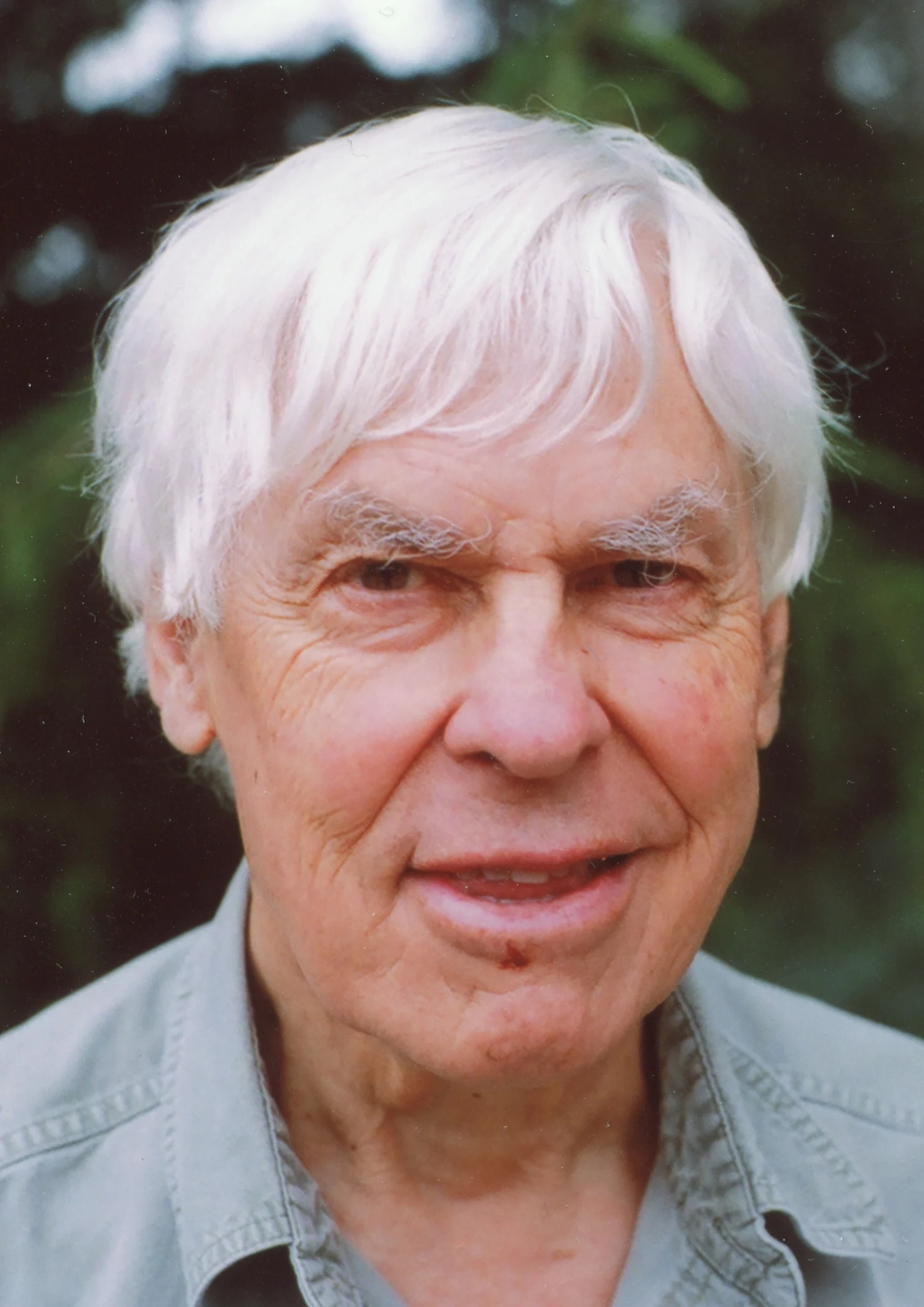
Two large books at the edge of completion
In 1966 the third part of EGA IV appeared in volume 28 of Publications Mathématiques de l’IHÉS. It ran from page 5 to page 255. In 1967 the fourth part appeared in volume 32 and ran from page 5 to page 361. These were not sequels in the ordinary literary sense. EGA—Éléments de géométrie algébrique—was designed as an architecture of definitions, propositions, proofs, and cross-references within which modern algebraic geometry could be carried out. The later parts of chapter IV examined local properties of schemes and morphisms with a level of detail that made the work both forbidding and durable.22Grothendieck and Dieudonné, “Éléments de géométrie algébrique IV: Étude locale des schémas et des morphismes de schémas, troisième partie”; Grothendieck and Dieudonné, “Éléments de géométrie algébrique IV: Étude locale des schémas et des morphismes de schémas, quatrième partie”.
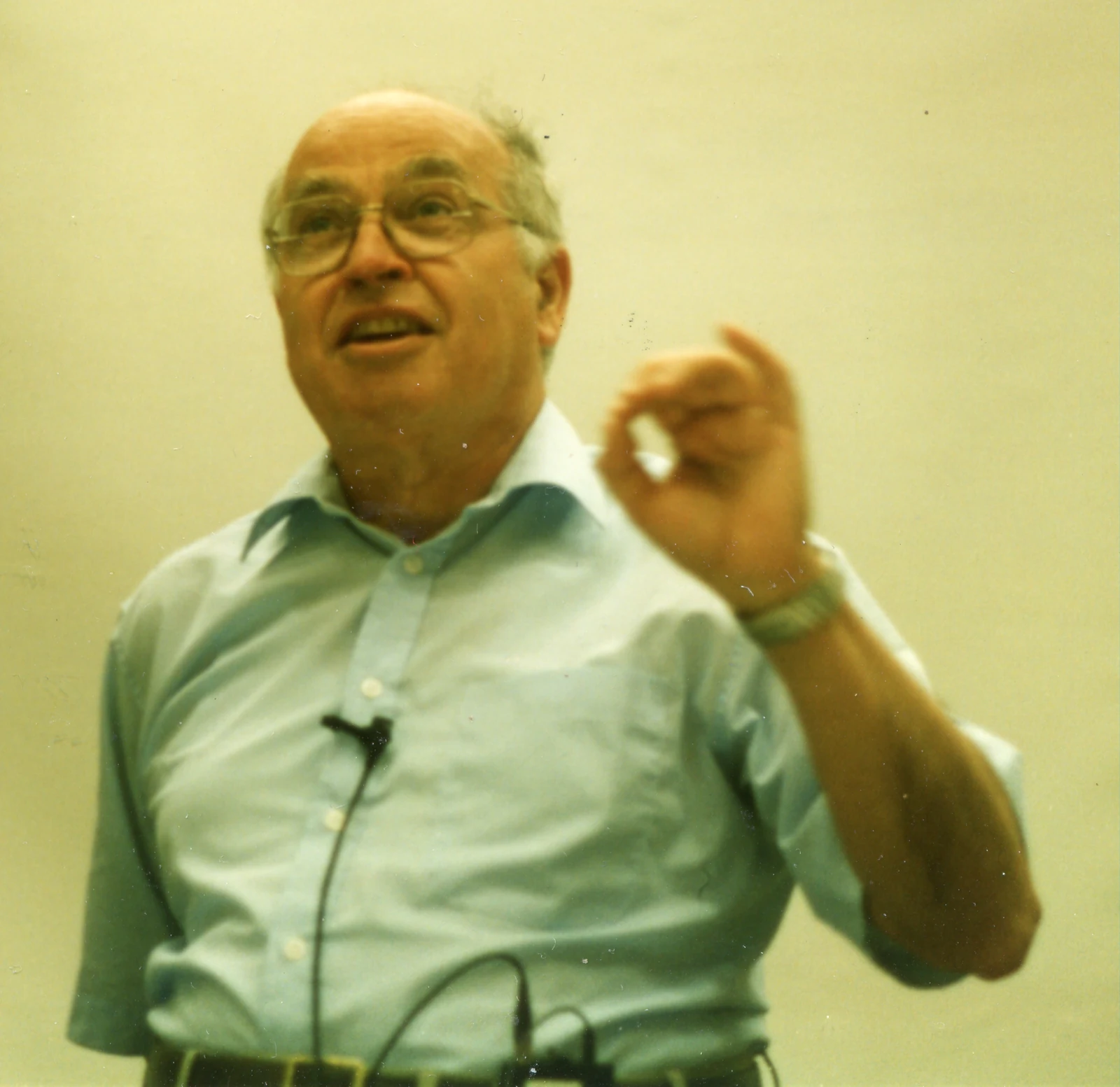
The title pages matter. The established attribution was to Grothendieck “with the collaboration of Jean Dieudonné.” That formula registers an asymmetry without making the work solitary. Grothendieck supplied the overarching program and extensive drafts. Dieudonné’s labor included rewriting, filling details, adding complements, polishing proofs, and, according to Luc Illusie’s later testimony, making an especially important contribution to material in EGA IV concerning differential calculus in positive characteristic and complete local rings. The result cannot be understood through the modern reflex of deciding whether “collaboration” means either equal coauthorship or secretarial assistance. The printed formula names a historically specific division of labor.33Luc Illusie and et al., “Reminiscences of Grothendieck and His School,” Notices of the American Mathematical Society 57, no. 9 (2010): 10–11, https://www.ams.org/notices/201009/rtx100901106p.pdf.
EGA’s physical abundance has sometimes encouraged a myth in which pages seem to flow directly from Grothendieck’s mind. The archive shows machinery. A five-page set of “Instructions générales sur la préparation des manuscrits,” dated September 1967, tells typists how to handle underlining, paragraph breaks, crowded formulas, punctuation, Greek letters, bibliographic references, and standardized EGA and SGA citations. It instructs them not to alter an author’s text without consent. This is a minor document next to a volume of EGA, but precisely for that reason it restores scale. A mathematical cathedral required not only a plan and stones but also rules for marks on paper, people who typed them, and repeated checking.44Alexandre Grothendieck, “Instructions générales sur la préparation des manuscrits,” September 1967, H3.1.2.1/1967.36, pp. 1–5, Archives de l’IHÉS, https://archives.ihes.fr/document/H3_1_2_1_1967_36.pdf.
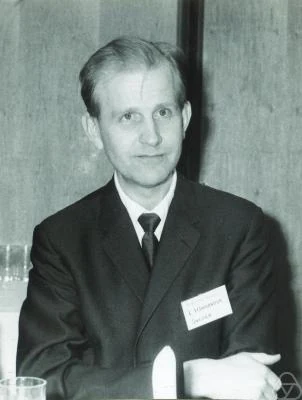
The instructions reveal a culture of precision before they reveal a personality. A reference such as “EGA IV 13.7.8” had to retain its exact form. Mathematical symbols were to be distinguished from punctuation. A doubtful passage should be listed and referred to the author. Such rules did not prove a theorem, yet they made a sprawling corpus navigable. They also imposed costs: time, clerical work, revision, and the disciplined attention of people whose names do not appear on theorem labels. The summit was built out of this largely invisible labor.
The document also distinguishes authority from intervention. Typists could standardize specified references and obvious errors, but doubtful syntax, notation, or wording had to return to an author. That boundary preserved mathematical responsibility while acknowledging that production staff exercised judgment. It records a workflow, not the names of everyone who performed it, and none are invented here.55Grothendieck, “Instructions générales sur la préparation des manuscrits,” 4–5.
This material anchor matters because the scale of EGA is otherwise easy to describe only through page totals. The instructions show how those pages became stable enough for distant readers to use without access to Bois-Marie.
EGA IV’s appearance across 1966 and 1967 can look like completion. It did not complete the larger plan documented in the early EGA outline. Themes were deferred, moved into seminars, or never treated in the projected sequence. The published volumes nevertheless formed a substantial stopping point. A phase of EGA reached its large published form without completing the foundations Grothendieck had envisioned. Later retrospective accounts treat exhaustion, incompletion, and the impossibility of constructing everything as possible parts of his turn away.
At the time, however, the best evidence is activity rather than declared defeat. Alongside EGA, Grothendieck published a concise article on the de Rham cohomology of algebraic varieties in Publications Mathématiques de l’IHÉS 29 in 1966. De Rham cohomology begins from differential forms; other cohomology theories available or under construction began from topology, sheaves, or étale coverings. Their coexistence did not scatter his program. It sharpened one central problem: distinct measuring systems repeatedly disclosed compatible structures in the same algebraic varieties.66Grothendieck, “On the de Rham Cohomology of Algebraic Varieties”.
Tuesday at Bois-Marie
The seminar supplied a different form of publication. On a surviving IHÉS poster, the heading announces a seminar directed by A. Grothendieck on “Le Théorème de Riemann–Roch en Géométrie Algébrique.” The first meeting was fixed for Tuesday, December 6, 1966, at half past two in the afternoon at Bois-Marie. Train information turned a mathematical program into a practical itinerary. A participant had to reach Bures-sur-Yvette.77Institut des Hautes Études Scientifiques, Archives de l’IHÉS, poster, “Le théorème de Riemann–Roch en géométrie algébrique,” December 6, 1966.
Illusie’s recollections supply the human practice behind the poster. He remembered Tuesday seminars beginning in the afternoon, lasting about an hour and a half, followed by tea. Grothendieck often prepared notes in advance and assigned exposés to students. The word assigned can sound administrative, but the assignments could determine years of work. They were also a form of apprenticeship. A student who wrote an exposé might receive pages blackened with pencilled corrections, then spend long sessions discussing matters that ranged from mathematical substance to the order of a sentence.88Illusie and et al., “Reminiscences of Grothendieck and His School,” 1–3; Jackson, “As If Summoned from the Void, I,” 1052–54.
The recollections do not describe an effortless community. Grothendieck could be exacting enough that some students chose other advisers. His criticism could extend to commas and accents. Yet Illusie insisted that the comments were to the point, not petty. Other witnesses remembered the clarity of the lectures, the care taken to recall prerequisites, and a willingness to explain what elite seminars often dismissed as obvious. These qualities belong together: a severe standard for written exposition and an expansive idea of what exposition owed a reader.
The power relation was equally real. Students called him, sometimes without irony, the master or the boss of a construction site. Nicholas Katz later described the honor participants felt when Grothendieck selected them for a task and his unusual ability to match a problem to a person. Such testimony records generosity, charisma, and hierarchy at once. To isolate only one of them would falsify the institution. A problem offered freely can still arrive with the force of a command when the giver organizes the field’s horizon.99Artin et al., “Alexandre Grothendieck 1928–2014, Part 1,” 253–54.
SGA differed from EGA in more than its origin as spoken lectures. It retained a more visible plurality of hands. Individual exposés carried bylines; seminar volumes named directors and collaborators; topics passed from prenotes to talks, from talks to notes, and from notes through revision. Grothendieck’s conceptual direction and editorial force were immense. So were the identifiable contributions of Berthelot, Illusie, Deligne, Katz, Verdier, Raynaud, and others. The phrase “Grothendieck’s seminar” accurately identifies an organizing center. It becomes inaccurate when used as a possessive that erases the work distributed around that center.
The Riemann–Roch seminar later published as SGA 6 is an especially clear example. Its program formulated the theorem for maps and families rather than for one isolated smooth variety. Earlier forms of Riemann–Roch related geometric data to numerical invariants. The relative point of view asked how such information behaves under a morphism . This shift is typical of his mathematics: an object becomes more intelligible when placed in relation to another object, and a theorem becomes more powerful when it explains transport along the relation.
For a general reader, the mathematical movement can be stated without pretending that the technical details are simple. A space may carry a sheaf or a complex that contains local algebraic information. K-theory packages such objects so that exact sequences become additive relations. A Riemann–Roch formula then compares two ways of sending that information along a map, with a characteristic-class correction that accounts for geometry. SGA 6 pursued this comparison in a broad setting. The formula does more than produce a number. It states that two languages of transport agree after the right translation.1010Berthelot et al., Théorie des intersections et théorème de Riemann–Roch (SGA 6).
The division of work within SGA 6 also resists a simple master-and-assistant picture. In Illusie’s later account, he suggested a broader fibered framework for finiteness conditions and described Berthelot adapting constructions to perfect complexes for another problem. These are A2 technical recollections rather than seminar minutes; the published bylines provide a separate bibliographic anchor.1111Berthelot et al., Théorie des intersections et théorème de Riemann–Roch (SGA 6); Illusie and et al., “Reminiscences of Grothendieck and His School,” 3–4.
This mode of collaboration had an ethical premise before it became an ethical problem. Ideas could be given away because the program mattered more than possession of every result. A participant’s contribution could be absorbed into a larger architecture because the architecture made it useful. The arrangement left several matters unresolved: the origin of a question, its transformation into a theorem, the authorship of the proof readers encountered, and authority over inclusion in the larger work. During the summit years, witnesses most often remembered abundance and shared excitement. The accounting became sharper after the community dispersed.
A world organized around a seminar
International prestige was not confined to honors conferred from outside France. It was enacted by travel toward Bures. Visitors came for periods long and short. Correspondence extended the seminar’s reach to Harvard, Princeton, and other centers. Scholars who could not sit in the Bois-Marie lecture room encountered preprints, partial notes, letters, or seminars recreated elsewhere. The “school” was geographically concentrated and transnational at once.
Robin Hartshorne’s recollections illustrate transmission at a distance. After work stimulated by Grothendieck’s Harvard lectures, Hartshorne sent him a thesis. The reply praised it briefly and then opened pages of further questions. Later, when Hartshorne ran a seminar on duality, Grothendieck sent roughly 250 pages of prenotes. Drafts returned covered in corrections. The resulting Residues and Duality, published in 1966, bore Hartshorne’s authorship while plainly emerging from a program and material that Grothendieck had supplied. It was neither a disguised Grothendieck book nor an independent work untouched by him. The bibliographic object preserves one answer to the collaboration: Hartshorne wrote the book, and the book openly announced that it concerned Grothendieck’s work.1212Jackson, “As If Summoned from the Void, I,” 1053–54; Artin et al., “Alexandre Grothendieck 1928–2014, Part 1,” 251–52.
Katz’s entry into SGA 7 took another route. Visiting IHÉS as a young mathematician in 1968, he was asked to lecture on Lefschetz pencils, a subject he later said he scarcely knew at first. By the end of the year he had given talks that entered SGA 7 and shaped his future research. The anecdote is valuable not because it proves magical foresight but because it shows program-building as social judgment. Grothendieck both identified unsolved problems and placed them in particular hands.
Deligne’s position was different again. He began attending the seminar in the middle of the decade and quickly became one of the mathematicians closest to Grothendieck’s program. A later IHÉS poster for March 5, 1968 names “P. Deligne et A. Grothendieck” together as directors of a seminar on local monodromy. A continuation poster for November 19 repeats the joint direction. Documentary typography here corrects the lazy story in which Deligne appears only after Grothendieck’s departure. Before any breach, the younger mathematician was already visibly helping direct a central part of the work.1313Institut des Hautes Études Scientifiques, Archives de l’IHÉS, poster, “Groupes de monodromie locale,” March 5, 1968, J6.1.8/2; Institut des Hautes Études Scientifiques, Archives de l’IHÉS, poster, “Groupes de monodromie locale (suite),” November 19, 1968, J6.1.8/1.
Local monodromy concerns change around degeneration. Imagine a family of smooth objects parameterized by points of a punctured disk. Move once around the missing center. A cohomology class may return transformed, and the transformation records information about the singular fiber that would occupy the center. This is monodromy. Nearby-cycle and vanishing-cycle formalisms make the relation between the smooth neighbors and the singular limit precise. The metaphor of memory is useful: the surrounding fibers carry a trace of what happens at the singularity. It ceases to be reliable if it suggests consciousness or a single numerical memory. The actual object is functorial, algebraic, and often represented by a complex of sheaves.1414Alexandre Grothendieck, ed., Groupes de monodromie en géométrie algébrique (SGA 7 I), Lecture Notes in Mathematics 288 (Springer, 1972), https://doi.org/10.1007/BFb0068688; Pierre Deligne and Nicholas Katz, eds., Groupes de monodromie en géométrie algébrique (SGA 7 II), Lecture Notes in Mathematics 340 (Springer, 1973), https://doi.org/10.1007/BFb0060505.
SGA 7 brought together Grothendieck’s formalism, Deligne’s work on the Picard–Lefschetz formula, Katz’s work on Lefschetz pencils, and other contributions. Its later publication in two volumes reflects both the scale and the delayed work of redaction. The subject pointed directly toward the Weil conjectures because Lefschetz pencils could reduce questions about high-dimensional varieties to controlled families with singular fibers. Yet even here it would be false to narrate every seminar as one straight march toward a famous theorem. Participants were also building concepts whose uses exceeded the original target.
The mathematics had become international in another sense: it created a shared technical language. A young geometer in the United States or Japan could learn to ask whether a functor was representable, whether a construction commuted with base change, or whether a property was local for an appropriate topology. The vocabulary did not guarantee agreement. It made disagreement and extension possible at a higher level of organization. This is one reason Grothendieck’s influence is difficult to measure by citations alone. A paper need not cite the inventor of grammar in every sentence written with it.
That ubiquity later became part of a dispute about credit. During the summit years, according to Serre and other witnesses, Grothendieck shared ideas with remarkable freedom and sometimes attached other people’s names to notions he had introduced. Decades later he would judge parts of the mathematical community harshly for failing to acknowledge or continue his program. Both records exist. The later accusation cannot be read backward as secret resentment governing 1966, and the earlier generosity cannot be used to declare all later grievances meaningless. Chronology is the first condition of fairness.
Prestige measured by assigned work
International standing at IHÉS can be measured through the work people agreed to undertake. Visitors did not arrive only to hear a celebrated lecturer. They entered seminars, wrote exposés, tested definitions, and carried questions to other institutions. The program’s reach appears in the resulting texts rather than in reputation alone.
Hartshorne’s duality seminar is one example. Grothendieck’s prenotes crossed the Atlantic; Hartshorne lectured from them, developed the exposition, and published a book under an authorship formula that identified the source. The work became accessible to readers who had not attended either Bois-Marie or Harvard.
Katz’s Lefschetz-pencil lectures provide another. A topic proposed during a visit became named exposés and later research. The documented sequence includes Grothendieck’s assignment, Katz’s mathematical work, and the SGA record. Prestige created the invitation to participate; proof and exposition created Katz’s contribution.1515Jackson, “As If Summoned from the Void, I,” 1053–54; Artin et al., “Alexandre Grothendieck 1928–2014, Part 1,” 251–54; Deligne and Katz, Groupes de monodromie en géométrie algébrique (SGA 7 II).
Deligne’s joint direction of the local-monodromy seminar shows that the network could develop a second center before Grothendieck left. The poster’s typography records shared institutional responsibility. Later history makes Deligne’s importance obvious, but the 1968 document establishes it without hindsight.
These examples also show different distances from Grothendieck’s current work. Hartshorne developed material that the IHÉS seminar was not then treating. Katz received a problem during a visit. Deligne worked inside the central seminar. International influence was therefore a set of relations rather than a single line radiating from Bures.
The arrangement imposed no guarantee that recipients would continue every program. A task accepted at one moment could lead to another subject. The resulting independence was a sign that the school generated mathematicians rather than executors, even when Grothendieck’s authority remained unusually strong.
This measure of prestige is more demanding than a list of invitations. It asks what durable work passed through the relation and who performed it. By 1966–1968, the program had enough authority to organize collective work across institutions.
The same measure exposes a limit. Strong concentration around one program can narrow attention elsewhere. Thom’s later testimony records one experience of that imbalance. It remains an A2 perspective, not a general verdict on the value of the seminar.
The summit therefore combined attraction and asymmetry. It drew mathematicians because the questions were productive; it placed them within an architecture strongly identified with one person. Both facts matter to the later ethics of credit and departure.
The height of work
Several witnesses later described the intensity of Grothendieck’s schedule in exceptionalizing language. Those recollections do not establish a causal fable about work and collapse. Barry Mazur remembered Grothendieck working late in a spare apartment, and David Ruelle estimated a punishing rhythm sustained for years. In Récoltes et Semailles, Grothendieck later criticized the scale of his mathematical investment. These accounts belong to different times and genres. A colleague’s estimate, a remembered image, and retrospective self-interpretation are not interchangeable measurements.
What the publication record demonstrates is enough. In and around 1966, Grothendieck was finishing large foundational texts, directing seminars, preparing prenotes, revising students’ drafts, corresponding internationally, lecturing abroad, and developing several new programs. The work branched through de Rham cohomology, crystals, Riemann–Roch, monodromy, motives, and standard conjectures.
The May 1966 letter to John Tate on crystals offers a compact example. Illusie later recalled Grothendieck’s terminology: a crystal combines rigidity with the ability to grow in a suitable neighborhood. The name would support a theory connecting infinitesimal deformation and cohomology in positive characteristic. For present purposes, the letter matters less as a technical origin certificate than as evidence of movement. While one program was being codified, another could appear in a letter and be carried forward by students and correspondents.1616Illusie and et al., “Reminiscences of Grothendieck and His School,” 2–3; Artin et al., “Alexandre Grothendieck 1928–2014, Part 2,” 405.
In early autumn, according to William Messing’s later recollection, Grothendieck gave three lectures at Haverford College. The third discussed the May letter to Tate. Messing did not claim to have understood it fully at the time. That admission captures a recurring mechanism of influence. A lecture could be too advanced for immediate comprehension yet still orient years of later work. Prestige made audiences listen; mathematical fertility gave them reasons to return.
There was an obvious danger in organizing history around one prodigious source. The more ideas Grothendieck released, the easier it became for later narration to treat collaborators as channels rather than mathematicians. The archive argues against that simplification. It supplies separate names, dates, exposés, page counts, and directorships. A 1970 IHÉS inventory lists joint entries under Grothendieck and Verdier, separate entries under Deligne and Katz, and many other items. The inventory records texts and bylines, not a complete genealogy of ideas.1717Institut des Hautes Études Scientifiques, Archives de l’IHÉS, “Travaux de mathématiques et de physique théorique, année 1970,” F3.2.2.1/4.
This distinction also alters the meaning of international fame. Recognition of Grothendieck extended beyond widespread knowledge of his name. His program distributed agency: it gave people subjects, formalisms, and unfinished tasks. That power could feel liberating to someone who found the right problem and constraining to someone whose work stood outside the prevailing program. René Thom later described Grothendieck’s technical superiority and seminar dominance as crushing. The comment is one person’s recollection of a complex relationship, not a verdict on the institute. It is nevertheless evidence that one mathematician’s summit could cast shade.
A poster for an unfinished country
An IHÉS poster dated April 25, 1967, announced the continuation of Grothendieck’s “Esquisse d’une théorie des motifs,” or sketch of a theory of motives. The sheet gives a date, a time, a train departure, a place, and a subject. It does not offer the theory itself. Motives would become an influential name associated with Grothendieck without being fully embodied in one work of his.1818Institut des Hautes Études Scientifiques, Archives de l’IHÉS, poster, “Esquisse d’une théorie des motifs,” April 25, 1967, J6.1.7/1.
The poster belongs chronologically to the summit. It also announces a limit. EGA had demonstrated that an enormous foundational vision could be converted into thousands of ordered pages. The motivic vision would not be converted in the same way. It passed through correspondence, oral exposition, short published statements, and the papers of other mathematicians. At the very moment when Grothendieck’s authority was most visible, one of his largest ideas existed as a sketch.
There is no contradiction in that. Mathematical authority can rest on the capacity to define a direction before all its constructions exist. Unfinished theories intensify questions of transmission. Oral circulation leaves intended scope uncertain; another mathematician’s definitions and proofs complicate the boundary between origin and authorship; later divisions make continuation contestable. These issues accompany motives into the next chapter. In 1967 the modest paper announcement records a room in which some portion of the program was spoken.
Hanoi
The movement from international prestige to public responsibility did not begin in 1970. Grothendieck’s own report on Vietnam fixes a sequence in 1967. Early that year, through intermediaries, mathematicians in the Democratic Republic of Vietnam requested preprints in algebra and algebraic geometry. He sent his own material and available IHÉS publications. In May he proposed visiting for two or three months to give courses or seminars. An invitation eventually arrived for November. IHÉS granted leave and travel support; his report also says that the French foreign ministry’s cultural-relations department was prepared to cover travel expenses.1919Alexandre Grothendieck, La vie mathématique en République Démocratique du Vietnam (1967), 1–2, https://webusers.imj-prg.fr/~leila.schneps/grothendieckcircle/vietnam.pdf.
He left Paris on October 31, waited in Phnom Penh because of difficulties coordinating the journey, reached Hanoi on November 10, and left on December 1. Those dates matter because later summaries sometimes turn the trip into an emblem detached from duration. His own count was twenty-one days. During nine days in Hanoi he gave general lectures to an audience that began at about sixty. He then spent roughly a week and a half at an evacuated university site about one hundred kilometers from the capital, giving a more specialized seminar on categories and homological algebra to thirty or forty listeners.2020Grothendieck, La vie mathématique en République Démocratique du Vietnam, 2.
The report is both evidence and rhetoric. It records what Grothendieck saw, what hosts told him, and what he inferred under wartime conditions. It should not be treated as a neutral survey of North Vietnam. It is nevertheless a near-contemporaneous first-person document with exact dates and organizational detail. On November 17, he wrote, air-raid alarms interrupted his lecture three times. A delayed-action cluster bomb fell in the courtyard of the Hanoi Polytechnic Institute and later killed two mathematics instructors. The audience continued the lecture schedule under a system shaped by bombardment and evacuation.2121Grothendieck, La vie mathématique en République Démocratique du Vietnam, 3–4.
No invented scene can improve on the documentary contrast. In Bois-Marie, the practical line on a poster told listeners which train to take from the Luxembourg station. In Hanoi, lecture hours were chosen partly around the expected timing of air raids. The mathematics was not different because it was taught under threat: categories and homological algebra did not acquire Vietnamese definitions. Its social conditions were radically different. A program produced at one of Europe’s best-supported independent institutes was being transmitted to colleagues whose university had dispersed into villages.
Grothendieck’s report paid close attention to that transmission. Hoàng Xuân Sính took notes. Lectures were given in French and translated into Vietnamese for part of the audience. Faculty traveled, often by bicycle, from evacuated institutions. Teachers were excused from other duties so that they could attend. These details prevent the journey from becoming a story of a famous European visitor bestowing mathematics on passive recipients. The hosts organized the seminar, translated it, recorded it, and sustained mathematical education in conditions the visitor could leave after three weeks.
The trip also complicates any claim that Grothendieck’s political activity began with the 1970 IHÉS funding dispute. The Vietnam report documents an earlier use of professional travel, books, and lectures in a country under bombardment. It does not establish a complete political philosophy or a direct cause of resignation.
It would be equally wrong to make Vietnam the sole cause of that rupture. The report does not announce an imminent departure from IHÉS or mathematics. On the contrary, it records that IHÉS facilitated the journey and that IHÉS publications were among the materials sent. Institution and conscience had not yet separated cleanly. The same institute that would become the site of an argument about military-origin funding helped enable a visit undertaken in solidarity with mathematicians living through war. History rarely arranges its symbols as neatly as later narrative desires.
On December 20, 1967 Grothendieck presented his report in Paris at the invitation of the mathematics department of the Faculty of Sciences. The return turned experience into testimony. That movement—from seeing to reporting, from a specialized authority to a public claim—would become more pronounced after 1970. At this point it remained continuous with his mathematical life. He traveled as a mathematician, taught mathematics, described mathematical institutions, and used the lecture room to speak about war’s effects.
What a summit cannot hold
By the end of 1967, EGA IV, SGA 6, the motives poster, international visitors, and circulating methods documented Grothendieck’s position within algebraic geometry.
Yet none of these signs meant rest. The foundational corpus was incomplete by its original ambition. Seminar volumes required years of redaction. Motives had been sketched, not built as a finished theory. The standard conjectures were approaching public formulation and would remain conjectures. The Weil conjectures still resisted the complete proof Grothendieck’s machinery had been designed in part to make possible. The summit was not a plateau on which the program stood complete. It was a ridge from which more unfinished terrain became visible.
There was also an institutional asymmetry concealed by success. IHÉS gave Grothendieck something rare: freedom from ordinary teaching loads, a stream of visitors, publication infrastructure, and a setting in which a seminar could direct a field. Grothendieck in turn gave the young institute scientific credibility. In Récoltes et Semailles, he later compared his and Dieudonné’s early scientific role to co-founding the institute. That retrospective claim accords with the scale of EGA and SGA but does not establish a legal status or his precise view in the late 1960s.2222Grothendieck, Récoltes et Semailles (Université des Sciences et Techniques du Languedoc and Centre National de la Recherche Scientifique, 1986); Institut des Hautes Études Scientifiques, “Alexander Grothendieck, Permanent Professor from 1958 to 1970”.
Identification raises the stakes of disagreement. An employee can leave a funding arrangement he dislikes; a self-understood co-founder confronts the arrangement as a fact about an institution partly his own. That consequence was not yet explicit in 1967. The evidence does not justify foreshadowing it as a plan already formed. It does justify recognizing why a later dispute over institutional money could become more than an argument about a small budget line.
The collaborative structure carried a related vulnerability. During expansion, work could be shared under the momentum of a common program. If the center withdrew, responsibility for redaction, publication, continuation, and credit would be redistributed. No one in 1966 could know exactly how later accusations would form. But the material conditions were already present: an immense body of common work, unequal authority, oral transmission, delayed publication, and ideas whose ownership was less clear than their origin.
For now, those conditions generated mathematics. The appropriate closing image is the verified sheet at Bois-Marie announcing another exposition, with a train time printed beneath it. Grothendieck’s work reached the world through ordinary Tuesday appointments, listeners who took notes, pages rewritten by several hands, and concepts not yet complete enough to belong to anyone in finished form.
The subject on the April 1967 poster was motives. The English word also invites a restrained biographical inquiry into what moves an action. The mathematical program sought an object beneath several visible realizations. Biography has no comparable universal object beneath a person’s choices. It has documents, acts, later memories, and competing interpretations. The next chapter begins with a theory whose name invites the analogy and whose unfinished form sets its boundary.
The seminar as a publication technology
A seminar is usually imagined as a sequence of talks. At Bois-Marie it was also a technology for converting a program into a literature. The conversion had stages. Grothendieck developed a subject, sometimes in extensive prenotes. A speaker received a portion. The talk exposed gaps and questions. Notes were written. Drafts underwent close correction. The resulting exposé entered a volume whose redaction might continue years after the lectures.
Each stage changed the mathematics. Speaking requires an order that a private notebook does not. Questions from an audience can reveal a missing hypothesis. Writing forces a local argument to connect with definitions elsewhere. Editing across exposés tests notation and compatibility. Publication turns a circle’s shared assumptions into statements available to readers who were not present.
The process explains both the strength and delay of SGA. A seminar could move quickly because participants carried common context. A book had to reconstruct enough of that context for strangers. Grothendieck’s refusal to accept “obvious” as a substitute for proof enlarged the redaction. So did his preference for the natural general setting. A result first needed for one application might be reformulated over a base, in a fibered category, or for a wider class of morphisms.
Generality was not an aesthetic addition after discovery; it could reveal the right proof. If a construction depended on an accidental coordinate choice, enlarging the setting forced the argument to identify its invariant core. Yet generality also imposed opportunity costs. Every widened statement demanded definitions, compatibilities, and edge cases. The seminar’s publication technology could turn a short path to one theorem into a long road through infrastructure.
Witnesses differed in how they valued that road. Some regarded EGA and SGA as unmatched tools. Others found the references and scale intimidating. Grothendieck himself later contrasted creative discovery with the burden of endless tasks. The historical account should not choose one experience as the objective one. A dictionary can be liberating to the reader who needs an exact entry and forbidding to the beginner looking for a first route through a subject.
The 1967 manuscript instructions show that the technology extended beyond mathematicians. A typist needed enough symbolic literacy to distinguish a Greek letter from a hurried Latin one and a bold symbol from an underlined word. References had to be normalized without altering content. Doubts were to be returned to the author. These were quality-control procedures before digital typesetting, version control, and searchable source files.
The instructions also expose gendered and classed labor that conventional mathematical history often leaves unnamed. The surviving document addresses “la dactylo,” the typist, as a role. The available record does not identify the individuals who performed it, and no name should be guessed. The absence of names in the available record is itself a limit: a book may describe the work without claiming to restore biographies it has not researched.
Printing added another layer. Publications Mathématiques de l’IHÉS gave EGA a stable serial home. Springer’s Lecture Notes would later hold much SGA material. Bibliographic form affected access. A preprint might circulate among well-connected centers; a published volume could reach libraries but at a price and after delay. International influence depended on these material channels as surely as on conceptual universality.
Translation was usually mathematical rather than linguistic. French remained a working language that many international geometers read. In Hanoi, however, Grothendieck’s French lectures required oral Vietnamese translation for much of the audience. Hoàng Xuân Sính’s notes became another form of transmission. A theory designed to be invariant under mathematical change of language still traveled through human languages with unequal accessibility.
One can therefore map the summit as a chain: idea, prenote, train journey, lecture, question, tea discussion, written exposé, pencilled revision, typescript, printer, library, seminar elsewhere. The chain has no single heroic instant. Grothendieck’s importance appears in the number and direction of connections, not in his isolation from them.
Several cohomologies at once
The mathematical work around 1966 gains coherence when seen through cohomology. Étale cohomology had supplied a way to treat varieties over fields where ordinary topology offered no suitable covering theory. De Rham cohomology extracted invariants from differential forms. Crystalline ideas sought to recover infinitesimal information in characteristic . SGA 6 used derived and K-theoretic methods. SGA 7 studied change in families and singular degeneration.
These were not unrelated empires. They asked how local data become global invariants, how invariants behave under maps, and how different measuring systems compare. Grothendieck’s repeated use of functoriality was the connective tissue. An invariant mattered not only as a group attached to one object but through the maps it induced and the compatibilities those maps satisfied.
For a nonspecialist, “cohomology” can sound like one advanced subject. In practice, a cohomology theory is a rule with structure. It assigns graded algebraic objects to spaces or schemes; a map in geometry induces a map in the opposite or appropriate direction; exact sequences relate a whole to pieces; products and duality constrain calculations. The value lies as much in the relations as in the individual groups.
The Weil conjectures made the choice of cohomology urgent. Their shape suggested that varieties over finite fields had topological-looking invariants, including numbers analogous to Betti numbers. But there was no ordinary complex topology on which to rely. Étale cohomology built a substitute through a new notion of covering. Its success vindicated the broader strategy of changing the concept of space until the desired invariants became natural.
De Rham cohomology supplied a different realization. On a smooth algebraic variety in characteristic zero, differential forms and their exterior derivatives form a complex. The cohomology of that complex agrees, under comparison, with topological cohomology after passing to complex points. The agreement is striking because the constructions begin in different languages.
Crystalline cohomology would address a failure specific to characteristic : ordinary algebraic de Rham methods can lose the expected behavior. Illusie later recalled a crystal metaphor combining rigidity with extension through infinitesimal neighborhoods in Grothendieck’s May 1966 letter to Tate. The exact letter wording has not been verified for this account; the dated correspondence and later work establish an emerging program.2323Illusie and et al., “Reminiscences of Grothendieck and His School,” 2–3; Artin et al., “Alexandre Grothendieck 1928–2014, Part 2,” 405.
SGA 6’s Riemann–Roch work concerned transport of classes and K-theory along morphisms. SGA 7’s monodromy concerned variation and degeneration. Together they made cohomology dynamic. One did not only ask what invariant a variety has; one asked how it changes in a family, how it pushes forward, how singularities contribute, and which operations commute.
Motives arose from this crowded success. If several cohomology theories repeatedly displayed parallel operations, perhaps their common structure should itself be an object. The motivic idea was not a retreat from technical work into philosophy. It was an attempt to explain why the technical machines agreed.
That attempt depended on standard conjectures about algebraic cycles. The summit therefore contained a hierarchy of certainty. EGA supplied proved foundations. Étale cohomology supplied powerful theorems. Crystals were emerging. Motives were sketched. Standard conjectures remained conjectural. Grothendieck moved among these levels without pretending they were equal, even when later admirers blur them.
The hierarchy matters for reputation. A mathematician may be credited for theorems, definitions, programs, or conjectures. Serre’s 1966 assessment addressed proved and constructed work. Later accounts also emphasize motives, whose complete theory Grothendieck did not publish. A fair portrait names the mode of each achievement.
Two forms of unfinished work
The de Rham article and the letter on crystals show two different ways in which Grothendieck’s mathematics moved in 1966. The article in Publications Mathématiques de l’IHÉS was a finished public object. It entered a numbered volume, carried a stable title and pagination, and stated results that readers could cite. The May letter to Tate circulated a developing vocabulary and a direction that other mathematicians would later make into a broader theory. One belonged to the formal publication record; the other belonged to correspondence and subsequent testimony.2424Grothendieck, “On the de Rham Cohomology of Algebraic Varieties”; Illusie and et al., “Reminiscences of Grothendieck and His School,” 2–3; Artin et al., “Alexandre Grothendieck 1928–2014, Part 2,” 405.
The distinction matters because a bibliography can make one mode visible and the other nearly disappear. A published article has clear boundaries. A long mathematical letter may contain definitions, conjectures, terminological proposals, and partial arguments without claiming the closure of a paper. Later work can draw on it in ways that are difficult to summarize through authorship alone.
De Rham cohomology provided an established comparison problem. For a smooth algebraic variety in characteristic zero, algebraic differential forms form a complex, and its cohomology can be compared with topological cohomology after passage to complex points under the appropriate hypotheses. The theory supplied one of the realizations that the motivic program sought to place beside others.
Crystalline cohomology addressed a different obstruction. In characteristic , familiar differential methods do not automatically retain the desired information. The emerging crystalline program used infinitesimal thickenings and rigid extension data. Grothendieck’s terminology in the Tate correspondence associated rigidity with controlled growth, but the exact French wording remains outside the chapter until primary verification. The historical claim is narrower: a dated letter and later participant testimony locate an active program in 1966.2525Illusie and et al., “Reminiscences of Grothendieck and His School,” 2–3; Artin et al., “Alexandre Grothendieck 1928–2014, Part 2,” 405.
These modes also distributed work differently. Grothendieck authored the de Rham paper. Crystalline theory developed through Berthelot, Illusie, Messing, and others, with letters, seminars, theses, and later publications carrying different parts. The contrast supplies a concrete example of why “Grothendieck’s mathematics” cannot function as one undifferentiated possessive.
At the summit, finished and unfinished work therefore reinforced each other. Established publications gave authority to new proposals. Letters and seminars opened problems that the published corpus did not yet solve. International standing accelerated circulation, but it did not convert a proposal into a theorem or erase the names of those who developed it.
The same distinction applies to motives. The April 1967 poster proves public exposition, not a completed category. Manin’s later paper proves a published construction, not transcription of the Bois-Marie talk. Each source answers a separate historical question.
This chronology guards against a decline narrative. An unfinished letter was not evidence that Grothendieck could no longer finish mathematics. It was a normal form of communication inside a program larger than any one publication. The later institutional break changed the conditions of development; it did not retroactively make the 1966 letter a fragment of departure.
The evidence carried by recollection
Much of the human texture of Bois-Marie comes from recollections recorded decades later. Illusie remembered the schedule, the tea, the cold office, the marked pages, and walks in the woods. Katz remembered receiving a problem. Hartshorne remembered red ink. Mazur remembered late-night work. These accounts are indispensable and uneven.
A recollection identifies its witness and angle. Illusie knew Grothendieck as adviser and editor. Thom experienced him as a dominant colleague. Cartier shared mathematics and politics but criticized tactics. Deligne was a younger collaborator of unusual mathematical closeness. None observed every domain.
Time changes memory. A later proof can make an early question look prophetic. A later conflict can darken an earlier correction. A later friendship can soften hierarchy. This does not make testimony unreliable by definition. It means testimony should be used for what the witness could know and attributed where interpretation begins.
Specific technical recollections carry a useful check. Illusie’s account of Berthelot’s K-theoretic contribution can be compared with SGA 6. Posters confirm joint seminar direction. Published exposés confirm bylines. These convergences raise confidence. A remembered private motive without a dated letter cannot receive the same status.
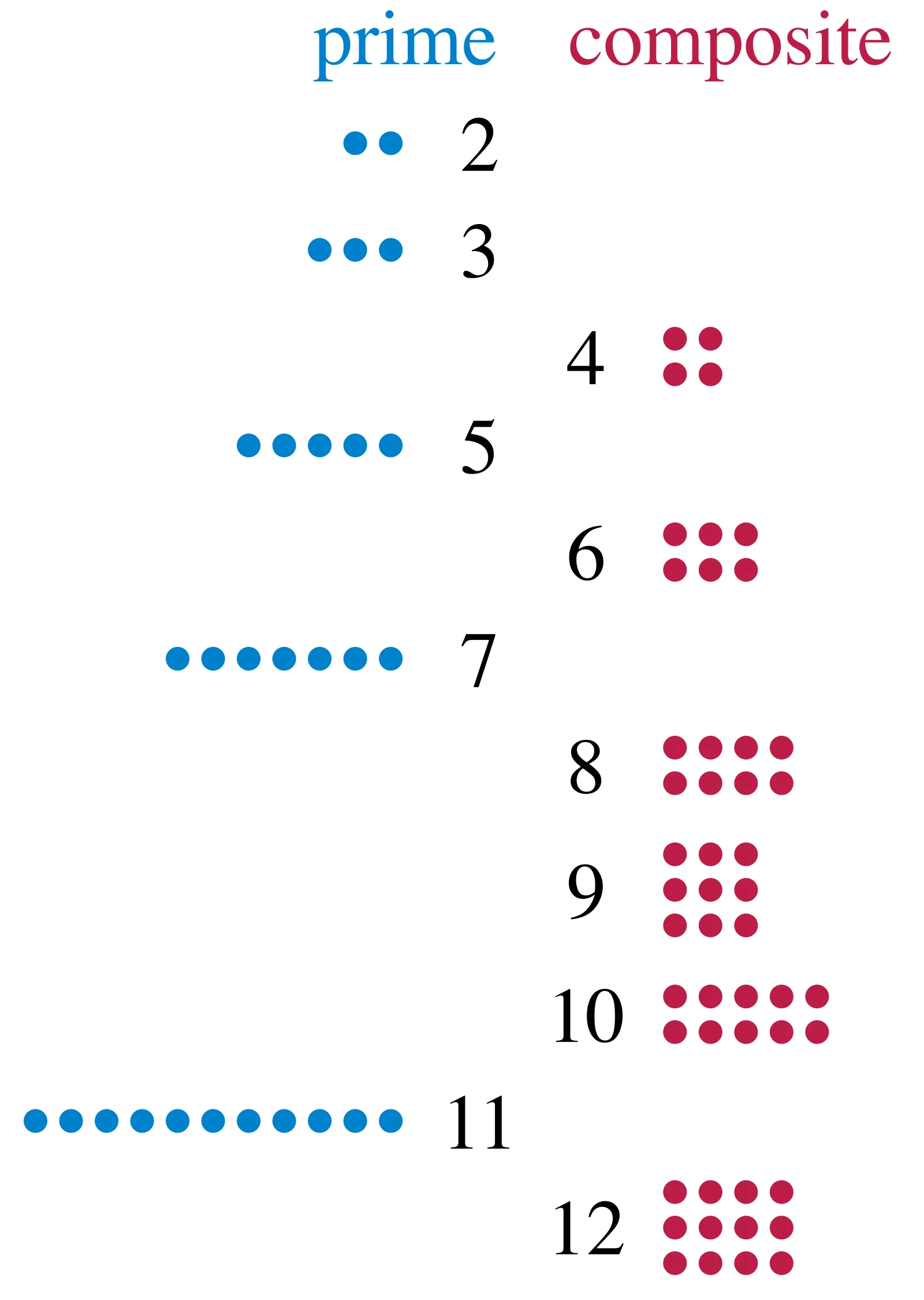
The biographer should also resist selecting anecdotes only because they symbolize a desired character. The “Grothendieck prime” story, for example, is memorable but uncertain in origin and tells little about the standard conjectures. This chapter has preferred records that illuminate work: assignments, drafts, train times, publication, and dated travel.
Concrete does not mean cinematic. The Vietnam report gives alarms, dates, audience sizes, and lecture organization. Those facts can create a vivid passage without invented weather, facial expressions, or dialogue. Documentary vividness is not inferior to reconstruction. It lets the reader know which details belong to the witness.
At the summit, later witnesses saw both abundance and strain. The record does not require deciding that one secretly caused the other. It requires leaving room for a mathematical culture to be exhilarating and costly, generous and hierarchical, international and institutionally dependent.
That layered account prepares the breach better than foreshadowing does. A record of glory alone would make departure look uncaused, while an overwork narrative would turn achievements into symptoms. The evidence instead shows a functioning system with unresolved institutional and collaborative tensions.
Seen from outside the center
The word “school” changes meaning with distance. At Bois-Marie it could mean people who heard one another weekly, shared references, and revised common texts. At Harvard it could mean a seminar rebuilt from prenotes. For a mathematician encountering EGA in a library, it meant a language without personal access to its makers. Each distance produced another Grothendieck school.
American visitors played a conspicuous role in later testimony because many were interviewed and because institutions at Harvard, Princeton, and MIT became secondary centers of the new geometry. Their memories should not make the United States the sole measure of international reach. The seminar also drew and influenced mathematicians from Belgium, Germany, India, Japan, the Soviet Union, and elsewhere. This account lacks a complete list of visitors and does not turn examples into exhaustive geography.
Distance could make the work more rather than less usable. A participant at Bois-Marie might depend on Grothendieck’s current explanation. A distant reader needed a definition that survived without him. EGA’s impersonal completeness and SGA’s detailed exposés enabled that independence. The cost of scale purchased portability.
Distance also magnified barriers. The texts assumed substantial background, were written in French, and circulated unevenly before publication. A mathematician without access to preprints or a well-connected library entered later. International universality in concepts coexisted with inequality in material access.
The Hanoi journey brought that inequality into Grothendieck’s own report. He described libraries with few Western books and colleagues seeking current preprints. His response was to send personal material and IHÉS publications. The act treated access as a responsibility attached to abundance.
It also revealed a limit to the institute’s internationalism. Hosting foreign visitors in France is not the same as bringing work to scholars unable to travel. Grothendieck’s proposal reversed the usual direction. The famous professor adapted to the host country’s wartime university rather than requiring the audience to reach Bois-Marie.
The visit should not be idealized as equal exchange without evidence. He arrived with scarce publications and a program from a globally dominant center. Hosts translated and organized under conditions he could leave. Reciprocity lay in labor, attention, and the report’s transformation of what he knew—not in symmetry of resources.
The report’s careful audience counts and teaching arrangements show that he regarded mathematical life as institutional achievement. He did not describe only heroic individuals. Evacuation, released teaching duties, translation, bicycles, and note-taking made the seminar possible. This attention parallels the evidence-led account of IHÉS, where trains, typists, funding, and visitors made another seminar possible.
International prestige thus enlarged the field of comparison. Grothendieck could see the extraordinary resources of Bois-Marie beside mathematical work maintained under bombardment. The documents do not say that the comparison caused his later funding ultimatum. They make it available as part of his experience.
The years 1966–1967 in outline
The years 1966–1967 can be listed without superlatives:
- EGA IV, parts three and four;
- an article on algebraic de Rham cohomology;
- a long letter opening a crystalline program;
- the start of the seminar later published as SGA 6;
- continued work toward SGA 7;
- a public exposition on motives;
- international lectures and correspondence;
- a twenty-one-day teaching visit to North Vietnam and a dated report.
The list does not prove all items equal in depth. It shows simultaneous modes of work: award, monograph, article, letter, seminar, program, travel, and testimony. A life organized only by published papers misses half of it.
It also shows several temporalities. EGA condensed years of prior work. The crystal letter pointed forward. SGA 6 began a seminar whose volume appeared later. Motives had an early written mention before the public poster. Vietnam produced an immediate report. “1966–1967” is not one present moment but an overlap of maturation, publication, experiment, and memory.
The summit’s institution had corresponding ledgers: income, visitors, publications, staff, and board decisions. Mathematics presented itself as conceptual freedom; institution translated freedom into scheduled and financed capacity. The later breach would occur in that translation.
The summit’s community had a credit ledger less formal than its financial one. Title pages named some roles. Exposé bylines named others. Oral ideas and revision remained partly tacit. Later conflict would show that tacit credit is stable only while memory and trust remain shared.
The summit’s person had no reliable energy ledger. Colleagues estimated hours; Grothendieck later judged the investment excessive. A biography should not turn output into a quantified account of inner cost. It can place his retrospective judgment beside the work and leave the relation open.
The final measure is not that Grothendieck did everything. It is that his program made many kinds of work converge and gave many people reasons to act. That capacity outlasted formal recognition.
The summit as a relation
A summit exists only relative to a landscape. If measured by formal honor, 1966 is an obvious peak. If measured by the number of foundational pages reaching print, 1966–1967 is equally compelling. If measured by later solitude, every year at IHÉS can look like a lost height. These scales should not be blended into one claim that he was “happiest,” “most creative,” or “already declining.”
Creativity is especially difficult to date. EGA pages published in 1967 may embody discoveries made years earlier. A letter written in 1966 may seed a theory developed later by others. A seminar problem can bear fruit after the director leaves. Publication count and conceptual birth are different curves.
International reputation is easier to observe through invitations, visitors, correspondence, and awards. Even there, surviving records favor institutions with archives. Fame in one mathematical subfield does not equal public celebrity. Grothendieck was a world figure among mathematicians and not a household name.
The summit was also relational because colleagues made it possible. Dieudonné’s pages, students’ exposés, Motchane’s fundraising, and hosts’ invitations were not supports outside the achievement. They were conditions within it. Recognizing them does not shrink Grothendieck; it describes the scale of organization his vision generated.
The later breach altered each relation differently. EGA remained in libraries, seminar relationships changed, IHÉS continued, and Vietnam entered political memory. A summit defined only as an inner state could not explain these divergent afterlives.
This chapter therefore ends without claiming a zenith of the person. It has established a summit of position and program. The person’s own later judgment of the period was more ambivalent, and the next four years would make that ambivalence public.
What can be seen is unfinished ambition under maximum authority. That combination made motives and standard conjectures credible enough to organize others. It also made every institutional disagreement consequential. The summit was a relation of trust among person, program, school, and institute. The breach would separate them without erasing any one.
Output, testimony, and bylines
Three controls follow this chapter into the rest of the Part. Output is not evidence of health. Testimony remains attached to witnesses. Collective nouns never erase bylines.
These controls matter because the next chapters move closer to conflict. A reader who has seen a solitary summit may expect a solitary fall. The documented summit was institutional and collective; its breach redistributed many relations.
The mathematical transition is equally exact. Motives ask for a common source behind realizations. Standard conjectures ask whether key cohomological operations descend to algebraic cycles. Both programs emerge while EGA and SGA are still active. They are not late thoughts produced after creative decline.
The political transition is exact only in documented acts. The Vietnam visit and later funding refusal do not establish one master plan; they belong to different source contexts.
In his later memoir, Grothendieck described an expectation of remaining at IHÉS. This retrospective account makes departure consequential in his retrospective narrative but does not establish his exact view at every earlier date.2626Jackson, “As If Summoned from the Void, I,” 1049 citing Récoltes et Semailles, p. 169.
The summit therefore supplies neither alibi nor diagnosis for what follows. It supplies stakes: a program still fertile, collaborators already independent, an institute materially necessary, and a reputation capable of making refusal public.
At the beginning of 1968, none of those stakes had resolved. The train still ran to Bois-Marie. Posters still named seminars. The next documents would add conjectures and accounts before they added a breach.
The tea after Tuesday lectures deserves one final place in the record. It was not an ornamental pause in heroic work. It was where a formal exposition returned to conversation, visitors met permanent members, and a question could move from audience to future exposé. Illusie’s list of participants joins algebraic geometers of different ages and countries. The room’s openness was selective—one had to reach IHÉS and understand enough to enter—but within that circle it enabled rapid exchange.
Institutions often create their deepest influence through such unrecorded intervals. No minutes preserve each suggestion. Later testimony can identify the practice, not assign every idea born there. The summit’s documentary paradox is that its official achievements depended on conversation least likely to leave an official source.
This book therefore keeps the poster and the recollection together. One proves the scheduled seminar; the other describes the social process around it. Neither is asked to do the other’s work.
That pairing also fixes the chapter’s tone. Reputation without the Tuesday train, manuscript rules, and seminar labor would make achievement weightless; infrastructure without mathematics would make institution the whole story.
Notes
- Serre, “Rapport au comité Fields sur les travaux de A. Grothendieck”; International Mathematical Union, “Fields Medals 1966”. ↩
- Grothendieck and Dieudonné, “Éléments de géométrie algébrique IV: Étude locale des schémas et des morphismes de schémas, troisième partie”; Grothendieck and Dieudonné, “Éléments de géométrie algébrique IV: Étude locale des schémas et des morphismes de schémas, quatrième partie”. ↩
- Luc Illusie and et al., “Reminiscences of Grothendieck and His School,” Notices of the American Mathematical Society 57, no. 9 (2010): 10–11, https://www.ams.org/notices/201009/rtx100901106p.pdf. ↩
- Alexandre Grothendieck, “Instructions générales sur la préparation des manuscrits,” September 1967, H3.1.2.1/1967.36, pp. 1–5, Archives de l’IHÉS, https://archives.ihes.fr/document/H3_1_2_1_1967_36.pdf. ↩
- Grothendieck, “Instructions générales sur la préparation des manuscrits,” 4–5. ↩
- Grothendieck, “On the de Rham Cohomology of Algebraic Varieties”. ↩
- Institut des Hautes Études Scientifiques, Archives de l’IHÉS, poster, “Le théorème de Riemann–Roch en géométrie algébrique,” December 6, 1966. ↩
- Illusie and et al., “Reminiscences of Grothendieck and His School,” 1–3; Jackson, “As If Summoned from the Void, I,” 1052–54. ↩
- Artin et al., “Alexandre Grothendieck 1928–2014, Part 1,” 253–54. ↩
- Berthelot et al., Théorie des intersections et théorème de Riemann–Roch (SGA 6). ↩
- Berthelot et al., Théorie des intersections et théorème de Riemann–Roch (SGA 6); Illusie and et al., “Reminiscences of Grothendieck and His School,” 3–4. ↩
- Jackson, “As If Summoned from the Void, I,” 1053–54; Artin et al., “Alexandre Grothendieck 1928–2014, Part 1,” 251–52. ↩
- Institut des Hautes Études Scientifiques, Archives de l’IHÉS, poster, “Groupes de monodromie locale,” March 5, 1968, J6.1.8/2; Institut des Hautes Études Scientifiques, Archives de l’IHÉS, poster, “Groupes de monodromie locale (suite),” November 19, 1968, J6.1.8/1. ↩
- Alexandre Grothendieck, ed., Groupes de monodromie en géométrie algébrique (SGA 7 I), Lecture Notes in Mathematics 288 (Springer, 1972), https://doi.org/10.1007/BFb0068688; Pierre Deligne and Nicholas Katz, eds., Groupes de monodromie en géométrie algébrique (SGA 7 II), Lecture Notes in Mathematics 340 (Springer, 1973), https://doi.org/10.1007/BFb0060505. ↩
- Jackson, “As If Summoned from the Void, I,” 1053–54; Artin et al., “Alexandre Grothendieck 1928–2014, Part 1,” 251–54; Deligne and Katz, Groupes de monodromie en géométrie algébrique (SGA 7 II). ↩
- Illusie and et al., “Reminiscences of Grothendieck and His School,” 2–3; Artin et al., “Alexandre Grothendieck 1928–2014, Part 2,” 405. ↩
- Institut des Hautes Études Scientifiques, Archives de l’IHÉS, “Travaux de mathématiques et de physique théorique, année 1970,” F3.2.2.1/4. ↩
- Institut des Hautes Études Scientifiques, Archives de l’IHÉS, poster, “Esquisse d’une théorie des motifs,” April 25, 1967, J6.1.7/1. ↩
- Alexandre Grothendieck, La vie mathématique en République Démocratique du Vietnam (1967), 1–2, https://webusers.imj-prg.fr/~leila.schneps/grothendieckcircle/vietnam.pdf. ↩
- Grothendieck, La vie mathématique en République Démocratique du Vietnam, 2. ↩
- Grothendieck, La vie mathématique en République Démocratique du Vietnam, 3–4. ↩
- Grothendieck, Récoltes et Semailles (Université des Sciences et Techniques du Languedoc and Centre National de la Recherche Scientifique, 1986); Institut des Hautes Études Scientifiques, “Alexander Grothendieck, Permanent Professor from 1958 to 1970”. ↩
- Illusie and et al., “Reminiscences of Grothendieck and His School,” 2–3; Artin et al., “Alexandre Grothendieck 1928–2014, Part 2,” 405. ↩
- Grothendieck, “On the de Rham Cohomology of Algebraic Varieties”; Illusie and et al., “Reminiscences of Grothendieck and His School,” 2–3; Artin et al., “Alexandre Grothendieck 1928–2014, Part 2,” 405. ↩
- Illusie and et al., “Reminiscences of Grothendieck and His School,” 2–3; Artin et al., “Alexandre Grothendieck 1928–2014, Part 2,” 405. ↩
- Jackson, “As If Summoned from the Void, I,” 1049 citing Récoltes et Semailles, p. 169. ↩