May 1939: a remembered reunion
Grothendieck later wrote that he rejoined his parents in Paris in May 1939. Later biographies repeat the month, but they may depend on the same witness; no travel paper, ticket, escort record, border entry, or reception document has been inspected.11Grothendieck, La Clef des Songes (1987), 90; Jackson, “As If Summoned from the Void, I”; O’Connor and Robertson, “Alexander Grothendieck”.
The sentence establishes retrospective chronology, not travel mode. This chapter makes no claim about a train, route, station, escort, or who met him. It also does not create a reunion scene or assign a reaction to parents or child.
The family’s reported locations place Schapiro in Paris and Hanka in Nîmes around the arrangements. The exact sequence between reunion and residence remains derivative. By the time war began, the family had been brought into one French chronology; the sources do not supply a continuous household narrative.
This section follows the completed movement at which Chapter 7 stops. It is short because the May date rests on one line of testimony and no contemporary travel document is available.
“Undesirable”
When France went to war with Germany in September 1939, the state possessed both an inherited language of asylum and a recently strengthened machinery for excluding foreigners. The decree-laws of 1938 had enlarged police powers over those categorized as étrangers indésirables—undesirable foreigners. Administrative internment did not require a criminal conviction. It made status, nationality, political history, and official suspicion sufficient grounds for confinement. The camps into which the Grothendieck family would be divided did not begin as German institutions. They belonged to a French system created under the Third Republic and expanded under Vichy.22Association pour le souvenir du camp de Rieucros, “Synthèse”.
That sequence is essential. It does not remove the differences between a French internment camp and a Nazi concentration or extermination camp. It does prevent a false chronology in which all coercion begins with the armistice of June 1940. Rieucros opened near Mende in January 1939. Le Vernet began receiving Spanish Republican soldiers in February. After the declaration of war, French authorities used Le Vernet for foreign political detainees, former combatants in Spain, antifascists, and others considered dangerous. By the time Vichy came to power, sites, files, guards, and categories already existed.33Association pour le souvenir du camp de Rieucros, “Synthèse”; Amicale des anciens internés politiques et résistants du camp du Vernet d’Ariège, “Le camp du Vernet”.
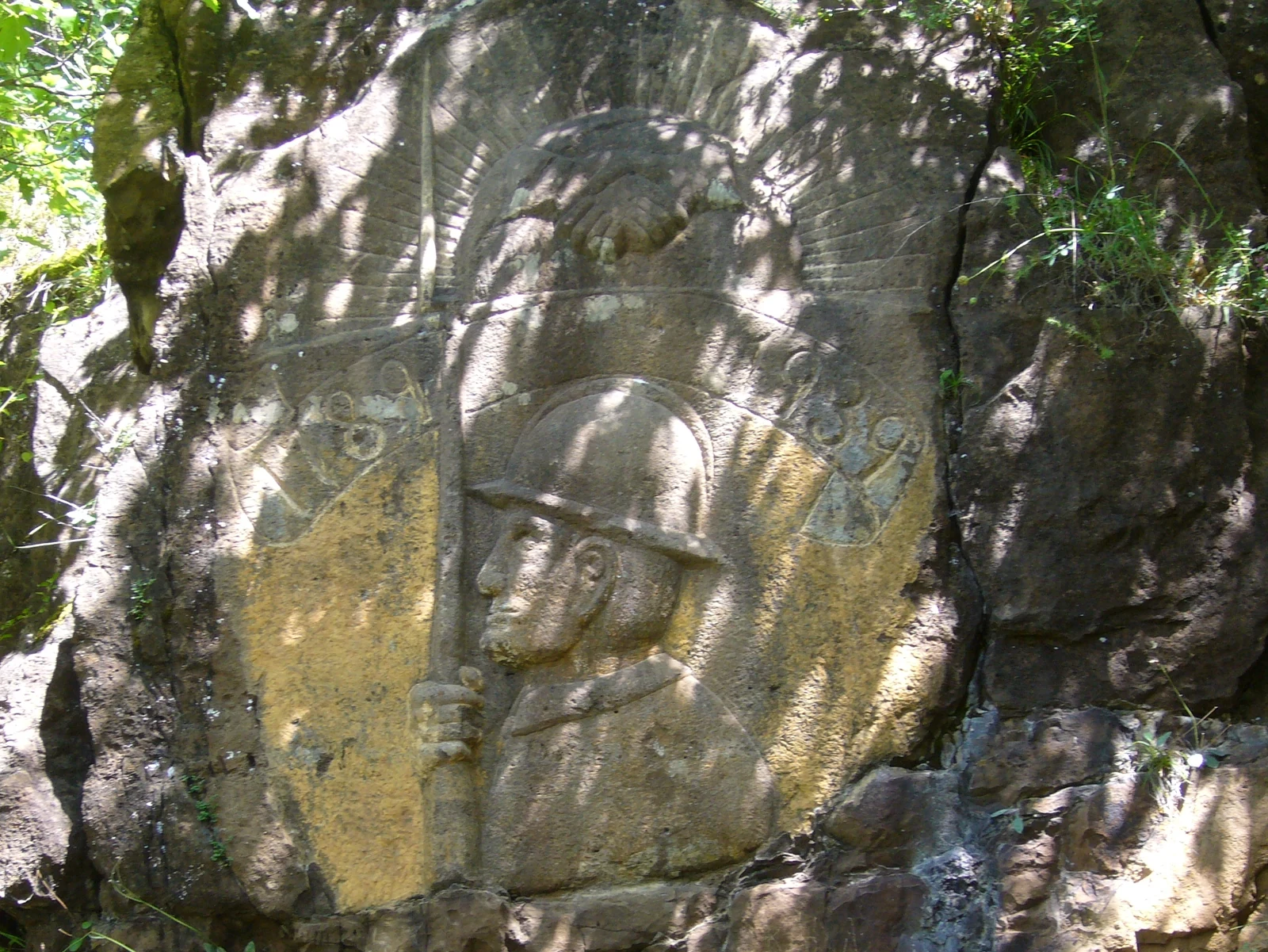
Grothendieck later compressed the family’s entry into that system into two sentences. His account places his father’s internment in winter 1939 and his own confinement with Hanka in early 1940. A Berlin memorial biography gives October 1939 for Schapiro’s arrest. The difference supports the bounded wording late 1939 but not an exact day. Schapiro was sent to Le Vernet. Hanka and Alexander were sent to Rieucros, a few kilometers outside Mende.44Grothendieck, La Clef des Songes (1987), 90; Koordinierungsstelle Stolpersteine Berlin, “Alexander Schapiro”.
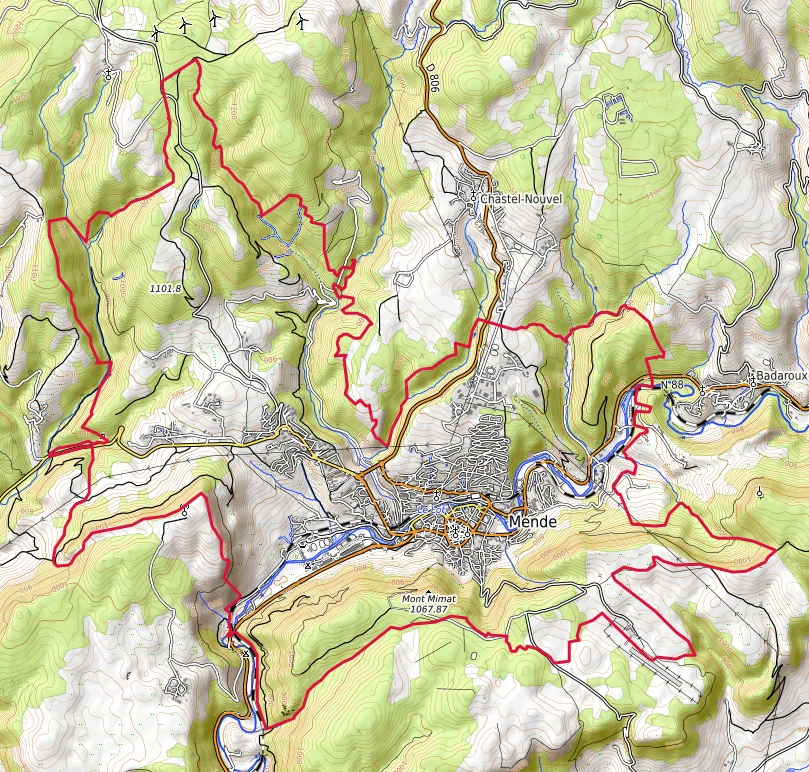
Alexander was eleven. The category under which he entered was political-administrative, not an assessment of anything he had done. He was German-born, attached to a German mother, the son of a stateless Jewish anarchist, and recently arrived from Germany. The authorities’ terminology attached “undesirable” to people of radically different histories: opponents of Hitler, refugees from Franco, Communists, anarchists, Jewish foreigners, and others caught by an expanding police regime. The label performed a reversal. People displaced by dictatorship could be confined as if displacement itself were evidence against them.
The chapter title, “The Camp,” risks making the institution singular. Schapiro was held at Le Vernet, while Hanka and Alexander were confined at Rieucros. Later routes require person-level records that have not been inspected. Camp in this chapter therefore names separate institutions within a French governing method, not a continuous family itinerary.55Grothendieck, La Clef des Songes (1987); Archives départementales de la Lozère, Fonds relatifs au camp de Rieucros (n.d.), https://camp-rieucros.com/bibliographie/; Archives départementales du Tarn, Fonds relatifs au camp de Brens (n.d.), https://camp-rieucros.com/bibliographie/.
Rieucros
Rieucros occupied a site outside Mende in Lozère. It had first held male foreigners whom officials regarded as threatening public order. In October 1939 the men were moved to Le Vernet, and Rieucros became principally a camp for foreign women, some accompanied by children. Under Vichy its population widened to include women targeted on political, antisemitic, and moral grounds. The memorial association estimates that roughly a thousand people passed through; the modern memorial names 1,058. Those aggregate figures provide scale but do not turn inmates into an undifferentiated mass.66Association pour le souvenir du camp de Rieucros, “Synthèse”; Fondation pour la Mémoire de la Shoah, “Mémorial du camp de Rieucros, Mende (48),” https://www.fondationshoah.org/lieux-de-memoire/memorial-du-camp-de-rieucros-mende-48.
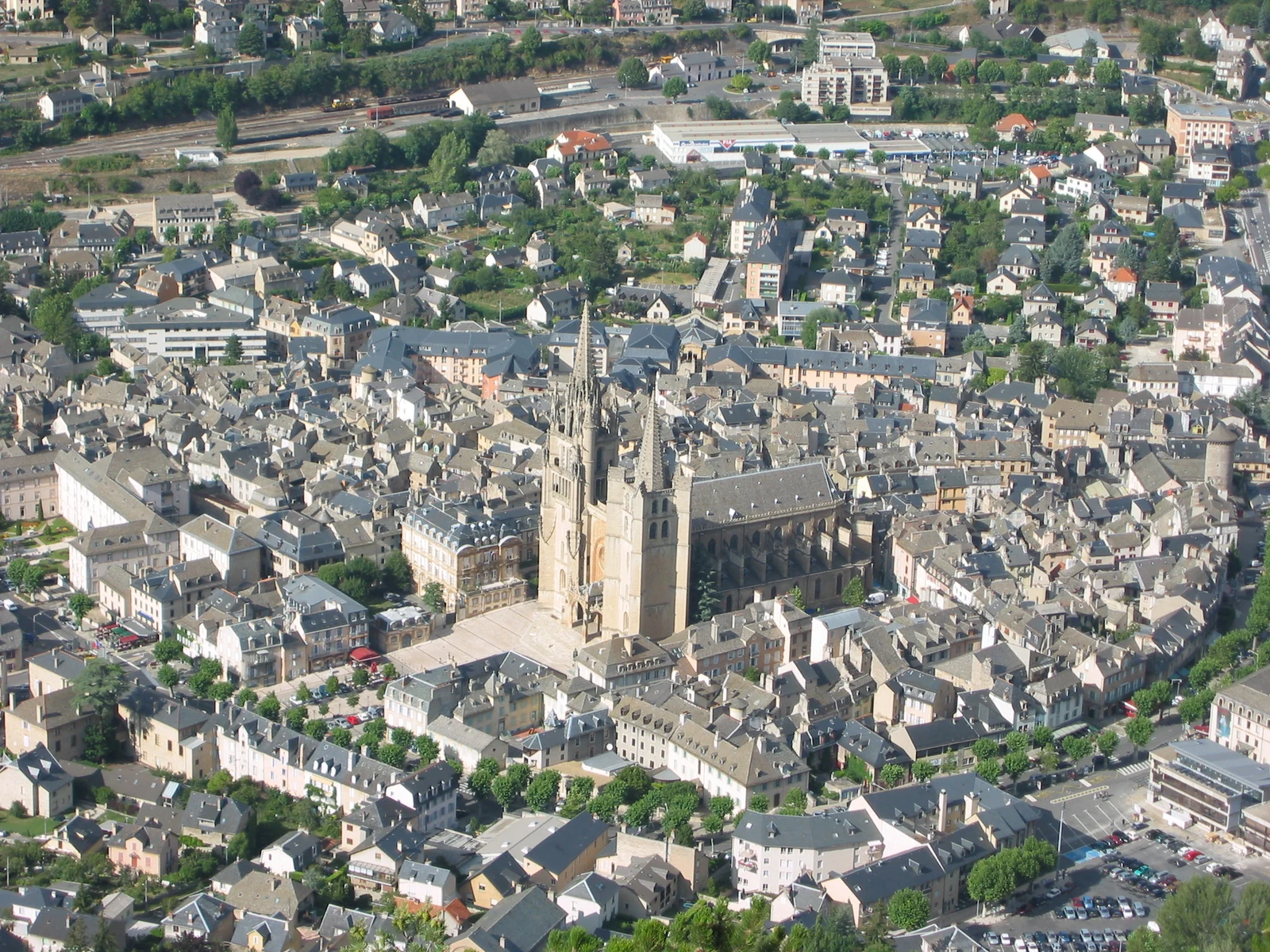
Grothendieck called it a small camp of about three hundred women during his time there. His estimate belongs to memory and may describe a typical population rather than the total across years. The administrative record, when fully examined, can refine movements by month. For the family’s experience, the primary account establishes the central fact: most of the two years he remembered spending in camps were spent with his mother at Rieucros.77Grothendieck, La Clef des Songes (1987), nn. 56–57.
Writing about camp life demands a discipline different from scenic reconstruction. The archives catalog files on water, food administration, health, worship, work, order, schools, visits, correspondence, intercepted mail, and Swiss parcels. Those headings show the reach of administration into daily life. They do not establish which ration Alexander received on a given day, who stood beside him, or what was said in a barrack. Until the individual dossier and relevant registers are examined, such particulars must remain absent.88Archives départementales de la Lozère, Fonds relatifs au camp de Rieucros.
His own recollections supply a few concrete limits. He later wrote that camp administrators looked the other way while children went in and out; he was the oldest child there and the only one who attended the lycée, four or five kilometers away. He recalled walking in snow and wind in makeshift shoes that took in water. This is sensory detail with a source, not atmosphere added by a narrator. No permit, movement leaf, school register, or age-based administrative mechanism has been inspected.99Grothendieck, Récoltes et Semailles (Université des Sciences et Techniques du Languedoc and Centre National de la Recherche Scientifique, 1986), 13–14.
That remembered movement should not be used to soften internment. Hanka remained confined. Residence, correspondence, and the camp boundary remained subject to administrative authority; the account does not establish a formal school permission. Nor should a secondary biography’s comparative description of Rieucros as a relatively better camp become the moral measure. Comparison among camps can help describe mortality, violence, or access to aid; it can also make confinement without trial seem acceptable whenever conditions were worse elsewhere. The more exact statement is that Rieucros was a site of deprivation and uncertainty in which Alexander retained unusual access to a town school.1010Jackson, “As If Summoned from the Void, I”.
The camp’s population included women whose languages, politics, religions, and routes into France differed. Hanka came from a Protestant Hamburg family and had broken with conventional religion and bourgeois expectation. She was also the partner of a Jewish anarchist and had been active in radical circles. Alexander later remembered contacts at the camp with Protestant pastors and workers from Cimade, who tried to help internees identified with Protestant backgrounds. That memory places relief inside confinement: civil and religious actors could enter the administrative world and mitigate it without controlling the state decisions that sustained it.1111Grothendieck, La Clef des Songes (1987), 100–101.
The road to the lycée
The repeated walk between Rieucros and Mende joined two institutions that classified Alexander differently. At the camp he was a foreign child attached to an interned woman. At the lycée he was a pupil expected to solve the same exercises as others. The contrast was not complete: his location, shoes, and limited movement traveled with him. The school door did not dissolve nationality.
Yet it admitted him to a curriculum. Grothendieck dated his first lycée year in France to 1940. He later described himself as a good student, guided more by interest than by a desire to satisfy each teacher. The most durable classroom memory from Mende concerned geometry. In his first mathematics examination, a teacher gave him a poor mark on a proof involving one of the three congruence cases for triangles. His demonstration was not the one in the book. Grothendieck remained convinced that it was no less persuasive than the prescribed proof, which used the traditional language of sliding one figure onto another.1212Grothendieck, Récoltes et Semailles (Université des Sciences et Techniques du Languedoc and Centre National de la Recherche Scientifique, 1986), 14.
The event survives only through his later account. No inspected source includes the paper or the teacher’s markings, so the proof’s validity cannot be independently assessed. Grothendieck interpreted the teacher’s response as dependence on textual authority: the man, he thought, could not judge the reasoning by his own lights and therefore needed the book. That judgment became part of a much broader critique in Récoltes et Semailles. A responsible narrative preserves its grammatical ownership. Grothendieck saw the incident this way. It is not an independently established diagnosis of the teacher.
The event remains a remembered dispute rather than a validated proof. The script, assigned problem, textbook, and teacher’s markings have not been found. The chapter can say that Grothendieck later objected to a textbook-bound judgment; it cannot certify his argument, repair it, or identify a mathematical victory.
The missing paper also limits claims about the teacher. Grothendieck interpreted the mark as deference to authority, but the assignment and marking convention are unknown. The episode belongs to his later account of education, not to a formal technical window.
Two educations
Grothendieck’s later description of the camps as a severe form of schooling can mislead if treated as praise for suffering. He did not say that internment was necessary, beneficial policy, or a test designed for his growth. In the note where the phrase appears, he wrote that he had never regretted the period because what he learned could not have been learned from books. He also said the thought never left him that such times might return, probably worse. The adult memory joined gratitude for knowledge to an expectation of renewed catastrophe.1313Grothendieck, La Clef des Songes (1987), 91 n. 56.
The statement should be read beside, not above, the facts of confinement. The state had not enrolled him in a lesson; it had deprived mother and son of freedom. Whatever he learned was wrested from that condition. To call every injury formative would reproduce a common biographical error: converting the suffering of a famous adult’s childhood into tuition paid for later greatness. His mathematics does not justify the camp retroactively.
Here schooling can mean several kinds of knowledge. The manuscripts do not provide a syllabus, but they describe political classification, material scarcity, and local aid. Pastors, Cimade workers, private tutors, and school personnel appear as helpers. Grothendieck’s account says administrators looked the other way while children moved; it does not establish an administered exception.
There was also Hanka. Mother and son lived together under conditions neither controlled. Grothendieck’s later writings about her are not simple. He admired her strength and judged her choices; he described both parents’ gifts, ambitions, failures, and treatment of their children with a relentless moral vocabulary. It would be wrong to turn Rieucros into a scene of uncomplicated maternal closeness merely because they were together. It would be equally wrong to assume estrangement. The camp record secures proximity, not the daily emotional texture of the relationship.
Hanka remained confined while her son sometimes left for school. The chapter does not infer her thoughts, health, or reaction from that difference.
Le Vernet
Father and son inhabited different branches of the camp system. Le Vernet lay in Ariège, far southwest of Mende. It had been used in 1939 for defeated Spanish Republican soldiers and became a repressive camp for foreigners regarded as politically dangerous. Former International Brigade volunteers, antifascists, Communists, anarchists, writers, and others passed through. The camp memorial estimates tens of thousands of internees from many nationalities over its operation and emphasizes the harsh conditions recorded by former prisoners such as Arthur Koestler.1414Amicale des anciens internés politiques et résistants du camp du Vernet d’Ariège, “Le camp du Vernet”.
Schapiro’s revolutionary history and Jewish origin were part of the police and camp context. The Klarsfeld/Stroweis online deportation memorial reports that Schapiro/Tanaroff was deported and killed. The individual record for Convoy 19 and the underlying death record have not been examined. This chapter therefore attributes those statements to the memorial and ends its account of his own movements at Le Vernet.1515Serge Klarsfeld and Jean-Pierre Stroweis, “Le Mémorial de la déportation des Juifs de France,” Stephen P. Morse, One-Step Webpages, https://stevemorse.org/france/; Arolsen Archives, “Deportation Lists from France,” Online collections, 1.1.9.1, https://collections.arolsen-archives.org/en/archive/1-1-9-1_1421000.
What the family knew
No contemporaneous family document or official notification has been inspected. This version therefore makes no claim about what Hanka or Alexander knew of Schapiro’s later route, when they learned it, what document they received, or how either reacted.
Absence is secure; the date on which Alexander learned the name or status of his father’s confinement remains undocumented. That boundary prevents later archival knowledge from being projected into the child’s perspective.
The closure of Rieucros
Rieucros closed in February 1942, and the women’s camp was generally transferred to Brens in the Tarn. The Lozère and Tarn finding aids identify the relevant series and general transfer; they do not prove Hanka’s or Alexander’s person-level route.1616Archives départementales de la Lozère, Fonds relatifs au camp de Rieucros; Archives départementales du Tarn, Fonds relatifs au camp de Brens.
Because no individual movement or release file has been inspected, this edition does not narrate a post-Rieucros Brens/Gurs sequence, a release place or date, or movement into a children’s home. The person-level chronology stops at the camp’s closure.
The remembered proof dispute
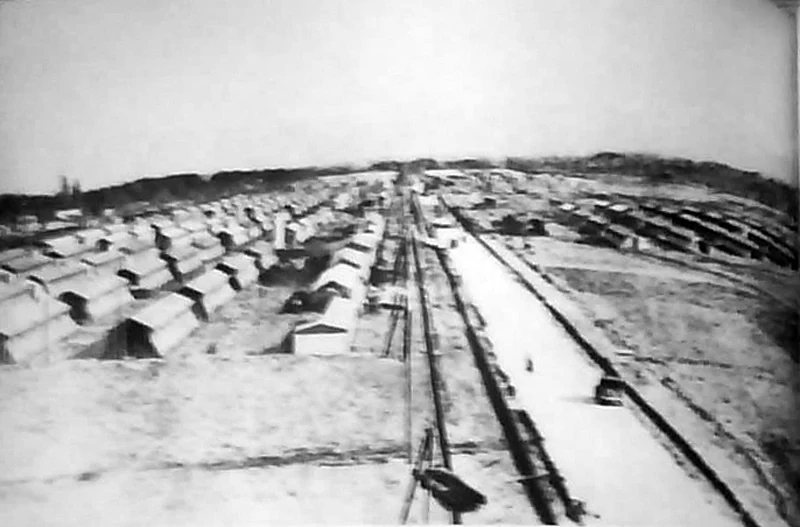
Grothendieck later remembered a poor mark for a proof that differed from the textbook. The script and teacher’s account are missing, so this version does not state a theorem, reproduce a proof, or judge who was mathematically correct.1717Grothendieck, Récoltes et Semailles (Université des Sciences et Techniques du Languedoc and Centre National de la Recherche Scientifique, 1986), 14.
The episode remains biographically useful as a memory of educational authority. Its technical content would belong to Chapter 10, if the missing school materials were found.
The limits of “resilience”
Modern accounts often describe children who continue schooling under persecution as resilient. The word can recognize agency; it can also move responsibility from institutions to victims. Alexander walked to the lycée, persisted in mathematics, and later said that the camp taught him things books could not. None of this makes the conditions acceptable or converts endurance into consent.
He was able to attend because several contingencies aligned: an administration tolerated the movement; a lycée admitted him; his health permitted the walk; his mother remained present at the camp; and helpers provided at least some support. Another child in another camp, younger or ill, could not have done the same. Biography must not turn an unusual educational opening into a representative feature of French internment.
Nor should later achievement be used as the measure of whether saving or educating a child mattered. The people at Rieucros and Brens were not valuable because one became a celebrated mathematician. The name Grothendieck draws attention to an administrative system that confined thousands whose later lives are less publicly known. A truthful chapter lets the famous inmate remain one person among them, even while following his particular route.
The modern memorial at Rieucros places names where the barracks no longer stand. That act of commemoration differs from reconstructing the camp as scenery. A contemporary photograph of the memorial may belong in the illustrated book if it is captioned as a present-day site. It cannot be labeled as what Alexander saw. Archival plans, registers, and photographs, where available, must carry the wartime visual work.
The archive of a camp
The catalog for Rieucros is unusually useful because its bureaucratic headings reveal what administration considered governable. Files concern installation, lease, plans, inventories, internal rules, the canteen or accounts, water, worship, schools, health, visits, order, work inside and outside the camp, correspondence, movements, intercepted mail, and transfer to Brens.1818Archives départementales de la Lozère, Fonds relatifs au camp de Rieucros.
Each heading can support a historical question. “Water” asks about supply and sanitation. “Schools” asks which children received instruction inside the camp and under what curriculum. “Visits” asks who could enter and how aid workers negotiated access. “Work” asks whether labor was voluntary, paid, required, or assigned differently by status. “Movements” asks who arrived, left, escaped, was released, or was transferred.
The headings are not answers. A file entitled “health” does not prove adequate care; a school file does not prove every child attended. Bureaucracies routinely record provisions that were incomplete in practice. The individual and monthly records must be read against memoirs, complaints, medical reports, and material conditions.
For Alexander, two series are especially promising. Lozère 9 W 102 is cataloged as a school map or school record for the camp in 1941–1942. Series 2 W 2805 includes schooling and the transfer to Brens. Because he says he was the oldest child and the only one attending the lycée in Mende, these records may distinguish camp instruction from external secondary attendance. They may also identify the official who authorized his movement.1919Archives départementales de la Lozère, Fonds relatifs au camp de Rieucros.
The possibility of a named authorization should not change the current prose. Until the file is read, no benevolent official should be invented. Permission may have resulted from a rule, repeated petitions, intervention by a pastor, or simple local discretion. Grothendieck’s later description suggests tolerated informality rather than a formal program, but the individual file has not been checked.
Series 2 W 3245 lists internees receiving a Swiss parcel. If Hanka appears, it could connect the family’s camp life to Swiss aid before Alexander entered a Secours Suisse home. Absence would not prove she received no aid; lists may cover only selected dates. The archival chain can test pathways without assuming continuity from a shared adjective.
Individual files in 2 W 2604 and M 11121 may contain orders, nationality entries, family composition, correspondence, requests, and movement slips. Such records are ethically double. They offer the most precise reconstruction, and they were created by a system depriving people of liberty. A facsimile should not aestheticize stamps and handwriting while hiding the coercive purpose.
The Tarn records take the story across the institutional boundary. Series 495 W 7 concerns the transfer from Rieucros to Brens; 495 W 26–29 registers internees; 495 W 53–69 contains dossiers. Matching entries by name, aliases, birth date, and family link can establish whether there was an intervening stay at Gurs. It may also show whether Alexander was formally released, assigned to a relief body, or moved under another status.2020Archives départementales du Tarn, Fonds relatifs au camp de Brens.
A camp archive privileges the institution’s viewpoint. It may call a departure “liberation” while the person moved into constrained residence, or “transfer” while family members experienced another rupture. Grothendieck’s manuscripts privilege retrospective meaning. The most reliable reconstruction will let the two kinds of source correct one another.
The archive also shows that Rieucros contained lives other than the famous one. A publication design that reproduces only the Grothendieck file could unintentionally make the camp seem built around him. A contextual spread should show aggregate movement or camp plan alongside the individual record and name the wider population.
What to call Rieucros
Grothendieck called Rieucros a camp de concentration. French officials and prisoners used that phrase for sites of concentrated administrative detention before and during Vichy. The Le Vernet memorial association insists on retaining it, citing period administrative usage. English readers, however, often hear “concentration camp” as a synonym for the Nazi camp system and, sometimes, for extermination camps.2121Grothendieck, La Clef des Songes (1987); Amicale des anciens internés politiques et résistants du camp du Vernet d’Ariège, “Le camp du Vernet”.
The historical solution is not to declare one vocabulary correct in all contexts. “French internment camp” identifies Rieucros’s function and national administration while limiting false equivalence. Quoting Grothendieck’s French preserves his own terminology. A note can explain that “concentration camp” had a broader contemporary administrative use and that Rieucros was not an extermination center.
Distinction must not become exculpation. Internment without trial, collective suspicion of foreigners, deprivation, coerced movement, family separation, and exposure to later deportation were serious forms of state violence. Some people confined in French camps were ultimately delivered to Nazi murder. The absence of gas chambers at Rieucros does not make the institution benign.
Conversely, continuity in a chain does not make every link identical. Le Vernet, Rieucros, Brens, Noé, Drancy, and Auschwitz-Birkenau had different administrations, populations, purposes, conditions, and periods. Drancy’s role as a deportation transit camp differed from Rieucros’s confinement of women and children. Auschwitz-Birkenau’s function in mass murder differed categorically from both.
Precise vocabulary lets responsibility be distributed rather than blurred. The Third Republic created and expanded administrative internment. Vichy continued and radicalized it, enacted anti-Jewish measures on its own initiative, and collaborated in deportation. German authorities organized the exterminatory destination. Individuals and organizations within France sometimes resisted, aided, or warned. One word cannot carry this entire structure.
The vocabulary of the inmates matters too. Grothendieck’s description of severe schooling and his use of camp de concentration show how he named the experience later. Other internees used different names, comparisons, irony, or euphemism. A biography of one person should not make his terminology universal, but it should not silently correct his language into administrative neutrality.
Elsewhere the narrative uses internment and specifies France.
After Le Vernet
The checked Klarsfeld/Stroweis memorial/index is a named secondary witness for later person-level fields. The Arolsen item opened here is only a collection description grouping multiple deportation lists; it is not the exact Schapiro/Tanaroff leaf. Because neither that leaf nor the death record has been opened, this account does not narrate a transfer sequence, convoy number, transport date, arrival date, destination, or death as established biographical fact.2222Klarsfeld and Stroweis, “Mémorial de la déportation”; Arolsen Archives, “Deportation Lists from France”.
The Arolsen collection can still establish that French deportation lists exist as a documentary class. It cannot substitute a series description for the missing person leaf.
Mother, son, and unequal movement
Rieucros gave Alexander a form of mobility not shared by Hanka. He could walk to Mende, attend class, and return. She remained subject to camp boundaries. This asymmetry complicates the phrase “interned together.” They shared the institution and much daily life, but age and educational exception produced different geographies.
For the son, the road to school joined deprivation to limited movement. The source does not record Hanka’s response, and the narrative supplies none.
Cimade and Protestant pastoral aid entered because Hanka’s family background was Protestant. Relief organized through confessional categories could help while reproducing distinctions among inmates. Grothendieck later appreciated the devotion he saw but did not infer that belief guaranteed humanity. The aid relationship was practical before it became material for spiritual reflection.2323Grothendieck, La Clef des Songes (1987), 100–101.
Parcels, visits, and Grothendieck’s memory of children going in and out show why the camp should not be imagined as hermetically sealed. Permeability could sustain life. It could also facilitate surveillance and later transfer. The state controlled which boundary crossings were legal; escape and clandestine aid occupied other routes.
The chapter stops this person-level comparison at Rieucros’s closure. Later separation, route, and care arrangements require individual files.
A boy in a women’s camp
Rieucros’s designation as a women’s camp can obscure the children living there. They were present because confinement attached them to mothers and because alternative care was unavailable or unsafe. Their legal and material position differed from that of adult inmates, but the camp determined their residence.
Grothendieck said he was the oldest child and the only one attending the lycée. This made him exceptional within an already exceptional population. Younger children may have attended instruction inside the camp, as the archive’s school series suggests. His outward route should not be treated as the standard childhood of Rieucros.
Age shaped the practical difference between his lycée attendance and younger children’s schooling, but no inspected record establishes an age-based administrative category or formal permission.
Gender shaped the family’s division. Schapiro went into a male political camp; Hanka and Alexander went into a women’s camp. No individual administrative rationale has been inspected beyond those placements.
Writing a famous boy into a women’s camp creates another risk: women’s histories can become background to his education. Rieucros held activists, refugees, Jewish women, antifascists, people targeted for alleged morals, and mothers whose own records deserve attention. The modern memorial and scholarship restore names that the chapter cannot narrate individually without expanding beyond scope.
The appropriate contextual image may therefore be a register page showing family composition rather than a solitary portrait. If a group photograph is used, every identified woman should be named in the caption where records permit. “Women at Rieucros with the young Grothendieck” would center him even if he were present; “Internees and children at Rieucros” would describe the institution more truthfully.
Hanka’s own writing and politics also resist reduction to motherhood. She had worked as a journalist, attempted literature, rejected family convention, joined radical movements, and endured exile before the camp. Her son’s later fame makes her easiest to see as the mother who accompanied him. The camp record should preserve her as an internee in her own right.
Alexander’s remembered school movement occurred while mother and son were confined at the same camp. No counterfactual is needed to establish that coexistence.
The chapter has no evidence about how other inmates responded to his school privilege. Envy, encouragement, help with clothing, or indifference would all be plausible and none can be narrated. Camp memoirs by other women may eventually provide named encounters, but generic testimony cannot be assigned to him.
Responsibility along a chain
Passive grammar can hide institutional agents. French police and camp administrations arrested, registered, confined, and transferred foreigners; Vichy later collaborated with German persecution. This general history does not establish Schapiro’s person-level sequence beyond Le Vernet.
No single sentence can assign the whole chain without becoming cumbersome. Across paragraphs, however, agency must remain visible. “The war separated the family” is too abstract if used alone. War created conditions; states and officials enacted policies; individuals complied, resisted, or exploited openings.
Responsibility also varies within an institution. Grothendieck’s memory of movement to school does not cancel the camp’s coercive function or prove a formal permit.
Historical responsibility includes record keepers after the event. Klarsfeld’s memorial, Arolsen’s digitization, Yad Vashem’s transport research, camp associations, and local archives make the route traceable. Their categories and corrections should be cited because the biography depends on this later labor.
Names can be misspelled, records destroyed, aliases unlinked, and database fields compressed. A later reconstruction therefore remains distinct from a contemporaneous person-level leaf.
The same method applies to a positive claim such as school attendance. Grothendieck’s memory, camp school files, lycée register, and perhaps municipal records can converge. Until they do, the first-person account carries the claim strongly, while exact dates and teacher identity remain open.
This source logic belongs in the narrative because camps were bureaucratic institutions. Claim-level citation is not decorative scholarship appended to suffering. It is how individuals reduced to administrative categories can be followed accurately through them.
Distance on the map
The family’s separation can be measured geographically without turning distance into emotion. Mende and Rieucros lay in Lozère; Le Vernet in Ariège. These institutions had different functions and did not form one family route.
For Alexander, the four or five kilometers to Mende were traversable on foot. The distance to his father’s camp was of another order and crossed departmental systems. No evidence shows regular visits or travel between them. Mapping a line from Rieucros to Le Vernet could misleadingly imply contact; the visual should use parallel bands rather than a family itinerary.
The small daily road to school moved in the opposite direction. It maintained a link between inmate and civic institution. A map at local scale could show Rieucros and Mende without inventing the walked path. Elevation, roads, and weather should come from historical cartography and meteorological records only if relevant, not from contemporary tourism imagery.
The local school distance and the separation between the two camps are sufficient for the chapter’s geographic frame.
Comparing conditions without ranking lives
Camp histories require comparison: dates, population, food, mortality, rules, release, and deportation risk. Comparison becomes harmful when it produces a ladder on which inmates are expected to be grateful for a “better” camp.
Jackson’s phrase that Rieucros was among the better French camps may refer to permission, scale, or relative conditions. Grothendieck still remembered deprivation, leaking shoes, uncertainty, and captivity. Both can be true. The narrative chooses concrete features over a global rank.
Comparison should also be temporal. Rieucros under the Third Republic and under Vichy was not administratively static. The danger to Jewish internees increased as policy radicalized. A condition observed in 1940 cannot automatically describe February 1942.
Individual position varied within one camp. Alexander’s lycée access was not Hanka’s mobility. Protestant aid contacts did not reach every inmate equally. Health, language, age, nationality, politics, and outside sponsors affected experience.
For these reasons, the chapter avoids saying he was “fortunate” to be interned at Rieucros. He was fortunate to encounter particular openings and helpers within an unjust confinement. The object of gratitude and the object of criticism are different.
The comparison with Le Vernet shows that sex, political file, and camp function shaped different placements. Later outcomes are outside this chapter’s person-level evidence boundary.
Comparative tables in the book should therefore list functions and dates rather than assign moral scores: population, authority, permitted movement, transfer role, and relation to deportation. A reader can see differences without being asked which confinement was acceptable.
Finally, the camp chapter should not let mathematical continuity redeem administrative violence. The lycée route and geometry memory are important because they happened, not because they convert Rieucros into a necessary workshop. Had no famous mathematics followed, the confinement would remain equally unjust.
The same principle governs language about movement to school. Grothendieck remembered administrators looking the other way; the source does not establish a formal exception.
Conversely, the boy was not outside education for two blank years. A chronology that lists only camp names would erase the repeated walk and classroom. The complete historical unit is confinement with continued schooling.
This dual record is why the chapter retains the proof dispute as memory without technical validation.
The distinction should guide notes as well. A claim about camp policy needs administrative and scholarly sources; a claim about the proof needs Grothendieck’s testimony and, ideally, the missing script. Combining them under one citation would blur two histories merely because they occurred in the same year.
It should guide pacing too. The walk to Mende recurs because the witness described it; the excluded later evidence chain does not become a narrative substitute for the missing leaf.
The missing proof
The Mende proof should be treated like a missing archival object rather than a legend of precocity. Grothendieck’s later account establishes that he remembered submitting a nonstandard argument and receiving a poor mark. It does not preserve the diagram, premises, wording, or teacher’s annotation.
If the script is found, review must separate three questions: whether the argument is valid under the textbook’s axioms, whether it answered the assigned exercise, and whether the mark followed an examination convention. A correct proof can fail to answer an assignment; an unconventional proof can contain a hidden gap; a rigid marking scheme can also miss a valid argument.
Until then, the biographical significance lies in the remembered disagreement over authority, not in a verified mathematical victory. That bounded conclusion preserves both the pupil’s testimony and the teacher’s absent evidence.
The missing examination page remains the only object that could connect his actual proof, the teacher’s response, and the school’s marking practice.
The missing page remains unresolved, both mathematically and historically.
The chapter therefore keeps the reported movement to school separate from any unverified explanation of who arranged it, why it occurred, or how consistently it operated.
Rieucros as an administrative institution
Rieucros began under the Third Republic before Vichy. The memorial association dates its operation from January 1939 to February 1942 and describes administrative internment without trial. Men were first confined there; after their transfer to Le Vernet in October 1939, Rieucros principally held foreign women, some accompanied by children.2424Association pour le souvenir du camp de Rieucros, “Synthèse”.
The modern memorial lists 1,058 people who passed through the camp. That cumulative number differs from Grothendieck’s later estimate of about three hundred women during his own stay. The two figures answer different questions: total passage across the camp’s operation and remembered population at a particular period.2525Grothendieck, La Clef des Songes (1987); Fondation pour la Mémoire de la Shoah, “Mémorial du camp de Rieucros, Mende (48)”.
The finding aid shows the breadth of administration. Files concern population movements, internal rules, water, health, worship, work, visits, correspondence, intercepted mail, schooling, Swiss parcels, and transfer to Brens. These categories document what authorities attempted to control; they do not prove the quality or consistency of provision.
The camp therefore appears not as a backdrop but as an institution with records, staff, boundaries, and connections to town. Grothendieck’s reported lycée attendance occurred within that structure. The exceptionality lies in the remembered movement, not in a claim that internment was generally permeable.
The archive also prevents the chapter from centering one child too completely. Women’s political, national, religious, and family histories formed the camp population. Grothendieck’s later fame changes the availability of his testimony, not the value of other internees’ lives.
School across a camp boundary
Grothendieck’s memory of the road to Mende provides the chapter’s strongest sourced action. He later described himself as the oldest child at Rieucros and the only one attending the lycée. He placed the school four or five kilometers away and remembered snow, wind, and shoes that leaked.2626Grothendieck, Récoltes et Semailles (Université des Sciences et Techniques du Languedoc and Centre National de la Recherche Scientifique, 1986), 13–14.
Those details are retained because the witness supplies them. The chapter does not add a departure time, route, classroom, or person met along the way. A modern map may show the camp and town as locations, but it cannot claim the exact path.
The school record is still incomplete. The lycée name, class register, teacher identity, textbook, timetable, and examination script remain uninspected. Finding-aid series 9 W 102 and 2 W 2805 indicate that school records may survive, but a catalog entry is not a pupil file.2727Archives départementales de la Lozère, Fonds relatifs au camp de Rieucros.
The remembered proof dispute belongs to this institutional boundary. At the lycée, Grothendieck was assessed as a pupil; at Rieucros, he remained attached to an interned parent. The same day could contain both roles without making one cancel the other.
No formal permit has been found. The wording therefore remains Grothendieck’s: administrators looked the other way while children went in and out. An issued permission, administered exception, or age-based policy would require a different record.
Le Vernet as a different camp
Le Vernet had a different institutional history. The camp memorial says it first held Spanish Republican soldiers in February 1939 and, after France declared war, became a repressive site for foreign political detainees, former Spain combatants, antifascists, and others treated as dangerous. It estimates roughly 35,000 internees from 72 nationalities across 1939–1944.2828Amicale des anciens internés politiques et résistants du camp du Vernet d’Ariège, “Le camp du Vernet”.
The memorial also records severe conditions and later deportations from the camp system. These general facts explain why Schapiro’s placement at Le Vernet cannot be folded into the women-and-children history of Rieucros.
This chapter establishes only that Schapiro was held at Le Vernet. It does not extend his personal route through later camps or transport records. General deportation history cannot supply the missing person leaf.
The two camp histories therefore run in parallel: mother and son at Rieucros, father at Le Vernet. No source inspected here proves visits, correspondence, a last meeting, or the date on which Alexander learned the official name or status of his father’s confinement.
What the February closure proves
The Lozère and Tarn catalogs support an institutional event: Rieucros closed and the women’s camp was generally transferred to Brens. They also identify series in which individual movement and release records may exist.2929Archives départementales de la Lozère, Fonds relatifs au camp de Rieucros; Archives départementales du Tarn, Fonds relatifs au camp de Brens.
That is the limit of the positive claim. A general transfer does not place Hanka or Alexander on a particular leaf, establish a stay at Gurs, date a release, or connect either person to a relief-home intake.
Camp, town, and aid institutions
Rieucros was connected to institutions beyond its boundary. Grothendieck later remembered Protestant pastors and Cimade workers assisting internees, while the archival catalog includes visits, worship, correspondence, school matters, and lists of Swiss parcels.3030Grothendieck, La Clef des Songes (1987), 100–101; Archives départementales de la Lozère, Fonds relatifs au camp de Rieucros.
These sources document contact categories rather than a complete aid network for one family. A list of Swiss parcels could establish a recipient only after the actual leaf is inspected. A catalog heading for visits does not identify a visitor or conversation. The chapter keeps institution-level and person-level evidence separate.
Mende supplied another external connection through the lycée. A school could receive a pupil who returned to confinement after class. That fact does not make the camp benevolent; it shows that French institutions did not act as one moral unit.
The distinction is important for responsibility. French authorities created and maintained administrative internment. Individual educators, religious workers, and relief organizations could mitigate particular conditions without controlling the state’s larger decisions. Their assistance should be named where records support it and not generalized into a defense of internment.
The camp’s internal categories also shaped access unevenly. Age, family attachment, language, health, and outside contacts may have affected experience, but no personal file has been inspected to explain why Grothendieck attended the lycée. The memoir supplies the fact of remembered attendance and movement; it does not supply an administrative rationale.
This institutional picture gives the chapter narrative breadth without inventing scenes. Water, school, correspondence, worship, work, visits, and parcels reveal the administrative and social fields in which people lived. The missing individual files determine which of those fields can later be attached to Hanka or Alexander.
It also explains why the chapter ends at closure rather than following a presumed route. The Rieucros institution can be described from public history and finding aids. The family’s next movement cannot.
Memory and the camp record
The chapter rests on two different evidence types. Grothendieck’s 1980s manuscript supplies the personal recollection of internment, the walk to school, leaking shoes, and the proof dispute. Camp memorials and archival finding aids supply institutional dates, population scope, file series, and the general Rieucros transfer.
Neither type replaces the other. A later witness can describe lived details absent from a catalog, while a catalog can establish institutional structure without verifying a remembered personal sequence. Their agreement on broad setting is useful and does not make them independent evidence for every detail.
This distinction controls citation placement. The school walk is attributed to Grothendieck and carries his page locator. The closure and general transfer cite the finding aids. A sentence that combines both must not let the institutional note appear to corroborate the personal memory.
The same rule governs Le Vernet. The memorial supports the camp’s public history; later biography supports Schapiro’s confinement there. The missing person file prevents a continuous route. This is a full historical account of the chapter’s period even though later fate remains excluded.
The two anchors also keep the child’s education from disappearing inside camp administration. A movement list can classify an internee but cannot explain why a proof dispute remained memorable decades later. Conversely, a memoir can preserve that dispute but cannot certify the school, teacher, or mark. Both records are needed before the episode can move from attributed memory to documented educational history.
This balance is the chapter’s final method. Institution-level evidence supplies the frame; retrospective testimony supplies bounded personal detail; missing individual records remain explicit. No additional route, permission, knowledge, or private response is inferred to make the chronology feel complete.
The resulting exit state is narrow and sufficient. Rieucros has closed as an institution; the general transfer is documented; Hanka’s and Alexander’s individual movements are not. Schapiro is last placed at Le Vernet, with later person-level fields excluded. Chapter 9 begins from a separately attributed residence association, not from a reconstructed bridge.
That division prevents a general camp catalog from becoming a family itinerary. It also preserves the difference between a closed institution and an unknown personal route, which is the central evidentiary boundary left by February 1942.
The chapter therefore closes on an archive series, not a departure scene. A person can be attached to that convoy only when the person-level record is found.
This is enough to preserve a full chapter because confinement, schooling, camp structure, and the parallel Le Vernet placement remain documented subjects even after later routes are withheld.
The chapter remains complete through documented relations rather than a continuous itinerary. No private response is supplied where surviving records remain silent.
That limit awaits review outside this correcting lane by independent readers.
What the Rieucros files were designed to see
The Lozère catalog divides the camp into administrative subjects. Reports and statistics count a population. Movement lists register passage. Individual files attach state decisions to names. Rules, order, correspondence, health, work, worship, visits, schooling, and parcels divide daily life into governable categories.3131Archives départementales de la Lozère, Fonds relatifs au camp de Rieucros.
Those categories reveal the reach of the institution even before a person file is opened. A camp administration did not confine bodies only at the perimeter. It regulated communication, movement, labor, education, and access to outside help.
The catalog does not show how each rule operated on each day. A health file can document administration without proving adequate care. A school map can show planning without proving regular attendance. A parcel list can show a channel without identifying what one family received.
For Grothendieck’s biography, the catalog performs two opposite tasks. It demonstrates that records potentially relevant to his life survive, and it prevents the narrative from treating their headings as if their contents had already been read.
Series 2 W 2604 and M 11121 are promising because they concern individual internees. Series 2 W 2783 concerns movement lists. Series 2 W 2805 joins rules, school, visits, health, work, and transfer. Series 9 W 102 concerns a school map.3232Archives départementales de la Lozère, Fonds relatifs au camp de Rieucros.
These numbers belong in the research apparatus because they turn a general demand for “more evidence” into a finite archival task. They do not belong as decoration in the story, and they cannot be cited as a hidden person-level route.
The Tarn catalog begins where the institutional history of Rieucros ends. It contains transfer, registration, Rieucros-document, and individual-dossier series at Brens. That connection proves archival continuity between institutions, not Hanka’s or Alexander’s presence on a particular page.3333Archives départementales du Tarn, Fonds relatifs au camp de Brens.
A later reader can therefore ask a precise question: does an identified record name the person and field used in the sentence? If not, the general series remains context rather than individual evidence.
Internment before and under Vichy
Rieucros opened in January 1939 under the Third Republic. The memorial association describes confinement there as administrative internment without trial. Men were initially held; after their transfer to Le Vernet in October 1939, the camp principally confined foreign women, some with children.3434Association pour le souvenir du camp de Rieucros, “Synthèse”.
That chronology blocks a misleading account in which French camps began only after the defeat of 1940. Vichy changed and intensified persecution, especially against Jews, but it inherited institutions and legal practices already created.
The distinction does not distribute blame away from Vichy. It places responsibility on the actual chronology. Republican authorities expanded coercive powers over foreigners; Vichy continued the camp and added its own exclusionary measures within collaboration and occupation.
Grothendieck and Hanka entered this existing system in early 1940 according to his later account. The exact arrest order and intake file remain missing, so the event stays attributed at the person level while the camp’s existence is institutionally documented.3535Grothendieck, La Clef des Songes (1987); Association pour le souvenir du camp de Rieucros, “Synthèse”.
Calling internment administrative explains the mechanism; it does not make it neutral. Absence of a criminal trial meant confinement could proceed through executive classification rather than conviction for a proved offense.
That mechanism helps explain the chapter title. “Undesirable” was a category applied by authorities, not an assessment of conduct established in court. The word belonged to state practice and should never become the narrator’s description of the people confined.
The political transitions of 1939 and 1940 changed who was treated as dangerous and on what grounds. Foreignness, political history, nationality, and Jewish classification could overlap. They did not have identical legal meanings.
Education inside a coercive geography
Rieucros and Mende formed one geography for the remembered school episode. The camp imposed a boundary; the lycée represented an external institution; the road connected them according to Grothendieck’s later account.3636Grothendieck, Récoltes et Semailles (Université des Sciences et Techniques du Languedoc and Centre National de la Recherche Scientifique, 1986), 13–14.
The arrangement did not dissolve confinement. A pupil who could leave for class and return was still attached to the camp system. The movement was exceptional enough for Grothendieck to remember himself as the oldest child and the only one attending the lycée.
No inspected document identifies the decision maker. The remembered phrase that administrators looked the other way is weaker and more revealing than a formal-permission claim. It suggests tolerated movement in the witness’s later telling without specifying an issued rule.
The school also imposed a different authority. It evaluated proofs and marks rather than nationality and police classification. The disputed geometry proof survives only as the pupil’s memory, so the chapter cannot determine whether the teacher misunderstood, the conditions differed, or the proof failed.
Holding both institutions in view avoids an easy moral contrast. The lycée’s access mattered, but one remembered mark does not define the school. The camp confined, but one tolerated movement does not redeem the camp.
The route itself remains bounded by what the witness said: a distance of four or five kilometers, winter conditions, and inadequate shoes. The chapter does not add a street, timetable, companion, or gate procedure.
The surviving school map and rule series could refine the institutional relation. A class register could identify the lycée and class; a movement list could document passage; a pupil script could settle the mathematical object. Until those records are opened, the memory remains personal testimony inside an established geography.
Education mattered because it persisted under coercion, not because it created an imaginary zone outside history. The proof dispute and the camp classification occurred within the same period and remained distinct forms of judgment.
The camp population beyond one biography
The Rieucros memorial records 1,058 people, while the specialist association gives a rounded total of about one thousand across the camp’s operation. Grothendieck later remembered roughly three hundred women during his own period. These figures differ in denominator and time rather than necessarily contradicting one another.3737Grothendieck, La Clef des Songes (1987); Association pour le souvenir du camp de Rieucros, “Synthèse”; Fondation pour la Mémoire de la Shoah, “Mémorial du camp de Rieucros, Mende (48)”.
The cumulative number restores scale. A biography follows Alexander because he is its subject, but the institution held many women and children whose later fame does not determine their historical importance.
The memorial’s names and panels are postwar forms of evidence. They gather identities across the camp’s years and expose the inadequacy of treating Rieucros as scenery for one school story.
Population categories varied. The association’s history describes foreign women and children, while the Shoah foundation emphasizes foreign Jewish women under Vichy. Political histories, national classifications, and family situations differed within the camp.3838Association pour le souvenir du camp de Rieucros, “Synthèse”; Fondation pour la Mémoire de la Shoah, “Mémorial du camp de Rieucros, Mende (48)”.
The chapter does not select another internee and invent a representative companion for Grothendieck. Collective context comes from institutional records; individual relations require named testimony.
This wider frame also changes the meaning of school access. His attendance was unusual inside a population whose members faced different constraints. The archive must explain the exception before biography turns it into a general camp policy.
At closure, the institutional population moved into another administrative phase. The catalogs document that general transition. Person-level files must determine individual routes.
From camp site to memorial record
Rieucros now enters public history through a memorial path, engraved names, panels, a specialist association, and archival catalogs. The Fondation pour la Mémoire de la Shoah describes 1,058 people commemorated at the site.3939Association pour le souvenir du camp de Rieucros, “Synthèse”; Fondation pour la Mémoire de la Shoah, “Mémorial du camp de Rieucros, Mende (48)”.
The memorial is not a preserved wartime day. It is a later act of research and remembrance that gathers names across the camp’s operation. Its cumulative form differs from a register made by the administration for control.
That difference shapes image use. A modern photograph of the path can show how the camp is remembered and marked today. It cannot illustrate the appearance of a barrack, classroom, or gate in 1941.
An image caption must therefore carry two dates: the wartime institution being commemorated and the later memorial object photographed. It should identify the association or institution responsible for the record and avoid implying that Alexander saw the memorial.
The engraved names shift attention from categories to persons, while the catalog restores the machinery that produced files about them. Biography needs both movements. One resists anonymity; the other explains how confinement operated.
Grothendieck’s name does not make the memorial more important. His later fame creates a route by which readers reach Rieucros, but the site’s historical claim rests on the whole interned population.
The afterlife of the camp also changes source language. A memorial synthesis interprets administrative records and testimonies; a finding aid describes surviving holdings; a memoir preserves one person’s recollection. Their institutional authority does not make them interchangeable.
This distinction protects the chapter from a visual shortcut. Generic barbed wire, railway tracks, or another camp’s barracks would create familiarity without evidence. The modern Rieucros memorial, correctly captioned, is more specific precisely because it is presented as commemoration rather than wartime scenery.
The memorial record closes one kind of disappearance by preserving names. It does not close Hanka’s or Alexander’s post-Rieucros route, Schapiro’s later person-level record, or the family-knowledge chronology.
For future verification, the memorial and archive should be cited together but not collapsed. The memorial supplies public commemoration and a researched count; the archive supplies series and potential person-level leaves. A reader should be able to tell which institution supports each sentence.
That separation also respects chronology. Wartime authorities created coercive records, later archivists organized holdings, and memorial workers built a public account. The biography uses all three layers while refusing to treat a modern synthesis as a document that the internees possessed.
The resulting visual and source plan is modest: show the actual place of memory, name its later date and purpose, and direct unresolved person claims back to the exact archival series.
February 1942
Rieucros closed in February 1942, and the women’s camp was generally transferred to Brens. That institutional movement is the last positive chronology in this chapter. No person-level file has been inspected for Hanka or Alexander after the closure.
Chapter 9 starts from later sources associating Grothendieck with La Guespy and the Collège Cévenol. No sending camp, year, route, escort, intermediary, or release decision bridges the chapters.
注释
- Grothendieck, La Clef des Songes (1987), 90; Jackson, “As If Summoned from the Void, I”; O’Connor and Robertson, “Alexander Grothendieck”. ↩
- Association pour le souvenir du camp de Rieucros, “Synthèse”. ↩
- Association pour le souvenir du camp de Rieucros, “Synthèse”; Amicale des anciens internés politiques et résistants du camp du Vernet d’Ariège, “Le camp du Vernet”. ↩
- Grothendieck, La Clef des Songes (1987), 90; Koordinierungsstelle Stolpersteine Berlin, “Alexander Schapiro”. ↩
- Grothendieck, La Clef des Songes (1987); Archives départementales de la Lozère, Fonds relatifs au camp de Rieucros (n.d.), https://camp-rieucros.com/bibliographie/; Archives départementales du Tarn, Fonds relatifs au camp de Brens (n.d.), https://camp-rieucros.com/bibliographie/. ↩
- Association pour le souvenir du camp de Rieucros, “Synthèse”; Fondation pour la Mémoire de la Shoah, “Mémorial du camp de Rieucros, Mende (48),” https://www.fondationshoah.org/lieux-de-memoire/memorial-du-camp-de-rieucros-mende-48. ↩
- Grothendieck, La Clef des Songes (1987), nn. 56–57. ↩
- Archives départementales de la Lozère, Fonds relatifs au camp de Rieucros. ↩
- Grothendieck, Récoltes et Semailles (Université des Sciences et Techniques du Languedoc and Centre National de la Recherche Scientifique, 1986), 13–14. ↩
- Jackson, “As If Summoned from the Void, I”. ↩
- Grothendieck, La Clef des Songes (1987), 100–101. ↩
- Grothendieck, Récoltes et Semailles (Université des Sciences et Techniques du Languedoc and Centre National de la Recherche Scientifique, 1986), 14. ↩
- Grothendieck, La Clef des Songes (1987), 91 n. 56. ↩
- Amicale des anciens internés politiques et résistants du camp du Vernet d’Ariège, “Le camp du Vernet”. ↩
- Serge Klarsfeld and Jean-Pierre Stroweis, “Le Mémorial de la déportation des Juifs de France,” Stephen P. Morse, One-Step Webpages, https://stevemorse.org/france/; Arolsen Archives, “Deportation Lists from France,” Online collections, 1.1.9.1, https://collections.arolsen-archives.org/en/archive/1-1-9-1_1421000. ↩
- Archives départementales de la Lozère, Fonds relatifs au camp de Rieucros; Archives départementales du Tarn, Fonds relatifs au camp de Brens. ↩
- Grothendieck, Récoltes et Semailles (Université des Sciences et Techniques du Languedoc and Centre National de la Recherche Scientifique, 1986), 14. ↩
- Archives départementales de la Lozère, Fonds relatifs au camp de Rieucros. ↩
- Archives départementales de la Lozère, Fonds relatifs au camp de Rieucros. ↩
- Archives départementales du Tarn, Fonds relatifs au camp de Brens. ↩
- Grothendieck, La Clef des Songes (1987); Amicale des anciens internés politiques et résistants du camp du Vernet d’Ariège, “Le camp du Vernet”. ↩
- Klarsfeld and Stroweis, “Mémorial de la déportation”; Arolsen Archives, “Deportation Lists from France”. ↩
- Grothendieck, La Clef des Songes (1987), 100–101. ↩
- Association pour le souvenir du camp de Rieucros, “Synthèse”. ↩
- Grothendieck, La Clef des Songes (1987); Fondation pour la Mémoire de la Shoah, “Mémorial du camp de Rieucros, Mende (48)”. ↩
- Grothendieck, Récoltes et Semailles (Université des Sciences et Techniques du Languedoc and Centre National de la Recherche Scientifique, 1986), 13–14. ↩
- Archives départementales de la Lozère, Fonds relatifs au camp de Rieucros. ↩
- Amicale des anciens internés politiques et résistants du camp du Vernet d’Ariège, “Le camp du Vernet”. ↩
- Archives départementales de la Lozère, Fonds relatifs au camp de Rieucros; Archives départementales du Tarn, Fonds relatifs au camp de Brens. ↩
- Grothendieck, La Clef des Songes (1987), 100–101; Archives départementales de la Lozère, Fonds relatifs au camp de Rieucros. ↩
- Archives départementales de la Lozère, Fonds relatifs au camp de Rieucros. ↩
- Archives départementales de la Lozère, Fonds relatifs au camp de Rieucros. ↩
- Archives départementales du Tarn, Fonds relatifs au camp de Brens. ↩
- Association pour le souvenir du camp de Rieucros, “Synthèse”. ↩
- Grothendieck, La Clef des Songes (1987); Association pour le souvenir du camp de Rieucros, “Synthèse”. ↩
- Grothendieck, Récoltes et Semailles (Université des Sciences et Techniques du Languedoc and Centre National de la Recherche Scientifique, 1986), 13–14. ↩
- Grothendieck, La Clef des Songes (1987); Association pour le souvenir du camp de Rieucros, “Synthèse”; Fondation pour la Mémoire de la Shoah, “Mémorial du camp de Rieucros, Mende (48)”. ↩
- Association pour le souvenir du camp de Rieucros, “Synthèse”; Fondation pour la Mémoire de la Shoah, “Mémorial du camp de Rieucros, Mende (48)”. ↩
- Association pour le souvenir du camp de Rieucros, “Synthèse”; Fondation pour la Mémoire de la Shoah, “Mémorial du camp de Rieucros, Mende (48)”. ↩