The place selected for a problem
Nancy had been selected for its concentration in functional analysis before Grothendieck arrived in October 1949. The move followed his Paris year, correspondence with Jean Dieudonné, and advice from Henri Cartan and André Weil. Jean Delsarte, Dieudonné, Roger Godement, and Laurent Schwartz were on the faculty; the Bourbaki secretariat and overlapping seminars added to the concentration.11Jean Dieudonné and Laurent Schwartz, “La dualité dans les espaces (F) et (LF),” Annales de l’Institut Fourier 1 (1949): 61–101, https://doi.org/10.5802/aif.8, especially concluding questions; Dieudonné, “A. Grothendieck’s Early Work (1950–1960),” 299–301; Jackson, “As If Summoned from the Void, I,” 1040–44; Laurent Schwartz, Un mathématicien aux prises avec le siècle (Odile Jacob, 1997); Laamri, Alexander Grothendieck: période 1928–1956, 69–79; Scharlau, “Who Is Alexander Grothendieck?” 931–33; Alexandre Grothendieck, “Sur la complétion du dual d’un espace vectoriel localement convexe,” Comptes rendus hebdomadaires des séances de l’Académie des sciences 230 (1950): 605–6; Alexandre Grothendieck, “Critères généraux de compacité dans les espaces vectoriels localement convexes. Pathologie des espaces (LF),” Comptes rendus hebdomadaires des séances de l’Académie des sciences 231 (1950): 940–41; Alexandre Grothendieck, “Critères de compacité dans les espaces fonctionnels généraux,” American Journal of Mathematics 74, no. 1 (1952): 168–86, https://doi.org/10.2307/2372076; Nicolas Bourbaki, “Sur certains espaces vectoriels topologiques,” Annales de l’Institut Fourier 2 (1950): 5–16, https://doi.org/10.5802/aif.16.
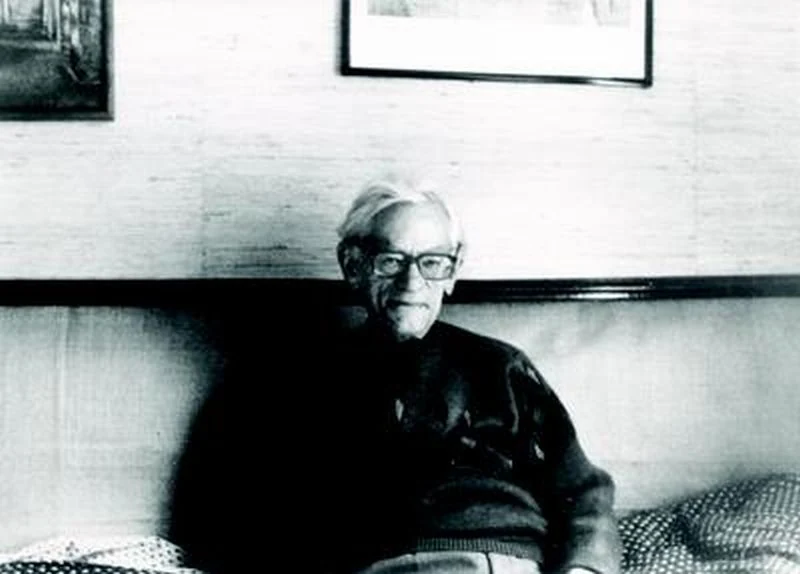
He did not arrive as a regular product of elite French training. He came with a Montpellier degree, an independently constructed measure manuscript, one year of difficult Paris exposure, and gaps that remained obvious to contemporaries. Nancy’s advantage was not that standards were lower. Its thematic focus and the availability of professors made learning through research possible. Paulo Ribenboim later remembered a slower pace than Paris and more time for students. That is a participant’s comparative memory, not a measurable property of every day.22Dieudonné and Schwartz, “La dualité dans les espaces (F) et (LF),” 61–101, especially concluding questions; Dieudonné, “A. Grothendieck’s Early Work (1950–1960),” 299–301; Jackson, “As If Summoned from the Void, I,” 1040–44; Schwartz, Un mathématicien aux prises avec le siècle; Laamri, Alexander Grothendieck: période 1928–1956, 69–79; Scharlau, “Who Is Alexander Grothendieck?” 931–33; Grothendieck, “Sur la complétion du dual d’un espace vectoriel localement convexe,” 605–6; Grothendieck, “Critères généraux de compacité dans les espaces vectoriels localement convexes. Pathologie des espaces (LF),” 940–41; Grothendieck, “Critères de compacité dans les espaces fonctionnels généraux,” 168–86; Nicolas Bourbaki, “Sur certains espaces vectoriels topologiques,” 5–16.
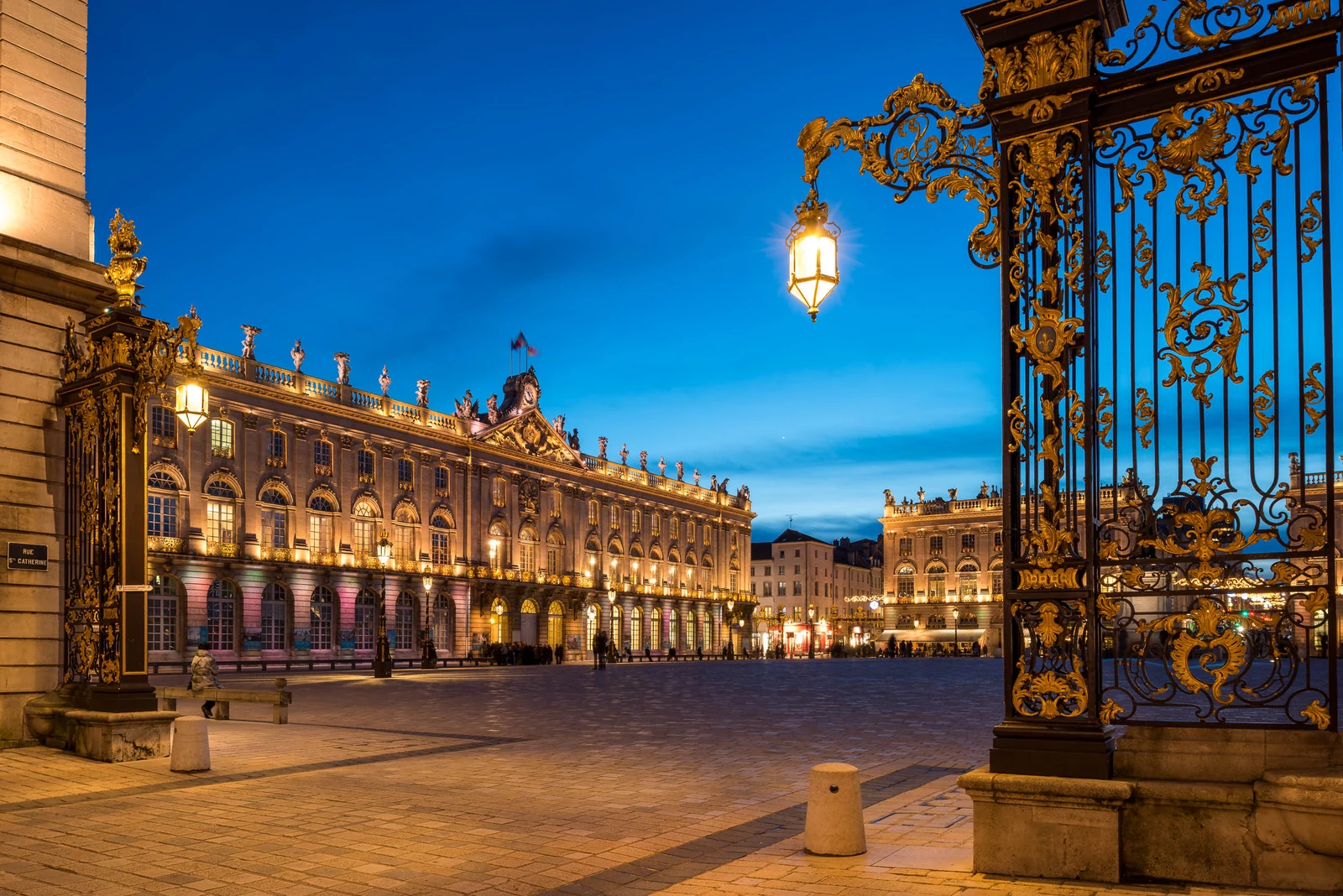
Grothendieck later remembered an affectionate reception in the homes of Laurent and Marie-Hélène Schwartz, Dieudonné, and Godement. He wrote that this warmth mattered throughout his mathematical life. The retrospective testimony supports a bounded account of welcome, not reconstructed dinners, dialogue, or gestures. His first professional work developed within seminars and a social network.33Dieudonné and Schwartz, “La dualité dans les espaces (F) et (LF),” 61–101, especially concluding questions; Dieudonné, “A. Grothendieck’s Early Work (1950–1960),” 299–301; Jackson, “As If Summoned from the Void, I,” 1040–44; Schwartz, Un mathématicien aux prises avec le siècle; Laamri, Alexander Grothendieck: période 1928–1956, 69–79; Scharlau, “Who Is Alexander Grothendieck?” 931–33; Grothendieck, “Sur la complétion du dual d’un espace vectoriel localement convexe,” 605–6; Grothendieck, “Critères généraux de compacité dans les espaces vectoriels localement convexes. Pathologie des espaces (LF),” 940–41; Grothendieck, “Critères de compacité dans les espaces fonctionnels généraux,” 168–86; Nicolas Bourbaki, “Sur certains espaces vectoriels topologiques,” 5–16.
Several later accounts place Hanka with Grothendieck in Nancy, although a contemporaneous residence record has not yet been located. The available sources do not meet the required threshold for further household claims.44Dieudonné and Schwartz, “La dualité dans les espaces (F) et (LF),” 61–101, especially concluding questions; Dieudonné, “A. Grothendieck’s Early Work (1950–1960),” 299–301; Jackson, “As If Summoned from the Void, I,” 1040–44; Schwartz, Un mathématicien aux prises avec le siècle; Laamri, Alexander Grothendieck: période 1928–1956, 69–79; Scharlau, “Who Is Alexander Grothendieck?” 931–33; Grothendieck, “Sur la complétion du dual d’un espace vectoriel localement convexe,” 605–6; Grothendieck, “Critères généraux de compacité dans les espaces vectoriels localement convexes. Pathologie des espaces (LF),” 940–41; Grothendieck, “Critères de compacité dans les espaces fonctionnels généraux,” 168–86; Nicolas Bourbaki, “Sur certains espaces vectoriels topologiques,” 5–16.
A field still being assembled
Functional analysis studies vector spaces of functions, sequences, measures, and generalized functions together with limits and linear operators. Banach spaces—complete normed vector spaces—already had a mature theory by 1950. But many spaces needed in analysis did not fit comfortably under one norm. Smooth functions, test functions, and distributions carried topologies defined by families of conditions. The general theory of locally convex spaces was young.55Dieudonné and Schwartz, “La dualité dans les espaces (F) et (LF),” 61–101, especially concluding questions; Dieudonné, “A. Grothendieck’s Early Work (1950–1960),” 299–301; Jackson, “As If Summoned from the Void, I,” 1040–44; Schwartz, Un mathématicien aux prises avec le siècle; Laamri, Alexander Grothendieck: période 1928–1956, 69–79; Scharlau, “Who Is Alexander Grothendieck?” 931–33; Grothendieck, “Sur la complétion du dual d’un espace vectoriel localement convexe,” 605–6; Grothendieck, “Critères généraux de compacité dans les espaces vectoriels localement convexes. Pathologie des espaces (LF),” 940–41; Grothendieck, “Critères de compacité dans les espaces fonctionnels généraux,” 168–86; Nicolas Bourbaki, “Sur certains espaces vectoriels topologiques,” 5–16.
Dieudonné later described the situation plainly. Banach-space duality was nearly classical, while locally convex duality had been developed only for selected types, including Fréchet spaces and certain inductive limits. He and Schwartz had encountered a series of questions they could not solve. Their 1949 paper, “La dualité dans les espaces (F) et (LF),” ended with fourteen questions in Schwartz’s later account. Those questions came from an active theory, not an examination designed for a beginner.66Dieudonné and Schwartz, “La dualité dans les espaces (F) et (LF),” 61–101, especially concluding questions; Dieudonné, “A. Grothendieck’s Early Work (1950–1960),” 299–301; Jackson, “As If Summoned from the Void, I,” 1040–44; Schwartz, Un mathématicien aux prises avec le siècle; Laamri, Alexander Grothendieck: période 1928–1956, 69–79; Scharlau, “Who Is Alexander Grothendieck?” 931–33; Grothendieck, “Sur la complétion du dual d’un espace vectoriel localement convexe,” 605–6; Grothendieck, “Critères généraux de compacité dans les espaces vectoriels localement convexes. Pathologie des espaces (LF),” 940–41; Grothendieck, “Critères de compacité dans les espaces fonctionnels généraux,” 168–86; Nicolas Bourbaki, “Sur certains espaces vectoriels topologiques,” 5–16.
The notation referred to Fréchet spaces in the period: complete metrizable locally convex spaces. An -space is, under standard modern use, a locally convex inductive limit of an increasing sequence of Fréchet spaces, with details and regularity conditions affecting theorems. The space of compactly supported smooth test functions is a central example assembled from spaces with support in fixed compact subsets.
Why Banach spaces were insufficient
A single norm must turn every desired convergence condition into one scale. For , convergence should control every derivative on every compact subset. The seminorms
do this naturally. A countable exhaustion of by compact sets and all derivative orders can make the topology metrizable and complete, hence Fréchet. But the compact-support condition requires a different assembly.
The ordinary intuition is that a norm is one gauge while a locally convex topology is a coordinated family of gauges. That intuition is faithful to seminorms. It becomes unreliable if it suggests that every result can be checked one gauge at a time independently. Boundedness, completeness, duality, and inductive limits involve how the whole family interacts.
Schwartz’s distributions
Schwartz’s theory of distributions supplied the motivating spaces. A test function is smooth and has compact support in an open set . A distribution is a continuous linear functional on :
An ordinary locally integrable function defines a distribution by
The Dirac delta at is the distribution
It is not an ordinary function whose value is infinite at one point and zero elsewhere. That popular picture fails because any ordinary function supported at a single point defines the zero distribution under Lebesgue integration. Delta is an evaluation functional. Its meaning lies in how it acts on every test function.
Distributional derivatives are defined by moving the derivative onto the test function:
For a smooth , this agrees with integration by parts, with boundary terms absent because has compact support. Every distribution has derivatives of all orders. A discontinuous function such as the Heaviside step has distributional derivative .
The human problem is that differential equations naturally produce limits, jumps, and point sources that classical functions cannot accommodate smoothly. Distributions enlarge the class of objects while preserving differentiation as a continuous linear operation. The faithful intuition is to know a generalized object through every smooth compactly supported probe. The limitation is that a distribution does not generally have pointwise values or permit arbitrary multiplication.
Ordinary functions converging to a point mass
Choose a nonnegative smooth compactly supported function on with
and define
As tends to zero, these functions become taller and concentrate near the origin. They do not converge to an ordinary integrable function with unit mass, but they do converge to the Dirac distribution.
For every test function ,
The change of variables exposes the precise mode of convergence: every smooth compactly supported probe records the limiting value at the origin.
This example anchors the topology on distributions. The convergence is neither pointwise convergence of the approximating functions nor convergence to a classical density. It occurs after pairing with every test function. The picture of mass concentrating at a point is useful only because the displayed pairing gives it exact meaning.
Approximate identities appear throughout regularization and partial differential equations. Their behavior explains why a continuous dual with a carefully chosen topology was necessary for Schwartz’s theory. The spaces had to retain limits that ordinary functions could not contain. This was the analytical setting in which Grothendieck’s work on locally convex spaces acquired immediate consequence.
The same family can smooth a rough object. If is a distribution, convolution with is a smooth function wherever the operation is defined, and tends back to in the distribution topology as decreases. Regularization thus moves from a generalized object to ordinary smooth representatives without claiming pointwise equality.
This procedure has a boundary. Convolution requires support or domain conditions, and different approximate identities need not have the same pointwise behavior. What remains invariant is the distributional limit under the stated hypotheses. The topology records exactly the convergence that survives the choice of smoothing kernel.
The example also explains why completeness matters. A sequence of smooth functions may be Cauchy under all distributional tests while its limit is no longer a smooth function. The larger dual space contains the limit; a theory restricted to classical functions would lose it.
Differentiation commutes with this regularization:
whenever the convolutions are defined. The identity lets a differential equation be smoothed without abandoning its derivative structure. Estimates can first be proved for smooth representatives and then interpreted in the distributional limit.
The method does not make every distribution an ordinary function. Regularization depends on , and the smooth representatives may grow without any pointwise limit. Their stable meaning lies in the topology of tests. That distinction is the concrete reason a generalized function space needs more than formal symbols.
Schwartz placed generalized practices used by physicists and analysts within a rigorous topological duality. The topology on determines which linear functionals are continuous and hence which distributions exist. Topological vector spaces were part of the definition rather than an abstract afterthought.77Dieudonné and Schwartz, “La dualité dans les espaces (F) et (LF),” 61–101, especially concluding questions; Dieudonné, “A. Grothendieck’s Early Work (1950–1960),” 299–301; Jackson, “As If Summoned from the Void, I,” 1040–44; Schwartz, Un mathématicien aux prises avec le siècle; Laamri, Alexander Grothendieck: période 1928–1956, 69–79; Scharlau, “Who Is Alexander Grothendieck?” 931–33; Grothendieck, “Sur la complétion du dual d’un espace vectoriel localement convexe,” 605–6; Grothendieck, “Critères généraux de compacité dans les espaces vectoriels localement convexes. Pathologie des espaces (LF),” 940–41; Grothendieck, “Critères de compacité dans les espaces fonctionnels généraux,” 168–86; Nicolas Bourbaki, “Sur certains espaces vectoriels topologiques,” 5–16.
Schwartz received the Fields Medal in 1950 for work including distributions. Grothendieck’s apprenticeship occurred as his mentor’s theory gained international recognition. The medal should not be allowed to turn every interaction into a master-and-disciple tableau. Schwartz and Dieudonné gave direction; Grothendieck’s solutions quickly made him a collaborator in the same program.88Dieudonné and Schwartz, “La dualité dans les espaces (F) et (LF),” 61–101, especially concluding questions; Dieudonné, “A. Grothendieck’s Early Work (1950–1960),” 299–301; Jackson, “As If Summoned from the Void, I,” 1040–44; Schwartz, Un mathématicien aux prises avec le siècle; Laamri, Alexander Grothendieck: période 1928–1956, 69–79; Scharlau, “Who Is Alexander Grothendieck?” 931–33; Grothendieck, “Sur la complétion du dual d’un espace vectoriel localement convexe,” 605–6; Grothendieck, “Critères généraux de compacité dans les espaces vectoriels localement convexes. Pathologie des espaces (LF),” 940–41; Grothendieck, “Critères de compacité dans les espaces fonctionnels généraux,” 168–86; Nicolas Bourbaki, “Sur certains espaces vectoriels topologiques,” 5–16.
Dieudonné’s demand for a consequential problem
Schwartz later recalled that Grothendieck first showed Dieudonné a roughly fifty-page paper on integration with values in a topological group. In Schwartz’s account, Dieudonné judged it correct but devoid of useful consequence and criticized generalization undertaken for its own sake. Because the scene comes through memoir, the exact length, language, and force of the criticism remain attributed to Schwartz.99Dieudonné and Schwartz, “La dualité dans les espaces (F) et (LF),” 61–101, especially concluding questions; Dieudonné, “A. Grothendieck’s Early Work (1950–1960),” 299–301; Jackson, “As If Summoned from the Void, I,” 1040–44; Schwartz, Un mathématicien aux prises avec le siècle; Laamri, Alexander Grothendieck: période 1928–1956, 69–79; Scharlau, “Who Is Alexander Grothendieck?” 931–33; Grothendieck, “Sur la complétion du dual d’un espace vectoriel localement convexe,” 605–6; Grothendieck, “Critères généraux de compacité dans les espaces vectoriels localement convexes. Pathologie des espaces (LF),” 940–41; Grothendieck, “Critères de compacité dans les espaces fonctionnels généraux,” 168–86; Nicolas Bourbaki, “Sur certains espaces vectoriels topologiques,” 5–16.
The episode identifies a tension that later followed Grothendieck’s reputation: explanatory generality had to be distinguished from formal enlargement without consequence. Dieudonné’s criterion, as Schwartz represented it, was that a problem should be difficult and connected to other mathematics. Generality earned its cost by solving, unifying, or exposing something beyond itself.
Grothendieck’s later work would become a principal example of powerful generality. That future should not be used to make Dieudonné foolish. A broad definition with no new theorem can be sterile; a severe response can redirect a young researcher toward problems that test the definition. The mentors then supplied exactly such problems from their own work.
The mathematical relation also changed rapidly. Dieudonné later became one of the strongest public witnesses to Grothendieck’s early power and, much later, his collaborator on Éléments de géométrie algébrique. In Nancy, criticism and encouragement were not opposites. The first rejected an unproductive direction; the second recognized solutions of consequence.1010Dieudonné and Schwartz, “La dualité dans les espaces (F) et (LF),” 61–101, especially concluding questions; Dieudonné, “A. Grothendieck’s Early Work (1950–1960),” 299–301; Jackson, “As If Summoned from the Void, I,” 1040–44; Schwartz, Un mathématicien aux prises avec le siècle; Laamri, Alexander Grothendieck: période 1928–1956, 69–79; Scharlau, “Who Is Alexander Grothendieck?” 931–33; Grothendieck, “Sur la complétion du dual d’un espace vectoriel localement convexe,” 605–6; Grothendieck, “Critères généraux de compacité dans les espaces vectoriels localement convexes. Pathologie des espaces (LF),” 940–41; Grothendieck, “Critères de compacité dans les espaces fonctionnels généraux,” 168–86; Nicolas Bourbaki, “Sur certains espaces vectoriels topologiques,” 5–16.
Fourteen questions, several memories
Later sources give different versions of the Nancy problem sequence. Schwartz wrote that the 1949 Dieudonné–Schwartz paper ended with fourteen questions and recalled that Grothendieck returned after some weeks with solutions to half of them. Dieudonné later wrote that Grothendieck solved every problem they had posed in less than a year and then moved to other questions. Scharlau compressed the interval into a few months for all fourteen.1111Dieudonné and Schwartz, “La dualité dans les espaces (F) et (LF),” 61–101, especially concluding questions; Dieudonné, “A. Grothendieck’s Early Work (1950–1960),” 299–301; Jackson, “As If Summoned from the Void, I,” 1040–44; Schwartz, Un mathématicien aux prises avec le siècle; Laamri, Alexander Grothendieck: période 1928–1956, 69–79; Scharlau, “Who Is Alexander Grothendieck?” 931–33; Grothendieck, “Sur la complétion du dual d’un espace vectoriel localement convexe,” 605–6; Grothendieck, “Critères généraux de compacité dans les espaces vectoriels localement convexes. Pathologie des espaces (LF),” 940–41; Grothendieck, “Critères de compacité dans les espaces fonctionnels généraux,” 168–86; Nicolas Bourbaki, “Sur certains espaces vectoriels topologiques,” 5–16.
These versions are compatible at a broad scale but not identical in timing and count. Schwartz supports a first return with about half; Dieudonné supports completion of the problems the mentors had posed within a year. No sentence in this chapter equates Dieudonné’s general wording with all fourteen published questions, because a question-by-question mapping has not been completed.
The paper itself anchors the account. “La dualité dans les espaces (F) et (LF)” studies duality for Fréchet spaces and inductive limits, including completeness, boundedness, and compactness phenomena. Its questions are technical statements with hypotheses rather than fourteen free-standing riddles.
No contemporaneous photograph, diary, or letter establishes a single scene in which a sheet crossed a desk. The problems may have been discussed, assigned from the paper, or revisited across meetings. The mentor testimonies support deliberate assignment of unresolved questions and retrospective surprise at the response, but not a reconstructed hand-over.
Dieudonné and Schwartz understood the difficulty, but both accounts were retrospective and written after the later career was known. Their agreement on rapid early results is corroborated by publications beginning in 1950; the exact sequence remains under comparison.1212Dieudonné and Schwartz, “La dualité dans les espaces (F) et (LF),” 61–101, especially concluding questions; Dieudonné, “A. Grothendieck’s Early Work (1950–1960),” 299–301; Jackson, “As If Summoned from the Void, I,” 1040–44; Schwartz, Un mathématicien aux prises avec le siècle; Laamri, Alexander Grothendieck: période 1928–1956, 69–79; Scharlau, “Who Is Alexander Grothendieck?” 931–33; Grothendieck, “Sur la complétion du dual d’un espace vectoriel localement convexe,” 605–6; Grothendieck, “Critères généraux de compacité dans les espaces vectoriels localement convexes. Pathologie des espaces (LF),” 940–41; Grothendieck, “Critères de compacité dans les espaces fonctionnels généraux,” 168–86; Nicolas Bourbaki, “Sur certains espaces vectoriels topologiques,” 5–16.
Competing dual topologies
For a locally convex space , the continuous dual is a vector space. To study it as a topological vector space, one must choose a topology. The weak-* or weak dual topology is pointwise convergence on : when
The strong dual topology is uniform convergence on bounded subsets of .
Between weak and strong topologies lie others, often generated by uniform convergence on specified families of bounded, compact, or precompact sets. The algebraic dual may remain the same while its topological properties change. Completeness of the dual, reflexivity of , compactness of polar sets, and continuity of transpose maps all depend on these choices.
The bidual consists of continuous linear functionals on the chosen topological dual. There is a canonical evaluation map
Calling reflexive can mean that is onto and is a topological isomorphism under specified conventions. In Banach spaces the conventions are comparatively stable. For general locally convex spaces, semi-reflexive and reflexive conditions must be distinguished.
The ordinary intuition says an object is studied by all continuous linear observations, then reconstructed from observations of those observations. It illuminates evaluation. Its limit is that the set and topology of “all observations” are part of the problem. A dual does not float free of the topology placed on the original space.
Dieudonné and Schwartz’s unresolved questions arose because results familiar from Banach spaces did not transfer automatically. Inductive limits could be incomplete or pathological; bounded sets could behave unexpectedly; dual topologies could fail hoped-for identities. Grothendieck’s solutions introduced constructions that separated the cases and established new general results.1313Dieudonné and Schwartz, “La dualité dans les espaces (F) et (LF),” 61–101, especially concluding questions; Dieudonné, “A. Grothendieck’s Early Work (1950–1960),” 299–301; Jackson, “As If Summoned from the Void, I,” 1040–44; Schwartz, Un mathématicien aux prises avec le siècle; Laamri, Alexander Grothendieck: période 1928–1956, 69–79; Scharlau, “Who Is Alexander Grothendieck?” 931–33; Grothendieck, “Sur la complétion du dual d’un espace vectoriel localement convexe,” 605–6; Grothendieck, “Critères généraux de compacité dans les espaces vectoriels localement convexes. Pathologie des espaces (LF),” 940–41; Grothendieck, “Critères de compacité dans les espaces fonctionnels généraux,” 168–86; Nicolas Bourbaki, “Sur certains espaces vectoriels topologiques,” 5–16.
The first published answers
Grothendieck’s first short notes appeared in the Comptes rendus de l’Académie des sciences in 1950. One was “Sur la complétion du dual d’un espace vectoriel localement convexe,” in volume 230, pages 605–606. Another was “Critères généraux de compacité dans les espaces vectoriels localement convexes. Pathologie des espaces (LF),” in volume 231, pages 940–941. The titles alone show the program: completion, duality, compactness, and the limits of LF spaces.1414Dieudonné and Schwartz, “La dualité dans les espaces (F) et (LF),” 61–101, especially concluding questions; Dieudonné, “A. Grothendieck’s Early Work (1950–1960),” 299–301; Jackson, “As If Summoned from the Void, I,” 1040–44; Schwartz, Un mathématicien aux prises avec le siècle; Laamri, Alexander Grothendieck: période 1928–1956, 69–79; Scharlau, “Who Is Alexander Grothendieck?” 931–33; Grothendieck, “Sur la complétion du dual d’un espace vectoriel localement convexe,” 605–6; Grothendieck, “Critères généraux de compacité dans les espaces vectoriels localement convexes. Pathologie des espaces (LF),” 940–41; Grothendieck, “Critères de compacité dans les espaces fonctionnels généraux,” 168–86; Nicolas Bourbaki, “Sur certains espaces vectoriels topologiques,” 5–16.
A Comptes rendus note was brief. It announced results rather than supplying the expansive proofs that would characterize the thesis. Publication transformed mentor surprise into inspectable claims and established dates of priority. The notes should be read with their later full treatments, because compressed announcements can conceal hypotheses and historical notation.
“Completion” addresses missing limits. A uniform or locally convex space may contain Cauchy nets that do not converge within it. A completion contains densely and supplies the missing limits with a universal property under suitable conventions. Completing a dual raises the question of whether the result is itself the dual of a natural space or retains expected structure.
“Pathology” is a technical warning rather than a medical metaphor. It denotes counterexamples or failures of properties expected from better-behaved spaces. Constructing pathology can advance a theory by proving that a proposed theorem needs additional hypotheses. Grothendieck’s capacity to build ingenious examples was as important as his capacity to unify.
The early notes were followed by larger work. Dieudonné later wrote that by 1953 there were six papers any one of which could have supported a good dissertation. The precise bibliography and submission chronology belong to the next chapter. Here the important transition is from assigned questions to a widening research agenda.1515Dieudonné and Schwartz, “La dualité dans les espaces (F) et (LF),” 61–101, especially concluding questions; Dieudonné, “A. Grothendieck’s Early Work (1950–1960),” 299–301; Jackson, “As If Summoned from the Void, I,” 1040–44; Schwartz, Un mathématicien aux prises avec le siècle; Laamri, Alexander Grothendieck: période 1928–1956, 69–79; Scharlau, “Who Is Alexander Grothendieck?” 931–33; Grothendieck, “Sur la complétion du dual d’un espace vectoriel localement convexe,” 605–6; Grothendieck, “Critères généraux de compacité dans les espaces vectoriels localement convexes. Pathologie des espaces (LF),” 940–41; Grothendieck, “Critères de compacité dans les espaces fonctionnels généraux,” 168–86; Nicolas Bourbaki, “Sur certains espaces vectoriels topologiques,” 5–16.
A seminar that made correction continuous
Accounts describe an active weekly seminar in Nancy, often on Saturdays, involving professors and students. The schedule should be checked against faculty records, but the consistent testimony supports a regular collective forum. Results could be presented, challenged, and related to other work.1616Dieudonné and Schwartz, “La dualité dans les espaces (F) et (LF),” 61–101, especially concluding questions; Dieudonné, “A. Grothendieck’s Early Work (1950–1960),” 299–301; Jackson, “As If Summoned from the Void, I,” 1040–44; Schwartz, Un mathématicien aux prises avec le siècle; Laamri, Alexander Grothendieck: période 1928–1956, 69–79; Scharlau, “Who Is Alexander Grothendieck?” 931–33; Grothendieck, “Sur la complétion du dual d’un espace vectoriel localement convexe,” 605–6; Grothendieck, “Critères généraux de compacité dans les espaces vectoriels localement convexes. Pathologie des espaces (LF),” 940–41; Grothendieck, “Critères de compacité dans les espaces fonctionnels généraux,” 168–86; Nicolas Bourbaki, “Sur certains espaces vectoriels topologiques,” 5–16.
In Montpellier, correction arrived after years, when the measure manuscript reached Paris. In Nancy it could arrive within days. This shortened feedback loop altered the economics of reconstruction. Grothendieck could still work alone for long stretches, but he no longer had to discover every known obstruction independently.
The seminar also distributed expertise. Schwartz brought distributions and analysis; Dieudonné brought broad structural knowledge and Bourbaki’s standards; Godement and Delsarte brought their own areas; fellow students supplied questions and comparisons. No single mentor possessed the whole environment. The apprenticeship belonged to a local network.
Participants later included or overlapped with Jacques-Louis Lions, Bernard Malgrange, François Bruhat, Paulo Ribenboim, and others. Attendance and exact dates vary, so names should not be packed into one session. They show that Grothendieck was learning beside mathematicians who would make major contributions, not in a one-pupil court.1717Dieudonné and Schwartz, “La dualité dans les espaces (F) et (LF),” 61–101, especially concluding questions; Dieudonné, “A. Grothendieck’s Early Work (1950–1960),” 299–301; Jackson, “As If Summoned from the Void, I,” 1040–44; Schwartz, Un mathématicien aux prises avec le siècle; Laamri, Alexander Grothendieck: période 1928–1956, 69–79; Scharlau, “Who Is Alexander Grothendieck?” 931–33; Grothendieck, “Sur la complétion du dual d’un espace vectoriel localement convexe,” 605–6; Grothendieck, “Critères généraux de compacité dans les espaces vectoriels localement convexes. Pathologie des espaces (LF),” 940–41; Grothendieck, “Critères de compacité dans les espaces fonctionnels généraux,” 168–86; Nicolas Bourbaki, “Sur certains espaces vectoriels topologiques,” 5–16.
Ribenboim later remembered admiration, while Grothendieck remembered affection in the Nancy circle. These retrospective accounts do not establish an absence of tension; they only counter a description of the work as socially isolated.
Encouragement as an operation
Grothendieck later singled out Dieudonné’s power of encouragement when early results appeared. Encouragement here was not generic reassurance. Dieudonné knew the questions, recognized the solutions, communicated their importance, and made that judgment visible to others. Expert recognition changed what the young mathematician could attempt and how the community received him.1818Dieudonné and Schwartz, “La dualité dans les espaces (F) et (LF),” 61–101, especially concluding questions; Dieudonné, “A. Grothendieck’s Early Work (1950–1960),” 299–301; Jackson, “As If Summoned from the Void, I,” 1040–44; Schwartz, Un mathématicien aux prises avec le siècle; Laamri, Alexander Grothendieck: période 1928–1956, 69–79; Scharlau, “Who Is Alexander Grothendieck?” 931–33; Grothendieck, “Sur la complétion du dual d’un espace vectoriel localement convexe,” 605–6; Grothendieck, “Critères généraux de compacité dans les espaces vectoriels localement convexes. Pathologie des espaces (LF),” 940–41; Grothendieck, “Critères de compacité dans les espaces fonctionnels généraux,” 168–86; Nicolas Bourbaki, “Sur certains espaces vectoriels topologiques,” 5–16.
The operation had inputs: a difficult public problem and a verifiable solution. Its output was not truth—the proof supplied that—but confidence, attention, and further opportunity. In a research culture, those social outputs affect which work is read and which researcher receives time.
Encouragement can amplify error if disconnected from criticism. Schwartz’s account pairs Dieudonné’s early rejection of consequence-free generalization with later emphatic praise for results he could evaluate. The mathematical effect lay in that combination rather than in praise alone.
Schwartz’s role differed. He connected the work to distributions, provided the later thesis problem, became official director, read the dissertation, and helped seek positions. His autobiography supplies a mentor’s retrospective assessment rather than a neutral measure of ability.1919Dieudonné and Schwartz, “La dualité dans les espaces (F) et (LF),” 61–101, especially concluding questions; Dieudonné, “A. Grothendieck’s Early Work (1950–1960),” 299–301; Jackson, “As If Summoned from the Void, I,” 1040–44; Schwartz, Un mathématicien aux prises avec le siècle; Laamri, Alexander Grothendieck: période 1928–1956, 69–79; Scharlau, “Who Is Alexander Grothendieck?” 931–33; Grothendieck, “Sur la complétion du dual d’un espace vectoriel localement convexe,” 605–6; Grothendieck, “Critères généraux de compacité dans les espaces vectoriels localement convexes. Pathologie des espaces (LF),” 940–41; Grothendieck, “Critères de compacité dans les espaces fonctionnels généraux,” 168–86; Nicolas Bourbaki, “Sur certains espaces vectoriels topologiques,” 5–16.
From problems to a program
Solving a listed question can leave the surrounding theory unchanged. Grothendieck’s early work did more, in Dieudonné’s assessment, because the solutions introduced constructions usable elsewhere. Once a technique answered several questions, new questions became visible. The researcher was no longer choosing from the mentors’ list but extending the field.2020Dieudonné and Schwartz, “La dualité dans les espaces (F) et (LF),” 61–101, especially concluding questions; Dieudonné, “A. Grothendieck’s Early Work (1950–1960),” 299–301; Jackson, “As If Summoned from the Void, I,” 1040–44; Schwartz, Un mathématicien aux prises avec le siècle; Laamri, Alexander Grothendieck: période 1928–1956, 69–79; Scharlau, “Who Is Alexander Grothendieck?” 931–33; Grothendieck, “Sur la complétion du dual d’un espace vectoriel localement convexe,” 605–6; Grothendieck, “Critères généraux de compacité dans les espaces vectoriels localement convexes. Pathologie des espaces (LF),” 940–41; Grothendieck, “Critères de compacité dans les espaces fonctionnels généraux,” 168–86; Nicolas Bourbaki, “Sur certains espaces vectoriels topologiques,” 5–16.
This is the difference between rapid problem solving and a research program. An exercise has a local target. A program develops language, examples, and methods whose consequences cannot be listed in advance. By spring 1951, topological tensor products provided the central thesis problem and a framework broad enough to connect operators, kernels, and nuclear spaces.
The word “program” should not imply a written master plan. The chronology shows successive enlargement: duality problems, compactness and completion, general locally convex structures, then tensor products. The unity is visible in published work and later accounts, not in a manifesto from October 1949.
Nancy thus completed the transition Paris began. Grothendieck entered with personal evidence that he could reconstruct known mathematics. He now produced public evidence that he could solve unknown mathematics. The difference was a community able to certify both the problem and the answer.
The topology on the probes
Defining a distribution as a continuous functional on hides the hardest word in continuous. The test-function space is an union of spaces , where ranges over compact subsets of and consists of smooth functions supported in . On each fixed , seminorms controlling every derivative define a Fréchet topology:
The full test-function topology is an inductive limit of these spaces.
A linear functional is a distribution precisely when, on every fixed compact , it can be bounded by finitely many derivative gauges: there exist and , depending on , such that
for all supported in . This estimate makes continuity concrete. The integer relates to the order of the distribution on .
The topology is designed so that differentiation of test functions is continuous and so that support cannot escape unnoticed. A sequence with derivatives converging on one compact set is not enough if its supports drift through the domain. The inductive-limit structure tracks both local smoothness and compact support.
This clarifies why general locally convex theory mattered to Schwartz. The objects of analysis were not simply defined first and topologized later. Continuity selected the generalized functions, and dual topology governed their convergence. Alter the topology on test functions and the continuous dual may change.
For an ordinary reader, test functions are probes placed in a bounded region and made sensitive through their derivatives. A distribution is known by every response. The analogy fails if a probe is imagined to sample a point mechanically. Test functions interact through an integral or functional pairing, and their topology encodes infinitely many derivative conditions.
Grothendieck’s work in Nancy asked what could be said about such spaces abstractly. If theorems depended only on being Fréchet, LF, barrelled, bornological, or nuclear, they could apply to many function and distribution spaces at once. Generality would then repay its cost through reuse.2121Dieudonné and Schwartz, “La dualité dans les espaces (F) et (LF),” 61–101, especially concluding questions; Dieudonné, “A. Grothendieck’s Early Work (1950–1960),” 299–301; Jackson, “As If Summoned from the Void, I,” 1040–44; Schwartz, Un mathématicien aux prises avec le siècle; Laamri, Alexander Grothendieck: période 1928–1956, 69–79; Scharlau, “Who Is Alexander Grothendieck?” 931–33; Grothendieck, “Sur la complétion du dual d’un espace vectoriel localement convexe,” 605–6; Grothendieck, “Critères généraux de compacité dans les espaces vectoriels localement convexes. Pathologie des espaces (LF),” 940–41; Grothendieck, “Critères de compacité dans les espaces fonctionnels généraux,” 168–86; Nicolas Bourbaki, “Sur certains espaces vectoriels topologiques,” 5–16.
Weak solutions and the reason to enlarge
Consider a differential equation . A classical solution requires pointwise differentiability. A distributional solution requires
for every test function . The derivative moves to the smooth probe. Functions with jumps and limits of approximate solutions can remain within the enlarged space.
For a partial differential operator , one seeks satisfying
for all test functions, with the formal adjoint. This formulation can yield existence where no classical solution exists initially. Additional regularity theorems may later show that the distributional solution is smoother under appropriate conditions.
The enlargement is disciplined. Not every nonlinear operation extends to all distributions. Multiplying a distribution by a smooth function is defined; multiplying two arbitrary distributions is not generally possible in a way preserving the desired properties. Generality solves one obstruction and makes another boundary explicit.
This is an example of the criterion Dieudonné demanded. Distribution theory was general, but its generality explained formal derivatives, supported PDE methods, and connected to Fourier analysis. The topological spaces around it were consequential. The young Grothendieck was being asked to build general theory with comparable payoff.
Polar sets and geometric duality
Let be a locally convex space and . Its polar in the continuous dual is
For , the polar is defined similarly. Polars convert neighborhoods into equicontinuous sets of functionals and bounded or convex sets into dual constraints.
The bipolar theorem, in a standard locally convex formulation, says that the bipolar is the closed absolutely convex hull of , with closure in the relevant weak topology. This is a geometric form of duality: continuous linear observations recover a canonical convex closure of the original set.
Hahn–Banach separation lies underneath. If a point lies outside a suitable closed convex set, a continuous linear functional can separate them. The dual is therefore rich enough to detect geometric distinctions. Locally convexity is precisely the setting where such separating functionals flourish.
The ordinary intuition is that functionals cast every possible linear shadow of a set; the collection of shadows reconstructs its convex outline. It illuminates separation. It fails because an infinite-dimensional polar is not a visual silhouette, and weak closure, absolute convexity, and choice of scalar field carry exact content.
Compactness enters through polars as well. Banach–Alaoglu says the polar of a neighborhood of zero is compact in the weak-* topology under standard dual-pair formulations. That compactness may not be sequential without countability conditions. Much of the early theory consisted in deciding when compact, bounded, and equicontinuous subsets corresponded under duality.
Grothendieck’s first notes on compactness and completion belonged to this web. The statements were not isolated tricks. They tested whether the dual geometry familiar in Banach spaces survived in broader categories.
Barrelled spaces: when pointwise control becomes uniform
A barrel in a locally convex space is a set that is closed, absolutely convex, absorbing, and typically balanced under the standard definition. A space is barrelled if every barrel is a neighborhood of zero. The definition is shaped so that Banach–Steinhaus takes a useful general form: pointwise bounded families of continuous linear maps from a barrelled space into a suitable locally convex target are equicontinuous.
“Pointwise bounded” means that for each fixed , the values remain bounded as ranges through the family. “Equicontinuous” gives one neighborhood of zero on which the whole family is controlled. The theorem upgrades separate bounds into uniform local control because the domain has enough Baire-like structure.
Every Banach space and every Fréchet space is barrelled, but inductive limits require care. The category was introduced to isolate exactly what the uniform boundedness principle needs beyond normability. This is a characteristic move in structural analysis: name the property supporting a theorem, then determine which constructions preserve it.
The ordinary analogy is that many instruments, each stable at every specimen, are calibrated uniformly on one range. Its limit is that pointwise boundedness is quantified over vectors and equicontinuity over neighborhoods; no finite laboratory test replaces the theorem.
The 1950 Annales article “Sur certains espaces vectoriels topologiques,” published under Bourbaki’s name and referring to Grothendieck’s early notes, emphasized barrelled and bornological spaces as extensions of the Dieudonné–Schwartz work. This provides a near-contemporaneous bibliographic link between the mentor paper and his solutions.2222Dieudonné and Schwartz, “La dualité dans les espaces (F) et (LF),” 61–101, especially concluding questions; Dieudonné, “A. Grothendieck’s Early Work (1950–1960),” 299–301; Jackson, “As If Summoned from the Void, I,” 1040–44; Schwartz, Un mathématicien aux prises avec le siècle; Laamri, Alexander Grothendieck: période 1928–1956, 69–79; Scharlau, “Who Is Alexander Grothendieck?” 931–33; Grothendieck, “Sur la complétion du dual d’un espace vectoriel localement convexe,” 605–6; Grothendieck, “Critères généraux de compacité dans les espaces vectoriels localement convexes. Pathologie des espaces (LF),” 940–41; Grothendieck, “Critères de compacité dans les espaces fonctionnels généraux,” 168–86; Nicolas Bourbaki, “Sur certains espaces vectoriels topologiques,” 5–16.
Bornological spaces: bounded sets determine continuity
A locally convex space is bornological, under a standard formulation, if every linear map from to any locally convex space that sends bounded sets to bounded sets is continuous. Equivalently, every absolutely convex set that absorbs every bounded set is a neighborhood of zero. Boundedness data determine the topology strongly enough to test linear continuity.
The word comes from borné, bounded. In a normed space, bounded linear maps and continuous linear maps coincide. General locally convex spaces can separate those notions. Bornological spaces recover the equivalence at an abstract level.
Barrelled and bornological conditions point in dual directions. Barrelledness controls families in the dual from pointwise information. Bornologicality lets bounded-set behavior control maps from the space. Duals of suitable Fréchet spaces led to -spaces, a class Grothendieck introduced and developed to capture properties dual to Fréchet behavior. Exact definitions and historical notation require care, but the motivation was this exchange.
The topology of uniform convergence on bounded sets turns into the strong dual . If is Fréchet, its strong dual is a -space in the standard theory. Conversely, not every space with superficially similar properties is a strong dual without further hypotheses. Grothendieck’s work organized these positive results and counterexamples.
For a general reader, “bounded sets know continuity” is the faithful summary. It does not mean one numerical bound exists. A set is bounded when every continuous seminorm is bounded on it; the definition already depends on the locally convex structure. Bornology packages which subsets count as bounded and asks how much topology they recover.
Fréchet, LF, DF, Montel, Schwartz
The alphabet of space classes can obscure the problem it solves. A Fréchet space is locally convex, metrizable, and complete. An LF-space is an inductive limit of a sequence of Fréchet spaces. A DF-space abstracts properties of strong duals of Fréchet spaces. A Montel space is, under common hypotheses, barrelled and every closed bounded set is compact; variants and redundancy of conditions differ by convention. A Schwartz space in the locally convex sense has bounded sets with strong precompactness properties and should not be confused with the Schwartz space of rapidly decreasing functions, though the histories intersect.
Names allow theorems to be stated once, but only if their definitions are stable. Early papers were part of stabilizing them. Counterexamples showed that an LF-space might lack a property naively inherited from each Fréchet stage. The manner in which stages sit inside one another matters.
Take an increasing sequence
The inductive-limit topology is the finest locally convex topology making each inclusion continuous. A set or sequence can wander through the stages. Completeness and boundedness of cannot always be read from one stage without regularity conditions.
For , the stages correspond to supports inside an exhausting sequence of compact sets. Many bounded subsets are ultimately contained and bounded in one stage under the standard strict LF structure. This good behavior is powerful, but it is a theorem tied to the construction, not an automatic property of every inductive limit.
Grothendieck’s “pathology of LF spaces” work mattered because it prevented a convenient example from being mistaken for the entire category. A general theory needs positive permanence theorems and explicit failure cases. His early originality operated in both modes.2323Dieudonné and Schwartz, “La dualité dans les espaces (F) et (LF),” 61–101, especially concluding questions; Dieudonné, “A. Grothendieck’s Early Work (1950–1960),” 299–301; Jackson, “As If Summoned from the Void, I,” 1040–44; Schwartz, Un mathématicien aux prises avec le siècle; Laamri, Alexander Grothendieck: période 1928–1956, 69–79; Scharlau, “Who Is Alexander Grothendieck?” 931–33; Grothendieck, “Sur la complétion du dual d’un espace vectoriel localement convexe,” 605–6; Grothendieck, “Critères généraux de compacité dans les espaces vectoriels localement convexes. Pathologie des espaces (LF),” 940–41; Grothendieck, “Critères de compacité dans les espaces fonctionnels généraux,” 168–86; Nicolas Bourbaki, “Sur certains espaces vectoriels topologiques,” 5–16.
Completion, quasi-completion, and what limits are missing
A topological vector space is complete if every Cauchy net, or every Cauchy filter under an equivalent formulation, converges. In metrizable spaces sequences suffice. A space is quasi-complete if every closed bounded subset is complete, again under standard conventions. Dual spaces may be quasi-complete without complete, or complete under one topology and not another.
The completion comes with a continuous linear map having dense image and a universal extension property for continuous linear maps into complete spaces. If is Hausdorff, the map is injective. The construction is unique up to a unique compatible isomorphism, not as a preferred set of new points.
Completing a normed space is familiar: rational polynomials can converge to functions outside the original set. In a locally convex space, Cauchy behavior is tested by every neighborhood or seminorm. The completion must preserve the family’s compatibility. Dualization and completion need not commute in the simplest hoped-for way.
Grothendieck’s note on completion of the dual addressed this layer. Its two-page announcement cannot support a universal paraphrase without the full proof and historical terminology. The title locates the problem; theorem-level claims still require review against the paper.2424Dieudonné and Schwartz, “La dualité dans les espaces (F) et (LF),” 61–101, especially concluding questions; Dieudonné, “A. Grothendieck’s Early Work (1950–1960),” 299–301; Jackson, “As If Summoned from the Void, I,” 1040–44; Schwartz, Un mathématicien aux prises avec le siècle; Laamri, Alexander Grothendieck: période 1928–1956, 69–79; Scharlau, “Who Is Alexander Grothendieck?” 931–33; Grothendieck, “Sur la complétion du dual d’un espace vectoriel localement convexe,” 605–6; Grothendieck, “Critères généraux de compacité dans les espaces vectoriels localement convexes. Pathologie des espaces (LF),” 940–41; Grothendieck, “Critères de compacité dans les espaces fonctionnels généraux,” 168–86; Nicolas Bourbaki, “Sur certains espaces vectoriels topologiques,” 5–16.
Compactness re-enters through operators
A linear operator between Banach spaces is compact if it sends the unit ball, or bounded sets, into relatively compact sets under equivalent standard formulations. Compact operators behave in some ways like finite-rank operators and play a central role in integral equations and spectral theory. In locally convex spaces, the definition branches according to neighborhoods, bounded sets, and chosen topologies.
An operator may send some neighborhood of zero to a relatively compact set; this is a strong compactness condition. It may send bounded sets to relatively compact sets; terminology varies. The theory must state which version it uses. Grothendieck’s papers developed general compactness criteria and exposed where LF spaces violated expected transfers.
The relation to distributions is indirect but important. Integral kernels define linear operators between function spaces. Compactness can make equations solvable through Fredholm theory. Later topological tensor products would encode kernels and operators within one algebraic-topological language.
Thus the early questions were converging. Duality described continuous observations; compactness controlled infinite-dimensional behavior; completion supplied missing limits; inductive limits built test-function spaces. Tensor products would connect bilinear forms and kernels. The thesis did not appear from a separate inspiration; it gathered the program’s strands.
Transposes
Given a continuous linear map , its transpose or adjoint in locally convex duality is
The direction reverses. Continuity of depends on which topologies are placed on the duals, though it is always weak-to-weak continuous in the natural dual-pair sense.
Kernels and images exchange with annihilators:
with closure entering reverse identities. Surjectivity of may relate to injectivity and topological properties of , but algebraic implications alone do not settle openness or closed range.
This reversal is the engine of duality. A difficult map between spaces can be studied through all scalar observations after composition. Yet topology prevents naive symmetry. A bijective continuous linear map need not have continuous inverse unless open-mapping hypotheses hold.
Fréchet spaces support open mapping and closed graph theorems resembling Banach results. LF and dual spaces require additional conditions. Much of the Nancy work can be understood as finding the classes in which these fundamental transfers remain valid.
The ordinary-reader intuition is to turn an operation around and ask how every measurement changes. It is faithful to precomposition. It fails if “turn around” suggests a geometric mirror or an inverse. The transpose reverses arrows; it does not undo the original map.
Nancy was built, not discovered
Calling Nancy a center can sound like geography did the work. Its mathematical concentration resulted from appointments and networks. Jean Delsarte, a Bourbaki founder and university administrator, helped attract strong mathematicians. Schwartz joined the faculty after the war; Godement and Dieudonné followed through the later 1940s. Bourbaki’s secretariat linked the city to collaborators elsewhere. By the time Grothendieck arrived, a local research ecology had been deliberately assembled.2525Dieudonné and Schwartz, “La dualité dans les espaces (F) et (LF),” 61–101, especially concluding questions; Dieudonné, “A. Grothendieck’s Early Work (1950–1960),” 299–301; Jackson, “As If Summoned from the Void, I,” 1040–44; Schwartz, Un mathématicien aux prises avec le siècle; Laamri, Alexander Grothendieck: période 1928–1956, 69–79; Scharlau, “Who Is Alexander Grothendieck?” 931–33; Grothendieck, “Sur la complétion du dual d’un espace vectoriel localement convexe,” 605–6; Grothendieck, “Critères généraux de compacité dans les espaces vectoriels localement convexes. Pathologie des espaces (LF),” 940–41; Grothendieck, “Critères de compacité dans les espaces fonctionnels généraux,” 168–86; Nicolas Bourbaki, “Sur certains espaces vectoriels topologiques,” 5–16.
This history qualifies the center-periphery language used about Montpellier and Paris. A city outside the capital could become internationally important through a focused group. Nancy did not possess every branch represented in Paris, but it had unusual density in analysis. The right “center” for a researcher depends on the problem.
The faculty’s postwar strength also had prewar roots. French analysis included traditions associated with Fréchet, Hadamard, Lebesgue, and others. Bourbaki’s structural program and Schwartz’s distributions were not a repudiation of all prior work; they reorganized and extended it. The Nancy seminar stood at a moment when abstract language and concrete analytical problems pressed directly upon one another.
Grothendieck reached this built environment through another network. Soula led to Cartan; Cartan and Weil led to Dieudonné and Schwartz; correspondence led to a place. Institutions and individuals supplied the transmission that a purely individual account would erase.
Success was not total. Statelessness and future employment remained unresolved. Educational gaps did not vanish. The claim is specific: the French mathematical network found an environment in which his ability could become public work.
Laurent Schwartz in 1949
Schwartz entered the Nancy years with a theory designed to make generalized differentiation rigorous. By 1949 distributions had become a major part of his research, and the 1950 Fields Medal recognized this work.2626Dieudonné and Schwartz, “La dualité dans les espaces (F) et (LF),” 61–101, especially concluding questions; Dieudonné, “A. Grothendieck’s Early Work (1950–1960),” 299–301; Jackson, “As If Summoned from the Void, I,” 1040–44; Schwartz, Un mathématicien aux prises avec le siècle; Laamri, Alexander Grothendieck: période 1928–1956, 69–79; Scharlau, “Who Is Alexander Grothendieck?” 931–33; Grothendieck, “Sur la complétion du dual d’un espace vectoriel localement convexe,” 605–6; Grothendieck, “Critères généraux de compacité dans les espaces vectoriels localement convexes. Pathologie des espaces (LF),” 940–41; Grothendieck, “Critères de compacité dans les espaces fonctionnels généraux,” 168–86; Nicolas Bourbaki, “Sur certains espaces vectoriels topologiques,” 5–16.
No source establishes a shared political or wartime experience as the cause of the mentorship. The immediate documented relation was mathematical: Schwartz’s distributions generated problems in locally convex analysis that Grothendieck began to address.
Schwartz’s analytical style joined abstract functional analysis to differential equations and Fourier analysis. Test-function spaces were not arbitrary examples; they were the infrastructure of distributions. His need for tensor products would later generate the thesis question. He could therefore pose problems whose solution promised application beyond formal classification.
As official supervisor, Schwartz eventually had to read and report on an enormous dissertation. His later account conveys both effort and joy. In the earlier Nancy phase he supplied access to a theory, a household welcome, practical advocacy, and an international network. After visiting Brazil in 1952, he helped arrange Grothendieck’s São Paulo position.
The Fields Medal can distort their 1950 relation by placing the laureate permanently above the student. Within months the student was solving questions the laureate could not. Mentorship at research level is asymmetric in experience without making intellectual contribution one-directional.
Jean Dieudonné in 1949
Dieudonné brought broad mathematical knowledge and Bourbaki’s standards of exposition. Schwartz later described his evaluative manner as forceful. Dieudonné worked in Nancy from 1948 and left for the University of Michigan in 1952. His later account identifies the state of the field, the problems posed, and his remembered pace of the solutions.2727Dieudonné and Schwartz, “La dualité dans les espaces (F) et (LF),” 61–101, especially concluding questions; Dieudonné, “A. Grothendieck’s Early Work (1950–1960),” 299–301; Jackson, “As If Summoned from the Void, I,” 1040–44; Schwartz, Un mathématicien aux prises avec le siècle; Laamri, Alexander Grothendieck: période 1928–1956, 69–79; Scharlau, “Who Is Alexander Grothendieck?” 931–33; Grothendieck, “Sur la complétion du dual d’un espace vectoriel localement convexe,” 605–6; Grothendieck, “Critères généraux de compacité dans les espaces vectoriels localement convexes. Pathologie des espaces (LF),” 940–41; Grothendieck, “Critères de compacité dans les espaces fonctionnels généraux,” 168–86; Nicolas Bourbaki, “Sur certains espaces vectoriels topologiques,” 5–16.
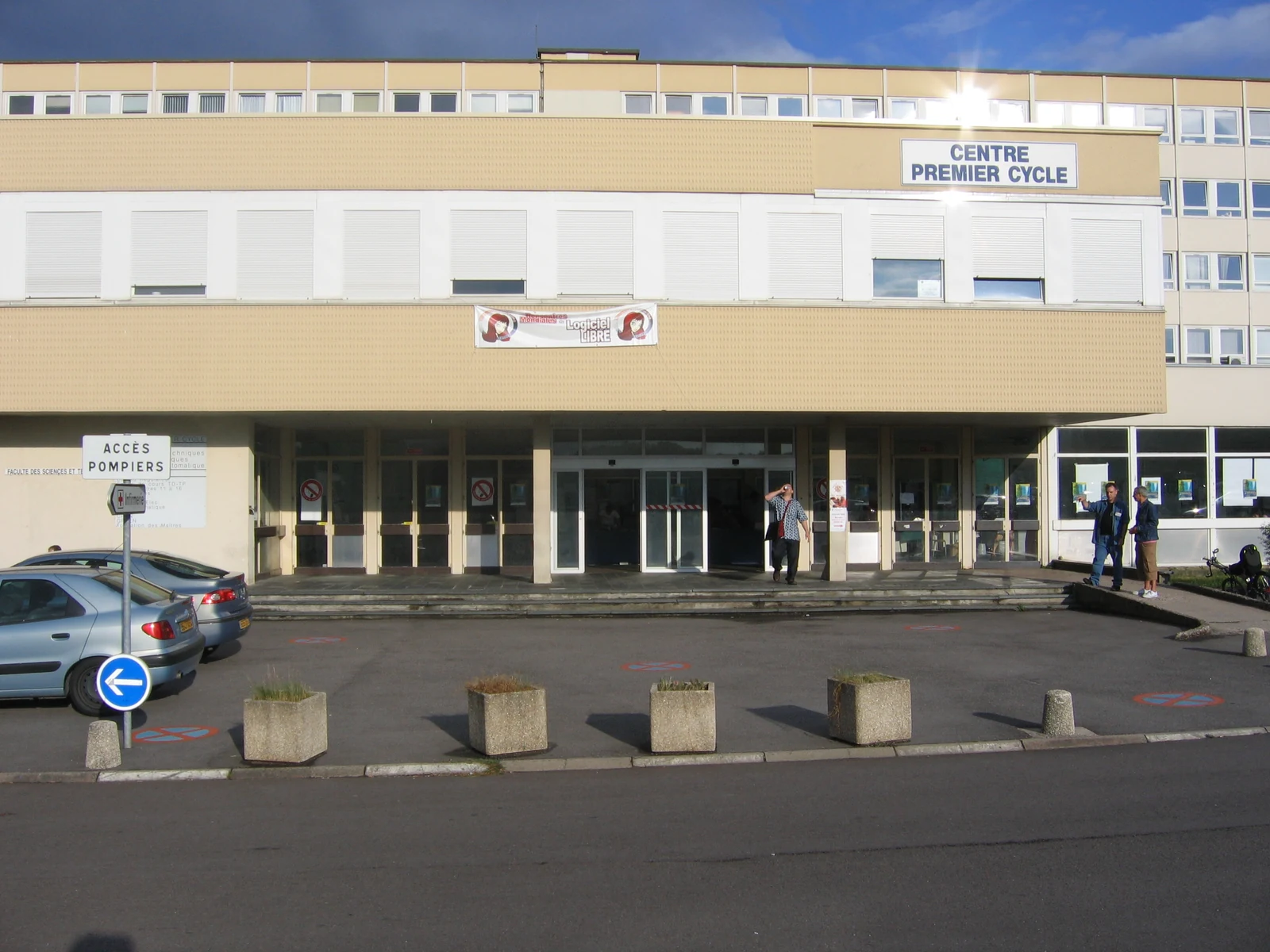
His 1989 essay was commemorative and concise. It is expert retrospective testimony rather than a neutral transcript. Dieudonné’s claim that Grothendieck solved every problem they had posed and exceeded their expectations requires comparison with the papers for exact theorem mapping. The source is strongest on mathematical significance and weaker on daily sequence.
Dieudonné’s first severe criticism, as reported by Schwartz, and later emphatic encouragement fit his criterion of consequence. He was not opposed to abstraction; Bourbaki embodied abstraction. As Schwartz presented it, he opposed generality disconnected from difficult mathematics. Grothendieck’s solutions changed his response because they demonstrated leverage.
Their later EGA collaboration does not establish perfect compatibility in Nancy. In 1949, Dieudonné was one of two mentors assessing an unknown student; the later division of conceptual and editorial labor belonged to another period.
Fellow students and the removal of exceptionalism
Paulo Ribenboim arrived in Nancy at about the same time and later recalled Grothendieck’s intensity, sparse library, and habit of reconstruction. Bernard Malgrange and Jacques-Louis Lions were among Schwartz’s students; François Bruhat and others belonged to the broader young group. Their presence matters because it places Grothendieck among peers rather than alone beneath two masters.2828Dieudonné and Schwartz, “La dualité dans les espaces (F) et (LF),” 61–101, especially concluding questions; Dieudonné, “A. Grothendieck’s Early Work (1950–1960),” 299–301; Jackson, “As If Summoned from the Void, I,” 1040–44; Schwartz, Un mathématicien aux prises avec le siècle; Laamri, Alexander Grothendieck: période 1928–1956, 69–79; Scharlau, “Who Is Alexander Grothendieck?” 931–33; Grothendieck, “Sur la complétion du dual d’un espace vectoriel localement convexe,” 605–6; Grothendieck, “Critères généraux de compacité dans les espaces vectoriels localement convexes. Pathologie des espaces (LF),” 940–41; Grothendieck, “Critères de compacité dans les espaces fonctionnels généraux,” 168–86; Nicolas Bourbaki, “Sur certains espaces vectoriels topologiques,” 5–16.
Each peer followed a different trajectory: Lions in partial differential equations, Malgrange in analysis and differential systems, Bruhat in representation theory and analysis, and Ribenboim in number theory. Nancy’s seminar created crossings among these routes. Grothendieck’s productivity did not turn the others into supporting characters.
Ribenboim later remembered looking up to Grothendieck and described Schwartz as encouraging ordinary friendship. The recollection does not support a general claim about work habits.
Peer presence supplies another kind of correction. A fellow student can ask the elementary question a professor assumes away, compare notes on an exposition, or reveal that difficulty is shared. The archive records less of these exchanges than of published theorems. Their likely general function should not be converted into specific dialogue.
The problem list as a pedagogical technology
A well-chosen open problem does several things. It identifies a real gap, narrows the literature a student must learn, and creates a criterion for progress. A list creates alternatives: if one question stalls, another may expose a technique. Dieudonné and Schwartz’s fourteen questions served this function because they arose at the boundary of their own paper.2929Dieudonné and Schwartz, “La dualité dans les espaces (F) et (LF),” 61–101, especially concluding questions; Dieudonné, “A. Grothendieck’s Early Work (1950–1960),” 299–301; Jackson, “As If Summoned from the Void, I,” 1040–44; Schwartz, Un mathématicien aux prises avec le siècle; Laamri, Alexander Grothendieck: période 1928–1956, 69–79; Scharlau, “Who Is Alexander Grothendieck?” 931–33; Grothendieck, “Sur la complétion du dual d’un espace vectoriel localement convexe,” 605–6; Grothendieck, “Critères généraux de compacité dans les espaces vectoriels localement convexes. Pathologie des espaces (LF),” 940–41; Grothendieck, “Critères de compacité dans les espaces fonctionnels généraux,” 168–86; Nicolas Bourbaki, “Sur certains espaces vectoriels topologiques,” 5–16.
The list was not a neutral set of equal puzzles. Some questions may have depended on others; some sought counterexamples, others positive theorems; some were broader than the short published wording suggested. Mapping solutions requires reading the paper’s definitions and the later articles, not matching keywords.
The number fourteen quantifies the published list but can distort the work by making it sound like an examination with fixed answers. Research questions can change under solution: a counterexample may split one into several cases, and a new concept may answer many at once.
Dieudonné later emphasized new constructions in the solutions. The result was not a collection of isolated devices: examples and structures reorganized the questions and generated work beyond the list.
The pedagogical success depended on mentors risking real problems. Giving an underprepared student only remedial exercises would have tested conformity to the sequence he lacked. Giving open questions let his strongest capacity—reconstruction under uncertainty—be observed. The risk was informed by Parisian recommendations and his earlier manuscript.
A famous story examined
Schwartz’s autobiography supplies the most detailed sequence: the first paper criticized, the 1949 article, disappearance for several weeks, and return with about half the problems solved. Dieudonné’s essay supplies the larger interval: all their problems in less than a year. Jackson interviewed participants and synthesized these accounts. Laamri later assembled testimony with exact chronological anchors.3030Dieudonné and Schwartz, “La dualité dans les espaces (F) et (LF),” 61–101, especially concluding questions; Dieudonné, “A. Grothendieck’s Early Work (1950–1960),” 299–301; Jackson, “As If Summoned from the Void, I,” 1040–44; Schwartz, Un mathématicien aux prises avec le siècle; Laamri, Alexander Grothendieck: période 1928–1956, 69–79; Scharlau, “Who Is Alexander Grothendieck?” 931–33; Grothendieck, “Sur la complétion du dual d’un espace vectoriel localement convexe,” 605–6; Grothendieck, “Critères généraux de compacité dans les espaces vectoriels localement convexes. Pathologie des espaces (LF),” 940–41; Grothendieck, “Critères de compacité dans les espaces fonctionnels généraux,” 168–86; Nicolas Bourbaki, “Sur certains espaces vectoriels topologiques,” 5–16.
Each timing claim retains its attribution: Schwartz supplied the interval of some weeks for the first group of solutions, while Dieudonné supplied the limit of less than a year for the full series. The publications corroborate rapid output but do not turn two memoirs into a daily log.
The differences are productive. They suggest stages rather than contradiction: a first group of solutions after weeks, then completion and expansion during the year. They also caution against treating “the fourteen” as one packet returned complete. The more exact story is mathematically richer because it permits methods to develop over time.
Exact dates of the first submissions can eventually refine the sequence. The CRAS volume and page numbers fix publication; Academy presentation dates may fix announcements; letters may mention results before print. Until those records are integrated, month-level narrative should remain spare.
Without an unsupported scene of the hand-over, the paper, its definitions, and the publication record remain the documentary anchors.
CNRS support and the category “researcher”
From the 1950 academic year Grothendieck held support as an attaché de recherches at the CNRS, according to Laamri’s reconstruction and corroborating biographies. The position functioned more like fixed-term research support than a permanent university post. It provided time for work while leaving the long-term employment problem unresolved.3131Dieudonné and Schwartz, “La dualité dans les espaces (F) et (LF),” 61–101, especially concluding questions; Dieudonné, “A. Grothendieck’s Early Work (1950–1960),” 299–301; Jackson, “As If Summoned from the Void, I,” 1040–44; Schwartz, Un mathématicien aux prises avec le siècle; Laamri, Alexander Grothendieck: période 1928–1956, 69–79; Scharlau, “Who Is Alexander Grothendieck?” 931–33; Grothendieck, “Sur la complétion du dual d’un espace vectoriel localement convexe,” 605–6; Grothendieck, “Critères généraux de compacité dans les espaces vectoriels localement convexes. Pathologie des espaces (LF),” 940–41; Grothendieck, “Critères de compacité dans les espaces fonctionnels généraux,” 168–86; Nicolas Bourbaki, “Sur certains espaces vectoriels topologiques,” 5–16.
The title marked an institutional change. In Montpellier he had been a scholarship student; in Paris he had attended advanced teaching with aid while his formal ENS designation remained unverified; in Nancy he now held a research designation. Publication and mentor advocacy were being converted into professional status.3232Laamri, Alexander Grothendieck: période 1928–1956, 69–79; Grothendieck, “Sur la complétion du dual d’un espace vectoriel localement convexe,” 605–6.
Statelessness remained relevant, while the CNRS support did not provide a permanent career. The precise connection among citizenship rules, appointment eligibility, naturalization, and military service still requires legal and archival verification and is not stated here as fact.3333Dieudonné and Schwartz, “La dualité dans les espaces (F) et (LF),” 61–101, especially concluding questions; Dieudonné, “A. Grothendieck’s Early Work (1950–1960),” 299–301; Jackson, “As If Summoned from the Void, I,” 1040–44; Schwartz, Un mathématicien aux prises avec le siècle; Laamri, Alexander Grothendieck: période 1928–1956, 69–79; Scharlau, “Who Is Alexander Grothendieck?” 931–33; Grothendieck, “Sur la complétion du dual d’un espace vectoriel localement convexe,” 605–6; Grothendieck, “Critères généraux de compacité dans les espaces vectoriels localement convexes. Pathologie des espaces (LF),” 940–41; Grothendieck, “Critères de compacité dans les espaces fonctionnels généraux,” 168–86; Nicolas Bourbaki, “Sur certains espaces vectoriels topologiques,” 5–16.
Research funding also affected thesis timing. Dieudonné later wrote that the early papers already reached dissertation quality; continuing support nevertheless allowed Grothendieck to pursue a larger problem while no permanent position awaited. The delay was not evidence that the first work was insufficient; it created the conditions for the tensor-product thesis.
Institutional categories do not measure mathematical quality, but they determine salary, visa options, and time.
The first notes as a public style
The 1950 CRAS notes are concise to the point of severity. Their titles name general criteria and pathologies; their pages announce results in compressed form. The contrast with the dense Montpellier manuscript is instructive. Public format imposed a limit, a literature, and readers who already knew the problem.3434Dieudonné and Schwartz, “La dualité dans les espaces (F) et (LF),” 61–101, especially concluding questions; Dieudonné, “A. Grothendieck’s Early Work (1950–1960),” 299–301; Jackson, “As If Summoned from the Void, I,” 1040–44; Schwartz, Un mathématicien aux prises avec le siècle; Laamri, Alexander Grothendieck: période 1928–1956, 69–79; Scharlau, “Who Is Alexander Grothendieck?” 931–33; Grothendieck, “Sur la complétion du dual d’un espace vectoriel localement convexe,” 605–6; Grothendieck, “Critères généraux de compacité dans les espaces vectoriels localement convexes. Pathologie des espaces (LF),” 940–41; Grothendieck, “Critères de compacité dans les espaces fonctionnels généraux,” 168–86; Nicolas Bourbaki, “Sur certains espaces vectoriels topologiques,” 5–16.
A two-page note cannot reproduce every proof. It establishes a claim and date, often with indications. Full exposition may follow elsewhere. This publication culture rewards the ability to separate theorem from derivation and central result from technical support.
Grothendieck would later become associated with extremely long treatments. His early bibliography shows he could also write within compressed forms. The two modes served different purposes. Announcements secured communication; memoirs and monographs built the machinery.
The theorem papers and Récoltes et Semailles answer different questions. A mathematical paper is primary evidence for what it proves but weak evidence for private motive; the memoir is primary evidence for later self-understanding and indirect evidence for exact early chronology.
Hanka in Nancy
Later sources place Hanka in Nancy, and the published thesis later carried a German dedication to her. These public facts do not establish her health, household income, or other private circumstances. Repeated secondary accounts of intimate and family matters lack the contemporaneous independent support required for direct statement here.3535Dieudonné and Schwartz, “La dualité dans les espaces (F) et (LF),” 61–101, especially concluding questions; Dieudonné, “A. Grothendieck’s Early Work (1950–1960),” 299–301; Jackson, “As If Summoned from the Void, I,” 1040–44; Schwartz, Un mathématicien aux prises avec le siècle; Laamri, Alexander Grothendieck: période 1928–1956, 69–79; Scharlau, “Who Is Alexander Grothendieck?” 931–33; Grothendieck, “Sur la complétion du dual d’un espace vectoriel localement convexe,” 605–6; Grothendieck, “Critères généraux de compacité dans les espaces vectoriels localement convexes. Pathologie des espaces (LF),” 940–41; Grothendieck, “Critères de compacité dans les espaces fonctionnels généraux,” 168–86; Nicolas Bourbaki, “Sur certains espaces vectoriels topologiques,” 5–16.
A different meaning of independence
At Montpellier independence meant selecting a question without a local research community. At Nancy it meant solving a problem without the mentors knowing the answer. The second form depended more, not less, on community. Dieudonné and Schwartz defined the frontier; journals and seminars tested the result; peers learned the language together.3636Dieudonné and Schwartz, “La dualité dans les espaces (F) et (LF),” 61–101, especially concluding questions; Dieudonné, “A. Grothendieck’s Early Work (1950–1960),” 299–301; Jackson, “As If Summoned from the Void, I,” 1040–44; Schwartz, Un mathématicien aux prises avec le siècle; Laamri, Alexander Grothendieck: période 1928–1956, 69–79; Scharlau, “Who Is Alexander Grothendieck?” 931–33; Grothendieck, “Sur la complétion du dual d’un espace vectoriel localement convexe,” 605–6; Grothendieck, “Critères généraux de compacité dans les espaces vectoriels localement convexes. Pathologie des espaces (LF),” 940–41; Grothendieck, “Critères de compacité dans les espaces fonctionnels généraux,” 168–86; Nicolas Bourbaki, “Sur certains espaces vectoriels topologiques,” 5–16.
This is a mature form of autonomy. The problem is socially certified as open, while the route remains the researcher’s. Recognition then returns through people capable of evaluating the proof. None of the three stages—selection, construction, evaluation—can be removed without changing what research means.
Grothendieck retained his reconstructive habit. Ribenboim remembered few books and intense independent work. But the same habit now operated inside a map. If he rebuilt a known lemma, mentors could say so quickly. If he found a new example, they could locate its consequence. Solitude became a phase in a feedback cycle rather than a complete ecology.
The transformation also changed credit. His answers were published under his name because they were new. The mentors received historical credit for the problems and program. Later summaries sometimes make their inability into a foil for the student’s success, although identifying deep and soluble questions was itself mathematical work.
Toward the tensor question
By spring 1951 the early duality and compactness results had established more than enough for a conventional dissertation. Schwartz instead proposed a problem about placing topologies on tensor products. He later remembered doing so before leaving for a summer in Brazil and receiving first a disappointed letter, then a triumphant one. The exact letters should be located before their language is quoted.3737Dieudonné and Schwartz, “La dualité dans les espaces (F) et (LF),” 61–101, especially concluding questions; Dieudonné, “A. Grothendieck’s Early Work (1950–1960),” 299–301; Jackson, “As If Summoned from the Void, I,” 1040–44; Schwartz, Un mathématicien aux prises avec le siècle; Laamri, Alexander Grothendieck: période 1928–1956, 69–79; Scharlau, “Who Is Alexander Grothendieck?” 931–33; Grothendieck, “Sur la complétion du dual d’un espace vectoriel localement convexe,” 605–6; Grothendieck, “Critères généraux de compacité dans les espaces vectoriels localement convexes. Pathologie des espaces (LF),” 940–41; Grothendieck, “Critères de compacité dans les espaces fonctionnels généraux,” 168–86; Nicolas Bourbaki, “Sur certains espaces vectoriels topologiques,” 5–16.
The shift followed the mathematics. Bilinear forms on correspond algebraically to linear maps on . For topological vector spaces and , the problem is to choose a topology on that makes continuous bilinear maps correspond to continuous linear maps. More than one reasonable answer exists, and the gap between them encodes classes of operators.
Schwartz’s kernel theorem and distribution spaces made the question consequential. A kernel is naturally an object on a product, while an operator sends functions of one variable to functions or distributions of another. Tensor products provide a language joining those views. This was not generalization without application.
The first attempt was difficult enough for discouragement, according to Schwartz’s later account. Then the fundamental ideas appeared in summer 1951. That work belongs to Chapter 18. Nancy closes at the moment when solutions to a mentor’s list have grown into a subject large enough to require new language.
The theorem and the counterexample
Grothendieck’s early strength appeared in two complementary forms. A theorem identifies conditions under which structure behaves well. A counterexample shows that removing a condition breaks the conclusion. General theory needs both because the space between them reveals the right category.
Suppose one hopes that an inductive limit of complete spaces is complete. The statement is too broad. The inclusions, bounded sets, and topology of the limit matter. A counterexample does more than destroy hope; it tells the theorist which behavior escaped control. One may then impose strictness, regularity, or another property and prove a corrected theorem.
This method differs from patching exceptions one by one. The aim is to name a structural hypothesis that explains all the good examples and excludes the bad construction for a reason. Barrelled, bornological, Montel, Schwartz, and DF conditions emerged in this atmosphere of classification by theorem-bearing properties.
The word “pathology” can encourage a misleading contrast between normal spaces and monsters. Some counterexamples are deliberately intricate, but their role is ordinary: they test the reach of a definition. In infinite-dimensional analysis, finite-dimensional expectations are often the pathology. The counterexample teaches which intuition was provincial.
Grothendieck’s willingness to build general constructions suited this work. An independently trained mathematician may be less attached to the canonical examples that support an expected theorem. That is a plausible advantage at the level of method; no source shows a conscious strategy of outsider iconoclasm. The publications, not psychology, establish the constructions.
Open mapping as a test case
The Banach open mapping theorem states that a surjective continuous linear map between Banach spaces is open. Consequently, a bijective continuous linear map has continuous inverse. Fréchet spaces admit an analogous theorem. The result turns algebraic surjectivity plus topological completeness into control of neighborhoods.
Without the completeness and Baire-category setting, surjective continuous linear maps need not be open. Inductive limits and duals require refined hypotheses. The Nancy group studied which categories retained the foundational theorems of Banach analysis.
The ordinary intuition is that a complete space cannot be squeezed surjectively onto another complete space without images of neighborhoods retaining interior. It is only intuition. The proof uses Baire category, and “complete” by itself outside a suitable metrizable or category setting may not yield the same theorem.
The closed graph theorem provides a related test. Under Banach or Fréchet hypotheses, a linear map whose graph is closed is continuous. In broader locally convex categories, the domain and codomain require webbed, barrelled, ultrabornological, or other conditions in later theory. Each extension asks which structural property carries the proof.
These theorems show why generality was not decorative. Analysts needed to know whether maps defined by differential equations, transforms, or duality were continuous and invertible. A category supporting open mapping and closed graph results was a working environment, not a taxonomy cabinet.
Reading the first papers forward, not backward
Later Grothendieck transformed algebraic geometry, and surveys often interpret every early construction as evidence of the same mature vision. The Nancy papers should first be read within functional analysis. Their objects are locally convex spaces, duals, compact sets, bounded sets, completions, and operators. Their contemporaneous interlocutors are Dieudonné, Schwartz, Bourbaki, Mackey, Köthe, and Banach-space theory.3838Dieudonné and Schwartz, “La dualité dans les espaces (F) et (LF),” 61–101, especially concluding questions; Dieudonné, “A. Grothendieck’s Early Work (1950–1960),” 299–301; Jackson, “As If Summoned from the Void, I,” 1040–44; Schwartz, Un mathématicien aux prises avec le siècle; Laamri, Alexander Grothendieck: période 1928–1956, 69–79; Scharlau, “Who Is Alexander Grothendieck?” 931–33; Grothendieck, “Sur la complétion du dual d’un espace vectoriel localement convexe,” 605–6; Grothendieck, “Critères généraux de compacité dans les espaces vectoriels localement convexes. Pathologie des espaces (LF),” 940–41; Grothendieck, “Critères de compacité dans les espaces fonctionnels généraux,” 168–86; Nicolas Bourbaki, “Sur certains espaces vectoriels topologiques,” 5–16.
There are real continuities: general definitions, categorical behavior, stability under constructions, and attention to universal properties. But these were also features of the mathematical culture he joined. It is historically unsafe to label each one uniquely “Grothendieckian” before determining what came from the field, mentors, or his own extension.
Dieudonné’s later judgment that the work already displayed the generality of the future is valuable as retrospective expert interpretation. It should be paired with the paper’s local aims. A thesis can foreshadow an oeuvre without being a coded version of it.
This forward reading also preserves uncertainty. In 1951 a distinguished career in analysis was a plausible path. The tensor work would remain influential, and Grothendieck continued in the field through the mid-1950s. Algebraic geometry had not yet claimed the program.
Recognition becomes responsibility
Once mentors announced that an unknown student had solved their problems, praise created expectations. Results had to be written, hypotheses checked, and errors corrected. Other analysts would use or challenge the claims. Recognition enlarged the audience and therefore the responsibility of exposition.3939Dieudonné and Schwartz, “La dualité dans les espaces (F) et (LF),” 61–101, especially concluding questions; Dieudonné, “A. Grothendieck’s Early Work (1950–1960),” 299–301; Jackson, “As If Summoned from the Void, I,” 1040–44; Schwartz, Un mathématicien aux prises avec le siècle; Laamri, Alexander Grothendieck: période 1928–1956, 69–79; Scharlau, “Who Is Alexander Grothendieck?” 931–33; Grothendieck, “Sur la complétion du dual d’un espace vectoriel localement convexe,” 605–6; Grothendieck, “Critères généraux de compacité dans les espaces vectoriels localement convexes. Pathologie des espaces (LF),” 940–41; Grothendieck, “Critères de compacité dans les espaces fonctionnels généraux,” 168–86; Nicolas Bourbaki, “Sur certains espaces vectoriels topologiques,” 5–16.
Grothendieck’s later summary of the thesis acknowledged that exhaustive treatment had made simple ideas hard to see. This is an unusually direct statement of the expository problem produced by abundance. Solving many questions is not the same as giving readers a navigable theory.
Schwartz’s later memory of spending six months reading the dissertation shows the cost borne by a supervisor. The exact claim belongs to Chapter 18, but its premise begins here: mentorship included verification of work that rapidly outran a normal thesis scale. Encouragement did not waive review.
The community also assumed responsibility for practical continuation. Dieudonné and Schwartz sought positions abroad while no permanent French appointment had been secured for Grothendieck. The available records do not establish one legal cause for that outcome. Mathematical recognition still had to be translated into employment.4040Jackson, “As If Summoned from the Void, I,” 1040–44; Scharlau, “Who Is Alexander Grothendieck?” 931–33.
Community did not manufacture Grothendieck’s solutions, and solitude did not certify them. Problems, proofs, criticism, encouragement, publication, funding, and advocacy formed one chain. The conditions were collective even where mathematical authorship was individual.
Spring 1951
By spring 1951 the eighteen months since Grothendieck’s arrival had altered his public position. He had entered as an unevenly trained provincial graduate. He now had CNRS research support and published solutions to problems that senior mathematicians had left open. Posts and papers document the change.4141Dieudonné and Schwartz, “La dualité dans les espaces (F) et (LF),” 61–101, especially concluding questions; Dieudonné, “A. Grothendieck’s Early Work (1950–1960),” 299–301; Jackson, “As If Summoned from the Void, I,” 1040–44; Schwartz, Un mathématicien aux prises avec le siècle; Laamri, Alexander Grothendieck: période 1928–1956, 69–79; Scharlau, “Who Is Alexander Grothendieck?” 931–33; Grothendieck, “Sur la complétion du dual d’un espace vectoriel localement convexe,” 605–6; Grothendieck, “Critères généraux de compacité dans les espaces vectoriels localement convexes. Pathologie des espaces (LF),” 940–41; Grothendieck, “Critères de compacité dans les espaces fonctionnels généraux,” 168–86; Nicolas Bourbaki, “Sur certains espaces vectoriels topologiques,” 5–16.
The next problem raised the scale again. Topologizing a tensor product required combining algebraic universality with analytical continuity. Different natural topologies competed. Their equality in special spaces would explain the tractability of Schwartz’s kernels. The question joined first principles to consequence in exactly the way Dieudonné’s early criticism demanded.
It also restored difficulty. Rapid success on one list did not make every next step immediate. Schwartz remembered receiving a disappointed letter before a triumphant one. Keeping both, once the letters are verified, will prevent the harvest from appearing effortless.
Nancy supplied the mathematical structures, human responses, and institutional time through which demonstrated ability became sustained research.
注释
- Jean Dieudonné and Laurent Schwartz, “La dualité dans les espaces (F) et (LF),” Annales de l’Institut Fourier 1 (1949): 61–101, https://doi.org/10.5802/aif.8, especially concluding questions; Dieudonné, “A. Grothendieck’s Early Work (1950–1960),” 299–301; Jackson, “As If Summoned from the Void, I,” 1040–44; Laurent Schwartz, Un mathématicien aux prises avec le siècle (Odile Jacob, 1997); Laamri, Alexander Grothendieck: période 1928–1956, 69–79; Scharlau, “Who Is Alexander Grothendieck?” 931–33; Alexandre Grothendieck, “Sur la complétion du dual d’un espace vectoriel localement convexe,” Comptes rendus hebdomadaires des séances de l’Académie des sciences 230 (1950): 605–6; Alexandre Grothendieck, “Critères généraux de compacité dans les espaces vectoriels localement convexes. Pathologie des espaces (LF),” Comptes rendus hebdomadaires des séances de l’Académie des sciences 231 (1950): 940–41; Alexandre Grothendieck, “Critères de compacité dans les espaces fonctionnels généraux,” American Journal of Mathematics 74, no. 1 (1952): 168–86, https://doi.org/10.2307/2372076; Nicolas Bourbaki, “Sur certains espaces vectoriels topologiques,” Annales de l’Institut Fourier 2 (1950): 5–16, https://doi.org/10.5802/aif.16. ↩
- Dieudonné and Schwartz, “La dualité dans les espaces (F) et (LF),” 61–101, especially concluding questions; Dieudonné, “A. Grothendieck’s Early Work (1950–1960),” 299–301; Jackson, “As If Summoned from the Void, I,” 1040–44; Schwartz, Un mathématicien aux prises avec le siècle; Laamri, Alexander Grothendieck: période 1928–1956, 69–79; Scharlau, “Who Is Alexander Grothendieck?” 931–33; Grothendieck, “Sur la complétion du dual d’un espace vectoriel localement convexe,” 605–6; Grothendieck, “Critères généraux de compacité dans les espaces vectoriels localement convexes. Pathologie des espaces (LF),” 940–41; Grothendieck, “Critères de compacité dans les espaces fonctionnels généraux,” 168–86; Nicolas Bourbaki, “Sur certains espaces vectoriels topologiques,” 5–16. ↩
- Dieudonné and Schwartz, “La dualité dans les espaces (F) et (LF),” 61–101, especially concluding questions; Dieudonné, “A. Grothendieck’s Early Work (1950–1960),” 299–301; Jackson, “As If Summoned from the Void, I,” 1040–44; Schwartz, Un mathématicien aux prises avec le siècle; Laamri, Alexander Grothendieck: période 1928–1956, 69–79; Scharlau, “Who Is Alexander Grothendieck?” 931–33; Grothendieck, “Sur la complétion du dual d’un espace vectoriel localement convexe,” 605–6; Grothendieck, “Critères généraux de compacité dans les espaces vectoriels localement convexes. Pathologie des espaces (LF),” 940–41; Grothendieck, “Critères de compacité dans les espaces fonctionnels généraux,” 168–86; Nicolas Bourbaki, “Sur certains espaces vectoriels topologiques,” 5–16. ↩
- Dieudonné and Schwartz, “La dualité dans les espaces (F) et (LF),” 61–101, especially concluding questions; Dieudonné, “A. Grothendieck’s Early Work (1950–1960),” 299–301; Jackson, “As If Summoned from the Void, I,” 1040–44; Schwartz, Un mathématicien aux prises avec le siècle; Laamri, Alexander Grothendieck: période 1928–1956, 69–79; Scharlau, “Who Is Alexander Grothendieck?” 931–33; Grothendieck, “Sur la complétion du dual d’un espace vectoriel localement convexe,” 605–6; Grothendieck, “Critères généraux de compacité dans les espaces vectoriels localement convexes. Pathologie des espaces (LF),” 940–41; Grothendieck, “Critères de compacité dans les espaces fonctionnels généraux,” 168–86; Nicolas Bourbaki, “Sur certains espaces vectoriels topologiques,” 5–16. ↩
- Dieudonné and Schwartz, “La dualité dans les espaces (F) et (LF),” 61–101, especially concluding questions; Dieudonné, “A. Grothendieck’s Early Work (1950–1960),” 299–301; Jackson, “As If Summoned from the Void, I,” 1040–44; Schwartz, Un mathématicien aux prises avec le siècle; Laamri, Alexander Grothendieck: période 1928–1956, 69–79; Scharlau, “Who Is Alexander Grothendieck?” 931–33; Grothendieck, “Sur la complétion du dual d’un espace vectoriel localement convexe,” 605–6; Grothendieck, “Critères généraux de compacité dans les espaces vectoriels localement convexes. Pathologie des espaces (LF),” 940–41; Grothendieck, “Critères de compacité dans les espaces fonctionnels généraux,” 168–86; Nicolas Bourbaki, “Sur certains espaces vectoriels topologiques,” 5–16. ↩
- Dieudonné and Schwartz, “La dualité dans les espaces (F) et (LF),” 61–101, especially concluding questions; Dieudonné, “A. Grothendieck’s Early Work (1950–1960),” 299–301; Jackson, “As If Summoned from the Void, I,” 1040–44; Schwartz, Un mathématicien aux prises avec le siècle; Laamri, Alexander Grothendieck: période 1928–1956, 69–79; Scharlau, “Who Is Alexander Grothendieck?” 931–33; Grothendieck, “Sur la complétion du dual d’un espace vectoriel localement convexe,” 605–6; Grothendieck, “Critères généraux de compacité dans les espaces vectoriels localement convexes. Pathologie des espaces (LF),” 940–41; Grothendieck, “Critères de compacité dans les espaces fonctionnels généraux,” 168–86; Nicolas Bourbaki, “Sur certains espaces vectoriels topologiques,” 5–16. ↩
- Dieudonné and Schwartz, “La dualité dans les espaces (F) et (LF),” 61–101, especially concluding questions; Dieudonné, “A. Grothendieck’s Early Work (1950–1960),” 299–301; Jackson, “As If Summoned from the Void, I,” 1040–44; Schwartz, Un mathématicien aux prises avec le siècle; Laamri, Alexander Grothendieck: période 1928–1956, 69–79; Scharlau, “Who Is Alexander Grothendieck?” 931–33; Grothendieck, “Sur la complétion du dual d’un espace vectoriel localement convexe,” 605–6; Grothendieck, “Critères généraux de compacité dans les espaces vectoriels localement convexes. Pathologie des espaces (LF),” 940–41; Grothendieck, “Critères de compacité dans les espaces fonctionnels généraux,” 168–86; Nicolas Bourbaki, “Sur certains espaces vectoriels topologiques,” 5–16. ↩
- Dieudonné and Schwartz, “La dualité dans les espaces (F) et (LF),” 61–101, especially concluding questions; Dieudonné, “A. Grothendieck’s Early Work (1950–1960),” 299–301; Jackson, “As If Summoned from the Void, I,” 1040–44; Schwartz, Un mathématicien aux prises avec le siècle; Laamri, Alexander Grothendieck: période 1928–1956, 69–79; Scharlau, “Who Is Alexander Grothendieck?” 931–33; Grothendieck, “Sur la complétion du dual d’un espace vectoriel localement convexe,” 605–6; Grothendieck, “Critères généraux de compacité dans les espaces vectoriels localement convexes. Pathologie des espaces (LF),” 940–41; Grothendieck, “Critères de compacité dans les espaces fonctionnels généraux,” 168–86; Nicolas Bourbaki, “Sur certains espaces vectoriels topologiques,” 5–16. ↩
- Dieudonné and Schwartz, “La dualité dans les espaces (F) et (LF),” 61–101, especially concluding questions; Dieudonné, “A. Grothendieck’s Early Work (1950–1960),” 299–301; Jackson, “As If Summoned from the Void, I,” 1040–44; Schwartz, Un mathématicien aux prises avec le siècle; Laamri, Alexander Grothendieck: période 1928–1956, 69–79; Scharlau, “Who Is Alexander Grothendieck?” 931–33; Grothendieck, “Sur la complétion du dual d’un espace vectoriel localement convexe,” 605–6; Grothendieck, “Critères généraux de compacité dans les espaces vectoriels localement convexes. Pathologie des espaces (LF),” 940–41; Grothendieck, “Critères de compacité dans les espaces fonctionnels généraux,” 168–86; Nicolas Bourbaki, “Sur certains espaces vectoriels topologiques,” 5–16. ↩
- Dieudonné and Schwartz, “La dualité dans les espaces (F) et (LF),” 61–101, especially concluding questions; Dieudonné, “A. Grothendieck’s Early Work (1950–1960),” 299–301; Jackson, “As If Summoned from the Void, I,” 1040–44; Schwartz, Un mathématicien aux prises avec le siècle; Laamri, Alexander Grothendieck: période 1928–1956, 69–79; Scharlau, “Who Is Alexander Grothendieck?” 931–33; Grothendieck, “Sur la complétion du dual d’un espace vectoriel localement convexe,” 605–6; Grothendieck, “Critères généraux de compacité dans les espaces vectoriels localement convexes. Pathologie des espaces (LF),” 940–41; Grothendieck, “Critères de compacité dans les espaces fonctionnels généraux,” 168–86; Nicolas Bourbaki, “Sur certains espaces vectoriels topologiques,” 5–16. ↩
- Dieudonné and Schwartz, “La dualité dans les espaces (F) et (LF),” 61–101, especially concluding questions; Dieudonné, “A. Grothendieck’s Early Work (1950–1960),” 299–301; Jackson, “As If Summoned from the Void, I,” 1040–44; Schwartz, Un mathématicien aux prises avec le siècle; Laamri, Alexander Grothendieck: période 1928–1956, 69–79; Scharlau, “Who Is Alexander Grothendieck?” 931–33; Grothendieck, “Sur la complétion du dual d’un espace vectoriel localement convexe,” 605–6; Grothendieck, “Critères généraux de compacité dans les espaces vectoriels localement convexes. Pathologie des espaces (LF),” 940–41; Grothendieck, “Critères de compacité dans les espaces fonctionnels généraux,” 168–86; Nicolas Bourbaki, “Sur certains espaces vectoriels topologiques,” 5–16. ↩
- Dieudonné and Schwartz, “La dualité dans les espaces (F) et (LF),” 61–101, especially concluding questions; Dieudonné, “A. Grothendieck’s Early Work (1950–1960),” 299–301; Jackson, “As If Summoned from the Void, I,” 1040–44; Schwartz, Un mathématicien aux prises avec le siècle; Laamri, Alexander Grothendieck: période 1928–1956, 69–79; Scharlau, “Who Is Alexander Grothendieck?” 931–33; Grothendieck, “Sur la complétion du dual d’un espace vectoriel localement convexe,” 605–6; Grothendieck, “Critères généraux de compacité dans les espaces vectoriels localement convexes. Pathologie des espaces (LF),” 940–41; Grothendieck, “Critères de compacité dans les espaces fonctionnels généraux,” 168–86; Nicolas Bourbaki, “Sur certains espaces vectoriels topologiques,” 5–16. ↩
- Dieudonné and Schwartz, “La dualité dans les espaces (F) et (LF),” 61–101, especially concluding questions; Dieudonné, “A. Grothendieck’s Early Work (1950–1960),” 299–301; Jackson, “As If Summoned from the Void, I,” 1040–44; Schwartz, Un mathématicien aux prises avec le siècle; Laamri, Alexander Grothendieck: période 1928–1956, 69–79; Scharlau, “Who Is Alexander Grothendieck?” 931–33; Grothendieck, “Sur la complétion du dual d’un espace vectoriel localement convexe,” 605–6; Grothendieck, “Critères généraux de compacité dans les espaces vectoriels localement convexes. Pathologie des espaces (LF),” 940–41; Grothendieck, “Critères de compacité dans les espaces fonctionnels généraux,” 168–86; Nicolas Bourbaki, “Sur certains espaces vectoriels topologiques,” 5–16. ↩
- Dieudonné and Schwartz, “La dualité dans les espaces (F) et (LF),” 61–101, especially concluding questions; Dieudonné, “A. Grothendieck’s Early Work (1950–1960),” 299–301; Jackson, “As If Summoned from the Void, I,” 1040–44; Schwartz, Un mathématicien aux prises avec le siècle; Laamri, Alexander Grothendieck: période 1928–1956, 69–79; Scharlau, “Who Is Alexander Grothendieck?” 931–33; Grothendieck, “Sur la complétion du dual d’un espace vectoriel localement convexe,” 605–6; Grothendieck, “Critères généraux de compacité dans les espaces vectoriels localement convexes. Pathologie des espaces (LF),” 940–41; Grothendieck, “Critères de compacité dans les espaces fonctionnels généraux,” 168–86; Nicolas Bourbaki, “Sur certains espaces vectoriels topologiques,” 5–16. ↩
- Dieudonné and Schwartz, “La dualité dans les espaces (F) et (LF),” 61–101, especially concluding questions; Dieudonné, “A. Grothendieck’s Early Work (1950–1960),” 299–301; Jackson, “As If Summoned from the Void, I,” 1040–44; Schwartz, Un mathématicien aux prises avec le siècle; Laamri, Alexander Grothendieck: période 1928–1956, 69–79; Scharlau, “Who Is Alexander Grothendieck?” 931–33; Grothendieck, “Sur la complétion du dual d’un espace vectoriel localement convexe,” 605–6; Grothendieck, “Critères généraux de compacité dans les espaces vectoriels localement convexes. Pathologie des espaces (LF),” 940–41; Grothendieck, “Critères de compacité dans les espaces fonctionnels généraux,” 168–86; Nicolas Bourbaki, “Sur certains espaces vectoriels topologiques,” 5–16. ↩
- Dieudonné and Schwartz, “La dualité dans les espaces (F) et (LF),” 61–101, especially concluding questions; Dieudonné, “A. Grothendieck’s Early Work (1950–1960),” 299–301; Jackson, “As If Summoned from the Void, I,” 1040–44; Schwartz, Un mathématicien aux prises avec le siècle; Laamri, Alexander Grothendieck: période 1928–1956, 69–79; Scharlau, “Who Is Alexander Grothendieck?” 931–33; Grothendieck, “Sur la complétion du dual d’un espace vectoriel localement convexe,” 605–6; Grothendieck, “Critères généraux de compacité dans les espaces vectoriels localement convexes. Pathologie des espaces (LF),” 940–41; Grothendieck, “Critères de compacité dans les espaces fonctionnels généraux,” 168–86; Nicolas Bourbaki, “Sur certains espaces vectoriels topologiques,” 5–16. ↩
- Dieudonné and Schwartz, “La dualité dans les espaces (F) et (LF),” 61–101, especially concluding questions; Dieudonné, “A. Grothendieck’s Early Work (1950–1960),” 299–301; Jackson, “As If Summoned from the Void, I,” 1040–44; Schwartz, Un mathématicien aux prises avec le siècle; Laamri, Alexander Grothendieck: période 1928–1956, 69–79; Scharlau, “Who Is Alexander Grothendieck?” 931–33; Grothendieck, “Sur la complétion du dual d’un espace vectoriel localement convexe,” 605–6; Grothendieck, “Critères généraux de compacité dans les espaces vectoriels localement convexes. Pathologie des espaces (LF),” 940–41; Grothendieck, “Critères de compacité dans les espaces fonctionnels généraux,” 168–86; Nicolas Bourbaki, “Sur certains espaces vectoriels topologiques,” 5–16. ↩
- Dieudonné and Schwartz, “La dualité dans les espaces (F) et (LF),” 61–101, especially concluding questions; Dieudonné, “A. Grothendieck’s Early Work (1950–1960),” 299–301; Jackson, “As If Summoned from the Void, I,” 1040–44; Schwartz, Un mathématicien aux prises avec le siècle; Laamri, Alexander Grothendieck: période 1928–1956, 69–79; Scharlau, “Who Is Alexander Grothendieck?” 931–33; Grothendieck, “Sur la complétion du dual d’un espace vectoriel localement convexe,” 605–6; Grothendieck, “Critères généraux de compacité dans les espaces vectoriels localement convexes. Pathologie des espaces (LF),” 940–41; Grothendieck, “Critères de compacité dans les espaces fonctionnels généraux,” 168–86; Nicolas Bourbaki, “Sur certains espaces vectoriels topologiques,” 5–16. ↩
- Dieudonné and Schwartz, “La dualité dans les espaces (F) et (LF),” 61–101, especially concluding questions; Dieudonné, “A. Grothendieck’s Early Work (1950–1960),” 299–301; Jackson, “As If Summoned from the Void, I,” 1040–44; Schwartz, Un mathématicien aux prises avec le siècle; Laamri, Alexander Grothendieck: période 1928–1956, 69–79; Scharlau, “Who Is Alexander Grothendieck?” 931–33; Grothendieck, “Sur la complétion du dual d’un espace vectoriel localement convexe,” 605–6; Grothendieck, “Critères généraux de compacité dans les espaces vectoriels localement convexes. Pathologie des espaces (LF),” 940–41; Grothendieck, “Critères de compacité dans les espaces fonctionnels généraux,” 168–86; Nicolas Bourbaki, “Sur certains espaces vectoriels topologiques,” 5–16. ↩
- Dieudonné and Schwartz, “La dualité dans les espaces (F) et (LF),” 61–101, especially concluding questions; Dieudonné, “A. Grothendieck’s Early Work (1950–1960),” 299–301; Jackson, “As If Summoned from the Void, I,” 1040–44; Schwartz, Un mathématicien aux prises avec le siècle; Laamri, Alexander Grothendieck: période 1928–1956, 69–79; Scharlau, “Who Is Alexander Grothendieck?” 931–33; Grothendieck, “Sur la complétion du dual d’un espace vectoriel localement convexe,” 605–6; Grothendieck, “Critères généraux de compacité dans les espaces vectoriels localement convexes. Pathologie des espaces (LF),” 940–41; Grothendieck, “Critères de compacité dans les espaces fonctionnels généraux,” 168–86; Nicolas Bourbaki, “Sur certains espaces vectoriels topologiques,” 5–16. ↩
- Dieudonné and Schwartz, “La dualité dans les espaces (F) et (LF),” 61–101, especially concluding questions; Dieudonné, “A. Grothendieck’s Early Work (1950–1960),” 299–301; Jackson, “As If Summoned from the Void, I,” 1040–44; Schwartz, Un mathématicien aux prises avec le siècle; Laamri, Alexander Grothendieck: période 1928–1956, 69–79; Scharlau, “Who Is Alexander Grothendieck?” 931–33; Grothendieck, “Sur la complétion du dual d’un espace vectoriel localement convexe,” 605–6; Grothendieck, “Critères généraux de compacité dans les espaces vectoriels localement convexes. Pathologie des espaces (LF),” 940–41; Grothendieck, “Critères de compacité dans les espaces fonctionnels généraux,” 168–86; Nicolas Bourbaki, “Sur certains espaces vectoriels topologiques,” 5–16. ↩
- Dieudonné and Schwartz, “La dualité dans les espaces (F) et (LF),” 61–101, especially concluding questions; Dieudonné, “A. Grothendieck’s Early Work (1950–1960),” 299–301; Jackson, “As If Summoned from the Void, I,” 1040–44; Schwartz, Un mathématicien aux prises avec le siècle; Laamri, Alexander Grothendieck: période 1928–1956, 69–79; Scharlau, “Who Is Alexander Grothendieck?” 931–33; Grothendieck, “Sur la complétion du dual d’un espace vectoriel localement convexe,” 605–6; Grothendieck, “Critères généraux de compacité dans les espaces vectoriels localement convexes. Pathologie des espaces (LF),” 940–41; Grothendieck, “Critères de compacité dans les espaces fonctionnels généraux,” 168–86; Nicolas Bourbaki, “Sur certains espaces vectoriels topologiques,” 5–16. ↩
- Dieudonné and Schwartz, “La dualité dans les espaces (F) et (LF),” 61–101, especially concluding questions; Dieudonné, “A. Grothendieck’s Early Work (1950–1960),” 299–301; Jackson, “As If Summoned from the Void, I,” 1040–44; Schwartz, Un mathématicien aux prises avec le siècle; Laamri, Alexander Grothendieck: période 1928–1956, 69–79; Scharlau, “Who Is Alexander Grothendieck?” 931–33; Grothendieck, “Sur la complétion du dual d’un espace vectoriel localement convexe,” 605–6; Grothendieck, “Critères généraux de compacité dans les espaces vectoriels localement convexes. Pathologie des espaces (LF),” 940–41; Grothendieck, “Critères de compacité dans les espaces fonctionnels généraux,” 168–86; Nicolas Bourbaki, “Sur certains espaces vectoriels topologiques,” 5–16. ↩
- Dieudonné and Schwartz, “La dualité dans les espaces (F) et (LF),” 61–101, especially concluding questions; Dieudonné, “A. Grothendieck’s Early Work (1950–1960),” 299–301; Jackson, “As If Summoned from the Void, I,” 1040–44; Schwartz, Un mathématicien aux prises avec le siècle; Laamri, Alexander Grothendieck: période 1928–1956, 69–79; Scharlau, “Who Is Alexander Grothendieck?” 931–33; Grothendieck, “Sur la complétion du dual d’un espace vectoriel localement convexe,” 605–6; Grothendieck, “Critères généraux de compacité dans les espaces vectoriels localement convexes. Pathologie des espaces (LF),” 940–41; Grothendieck, “Critères de compacité dans les espaces fonctionnels généraux,” 168–86; Nicolas Bourbaki, “Sur certains espaces vectoriels topologiques,” 5–16. ↩
- Dieudonné and Schwartz, “La dualité dans les espaces (F) et (LF),” 61–101, especially concluding questions; Dieudonné, “A. Grothendieck’s Early Work (1950–1960),” 299–301; Jackson, “As If Summoned from the Void, I,” 1040–44; Schwartz, Un mathématicien aux prises avec le siècle; Laamri, Alexander Grothendieck: période 1928–1956, 69–79; Scharlau, “Who Is Alexander Grothendieck?” 931–33; Grothendieck, “Sur la complétion du dual d’un espace vectoriel localement convexe,” 605–6; Grothendieck, “Critères généraux de compacité dans les espaces vectoriels localement convexes. Pathologie des espaces (LF),” 940–41; Grothendieck, “Critères de compacité dans les espaces fonctionnels généraux,” 168–86; Nicolas Bourbaki, “Sur certains espaces vectoriels topologiques,” 5–16. ↩
- Dieudonné and Schwartz, “La dualité dans les espaces (F) et (LF),” 61–101, especially concluding questions; Dieudonné, “A. Grothendieck’s Early Work (1950–1960),” 299–301; Jackson, “As If Summoned from the Void, I,” 1040–44; Schwartz, Un mathématicien aux prises avec le siècle; Laamri, Alexander Grothendieck: période 1928–1956, 69–79; Scharlau, “Who Is Alexander Grothendieck?” 931–33; Grothendieck, “Sur la complétion du dual d’un espace vectoriel localement convexe,” 605–6; Grothendieck, “Critères généraux de compacité dans les espaces vectoriels localement convexes. Pathologie des espaces (LF),” 940–41; Grothendieck, “Critères de compacité dans les espaces fonctionnels généraux,” 168–86; Nicolas Bourbaki, “Sur certains espaces vectoriels topologiques,” 5–16. ↩
- Dieudonné and Schwartz, “La dualité dans les espaces (F) et (LF),” 61–101, especially concluding questions; Dieudonné, “A. Grothendieck’s Early Work (1950–1960),” 299–301; Jackson, “As If Summoned from the Void, I,” 1040–44; Schwartz, Un mathématicien aux prises avec le siècle; Laamri, Alexander Grothendieck: période 1928–1956, 69–79; Scharlau, “Who Is Alexander Grothendieck?” 931–33; Grothendieck, “Sur la complétion du dual d’un espace vectoriel localement convexe,” 605–6; Grothendieck, “Critères généraux de compacité dans les espaces vectoriels localement convexes. Pathologie des espaces (LF),” 940–41; Grothendieck, “Critères de compacité dans les espaces fonctionnels généraux,” 168–86; Nicolas Bourbaki, “Sur certains espaces vectoriels topologiques,” 5–16. ↩
- Dieudonné and Schwartz, “La dualité dans les espaces (F) et (LF),” 61–101, especially concluding questions; Dieudonné, “A. Grothendieck’s Early Work (1950–1960),” 299–301; Jackson, “As If Summoned from the Void, I,” 1040–44; Schwartz, Un mathématicien aux prises avec le siècle; Laamri, Alexander Grothendieck: période 1928–1956, 69–79; Scharlau, “Who Is Alexander Grothendieck?” 931–33; Grothendieck, “Sur la complétion du dual d’un espace vectoriel localement convexe,” 605–6; Grothendieck, “Critères généraux de compacité dans les espaces vectoriels localement convexes. Pathologie des espaces (LF),” 940–41; Grothendieck, “Critères de compacité dans les espaces fonctionnels généraux,” 168–86; Nicolas Bourbaki, “Sur certains espaces vectoriels topologiques,” 5–16. ↩
- Dieudonné and Schwartz, “La dualité dans les espaces (F) et (LF),” 61–101, especially concluding questions; Dieudonné, “A. Grothendieck’s Early Work (1950–1960),” 299–301; Jackson, “As If Summoned from the Void, I,” 1040–44; Schwartz, Un mathématicien aux prises avec le siècle; Laamri, Alexander Grothendieck: période 1928–1956, 69–79; Scharlau, “Who Is Alexander Grothendieck?” 931–33; Grothendieck, “Sur la complétion du dual d’un espace vectoriel localement convexe,” 605–6; Grothendieck, “Critères généraux de compacité dans les espaces vectoriels localement convexes. Pathologie des espaces (LF),” 940–41; Grothendieck, “Critères de compacité dans les espaces fonctionnels généraux,” 168–86; Nicolas Bourbaki, “Sur certains espaces vectoriels topologiques,” 5–16. ↩
- Dieudonné and Schwartz, “La dualité dans les espaces (F) et (LF),” 61–101, especially concluding questions; Dieudonné, “A. Grothendieck’s Early Work (1950–1960),” 299–301; Jackson, “As If Summoned from the Void, I,” 1040–44; Schwartz, Un mathématicien aux prises avec le siècle; Laamri, Alexander Grothendieck: période 1928–1956, 69–79; Scharlau, “Who Is Alexander Grothendieck?” 931–33; Grothendieck, “Sur la complétion du dual d’un espace vectoriel localement convexe,” 605–6; Grothendieck, “Critères généraux de compacité dans les espaces vectoriels localement convexes. Pathologie des espaces (LF),” 940–41; Grothendieck, “Critères de compacité dans les espaces fonctionnels généraux,” 168–86; Nicolas Bourbaki, “Sur certains espaces vectoriels topologiques,” 5–16. ↩
- Dieudonné and Schwartz, “La dualité dans les espaces (F) et (LF),” 61–101, especially concluding questions; Dieudonné, “A. Grothendieck’s Early Work (1950–1960),” 299–301; Jackson, “As If Summoned from the Void, I,” 1040–44; Schwartz, Un mathématicien aux prises avec le siècle; Laamri, Alexander Grothendieck: période 1928–1956, 69–79; Scharlau, “Who Is Alexander Grothendieck?” 931–33; Grothendieck, “Sur la complétion du dual d’un espace vectoriel localement convexe,” 605–6; Grothendieck, “Critères généraux de compacité dans les espaces vectoriels localement convexes. Pathologie des espaces (LF),” 940–41; Grothendieck, “Critères de compacité dans les espaces fonctionnels généraux,” 168–86; Nicolas Bourbaki, “Sur certains espaces vectoriels topologiques,” 5–16. ↩
- Laamri, Alexander Grothendieck: période 1928–1956, 69–79; Grothendieck, “Sur la complétion du dual d’un espace vectoriel localement convexe,” 605–6. ↩
- Dieudonné and Schwartz, “La dualité dans les espaces (F) et (LF),” 61–101, especially concluding questions; Dieudonné, “A. Grothendieck’s Early Work (1950–1960),” 299–301; Jackson, “As If Summoned from the Void, I,” 1040–44; Schwartz, Un mathématicien aux prises avec le siècle; Laamri, Alexander Grothendieck: période 1928–1956, 69–79; Scharlau, “Who Is Alexander Grothendieck?” 931–33; Grothendieck, “Sur la complétion du dual d’un espace vectoriel localement convexe,” 605–6; Grothendieck, “Critères généraux de compacité dans les espaces vectoriels localement convexes. Pathologie des espaces (LF),” 940–41; Grothendieck, “Critères de compacité dans les espaces fonctionnels généraux,” 168–86; Nicolas Bourbaki, “Sur certains espaces vectoriels topologiques,” 5–16. ↩
- Dieudonné and Schwartz, “La dualité dans les espaces (F) et (LF),” 61–101, especially concluding questions; Dieudonné, “A. Grothendieck’s Early Work (1950–1960),” 299–301; Jackson, “As If Summoned from the Void, I,” 1040–44; Schwartz, Un mathématicien aux prises avec le siècle; Laamri, Alexander Grothendieck: période 1928–1956, 69–79; Scharlau, “Who Is Alexander Grothendieck?” 931–33; Grothendieck, “Sur la complétion du dual d’un espace vectoriel localement convexe,” 605–6; Grothendieck, “Critères généraux de compacité dans les espaces vectoriels localement convexes. Pathologie des espaces (LF),” 940–41; Grothendieck, “Critères de compacité dans les espaces fonctionnels généraux,” 168–86; Nicolas Bourbaki, “Sur certains espaces vectoriels topologiques,” 5–16. ↩
- Dieudonné and Schwartz, “La dualité dans les espaces (F) et (LF),” 61–101, especially concluding questions; Dieudonné, “A. Grothendieck’s Early Work (1950–1960),” 299–301; Jackson, “As If Summoned from the Void, I,” 1040–44; Schwartz, Un mathématicien aux prises avec le siècle; Laamri, Alexander Grothendieck: période 1928–1956, 69–79; Scharlau, “Who Is Alexander Grothendieck?” 931–33; Grothendieck, “Sur la complétion du dual d’un espace vectoriel localement convexe,” 605–6; Grothendieck, “Critères généraux de compacité dans les espaces vectoriels localement convexes. Pathologie des espaces (LF),” 940–41; Grothendieck, “Critères de compacité dans les espaces fonctionnels généraux,” 168–86; Nicolas Bourbaki, “Sur certains espaces vectoriels topologiques,” 5–16. ↩
- Dieudonné and Schwartz, “La dualité dans les espaces (F) et (LF),” 61–101, especially concluding questions; Dieudonné, “A. Grothendieck’s Early Work (1950–1960),” 299–301; Jackson, “As If Summoned from the Void, I,” 1040–44; Schwartz, Un mathématicien aux prises avec le siècle; Laamri, Alexander Grothendieck: période 1928–1956, 69–79; Scharlau, “Who Is Alexander Grothendieck?” 931–33; Grothendieck, “Sur la complétion du dual d’un espace vectoriel localement convexe,” 605–6; Grothendieck, “Critères généraux de compacité dans les espaces vectoriels localement convexes. Pathologie des espaces (LF),” 940–41; Grothendieck, “Critères de compacité dans les espaces fonctionnels généraux,” 168–86; Nicolas Bourbaki, “Sur certains espaces vectoriels topologiques,” 5–16. ↩
- Dieudonné and Schwartz, “La dualité dans les espaces (F) et (LF),” 61–101, especially concluding questions; Dieudonné, “A. Grothendieck’s Early Work (1950–1960),” 299–301; Jackson, “As If Summoned from the Void, I,” 1040–44; Schwartz, Un mathématicien aux prises avec le siècle; Laamri, Alexander Grothendieck: période 1928–1956, 69–79; Scharlau, “Who Is Alexander Grothendieck?” 931–33; Grothendieck, “Sur la complétion du dual d’un espace vectoriel localement convexe,” 605–6; Grothendieck, “Critères généraux de compacité dans les espaces vectoriels localement convexes. Pathologie des espaces (LF),” 940–41; Grothendieck, “Critères de compacité dans les espaces fonctionnels généraux,” 168–86; Nicolas Bourbaki, “Sur certains espaces vectoriels topologiques,” 5–16. ↩
- Dieudonné and Schwartz, “La dualité dans les espaces (F) et (LF),” 61–101, especially concluding questions; Dieudonné, “A. Grothendieck’s Early Work (1950–1960),” 299–301; Jackson, “As If Summoned from the Void, I,” 1040–44; Schwartz, Un mathématicien aux prises avec le siècle; Laamri, Alexander Grothendieck: période 1928–1956, 69–79; Scharlau, “Who Is Alexander Grothendieck?” 931–33; Grothendieck, “Sur la complétion du dual d’un espace vectoriel localement convexe,” 605–6; Grothendieck, “Critères généraux de compacité dans les espaces vectoriels localement convexes. Pathologie des espaces (LF),” 940–41; Grothendieck, “Critères de compacité dans les espaces fonctionnels généraux,” 168–86; Nicolas Bourbaki, “Sur certains espaces vectoriels topologiques,” 5–16. ↩
- Dieudonné and Schwartz, “La dualité dans les espaces (F) et (LF),” 61–101, especially concluding questions; Dieudonné, “A. Grothendieck’s Early Work (1950–1960),” 299–301; Jackson, “As If Summoned from the Void, I,” 1040–44; Schwartz, Un mathématicien aux prises avec le siècle; Laamri, Alexander Grothendieck: période 1928–1956, 69–79; Scharlau, “Who Is Alexander Grothendieck?” 931–33; Grothendieck, “Sur la complétion du dual d’un espace vectoriel localement convexe,” 605–6; Grothendieck, “Critères généraux de compacité dans les espaces vectoriels localement convexes. Pathologie des espaces (LF),” 940–41; Grothendieck, “Critères de compacité dans les espaces fonctionnels généraux,” 168–86; Nicolas Bourbaki, “Sur certains espaces vectoriels topologiques,” 5–16. ↩
- Jackson, “As If Summoned from the Void, I,” 1040–44; Scharlau, “Who Is Alexander Grothendieck?” 931–33. ↩
- Dieudonné and Schwartz, “La dualité dans les espaces (F) et (LF),” 61–101, especially concluding questions; Dieudonné, “A. Grothendieck’s Early Work (1950–1960),” 299–301; Jackson, “As If Summoned from the Void, I,” 1040–44; Schwartz, Un mathématicien aux prises avec le siècle; Laamri, Alexander Grothendieck: période 1928–1956, 69–79; Scharlau, “Who Is Alexander Grothendieck?” 931–33; Grothendieck, “Sur la complétion du dual d’un espace vectoriel localement convexe,” 605–6; Grothendieck, “Critères généraux de compacité dans les espaces vectoriels localement convexes. Pathologie des espaces (LF),” 940–41; Grothendieck, “Critères de compacité dans les espaces fonctionnels généraux,” 168–86; Nicolas Bourbaki, “Sur certains espaces vectoriels topologiques,” 5–16. ↩