A house on fire
In the English text published by Queen’s University in 1971, Alexander Grothendieck answered a criticism already directed at his antimilitary appeal. Why act before identifying the true economic and political causes? His reply was an image rather than a theory: “If your house is on fire, the first thing to do is drench it with water—the analysis of true causes is for later.” The sentence did not deny causes. It ranked tasks. A scientist who condemned the military should first stop accepting its support; otherwise analysis could become the respectable form of delay.
He immediately qualified the reach of that action. Individual non-collaboration was “merely a preliminary to more radical action.” Its practical effect might be slight; its psychological effect was to release a person from a relation that weakened opposition. Effective action would need coordination, persistence, and expansion beyond a few consciences. The qualification is crucial. Grothendieck’s politics in 1970 did not amount to a belief that moral purity would extinguish an army. It began from the claim that an opposition financed by what it opposed had surrendered part of its capacity.
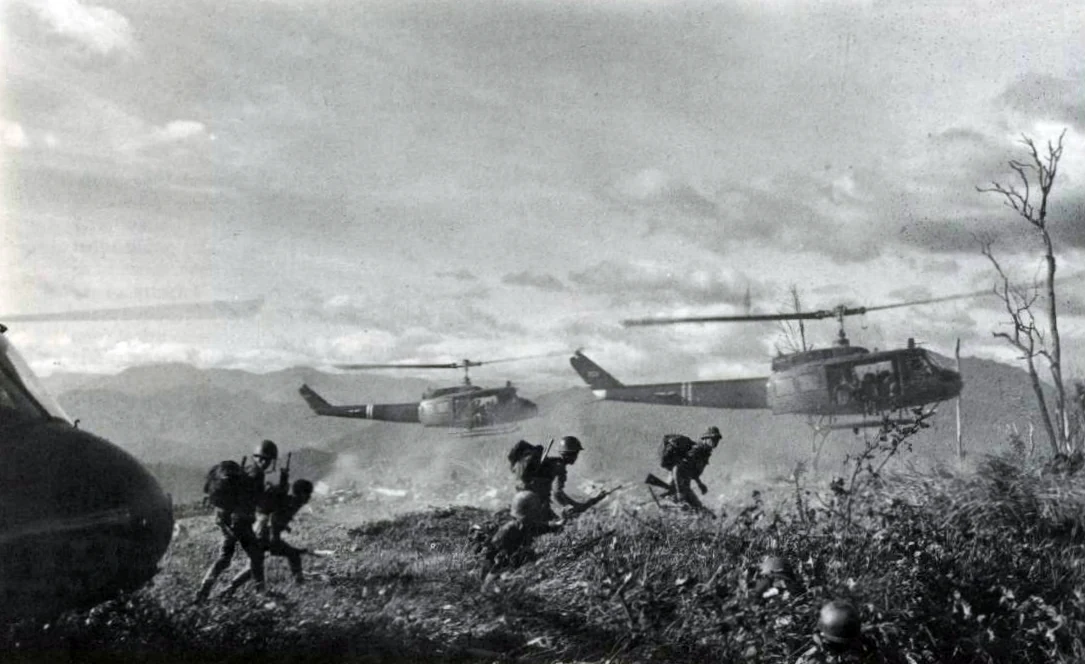
The fire in this first argument was military. Grothendieck spoke after a quarter-century marked by Hiroshima and Nagasaki, atmospheric tests, thermonuclear weapons, colonial wars, and a Vietnam War in which advanced research had been organized around surveillance, defoliation, antipersonnel weapons, aircraft, and communications. He had seen North Vietnam under bombardment in 1967. He had learned that his own institute received military-origin funds. The object of refusal was the apparatus connecting scientific prestige and labor to organized violence.
Civil nuclear energy did not yet occupy the same place in his June 1970 address. It would move there over the next two years through the journal’s contacts with radiation critics, the first large protests around reactor sites, and a campaign over radioactive waste at Saclay. Later summaries often compress this sequence into a single antinuclear conversion. That compression loses the historical work by which a stand against bombs became a critique of an energy system.
No straight line from Hiroshima to a reactor
The bomb supplied an overwhelming moral image. It was designed to release destructive energy in an instant against human beings. A power reactor was designed to sustain a controlled process and deliver electricity. To invoke Hiroshima in every reactor debate could illuminate a shared nuclear history and collapse distinct technologies into fear. Survivre did both at different moments.11Grothendieck, “The Responsibility of the Scientist Today”; Pessis, “Les années 1968 et la science: Survivre … et Vivre, des mathématiciens critiques à l’origine de l’écologisme,” 64–69.
The political connection was stronger than visual analogy. States developed nuclear expertise through military and civil programs that exchanged people, institutions, and materials. The authority accumulated by weapons science could be rehabilitated through peaceful use; the capacity built by civil industry could affect proliferation. In France, the force de frappe and state electricity program belonged to one national project of technical independence even where their facilities and purposes differed.22Sezin Topçu, “Les physiciens dans le mouvement antinucléaire: Entre science, expertise et politique,” Cahiers d’histoire. Revue d’histoire critique, no. 102 (2007), https://journals.openedition.org/chrhc/214.
The health connection also had distinct pathways. Bomb tests and attacks produced intense and dispersed exposures; reactors raised questions about workers, routine releases, accidents, and waste. Ionizing radiation connected them biologically without making dose or consequence equal. Campaigners who treated any radiation as one undifferentiated threat could obscure the information needed to protect people.33Survivre … et vivre, no. 6; Survivre … et vivre, no. 7; Survivre … et vivre, no. 8; Survivre … et vivre, no. 14; Survivre … et vivre, no. 15.
Nonviolence supplied another bridge. The same communities and activists who opposed nuclear weapons often resisted plants because both depended on centralized state power and imposed risk without consent. Conscientious objection extended from refusing military service to refusing a technological order organized through command. This was a political genealogy, not a proof from reactor physics.44Pessis, “Les années 1968 et la science: Survivre … et Vivre, des mathématiciens critiques à l’origine de l’écologisme,” 64–69; Valéry Bordois, “Anti-Nuclear Activist Circulations in 1970s Europe,” in Encyclopédie d’histoire Numérique de l’Europe (EHNE) (Sorbonne Université), https://ehne.fr/en/encyclopedia/themes/ecology-and-environment/ideas-actors-and-political-practices/anti-nuclear-activist-circulations-in-1970s-europe.
The transition mattered strategically. Weapons opposition could seek disarmament while leaving electricity policy unchanged. Civil antinuclear politics had to answer employment, energy demand, regional development, and alternative supply. It entered domestic comfort and industrial planning in a way a ban on bombs did not. The movement needed allies beyond pacifism.55Pessis, “Les années 1968 et la science: Survivre … et Vivre, des mathématiciens critiques à l’origine de l’écologisme,” 23–30; Topçu, “Les physiciens dans le mouvement antinucléaire: Entre science, expertise et politique”.
The language of Grothendieck’s published interventions broadened alongside those alliances. In 1970 the army was the most flagrant moral object. By 1972 industrial centralization and expert dependence appeared more fundamental to the analysis. The bomb remained a warning and ceased to be the whole explanation.66Grothendieck, “Responsabilité du savant dans le monde d’aujourd’hui”; Grothendieck, “The Responsibility of the Scientist Today”; Grothendieck, “Comment je suis devenu militant ?”; Survivre … et vivre, no. 14.
Keeping this sequence prevents retrospective prophecy. He did not discover the complete ecological meaning of nuclear power in one insight at IHÉS. Journal contributors, local committees, American radiation critics, union records, and public arguments built the connection. His role was to generalize and amplify, sometimes beyond what the evidence could bear.77Survivre … et vivre, no. 6; Survivre … et vivre, no. 7; Survivre … et vivre, no. 8; Survivre … et vivre, no. 9; Survivre … et vivre, no. 10; Survivre … et vivre, no. 11; Survivre … et vivre, no. 12; Survivre … et vivre, no. 14; Survivre … et vivre, no. 15; Pessis, “Les années 1968 et la science: Survivre … et Vivre, des mathématiciens critiques à l’origine de l’écologisme”.
It also prevents a false separation. Once the civil program was examined, military history could not simply be declared irrelevant. The proper historical statement is neither reactors are bombs nor peaceful and military atoms have nothing to do with one another. It is that the movements, institutions, materials, and risks overlapped in specific ways that became objects of political choice.88Survivre … et vivre, no. 14, pp. 13–18; Topçu, “Les physiciens dans le mouvement antinucléaire: Entre science, expertise et politique”.
The atom’s two careers
After 1945 governments and nuclear institutions distinguished the military atom from the peaceful atom. Reactors promised electricity, research, medical isotopes, industrial modernity, and national technical competence. The distinction answered the moral shadow of the bomb by giving nuclear knowledge a constructive career. In France it also existed alongside an independent nuclear force and a state-led technological program. The same word—atomique, later often nucléaire—could therefore invoke annihilation or progress depending on its setting.99Topçu, “Les physiciens dans le mouvement antinucléaire: Entre science, expertise et politique”.
Opponents challenged the separation at several levels. Civil and military programs shared institutions, expertise, materials, and prestige. Reactor fuel cycles could produce plutonium, although the technical suitability and path to weapons varied. Public authorities responsible for promoting nuclear development also spoke as authorities on its safety. Wastes and routine releases raised questions about exposure extending beyond the plant. Finally, the need for specialized knowledge made decisions difficult for the people living beside proposed sites.
These objections were not one claim. A weapons connection could be opposed even if a reactor met a safety standard. A centralized bureaucracy could be criticized even if its engineers were honest. A health risk could be reduced without changing who decided. Conversely, evidence that civilian and military programs were historically linked did not establish every prediction of catastrophe. Survivre’s later editorial assembled these arguments into one political refusal, but a biography must keep their evidentiary levels distinct.
The journal’s language also shifted from atomic energy to nuclear industry. The second phrase made scale and organization visible. It was not one laboratory or one reactor but a chain of mines, fuel preparation, construction, operation, waste, transport, regulation, finance, and public information. To oppose the industry was to oppose a direction of development, rather than fear a machine. That broader object enabled the editorial claim that technical improvement alone would not satisfy the movement.1010Survivre … et vivre, no. 14, pp. 13–18.
The rhetoric of inevitability
Nuclear development was commonly presented not as one political option among others but as the necessary answer to growing demand. Electricity use would rise; fossil resources were finite or imported; modern economies required abundant power; therefore reactors would be built. Within this sequence, public discussion began after the decisive assumptions. Citizens could be asked where to place a plant, how to compensate a locality, or what safety margin to require, but not whether demand should grow or which activities deserved power.
Survivre attacked the sequence at its first verb. Demand was not a natural quantity arriving from outside society. Housing design, transport, industrial policy, advertising, prices, working time, domestic appliances, military production, and urban form all helped produce it. Forecasts could become self-fulfilling when institutions built capacity on their basis and then organized life to consume that capacity. To question a reactor was therefore to question the future embedded in a demand curve.
This argument challenged a powerful meaning of progress in postwar France. Electrification, industrial planning, and technical education had accompanied real improvements in comfort, health, mobility, and security. People who had experienced scarcity could reasonably hear a critique of energy growth as a wish to reserve comfort for those who already possessed it. The nuclear program also carried a promise of national independence and collective competence. It cannot be understood only as deception imposed by engineers.
The journal’s reply was that more production did not automatically distribute power or well-being. A society could grow richer in energy and poorer in control over work, place, and time. Benefits could be general while hazards were concentrated among workers, test-site populations, mining regions, or future generations. The question was not whether electricity had uses; it was why one pattern of use had been made the measure of development.
Here ecology altered antimilitarism. An army could be opposed as an institution visibly organized for violence. An electricity system entered homes and hospitals as well as industry. Refusal had to account for goods that people valued rather than only expose an evil purpose. The categorical tone of no. 14 sometimes bypassed that difficulty, but the surrounding articles on solar heat, food, and small technologies attempted a positive answer: reduce forced demand and meet remaining needs through systems people could understand and influence.
The alternative was more program than demonstrated capacity. Solar thermal devices could heat water or buildings; they did not in 1972 supply a complete industrial energy system. Local production could reduce dependence without eliminating grids. Survivre’s technical optimism about light methods was as selective as the official optimism it criticized. Its durable intervention was not a proven replacement plan. It was the refusal of inevitability as a substitute for consent.
That refusal changed the burden of argument. Officials could no longer answer every objection by saying that modern life required expansion. They had to show which life, which forecast, which risks, and which alternatives were being assumed. Activists, in turn, had to confront the material expectations that gave the program legitimacy. The antinuclear controversy became a dispute over social imagination before it became a dispute over reactor numbers.1111Survivre … et vivre, no. 14; Topçu, “Les physiciens dans le mouvement antinucléaire: Entre science, expertise et politique”.
Before the mass marches
In 1970 French opposition to civil nuclear power was scattered. Jean Pignero’s Association for Protection against Ionizing Radiation, Daniel Parker, Georges Krassovsky’s small publication, communities of nonviolence, and the Committee for the Safeguarding of Fessenheim and the Rhine Plain were among the early voices. Pierre Fournier used his pages in Charlie Hebdo to give them reach. Their arguments were often refused by larger newspapers and broadcasters on the ground that the speakers lacked competence.1212Pessis, “Les années 1968 et la science: Survivre … et Vivre, des mathématiciens critiques à l’origine de l’écologisme,” 23–26, 143–45.
Survivre offered space before it possessed a settled nuclear position. No. 5 printed material on radioactive pollution and the American Atomic Energy Commission. No. 6 carried further discussion and Parker’s challenge to the nuclear industry. No. 8 translated or summarized American work by John Gofman and Arthur Tamplin contesting exposure standards. These articles gave readers technical claims, bibliographies, organizations, and dates as well as political language. This sequence, read with Pessis’s media comparison, indicates that the journal was among the small outlets offering sustained space to early critics.1313Survivre … et vivre, no. 6; Survivre … et vivre, no. 7; Survivre … et vivre, no. 8; Pessis, “Les années 1968 et la science: Survivre … et Vivre, des mathématiciens critiques à l’origine de l’écologisme,” 23–26.
Topçu’s later history of physicists in French antinuclear politics helps set a boundary around this role. The larger scientific mobilizations associated with the Appeal of the 400 and GSIEN belonged to a later phase. Survivre’s 1970–1972 interventions preceded that consolidation and combined technical information with a stronger attack on expertise itself. The sequence does not make Survivre the organizational source of every later scientists’ group; it places the journal among the earlier sites in which the political role of scientific competence was contested.1414Topçu, “Les physiciens dans le mouvement antinucléaire: Entre science, expertise et politique”.
The American material mattered because nuclear risk had been debated there through institutional science itself. Gofman and Tamplin had credentials and experience within the American nuclear establishment. Their criticism could answer the claim that only ignorance produced opposition. Yet reliance on credentialed dissenters created a dilemma. If a famous scientist’s signature was needed to make residents audible, the hierarchy of expertise remained intact. Survivre used such authority while beginning to criticize the need for it.
The technical claims require caution. Radiation risk depends on dose, route, timing, population, model, and uncertainty. Early campaign literature sometimes moved rapidly from contested standards to dramatic totals. It correctly insisted that permissible did not mean harmless and that low-dose effects involved political judgments about acceptable risk. But an account cannot turn every number printed in an activist journal into settled fact. The historical fact is that these reports equipped a movement and altered what French readers could ask.
Fessenheim, April 12, 1971
On April 12, 1971, about a thousand people joined a march against the proposed nuclear plant at Fessenheim in Alsace; later activist accounts give fifteen hundred. It is often identified as the first large French demonstration against civil nuclear power. The location mattered. Along the Rhine, French, West German, and Swiss projects placed populations inside a shared geography that national regulation could not contain. Information and activists crossed borders from the first major action.1515Bordois, “Anti-Nuclear Activist Circulations in 1970s Europe”.
There is no evidence in the available record that Grothendieck attended, and the chapter does not put him in the crowd. His importance lay elsewhere: the journal helped relay calls, contacts, and arguments; his name could assist an appeal to the press; the movement linked the site campaign to a criticism of science. The distinction protects both accuracy and political proportion. Local residents and regional organizers did not require a Paris mathematician to make their opposition real.
Fessenheim also demonstrated that antinuclear politics was not born as a national organization with a single doctrine. Defense of a locality, cross-border solidarity, concern about radiation, regional identity, nonviolence, and opposition to central planning could converge without becoming the same motive. Brochures circulated findings from American scientists beside European material. A few foreign participants joined. By December, organizations from several countries met in Strasbourg and attempted a European federation. The movement was local and transnational at once.1616Bordois, “Anti-Nuclear Activist Circulations in 1970s Europe”.
For Survivre this model was attractive because it seemed to enact the desired decentralization. A committee rooted beside a proposed plant could learn, organize, and communicate laterally. But localism had limits. A national electricity system, state finance, and international technology could not be altered by one village alone. The journal’s network tried to connect places without making Paris their command. It never fully solved the scale problem.
The fête at Bugey
The gathering at Bugey on July 10, 1971, joined protest to the form of a fête and sought to help constitute a French ecological movement around opposition to the plant. Survivre publicized the event. In no. 8, Grothendieck’s article argues that its form left too many people spectators rather than participants.
That criticism reveals the criterion that would later dominate the journal. An action could fail even with a large attendance if a platform reproduced the division between performers and audience. Speeches could deliver correct information while leaving listeners dependent. A fête could consume an ecological message as entertainment. The article calls for local committees and speech rooted in participants’ own conditions. The event’s immediate technical goal and its internal relations had to be judged together.
The standard was demanding and could become ungenerous. Large gatherings need organization; newcomers often listen before they act; a speech can provide information unavailable locally. A person who had spent decades holding audiences through intellectual authority was not well placed to declare spectatorship abolished. Yet the criticism was not cynical. It grew from a real attempt to prevent ecological politics from becoming another speciality administered by speakers.
After Bugey, local committees multiplied. The movement’s bulletin listed contacts by region and reported actions. The journal did not command them. Some sought counter-expertise, some nonviolent direct action, some public education. The plurality would become important at Saclay, where workers, union representatives, nearby residents, scientists, journalists, and Survivre participants encountered the same waste through different kinds of knowledge.
Nine names in Le Monde
In the spring of 1971 Grothendieck sought prominent scientific support for a public warning about nuclear plants. A notice published by Le Monde on June 16 carries nine names, among them Grothendieck, Alain Hervé, Daniel Parker, Jean Pignero, Pierre Samuel, Roger Godement, Étienne Wolff, Ségolène Aboulker, and Esther Peter-Davis. Four were directly associated with Survivre. The notice appeared beside a larger presentation of reactor danger. The newspaper item has been checked here through Pessis’s exact citation, not used for a direct quotation.
The appeal used reputation deliberately. If outlets dismissed Parker or Pignero as non-experts, the names of professors and scientists could force a hearing. This was a tactical answer to exclusion. It was also what the journal would later call a scientific guarantee: a recognized person lending credibility to people presumed unable to possess it. Grothendieck and Samuel were initially more willing than younger radicals to use that guarantee.1717Pessis, “Les années 1968 et la science: Survivre … et Vivre, des mathématiciens critiques à l’origine de l’écologisme,” 143–51.
The contradiction was not resolved by refusing famous signatures. Public debate was already structured by unequal access; withdrawing the signature might restore silence rather than equality. Nor was it resolved by adding more experts, since dueling authorities could leave residents as spectators of a technical contest. Survivre moved between the two tactics: it circulated scientific criticism and attacked the political monopoly of scientists. That movement was not simple inconsistency. It suggests the absence of a public institution in which technical knowledge and democratic judgment could meet without one swallowing the other.
Four nuclear questions
The period’s polemics frequently merged four questions. Weapons release energy through rapid nuclear reactions and are designed to destroy. Power reactors sustain controlled fission to produce heat and electricity; their ordinary operation, accident pathways, and safeguards require analysis specific to reactor design. Fuel cycles and wastes involve mining, processing, spent fuel, reprocessing in some systems, transport, and materials that remain hazardous across very different timescales. Ionizing radiation can damage tissue and genetic material; risk depends on type and dose as well as exposure route and population.
These questions are connected institutionally and materially, but no one answer settles the others. A reactor can be opposed for political centralization even if an accident estimate is revised downward. A person can oppose weapons while accepting civil power. A waste-management failure does not prove that every reactor will explode. A statement about average dose does not decide whether exposing a population without meaningful consent is just. Keeping the distinctions prevents both official reassurance and activist alarm from substituting one claim for another.
The movement’s strongest democratic point concerned the transition from calculation to decision. Engineers can estimate probabilities and doses under assumptions. They cannot derive from physics alone which risk is acceptable, whose livelihood may be disrupted, how far into the future an obligation extends, or whether an energy demand should be met. Those questions require knowledge and politics. Calling them technical removes values from view; calling all technique ideology removes information needed to act.
In public, Grothendieck repeatedly asked audiences to identify hidden assumptions and challenge the authority of formal argument. He was not a reactor physicist, radiobiologist, or waste engineer. He sometimes spoke beyond his competence, as he freely admitted in other settings. His public role did not depend on becoming a substitute nuclear expert. It depended on asking why competence had been converted into exclusive political authority.
The drums at Saclay
The Saclay nuclear research center stood near the universities and institutions in which many Survivre participants worked. Radioactive waste drums had accumulated on the plateau over decades. In 1972 information circulated that some drums were cracked or otherwise inadequately protected. Numbers changed as internal inspections and reports distinguished the much larger stock from the subset presenting visible problems. Survivre’s later issue spoke of eighteen thousand drums in total; the chapter preserves that as the journal’s allegation, not an independently audited count of damaged containers.1818Survivre … et vivre, no. 14, pp. 2–12; Pessis, “Les années 1968 et la science: Survivre … et Vivre, des mathématiciens critiques à l’origine de l’écologisme,” 25–26.
An April 1972 discussion involving Grothendieck and Guedj helped bring the matter before scientists at Saclay. The journal later described them as surprised by the existence and condition of the stores. A union representative on a health and safety committee pursued questions; different estimates followed. The issue was therefore not discovered by two visiting mathematicians walking onto a waste site. It emerged through workers, committee procedures, documents, and a campaign that Survivre amplified.1919Survivre … et vivre, no. 14, pp. 2–12.
The distinction matters because the journal opposed the image of the heroic expert while its later memory could create heroic whistle-blowers. Workers who handled materials, union delegates, technicians, and nearby residents possessed situated knowledge. Administrators controlled access and official statements. Activists connected the local facts to the public. Journalists carried the story nationally. No single actor owned the disclosure.
In September a public information meeting at Bures-sur-Yvette circulated documents and pressed the center’s response. The campaign visited nearby residents and distributed material. The journal examined containment and the indifference or hesitation encountered in apartment stairwells. That attention to response distinguished a political campaign from a technical report. People could live beside a risk and still have work, family, trust, fatigue, and uncertainty that made mobilization unlikely.
By October national outlets had taken up the affair. Pessis identifies coverage in Le Nouvel Observateur, Politique-Hebdo, and Le Monde, an RTL report, and reassuring interventions from health, environmental, and nuclear authorities. Survivre no. 14 narrated the sequence as an attempt to break silence. The attention was a success, but causation should not be monopolized: the story traveled because internal reports, union action, activist publication, and media interest converged.
How a fact becomes a scandal
A cracked container is a material condition. A scandal is a public relation constructed around it. The Saclay campaign had to show that the condition was not an isolated maintenance problem already contained by normal procedure. It connected the drums to secrecy, divided responsibility, long-lived waste, occupational hierarchy, and official claims of control. The connection made a technical defect evidence about an institution.
That construction could be accused of exaggeration. Administrators could say that inspectors had identified a bounded problem, that radioactivity outside containers remained within limits, or that activists confused the existence of waste with immediate public danger. Activists could reply that the problem was known late, disclosed reluctantly, or evaluated by the same organization responsible for it. Each side disputed measurements and the proper frame, which could encompass several cracked drums, a storage policy, the whole fuel cycle, or industrial society.
Survivre favored the widest frame. Its issue moves from committee documents to satire, local response, national media, and the political purpose of nuclear development. Widening the frame revealed relations that a maintenance report excluded. It also risked making every defect proof of the entire critique. A responsible history must preserve the widening as political work without adopting it as automatic inference.
The press played a constitutive role. A matter inside a health and safety committee became national when editors judged it intelligible and timely. The presence of Grothendieck’s name, the visibility of ecological controversy, and official anxiety about public confidence all helped. Media attention did not simply transmit a complete scandal discovered elsewhere. Headlines, images, interviews, and rebuttals selected its meaning. Survivre treated mass media as both necessary amplifier and system of simplification.
Official reassurance also made the controversy. A ministerial statement or a televised expert could calm some viewers and confirm others’ suspicion that authority was closing ranks. Technical language intended to clarify could appear evasive if underlying documents remained inaccessible. Conversely, activist sarcasm could harden institutional defensiveness. Trust was produced through the interaction, not stored permanently in a credential.
The campaign’s visits to nearby homes confronted another assumption: that exposure to information naturally produces action. Residents could hear the claims and remain unconvinced, busy, resigned, or dependent on the research center. Survivre’s reports sometimes read indifference as evidence of conditioning by consumer society. That diagnosis underestimated ordinary reasons for caution. People asked whether the messengers were accurate, whether participation would change anything, and what conflict might cost.
At Nice, Grothendieck’s report recorded only a few formal adhesions. At Saclay, information again did not produce immediate collective action. A fact does not command a public by its truth alone. People require relationships, confidence, time, and a plausible form of action. The movement’s growing attention to debate and local speech addressed that gap.2020Survivre … et vivre, nos. 2–3; Survivre … et vivre, no. 14.
Scandal, then, was neither manufactured from nothing nor simply uncovered. It was the form through which a hidden or normalized condition became contestable. The form had ethical obligations: distinguish total stock from damaged stock, preserve uncertainty, credit workers and committees, and permit correction. The movement met those obligations unevenly. Its success in breaking silence made precision more, not less, necessary.
Work, unions, and exposure
Saclay made the workplace visible inside environmental politics. Public discussion often treated the population as residents outside a plant and experts as scientists inside. Workers crossed that line. They could receive exposure, know procedures, depend on the institution for wages, and be represented by unions committed to both employment and safety. Subcontracted or immigrant workers could occupy the most vulnerable positions while remaining least visible in professional debate.
Survivre’s relations with organized labor were uneasy. Communist and CGT traditions often defended scientific and industrial development as the basis of social progress, provided it served the people rather than capital. Ecological critics could appear to threaten jobs and national capacity. Survivre caricatured productivist union language and was in turn dismissed as petit-bourgeois. At Saclay, however, health and safety committee action was part of the evidence that made criticism possible. The relation was conflict, dependence, and potential alliance at once.
The CFDT appeared more open in some regions to ecological concerns, and Survivre participants reported conversations with its members. No simple labor/ecology opposition can therefore describe the moment. Workers asked who controlled production, while the journal asks whether some production should continue at all. A democratic antinuclear politics had to hold both questions: power within the workplace and power over the existence of the industry.
Grothendieck’s original refusal had been possible because he could leave a prestigious post and immediately enter another. The waste worker could not necessarily refuse employment. This difference did not make his act empty; it limited its universality as a prescription. At Saclay, responsibility could no longer be imagined only as the individual scientist declining a grant. It involved collective protections, access to records, freedom to speak, and the distribution of economic risk.
Three reasons
The central editorial of no. 14 asked why the group opposed nuclear energy. Its answer was deliberately broader than a safety brief and organized three groups of reasons. First, the nuclear industry was dangerous. Second, its development was closely linked to atomic armament. Third, dependence on it prevented people from becoming masters of their own lives. The three-part structure joined technical, military, and political claims.2121Survivre … et vivre, no. 14, pp. 13–18.
The editorial begins by refusing to let the discussion become exclusively technical. It does not make lowering permissible exposure limits, improving waste storage, or increasing reactor reliability its final aim. Such measures could reduce harm and therefore mattered to people facing it; the authors fear that making them the horizon would place the public back under experts. The editorial states that opposition is not conditional on the present imperfection of the technology. Even a future fusion system is included in the refusal insofar as it reproduced centralized dependence.2222Survivre … et vivre, no. 14.
That position deserves exact disagreement rather than dismissal. An engineer could reply that technologies differ, risks can be reduced, and decentralized systems also require expertise. A worker could ask what energy source would support secure material life. A climate politics developed later would change the comparison among nuclear and fossil sources. None of these later questions turns the 1972 editorial into foolishness. Its object was not a timeless ranking of carbon technologies. It was the French nuclear program as the authors encountered it: state-led, secretive, linked in history to weapons, and presented as inevitable.
The categorical refusal also had costs. If no technical improvement could alter the conclusion, then evidence seemed politically secondary. Dialogue with people who accepted nuclear power conditionally could become impossible. The editorial’s strength was to expose hidden values; its weakness was to make one set of values immune to revision. Survivre’s simultaneous demand for open debate and unconditional opposition remained a real tension.
Danger
The danger argument in no. 14 ranged across routine exposure, waste, occupational health, contamination pathways, and severe accidents. It criticized the comparison of unlike harms through one supposedly objective scale. For a person driven into illness by noise, the authors argued, noise could not be dismissed because another pollution scored higher in an expert table. This insistence on lived harm resisted a technocratic calculus that made individuals disappear into averages.
At the same time, public policy cannot avoid comparison. Resources devoted to one hazard are unavailable for another; energy systems have different effects; individual experience does not measure an invisible exposure. Survivre’s critique was strongest when it asked who selected the metric and who bore the residual harm. It was weaker when it suggested that comparison as such belonged to a dehumanizing technical mentality.
The journal’s radiation claims drew on dissident scientific work and campaign literature. Some were prescient about institutional complacency and the long-term problem of waste. Others used uncertain estimates with confidence equal to the official confidence they opposed. This chapter does not settle those scientific controversies from the bulletin. It records why technical uncertainty became politically explosive: promoters presented expansion as necessary while the people exposed had limited access to the assumptions.
Fear was not irrational in such conditions. Nor was every reassurance deception. Administrators publicly described risks as controlled; activists could overestimate them. Institutional trust depended on disclosure, independent scrutiny, and the ability to refuse—not on sincerity alone. The Saclay drums became powerful because visible deterioration contradicted an image of comprehensive control.
Weapons
The weapons argument joined history to material flow. Civil nuclear institutions had grown from wartime and postwar programs; plutonium production and expertise connected reactors to arsenals. In France the simultaneous pursuit of civil power and the force de frappe made the separation politically difficult. The editorial argues that military demand stood behind the peaceful atom and that an industrial nuclear system could not be treated as morally detached from bombs.
The connection was real without being mechanically identical. Different reactor and fuel-cycle choices have different proliferation implications. Civil electricity is not an explosion stretched over time. The strongest historical claim concerned institutions and capability: civil programs can create materials, skills, and infrastructures relevant to weapons. The political judgment concerned whether that possibility and shared origin were acceptable.
For Grothendieck, the connection returned the debate to IHÉS. A small military-origin subsidy had mattered even without a military theorem because association legitimated an apparatus. In nuclear energy, the relation was larger and more material. Supporting the civilian program could help normalize the institutions and expertise from which weapons power also drew. This continuity explains why antimilitarism remained inside the ecological turn rather than being replaced by it.
The movement also opposed French nuclear tests and gave space to voices from Polynesia. Here the geographical distribution of power was stark: metropolitan authorities asserted safety while explosions and fallout were imposed far away. The rhetoric of national independence depended on places and peoples with little control over the decision. Anticolonial and antinuclear arguments therefore met without becoming the same history.
Dependence
The third reason was the most distinctive. Nuclear power, the editorial argued, required an immense and intricate industrial superstructure beyond ordinary control. Its technical language removed speech from lay people and gave it to experts. Experts themselves performed divided tasks, depended on employers, and could be sincerely conditioned toward expansion. No conspiracy was required. Professional position and institutional purpose aligned judgment.
This analysis shifted the issue from bad experts to a system of expertise. A conscientious radiation officer could monitor compliance with limits without having authority to question the limits. A reactor specialist might know little about labor, waste, or regional planning. A committee of specialists could combine reports without creating democratic consent. Fragmentation protected each participant from responsibility for the whole.
Grothendieck’s public arguments placed this account beside his critique of scientific specialization. At the Collège de France, colleagues had argued that speaking outside one’s field led to ignorance. The nuclear debate made the cost of that rule immediate: every important question crossed fields, yet no non-specialist was authorized to hold the whole. The expert appeared indispensable and insufficient at once.
The editorial’s alternative was not technically complete. Decentralized energy, especially solar methods discussed in no. 15, seemed to permit local understanding and repair. But local systems still involve materials, standards, and unequal capacities; a national grid can express solidarity as well as control. The political value of decentralization depends on ownership, access, and decision, not scale alone. Survivre identified dependence powerfully without designing an energy system capable of replacing what it rejected.
Energy in ordinary life
Dependence was not imposed only by ministries. It was woven into habits that made central supply invisible. A switch separated the user from mines, workers, transmission lines, waste, and planning. The achievement was real: electricity arrived reliably without requiring every household to become an engineer. Survivre read the same achievement as dispossession. Convenience could remove the knowledge and collective decisions through which people might govern a necessity.
The movement’s interest in solar heat illustrates its answer. A collector made from accessible materials could expose the relation between sun, surface, water, storage, and use. Construction joined learning to provision. If a device failed, users might understand why and repair it. The point was not only cleaner energy but the recovery of competence through practice. No. 15 placed such possibilities beside the nuclear dossier, making the contrast visual and political.
Yet self-provision can transfer burdens into households and communes. Someone must maintain the collector, gather fuel, manage scarcity, and care for people when a system fails. Historically such labor is often unequal and unpaid. A public utility can socialize risk and provide universality that small property cannot. The question is not central or local in the abstract; it is which arrangement distributes labor, knowledge, benefit, and voice fairly.
Survivre’s language of mastery sometimes imagined a sovereign individual or small group capable of controlling every condition of life. Ecology itself undermines that fantasy. Watersheds, air, climate, disease, migration, and energy networks cross local boundaries. Interdependence cannot be abolished; it can be organized differently. A democratic energy system would need institutions large enough for shared problems and answerable enough for those affected.
Survivre’s movement from institutional critique toward communal autonomy thus contained an unresolved scale. Grothendieck had condemned IHÉS because a funding relation joined his work to an apparatus he could not accept. Leaving restored personal choice, but it did not determine how millions should coordinate energy. Survivre’s experiments displayed limited forms of autonomy in a device or garden. They did not by themselves solve collective provision.
This limitation does not reduce the experiments to lifestyle. A small working alternative can refute the claim that no other practice is imaginable. It can teach skills and expose hidden assumptions. Its political value depends on whether it remains a private refuge or informs wider institutions. The journal oscillated between those functions, sometimes celebrating islands of another life and sometimes seeking a movement capable of changing national choices.
The nuclear program sharpened the oscillation because it demanded decisions at long temporal and geographical scales. Waste outlived a household; an accident could cross borders; proliferation implicated states. Opposing that system through local autonomy required federations, records, and durable commitments—the forms that the radical current criticized as bureaucratic. Against the bomb, the movement encountered the necessity of institutions even as it rejected the institutions it knew.
Counter-knowledge
The group’s practical work continually restored the expertise its theory displaced. It translated radiation studies, consulted geologists, printed technical explanations, compared official statements, and asked scientists to speak. No campaign over invisible contamination could proceed otherwise. The question became whether counter-expertise liberated public judgment or created a rival expert hierarchy.
One answer was to expose documents and assumptions rather than demand trust in a new authority. A technical contributor could explain how an estimate was made, what remained uncertain, and what interests shaped a standard. Residents and workers could add observations and values not contained in the model. Decision would then remain open. This ideal resembles later practices of participatory expertise, though Survivre lacked a stable procedure for it.
Another answer was more radical: refuse the premise that the public debate should be technical. The no. 14 editorial took this path. It allowed the movement to state political grounds that no improved calculation could remove. It also risked treating inconvenient evidence as beside the point. The two answers coexisted because the problem was real. Without technical knowledge the group could be dismissed and could misjudge danger; with expert authority it could reproduce the exclusion it opposed.
The productive result was not a solution but a vocabulary. Safety was shown to contain a standard, a population, a timescale, and a judgment. Need for energy was shown to contain assumptions about work, growth, housing, transport, and consumption. Competence was shown to contain institutional recognition. Once those terms were opened, officials could no longer present the program as a conclusion derived from physics alone.
Fear, courage, and the future
Survival politics worked through fear because the dangers were grave and difficult to perceive directly. Grothendieck did not disguise this. His early address struggled with the abstraction of billions of deaths and the possible end of life. In the address, he attributes inaction partly to the difficulty of feeling such a scale. The bulletin uses drawings of deformity, ruined landscapes, and machines out of control to make remote consequences present.
Fear can mobilize and disable. A person convinced that civilization will collapse within a generation may abandon patient institutions or accept an authority promising rescue. Catastrophic images can crowd out differences between possible, probable, and certain. They can also articulate a danger that official routine has normalized. The ethical question is not whether fear belongs in politics; it is whether fear remains answerable to evidence and leaves people capable of judgment.
Survivre tried to answer by joining alarm to creativity. The name change refused a movement organized only around an ending. Fêtes, cartoons, debates, gardens, and devices offered actions not dependent on confidence that the whole system would soon be won. Grothendieck wrote elsewhere that the prospect of success was not necessary for doing what was right. That conviction protected action from despair, though it could also weaken the discipline of testing whether an action achieved its stated purpose.
The antinuclear campaign made time politically difficult. Reactor promoters asked for decisions based on projected demand decades ahead. Waste required care across periods beyond ordinary institutions. Activists warned that an accident might be irreversible. Immediate democratic consent had to address futures whose inhabitants could not speak. Expertise was unavoidable because the consequences exceeded experience; humility was unavoidable because prediction could not eliminate uncertainty.
Grothendieck’s response was precautionary before the term acquired its later policy prominence: do not build a system with potentially vast and durable harms merely because specialists expect to control it. The journal went further, making centralized nuclear technology undesirable even under safer conditions. That move converted precaution into a social choice. It also made clear that no quantity of reassurance could answer a political objection to dependence.
Opponents could reasonably ask whether refusing one technology displaced harm to coal, oil, dams, or poverty. Survivre’s critique of industrial production tried to prevent that narrow substitution by reducing demand and transforming life. But the answer remained incomplete. Every energy path carried consequences, and a society could not wait for complete moral knowledge. Decision required comparison—the practice the journal sometimes distrusted.
The value of its intervention was to prevent comparison from becoming a table with no authors. Someone chose the options, boundaries, discount rates, populations, and goals. Making those choices explicit was a democratic gain. The movement’s obligation in return was to expose its own assumptions with the same severity. Its bulletins approached that reciprocity through open disagreement but did not consistently achieve it.
The historical actors did not know Chernobyl, Fukushima, or the later climate crisis. They knew Hiroshima, atmospheric tests, Vietnam, early reactor programs, visible waste failures, and a postwar faith in expansion. Their position should be judged inside that field of knowledge before later events are invoked. Hindsight can recast every warning as vindicated foresight or every mistaken deadline absurd. Both responses evade the more difficult task of following how people acted under uncertainty.
Choosing before certainty
Nuclear controversy forced a decision while evidence remained incomplete. Promoters could argue that every technology carried risk and that continued research would improve safety. Opponents could argue that building the system created facts on the ground—capital, jobs, fuel, waste, and institutional commitment—before the uncertainty was resolved. Waiting was not neutral when construction continued.
A moratorium is one political answer. It does not claim that danger has been proved beyond revision. It assigns the burden of uncertainty to expansion rather than to exposed populations. Movement discussions at the end of 1972 increasingly considered such a pause. Survivre’s collective position went further toward dismantling, but the moratorium idea shows that antinuclear politics contained conditional as well as categorical currents.
Officials faced a symmetric concern. Stopping a program could deepen dependence on other fuels, waste prior investment, or fail to meet expected demand. Those consequences were also uncertain and politically distributed. The comparison required choices about which errors were reversible. A delayed plant can later be built; long-lived waste cannot be made unproduced. A delayed energy supply can impose immediate costs; a low-probability accident may never occur. No formula removes the values in ranking them.
Grothendieck’s published rhetoric ranked irreversible danger above ordinary cost. Engineering responses often favored incremental correction because systems are always imperfect. The disagreement concerned policy under uncertainty as well as data.
Democratic procedure becomes most important where certainty is unavailable. People need access to assumptions, independent challenge, and meaningful power to alter the choice. A public meeting held after a site is fixed and contracts signed supplies information without consent. An activist demand that permits no revision supplies conviction without deliberation. Survivre criticized the first and sometimes approached the second.
The early movement’s achievement was to make uncertainty speakable against official inevitability. Its obligation was to avoid presenting every unknown as confirmation of catastrophe. The journal’s mixture of technical dossiers, cartoons, reports, and internal criticism shows both practices. It invited readers to distrust authority and occasionally asked them to trust the movement’s own synthesis.
Against the bomb, caution had an undeniable object: weapons were designed for destruction. Against civil power, caution had to navigate benefits, substitute harms, probabilities, and political form. The transition between the two made Grothendieck’s refusal more ambitious and less demonstrable. That was not a reason to silence it. It was a reason the lecture had to become a debate.
A movement larger than one participant
Grothendieck’s contribution to the antinuclear movement was brief and intense. He wrote, edited, signed appeals, organized discussions, and placed his prestige at the service of publicity. His challenge to expert monopoly helped connect nuclear opposition to a wider democratic critique. He did not originate the local struggles, supply the principal radiation research, or build the organizations that sustained French antinuclear politics for decades.
Pignero, Parker, Fournier, Samuel, regional committees, Rhine activists, workers, and many others occupy that history. Samuel in particular continued long after Grothendieck’s regular involvement declined. Treating the mathematician as the singular origin of French ecology would reproduce the hierarchy the movement contested. Treating him as a tourist in politics would ignore the labor, conflict, and public effect documented in the bulletins.
His political stance also changed through the campaign. In June 1970 refusal meant leaving military patronage. By late 1972 it meant opposing an entire industry even under improved technical conditions. Between those positions stood events: Fessenheim, Bugey, the attempt to enter the press, the Saclay drums, debates with physicists, and the editorial arguments of a changing collective. The shift was not an inevitable unfolding of one conscience. It was made in contact with a movement.
On January 27, 1972, before no. 14 appeared, Grothendieck carried these questions into CERN. He began by teasing the name of the European center and then connected advanced research, weapons, and the proliferation of nuclear plants. The audience did not remain silent. Scientists challenged his generalization, defended medicine and knowledge, and asked what CERN’s work had to do with war. The movement against the bomb had reached a citadel of research, but the form of the encounter mattered as much as the thesis. The next chapter enters that room.
注释
- Grothendieck, “The Responsibility of the Scientist Today”; Pessis, “Les années 1968 et la science: Survivre … et Vivre, des mathématiciens critiques à l’origine de l’écologisme,” 64–69. ↩
- Sezin Topçu, “Les physiciens dans le mouvement antinucléaire: Entre science, expertise et politique,” Cahiers d’histoire. Revue d’histoire critique, no. 102 (2007), https://journals.openedition.org/chrhc/214. ↩
- Survivre … et vivre, no. 6; Survivre … et vivre, no. 7; Survivre … et vivre, no. 8; Survivre … et vivre, no. 14; Survivre … et vivre, no. 15. ↩
- Pessis, “Les années 1968 et la science: Survivre … et Vivre, des mathématiciens critiques à l’origine de l’écologisme,” 64–69; Valéry Bordois, “Anti-Nuclear Activist Circulations in 1970s Europe,” in Encyclopédie d’histoire Numérique de l’Europe (EHNE) (Sorbonne Université), https://ehne.fr/en/encyclopedia/themes/ecology-and-environment/ideas-actors-and-political-practices/anti-nuclear-activist-circulations-in-1970s-europe. ↩
- Pessis, “Les années 1968 et la science: Survivre … et Vivre, des mathématiciens critiques à l’origine de l’écologisme,” 23–30; Topçu, “Les physiciens dans le mouvement antinucléaire: Entre science, expertise et politique”. ↩
- Grothendieck, “Responsabilité du savant dans le monde d’aujourd’hui”; Grothendieck, “The Responsibility of the Scientist Today”; Grothendieck, “Comment je suis devenu militant ?”; Survivre … et vivre, no. 14. ↩
- Survivre … et vivre, no. 6; Survivre … et vivre, no. 7; Survivre … et vivre, no. 8; Survivre … et vivre, no. 9; Survivre … et vivre, no. 10; Survivre … et vivre, no. 11; Survivre … et vivre, no. 12; Survivre … et vivre, no. 14; Survivre … et vivre, no. 15; Pessis, “Les années 1968 et la science: Survivre … et Vivre, des mathématiciens critiques à l’origine de l’écologisme”. ↩
- Survivre … et vivre, no. 14, pp. 13–18; Topçu, “Les physiciens dans le mouvement antinucléaire: Entre science, expertise et politique”. ↩
- Topçu, “Les physiciens dans le mouvement antinucléaire: Entre science, expertise et politique”. ↩
- Survivre … et vivre, no. 14, pp. 13–18. ↩
- Survivre … et vivre, no. 14; Topçu, “Les physiciens dans le mouvement antinucléaire: Entre science, expertise et politique”. ↩
- Pessis, “Les années 1968 et la science: Survivre … et Vivre, des mathématiciens critiques à l’origine de l’écologisme,” 23–26, 143–45. ↩
- Survivre … et vivre, no. 6; Survivre … et vivre, no. 7; Survivre … et vivre, no. 8; Pessis, “Les années 1968 et la science: Survivre … et Vivre, des mathématiciens critiques à l’origine de l’écologisme,” 23–26. ↩
- Topçu, “Les physiciens dans le mouvement antinucléaire: Entre science, expertise et politique”. ↩
- Bordois, “Anti-Nuclear Activist Circulations in 1970s Europe”. ↩
- Bordois, “Anti-Nuclear Activist Circulations in 1970s Europe”. ↩
- Pessis, “Les années 1968 et la science: Survivre … et Vivre, des mathématiciens critiques à l’origine de l’écologisme,” 143–51. ↩
- Survivre … et vivre, no. 14, pp. 2–12; Pessis, “Les années 1968 et la science: Survivre … et Vivre, des mathématiciens critiques à l’origine de l’écologisme,” 25–26. ↩
- Survivre … et vivre, no. 14, pp. 2–12. ↩
- Survivre … et vivre, nos. 2–3; Survivre … et vivre, no. 14. ↩
- Survivre … et vivre, no. 14, pp. 13–18. ↩
- Survivre … et vivre, no. 14. ↩