Grothendieck gave the beginning a date. In the retrospective map of his recent work that became Esquisse d’un programme, he wrote that his interest in topological surfaces began to appear in 1974, when he proposed to Yves Ladegaillerie the isotopy study of embeddings of a topological one-complex in a compact surface. The sentence is unusually useful: it names a year, a student, an object, and a problem. It replaces the vague assertion that Grothendieck “eventually returned to mathematics” with a piece of research that could be stated on a page.11Grothendieck, “Esquisse d’un Programme,” sec. 3, p. 13; Maronne and Toën, Le temps des réflexions, 13–15, 22.
Ladegaillerie developed results beyond a routine execution of an assigned topic. In 1974 he announced a topological classification of embeddings of compact one-complexes in surfaces; in 1975 he announced an isotopy theorem; in 1976 he completed the state thesis Découpes et isotopies de surfaces topologiques. A later article, “Classes d’isotopie de plongements de 1-complexes dans les surfaces,” published the work in Topology in 1984 and cited those earlier notes and the thesis. The documentary sequence identifies him as the author of the results.22Ladegaillerie, “Découpes et isotopies de surfaces topologiques”; Ladegaillerie, “Classes d’isotopie de plongements de 1-complexes dans les surfaces”.
Grothendieck’s later account called the resulting isotopy theorem remarkable and described it as a complete algebraic characterization of isotopy classes in the setting under study. He also said that he learned key facts of surface topology while directing the thesis. The direction of instruction therefore ran both ways. The famous adviser supplied questions and characteristic generalizations; the student supplied expertise, proofs, and results that changed the adviser’s field of vision.33Grothendieck, “Esquisse d’un Programme,” sec. 3, pp. 13–15; Maronne and Toën, Le temps des réflexions, 15.
“Beginning again” should be understood at that scale. It was not a reset of mathematical capacity and not an erasure of the years before 1970. Grothendieck brought to the project a lifetime of thinking about equivalence, descent, moduli, and fundamental groups. What began again was sustained attention to an object near the ground: a finite graph drawn on a surface, and the exact conditions under which one drawing could be moved to another.44Grothendieck, “Esquisse d’un Programme,” secs. 2–3.
An accessible problem that did not stay small
A topological one-complex can be pictured as a graph: vertices joined by edges, with loops and multiple edges allowed. A compact surface can be a sphere, a torus, a surface with several handles, or a nonorientable analogue. An embedding places the graph in the surface without crossings except where edges are meant to meet at vertices. The classification problem asks when two such placements differ only by a continuous motion of the surface.55Ladegaillerie, “Découpes et isotopies de surfaces topologiques”; Ladegaillerie, “Classes d’isotopie de plongements de 1-complexes dans les surfaces”.
The phrase “continuous motion” hides a distinction. If two maps are homotopic without being isotopic, the graph may pass through itself during the deformation. If two embeddings are isotopic, every intermediate map remains an embedding. The latter relation captures the intuitive demand that a drawing be moved without cutting strands or pushing one through another. Isotopy is consequently sensitive to the way the graph sits as well as to the homotopy classes of individual cycles.
One begins with invariants. A homeomorphism between embedded graphs should preserve which vertices connect, how incident half-edges are cyclically ordered around each vertex in an oriented surface, and how the complementary regions are arranged. Loops in the graph determine elements of the surface’s fundamental group. But a list of invariants is not yet a classification theorem. One must prove that agreement of the correct algebraic data is sufficient to construct an isotopy. That sufficiency is where a visually evident question becomes difficult.
Cutting is a natural technique. If one cuts a surface along selected curves or along a regular neighborhood of the graph, the problem can be reduced to pieces with boundary. Their gluing data remembers the original embedding. Ladegaillerie’s thesis title joins the two operations—découpes and isotopies—because a controlled decomposition can turn a global motion problem into local and combinatorial ones.66Ladegaillerie, “Découpes et isotopies de surfaces topologiques”; Ladegaillerie, “Classes d’isotopie de plongements de 1-complexes dans les surfaces”.
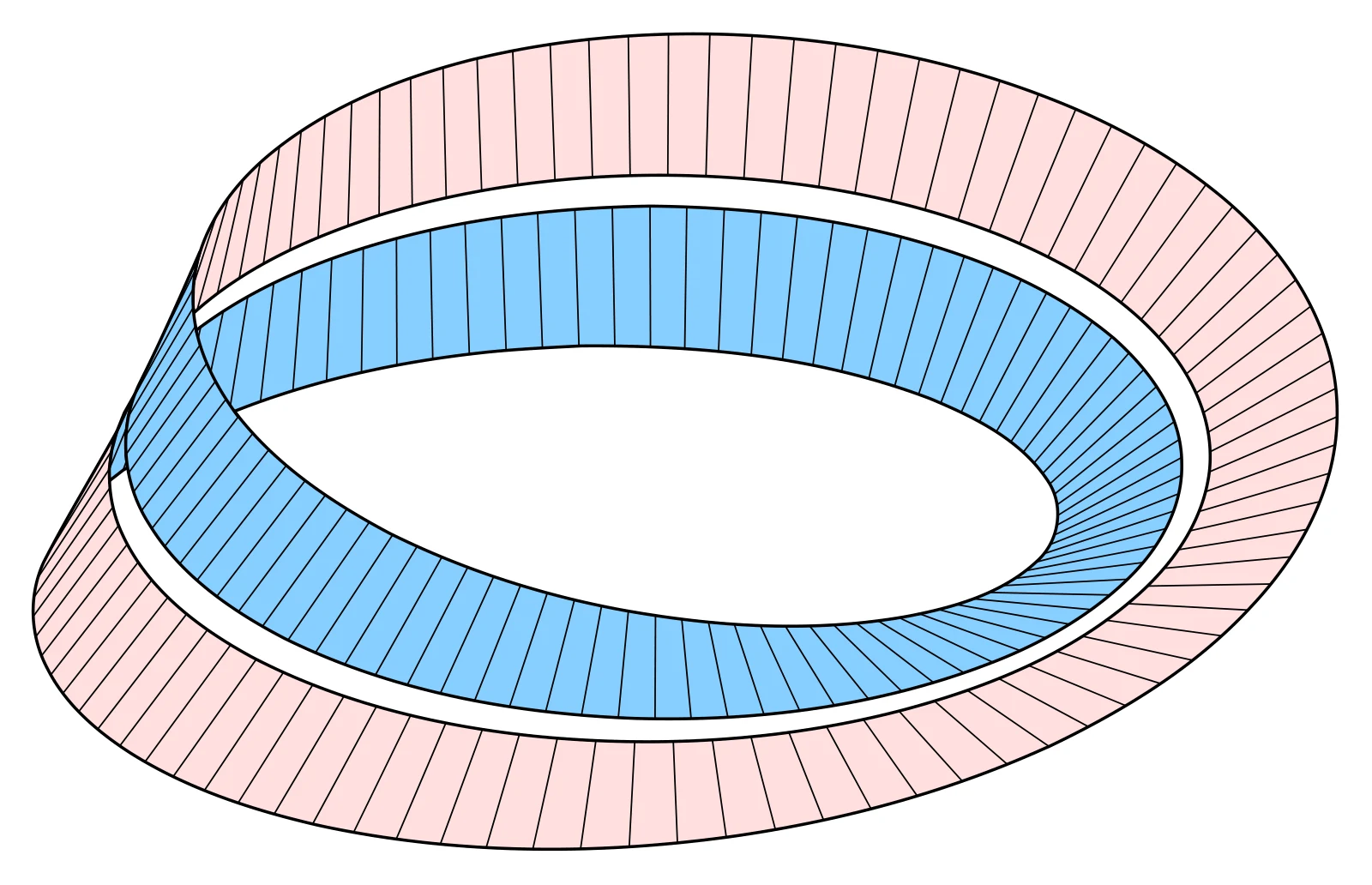
The precise theorem requires hypotheses and notation beyond this narrative window. The reliable historical claim is narrower: between 1974 and 1976 Ladegaillerie developed an algebraic description of isotopy classes for embedded one-complexes in surfaces, announced components in the Comptes rendus, and completed a state thesis under Grothendieck’s direction. It would be inaccurate to attribute every statement to the adviser or to claim that the entire subject began in Montpellier. Earlier work by Baer and Epstein formed part of the field, as Ladegaillerie’s later bibliography makes clear.77Ladegaillerie, “Découpes et isotopies de surfaces topologiques”; Ladegaillerie, “Classes d’isotopie de plongements de 1-complexes dans les surfaces”.
Grothendieck’s contribution lay less in owning the result than in the questions that gathered around it: functorial translation from topology to combinatorics, the category and morphisms appropriate to embedded graphs, retention of automorphisms, and possible moduli of embeddings. Those extensions pointed beyond a single classification theorem.
They also suited the university. The first examples required little specialized algebraic geometry. Students could manipulate curves and drawings and discover counterexamples. Yet the work demanded exact definitions and proofs. It fulfilled the pedagogical hope that a shared visual stock could become rigorous mathematics without being reduced to an exercise whose answer the teacher already knew.88Grothendieck, “Esquisse d’un Programme,” sec. 2, p. 8; Grothendieck, “En guise de programme pour le cours de C4 « Introduction à la recherche » 1978/79”; Maronne and Toën, Le temps des réflexions, 13–15.
A graph, its neighborhood, and what the complement knows
A theta-shaped graph has two vertices joined by three distinct edges. On a sphere it can be embedded so that its complement consists of three disks. A small regular neighborhood of the graph is then a sphere with three open disks removed, often called a pair of pants. The boundary circles of that neighborhood record the three complementary regions.
Place the same abstract graph on a torus. One edge may run around a meridian and another around a longitude. The cyclic order of the three half-edges at each vertex may agree with the spherical drawing, yet the complement and the induced loops in the fundamental group differ. The graph alone does not determine the embedding. One needs data about the surface around it and about how cycles travel globally.
A regular neighborhood translates part of the embedding problem into a gluing problem. The neighborhood is a surface with boundary that deformation-retracts onto the graph. The closure of its complement is another surface with boundary. Reconstructing the original surface requires matching boundary components. If two embeddings supply equivalent neighborhood and complement data with compatible boundary identifications, one can ask whether the equivalence extends to an ambient isotopy.
This method explains why cutting appears in the thesis title. Cutting simplifies a picture and exposes the interface along which local classifications must be glued. The interface has automorphisms—boundary circles can be rotated, and components can sometimes be permuted—so a set of pieces without gluing maps is insufficient.
The mapping class group of a surface enters naturally. It consists, roughly, of homeomorphisms of the surface modulo isotopy. It acts on embeddings of a graph. Two drawings may be related by a homeomorphism of the surface but not by an isotopy starting from the identity. Thus “same up to a change of coordinates” and “same by continuous motion within the fixed surface” are different equivalence relations.99Ladegaillerie, “Découpes et isotopies de surfaces topologiques”; Ladegaillerie, “Classes d’isotopie de plongements de 1-complexes dans les surfaces”.
This distinction later becomes important in the moduli of curves, where mapping class groups appear as fundamental groups of moduli spaces in an orbifold or stack sense. The 1974 project should not be credited with the later arithmetic program, but it placed mapping classes, combinatorial maps, and moduli in the same field of attention. That field was wide enough for an elementary drawing to touch a sophisticated group.
The example also sets a limit on visual reasoning. On the page, one may draw only a chosen polygonal model of the torus. An edge crossing the boundary of the polygon reappears on the opposite side. Different planar pictures can represent the same embedded graph, and similar pictures can represent different embeddings. Algebraic invariants are not an optional abstraction imposed on a clear image; they are what make the image independent of the drawing convention.
For teaching, this was productive friction. Students could begin by trusting a picture, discover that the picture lied or omitted global information, and then see why a fundamental group, cyclic order, or gluing invariant was needed. The language arose in response to a failure of intuition rather than arriving as a prefabricated prerequisite. That sequence closely matches the pedagogy Grothendieck later described, even though the surviving record does not assign each classroom example to him.
Adviser and student
The language of “Grothendieck’s students” can reproduce the hierarchy it describes. In the IHÉS period it often turns a large collaborative production into the work of a single source. In Montpellier it can do something different but equally misleading: measure each student by whether he or she became a carrier of Grothendieck’s whole vision. Ladegaillerie’s work should instead be read as a mathematical achievement with a documented relation to the adviser.
Grothendieck himself was capable of both perspectives. In Esquisse he named Ladegaillerie as one of two students whose substantial work in 1974–76 gave him pleasure. He described the theorem with admiration. Elsewhere in his retrospective writing he folded the student’s work into a larger account of ideas that he believed had not found adequate continuation. The first register recognizes another mathematician; the second makes continuation of the adviser’s program the standard. Both belong to his testimony, but a biography need not adopt the second standard.1010Grothendieck, “Esquisse d’un Programme,” secs. 3, 9; Grothendieck, Récoltes et Semailles, ed. Carmona (1985), 221–23 and related notes.
The thesis had consequences for Grothendieck’s own research. The archive exhibition dates his emerging Galois–Teichmüller aspiration to 1977, in the wake of the surface-topology work connected with Ladegaillerie. That later development should not be pushed into 1974 as a finished plan. What can be seen already is the infrastructure: maps on surfaces, fundamental groups, isotopy, combinatorial encoding, and moduli. Those ingredients acquired an arithmetic charge only step by step.1111Maronne and Toën, Le temps des réflexions, 22, 26–31.
The collaboration also offered a contrast with the standard image of Grothendieck as a lecturer who already knew the destination. Surface topology was not his established specialty. He could recognize broad structural possibilities while needing to learn the field’s theorems. This combination—outsider’s questions and student’s domain work—helps explain both the fertility and the friction of the Montpellier period. An outsider can ask why accepted boundaries exist; an outsider can also underestimate the knowledge already accumulated within them.
No surviving source authorizes a continuous scene-by-scene reconstruction of their meetings. We do not know which lemma was discussed on which afternoon or who first drew a decisive picture. The thesis, announcements, and later assessments define the responsible narrative boundary. They show a sustained project and mutual intellectual effect. They do not show dialogue that can be placed in quotation marks.
A second project: Jacobians made relative
Around the same mid-decade interval, Carlos Contou-Carrère worked with Grothendieck on local and global generalized Jacobians over general base schemes. Esquisse identifies this as the other substantial student project of roughly 1974–76, while noting that much of it remained unpublished at the time and that part was announced in the Comptes rendus. Later bibliographic records identify a 1979 note, “La jacobienne généralisée d’une courbe relative; construction et propriété universelle de factorisation,” and a 1981 note on relative geometric local class field theory.1212Grothendieck, “Esquisse d’un Programme,” sec. 9, p. 42; Carlos E. Contou-Carrère, “Jacobiennes généralisées globales relatives,” in The Grothendieck Festschrift, vol. 2, Progress in Mathematics 87 (Birkhäuser, 1990).
A Jacobian begins with a curve but produces a group-like geometric object. For a smooth projective curve over a field, the Jacobian organizes degree-zero divisor classes, or equivalently suitable line bundles. It converts questions about points and divisors on the curve into questions about an abelian variety. The adjective generalized extends the construction to curves with singularities or additional modulus data. The adjective relative asks for the construction not over one fixed field but in a family of curves varying over a base scheme.1313Contou-Carrère, “Jacobiennes généralisées globales relatives”; Grothendieck, “Esquisse d’un Programme,” sec. 3.
That last change is characteristic of Grothendieck’s earlier algebraic geometry. Instead of studying one curve , consider a morphism , with each point of indexing a fiber. A satisfactory relative Jacobian should vary with the family, behave under change of base, and satisfy a universal property. These demands force delicate questions about representability, degeneration, and the distinction between local and global data.
The project therefore cuts against any claim that Montpellier meant an immediate abandonment of schemes. Surface topology supplied a new path, but the relative point of view remained active in student work. Grothendieck could move between a graph drawn on a real surface and a Jacobian defined over a general base scheme. The two projects occupied different technical worlds while sharing an interest in extracting algebraic organization from geometry.
The 1979 and 1981 announcements belonged to Contou-Carrère. The historical credit belongs to the author who developed and published the work. Grothendieck’s role is documented as direction and stimulation, not coauthorship.1414Contou-Carrère, “Jacobiennes généralisées globales relatives”.
Here the route from teacher to community was indirect. An idea discussed in a small Montpellier setting entered the literature under a student’s name and on the student’s schedule. That is not concealment or loss. It is one normal form of mathematical transmission. Grothendieck’s later dissatisfaction with reception should be reported separately from the content and authorship of Contou-Carrère’s work.
The relative setting deserves emphasis because it shows what had not changed. A classical geometer might attach one Jacobian to one curve. Grothendieck’s reflex was to ask for the construction in a varying family and over a sufficiently general base. Fibers could then specialize, acquire singularities, or live in positive characteristic. The central issue became the object’s behavior under every legitimate change of base.
That demand can reveal false definitions. Suppose a proposed relative Jacobian is built separately on each fiber. The fibers may have the right dimensions and group laws while failing to assemble into a geometric object over . A family can have monodromy; singular fibers can change the connected or affine parts; line bundles may require descent data. Fiberwise correctness is not the same as relative existence.
Functorial language makes the test exact. To each -scheme , associate a group of line bundles or divisor classes on the pulled-back curve , subject to an equivalence. If this functor is represented by a group scheme or algebraic space , then maps correspond naturally to those classes. If automorphisms remain, a stack may be the more faithful object. The construction is successful when it represents the intended moduli problem and is compatible with base change under stated hypotheses.1515Contou-Carrère, “Jacobiennes généralisées globales relatives”.
This explanation is not a claim that Contou-Carrère’s exact construction took this simplified form in every case. It supplies the inherited problem around which “relative global generalized Jacobian” is intelligible. The local theory introduces formal curves and loop-like groups that require additional machinery.
A universal property
The phrase “universal property” recurs across Grothendieck’s mathematics because it defines an object by the maps it controls rather than by a chosen construction. In a simplified form, the Jacobian of a pointed smooth projective curve receives a map from the curve and has the property that suitable maps from to abelian varieties factor uniquely through . The exact formulation depends on base points, degree, and the category in use.
For a family , one seeks a relative object that performs an analogous task compatibly over every part of the base. The analogy illuminates the goal but has limits. Singular fibers may require generalized Jacobians; the relevant functor may be a sheaf or stack; representability can fail without hypotheses; and “unique” may mean unique up to a specified isomorphism.1616Contou-Carrère, “Jacobiennes généralisées globales relatives”.
The student project’s local/global language points toward another distinction. Global divisor data lives on the whole curve or family. Local symbols and local Jacobian constructions capture behavior near formal punctures or singular points. Class field theory relates local multiplicative information to abelian extensions; a geometric relative version seeks an algebro-geometric family form of those relations. This is technically far from the isotopy of graphs, but both ask how local pieces assemble into a global invariant.
The comparison should not be pressed into a theorem. It is a narrative parallel: cutting and gluing on surfaces, descent and factorization in relative geometry. The mathematical objects and proofs are different. What the parallel shows is why both projects could interest a mathematician trained to look for passage from local data to global form.
February 1975: a program in a letter
On February 5, 1975, Grothendieck wrote Larry Breen proposing higher nonabelian-cohomology and groupoid questions. The surviving sentence identifies a dated document; no definitions or equivalence theorems are reproduced here.1717Grothendieck and Brown, Correspondance Grothendieck–Brown, letters of March 4 and March 25, 1982, pp. 1–4; Maronne and Toën, Le temps des réflexions, 19–20.
Three tempos of mathematical work
By 1975 three tempos coexisted. The university tempo was annual: courses, examinations, student projects, thesis deadlines. The correspondence tempo was intermittent: a long letter could open a program and wait years for a reply or rediscovery. The private tempo came in bursts: a question might occupy days or weeks and then be put aside. Grothendieck later described such episodes as sporadic and sometimes explosive periods of mathematical hunger.1818Grothendieck, Récoltes et Semailles, ed. Carmona (1985), 282–84; Maronne and Toën, Le temps des réflexions, 16.
No one tempo governed all three projects. Ladegaillerie’s thesis moved through successive announcements toward a 1976 defense. Contou-Carrère’s work extended into later announcements and publications. The Breen program remained largely epistolary until Brown’s letter in 1982 revived it. A biography that looks only for dated papers will see the first two incompletely and almost miss the third.
This unevenness also explains why labels such as “returned” and “abandoned” fail. Grothendieck could tell Brown in 1982 that his interest in mathematics had become sporadic, yet retrieve and discuss a technically ambitious 1975 program. He could later say that he thought the machine-building period was over, then write hundreds of pages on foundational machinery in 1983. These were not necessarily lies or conversions. They were statements made at different points in an intermittent practice.
The political and contemplative parts of his life likewise cannot be arranged as forces that displaced mathematics. His ecological activism had questioned whether scientific production deserved priority. From 1976, by his own later account, what he called méditation became another sustained practice. The archive exhibition notes that these activities competed for time, while insisting on continuous traces of mathematical research. Competition for attention is a sufficient historical statement; no pathology or private causal theory is needed.1919Grothendieck, Récoltes et Semailles, ed. Carmona (1985), “Une lettre, ” pp. L3–L4; Maronne and Toën, Le temps des réflexions, 5–16.
The phrase “sporadic work” can also mislead if it is heard as casual work. A concentrated interval of several weeks may produce hundreds of pages or reorganize a program. What was sporadic was recurrence across the calendar, not necessarily intensity within an episode. Grothendieck’s later metaphors of hunger and explosion emphasize that distinction, though their emotional force should not be converted into a clinical category.
The record documents interruptions, later retrieval, and notes preserved in boxes; it does not identify a private cause for stopping or resuming. Without a publication deadline, a line of thought could be set aside when teaching or another activity intervened. On return, notation, assumptions, and unresolved branches had to be recovered from the pages. Boxes preserved material but supplied neither an index nor a reader.2020Grothendieck and Brown, Correspondance Grothendieck–Brown, letters of March 4 and March 25, 1982; Grothendieck, “Esquisse d’un Programme,” sec. 1, p. 7.
Student work imposed a different discipline. A thesis had to stabilize terminology and reach a defensible conclusion. In that sense, Ladegaillerie’s and Contou-Carrère’s projects provided public edges to a much larger private field. Their documents provide evidence about Grothendieck and show where common mathematical standards acted on shared ideas.
What “outside fashion” meant in 1975
Surface topology itself was not unfashionable. Mathematicians had studied curves on surfaces, mapping class groups, and moduli for decades. Higher category ideas were not unique to Grothendieck; Benabou, Ehresmann, Boardman, Vogt, and others formed parts of a wider history. Relative Jacobians belonged to active algebraic geometry. The phrase “outside fashion” must therefore refer to the combination and the channel, not to an assertion that no one else cared about the constituent subjects.
The dominant public image of Grothendieck’s mathematics still came from schemes, topoi, cohomology, and the Weil conjectures. Deligne’s 1974 theorem and continuing SGA publication made the earlier program highly visible, unlike the private 1975 letter and local surface work.2121Deligne, “La conjecture de Weil I”; The Grothendieck Circle, “Bibliographie d’Alexandre Grothendieck”; Maronne and Toën, Le temps des réflexions, 10–13.
The new work also lacked an agreed public genre. A thesis could be cataloged. A Comptes rendus note could be cited. A forty-page letter full of conjectural foundations occupied a less stable position between source, private communication, program, and request for another mathematician’s work. Its mathematical importance now appears through later developments, but contemporary readers received it as correspondence.
Grothendieck’s style of problem choice intensified this ambiguity. He often treated the absence of the right concept as the central obstruction. To readers seeking a theorem, a program to invent several levels of categorical language could seem unbounded. To him, solving a technical result inside an inadequate framework could miss the point. The disagreement is mathematical and sociological before it is personal: different standards determine what counts as progress.
At Montpellier the shortage of advanced interlocutors made broad programs difficult to distribute locally. Esquisse later says that even minimal combinatorial language could be a barrier for many students, a judgment expressed in severe terms. Yet the same setting generated the surface questions that led him toward the programs. The university was both constraint and source.2222Grothendieck, “Esquisse d’un Programme,” secs. 2, 8–9.
The meaning of a successful thesis
Ladegaillerie’s 1976 thesis marks an outcome rather than a prologue to Grothendieck’s later fame. Its success can be measured without asking whether it produced dessins d’enfants. It formulated and proved results in surface topology, entered announcements into the literature, and supplied material for later publication. It also sustained a working relation across several years in the very institution Grothendieck would judge unable to host a collective research adventure.
The apparent contradiction disappears if one distinguishes a project from a milieu. A project can succeed between adviser and student. A milieu requires overlapping projects, continuing seminars, new entrants, shared language, and institutional succession. Grothendieck wanted the latter and obtained the former in several cases. His later negative assessment concerned the missing multiplication, not a total absence of results.2323Grothendieck, “Esquisse d’un Programme,” sec. 9; Maronne and Toën, Le temps des réflexions, 14–15.
The student’s role also challenged a central pedagogical temptation. A teacher who chooses a problem may silently know the shape of the answer and lead the student toward it. In a field the teacher is learning, control is less complete. Grothendieck could offer structural instincts and demand generality, but Ladegaillerie had to build the surface-topological proof. That partial reversal approached the active-active relation the later course program would praise.
It did not abolish asymmetry. The adviser controlled institutional recognition and could characterize the work in later memoirs. The student needed a defensible thesis. Their names did not carry equal power. A balanced account can recognize mutual learning without pretending equal position.
The same caution applies to Contou-Carrère. Grothendieck’s retrospective texts interpret the project through his own concerns about reception and credit. The mathematical bibliography demonstrates that Contou-Carrère pursued a distinct line of work over decades. A biography of the adviser must not make the student’s career vanish at the edge of the adviser’s grievance.
The other practice named in 1976
In his 1984–86 retrospective account, Grothendieck dated the emergence of another sustained practice to 1976. He called it méditation and warned that the word would invite misunderstanding. The archive exhibition places his reported beginning more specifically in October. The start date cannot be independently verified; October remains a curator’s reported refinement of his later chronology, in which he distinguished the practice from, while comparing it to, mathematical discovery.2424Grothendieck, Récoltes et Semailles, ed. Carmona (1985), “Une lettre, ” pp. L3–L4; Maronne and Toën, Le temps des réflexions, 16.
This fact has often been used as a hinge between rational mathematics and an allegedly irrational later life. Such a hinge is both pathologizing and chronologically false. The surface program continued. The drawings and arithmetic questions intensified after 1976. The Long March came in 1981 and Pursuing Stacks in 1983. Meditation competed for time and altered his self-description; it did not switch mathematical capacity off.
Grothendieck’s own analogy between meditation and mathematics concerned discovery. In both, he understood work as attending to something not supplied by authority and allowing an initially unclear structure to become visible. A historian need not accept his philosophical claims in order to report that this comparison mattered to him. Nor should the comparison be used to infer private experiences for which no document exists.
The timing also cautions against explaining mathematical subjects through spirituality. His 1974 surface question preceded the date. The 1975 Breen program grew from cohomology and homotopy. Later vocabulary about children, dreams, or inner division cannot be projected backward as the cause of an isotopy theorem or a relative Jacobian. Mathematical claims require mathematical genealogies even when the mathematician places them inside a broader life.
The coexistence of practices affected form. A mathematical problem could be interrupted for reflection and later resumed. Conversely, writing about his life could expand until it displaced the mathematical introduction it was meant to serve, as happened with Récoltes et Semailles after 1983. That later outcome was not predetermined in 1976. At this stage the evidence shows alternation, not replacement.
There is a positive historical gain in that restraint. Once unsupported psychological explanation is removed, the documents themselves become sufficient. A thesis reached completion. A course entered the curriculum. A program traveled in a letter. A new reflective practice began. The year can contain all four facts without being forced into one secret cause.
Documents on different kinds of paper
Three documentary objects define these years. The first is the published announcement: short, dated, and designed to establish a result. Ladegaillerie’s 1974 and 1975 notes belong to this form. The second is the thesis: extended, examined, and institutionally deposited. Découpes et isotopies de surfaces topologiques belongs to it. The third is the letter: addressed to one person, exploratory, and under no obligation to close every question. The 1975 Breen correspondence belongs to this form.
Their differences are part of the history. The note compresses. The thesis demonstrates. The letter speculates and recruits. Grothendieck’s mathematical life after 1970 increasingly spread across the third form and private scratchwork, while students still used the first two. That division helps explain how ideas could originate in a shared setting yet acquire radically different visibility.
The archive preserves another distinction: the document written then and the document remembering later. Esquisse in 1984 supplies the clearest chronology of 1974–76, but it was composed for a CNRS application and shaped by a decade of hindsight. Récoltes et Semailles supplies richer self-assessment, but it was written amid a broader moral reckoning. The earlier notes and thesis anchor those retrospections.2525Grothendieck, “Esquisse d’un Programme”; Grothendieck, Récoltes et Semailles, ed. Carmona (1985); Ladegaillerie, “Découpes et isotopies de surfaces topologiques”; Ladegaillerie, “Classes d’isotopie de plongements de 1-complexes dans les surfaces”.
Where the sources disagree in emphasis, the narrative should retain the tension. Grothendieck remembered two exceptional student projects amid general failure. The archive exhibition sees an original teaching program whose vision was not always realized. Bibliography shows concrete results. None of these statements cancels another. Together they describe a beginning that was productive but not self-sustaining.
A problem takes local form
The first opened primary publication is Yves Ladegaillerie’s four-page note, “Classification topologique des plongements des 1-complexes compacts dans les surfaces,” in the July 22, 1974, Comptes rendus. Ladegaillerie is the author and Henri Cartan the presenter. Its abstract announces equivalences for oriented and unoriented tubular neighborhoods of compact one-complexes and a characterization of embeddings of minimal genus in oriented surfaces. Those are the paper’s public claims; Grothendieck’s later report supplies the supervisory setting, not a second byline.2626Schneps and Lochak, Geometric Galois Actions 1, 7–48, 13–15; Ladegaillerie, “Classification topologique des plongements des 1-complexes compacts dans les surfaces,” 129.
The note begins from a compact one-complex, a finite graph considered as a topological space, and replaces the bare drawing by a tubular neighborhood: a compact surface with boundary that retracts to the graph. In an oriented thickening, the circular order of half-edges around each vertex becomes part of the data. Theorem 8.3 on printed page 129 states the relevant equivalence of categories. Thus two graphs with the same vertices and edges can carry different neighborhood information; the paper classifies more than the abstract graph.2727Ladegaillerie, “Classification topologique des plongements des 1-complexes compacts dans les surfaces,” 129–30.
For a general reader, one may compare the problem to asking whether two routes of cord sewn onto the same piece of cloth can be moved into one another without unpicking the cord or letting it pass through itself. The analogy makes isotopy stricter than a free deformation. It stops before classification: an abstract graph may have loops and branching, a surface may carry handles or boundary, and the actual theorem depends on precise topological data not captured by cloth and cord. The comparison is an entry point, not a proof and not a claim that Ladegaillerie used this example.2828Ladegaillerie, “Classification topologique des plongements des 1-complexes compacts dans les surfaces,” 129–30.
The note handles the unoriented case by adding structure rather than erasing orientation from the language. Sections 9–11 introduce a fixed-point-free involution and an antisymmetric circularization, and section 11 gives another category equivalence. The compact statement matters historically: by June 1974, the session date printed on page 131, the project had definitions and results precise enough for an academy announcement. It does not show that this final vocabulary existed at the project’s first conversation.2929Ladegaillerie, “Classification topologique des plongements des 1-complexes compacts dans les surfaces,” 129–31.
Section 12 defines equivalence of embeddings by a homeomorphism of the ambient compact surfaces and analyzes the complementary surface after a tubular neighborhood is removed. Section 13 asks for the least genus of an oriented surface supporting an embedding. Theorem 13.5 describes the disconnected case by taking minimal embeddings of the connected components and joining their ambient surfaces according to a tree. The claim stays within the note’s hypotheses; it is not a formula for arbitrary sketches or arbitrary equivalence relations.3030Ladegaillerie, “Classification topologique des plongements des 1-complexes compacts dans les surfaces,” 131–32.
The paper itself uses categories, functors, and equivalences; those terms are not retrospective decoration. What the source does not reveal is a division of invention between supervisor and student. The printed theorem belongs to Ladegaillerie, while Grothendieck’s report says that he proposed and directed the topic. The paper can therefore support exact mathematical scope and the report can support collaboration, without changing the byline.3131Grothendieck, “Esquisse d’un Programme,” 13–15; Ladegaillerie, “Classification topologique des plongements des 1-complexes compacts dans les surfaces,” 129–32.
The page design fixes another useful chronology. The issue header is dated July 22, 1974; a note at the end records the academy session of June 5; the final page prints Ladegaillerie’s Montpellier address. These are presentation and publication facts, not dates of the first proof or the start of supervision. They establish that a locally developed project had entered the academy’s short-note format by mid-1974 under the student’s name.3232Ladegaillerie, “Classification topologique des plongements des 1-complexes compacts dans les surfaces,” 129–32.
Sections 7 and 8 show how much structure lies behind the abstract’s compact word “equivalence.” The paper starts from embeddings of a compact one-complex in a compact surface with boundary, defines standard tubular-neighborhood constructions, and then packages those constructions in a functor. Theorem 8.3 states that this functor is an equivalence of the named categories. The theorem is therefore about objects and morphisms under the paper’s definitions, not a claim that any two visually similar thickenings are interchangeable.3333Ladegaillerie, “Classification topologique des plongements des 1-complexes compacts dans les surfaces,” 129–30.
The unoriented passage is not the oriented theorem with one adjective deleted. The summary and sections 9–11 add a fixed-point-free involution and a cocircularization with an antisymmetry condition. Section 11 states the corresponding category equivalence. These additions record the twisting information that an orientation would otherwise organize. They also mark the limit of the cord-and-cloth analogy: a physical twist suggests the issue, but the paper’s involution and category are the mathematical data.3434Ladegaillerie, “Classification topologique des plongements des 1-complexes compacts dans les surfaces,” 129–31.
Theorem 13.5 supplies a construction rather than a slogan about “adding genera.” For a disconnected complex, the note begins with minimal embeddings of its connected components in compact surfaces and joins those surfaces by cylinders according to a tree. The tree prevents the joining operation itself from adding unnecessary cycles. This is the theorem’s disconnected-case architecture; the exact classification and proof remain attached to printed pages 131–132 and named topology review.3535Ladegaillerie, “Classification topologique des plongements des 1-complexes compacts dans les surfaces,” 131–32.
The references on page 132 place the announcement in a specialist line rather than presenting it as an isolated invention. They cite Ladegaillerie’s own earlier Comptes rendus note, work of Edmonds, and the Battle–Harary–Kodama–Youngs genus result. This bibliography does not divide the new proof between supervisor and student, but it does show which published topology the signed note made explicit as background. The primary paper itself shows continuity with Ladegaillerie’s earlier notice; it cites no Grothendieck draft or thesis manuscript. That absence is a source limit, not evidence that no drafts existed. Grothendieck’s retrospective praise and the article’s reference list therefore answer different historical questions.3636Grothendieck, “Esquisse d’un Programme,” 13–15; Ladegaillerie, “Classification topologique des plongements des 1-complexes compacts dans les surfaces,” 132.
The 1984 article’s references identify “Un théorème d’isotopie sur les surfaces,” CRAS, Série A 281 (1975), first page 195, and Découpes et isotopies de surfaces topologiques as a 1976 thèse de doctorat d’État. They give neither the notice’s full span nor the thesis institution, defense day, jury, or cote.3737Ladegaillerie, “Découpes et isotopies de surfaces topologiques”.
Ladegaillerie and the work of collaboration
Authorship is visible when the documentary sequence is arranged by genre. Ladegaillerie’s opened 1974 note occupies printed pages 129–132 and records the academy session of June 5. Bibliographic records identify a 1975 isotopy notice, the 1976 state thesis Découpes et isotopies de surfaces topologiques, and the 1984 Topology article at pages 303–311. These are distinct written states. The current evidence does not provide a title-page scan, defense day, jury, or repository cote for the thesis.3838Ladegaillerie, “Découpes et isotopies de surfaces topologiques”; Ladegaillerie, “Classification topologique des plongements des 1-complexes compacts dans les surfaces,” 129–32.
Grothendieck’s role is clearest in his later report. He said that he proposed the topic in 1974, directed the work, admired the resulting theorem, and learned important surface topology in the process. Those are substantial claims about question setting, supervision, assessment, and reciprocal learning. They are not a transfer of proof authorship. The thesis and articles remain Ladegaillerie’s. Nor does the retrospective account identify which definition, lemma, or example first came from either participant. The chapter therefore uses verbs with different burdens: Grothendieck proposed and directed; Ladegaillerie developed, proved, announced, and published; both participated in an exchange whose private conversations are not reconstructed.3939Grothendieck, “Esquisse d’un Programme,” 13–15; Maronne and Toën, Le temps des réflexions, 15; Ladegaillerie, “Découpes et isotopies de surfaces topologiques”.
Collaboration also passed through an institution. A state thesis required a registered candidate, supervision, examination, and an object that could be deposited or cited. The later article and archive study verify the title and year, but no title-page image, Montpellier repository identifier, or defense record has been inspected. That gap prevents a defense date, jury, or formal adviser wording from being supplied merely because the mathematical relationship is otherwise well attested. Bibliographic certainty about a thesis’s existence is not identical to archival certainty about every administrative event around it.4040Maronne and Toën, Le temps des réflexions, 13–15; Ladegaillerie, “Découpes et isotopies de surfaces topologiques”.
This disciplined credit makes the collaboration more, not less, biographical. Grothendieck entered a subject in which he did not possess the accumulated specialist command associated with his earlier algebraic-geometric school. He could recognize structural questions and demand a broad formulation, while the student had to master the surface literature and make the proof work. The archive exhibition’s phrase that he learned key theorems from Ladegaillerie records a reversal within an unequal relation. Adviser and candidate did not exchange institutional power, but knowledge did not travel in one direction. The project thus provides evidence for “beginning again” as learning with another mathematician, not as a lone recovery of former powers.4141Grothendieck, “Esquisse d’un Programme,” 13–15; Maronne and Toën, Le temps des réflexions, 15.
The primary note adds a material detail to that division of labor. Its last page prints Ladegaillerie’s Montpellier address; its first page names Cartan as presenter. Neither line names Grothendieck as author. The later retrospective account is still important because it records proposal, direction, and reciprocal learning. Publication and recollection thus illuminate different acts without being merged into one credit statement.4242Grothendieck, “Esquisse d’un Programme,” 13–15; Ladegaillerie, “Classification topologique des plongements des 1-complexes compacts dans les surfaces,” 129 and 132; Centre for Grothendieckian Studies, “Correspondence”.
The retrospective sources add a relation that the article itself was not designed to record. Esquisse says that Grothendieck proposed and directed the work and that the project taught him important surface topology; the exhibition dates the state-thesis work from 1974 to 1976. The contemporary note, by contrast, fixes Ladegaillerie’s authored result in June–July 1974. Together they support a supervised project with reciprocal learning and a student’s publication. They do not reveal which conversation produced Theorem 8.3 or Theorem 13.5.4343Grothendieck, “Esquisse d’un Programme,” 13–15; Maronne and Toën, Le temps des réflexions, 13–15; Ladegaillerie, “Classification topologique des plongements des 1-complexes compacts dans les surfaces,” 129–32.
The dates also show why “thesis result” is too blunt. An academy note existed while the thesis was still developing; the state thesis followed in 1976; a journal article appeared in 1984. A theorem printed in 1974 cannot be dated only by the later degree, and the 1984 article cannot make the earlier notice an unpublished draft. Each form crossed a different public threshold under Ladegaillerie’s name.4444Maronne and Toën, Le temps des réflexions, 13–15; Ladegaillerie, “Découpes et isotopies de surfaces topologiques”; Ladegaillerie, “Classification topologique des plongements des 1-complexes compacts dans les surfaces,” 129–32.
Contou-Carrère and a second line
Carlos Contou-Carrère’s work forms a separate research line. His opened 1979 note, “La jacobienne généralisée d’une courbe relative,” occupies printed pages 203–206, names Contou-Carrère as author and Cartan as presenter, and begins from a relative proper curve , a relative divisor , and a smooth complement . It constructs a projective system of smooth groups from that data. Grothendieck’s 1984 report places the collaboration in Montpellier; the note controls the public mathematical claim.4545Grothendieck, “Esquisse d’un Programme,” 42; Carlos E. Contou-Carrère, “La jacobienne généralisée d’une courbe relative; construction et propriété universelle de factorisation,” Comptes rendus de l’Académie des sciences. Série A 289 (July 1979): 203–6.
Theorem 1.4 on page 204 states the universal property. The note constructs a pro-smooth group and, for a commutative smooth -group , gives an isomorphism induced by composition with the canonical map from the punctured relative curve. One may compare to an adaptor through which maps to eligible targets are organized. The analogy stops at convenience: a universal property is a precise natural correspondence, and the category and hypotheses are indispensable.4646Contou-Carrère, “La jacobienne généralisée d’une courbe relative; construction et propriété universelle de factorisation,” 204; Hartshorne, Algebraic Geometry.
The note’s final page records submission on June 18, 1979, and acceptance on July 2. Those are editorial dates, not dates of discovery. They establish that the relative-curve construction had reached announcement form by mid-1979 and say nothing about the first discussion, the pace of the work, or the date of any degree. Grothendieck’s retrospective report and Contou-Carrère’s primary paper therefore provide complementary, not interchangeable, chronology.4747Grothendieck, “Esquisse d’un Programme,” 42; Contou-Carrère, “La jacobienne généralisée d’une courbe relative; construction et propriété universelle de factorisation,” 206.
The second opened note, “Corps de classes local géométrique relatif,” appeared on printed pages 481–484 in 1981. Theorem 1.5 on page 482 assumes a noetherian base ring and a commutative, smooth, separated group scheme and states the relevant maps as bijections. “Relative” means variation over a base; “local” belongs to the formal or punctured local situation in the note. Neither term supports a claim beyond those printed assumptions.4848Carlos E. Contou-Carrère, “Corps de classes local géométrique relatif,” Comptes rendus de l’Académie des sciences 292 (1981): 481–84.
The surface and relative-curve projects consequently document plurality, not one concealed synthesis. They required different definitions, appeared under different student bylines, and entered print on different schedules. The common fact is the Montpellier supervisory setting reported in Esquisse. No inspected source shows the two student projects sharing a theorem or manuscript.4949Grothendieck, “Esquisse d’un Programme,” 42; Ladegaillerie, “Classification topologique des plongements des 1-complexes compacts dans les surfaces,” 129; Contou-Carrère, “La jacobienne généralisée d’une courbe relative; construction et propriété universelle de factorisation,” 203; Contou-Carrère, “Corps de classes local géométrique relatif,” 481.
The bilingual summary on page 203 gives the 1979 result in a form less compressed than its title. It requires a proper relative curve, a relative divisor, and a smooth complement; it then announces an -group scheme and a map from the complement with a unique factorization property for maps to smooth commutative -group schemes. Theorem 1.4 refines that summary under the hypotheses stated in section 0. The adjective “universal” refers to this unique factorization, not to a claim that one Jacobian represents every unrelated curve.5050Contou-Carrère, “La jacobienne généralisée d’une courbe relative; construction et propriété universelle de factorisation,” 203–4; Hartshorne, Algebraic Geometry.
Section 0 gives the base conditions hidden by that short summary. The curve is flat and of finite presentation over , has geometrically integral one-dimensional fibers, and is locally projective; the relative divisor is flat with invertible defining ideal, and its complement is smooth. These hypotheses delimit Theorem 1.4. The boundary comes from the 1979 page itself, not from a later summary or modern restatement. The chapter does not extend the factorization statement to arbitrary singular families or arbitrary removed subschemes.5151Contou-Carrère, “La jacobienne généralisée d’une courbe relative; construction et propriété universelle de factorisation,” 203; Hartshorne, Algebraic Geometry.
The construction proceeds through the infinitesimal neighborhoods of the divisor and a projective system of smooth group schemes before taking the pro-object denoted . This order explains why the theorem’s target is not a single elementary invariant attached to a lone curve over a field. It is built to retain relative and infinitesimal data over the base. The chapter uses that architecture only to clarify the primary statement; it does not reproduce the proof by descent across pages 204–206.5252Contou-Carrère, “La jacobienne généralisée d’une courbe relative; construction et propriété universelle de factorisation,” 203–6; Hartshorne, Algebraic Geometry.
The references on page 206 locate this work in an existing public literature. They include Grothendieck’s EGA IV, his Bourbaki exposés on foundations of algebraic geometry, and the Grothendieck–Demazure volumes on group schemes, alongside Serre and other sources. Citation establishes mathematical dependence and vocabulary; it does not move Contou-Carrère’s theorem under another byline. The note’s own address remains the Université des Sciences et Techniques du Languedoc in Montpellier.5353Contou-Carrère, “La jacobienne généralisée d’une courbe relative; construction et propriété universelle de factorisation,” 206.
The 1981 note begins from a more local object. For a commutative ring , it writes the formal disk through and its punctured version through , constructs a local Jacobian-like group object, and states a mapping property. Theorem 1.5 on page 482 adds the noetherian hypothesis on and requires the target group scheme to be commutative, smooth, and separated. Those adjectives are part of the theorem’s domain, not optional technical scenery.5454Contou-Carrère, “Corps de classes local géométrique relatif,” 481–82; Hartshorne, Algebraic Geometry.
The compact four-page note also records its own proof stages. Page 482 treats injectivity and reduction to a field; pages 483–484 continue reductions through reduced and complete discrete-valuation settings. This internal outline makes “local geometric class field theory” more than a bibliographic label while leaving the full argument to the paper. The closing editorial line—received January 5 and accepted after revision February 2, 1981—dates the submitted object, not the origin of the research.5555Contou-Carrère, “Corps de classes local géométrique relatif,” 482–84; Hartshorne, Algebraic Geometry.
From seminar to publication
The surviving record does not justify calling the Montpellier setting a seminar in the SGA sense. It shows supervision, course artifacts, short announcements, a thesis, and later publications. The opened academy notes make one transformation concrete: a compact statement acquired an author, a presenter, printed pages, numbered theorems, and editorial dates. A thesis and a later article are different public objects, not longer copies of that announcement.5656Maronne and Toën, Le temps des réflexions, 13–15; Ladegaillerie, “Classification topologique des plongements des 1-complexes compacts dans les surfaces,” 129–32; Contou-Carrère, “La jacobienne généralisée d’une courbe relative; construction et propriété universelle de factorisation,” 203–6; Contou-Carrère, “Corps de classes local géométrique relatif,” 481–84.
Ladegaillerie’s sequence makes the distinction visible. The 1974 scan is an announcement; the 1976 state thesis is an examined extended object known through later references; the 1984 Topology article, pages 303–311, is a separate journal publication. The 1975 notice is bibliographically identified but was not examined in full for this account. Its title may anchor chronology; its exact theorem scope is not inferred.5757Ladegaillerie, “Découpes et isotopies de surfaces topologiques”; Ladegaillerie, “Classification topologique des plongements des 1-complexes compacts dans les surfaces,” 129–32.
Esquisse enters after those contemporary anchors. It explains why Grothendieck grouped the projects and valued them, but it was written for a 1984 research application rather than during the collaborations. The article scans hold statement and publication dates in place; the retrospective text supplies an attributed later assessment. No inspected thesis title page or official register supplies a defense day, jury, or cote, so none is invented.5858Grothendieck, “Esquisse d’un Programme,” 9; Maronne and Toën, Le temps des réflexions, 13–15; Ladegaillerie, “Classification topologique des plongements des 1-complexes compacts dans les surfaces,” 129–32; Contou-Carrère, “La jacobienne généralisée d’une courbe relative; construction et propriété universelle de factorisation,” 203–6; Contou-Carrère, “Corps de classes local géométrique relatif,” 481–84.
The Festschrift chapter requires the same version discipline. Its original bibliographic object is the 1990 contribution in The Grothendieck Festschrift, volume II, Progress in Mathematics 87, pages 69–109, published by Birkhäuser Boston and edited by Cartier, Illusie, Katz, Laumon, Manin, and Ribet. The DOI landing page presents the 2007 Modern Birkhäuser Classics reprint; the citation retains 1990 as the first publication year. Neither edition supplies the missing Montpellier degree record.5959Contou-Carrère, “Jacobiennes généralisées globales relatives,” 69–109 and 2007.6060Contou-Carrère, “Jacobiennes généralisées globales relatives,” vol. 2; Contou-Carrère, “Jacobiennes généralisées globales relatives,” 69–109 and 2007; Contou-Carrère, “Corps de classes local géométrique relatif,” 484; Centre for Grothendieckian Studies, “Correspondence”.6161Contou-Carrère, “Jacobiennes généralisées globales relatives”; Contou-Carrère, “La jacobienne généralisée d’une courbe relative; construction et propriété universelle de factorisation,” 206; Contou-Carrère, “Corps de classes local géométrique relatif,” 484.
The remaining gap is exact rather than atmospheric. No inspected source gives a defensible thesis archive cote, title-page image, day of defense, or jury list for the projects discussed here. The archive exhibition, later articles, and primary notes support student identity, supervision context, and publication. They do not authorize an invented shelfmark. The absence belongs to the degree file, not to the opened articles. The chronology therefore ends at the highest resolution the objects actually carry.6262Grothendieck, “Esquisse d’un Programme,” 42; Maronne and Toën, Le temps des réflexions, 13–15; Ladegaillerie, “Classification topologique des plongements des 1-complexes compacts dans les surfaces,” 129–32; Contou-Carrère, “La jacobienne généralisée d’une courbe relative; construction et propriété universelle de factorisation,” 203–6; Contou-Carrère, “Corps de classes local géométrique relatif,” 481–84.
The academy dates also name different editorial acts. Ladegaillerie’s note prints a June 5 session and a July 22 issue date. Contou-Carrère’s 1979 and 1981 notes print receipt and acceptance lines, with the latter expressly “accepted after revision.” None of these is a thesis defense date or a discovery date. Together they show how a result moved through presentation, submission, revision, acceptance, and issue publication in forms that must not be collapsed into the single verb “appeared.”6363Ladegaillerie, “Classification topologique des plongements des 1-complexes compacts dans les surfaces,” 131; Contou-Carrère, “La jacobienne généralisée d’une courbe relative; construction et propriété universelle de factorisation,” 206; Contou-Carrère, “Corps de classes local géométrique relatif,” 484.
What a surface question opened
The surface question opened three things that can be stated without turning it into a prophecy. It opened a rigorous research task whose first examples could be drawn. It opened a collaboration in which the adviser learned from the candidate’s specialist work. And it opened a path from an individual problem into assessed teaching, documented by the 1976 examination. Later programs would connect surfaces to larger questions, but those developments are not hidden conclusions of the isotopy theorem.6464Grothendieck, “Esquisse d’un Programme,” 13–15; Maronne and Toën, Le temps des réflexions, 13–15; Ladegaillerie, “Classification topologique des plongements des 1-complexes compacts dans les surfaces,” 129–32.
The relative-Jacobian line supplies a necessary counterweight. Montpellier did not replace schemes with pictures. Work on families of curves over general bases continued beside surface topology, under another student’s authorship and publication chronology. The two lines shared a concern with how local or variable data assemble, but that resemblance is expository, not a common theorem. Their coexistence is the stronger historical point: beginning again meant adding entry objects and collaborators, not erasing the mathematical habits formed before 1970.6565Grothendieck, “Esquisse d’un Programme,” 13–15, 42; Ladegaillerie, “Classification topologique des plongements des 1-complexes compacts dans les surfaces,” 129–32; Contou-Carrère, “La jacobienne généralisée d’une courbe relative; construction et propriété universelle de factorisation,” 203–6; Contou-Carrère, “Corps de classes local géométrique relatif,” 481–84.
The page spans make the change of scale tangible without ranking quality. Ladegaillerie’s opened announcement is four pages; Contou-Carrère’s two opened announcements are four pages each; the latter’s Festschrift chapter occupies pages 69–109 in its original 1990 volume. Short notes fixed claims and priority in compressed form, while later articles supplied another stage of exposition. The public record is distributed across those signed objects rather than concentrated in a seminar volume bearing Grothendieck’s name.6666Contou-Carrère, “Jacobiennes généralisées globales relatives,” 69–109; Ladegaillerie, “Classification topologique des plongements des 1-complexes compacts dans les surfaces,” 129–32; Contou-Carrère, “La jacobienne généralisée d’une courbe relative; construction et propriété universelle de factorisation,” 203–6; Contou-Carrère, “Corps de classes local géométrique relatif,” 481–84.
That distribution also prevents one chronology from standing for both projects. The surface line was public by 1974 and moved through a thesis and later article. The relative-Jacobian line is visible in the opened 1979 and 1981 notes and the 1990 chapter. The sources do not say that one line appeared earlier because it was simpler, more fashionable, or more strongly supervised. They establish distinct publication histories and leave motive out.6767Ladegaillerie, “Découpes et isotopies de surfaces topologiques”; Contou-Carrère, “Jacobiennes généralisées globales relatives”; Ladegaillerie, “Classification topologique des plongements des 1-complexes compacts dans les surfaces,” 129–32; Contou-Carrère, “La jacobienne généralisée d’une courbe relative; construction et propriété universelle de factorisation,” 203–6; Contou-Carrère, “Corps de classes local géométrique relatif,” 481–84.
The academy format also gives the three opened notes a comparable outer frame. Each names the student author and Henri Cartan as presenter; each prints a Montpellier or USTL affiliation; each condenses definitions and numbered statements into four pages. That common format does not make the mathematics one project. It shows three authored results entering the same public institution of French mathematical publication from the Montpellier setting.6868Ladegaillerie, “Classification topologique des plongements des 1-complexes compacts dans les surfaces,” 129–32; Contou-Carrère, “La jacobienne généralisée d’une courbe relative; construction et propriété universelle de factorisation,” 203–6; Contou-Carrère, “Corps de classes local géométrique relatif,” 481–84.
Their theorem forms remain distinct. Ladegaillerie proves category equivalences and a minimal-embedding construction; Contou-Carrère’s 1979 note gives a universal factorization for a relative curve; the 1981 note gives bijections in a local formal setting under its own hypotheses. “Grothendieck’s Montpellier work” is a historical umbrella for supervision and location, not a mathematical theorem unifying those statements. The primary bylines and locators keep that plurality visible.6969Ladegaillerie, “Classification topologique des plongements des 1-complexes compacts dans les surfaces,” 129; Contou-Carrère, “La jacobienne généralisée d’une courbe relative; construction et propriété universelle de factorisation,” 204; Contou-Carrère, “Corps de classes local géométrique relatif,” 482.
Reading backward from 1984
The 1984 Esquisse is a retrospective chronology source, not this chapter’s program exposition. The 1974–76 notices, thesis, and dated letter control what is stated here.7070Grothendieck, “Esquisse d’un Programme,” secs. 2–3; Grothendieck and Brown, Correspondance Grothendieck–Brown; Ladegaillerie, “Découpes et isotopies de surfaces topologiques”; Ladegaillerie, “Classes d’isotopie de plongements de 1-complexes dans les surfaces”; Contou-Carrère, “Jacobiennes généralisées globales relatives”.
Three records, not one hidden synthesis
The surface thesis, relative-Jacobian work, and Breen letter overlap in time but have separate authors, objects, and publication states; no master-plan derivation is asserted.
Toward the classroom
Ladegaillerie proved and published the surface results; Contou-Carrère authored the relative-Jacobian work; Grothendieck directed projects and wrote the Breen letter. Direction is not converted into coauthorship.7171Ladegaillerie, “Découpes et isotopies de surfaces topologiques”; Ladegaillerie, “Classes d’isotopie de plongements de 1-complexes dans les surfaces”; Contou-Carrère, “Jacobiennes généralisées globales relatives”.
The 1976 surface examination turned the research project into a course artifact; Chapter 51 follows the later course sequence.7272Maronne and Toën, Le temps des réflexions, 13–14.
注释
- Grothendieck, “Esquisse d’un Programme,” sec. 3, p. 13; Maronne and Toën, Le temps des réflexions, 13–15, 22. ↩
- Ladegaillerie, “Découpes et isotopies de surfaces topologiques”; Ladegaillerie, “Classes d’isotopie de plongements de 1-complexes dans les surfaces”. ↩
- Grothendieck, “Esquisse d’un Programme,” sec. 3, pp. 13–15; Maronne and Toën, Le temps des réflexions, 15. ↩
- Grothendieck, “Esquisse d’un Programme,” secs. 2–3. ↩
- Ladegaillerie, “Découpes et isotopies de surfaces topologiques”; Ladegaillerie, “Classes d’isotopie de plongements de 1-complexes dans les surfaces”. ↩
- Ladegaillerie, “Découpes et isotopies de surfaces topologiques”; Ladegaillerie, “Classes d’isotopie de plongements de 1-complexes dans les surfaces”. ↩
- Ladegaillerie, “Découpes et isotopies de surfaces topologiques”; Ladegaillerie, “Classes d’isotopie de plongements de 1-complexes dans les surfaces”. ↩
- Grothendieck, “Esquisse d’un Programme,” sec. 2, p. 8; Grothendieck, “En guise de programme pour le cours de C4 « Introduction à la recherche » 1978/79”; Maronne and Toën, Le temps des réflexions, 13–15. ↩
- Ladegaillerie, “Découpes et isotopies de surfaces topologiques”; Ladegaillerie, “Classes d’isotopie de plongements de 1-complexes dans les surfaces”. ↩
- Grothendieck, “Esquisse d’un Programme,” secs. 3, 9; Grothendieck, Récoltes et Semailles, ed. Carmona (1985), 221–23 and related notes. ↩
- Maronne and Toën, Le temps des réflexions, 22, 26–31. ↩
- Grothendieck, “Esquisse d’un Programme,” sec. 9, p. 42; Carlos E. Contou-Carrère, “Jacobiennes généralisées globales relatives,” in The Grothendieck Festschrift, vol. 2, Progress in Mathematics 87 (Birkhäuser, 1990). ↩
- Contou-Carrère, “Jacobiennes généralisées globales relatives”; Grothendieck, “Esquisse d’un Programme,” sec. 3. ↩
- Contou-Carrère, “Jacobiennes généralisées globales relatives”. ↩
- Contou-Carrère, “Jacobiennes généralisées globales relatives”. ↩
- Contou-Carrère, “Jacobiennes généralisées globales relatives”. ↩
- Grothendieck and Brown, Correspondance Grothendieck–Brown, letters of March 4 and March 25, 1982, pp. 1–4; Maronne and Toën, Le temps des réflexions, 19–20. ↩
- Grothendieck, Récoltes et Semailles, ed. Carmona (1985), 282–84; Maronne and Toën, Le temps des réflexions, 16. ↩
- Grothendieck, Récoltes et Semailles, ed. Carmona (1985), “Une lettre, ” pp. L3–L4; Maronne and Toën, Le temps des réflexions, 5–16. ↩
- Grothendieck and Brown, Correspondance Grothendieck–Brown, letters of March 4 and March 25, 1982; Grothendieck, “Esquisse d’un Programme,” sec. 1, p. 7. ↩
- Deligne, “La conjecture de Weil I”; The Grothendieck Circle, “Bibliographie d’Alexandre Grothendieck”; Maronne and Toën, Le temps des réflexions, 10–13. ↩
- Grothendieck, “Esquisse d’un Programme,” secs. 2, 8–9. ↩
- Grothendieck, “Esquisse d’un Programme,” sec. 9; Maronne and Toën, Le temps des réflexions, 14–15. ↩
- Grothendieck, Récoltes et Semailles, ed. Carmona (1985), “Une lettre, ” pp. L3–L4; Maronne and Toën, Le temps des réflexions, 16. ↩
- Grothendieck, “Esquisse d’un Programme”; Grothendieck, Récoltes et Semailles, ed. Carmona (1985); Ladegaillerie, “Découpes et isotopies de surfaces topologiques”; Ladegaillerie, “Classes d’isotopie de plongements de 1-complexes dans les surfaces”. ↩
- Schneps and Lochak, Geometric Galois Actions 1, 7–48, 13–15; Ladegaillerie, “Classification topologique des plongements des 1-complexes compacts dans les surfaces,” 129. ↩
- Ladegaillerie, “Classification topologique des plongements des 1-complexes compacts dans les surfaces,” 129–30. ↩
- Ladegaillerie, “Classification topologique des plongements des 1-complexes compacts dans les surfaces,” 129–30. ↩
- Ladegaillerie, “Classification topologique des plongements des 1-complexes compacts dans les surfaces,” 129–31. ↩
- Ladegaillerie, “Classification topologique des plongements des 1-complexes compacts dans les surfaces,” 131–32. ↩
- Grothendieck, “Esquisse d’un Programme,” 13–15; Ladegaillerie, “Classification topologique des plongements des 1-complexes compacts dans les surfaces,” 129–32. ↩
- Ladegaillerie, “Classification topologique des plongements des 1-complexes compacts dans les surfaces,” 129–32. ↩
- Ladegaillerie, “Classification topologique des plongements des 1-complexes compacts dans les surfaces,” 129–30. ↩
- Ladegaillerie, “Classification topologique des plongements des 1-complexes compacts dans les surfaces,” 129–31. ↩
- Ladegaillerie, “Classification topologique des plongements des 1-complexes compacts dans les surfaces,” 131–32. ↩
- Grothendieck, “Esquisse d’un Programme,” 13–15; Ladegaillerie, “Classification topologique des plongements des 1-complexes compacts dans les surfaces,” 132. ↩
- Ladegaillerie, “Découpes et isotopies de surfaces topologiques”. ↩
- Ladegaillerie, “Découpes et isotopies de surfaces topologiques”; Ladegaillerie, “Classification topologique des plongements des 1-complexes compacts dans les surfaces,” 129–32. ↩
- Grothendieck, “Esquisse d’un Programme,” 13–15; Maronne and Toën, Le temps des réflexions, 15; Ladegaillerie, “Découpes et isotopies de surfaces topologiques”. ↩
- Maronne and Toën, Le temps des réflexions, 13–15; Ladegaillerie, “Découpes et isotopies de surfaces topologiques”. ↩
- Grothendieck, “Esquisse d’un Programme,” 13–15; Maronne and Toën, Le temps des réflexions, 15. ↩
- Grothendieck, “Esquisse d’un Programme,” 13–15; Ladegaillerie, “Classification topologique des plongements des 1-complexes compacts dans les surfaces,” 129 and 132; Centre for Grothendieckian Studies, “Correspondence”. ↩
- Grothendieck, “Esquisse d’un Programme,” 13–15; Maronne and Toën, Le temps des réflexions, 13–15; Ladegaillerie, “Classification topologique des plongements des 1-complexes compacts dans les surfaces,” 129–32. ↩
- Maronne and Toën, Le temps des réflexions, 13–15; Ladegaillerie, “Découpes et isotopies de surfaces topologiques”; Ladegaillerie, “Classification topologique des plongements des 1-complexes compacts dans les surfaces,” 129–32. ↩
- Grothendieck, “Esquisse d’un Programme,” 42; Carlos E. Contou-Carrère, “La jacobienne généralisée d’une courbe relative; construction et propriété universelle de factorisation,” Comptes rendus de l’Académie des sciences. Série A 289 (July 1979): 203–6. ↩
- Contou-Carrère, “La jacobienne généralisée d’une courbe relative; construction et propriété universelle de factorisation,” 204; Hartshorne, Algebraic Geometry. ↩
- Grothendieck, “Esquisse d’un Programme,” 42; Contou-Carrère, “La jacobienne généralisée d’une courbe relative; construction et propriété universelle de factorisation,” 206. ↩
- Carlos E. Contou-Carrère, “Corps de classes local géométrique relatif,” Comptes rendus de l’Académie des sciences 292 (1981): 481–84. ↩
- Grothendieck, “Esquisse d’un Programme,” 42; Ladegaillerie, “Classification topologique des plongements des 1-complexes compacts dans les surfaces,” 129; Contou-Carrère, “La jacobienne généralisée d’une courbe relative; construction et propriété universelle de factorisation,” 203; Contou-Carrère, “Corps de classes local géométrique relatif,” 481. ↩
- Contou-Carrère, “La jacobienne généralisée d’une courbe relative; construction et propriété universelle de factorisation,” 203–4; Hartshorne, Algebraic Geometry. ↩
- Contou-Carrère, “La jacobienne généralisée d’une courbe relative; construction et propriété universelle de factorisation,” 203; Hartshorne, Algebraic Geometry. ↩
- Contou-Carrère, “La jacobienne généralisée d’une courbe relative; construction et propriété universelle de factorisation,” 203–6; Hartshorne, Algebraic Geometry. ↩
- Contou-Carrère, “La jacobienne généralisée d’une courbe relative; construction et propriété universelle de factorisation,” 206. ↩
- Contou-Carrère, “Corps de classes local géométrique relatif,” 481–82; Hartshorne, Algebraic Geometry. ↩
- Contou-Carrère, “Corps de classes local géométrique relatif,” 482–84; Hartshorne, Algebraic Geometry. ↩
- Maronne and Toën, Le temps des réflexions, 13–15; Ladegaillerie, “Classification topologique des plongements des 1-complexes compacts dans les surfaces,” 129–32; Contou-Carrère, “La jacobienne généralisée d’une courbe relative; construction et propriété universelle de factorisation,” 203–6; Contou-Carrère, “Corps de classes local géométrique relatif,” 481–84. ↩
- Ladegaillerie, “Découpes et isotopies de surfaces topologiques”; Ladegaillerie, “Classification topologique des plongements des 1-complexes compacts dans les surfaces,” 129–32. ↩
- Grothendieck, “Esquisse d’un Programme,” 9; Maronne and Toën, Le temps des réflexions, 13–15; Ladegaillerie, “Classification topologique des plongements des 1-complexes compacts dans les surfaces,” 129–32; Contou-Carrère, “La jacobienne généralisée d’une courbe relative; construction et propriété universelle de factorisation,” 203–6; Contou-Carrère, “Corps de classes local géométrique relatif,” 481–84. ↩
- Contou-Carrère, “Jacobiennes généralisées globales relatives,” 69–109 and 2007. ↩
- Contou-Carrère, “Jacobiennes généralisées globales relatives,” vol. 2; Contou-Carrère, “Jacobiennes généralisées globales relatives,” 69–109 and 2007; Contou-Carrère, “Corps de classes local géométrique relatif,” 484; Centre for Grothendieckian Studies, “Correspondence”. ↩
- Contou-Carrère, “Jacobiennes généralisées globales relatives”; Contou-Carrère, “La jacobienne généralisée d’une courbe relative; construction et propriété universelle de factorisation,” 206; Contou-Carrère, “Corps de classes local géométrique relatif,” 484. ↩
- Grothendieck, “Esquisse d’un Programme,” 42; Maronne and Toën, Le temps des réflexions, 13–15; Ladegaillerie, “Classification topologique des plongements des 1-complexes compacts dans les surfaces,” 129–32; Contou-Carrère, “La jacobienne généralisée d’une courbe relative; construction et propriété universelle de factorisation,” 203–6; Contou-Carrère, “Corps de classes local géométrique relatif,” 481–84. ↩
- Ladegaillerie, “Classification topologique des plongements des 1-complexes compacts dans les surfaces,” 131; Contou-Carrère, “La jacobienne généralisée d’une courbe relative; construction et propriété universelle de factorisation,” 206; Contou-Carrère, “Corps de classes local géométrique relatif,” 484. ↩
- Grothendieck, “Esquisse d’un Programme,” 13–15; Maronne and Toën, Le temps des réflexions, 13–15; Ladegaillerie, “Classification topologique des plongements des 1-complexes compacts dans les surfaces,” 129–32. ↩
- Grothendieck, “Esquisse d’un Programme,” 13–15, 42; Ladegaillerie, “Classification topologique des plongements des 1-complexes compacts dans les surfaces,” 129–32; Contou-Carrère, “La jacobienne généralisée d’une courbe relative; construction et propriété universelle de factorisation,” 203–6; Contou-Carrère, “Corps de classes local géométrique relatif,” 481–84. ↩
- Contou-Carrère, “Jacobiennes généralisées globales relatives,” 69–109; Ladegaillerie, “Classification topologique des plongements des 1-complexes compacts dans les surfaces,” 129–32; Contou-Carrère, “La jacobienne généralisée d’une courbe relative; construction et propriété universelle de factorisation,” 203–6; Contou-Carrère, “Corps de classes local géométrique relatif,” 481–84. ↩
- Ladegaillerie, “Découpes et isotopies de surfaces topologiques”; Contou-Carrère, “Jacobiennes généralisées globales relatives”; Ladegaillerie, “Classification topologique des plongements des 1-complexes compacts dans les surfaces,” 129–32; Contou-Carrère, “La jacobienne généralisée d’une courbe relative; construction et propriété universelle de factorisation,” 203–6; Contou-Carrère, “Corps de classes local géométrique relatif,” 481–84. ↩
- Ladegaillerie, “Classification topologique des plongements des 1-complexes compacts dans les surfaces,” 129–32; Contou-Carrère, “La jacobienne généralisée d’une courbe relative; construction et propriété universelle de factorisation,” 203–6; Contou-Carrère, “Corps de classes local géométrique relatif,” 481–84. ↩
- Ladegaillerie, “Classification topologique des plongements des 1-complexes compacts dans les surfaces,” 129; Contou-Carrère, “La jacobienne généralisée d’une courbe relative; construction et propriété universelle de factorisation,” 204; Contou-Carrère, “Corps de classes local géométrique relatif,” 482. ↩
- Grothendieck, “Esquisse d’un Programme,” secs. 2–3; Grothendieck and Brown, Correspondance Grothendieck–Brown; Ladegaillerie, “Découpes et isotopies de surfaces topologiques”; Ladegaillerie, “Classes d’isotopie de plongements de 1-complexes dans les surfaces”; Contou-Carrère, “Jacobiennes généralisées globales relatives”. ↩
- Ladegaillerie, “Découpes et isotopies de surfaces topologiques”; Ladegaillerie, “Classes d’isotopie de plongements de 1-complexes dans les surfaces”; Contou-Carrère, “Jacobiennes généralisées globales relatives”. ↩
- Maronne and Toën, Le temps des réflexions, 13–14. ↩