On August 25, 1978, Grothendieck wrote from Villecun to Jean Malgoire. He enclosed a letter from Pierre Deligne containing Gennadii Belyi’s proof of a conjecture about a class of algebraic numbers that interested them. Grothendieck emphasized the proof’s economy, told Malgoire that the argument had been within reach, and proposed an extension. One sheet carries a whole network: Villecun, Montpellier, the IHÉS, Deligne, Belyi, a student, and a problem moving through private mail.11Maronne and Toën, Le temps des réflexions, 28, 31–32.
This is not the correspondence of a man without mathematical contact. It is also not the circulation system of his earlier career. No seminar volume or journal under Grothendieck’s name announced the idea. A proof passed from a Soviet mathematician’s result through Deligne to Grothendieck and then to Malgoire. The route was personal, quick, and narrow.
The result mattered because it joined two worlds that Grothendieck’s Montpellier teaching had brought into contact. On one side were finite drawings on surfaces—graphs, maps, and their symmetries. On the other were algebraic curves and the arithmetic of their fields of definition. Belyi’s theorem made the bridge exact.
The document before the legend
The surviving object is a letter from Grothendieck to Jean Malgoire, dated at Villecun on August 25, 1978. The archive exhibition reproduces its recto and identifies the copy’s provenance with Malgoire. On that page Grothendieck says he is forwarding a letter from Deligne that gives Belyi’s proof, comments on its simplicity, and proposes a possible extension. The reproduced recto therefore fixes sender, addressee, place, date, the existence of an enclosure, and the purpose Grothendieck assigned to his forwarding. It does not reproduce the enclosed Deligne letter or establish that the surviving image represents every sheet in the outgoing packet.22Maronne and Toën, Le temps des réflexions, 28, 31–32.
Material status matters because the letter is often asked to carry a later legend. The image is a contemporary primary object, but the exhibition layout, transcription aids, and caption are later curatorial work. The private-collection credit identifies provenance, not a reuse license or transfer of institutional custody. A visible scan can support carefully paraphrased facts after verification; it does not settle image rights, quotation rights, custody before exhibition, or whether an archive-certified facsimile exists. The reproduced page remains unavailable for image reuse. Web visibility is evidence of access, not a publication license.33Maronne and Toën, Le temps des réflexions, 31–32.
The document also has a version boundary. Grothendieck’s page records his understanding of a proof transmitted by Deligne and his own proposed adaptation. Belyi’s published article appeared later. A historian should not silently replace the wording or scope of the enclosed account with the polished publication, nor treat Grothendieck’s proposal as a result obtained by Malgoire. The available record records an invitation and a transmission. No opened reply establishes how the recipient evaluated the suggestion, whether work began, or whether the proposed extension was proved. Those remain research questions, not missing scenes to be supplied by probability.44Maronne and Toën, Le temps des réflexions, 28, 31–32; G. V. Belyi, “On Galois Extensions of a Maximal Cyclotomic Field,” trans. N. Koblitz, Mathematics of the USSR-Izvestiya 14, no. 2 (1980): no. 2, https://doi.org/10.1070/IM1980v014n02ABEH001096; Centre for Grothendieckian Studies, “Correspondence”.
For a general reader, the letter can be compared to a dated forwarding cover attached to a technical report. It proves who sent what kind of item onward, when, and with what stated invitation. The analogy stops before content: a postal cover normally reveals little of a report, while Grothendieck’s page summarizes and evaluates the mathematical news. It also stops before receipt. An outgoing letter is not a signed delivery record, and an invitation is not evidence of action by the recipient. The comparison is useful only for separating transmission from theorem, response, and later influence.55Maronne and Toën, Le temps des réflexions, 28, 31–32.
A dated recto credited to Jean Malgoire’s private collection is the inspected primary witness. No verso or separate Deligne enclosure was inspected, so neither its wording nor the available record’s full extent is claimed.66Maronne and Toën, Le temps des réflexions, 31–32.
Pages 31–32 locate the exhibition booklet and are not archival foliation of the original letter. No unverified collection cote is supplied.77Maronne and Toën, Le temps des réflexions, 31–32.
The theorem in brief
Belyi’s Theorem 4 states that a complete nonsingular algebraic curve in characteristic zero is definable over exactly when it admits a nonconstant morphism to ramified only over at most three points; a projective coordinate can normalize those branch values to .88Belyi, “On Galois Extensions of a Maximal Cyclotomic Field”, theorem 4, p. 255; Maronne and Toën, Le temps des réflexions, 28–29.
Grothendieck’s August 25, 1978, letter forwarded Deligne’s account of the proof and proposed an extension, connecting Montpellier questions, curves, and arithmetic in a dated document. The page supplies no worked construction or later program.99Maronne and Toën, Le temps des réflexions, 28, 31–32.
Belyi’s result explained
Belyi’s English article, “On Galois Extensions of a Maximal Cyclotomic Field,” appeared in Mathematics of the USSR-Izvestiya 14, no. 2 (1980), pages 247–256. The article identifies the corresponding Russian volume as 43 (1979), no. 2. MathNet supplies DOI 10.1070/IM1980v014n02ABEH001096 and the stable record im1682. The exhibition booklet independently supplies the Montpellier transmission context.1010Maronne and Toën, Le temps des réflexions, 28–32; Belyi, “On Galois Extensions of a Maximal Cyclotomic Field,” 247–56.
Three dates answer different questions. August 2, 1978, printed on page 256, is the article’s receipt date. August 25 dates Grothendieck’s forwarding letter. The Russian and English journal years date publication and translation. The twenty-three-day interval does not prove when Deligne obtained the proof or what version he sent; it only places two independent dated objects close together.1111Maronne and Toën, Le temps des réflexions, 31–32; Belyi, “On Galois Extensions of a Maximal Cyclotomic Field,” 256.
Theorem 4 appears on printed page 255 under the heading “Criterion for algebraicity of the ground field.” The proof begins from an arbitrary nonconstant rational function on the curve and reduces its finite branch set by composing polynomials. That locator supports the words “nonconstant” and “at most three,” which an abstract-level citation could leave ambiguous. This chapter does not reproduce the construction or its subsequent corollary, and specialist review remains open.1212Belyi, “On Galois Extensions of a Maximal Cyclotomic Field,” 255.
Authorship remains explicit. The article is Belyi’s and closes by thanking his adviser I. R. Shafarevich; the English text names N. Koblitz as translator. Grothendieck’s page attributes the proof to Belyi, reports transmission through Deligne, and adds a proposed extension for Malgoire. The theorem, translation, forwarding, recognition, and new question therefore belong to named but different acts. No inspected source reconstructs how Belyi discovered the proof or how Deligne obtained his account.1313Maronne and Toën, Le temps des réflexions, 31–32; Belyi, “On Galois Extensions of a Maximal Cyclotomic Field,” 256.
The coordinate normalization is also located on page 255. Belyi observes that any two triples of points on the projective line are carried to one another by a fractional linear transformation, so choosing is no restriction. This is a change of projective coordinate, not a claim that every covering begins with those three written labels. The distinction preserves the geometric statement while keeping the chapter within one documentary window.1414Belyi, “On Galois Extensions of a Maximal Cyclotomic Field,” 255.
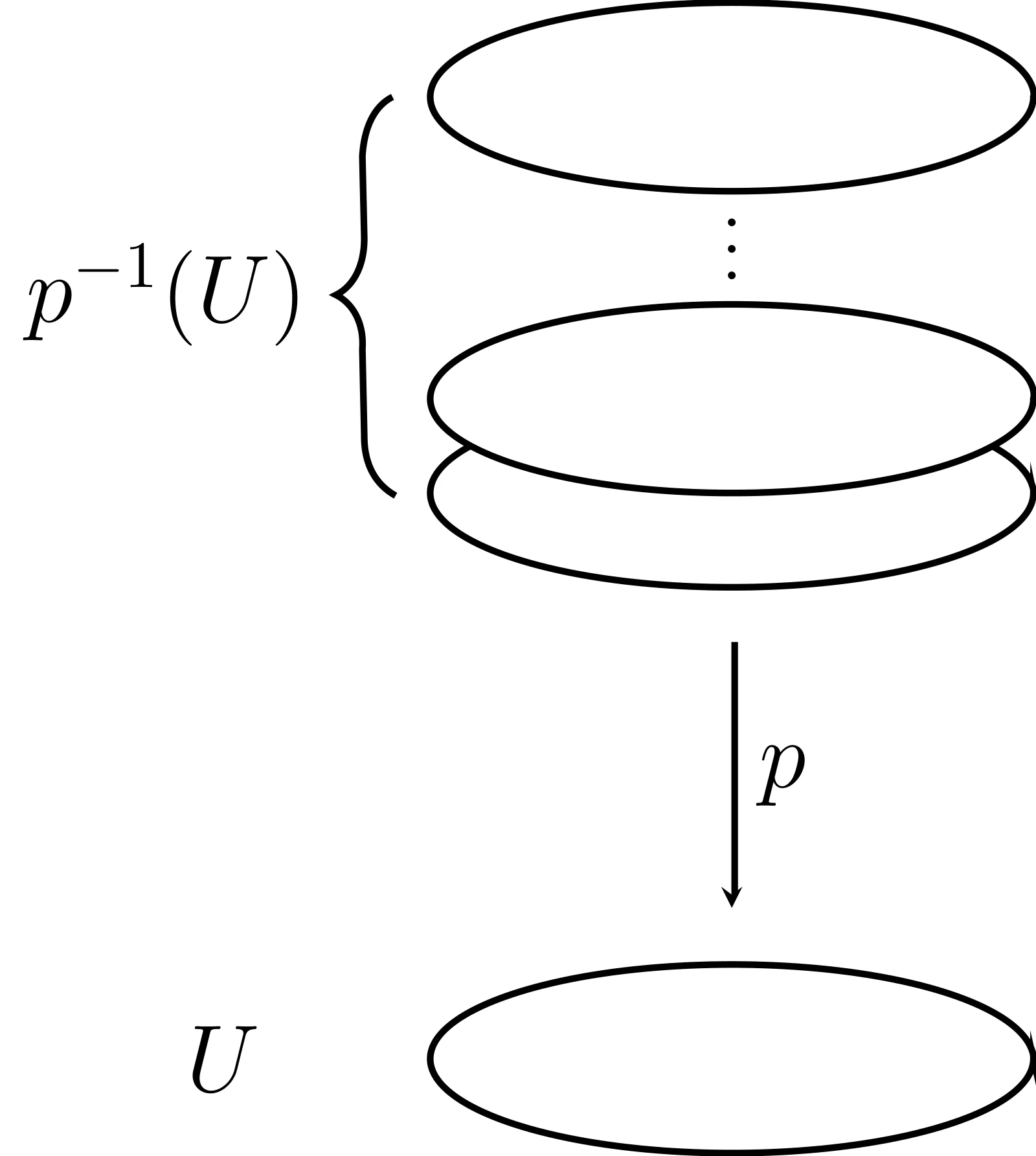
The familiar three-point criterion is not the title or sole subject of Belyi’s paper. It appears in section 4, “Criterion for algebraicity of the ground field,” near the end of an article whose title concerns Galois extensions of a maximal cyclotomic field. The placement matters historically. Grothendieck’s letter singles out a proof that met his Montpellier questions, while the published object embeds that criterion in Belyi’s broader argument. The unseen Deligne enclosure cannot be assumed to reproduce the entire submitted paper.1515Maronne and Toën, Le temps des réflexions, 31–32; Belyi, “On Galois Extensions of a Maximal Cyclotomic Field,” 247 and 255.
The English witness identifies its relation to the Russian original on the first printed page: Russian volume 43 (1979), no. 2, pages 267–276, corresponds to English volume 14 (1980), no. 2, pages 247–256. MathNet gives the Russian title in transliteration as O rasshireniyakh Galua maksimal’nogo krugovogo polya; the last page names N. Koblitz as translator. These details make the 1980 item a translated publication state rather than a second discovery or a reprint with an unexplained date.1616Belyi, “On Galois Extensions of a Maximal Cyclotomic Field,” 247 and 256.
Theorem 4’s printed vocabulary also explains the modern wording used above. The primary text uses the period pair “complete” and “nonsingular” and speaks of a covering of the projective line; this account uses the equivalent modern language of a smooth projective curve and a nonconstant morphism. The proof’s first nontrivial choice is explicitly a nonconstant rational function, so “nonconstant” is not an embellishment. 1717Belyi, “On Galois Extensions of a Maximal Cyclotomic Field,” 255.
MathNet’s record and the opened PDF support different levels of the citation. The record supplies author, English journal title, volume 14, issue 2, pages 247–256, DOI, stable identifier im1682, and an abstract that separately mentions the curve criterion. The PDF supplies the numbered theorem and proof on page 255. Bibliographic identity is therefore not used as a substitute for theorem location, and theorem location is not used to invent an archival history for the Malgoire packet.1818Belyi, “On Galois Extensions of a Maximal Cyclotomic Field,” 255.
The article’s organization further limits the biographical shorthand “Belyi’s theorem.” Pages 247–254 pursue the paper’s cyclotomic-field and Galois-extension problem; section 4 on page 255 gives the algebraicity criterion; page 256 draws a further corollary, poses another question, thanks Shafarevich, and records receipt. The criterion is a decisive component of a larger article, not a free-standing note written for Grothendieck’s program.1919Belyi, “On Galois Extensions of a Maximal Cyclotomic Field,” 247–56.
“Nonconstant” is mathematically necessary, not just more elegant wording. A constant map would carry no meaningful covering information and would make the ramification condition vacuous. Belyi’s proof explicitly begins with an arbitrary nonconstant rational function and then alters its finite branch set. Likewise, “at most three points” is the safe statement of the branch-value bound; the coordinate choice names a normalized triple and does not require all three values to occur in every case.2020Belyi, “On Galois Extensions of a Maximal Cyclotomic Field,” 255.
MathNet’s abstract describes the criterion as one for a curve to be defined over an algebraic number field. The theorem text and standard formulation use definability over , meaning that some number field of definition exists. This is why the wording does not say “defined over ” without the algebraic closure. The English PDF’s symbols and MathNet abstract are read together for that distinction.2121Belyi, “On Galois Extensions of a Maximal Cyclotomic Field,” 255.
The same abstract describes the paper’s principal project as realizing certain Chevalley groups as Galois groups over cyclotomic fields and presents the curve criterion as an additional result; the record lists eleven bibliography items. This source-level framing explains the distance between the article title and the theorem for which it later became famous. Grothendieck’s August page selected the criterion for a local question, but selection did not redefine the purpose or authorship of Belyi’s whole paper. The publication must still be read as Belyi’s complete argument, not as documentary apparatus to Grothendieck’s later program.2222Maronne and Toën, Le temps des réflexions, 31–32; Belyi, “On Galois Extensions of a Maximal Cyclotomic Field”.
June 1978: contact, not reintegration
The archive-based account dates an important discussion to June 1978. During a visit to the IHÉS with Jean Malgoire, Grothendieck presented developing Montpellier ideas to Pierre Deligne and Barry Mazur. The meeting shows direct contact with leading arithmetic geometers. It also marks the limited form of that contact: a visit and discussion, not a restored permanent seminar.2323Maronne and Toën, Le temps des réflexions, 22.
Deligne was a particularly charged interlocutor. Four years earlier his proof of the final Weil conjecture had demonstrated the power of the -adic cohomology program. He now heard a different project centered on elementary maps and arithmetic questions. The facts support juxtaposition, not an invented dialogue or reaction.
Mazur’s presence also matters because the discussion was not a sealed exchange between former teacher and student. The arithmetic questions were presented within a broader mathematical network. Yet they did not immediately become a collective publication.
The later receipt of Belyi’s proof through Deligne shows the network functioning. Information traveled back to Villecun. Grothendieck passed it to Malgoire. Marginality here meant no institutional center under his control, not absence of connection.
The visit also resists the retrospective claim that he had left professional mathematics in a single event in 1970. He left a position and a dominant role. He could still enter the IHÉS, discuss current work, and correspond with its mathematicians. Withdrawal occurred by degrees and in different dimensions.
A network reconstructed from paper
The June visit and August letter can be placed in a document chain:
- Montpellier work on embedded maps and low-degree drawings, roughly 1976–78.
- A June 1978 presentation by Grothendieck to Deligne and Mazur at the IHÉS, with Malgoire present.
- Information about Belyi’s proof transmitted by Deligne.
- Grothendieck’s Villecun letter of 25 August forwarding the proof to Malgoire and suggesting a generalization.
- Belyi’s published Russian paper in 1979 and English translation in 1980.
The chain is stronger than a generalized claim that “they were in contact” because each link has a date or object. It is weaker than a transcript. We do not know every comment at the June meeting, the date of Deligne’s enclosed letter from the excerpt alone, or how Malgoire pursued the proposed extension.2424Maronne and Toën, Le temps des réflexions, 22, 28, 31–32; Belyi, “On Galois Extensions of a Maximal Cyclotomic Field”.
Paper also reveals direction. Information did not flow only outward from Grothendieck. A theorem by Belyi reached him through Deligne. The student was asked to adapt it. The former center of a school was now one node in a network, receiving as well as proposing.
That change can be called marginalization only if reception is included. Grothendieck’s distance from formal publication did not remove his dependence on other mathematicians’ results. His new program was made possible by a theorem he did not prove. Mathematical creation remained collective even when writing became solitary.
The chain crosses political boundaries without needing a dramatic Cold War scene. Belyi worked in the Soviet mathematical world; Deligne in Western Europe; the theorem traveled through publication and correspondence. Grothendieck’s earlier refusal to attend the 1966 Moscow congress and his political views do not need to be invoked to explain the mathematics.
The archived letter is especially valuable because it fixes handwriting, address, and date. A reproduction of its page would not show Deligne’s enclosed proof: one page is evidence of transmission, not the whole packet.
The relevant sense of fashion
The title risks falsity if “fashion” is treated as a list of neglected topics. Belyi’s theorem entered a major journal, Deligne transmitted current mathematical news, and the archive study reports an IHÉS discussion with leading arithmetic geometers. Grothendieck was not working in a deserted field; what remained difficult to inspect was his own unpublished synthesis and its personal route of circulation.
What lay outside the most visible fashion was his synthesis and mode of presentation. He approached arithmetic through children’s drawings, proposed a vast program without conventional papers, and connected course problems to the absolute Galois group through private notes. The work had not yet acquired a recognized research community or standard terminology.
His earlier program also shaped expectations. Mathematicians who associated Grothendieck with maximal generality might see polygons and drawings as a retreat to special cases. In Esquisse he explicitly contrasted the pre-1970 search for all-dimensional passkey techniques with the new concentration on surfaces and curves. The apparent narrowing concealed a new convergence.2525Grothendieck, “Esquisse d’un Programme,” sec. 2, pp. 8–9.
The term “outside fashion” should therefore mean outside the expected trajectory of his public career and outside ordinary channels of certification. It should not claim prophetic isolation. Several ingredients were already active in contemporary mathematics; his way of joining them was distinctive.
The public literature of the late 1970s made the contrast sharper. SGA 4½ and SGA 5 appeared in 1977, extending the extensive printed record of the earlier school. Readers could cite hundreds of polished pages associated with Grothendieck while having almost no access to the new pages he was writing. The old work was becoming more official as the current work became less visible.2626The Grothendieck Circle, “Bibliographie d’Alexandre Grothendieck”.
Fashion as a problem of time
Research fashion is not the same as popularity. It directs attention toward problems expected to yield publishable results with recognized tools. It affects seminars, hiring, invitations, and what students can plausibly choose. A program may be mathematically serious and still lie outside this temporal economy because it asks for decades of foundations before producing standard theorems.
Grothendieck’s earlier success had once changed the fashion. Schemes and cohomology became languages in which central problems could be attacked. By the late 1970s other mathematicians were using, refining, and sometimes simplifying that machinery. The profession had reasons to invest there: Deligne’s Weil proof was a spectacular return.
The new Montpellier questions did not yet offer the same return. Each demanded conceptual investment whose outcome was uncertain.
Grothendieck’s mode of work amplified the mismatch. He did not write concise prospectuses for journals, establish a regular seminar, or train a large cohort around a fixed sequence of problems. Ideas arrived through long manuscripts and conversation. Colleagues could admire a vision without reorganizing their research around it.
“Outside fashion” therefore contains agency on both sides. The community allocated attention under its own incentives. Grothendieck chose genres and scales hard to absorb. It is too easy to call the result blindness by others or self-exile by him. The interaction produced invisibility.
Later developments can distort this judgment by making the 1978 exchange look inevitable. At the time, no subsequent field guaranteed that Grothendieck’s proposed total synthesis was the right next investment or that its private route would become historically central.
The book should also distinguish influence from fulfillment. Later fields realized parts of his vision in forms he did not specify and sometimes through independent routes. Their existence validates the fertility of questions, not every conjecture or historiographical claim he later made.
What remained unpublished
The 1978 dossier is unusually instructive because its objects have different dates and authorities. The archive study reports a June discussion at the IHÉS. The August 25 letter is a contemporary object with sender, recipient, place, and date. Belyi’s publication appeared in 1979, followed by the English version in 1980. The 1984 Esquisse supplies the mature retrospective synthesis.2727Maronne and Toën, Le temps des réflexions, 22, 28–32; Belyi, “On Galois Extensions of a Maximal Cyclotomic Field”.
No one object proves the whole chain. The archive synthesis supports that a meeting was reported and names participants, but correspondence from the institution would strengthen its exact date and roster. The Malgoire letter proves transmission in August, not every word spoken in June. Belyi’s paper proves authorship and theorem, not what Grothendieck or his students had conjectured before seeing the proof.
This separation preserves Belyi’s credit. The theorem is his published result. Grothendieck’s contribution in this episode lies in recognizing its significance for the Montpellier questions, transmitting the proof, proposing an extension, and later building a program around the correspondence. These are substantial actions without rewriting the theorem’s authorship.
It also preserves Malgoire’s agency. The letter addresses a mathematician, not an empty conduit. What he did with the suggestion requires evidence from his work or correspondence. The chapter records receipt and proposed extension but does not invent compliance, disappointment, or an unrecorded reply.
Finally, the dossier explains the chapter’s use of “outside fashion.” The mathematics was connected to active institutions and current theorems. What remained outside ordinary timing was the synthesis’s form: discussion, private letter, scratchwork, and later manuscript rather than a stable paper under Grothendieck’s name. Marginality concerned circulation, not the seriousness of curves or Galois theory.
The chain also illustrates why a contemporary letter deserves more weight than a polished later memory for some claims and less for others. It fixes what was sent, from where, to whom, and when. It may contain an evaluation made in the moment. It cannot by itself reconstruct the earlier meeting, establish the recipient’s later response, or prove that the mature 1984 vocabulary was already stable.
The chapter uses that asymmetry deliberately. Dates and transmission come from the letter; the theorem statement and publication history come from Belyi’s record; the longer program comes from later manuscripts and scholarly analysis. No single voice narrates every link. The resulting account is less seamless but more faithful to a network in which information moved in several directions.
That network also prevents an isolated-genius reading. Deligne transmitted a proof, Belyi authored the theorem, Malgoire received a proposed extension, and Grothendieck connected the result to questions already being explored at Montpellier. The episode is mathematically creative because these roles met, not because one figure secretly contained the whole development. The letter’s narrow circulation remains part of the story, but narrow circulation is not solitary origination or isolation.
The chapter closes on circulation and chronology, not on a claim that the later field already existed under its settled name.
By 1980 the public record consisted of other people’s papers, course traces, and letters. Grothendieck had not issued a systematic article on the questions surrounding the August exchange. The University archive now contains thousands of pages from the broader period, but present archival visibility must not be projected backward.2828Maronne and Toën, Le temps des réflexions, 10–11, 24–29; Université de Montpellier, “À la recherche d’Alexandre Grothendieck”; Université de Montpellier, “28 000 pages d’Alexandre Grothendieck”.
Private scratchwork has a different evidentiary status from a dated finished manuscript. A page can show that a definition was tried, an example calculated, or a term used. It may not show endorsement after revision. Marginal corrections can reverse the main text. Archivists therefore preserve sequence, recto/verso order, and file grouping.
Grothendieck’s later writing often presented private notes as seeds awaiting development. That metaphor should not turn every scratch into a discovered theorem.
This distinction will matter intensely in the Long March. The manuscript retains changing conjectures and comments to himself. Its historical importance lies partly in showing thought move, but readers must not cite an early false formulation as Grothendieck’s final claim.
Unpublished work can be influential through selective circulation. The 1978 letter is an example. It can also remain effectively unavailable for decades. The boundary is not publication versus secrecy but a spectrum of access, from one correspondent to an open archive.
The Montpellier story occupies that spectrum. It is now easier to see because the University digitized a large archive after his death. Present accessibility should not be projected backward. A PDF online in 2017 was a box or private copy in 1978.
Nonpublication without a motive claim
The sources contain no 1978 statement explaining why Grothendieck did not publish a paper on the August questions. Several conditions are visible, but none should be promoted to a private motive.
His cessation of ordinary article submission, teaching duties, expanding questions, and changed editorial setting are documented conditions. The sources do not rank them as causes of nonpublication.
The absence of a paper affected students and colleagues. They could not cite a stable exposition. Ideas remained attached to oral communication and personal authority. When later fields developed, reconstructing who knew what and when became contentious.
The biography’s remedy is documentary rather than judicial. Date the Malgoire letter. Date the IHÉS visit provisionally. Credit Belyi’s theorem. Identify the archive pages. Distinguish the mature 1984 synthesis from the 1978 discussion. This establishes a strong history without deciding every later dispute over recognition.
It also honors the chapter’s title in a precise way. A mathematics outside ordinary publication can be outside professional timing even while its objects are timely. Fashion is partly a clock. Grothendieck’s clock had shifted from articles and annual seminars to boxes, long letters, and sudden months of work.
A chain of transmission
The chain begins before the surviving letter, but its first link is less secure. The archive study reports that in June 1978 Grothendieck visited IHÉS with Malgoire and presented developing ideas to Deligne and Barry Mazur. No opened visitor log, seminar schedule, or contemporary correspondence for this account independently fixes the day or roster. The account is therefore introduced with “reports,” not “proves.” It establishes a scholarly reconstruction that can guide archival work while remaining distinct from the August page written at the time.2929Maronne and Toën, Le temps des réflexions, 22.
The next link is mathematical news received from Deligne. The reproduced August page refers to an enclosed letter giving Belyi’s proof, but the enclosure has not been inspected separately and its exact wording is absent. Grothendieck says he forwards it; “commissioned,” “verified,” “endorsed,” or “explained” would add functions the page does not establish. Deligne is a transmitter, Belyi the author, Grothendieck the forwarding correspondent who adds an extension question, and Malgoire the named recipient.3030Maronne and Toën, Le temps des réflexions, 31–32.
The final opened link is publication. Belyi’s article gives the result a public bibliographic identity in 1979, with an English translation in 1980. What lies between Malgoire’s receipt and that publication is not reconstructed here. The current corpus has no receipt, reply, notebook entry, or resulting paper that proves he pursued Grothendieck’s proposed extension. Silence at that point is local and testable: correspondence or work papers could fill it. The biography does not convert lack of a reply into refusal, failure, or lost opportunity.3131Maronne and Toën, Le temps des réflexions, 31–32; Belyi, “On Galois Extensions of a Maximal Cyclotomic Field,” 247–56; Centre for Grothendieckian Studies, “Correspondence”.
Names in the chain are therefore attached to verbs, not assembled as a cast for a scene: the archive study reports participants; Deligne transmits; Grothendieck forwards and proposes; Malgoire is addressed; Belyi proves and publishes. This syntax preserves agency while revealing which link still lacks a primary witness. It also blocks an “encounter of geniuses” narrative unsupported by the documents.3232Maronne and Toën, Le temps des réflexions, 22, 31–32; Belyi, “On Galois Extensions of a Maximal Cyclotomic Field,” 255.
Three source clocks can now be read without merging them. The exhibition’s June meeting is a later scholarly reconstruction. The article’s August 2 receipt line is contemporary journal metadata. The August 25 Malgoire letter is a contemporary act of forwarding. Their order is suggestive but not a proof of a direct route from Belyi’s submitted manuscript through Deligne to Villecun; the Deligne item itself remains uninspected.3333Maronne and Toën, Le temps des réflexions, 31–32; Belyi, “On Galois Extensions of a Maximal Cyclotomic Field,” 256.
The missing enclosure limits content as well as date. Grothendieck’s recto says that Deligne’s letter gives Belyi’s proof, but the reproduced pages do not show Deligne’s wording, diagrams, or bibliographic information. The published Theorem 4 can verify the public result; it cannot be substituted as a facsimile of what Malgoire received. The available record and the article are related witnesses whose textual identity has not been established.3434Maronne and Toën, Le temps des réflexions, 31–32; Belyi, “On Galois Extensions of a Maximal Cyclotomic Field,” 255.
Outside the fashionable center
The institutional record does not support a story of mathematics ignored because its subject was inherently unfashionable. The June episode, as reported, involved IHÉS and leading arithmetic geometers. Deligne transmitted current mathematical news. Belyi published in a major Soviet journal, and an English translation followed. Meanwhile SGA volumes carrying earlier work associated with Grothendieck appeared in 1977. The contrast is not between serious centers and a private fantasy. It is between forms of visibility: journal articles and edited seminar volumes on one side, local discussion and personal correspondence on the other.3535Maronne and Toën, Le temps des réflexions, 10–13, 22, 28–32; Belyi, “On Galois Extensions of a Maximal Cyclotomic Field,” 247–56; The Grothendieck Circle, “Bibliographie d’Alexandre Grothendieck”.
“Outside fashion” can then be defined without unsupported sociology. Grothendieck’s new synthesis did not yet have a regular seminar, a submitted exposition, or a stable public vocabulary under his name. Its components belonged to active mathematics, but the route joining them was difficult for others to inspect. That difference affected attention without proving why any individual mathematician did or did not engage. Hiring incentives, taste, personal relations, and judgments of tractability would require their own evidence. The opened documents show publication form and transmission route, not a collective state of mind.3636Schneps and Lochak, Geometric Galois Actions 1, 7–48, 8–15; Maronne and Toën, Le temps des réflexions, 22–32; The Grothendieck Circle, “Bibliographie d’Alexandre Grothendieck”.
The episode therefore belongs to mathematical publication history. One result had an author and a journal trajectory. One letter had a sender, addressee, enclosure, and proposed extension. One reported meeting placed the questions before named listeners. Later archive pages reveal work not then available through ordinary bibliography. These channels can be compared without ranking private paper as purer or journal publication as intellectually shallow. They answer different needs: discovery, exchange, validation, preservation, and public retrieval.3737Maronne and Toën, Le temps des réflexions, 22, 28–32; Belyi, “On Galois Extensions of a Maximal Cyclotomic Field,” 247–56; The Grothendieck Circle, “Bibliographie d’Alexandre Grothendieck”.
Language choice reflects those channels. “Current” means that a result was moving through contemporary correspondence, not that it had already appeared in the opened journal record. “Public” means bibliographically available through publication, not only known to named correspondents. “Local” describes the Montpellier setting of questions and recipients, not their mathematical importance. “Marginal” describes limited institutionalized circulation, not proof of rejection. By defining the terms through documents, the chapter avoids treating fashion as a collective emotion. It can show an asymmetry—earlier SGA material readily citable, current Grothendieck work difficult to retrieve—without inventing what the profession thought.3838Maronne and Toën, Le temps des réflexions, 10–13, 22–32; The Grothendieck Circle, “Bibliographie d’Alexandre Grothendieck”.
The two institutions in the chain also had different functions. IHÉS supplied a reported place of encounter and a route to Deligne; USTL supplied students, courses, and the local setting to which the letter returned. Neither institution authored Belyi’s result. Naming them shows the infrastructure of contact without turning institutional prestige into proof of influence. A visitor record could strengthen the June chronology, while a university archive could strengthen the local afterlife. Their absence is a source gap, not evidence that the exchange was imaginary or that it transformed a community.3939Maronne and Toën, Le temps des réflexions, 22, 28–32.
The letter of August 1978
The August letter establishes a threshold because it converts coincidence into a documented relation. Questions about surfaces and arithmetic were already present in Montpellier; Belyi’s result arrived through Deligne; Grothendieck recognized a connection and proposed another question to Malgoire. That sequence is enough to explain why the paper mattered in this biography. It does not prove immediate influence on a later manuscript, establish a priority claim over Belyi, or show that a mature research program existed in the letter’s vocabulary.4040Maronne and Toën, Le temps des réflexions, 28, 31–32; Belyi, “On Galois Extensions of a Maximal Cyclotomic Field,” 255.
The threshold is asymmetrical. The outgoing recto preserves Grothendieck’s evaluation and proposed extension, but no inspected incoming reply preserves Malgoire’s reaction. The article preserves Belyi’s theorem and publication state, but not Deligne’s act of transmission. Each object therefore adds one side of the relation and leaves another open. This is enough for a history of movement; it is not enough for a scene of shared discovery.4141Maronne and Toën, Le temps des réflexions, 31–32; Belyi, “On Galois Extensions of a Maximal Cyclotomic Field,” 247–56.
Public form arrived on its own schedule. The Russian article appeared in 1979 and the English translation in 1980, after the journal’s printed receipt date and after Grothendieck’s forwarding letter. Publication gave the theorem a stable author, title, page span, and retrievable statement. It did not publish Grothendieck’s proposed extension, establish that Malgoire pursued it, or turn the August packet into a coauthored precursor.4242Maronne and Toën, Le temps des réflexions, 31–32; Belyi, “On Galois Extensions of a Maximal Cyclotomic Field,” 247–56.
The final page of the article names Belyi’s adviser, I. R. Shafarevich, and the English translator, N. Koblitz. The letter names Deligne and Malgoire. Keeping those roles visible gives the episode more participants without making them interchangeable: advice during preparation, translation, transmission, recognition, reception, and authorship are different contributions. The source record is strongest when it preserves those verbs rather than collapsing the network into Grothendieck’s later fame.4343Maronne and Toën, Le temps des réflexions, 31–32; Belyi, “On Galois Extensions of a Maximal Cyclotomic Field,” 256.
What remains unknown is equally concrete: the date and full text of Deligne’s enclosed letter, proof of Malgoire’s receipt, any reply, and any work product tied to the proposed extension. None of those gaps weakens the dated outgoing recto or Belyi’s publication. They prevent only the next verbs—received, answered, attempted, or proved—from entering without another object.4444Maronne and Toën, Le temps des réflexions, 31–32; Belyi, “On Galois Extensions of a Maximal Cyclotomic Field,” 247–56; Centre for Grothendieckian Studies, “Correspondence”.
The source chain closes without becoming circular. The exhibition booklet supplies a later account of the June context and reproduces Grothendieck’s August page. The primary article independently supplies Belyi’s authored theorem and publication data. The August page names Deligne’s transmission, but the exhibition and article do not create a second witness to Deligne’s exact text. The episode is well anchored at meeting report, outgoing letter, and published theorem while remaining open at the enclosure and response.4545Maronne and Toën, Le temps des réflexions, 28–32; Belyi, “On Galois Extensions of a Maximal Cyclotomic Field,” 247–56.
The stable identifiers preserve that independence for later readers. DOI 10.1070/IM1980v014n02ABEH001096 resolves to the translated article, while MathNet im1682 supplies its bibliographic record and a link keyed to the Russian volume. The exhibition has its own pages and private-collection credit for the letter. Linking both objects in one note does not imply common custody, common rights, or identical text.4646Maronne and Toën, Le temps des réflexions, 31–32; Belyi, “On Galois Extensions of a Maximal Cyclotomic Field,” 1682.
A theorem arrives, a program departs
The 1978 letter opened questions sustained in the 1981 manuscript.4747Alexandre Grothendieck, La Longue Marche à travers la théorie de Galois (1981), Manuscript, cote 140, Archives Grothendieck, Université de Montpellier, https://grothendieck.umontpellier.fr/; Maronne and Toën, Le temps des réflexions, 22; Leila Schneps, “Grothendieck’s ‘Long March Through Galois Theory’,” in Geometric Galois Actions 1: Around Grothendieck’s Esquisse d’un Programme, ed. Leila Schneps and Pierre Lochak, London Mathematical Society Lecture Note Series 242 (Cambridge University Press, 1997), 59–60, https://webusers.imj-prg.fr/~leila.schneps/SchnepsLM.pdf.
注释
- Maronne and Toën, Le temps des réflexions, 28, 31–32. ↩
- Maronne and Toën, Le temps des réflexions, 28, 31–32. ↩
- Maronne and Toën, Le temps des réflexions, 31–32. ↩
- Maronne and Toën, Le temps des réflexions, 28, 31–32; G. V. Belyi, “On Galois Extensions of a Maximal Cyclotomic Field,” trans. N. Koblitz, Mathematics of the USSR-Izvestiya 14, no. 2 (1980): no. 2, https://doi.org/10.1070/IM1980v014n02ABEH001096; Centre for Grothendieckian Studies, “Correspondence”. ↩
- Maronne and Toën, Le temps des réflexions, 28, 31–32. ↩
- Maronne and Toën, Le temps des réflexions, 31–32. ↩
- Maronne and Toën, Le temps des réflexions, 31–32. ↩
- Belyi, “On Galois Extensions of a Maximal Cyclotomic Field”, theorem 4, p. 255; Maronne and Toën, Le temps des réflexions, 28–29. ↩
- Maronne and Toën, Le temps des réflexions, 28, 31–32. ↩
- Maronne and Toën, Le temps des réflexions, 28–32; Belyi, “On Galois Extensions of a Maximal Cyclotomic Field,” 247–56. ↩
- Maronne and Toën, Le temps des réflexions, 31–32; Belyi, “On Galois Extensions of a Maximal Cyclotomic Field,” 256. ↩
- Belyi, “On Galois Extensions of a Maximal Cyclotomic Field,” 255. ↩
- Maronne and Toën, Le temps des réflexions, 31–32; Belyi, “On Galois Extensions of a Maximal Cyclotomic Field,” 256. ↩
- Belyi, “On Galois Extensions of a Maximal Cyclotomic Field,” 255. ↩
- Maronne and Toën, Le temps des réflexions, 31–32; Belyi, “On Galois Extensions of a Maximal Cyclotomic Field,” 247 and 255. ↩
- Belyi, “On Galois Extensions of a Maximal Cyclotomic Field,” 247 and 256. ↩
- Belyi, “On Galois Extensions of a Maximal Cyclotomic Field,” 255. ↩
- Belyi, “On Galois Extensions of a Maximal Cyclotomic Field,” 255. ↩
- Belyi, “On Galois Extensions of a Maximal Cyclotomic Field,” 247–56. ↩
- Belyi, “On Galois Extensions of a Maximal Cyclotomic Field,” 255. ↩
- Belyi, “On Galois Extensions of a Maximal Cyclotomic Field,” 255. ↩
- Maronne and Toën, Le temps des réflexions, 31–32; Belyi, “On Galois Extensions of a Maximal Cyclotomic Field”. ↩
- Maronne and Toën, Le temps des réflexions, 22. ↩
- Maronne and Toën, Le temps des réflexions, 22, 28, 31–32; Belyi, “On Galois Extensions of a Maximal Cyclotomic Field”. ↩
- Grothendieck, “Esquisse d’un Programme,” sec. 2, pp. 8–9. ↩
- The Grothendieck Circle, “Bibliographie d’Alexandre Grothendieck”. ↩
- Maronne and Toën, Le temps des réflexions, 22, 28–32; Belyi, “On Galois Extensions of a Maximal Cyclotomic Field”. ↩
- Maronne and Toën, Le temps des réflexions, 10–11, 24–29; Université de Montpellier, “À la recherche d’Alexandre Grothendieck”; Université de Montpellier, “28 000 pages d’Alexandre Grothendieck”. ↩
- Maronne and Toën, Le temps des réflexions, 22. ↩
- Maronne and Toën, Le temps des réflexions, 31–32. ↩
- Maronne and Toën, Le temps des réflexions, 31–32; Belyi, “On Galois Extensions of a Maximal Cyclotomic Field,” 247–56; Centre for Grothendieckian Studies, “Correspondence”. ↩
- Maronne and Toën, Le temps des réflexions, 22, 31–32; Belyi, “On Galois Extensions of a Maximal Cyclotomic Field,” 255. ↩
- Maronne and Toën, Le temps des réflexions, 31–32; Belyi, “On Galois Extensions of a Maximal Cyclotomic Field,” 256. ↩
- Maronne and Toën, Le temps des réflexions, 31–32; Belyi, “On Galois Extensions of a Maximal Cyclotomic Field,” 255. ↩
- Maronne and Toën, Le temps des réflexions, 10–13, 22, 28–32; Belyi, “On Galois Extensions of a Maximal Cyclotomic Field,” 247–56; The Grothendieck Circle, “Bibliographie d’Alexandre Grothendieck”. ↩
- Schneps and Lochak, Geometric Galois Actions 1, 7–48, 8–15; Maronne and Toën, Le temps des réflexions, 22–32; The Grothendieck Circle, “Bibliographie d’Alexandre Grothendieck”. ↩
- Maronne and Toën, Le temps des réflexions, 22, 28–32; Belyi, “On Galois Extensions of a Maximal Cyclotomic Field,” 247–56; The Grothendieck Circle, “Bibliographie d’Alexandre Grothendieck”. ↩
- Maronne and Toën, Le temps des réflexions, 10–13, 22–32; The Grothendieck Circle, “Bibliographie d’Alexandre Grothendieck”. ↩
- Maronne and Toën, Le temps des réflexions, 22, 28–32. ↩
- Maronne and Toën, Le temps des réflexions, 28, 31–32; Belyi, “On Galois Extensions of a Maximal Cyclotomic Field,” 255. ↩
- Maronne and Toën, Le temps des réflexions, 31–32; Belyi, “On Galois Extensions of a Maximal Cyclotomic Field,” 247–56. ↩
- Maronne and Toën, Le temps des réflexions, 31–32; Belyi, “On Galois Extensions of a Maximal Cyclotomic Field,” 247–56. ↩
- Maronne and Toën, Le temps des réflexions, 31–32; Belyi, “On Galois Extensions of a Maximal Cyclotomic Field,” 256. ↩
- Maronne and Toën, Le temps des réflexions, 31–32; Belyi, “On Galois Extensions of a Maximal Cyclotomic Field,” 247–56; Centre for Grothendieckian Studies, “Correspondence”. ↩
- Maronne and Toën, Le temps des réflexions, 28–32; Belyi, “On Galois Extensions of a Maximal Cyclotomic Field,” 247–56. ↩
- Maronne and Toën, Le temps des réflexions, 31–32; Belyi, “On Galois Extensions of a Maximal Cyclotomic Field,” 1682. ↩
- Alexandre Grothendieck, La Longue Marche à travers la théorie de Galois (1981), Manuscript, cote 140, Archives Grothendieck, Université de Montpellier, https://grothendieck.umontpellier.fr/; Maronne and Toën, Le temps des réflexions, 22; Leila Schneps, “Grothendieck’s ‘Long March Through Galois Theory’,” in Geometric Galois Actions 1: Around Grothendieck’s Esquisse d’un Programme, ed. Leila Schneps and Pierre Lochak, London Mathematical Society Lecture Note Series 242 (Cambridge University Press, 1997), 59–60, https://webusers.imj-prg.fr/~leila.schneps/SchnepsLM.pdf. ↩