Lasserre, January 3, 2010
On January 3, 2010, Alexander Grothendieck dated a handwritten letter at Lasserre and addressed it to Luc Illusie. Attached to it was a one-page statement headed Déclaration d’intention de non-publication. The surviving scan packet includes envelopes and addresses; those details establish transmission but have no place in this narrative. The historically consequential objects are the dated covering letter, the attached declaration, and the request that the declaration be communicated. 11Alexandre Grothendieck, “Déclaration d’intention de non-publication,” 2010, https://csg.igrothendieck.org/wp-content/uploads/2025/02/U85d.pdf; Grothendieck, Lettre à L. Illusie; Centre for Grothendieckian Studies, “Correspondence”.
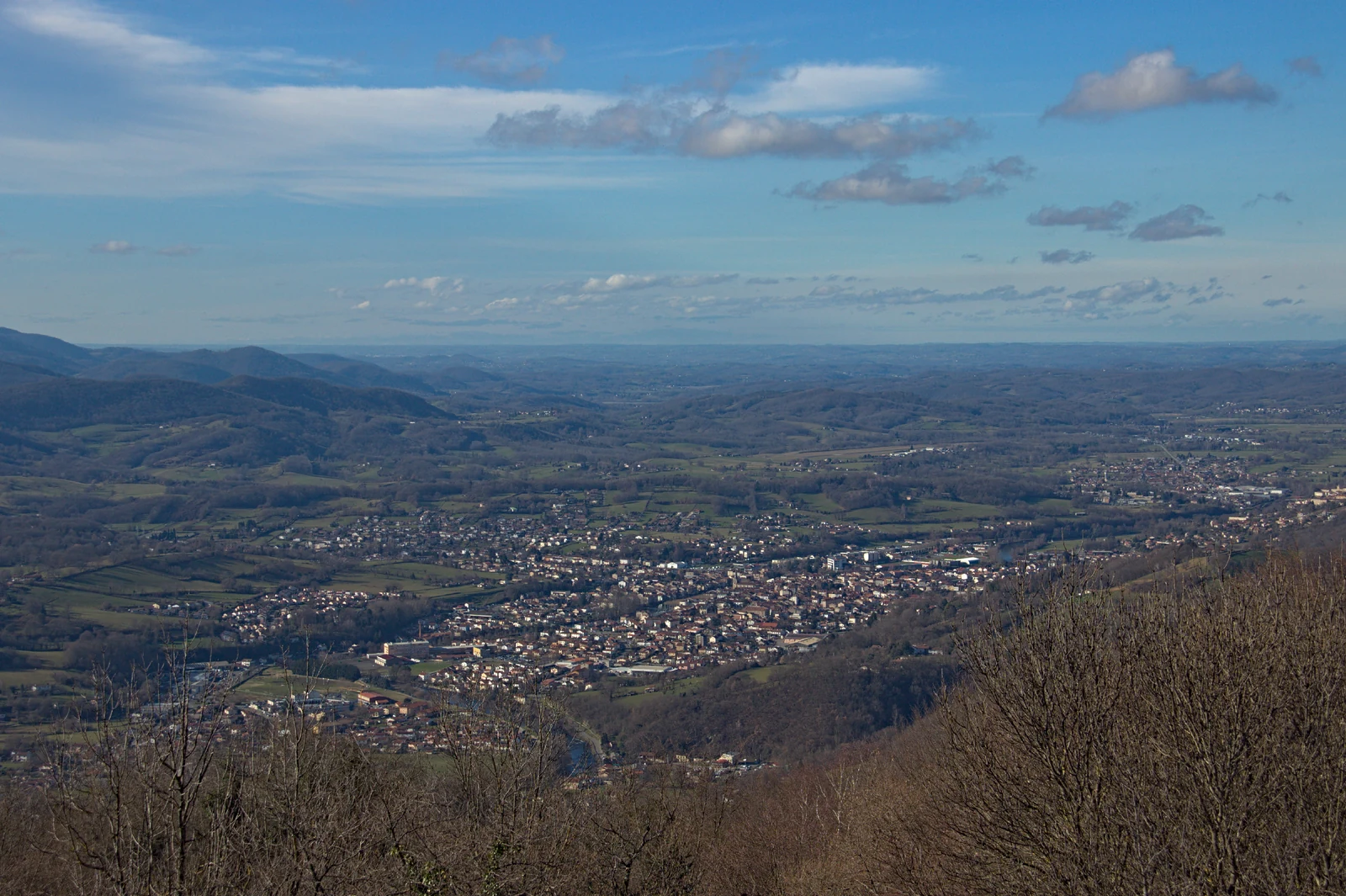
Grothendieck wrote after a long silence between the two men. He sought information about projects involving his texts and asked Illusie’s help in making his position known. The covering letter names rumors, editions, and people; its private particulars need not be reproduced to establish the public act. Grothendieck was preparing a statement to travel beyond its first recipient, not responding only to a proposal made directly to him. 22Grothendieck, Lettre à L. Illusie; Centre for Grothendieckian Studies, “Correspondence”.
The declaration opens broadly. He states that he does not intend to publish or republish any work or text of which he is the author, in print or electronic form, complete or in extracts. He includes scientific, personal, and other texts, letters to anyone, and translations. He describes editions or distributions made without his agreement, in the past or future while he was alive, as illicit by his own stated standard. 33Grothendieck, “Déclaration d’intention de non-publication”.
He then says that, when he learns of such editions, he will ask those responsible to withdraw the books from commerce. He will also ask libraries possessing such books to remove them. A parenthesis excepts possible quotations of a few lines each. The final paragraph condemns disregard for the intention he has stated. The page closes with place implied by the covering letter, date, and signature. 44Grothendieck, “Déclaration d’intention de non-publication”.
This is the strongest primary evidence for Grothendieck’s late boundary toward publication. It is also narrower than the stories often told about it. The page does not say “burn every manuscript.” It does not instruct Malgoire to destroy the Montpellier archive. It does not enumerate boxes in Lasserre. It does not supply a legal analysis of copyright, deposit, or previously authorized editions. It states an author’s intention, identifies circulation he regards as unauthorized, and asks for withdrawal. 55Grothendieck, “Déclaration d’intention de non-publication”; Université de Montpellier, “Archives Grothendieck”; Grothendieck, Lettre à L. Illusie.
Every verb matters because the public legend tends to compress them. Not publish becomes suppress; remove becomes destroy; an intention during his lifetime becomes an all-time testament; a broad but textually specific protest becomes a wish to erase the whole mathematical past. Close reading does not make the declaration less forceful. It makes its force exact.
An earlier circular
Scharlau’s secondary account—no primary copy of the circular was inspected for this account—reports a January 26, 1990, mailing of about 250 copies, eleven pages, and translations prepared by Grothendieck. 66Scharlau, Spirituality, secs. 29.3, 8–11; Centre for Grothendieckian Studies, “Unpublished Works”.
Scharlau’s secondary account—again without a primary copy inspected here—reports that the circular presented religious predictions as revelation. This chapter does not repeat the prophetic system or treat the report as independent primary evidence. 77Scharlau, Spirituality, secs. 29.3, 8–11; Centre for Grothendieckian Studies, “Unpublished Works”.
Scharlau’s secondary account—whose primary follow-up copy was not inspected here—also reports an eighty-two-page Développements sequence and a March 14 communication expressing doubt about crucial predictions. The record therefore rests on a secondary account; it is neither a settled fact nor evidence of a complete retraction. 88Scharlau, Spirituality, secs. 29.3, 8–11; Centre for Grothendieckian Studies, “Unpublished Works”.
No diagnosis follows from this secondary account. The documentary consequence is limited: Scharlau reports a public circular and a later qualification, and no primary copy has been examined. 99Scharlau, Spirituality, secs. 29.3, 8–11; Centre for Grothendieckian Studies, “Unpublished Works”.
What the reported qualification can establish
Scharlau’s secondary account—without primary-copy verification for this account—supports changed confidence in specific predictions, not a renunciation of every spiritual conclusion in La Clef or a return to an earlier secular position. 1010Scharlau, Spirituality, secs. 29.3, 8–11; Centre for Grothendieckian Studies, “Unpublished Works”.
Scharlau’s secondary account—still subject to the same primary gap—shows why qualification is safer than erasure: a later message may alter an author’s stated confidence but cannot recover copies or establish how every recipient understood them. 1111Scharlau, Spirituality, secs. 29.3, 8–11; Centre for Grothendieckian Studies, “Unpublished Works”.
The sequence matters here as an example of addressed paper changing status over time. Its religious and private content remains attributed to Scharlau and is not narrated more strongly without primary evidence. 1212Scharlau, Spirituality, secs. 29.3, 8–11; Centre for Grothendieckian Studies, “Unpublished Works”.
From informal circulation to digital multiplication
Grothendieck’s unpublished works had never been wholly unavailable. Pursuing Stacks began as a letter and circulated among mathematicians. Esquisse d’un Programme was sent with a CNRS application and then read far beyond the committee. Copies of Récoltes et Semailles were mailed according to lists. La Clef existed in typescript and partial copies. Availability was uneven, based on personal networks rather than a publisher’s stock.
This circulation suited discovery in one respect. A text could influence work before formal edition. It also created ambiguity about a recipient’s authority to copy a manuscript, the scope of consent implied by earlier distribution, an editor’s ability to correct errors, and the later publication status of a reading copy. The answers vary by document and jurisdiction; biography cannot infer them from circulation alone.
The year 2010 intensified the problem because electronic reproduction changed scale. A photocopy had a cost and a traceable route. A digital file could be duplicated perfectly, sent globally, indexed, and mirrored. Removing one host did not retrieve downloads. Grothendieck’s express inclusion of electronic form shows that the declaration addressed this transformed environment, not only traditional book contracts. 1313Grothendieck, “Déclaration d’intention de non-publication”.
The internet also collapsed distinctions between scholarly navigation and publication. A personal academic page could host a complete manuscript, a partial scan, a table of contents, and a bibliographic link side by side. To a reader, all appeared equally “online,” although the acts could carry different rights and permissions.
Editors of difficult mathematical manuscripts faced another problem. Faithful publication requires labor: deciphering handwriting, checking symbols, constructing a table of contents, locating references, and marking errors. That labor may begin long before permission is settled. A sudden non-publication declaration can leave years of editorial work without an outlet. The editor’s investment does not erase the author’s rights; the author’s refusal does not erase the editor’s labor. An adequate history records both.
The 2010 letter to Illusie can be read within this material setting without assigning a hidden motive. It asks about rumored edition projects and seeks help distributing the attached statement. The choice of an established mathematician as recipient was practical. Illusie could understand the works named, identify people in the publication network, and make a one-page declaration visible where informal copies circulated.
Grothendieck’s reach was therefore greater than his public presence suggested. He did not need a website or press conference. The older network created through IHES, seminars, correspondence, and students remained available as a route for refusal. Seclusion had interrupted ordinary exchange but had not erased the social graph of the mathematical past.
This is why “letters of withdrawal” names a genre rather than a retreat into wordlessness. Each letter acts on a relationship made earlier. A farewell requires a shared home. A publication prohibition requires works already desired by readers. A correction requires recipients of the first message. The withdrawal contains the history from which it withdraws.
The farewell that was not public
Between Scharlau’s reported 1990 circular, whose primary copy was not inspected here, and the documented 2010 declaration stands the 1991 farewell. Scharlau’s separate private-testimony account describes practical instructions and places departure probably on July 24. 1414Scharlau, Spirituality, secs. 29.3, 8–11.
This letter is relevant because “withdrawal” changes scale. Scharlau’s secondary account—without a primary circular inspected here—reports a large January 1990 mailing; the 1991 note and 2010 covering letter have different recipients and requested actions. 1515Scharlau, Spirituality, secs. 29.3, 8–11; Centre for Grothendieckian Studies, “Unpublished Works”.
A biography should not quote intimate sentences from the farewell because a secondary source does. The existence and practical character of the letter are sufficient. Its private thanks, personal history, and distribution of family objects belong to the people addressed unless a consequential fact requires them. Restraint is especially necessary because the recipient’s full voice is not present in the public record used here.
The farewell also resists a story in which Grothendieck “vanished without a word.” He left a word, but not one offered to the world. The distinction is not pedantic. Public absence can coexist with private notice. A person can refuse an encounter and still arrange rent. The practical page complicates later portrayals that make every late act an emblem of otherworldliness.
Nor should the farewell be read as proof that all relations ended on one day. The second archive transfer to Malgoire in 1995 and the 2010 letter to Illusie demonstrate later contacts. “Farewell” named the closure of one place and relation, not the literal end of communication. The archive turns dramatic nouns back into dated, limited acts.
Reading the declaration line by line
The title uses the language of intention: Déclaration d’intention de non-publication. It does not call itself a contract, court order, or testament. This chapter cannot decide its legal effect. French copyright, prior permissions, coauthorship, ownership of paper, library obligations, and succession require specialist analysis. The historical fact is that Grothendieck framed his will publicly in this form.
The first sentence expands along several axes. “Publish or republish” covers new and renewed editions. “Any work or text” rejects a distinction between major works and minor documents. Print and electronic media are both named. Complete texts and extracts are included. Scientific and personal writing are included together. Letters and translations are expressly added. This is a deliberately comprehensive enumeration.
The enumeration matters against an easy explanation that he cared only about intimate papers. He included scientific texts. It also matters against the idea that he wished only to stop pirated web scans. He included print. His concern, as worded, was control over authorization across media and genre.
The temporal phrase de mon vivant appears in the sentence describing past or future dissemination contrary to his expressed will. It must be preserved because it is part of the document. It does not automatically resolve what he wanted after death. Elsewhere, the BnF uses the terms bequest and gift in describing the late fonds. This account has not examined the instruments behind those labels and does not infer donation, ownership, copyright transfer, or changing intention from them. 1616Bibliothèque nationale de France, NAF 29093. Fonds Alexandre Grothendieck; Bibliothèque nationale de France, “Les manuscrits du mathématicien Alexandre Grothendieck entrent à la BnF”; Istituto Grothendieck, “Handover of Unpublished Manuscripts of A. Grothendieck to the BnF,” 2023, https://igrothendieck.org/en/handover-of-unpublished-grothendieck-manuscripts-to-the-bnf/.
The phrase illicite à mes yeux also deserves exact treatment because Grothendieck states the judgment as his own. The wording is not identical to a court’s finding that every named act is unlawful. Reporting it as “he declared all libraries illegal” would be both inaccurate and inflammatory. He declared specified unauthorized dissemination illicit from his perspective and announced requests he would make.
Those requests target editions, not unique manuscripts. He asks for books to be withdrawn from commerce and from libraries. Physical destruction is absent. A removed library book might be placed in restricted storage rather than pulped; the declaration does not specify. The distinction between access status and material survival is central to archival practice.
The exception for short quotations is equally concrete. Grothendieck did not phrase the page as a prohibition on every sequence of his words. He parenthetically allows the possibility of several-line citations. This account’s restrained use of the declaration follows that textual limit while also recording the source and scan. 1717Grothendieck, “Déclaration d’intention de non-publication”.
The final moral condemnation is severe. Rather than soften it, the biography locates it. It demonstrates how seriously Grothendieck regarded authorial intention. It does not license the narrator to condemn librarians or editors whose legal and ethical positions have not been examined. The subject’s judgment is evidence; it is not the biography’s verdict.
Destruction: the limited record
The University of Montpellier finding aid records that shortly before the first 1990 transfer to Jean Malgoire, part of Grothendieck’s non-mathematical archive was destroyed by Grothendieck himself, according to Malgoire. This is an institutional record of attributed testimony. Its limits are as important as its content. It supplies neither a page total nor a complete list of what was destroyed. 1818Université de Montpellier, “Archives Grothendieck”.
Scharlau’s account adds more specific claims about personal papers, but the finding aid, the stronger source, remains the basis here. Later retellings often supply flames, quantities, dramatic warnings, and a rescued last minute. Some may derive from real testimony; they have not all been verified to the standard required for a high-risk private event. The chapter therefore does not stage a bonfire.
The surviving evidence supports four separate propositions with different statuses. The Montpellier finding aid attributes to Malgoire the statement that Grothendieck destroyed some non-mathematical papers around the first reported transfer. Institutional sources report transfers to Malgoire in 1990 and 1995. In 2010 Grothendieck demanded withdrawal of unauthorized editions from circulation. The BnF later described another accession using bequest terminology, whose legal basis has not been inspected here. Any sentence that collapses those propositions into “he wanted everything destroyed” is false to the record. 1919Grothendieck, “Déclaration d’intention de non-publication”; Université de Montpellier, “Archives Grothendieck”; Grothendieck, Lettre à L. Illusie; Institut des Hautes Études Scientifiques, “Some of Grothendieck’s Archives Published Online by the University of Montpellier”; Bibliothèque nationale de France, NAF 29093. Fonds Alexandre Grothendieck; Bibliothèque nationale de France, “Les manuscrits du mathématicien Alexandre Grothendieck entrent à la BnF”; Istituto Grothendieck, “Handover of Unpublished Manuscripts of A. Grothendieck to the BnF”.
The distinction also protects the history of other writers. Correspondence is not solely the property of one voice in an ethical sense, even when physical sheets sit in one person’s office. A letter by someone else may be evidence of that person’s work and life. Destruction of correspondence can silence more than the destroyer. Conversely, publication can expose correspondents who never consented. Archival restraint must navigate both harms.
Montpellier’s decision to keep some correspondence offline illustrates the point. Approximately 18,000 of about 28,000 pages became available in 2017; rights in letters by Grothendieck’s correspondents accounted for part of the remainder. Preservation did not imply immediate display. 2020Université de Montpellier, “Archives Grothendieck”; Université de Montpellier, “28 000 pages d’Alexandre Grothendieck”; Institut des Hautes Études Scientifiques, “Some of Grothendieck’s Archives Published Online by the University of Montpellier”.
This layered response is more faithful to the late record than either total obedience or heroic defiance. An archive can conserve an object, describe it, restrict it, seek permissions, and open it later. Those actions are not interchangeable. Grothendieck’s declaration belongs in that decision history, but it does not by itself erase every right and responsibility held by others.
Four kinds of sentence
Four kinds of sentence recur around the 2010 event:
- Textual: the declaration says that Grothendieck does not intend to publish or republish.
- Historical: he sent it with a letter to Illusie and asked for assistance circulating it.
- Legal: the declaration invalidated, or did not invalidate, a particular edition.
- Psychological: he issued it because of a particular inner motive.
The first is established by reading the scan. The second is established by the covering letter and catalog metadata. The third requires publication contracts, copyright law, succession documents, and facts about authorization. The fourth requires evidence of motive and remains especially vulnerable to speculation. A biography can state the first two. It should refer the third to legal review and avoid asserting the fourth as fact.
This simple sorting prevents source laundering. A journalist’s description of the declaration as an attempt to erase his past may be vivid, but it is an interpretation. If repeated without attribution, it becomes false fact. The scan supports control over publication; “erase the past” imports motive and totality.
The same logic applies to compliance. That an online site removed a text after a family request proves that removal occurred. It does not prove that every library complied, that removal was legally compulsory, or that Grothendieck knew the response. Each consequence needs its own record.
Exact grammar also changes meaning. Grothendieck says what he intends and what he will ask. He does not claim the physical power to retrieve every copy. His page attempts to mobilize shame and responsibility where direct control is impossible. The declaration’s moral intensity is partly the intensity of dependence on other people’s action.
Here withdrawal reaches a paradox. To limit circulation, he must circulate the limit. To refuse publication, he must produce a text meant to be copied. To reassert solitude, he must choose a messenger in an old mathematical network. The paradox is not a contradiction to diagnose. It is the ordinary structure of a public refusal.
What a library can do
The request to remove books from libraries sounds, at first reading, like a demand for disappearance. Actual library practice contains more possibilities. A repository may withdraw an item from open shelves but retain it in closed storage. It may restrict consultation while reviewing rights. It may preserve a physical copy as evidence of publication history without authorizing reproduction. It may catalog a fonds while requiring readers to apply in person.
The BnF’s current treatment of NAF 29093 illustrates such an intermediate state. The catalog is public. The objects are preserved. Communication follows a specific procedure through the Manuscripts Department. A reader cannot infer from the catalog that every page may be copied, published, or placed online. 2121Bibliothèque nationale de France, NAF 29093. Fonds Alexandre Grothendieck.
Montpellier offers another model. Most of the mathematical fonds was digitized, but not every digital image was opened. Correspondence by other people raised separate rights. The institution preserved the restricted portion rather than treating restriction as a command to destroy it. 2222Université de Montpellier, “Archives Grothendieck”.
These examples postdate or outlast Grothendieck’s declaration and do not prove his approval. They show why “removed from a library” cannot automatically be paraphrased as “burned.” Libraries distinguish collection, catalog, communication, copying, and publication because each serves a different interest. The distinction is precisely what the sensational version loses.
Preservation can also protect an author’s refusal. If a declaration survives beside the works it concerns, future editors cannot plausibly claim ignorance. Provenance records can identify when permission changed. Restricted custody may prevent a private holder from selling or selectively leaking pages. In this sense, an archive can institutionalize boundaries while preserving a degree of secrecy.
At the same time, permanent restriction has costs. Scholarship cannot evaluate a manuscript it cannot inspect. Correspondents’ contributions may disappear from history. Mathematical claims cannot be checked. Decisions made under one set of circumstances govern readers who had no part in them. These are real tensions, not reasons to pretend the declaration says something else.
A legal and ethical review would examine ownership of the paper, copyright in each text, prior permissions, the privacy and correspondence rights of other people, and restrictions attached to a bequest or donation. The 2010 page answers none of those questions fully. It is essential evidence within that review, not the review’s entire result.
The biography should adopt the same layered method. It can name a manuscript from catalog metadata without exposing its intimate content. It can quote a few located lines when analysis requires them. It can state that a complete scan exists without reproducing it. It can flag a facsimile as amber until permission is secured. Documentary richness does not require maximal display.
This approach also keeps Part XI distinct from Part XII. The present chapter records Grothendieck’s act in 2010. The later institutional negotiation, edition history, inheritance, and public opening of archives belong to the history after his death. They appear here only where necessary to prevent a false claim about destruction.
The reported bequest beside the refusal
The BnF catalog and press release describe the 2023 accession with two labels: Grothendieck’s bequest and his children’s supplementary gift. The instruments and legal effects behind those labels were not inspected for this account. 2323Bibliothèque nationale de France, NAF 29093. Fonds Alexandre Grothendieck; Bibliothèque nationale de France, “Les manuscrits du mathématicien Alexandre Grothendieck entrent à la BnF”; Istituto Grothendieck, “Handover of Unpublished Manuscripts of A. Grothendieck to the BnF”.
Placed side by side, the declaration and the BnF’s later terminology may look contradictory. The available wording does not establish dates, scope, transfer of title, copyright, publication permission, or the relation among the instruments, so this chapter does not adjudicate them.
Nor should the records be harmonized by inventing a final change of heart. No consulted source records Grothendieck announcing that the declaration was withdrawn. The safest account preserves the declaration and the BnF’s institutional labels without inferring their legal relation.
This unresolved relation reveals the danger of writing a subject’s “true last wish.” People express wishes in letters, contracts, conversations, and wills. They may differ across time. Law supplies procedures for deciding effect; biography supplies chronology and context. Neither gains accuracy by choosing the most dramatic sentence and treating it as the whole person.
The BnF’s report of a later gift by Grothendieck’s children introduces another set of actors without establishing the legal scope of their action here. Part XII will follow the later decisions. Part XI ends with reported custody changes, an attributed destruction account, and Grothendieck’s documented declaration against unauthorized publication during his lifetime.
The pattern is not consistency or inconsistency in the abstract. It is a series of choices about different objects under different conditions. The task of source cards is to keep the object attached to the choice. NAF 29093 is not the same corpus as the Montpellier fonds. A complete typescript is not the same as a pirate edition. A library catalog is not the same as a commercial reprint.
Once those distinctions are maintained, the legend of total erasure gives way to a harder history. Grothendieck sought control in a world where his texts already belonged to many intellectual histories. Other people had copied, studied, edited, translated, and preserved them. His refusal mattered, but it entered a field of prior relations rather than empty space.
The form of the open letter
The phrase “open letter” is often used loosely. Scharlau’s secondary account—without primary copies inspected here—reports a common 1990 circular to a defined network and a later follow-up to that network. 2424Scharlau, Spirituality, secs. 29.3, 8–11; Centre for Grothendieckian Studies, “Unpublished Works”.
The 1991 farewell was private. Its later description by a biographer did not retroactively make its original audience public. Quoting it should remain governed by that initial relation, not by the fact that selected content has entered secondary literature.
The 2010 declaration was public-facing but attached to a private covering letter. Grothendieck wanted the statement circulated beyond Illusie, so “open declaration” captures its function better than “private letter.” The distinction matters for any reproduction: the declaration sheet may be historically appropriate if rights allow; the addressed envelopes and unrelated covering-letter details are not. 2525Grothendieck, Lettre à L. Illusie; Centre for Grothendieckian Studies, “Correspondence”.
These classifications are not mere terminology. They determine what kind of consent could reasonably have been expected by recipients, how privacy should be assessed, and what evidence transmission supplies. A mass circular proves planned duplication. A private letter proves communication to one recipient. A declaration sent for circulation combines both forms.
The documents also differ in authorship status. Scharlau’s secondary account—without a primary circular inspected here—reports translations prepared by Grothendieck; the 2010 declaration expressly includes translations, and the farewell is known through another writer’s summary. Every step away from the autograph introduces editorial mediation. 2626Scharlau, Spirituality, secs. 29.3, 8–11; Centre for Grothendieckian Studies, “Unpublished Works”.
The chapter title uses the plural “letters” to hold these forms together, not to erase their difference. What unites them is action at a boundary: alerting a network, revising a message, leaving a house, restricting publication. What separates them is audience. The standard of evidence rises as the audience narrows.
That rule has consequences for tone. Because Scharlau’s secondary account is the only inspected basis and no primary circular was checked, the circular receives attributed summary only. The declaration may be quoted briefly under its own short-citation exception; the farewell receives bounded secondary description. 2727Scharlau, Spirituality, secs. 29.3, 8–11; Centre for Grothendieckian Studies, “Unpublished Works”.
Authority, authorship, and the reader
Grothendieck had reasons to be sensitive to how texts circulated. His mathematical career was inseparable from collective production. Seminar lectures became redactions. Letters seeded manuscripts. Ideas were developed by students and colleagues. Récoltes et Semailles had disputed the ethics of credit and continuation at enormous length. By 2010, editions of unpublished or informally circulated work raised again the question of who could make his words public.
The declaration answers with maximal authorial control. Yet mathematical writing complicates singular control. A manuscript may contain responses to others, depend on editorial labor, or have been distributed for use. A correspondence has two sides. A seminar volume can embody many contributors. The historian should neither dissolve Grothendieck’s authorship into “the community” nor pretend every object was created without others.
His exclusion of translations is particularly revealing. Translation changes audience and wording while preserving attribution to an author. Scharlau’s secondary account—without a primary circular inspected here—reports that the 1990 mailing included translations; the 2010 declaration itself supplies the separate primary wording. 2828Grothendieck, “Déclaration d’intention de non-publication”; Scharlau, Spirituality, secs. 29.3, 8–11.
Electronic form receives equal emphasis. By 2010, scans and transcriptions could circulate far beyond the small photocopy networks of the 1980s. A removal request addressed to a library no longer contained the object if copies had spread online. The declaration belongs to this technological transition: an author trained in typescript and carbon copies confronting reproduction with almost no marginal cost.
The short-quotation exception recognizes another reality. Scholarship requires enough of a text to identify and analyze it. A few lines can support commentary without reproducing a work. That is the practice followed here: the opening, the removal request, and the exception itself are quoted with exact locators; the full page is not silently duplicated into the chapter.
Respecting authorship also means not treating refusal as a puzzle to be defeated. The objective is not to discover how much can legally be copied despite him. The historical task is to understand the declaration, preserve its context, and weigh it alongside later archival facts. Access can be pursued through institutions and permissions rather than through spectacle.
At the same time, a biography cannot surrender its independent duty to accuracy. Grothendieck’s wish does not require historians to say that he destroyed papers he did not order destroyed, or that his work ceased when it did not. Respect is not repetition of the subject’s preferred story. It includes precise correction of legends built in his name.
Hand, date, and signature
The declaration’s material form strengthens identification. It is one handwritten page with heading, date, and signature, preserved in a scan packet linked to the covering letter. The transcription can be checked against the image rather than trusted as detached text. 2929Grothendieck, “Déclaration d’intention de non-publication”.
Handwriting does not prove state of mind. Uneven lines, corrections, and emphasis are ordinary features of autograph documents and should not be interpreted diagnostically. Their evidentiary value is narrower: they show the wording as written and help distinguish authorial marks from editorial typography.
The date links declaration and covering letter. The Lasserre heading on the letter supplies place; the signed statement says it was made at his home that day. The biography need not reproduce the street address to preserve provenance.
If a facsimile is eventually licensed, the crop must show the complete declaration and signature without the envelopes. Design should not imitate Grothendieck’s hand for headings elsewhere; that would turn a primary mark into decorative branding.
What the letters leave
Scharlau’s secondary account—without primary 1990 copies inspected here—reports the first sequence; separate sources document the 1991 farewell and 2010 declaration. Together they show changing relations between voice and audience. 3030Scharlau, Spirituality, secs. 29.3, 8–11; Centre for Grothendieckian Studies, “Unpublished Works”.
None is silence. Each leaves paper. Each depends on a recipient. Each produces obligations the writer cannot complete alone. Even the demand that a book disappear becomes another archival object, scanned, transcribed, cataloged, and quoted.
That afterlife can seem to defeat the declaration. The more Grothendieck resisted circulation, the more the resistance itself attracted attention. Yet “defeat” assumes that the only outcomes are total disappearance or unrestricted publication. Archives create intermediate states. A page may survive under restriction; a catalog may reveal its existence without digitizing it; a scholar may quote briefly without reproducing it.
The BnF’s late fonds now makes that intermediate condition visible. Communication requires a specific procedure. The collection is preserved, described, and available under restrictions rather than dumped onto the web. The arrangement does not settle every ethical question, but it demonstrates that preservation and publicity need not be identical. 3131Bibliothèque nationale de France, NAF 29093. Fonds Alexandre Grothendieck.
The letters also caution against the title “hermit” when it is used as if it explained action. Grothendieck could maintain a severe boundary and still know how networks worked. He selected Illusie because a declaration sent to one informed mathematician could travel. He wrote a general statement capable of reproduction. This was not communication by accident.
What changed most was not the ability to address others but the terms on which he would be addressed and reproduced. The public mathematical world had once depended on open-ended discussion, seminar response, and textual continuation. In 2010 he tried to halt that continuation for his own words unless he consented. The decision was relational even when its aim was refusal.
The request did not make its objects simple. One archive had already passed through Malgoire to Montpellier; another large body remained associated with Lasserre and later entered the BnF. Their records require several measures—pages, online images, boxes, volumes, and years—because the unpublished archive is not a single heap.
注释
- Alexandre Grothendieck, “Déclaration d’intention de non-publication,” 2010, https://csg.igrothendieck.org/wp-content/uploads/2025/02/U85d.pdf; Grothendieck, Lettre à L. Illusie; Centre for Grothendieckian Studies, “Correspondence”. ↩
- Grothendieck, Lettre à L. Illusie; Centre for Grothendieckian Studies, “Correspondence”. ↩
- Grothendieck, “Déclaration d’intention de non-publication”. ↩
- Grothendieck, “Déclaration d’intention de non-publication”. ↩
- Grothendieck, “Déclaration d’intention de non-publication”; Université de Montpellier, “Archives Grothendieck”; Grothendieck, Lettre à L. Illusie. ↩
- Scharlau, Spirituality, secs. 29.3, 8–11; Centre for Grothendieckian Studies, “Unpublished Works”. ↩
- Scharlau, Spirituality, secs. 29.3, 8–11; Centre for Grothendieckian Studies, “Unpublished Works”. ↩
- Scharlau, Spirituality, secs. 29.3, 8–11; Centre for Grothendieckian Studies, “Unpublished Works”. ↩
- Scharlau, Spirituality, secs. 29.3, 8–11; Centre for Grothendieckian Studies, “Unpublished Works”. ↩
- Scharlau, Spirituality, secs. 29.3, 8–11; Centre for Grothendieckian Studies, “Unpublished Works”. ↩
- Scharlau, Spirituality, secs. 29.3, 8–11; Centre for Grothendieckian Studies, “Unpublished Works”. ↩
- Scharlau, Spirituality, secs. 29.3, 8–11; Centre for Grothendieckian Studies, “Unpublished Works”. ↩
- Grothendieck, “Déclaration d’intention de non-publication”. ↩
- Scharlau, Spirituality, secs. 29.3, 8–11. ↩
- Scharlau, Spirituality, secs. 29.3, 8–11; Centre for Grothendieckian Studies, “Unpublished Works”. ↩
- Bibliothèque nationale de France, NAF 29093. Fonds Alexandre Grothendieck; Bibliothèque nationale de France, “Les manuscrits du mathématicien Alexandre Grothendieck entrent à la BnF”; Istituto Grothendieck, “Handover of Unpublished Manuscripts of A. Grothendieck to the BnF,” 2023, https://igrothendieck.org/en/handover-of-unpublished-grothendieck-manuscripts-to-the-bnf/. ↩
- Grothendieck, “Déclaration d’intention de non-publication”. ↩
- Université de Montpellier, “Archives Grothendieck”. ↩
- Grothendieck, “Déclaration d’intention de non-publication”; Université de Montpellier, “Archives Grothendieck”; Grothendieck, Lettre à L. Illusie; Institut des Hautes Études Scientifiques, “Some of Grothendieck’s Archives Published Online by the University of Montpellier”; Bibliothèque nationale de France, NAF 29093. Fonds Alexandre Grothendieck; Bibliothèque nationale de France, “Les manuscrits du mathématicien Alexandre Grothendieck entrent à la BnF”; Istituto Grothendieck, “Handover of Unpublished Manuscripts of A. Grothendieck to the BnF”. ↩
- Université de Montpellier, “Archives Grothendieck”; Université de Montpellier, “28 000 pages d’Alexandre Grothendieck”; Institut des Hautes Études Scientifiques, “Some of Grothendieck’s Archives Published Online by the University of Montpellier”. ↩
- Bibliothèque nationale de France, NAF 29093. Fonds Alexandre Grothendieck. ↩
- Université de Montpellier, “Archives Grothendieck”. ↩
- Bibliothèque nationale de France, NAF 29093. Fonds Alexandre Grothendieck; Bibliothèque nationale de France, “Les manuscrits du mathématicien Alexandre Grothendieck entrent à la BnF”; Istituto Grothendieck, “Handover of Unpublished Manuscripts of A. Grothendieck to the BnF”. ↩
- Scharlau, Spirituality, secs. 29.3, 8–11; Centre for Grothendieckian Studies, “Unpublished Works”. ↩
- Grothendieck, Lettre à L. Illusie; Centre for Grothendieckian Studies, “Correspondence”. ↩
- Scharlau, Spirituality, secs. 29.3, 8–11; Centre for Grothendieckian Studies, “Unpublished Works”. ↩
- Scharlau, Spirituality, secs. 29.3, 8–11; Centre for Grothendieckian Studies, “Unpublished Works”. ↩
- Grothendieck, “Déclaration d’intention de non-publication”; Scharlau, Spirituality, secs. 29.3, 8–11. ↩
- Grothendieck, “Déclaration d’intention de non-publication”. ↩
- Scharlau, Spirituality, secs. 29.3, 8–11; Centre for Grothendieckian Studies, “Unpublished Works”. ↩
- Bibliothèque nationale de France, NAF 29093. Fonds Alexandre Grothendieck. ↩