A mimeograph before the monument
In the spring of 1962, Michael Artin taught a Harvard seminar whose surviving mimeograph was titled Grothendieck Topologies. The document preceded the seminar year printed on SGA 4, 1963–64, and the three revised SGA 4 volumes by a decade. It is a useful opening because it breaks the illusion that the theory traveled through one authorized channel. Before the later three-volume edition, there were lectures, notes, and mathematicians carrying a new definition into other rooms.11Artin, Grothendieck Topologies: Notes on a Seminar.
The word topology in the title did not refer to a new collection of subsets on one underlying set. It referred to rules declaring certain families of maps in a category to be covers. This shift could look like an act of abstraction for its own sake. In fact it answered an exact failure. The topology that algebraic geometers already had was powerful for coherent sheaves but too coarse for the kind of constant finite-coefficient cohomology demanded by arithmetic.
Jean-Pierre Serre’s 1955 paper Faisceaux algébriques cohérents had shown how coherent algebraic sheaves and their cohomology could transform projective algebraic geometry. His GAGA paper of 1956 compared algebraic and analytic geometry for complex projective varieties under precise hypotheses. These were not discarded antecedents. They demonstrated what sheaf cohomology could do and set the standard a new theory had to meet.22Serre, “Faisceaux algébriques cohérents”; Serre, “Géométrie algébrique et géométrie analytique”.
The obstruction appeared when one asked for topological-style cohomology with finite constant coefficients on a variety over a field. An irreducible algebraic variety has very few Zariski open sets in comparison with its complex analytic space. Any two nonempty opens meet. Constant sheaves therefore do not produce the higher cohomology one expects from the loops and holes of a complex variety. The trouble was not that sheaves had failed; the chosen notion of neighborhood did not see enough.
Grothendieck’s 1958 ICM address had proposed a cohomological program for abstract algebraic varieties. By the early 1960s, the path toward it required a difficult conceptual permission: an algebraic neighborhood of need not be a subset of . It could be another scheme mapping to . If the map had the right local behavior, sections over could play the role of sections over an open neighborhood. The category of such maps, rather than the lattice of subsets, would carry the topology.33Grothendieck, “The Cohomology Theory of Abstract Algebraic Varieties”.
Artin’s notes show the idea already being taught across the Atlantic before SGA 4 gave it its vast collective form. They should not be called a draft of the later book without further evidence. Their distinctness is historically valuable. A theory becomes real in a community when it can be re-expressed outside its place of origin. Harvard was not a remote audience receiving a finished Parisian object; it was one node in the work of formation.44Artin, Grothendieck Topologies: Notes on a Seminar.
The algebraic local isomorphism
An étale morphism is the map that supplied the new neighborhoods. In modern formulation it is flat and unramified and locally of finite presentation. In affine cases given by finitely many equations, a Jacobian criterion can express the condition. The name comes from the French word for spread out or unramified. Its historical roots include the study of unramified coverings and algebraic functions.55Grothendieck and Dieudonné, “Éléments de géométrie algébrique IV: Étude locale des schémas et des morphismes de schémas, première partie”; Grothendieck and Dieudonné, “Éléments de géométrie algébrique IV: Étude locale des schémas et des morphismes de schémas, seconde partie”; Grothendieck and Dieudonné, “Éléments de géométrie algébrique IV: Étude locale des schémas et des morphismes de schémas, troisième partie”; Artin et al., Théorie des topos et cohomologie étale des schémas (SGA 4), Tome 1; Artin et al., Théorie des topos et cohomologie étale des schémas (SGA 4), Tome 2; Artin et al., Théorie des topos et cohomologie étale des schémas (SGA 4), Tome 3.
The best elementary intuition is the inverse or implicit function theorem. A smooth map of equal relative dimension zero, with nonvanishing Jacobian in the relevant sense, behaves locally like an isomorphism. An étale map introduces no infinitesimal ramification. But the analogy ends where algebraic geometry begins. An étale map need not inject its source into . It can be a finite covering with several sheets. It can become trivial only after another base change. Its source is a new scheme, not an unusually shaped subset.
Consider . Where the derivative is invertible, the map is étale under the standard finite-presentation conditions. The equation has simple roots rather than repeated ones. Over the complex numbers this resembles separate analytic branches. Over a general field, the branches may exist only after extension, yet the algebraic map still records them.
The condition behaves well under composition and base change. These two properties were indispensable. If is an allowed neighborhood and changes the base, then should still be allowed. Otherwise locality would break at the first relative maneuver. EGA IV’s contemporary work on morphisms gave this vocabulary its systematic foundation; its first three parts appeared in 1964, 1965, and 1966.66Grothendieck and Dieudonné, “Éléments de géométrie algébrique IV: Étude locale des schémas et des morphismes de schémas, première partie”; Grothendieck and Dieudonné, “Éléments de géométrie algébrique IV: Étude locale des schémas et des morphismes de schémas, seconde partie”; Grothendieck and Dieudonné, “Éléments de géométrie algébrique IV: Étude locale des schémas et des morphismes de schémas, troisième partie”.
An étale covering family is, in the standard small site, a family of étale maps whose images jointly cover the underlying topological space. No single need be an open subset. Their overlaps are fiber products . Descent’s double and triple intersections have returned, now built into the definition of locality.
The adjective small indicates that the objects are étale schemes over a fixed , subject to a size convention. The big étale site allows a broader class of objects over and chooses étale coverings among maps between them. Both appear in the literature, and careless exposition can move between them unnoticed. For the basic picture here, means the small étale site. Precision about the site is part of precision about the cohomology.
Allowing every map as a neighborhood would not serve the same purpose. Étale maps are fine enough to reveal finite unramified coverings and useful torsion coefficients, yet rigid enough to support finiteness, comparison, and base-change theorems. The fpqc topology is finer and indispensable for many descent questions, but étale cohomology acquires its arithmetic power from a more particular balance.
A topology without open sets
A Grothendieck topology can be specified through covering families or, more invariantly, covering sieves. Its axioms mirror ordinary covers. An identity cover is allowed. Pulling a cover back along any map gives a cover. Refining each member of a cover by another cover gives a composite cover. These rules ensure that local reasoning can be iterated.77Artin et al., Théorie des topos et cohomologie étale des schémas (SGA 4), Tome 1; Artin, Grothendieck Topologies: Notes on a Seminar; The Stacks Project Authors, The Stacks Project.
The abstraction removes accidental features of subsets while retaining the logic of restriction and gluing. An object in the category plays the role of an open set. A map plays the role of inclusion or refinement. A presheaf assigns data to every and restriction maps contravariantly to every . It becomes a sheaf when matching data on a covering family glue uniquely.
Uniqueness says that a global section is determined by its local restrictions. Existence says that compatible local restrictions come from a global section. The same two halves appeared in descent. Sheaf theory is the set- or group-valued baseline of the descent condition. More complicated geometric objects require fibered categories and later stacks, but the site supplies their field of locality.
This generalization did not abolish ordinary topological spaces. Their open subsets form a category with the usual covers, producing the familiar category of sheaves. Zariski opens form another site. Étale maps form another. A single category can carry several topologies, and different sites can present equivalent categories of sheaves. The concept separates the presentation of locality from the sheaf world it generates.
That sheaf world is a topos. In the SGA 4 setting, a Grothendieck topos is a category equivalent to sheaves of sets on some site. The definition is categorical: the topos is not the underlying category of neighborhoods, and it is not a new set of points attached to . It contains all sheaves and the morphisms between them, along with limits, colimits, and logical-looking operations inherited from sets.
Grothendieck chose a term suggesting place. The suggestion is apt if one remembers that the place is recognized through variable sets rather than through a collection of physical locations. A topos can preserve enough of the behavior of ordinary sheaves that one speaks of points, maps, cohomology, and localization. It can also exist where no ordinary point-set space presents it adequately.
Later researchers developed powerful connections between topoi and logic. Those connections are part of the concept’s history, not evidence that Grothendieck created the étale topos in 1963 to found categorical logic. The contemporaneous program was geometric and cohomological. A biography should not replace that pressure with the concept’s later reach.
The sheaf world of a scheme
Fix a scheme . The étale topos consists of sheaves on its étale site. A morphism of schemes induces, with the appropriate direction and constructions, functors between the corresponding sheaf categories. Direct and inverse image functors make cohomology relative. The goal extends beyond calculating groups for one to understanding how sheaves and their cohomology move under .
Global sections form a left-exact functor. Its right derived functors define For , the group is ordinary global sections. Higher measure the failure of exactness and the obstruction to solving local gluing problems at the level of abelian groups. The phrase “higher holes” may help a topological reader, but arithmetic schemes have phenomena that no literal cavity represents. The derived-functor definition is the reliable one.
Grothendieck’s 1957 Tôhoku paper had supplied a general framework for derived functors in abelian categories with enough injectives. Étale sheaves of abelian groups could enter that machinery. The new topology and the earlier homological architecture met. This was characteristic of the period: a concept developed in one domain became load-bearing in another because its hypotheses had been stated at the right level.88Grothendieck, “Sur quelques points d’algèbre homologique, I”.
The coefficient sheaf mattered. Coherent sheaves had thrived on the Zariski site, but the arithmetic program required finite locally constant coefficients such as , with invertible on the scheme. In characteristic , choosing avoids the wild infinitesimal behavior of -primary coefficients. The restriction is structural, not cosmetic.
Over an algebraically closed field, a finite étale cover behaves like a finite topological covering in key respects. Over a nonclosed field, the absolute Galois group enters. Already for , the étale topos remembers finite separable extensions and Galois action. Thus the theory joins topology and arithmetic at the smallest possible scheme: a point whose residue field is not algebraically closed.
This example corrects a visual prejudice. The topological space underlying has one point, regardless of the field. Its Zariski topology cannot distinguish from . The étale site can. Its neighborhoods include spectra of finite separable extensions, and its sheaves record Galois modules. A one-point scheme can have a rich étale world.
Geometric points—maps from spectra of separably closed fields—serve as probes. They define stalks and fiber functors. In SGA 1, a chosen geometric point allowed the category of finite étale covers to produce the profinite fundamental group. In SGA 4, geometric points helped make sheaf-theoretic locality testable. The move from ordinary points to geometric points was not a rejection of points but a refinement of what a point must carry.99Grothendieck, Revêtements étales et groupe fondamental (SGA 1).
Returning to complex geometry
A new theory could not claim to be the desired cohomology merely because it was general. Over the complex numbers, where a smooth algebraic variety has an associated analytic space, étale cohomology with finite coefficients had to compare with classical topology. The comparison theorem, under appropriate finite-type hypotheses, supplied that test.1010Artin et al., Théorie des topos et cohomologie étale des schémas (SGA 4), Tome 1; Artin et al., Théorie des topos et cohomologie étale des schémas (SGA 4), Tome 2; Artin et al., Théorie des topos et cohomologie étale des schémas (SGA 4), Tome 3; J. S. Milne, Étale Cohomology, Princeton Mathematical Series 33 (Princeton University Press, 1980).
The theorem says, roughly, that finite-coefficient étale cohomology of a complex algebraic variety agrees with finite-coefficient singular cohomology of its complex points. “Roughly” cannot remove the coefficient and finiteness conditions. Integral cohomology, profinite completion, and comparison of fundamental groups require their own exact formulations. The success was not a universal equality of all algebraic and topological invariants.
This return mattered conceptually. The étale site had been created by refusing to make neighborhoods subsets. Comparison showed that the refusal did not abandon classical topology where classical topology was available. The generalized construction recovered the expected finite information and continued to make sense over fields with no complex embedding.
It also offered a source of Betti numbers for reductions of varieties, subject to theorems connecting fibers. If the ℓ-adic cohomology groups were finite-dimensional and behaved well in families, their dimensions could play the role demanded in the Weil conjectures. But the comparison theorem alone did not prove all independence, finiteness, or weight statements. Each required additional machinery.
The theory’s credibility grew through such convergences. On it met Galois cohomology. On complex varieties it met singular cohomology. On curves and abelian varieties it met classical fundamental groups and Tate modules. A general construction earned trust by returning several established answers, not by superseding them rhetorically.
Artin, Verdier, Grothendieck
The published SGA 4 names Michael Artin, Alexander Grothendieck, and Jean-Louis Verdier as directors. The credit is evidence against two simplifications. The first is that étale cohomology sprang fully formed from Grothendieck alone. The second is that collective direction made individual mathematical styles irrelevant. The theory’s form emerged through their conjunction.1111Artin et al., Théorie des topos et cohomologie étale des schémas (SGA 4), Tome 1; Artin et al., Théorie des topos et cohomologie étale des schémas (SGA 4), Tome 2; Artin et al., Théorie des topos et cohomologie étale des schémas (SGA 4), Tome 3.
Artin brought a powerful command of concrete algebraic geometry and examples, as well as the independent Harvard channel visible in the 1962 notes. His name remains attached to comparison and approximation results central to making abstract frameworks usable. To call him merely a student or transmitter would misdescribe the relationship. The title page says co-director.
Verdier’s work on derived categories supplied language for complexes, derived functors, and duality that the expanding cohomological architecture increasingly needed. A derived category formally inverts quasi-isomorphisms, allowing complexes with the same cohomology to serve as equivalent models. The definition prevents dependence on one chosen resolution from obscuring the functorial object.
The mature theory of derived categories was not all available at once, and its publication history is complicated. The safe historical statement is developmental: Verdier’s language was being formed in the environment of duality and SGA 4, while the earlier EGA fascicles did not already presuppose its later finished exposition. The collaboration changed the toolkit in use.
Grothendieck supplied the encompassing move from selected coverings to sites and topoi, and he directed the arithmetic program that required them. The design of the program indicates a search for an environment in which desired operations became natural. But “supplied” must remain tied to documents. Particular exposés and proofs have bylines; Artin and Verdier’s directorial credit is not ceremonial.
The collaboration also reveals why a topos could become both object and method. A categorical foundation alone might remain remote from algebraic examples. A collection of calculations alone might not reveal the correct general axioms. Derived techniques alone could organize complexes without choosing the geometric site. SGA 4 joined all three pressures.
Later generations often learned the result in a more economical form. Deligne’s SGA 4½, published in 1977, simplified and supplemented parts of the theory; it did not correspond to an additional seminar. Modern textbooks can reach étale cohomology with less general topos theory. That pedagogical fact does not establish that the original generality was useless. It shows that an architecture can later support shorter routes.1212Deligne, Cohomologie étale (SGA 4½).
Size and the universe
Once neighborhoods are objects of a category and sheaves are all suitable functors, size questions become unavoidable. The “category of all” objects under discussion may be too large to be a set within ordinary informal notation. SGA 4 used Grothendieck universes to separate levels.1313Artin et al., Théorie des topos et cohomologie étale des schémas (SGA 4), Tome 1.
A universe is, informally, a set closed under the standard operations needed to do mathematics within it: forming elements, pairs, indexed unions, and power sets under the chosen axioms. Objects whose underlying data lie in the universe are called small relative to it. One can then choose a larger universe to contain the category of those small objects.
The device is sometimes presented as a metaphysical doctrine about mathematical reality. In this context it functioned primarily as bookkeeping. It allowed authors to form categories of sheaves and functors without repeatedly writing qualifications about size. The mathematical substance of étale cohomology lies in its sites, coefficients, and theorems, not in a claim that universes generate arithmetic.
Set-theoretic foundations still matter because an argument that quantifies over a category must know what kind of collection it is. Grothendieck’s insistence on an explicit convention reflects the same discipline visible in descent: compatibility and existence cannot be left to an intuition that “everything needed” forms a set. The horizon is chosen and stated.
Modern treatments often handle size with different conventions or show that the cases used in arithmetic can be developed within familiar set theory. This later economy should not be projected backward as a correction of irrational excess. SGA 4 faced large categorical constructions at a time when their technical grammar was still being standardized.
The 1963–64 seminar and the 1972–73 books
SGA 4’s title records the seminar year 1963–64. Its three revised volumes appeared as LNM 269 and 270 in 1972 and LNM 305 in 1973. The eight- to ten-year interval is one of the largest chronological traps in the Grothendieck literature. A sentence proved in the 1973 edition is not, without more evidence, a sentence known in exactly that form in 1964.1414Artin et al., Théorie des topos et cohomologie étale des schémas (SGA 4), Tome 1; Artin et al., Théorie des topos et cohomologie étale des schémas (SGA 4), Tome 2; Artin et al., Théorie des topos et cohomologie étale des schémas (SGA 4), Tome 3.
The gap also testifies to continuing work. Étale cohomology was being used and extended while its foundational volume remained under revision. Results migrated between seminars; notation changed; derived techniques matured; applications exposed missing hypotheses. The book is not late because the seminar was unreal. It is late because turning an active theory into a durable encyclopedic source was difficult.
Original fascicles and participant notes are therefore crucial for fine chronology. The present chapter uses the revised SGA 4 for the architecture and credits, Artin’s 1962 mimeograph for earlier transmission, contemporary EGA fascicles for morphism theory, and later histories for identified recollection. It does not claim a precise day for the birth of the topos. Concepts of this scale rarely have one.
The delayed publication changed access. A mathematician inside the network could learn through talks and notes. A reader outside it might confront citations to unpublished or scarce fascicles. The eventual LNM volumes made the theory more stable but also preserved its formidable size. Generality widened the range of applications while the medium could narrow the range of immediate readers.
This tension belongs in Grothendieck’s biography. He sought languages that anyone could in principle apply functorially, yet the resulting exposition demanded long apprenticeship. His generosity with ideas, praised by later witnesses, operated inside an exacting mathematical culture. Openness of concept and ease of entry were not the same.1515Jackson, “As If Summoned from the Void, I”; Allyn Jackson, “Comme Appelé Du Néant—As If Summoned from the Void: The Life of Alexandre Grothendieck, Part II,” Notices of the American Mathematical Society, November 2004, https://webusers.imj-prg.fr/~leila.schneps/grothendieckcircle/allyn2.pdf; Pierre Cartier, “A Mad Day’s Work: From Grothendieck to Connes and Kontsevich—The Evolution of Concepts of Space and Symmetry,” Bulletin of the American Mathematical Society 38, no. 4 (2001): 389–408, https://doi.org/10.1090/S0273-0979-01-00913-2; O’Connor and Robertson, “Alexander Grothendieck”; Scharlau, Anarchie; Schneps, Alexandre Grothendieck: A Mathematical Portrait; Artin et al., “Alexandre Grothendieck 1928–2014, Part 1”; Artin et al., “Alexandre Grothendieck 1928–2014, Part 2”.
Choosing what counts as near
The étale site altered a basic philosophical word: near. In ordinary geometry two points are near when they occupy neighboring positions in a topology or metric. In a site, locality is specified through maps and covers. An étale neighborhood of a geometric point can come from a different scheme. Nearness becomes a relation of admissible probing.
This does not make locality subjective. Once the site is fixed, the sheaf condition and cohomology are exact. Different sites can be compared by morphisms, and theorems show when they yield the same information. The choice is mathematical, justified by what it preserves and detects. Grothendieck’s freedom lay in recognizing that the choice existed.
The move resembles changing an instrument. A microscope and a telescope make different structures visible; neither creates the object arbitrarily. The analogy fails if it suggests that a site is an external physical device. A site is part of the formal definition of local data. It changes not only resolution but which families count as covers.
The Zariski site sees coherent algebraic functions with extraordinary efficiency. The étale site sees separable and unramified phenomena. The fppf site sees additional flat torsors. There is no insult to one topology in choosing another for another question. The architecture is plural because geometry contains several legitimate forms of locality.
Grothendieck’s broader philosophy, as documented in his mathematical practice, did not seek generality by stripping away all structure. It made hidden choices explicit and variable. A base could vary; a topology could vary; coefficients could vary. Then one studied transformations between choices. Generality meant a controlled ecology of contexts.
This ecology was essential for cohomology because cohomology records failures of global solution relative to a notion of local solution. Change the topology and the obstruction groups change. The étale site was not a technical shell around an already-known invariant. It helped define what the invariant was.
Taking an -th root
One small equation displays what the new topology could see. On the multiplicative group scheme , consider the map If is invertible on the base, this map is finite étale. In ordinary terms, it adjoins an -th root. A unit may have no -th root on a Zariski neighborhood, because deleting closed subsets cannot manufacture the necessary algebraic extension. Étale-locally, the root can exist.
This produces the Kummer sequence on the étale site, when is invertible. The right-hand map is locally surjective in the étale topology. Its kernel is the sheaf of -th roots of unity. Passing to cohomology links units, line bundles, and torsion classes. A familiar equation has become an exact sequence because the site recognizes the cover on which roots appear.
The condition on cannot be dropped. In characteristic , the map has zero derivative and is not étale. The group scheme can be nonreduced. Étale neighborhoods do not see this -primary infinitesimal behavior in the same way. The example makes the coefficient restriction visible before ℓ-adic inverse limits enter.
For a complex number, taking an -th root locally is an analytic covering phenomenon. The algebraic map above reproduces the finite covering without choosing analytic paths. Over a field that lacks all roots of unity, Galois action on supplies additional arithmetic information. One construction therefore contains both the topological cover and the field’s arithmetic symmetry.
The Kummer sequence also reaches the Picard group. Since classifies line bundles, the long exact sequence relates -torsion in the Picard group to cohomology with coefficients in . The descent chapter’s transition functions have entered the étale cohomology chapter. The site was not imposed from above; it was the locality in which a desired algebraic operation became exact.
For a general reader, the lesson is not the formula alone. Local solvability depends on what counts as a local extension. Zariski locality permits restriction inside the same scheme. Étale locality permits controlled unramified change. The same equation can be unsolvable in the first sense and locally solvable in the second. Topology has become a specification of allowable algebraic help.
The arithmetic inside a point
Let . Its underlying Zariski space has one point, so ordinary sheaf intuition predicts little. The small étale site contains for finite separable extensions , together with their products and refinements. If has a separable closure , the absolute Galois group organizes these finite covers.
Finite locally constant sheaves on this site correspond to finite discrete sets or groups with continuous Galois action. Étale cohomology of with such coefficients becomes Galois cohomology. This is more than an analogy: the categories and derived functors agree in the appropriate formulation. The topos of the point has remembered the field that the point-set topology forgot.
The example explains why the algebraic fundamental group is arithmetic. For a geometric point , is the absolute Galois group, with the usual base-point convention. For a variety over , the geometric fundamental group of the base change to and the Galois group of interact in an exact sequence under standard connectedness hypotheses. Geometry and arithmetic are not placed beside one another; one acts on the other.
This exact sequence would become a central organizer of arithmetic geometry. In the early 1960s its significance lay in showing that the same category of finite étale covers could recover classical Galois theory at one extreme and topological-style covering theory at another. SGA 1 had prepared that result before SGA 4 constructed the higher cohomology world around it.
The word point thus split into levels. A scheme-theoretic point has a residue field. A geometric point chooses a separably closed extension of that residue field. A point of the associated complex analytic space, when available, belongs to another topology. Each probes different data. Grothendieck’s language did not abolish the point; it refused to let the underlying location discard its field.
Stalks of an étale sheaf at geometric points can test exactness. This gives the topos enough points in the relevant sense for many arguments. But “enough points” is a theorem about detecting maps of sheaves, not proof that the topos is an ordinary space. The categorical world may be probed pointwise without being reconstructed as a set with open subsets in a naive way.
For Grothendieck’s program, this was a vindication of relative thinking. The smallest base already carried a transformation group. Passing to a variety over that base did not remove the arithmetic; it distributed the action across covers and cohomology. A theory designed only for algebraically closed fields would have discarded the most important symmetry at the start.
From Čech cocycles to derived functors
Descent diagrams naturally produce Čech cohomology. Given a cover , take sections on the , then on double overlaps, triple overlaps, and so on. Alternating restriction maps form a complex. Zero-cocycles are compatible local sections; one-cocycles describe twisting data such as line-bundle transition functions. This calculation makes higher obstruction tangible.
Yet Čech cohomology for one cover does not always equal derived-functor sheaf cohomology. One may need to refine covers, pass to hypercovers, or use injective resolutions. SGA 4’s general machinery addressed these distinctions. A biography that says “cohomology is gluing” gives the motivation but not the definition. Derived global sections supply the invariant independent of one fortunate cover.
The Tôhoku framework mattered here. In an abelian category with enough injectives, embed a sheaf into an injective resolution Apply global sections and take cohomology. Different resolutions give canonically equivalent results at the derived level. The procedure measures the failure of global sections to preserve exact sequences.1616Grothendieck, “Sur quelques points d’algèbre homologique, I”.
The phrase “enough injectives” is a structural existence theorem. Without it, the standard construction of derived functors might not run. Grothendieck’s earlier work had identified broad abelian categories where filtered colimits behaved well and injective resolutions existed. Étale sheaves entered a machine whose general conditions had been investigated before the arithmetic application was ready.
Spectral sequences appeared whenever functors were composed or a cover filtered the calculation. They can be imagined as pages of successive approximations converging to cohomology, but that picture must not suggest numerical approximation. Each page is algebraic data; differentials remove classes that do not survive. In SGA, spectral sequences were working instruments for comparing local, relative, and global constructions.
Verdier’s derived-category language reorganized this process. Instead of treating each cohomology group and resolution separately, one could regard the derived object or as carrying all degrees and connecting maps. This did not make calculations disappear. It made functorial relations between calculations more stable.
The movement from Čech data to derived objects recapitulates the period’s architecture. Start with explicit overlaps. Identify the categorical operation they suggest. Prove an existence theorem that makes the operation general. Then retain the explicit complex as a way to compute in favorable cases. Abstraction and calculation remained linked by comparison.
Families and higher direct images
For a morphism , the sheaf records sections of over inverse images of neighborhoods in . Its higher derived images record the higher cohomology of those fibers in a manner that can vary over the base. This is the relative form of cohomology. The output is a sheaf on , rather than only a group.
Base change asks whether pulling to a new base agrees with taking the higher direct image after forming . There is a natural comparison map. Under properness, torsion, constructibility, and invertibility hypotheses appropriate to the theorem, proper base change says it is an isomorphism. Such a result is essential if cohomology is to describe a family rather than one isolated fiber.
The intuitive statement that “cohomology stays the same in a proper family” is too strong. Monodromy can make the groups vary as a local system. Singular fibers can change behavior. What remains controlled is the sheaf-theoretic relation between higher direct images and fibers. The theorem makes variation coherent; it does not make every family constant.
Proper base change would later allow comparison of cohomology across specialization from characteristic zero to characteristic , under suitable models and coefficients. This was vital for the Betti-number aspect of Weil’s conjectures. Again, the site alone did not deliver the result. Properness of morphisms, finiteness of coefficients, constructibility of sheaves, and derived direct images had to be woven together.
Smooth base change supplied another form of local constancy under appropriate hypotheses. Together these theorems turned étale cohomology into a relative instrument. A sheaf could be transported through a family and its transformations measured. The relative viewpoint that had begun with schemes over a base now reached the invariants attached to them.
The mathematical labor behind these statements is easy to hide in the word “formalism.” A formalism is useful only after the relevant functors exist, adjunctions are proved, and base-change morphisms are shown to be isomorphisms in the claimed range. SGA 4’s scale reflects that labor. The architecture was not a diagram placed above proofs; it was the proof that the diagram worked.
For Grothendieck, this compatibility was part of what made a cohomology theory worthy of the name. Isolated groups could imitate topology in examples. A full theory had to support products, pullbacks, pushforwards, supports, duality, and comparison. The ambition explains why a direct arithmetic problem generated volumes of categorical geometry.
Coefficients and the characteristic
The prime in ℓ-adic cohomology is not the characteristic of the finite field. The inequality makes multiplication by étale-locally well behaved and keeps -power torsion away from the inseparable direction. It is the arithmetic equivalent of choosing a measuring device that does not collapse in the medium being measured. The analogy addresses the choice of coefficient prime only; it does not define ℓ-adic cohomology.
At finite level, the coefficients are manageable sheaves. Their cohomology groups can be finite under appropriate hypotheses. Passing through all constructs ℓ-adic information. But the inverse limit is not a casual replacement of coefficients by . Derived limits and compatibility must be controlled. SGA 5 would make that passage a central issue.
Characteristic-zero coefficient fields such as permit linear algebra while the variety remains in characteristic . This setting permits eigenvalues and determinants with the rigidity expected in the Weil program. Frobenius acts on finite-level cohomology and hence on the compatible ℓ-adic system. Point counts can then be compared with traces.
The resulting vector spaces depend on a chosen auxiliary prime in their construction. The desired numerical conclusions, such as the zeta function, do not. Independence of became a deep question and a test that the theory was reading geometry rather than an artifact of coefficients. In 1964 not every later independence statement was available. The existence of the question should not be mistaken for its complete solution.
When , other cohomology theories are needed. Crystalline cohomology would emerge later in Grothendieck’s circle as a characteristic- counterpart with different local geometry. Mentioning it here marks a boundary, not a tool already complete in SGA 4. The plural architecture of cohomology was becoming visible because no single coefficient regime served every purpose.
This coefficient discipline counters a common simplification: that étale cohomology is “ordinary topology for algebraic varieties.” It is a family of sheaf-cohomological constructions sensitive to topology, coefficients, and base. Its achievement is not literal identity with singular cohomology everywhere. It is a functorial replacement that agrees where comparison should hold and carries arithmetic action where ordinary topology is absent.
Topos as object, not ornament
Studying topoi in full generality served purposes beyond defining one étale cohomology group. The original program compared sites, constructed morphisms, localized, passed to slices, analyzed points, and developed cohomology in an environment stable under these operations. The topos made the environment itself an object of mathematics.
A sheaf category remembers more than its cohomology groups. It remembers all coefficient objects, exact sequences, torsors, and maps. Two sites that look different can yield equivalent topoi and therefore the same sheaf world. This presentation-invariance echoes representability and descent. The chosen atlas of neighborhoods is not the final invariant.
Slices of a topos behave like localization over an object. Geometric morphisms come with inverse- and direct-image functors related by adjunction. Points are special geometric morphisms from the topos of sets. These categorical patterns allow ordinary spatial language to survive in generalized form without pretending that a set of points is primary.
The generality also allowed topologies other than étale to enter a common theory. Zariski, Nisnevich, fppf, and other later sites could be compared through their sheaves and morphisms. Not all were part of SGA 4 in their mature later form, but the framework made plurality systematic. A new local geometry did not require a new foundation from zero.
Critics can reasonably ask whether all this generality was needed for the first applications. Later streamlined proofs sometimes use less. Historical judgment should separate two questions: what is minimally necessary to prove one theorem, and what architecture made a research program coherent while its final uses were unknown. SGA 4 answered the second.
For Grothendieck, the object/method distinction repeatedly dissolved. Schemes began as a language for varieties and became objects studied in their own right. Functor categories began as tools and revealed new structures. The topos began as the home of sheaves and acquired geometry of its own. This was not an automatic inflation of abstraction. It occurred when the relations needed for a method formed a stable mathematical world.
Three misreadings
The first misreading says that Grothendieck merely replaced the Zariski topology with a finer ordinary topology. He did not. Étale neighborhoods are maps from other schemes, and the site is categorical. Calling them “open sets” is useful only while the difference is stated.
The second says that he invented étale cohomology alone at one moment. The record shows antecedents in Serre’s sheaf theory and GAGA, the 1958 cohomological program, SGA 1’s coverings, Artin’s Harvard seminar, and the co-direction of Artin, Grothendieck, and Verdier in SGA 4. Central invention and collective construction are both required.
The third says that SGA 4 proved the Weil conjectures. It built foundations central to later proofs and supplied major theorems, but the Riemann-hypothesis component remained open after 1966. Deligne’s proof belongs to 1974. A tool’s eventual success must not be transported backward into its first edition—or into a seminar eight years before that edition.
There is a fourth, quieter error: to treat the 1972–73 books as failures of timely publication and therefore marginal to the live period. The theory circulated through fascicles, talks, and work. Mathematicians did not wait for LNM 305 to begin using étale cohomology. Publication delay changes the evidence available to historians; it does not mean the seminar left no mathematical object.
Together these corrections produce a more dynamic portrait. Grothendieck neither named a finished topology nor merely gestured toward a future one. He helped lead a network that changed what locality could mean, made the new definition bear cohomology, and then tested that cohomology against classical and arithmetic cases. The process had dates, collaborators, and unfinished edges.
Why Zariski opens were too few
The inadequacy of the Zariski topology can be made more exact. On an irreducible variety, every nonempty open subset contains the generic point, so any two nonempty opens intersect. A locally constant function into a finite discrete set is therefore usually constant. Higher cohomology of a constant sheaf cannot reproduce the finite-coefficient singular cohomology of a complex curve with handles. The topology has forgotten the relevant finite coverings.
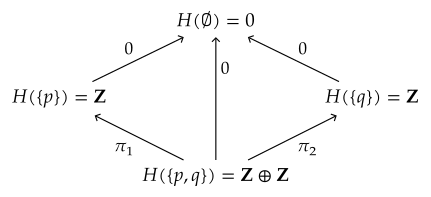
This does not mean the Zariski topology is “bad.” For regular functions, coherent modules, divisors, and many local properties of schemes, its large opens and generic points are exactly right. Serre’s FAC demonstrated that its coherent-sheaf cohomology carried deep projective geometry. A topology can be excellent for one coefficient category and inadequate for another.
One possible response would have been to attach an analytic topology whenever the ground field embedded in . That would abandon varieties over finite fields and make the construction depend on an embedding. Weil’s question required a topology defined algebraically, stable under change of field, and meaningful in positive characteristic. The new neighborhoods had to be equations and maps.
Finite separable field extensions supplied the zero-dimensional clue. They behave like disjoint covering sheets after passing to a separable closure. Unramified covers of curves supplied the one-dimensional clue. Serre had developed an algebraic treatment of such covers. Grothendieck’s étale morphisms placed both inside a relative class stable under base change.
The advance changed the kind of object allowed to be a neighborhood, rather than only making an ordinary topology finer. Once that permission was granted, finite covering behavior could appear without analytic paths. The local category became rich enough while remaining algebraic.
This change also separated locality from inclusion. In ordinary speech, a smaller neighborhood sits inside a larger one. In a site, refinement is a map. Several maps can jointly cover an object, and their sources may carry information absent from any subset of the target. The geometry of relation replaces the geometry of containment.
Henselian neighborhoods and geometric points
An ordinary stalk takes a direct limit over open neighborhoods of a point. On the étale site, neighborhoods are pairs consisting of an étale map and a chosen geometric point of above . Taking a filtered limit over such neighborhoods produces the étale stalk .
The local ring naturally associated with all these neighborhoods is a strict henselization of the local ring at the underlying point, after the residue-field choice. Hensel’s principle says, in one form, that simple roots modulo the maximal ideal lift uniquely. Strict henselization combines this lifting behavior with a separably closed residue field. It is an algebraic local world tailored to étale maps.
This construction clarifies the implicit-function analogy. Étale equations with simple residual roots have unique local lifts in a henselian setting. The neighborhood is not analytic, but it supports a comparable uniqueness principle. The algebraic condition and the site’s points fit one another.
Geometric points also expose specialization. A point in a scheme carries a residue field and may specialize to another point. Étale neighborhoods track both the topological position and separable extensions of the field. Stalks therefore retain arithmetic data that an ordinary point-set stalk would suppress.
The theorem that geometric stalks detect exactness made sheaf arguments concrete. A sequence of étale sheaves is exact if it is exact on all geometric stalks in the standard setting. This allowed local checking without reducing the topos to a classical space. Points were probes strong enough for verification.
For the seminar, such results were essential bridges. A topos could be defined at a high categorical level, but algebraic geometers needed ways to test a map on local objects. Geometric points and strict local rings translated categorical exactness back into recognizable algebra.
Comparison as a discipline of return
The comparison with classical topology did more than validate dimensions. It required constructing a map between sites or topoi. A complex algebraic variety has an analytic space . An algebraic étale map produces, after analytification, a local analytic covering. This relation induces comparison functors on sheaves.
For finite coefficients, the resulting map on cohomology is an isomorphism under the appropriate finite-type hypotheses. The proof cannot simply say that étale maps “look like” local homeomorphisms. It must compare sites, use local contractibility or covering theory where appropriate, and control derived functors. Analogy becomes theorem through a functor.
The comparison recovers the cohomology groups and the profinite completion of the topological fundamental group in the relevant sense. Finite covers are the bridge: the étale fundamental group sees precisely the finite quotients of the classical one for a connected complex variety under standard hypotheses. It does not recover the entire discrete fundamental group.
This limitation is illuminating. The arithmetic program required finite coefficients and profinite Galois action. Losing infinite covering information was not accidental damage; the theory was tuned to a finite world. Later étale homotopy would seek a broader profinite homotopy type, but that 1969 development belongs after SGA 4.1717Michael Artin and Barry Mazur, Étale Homotopy, Lecture Notes in Mathematics 100 (Springer, 1969), https://doi.org/10.1007/BFb0080957.
Comparison also prevented “abstract algebraic variety” from becoming detached from known geometry. A new cohomology had to reproduce intersection pairings, Betti numbers, and covering classifications where the complex topology supplied them. The return test was as important as the generalization.
Grothendieck’s method repeatedly followed this arc: leave a familiar category to construct a more universal object, then return by a comparison theorem. Generality without return would be unverified aspiration. Return without generality would leave the finite-field problem untouched.
Morphisms of topoi
If topoi are generalized sheaf worlds, they need maps. A geometric morphism from to consists of an inverse-image functor that is left exact together with a right adjoint . The direction follows the familiar behavior of inverse images of sheaves, not the direction of an arbitrary functor between categories.
For a scheme morphism , the induced morphism of étale topoi organizes pullback and direct image. Its derived direct image is the home of higher direct images. Base-change squares produce natural transformations between composites. The abstract definition exists because these relations recur.
Adjunction is the claim that maps from to correspond naturally to maps from to . It packages extension and restriction behavior without element-by-element choices. In a large formalism, adjunctions are interfaces: once established, they produce unit and counit maps used in duality and comparison.
The inverse-image functor is required to preserve finite limits because logical and sheaf-theoretic structure depends on products and equalizers. This left exactness distinguishes geometric morphisms from arbitrary adjoint pairs. The term “geometric” names structural preservation, not a claim that every such morphism comes from a map of point-set spaces.
Morphisms made topoi useful beyond classification. One could move sheaves between Zariski and étale sites, compare big and small sites, and push coefficients along a scheme morphism. Cohomology became functorial in the environment, not only in individual groups.
This was one source of SGA 4’s length. Defining a topos occupies a line; proving that the necessary topoi and morphisms support exactness, derived functors, and base change occupies volumes. The generality was justified through operations.
Writing a foundation while using it
SGA 4 confronted a circular practical problem. Étale cohomology was needed for arithmetic applications that would test and refine its foundations. Yet those applications could not wait for every foundational chapter to be perfected. The seminar therefore used a theory while its definitive exposition was still being made.
Artin’s 1962 notes represent one stage. The 1963–64 seminar represents another. Early fascicles represent further stages. The 1972–73 volumes represent a mature redaction. A theorem can travel through all four and change its statement without losing historical continuity.
This layered record complicates priority. An idea may have been proposed by Grothendieck, proved in an exposé by Artin, reformulated through Verdier’s language, and corrected before publication. The phrase “SGA 4 proves” is often the most accurate at program scale. Claim-level history must go lower.
The long redaction also shows that foundations are retrospective. One learns which definitions are central by using them. A notion introduced to solve one problem may move earlier in the exposition when it proves universal. A cumbersome hypothesis may be removed after a stronger theorem. The final logical order is not the order of discovery.
Grothendieck and his collaborators were therefore designing two architectures: the mathematical dependence of the theory and the pedagogical dependence of the book. These overlap but differ. A proof may historically precede the lemma that the final edition places first. Confusing the orders produces a myth of deduction without exploration.
The seminar form made revision possible because exposés were modular. It also made global consistency difficult. A changed convention could affect several authors’ texts. Editors had to perform descent on the corpus itself, preserving local work while making one book. The analogy is only organizational, but the labor was real.
The cost of a general environment
Topos theory brought universes, sites, sieves, sheafification, points, and geometric morphisms into a story motivated by counting solutions of equations. To some readers the route seemed extravagantly long. The objection deserves historical space rather than dismissal as resistance to abstraction.
One can compute many étale cohomology groups using a narrower toolkit. Later expositions did so. A student who wants the Kummer sequence need not first master every theorem about arbitrary topoi. Minimal proof and foundational architecture answer different needs.
Grothendieck’s choice favored portability. An arbitrary site allowed the same cohomological machinery to work for several topologies. General topoi made comparison and localization structural. Universes prevented size qualifications from interrupting every construction. The cost was an entry barrier and long chains of reference.
The choice also created mathematical surplus. Topoi later became central in logic, homotopy, and other geometries not required by the Weil conjectures. This later fertility is evidence that the general environment was real, but it cannot prove that every abstraction was optimally placed for every original reader.
Grothendieck’s program addressed problems at a broader structural scale, with both costs and surplus. Colleagues who entered the architecture gained a world. Readers outside it sometimes met a wall of foundations.
Collective work mitigated the cost. Artin could teach through examples; Verdier could organize derived operations; later Deligne could produce a more economical SGA 4½. The environment survived because other mathematicians found routes through and beyond it. A foundation no one else can revise is not collective intelligence.
The fundamental group inside the topos
SGA 1 had reconstructed a profinite fundamental group from finite étale covers. SGA 4 placed those covers inside a larger sheaf world. The group can be recovered from automorphisms of a fiber functor, while the topos retains all sheaves, not only finite locally constant ones. The later theory did not replace the earlier group; it gave it an environment.
For a connected scheme and geometric point , every finite locally constant sheaf has a fiber with continuous action by . Conversely, finite continuous sets with such action produce finite locally constant sheaves. This equivalence turns geometric coverings into representation theory of a profinite group.
The group depends on the base point, but paths between geometric points are replaced by isomorphisms of fiber functors, and the resulting group is well defined up to inner automorphism. Statements that depend only on conjugacy classes are therefore intrinsic. Frobenius elements at closed points later enter precisely through such conjugacy classes.
The topos goes beyond the group because constructible sheaves can change along strata and cohomology in higher degrees cannot be reconstructed from one fundamental group in all settings. A space can have the same profinite fundamental group as another and different higher étale cohomology. The group is one shadow of the local world.
Artin and Mazur’s later Étale Homotopy would seek a profinite homotopy type containing higher information. Its 1969 date matters. SGA 4 supplied the site and topos from which such a later extension could grow, but the extension was not a finished object of the 1963–64 seminar.1818Artin and Mazur, Étale Homotopy.
This sequence reveals Grothendieck’s recurring pattern. A successful invariant—the fundamental group—became evidence for a surrounding category. Once the category existed, the invariant could be understood as a functorial part rather than the whole. Generality deepened a result by locating its boundary.
A topos does not erase the scheme
Because a scheme determines several topoi, it can sound as though the original scheme has dissolved into interchangeable sheaf categories. It has not. The scheme supplies morphisms, residue fields, local rings, and admissible sites. Its Zariski, étale, and fppf topoi expose different aspects of the same algebraic object.
Nor is the topos merely a container placed around . Sheaves can encode covers, torsors, coefficients, and descent data unavailable in the underlying point set. Morphisms of schemes induce geometric morphisms of topoi, but not every categorical feature is visible on points. The relation is faithful in some directions and richer in others.
This balance mattered philosophically. Grothendieck did not replace objects with relations in the sense of denying objects. He chose objects whose identities were expressed by networks of maps and functors. The scheme remained a node; the topos made its local relations into a world.
The balance also guards exposition. Saying “a topos is a generalized space” opens intuition. Saying “a topos is the category of sheaves on a site, up to equivalence of such presentations” restores precision. Neither sentence alone is enough for all readers.
In the seminar, the exact definition allowed multiple intuitions to coexist. Artin could approach through geometric examples, Verdier through derived operations, and Grothendieck through the universal environment. Shared axioms prevented the perspectives from becoming different subjects.
Reading the dates as part of the mathematics
The 1962 Harvard mimeograph, 1963–64 SGA title, 1964–66 EGA IV fascicles, and 1972–73 revised SGA 4 volumes form a chronological diagram. None is simply an early or late copy of one timeless theory. Each records a different state and function: teaching, research program, morphism foundation, definitive redaction.
The diagram also warns against theorem leakage. A statement that first appears in a 1973 exposé may clarify a 1964 idea, but its later proof cannot be presumed known then. Conversely, absence from a later title page does not show an idea was absent from seminar discussion. Fine chronology requires the intervening fascicles.
This account therefore uses source verbs deliberately. The Harvard notes “record”; the seminar “treated”; EGA “published”; the revised volume “proves” or “presents.” Such grammar keeps mathematical content attached to documentary time.
Chronology is not external metadata. Which lemmas were available changes which proofs could be given. Whether derived categories had stabilized changes the form of a direct-image argument. Whether comparison was established changes what counted as evidence for the new cohomology.
The architecture of cohomology was an architecture in time. Definitions, proofs, and books did not arrive together. The site is best understood not as one flash of invention but as a sequence of objects that made a new locality teachable, usable, and eventually canonical.
No single birthday for the site
Histories naturally seek a birthday: the first letter, lecture, mimeograph, or published definition. For the étale site, each candidate answers a different question. An idea can be proposed before its axioms stabilize, taught before its full applications exist, and published definitively after mathematicians have used it for years.
The 1958 cohomological program establishes intention at broad scale. SGA 1 records étale coverings in 1960–61. Artin’s notes record teaching of Grothendieck topologies in 1962. SGA 4 names the 1963–64 program. The 1972–73 books provide mature redaction. None alone is “the invention” in every sense.
Choosing one date can erase collaborators. A date tied to Grothendieck’s first proposal emphasizes conception; a date tied to Artin’s notes emphasizes transmission; the SGA 4 dates emphasize collective construction. The plurality is not indecision but a map of different acts.
Mathematical concepts often have this layered origin because definition and power develop together. A bare site axiom is not yet proper base change. A comparison theorem can reveal that the definition was right. A later simplification can show which part was essential.
This chapter therefore gives the site a chronology rather than a birthday. Grothendieck’s originating role remains central, and Artin and Verdier’s named work remains visible. Historical precision is not a subtraction from invention; it is the account of how invention became a field.
A point over the real numbers
The map is finite étale of degree two. The underlying Zariski space on each side has one point, so ordinary point-set topology does not display two covering sheets. The field extension does.1919Artin et al., Théorie des topos et cohomologie étale des schémas (SGA 4), Tome 1; Artin et al., Théorie des topos et cohomologie étale des schémas (SGA 4), Tome 2; Artin et al., Théorie des topos et cohomologie étale des schémas (SGA 4), Tome 3; Milne, Étale Cohomology.
Complex conjugation exchanges the two geometric embeddings after passage to a separable closure. With geometric base point , the group identifies with , which has order two. Finite locally constant sheaves are naturally equivalent to finite continuous sets governed by this group.2020Grothendieck, Revêtements étales et groupe fondamental (SGA 1); Milne, Étale Cohomology.
This example gives a concrete answer to the Zariski problem. The scheme has no additional ordinary open subsets, but its étale site contains a nontrivial cover and therefore records separable arithmetic. The added locality comes from admissible maps rather than subdivisions of an underlying set.
The example also marks a boundary. It explains finite separable information at a field-valued point, not the higher cohomology of every variety. Curves, surfaces, and constructible sheaves require the wider topos and derived machinery developed in SGA 4.2121Artin et al., Théorie des topos et cohomologie étale des schémas (SGA 4), Tome 1; Artin et al., Théorie des topos et cohomologie étale des schémas (SGA 4), Tome 2; Artin et al., Théorie des topos et cohomologie étale des schémas (SGA 4), Tome 3.
Biographically, the example shows why the general site belonged in the seminar. A definition that handled only complex varieties would miss arithmetic already present at . Grothendieck’s program sought one algebraic setting in which this point and higher-dimensional schemes could be treated functorially.2222Grothendieck, “The Cohomology Theory of Abstract Algebraic Varieties”; Artin, Grothendieck Topologies: Notes on a Seminar; Artin et al., Théorie des topos et cohomologie étale des schémas (SGA 4), Tome 1; Artin et al., Théorie des topos et cohomologie étale des schémas (SGA 4), Tome 2; Artin et al., Théorie des topos et cohomologie étale des schémas (SGA 4), Tome 3.
The words used to describe this example require two clocks. “Small étale site” and the modern equivalence with continuous Galois sets give a concise present-day formulation. The 1962 mimeograph and SGA 4 volumes remain the evidence for how the framework was taught and published.2323Artin, Grothendieck Topologies: Notes on a Seminar; Artin et al., Théorie des topos et cohomologie étale des schémas (SGA 4), Tome 1; Artin et al., Théorie des topos et cohomologie étale des schémas (SGA 4), Tome 2; Artin et al., Théorie des topos et cohomologie étale des schémas (SGA 4), Tome 3.
Separating those clocks prevents a familiar shortcut. A modern statement may be mathematically equivalent to an earlier construction while using categories, notation, or theorem packages stabilized later. The chapter uses the modern kernel for clarity and attaches historical claims only to dated texts.
The example also prevents the word “point” from becoming visually misleading. The one-point Zariski spaces do not have the same étale neighborhoods. Residue fields and separable extensions are therefore part of the local geometry, even when the underlying point set cannot display them.2424Grothendieck, Revêtements étales et groupe fondamental (SGA 1); Artin et al., Théorie des topos et cohomologie étale des schémas (SGA 4), Tome 1; Milne, Étale Cohomology.
The choice that becomes an invariant
A site begins with a choice of covers. Once sheaves are formed, however, the resulting topos can be independent of the particular presentation: different sites may yield equivalent sheaf categories. The theory therefore distinguishes a chosen language of neighborhoods from the invariant world that language presents.
This is another form of descent. Local charts are necessary for construction and not privileged in the final identity. The analogy stops short of literal equality, but it clarifies why Grothendieck studied topoi rather than treating sites as notation.
The move also explains the philosophical restraint of the chapter. Locality is chosen, yet not arbitrary; presentation varies, yet equivalence can be proved. The étale site became powerful because its chosen maps produced an invariant world that returned correct topology and carried new arithmetic.
Before the machine starts
By 1964, the outline of a new cohomology theory was present: étale neighborhoods, sheaves on their site, a topos, derived global sections, geometric points, comparison with classical finite-coefficient topology, and the beginning of powerful base-change and duality results. The outline did not yet equal the complete arithmetic machine later printed in SGA 4 and SGA 5.
To count points over finite fields, one needed finite-dimensional ℓ-adic cohomology, an action of Frobenius, compact supports for nonproper varieties, a trace formula, and enough duality and finiteness to turn traces into rational functions. Each item depended on the site, but none followed from the definition alone. The next seminar program would test whether the new world of sheaves could perform those operations.
It is easy to call the étale site a solution to the Weil conjectures because later history confirms its centrality. In 1964 it was better described as the space in which a solution might be built. Dwork had already proved rationality by a different method. The hardest absolute-value assertion remained untouched in general. The architecture had created a room for Frobenius; it had not yet controlled every eigenvalue.
This unfinished condition is part of the biographical drama. Grothendieck did not receive a revelation and then spend years publishing it. He and collaborators built an environment, learned which theorems it could support, and encountered the limit that would shape later programs. The topos was a major result and the starting point for further work.
The passage to SGA 5 would turn the general vocabulary toward a numerical target. The number of points over each finite extension would be compared with traces of one endomorphism acting on a sequence of cohomology groups. To understand that translation, one must leave the neighborhood and watch the machine move.
注释
- Artin, Grothendieck Topologies: Notes on a Seminar. ↩
- Serre, “Faisceaux algébriques cohérents”; Serre, “Géométrie algébrique et géométrie analytique”. ↩
- Grothendieck, “The Cohomology Theory of Abstract Algebraic Varieties”. ↩
- Artin, Grothendieck Topologies: Notes on a Seminar. ↩
- Grothendieck and Dieudonné, “Éléments de géométrie algébrique IV: Étude locale des schémas et des morphismes de schémas, première partie”; Grothendieck and Dieudonné, “Éléments de géométrie algébrique IV: Étude locale des schémas et des morphismes de schémas, seconde partie”; Grothendieck and Dieudonné, “Éléments de géométrie algébrique IV: Étude locale des schémas et des morphismes de schémas, troisième partie”; Artin et al., Théorie des topos et cohomologie étale des schémas (SGA 4), Tome 1; Artin et al., Théorie des topos et cohomologie étale des schémas (SGA 4), Tome 2; Artin et al., Théorie des topos et cohomologie étale des schémas (SGA 4), Tome 3. ↩
- Grothendieck and Dieudonné, “Éléments de géométrie algébrique IV: Étude locale des schémas et des morphismes de schémas, première partie”; Grothendieck and Dieudonné, “Éléments de géométrie algébrique IV: Étude locale des schémas et des morphismes de schémas, seconde partie”; Grothendieck and Dieudonné, “Éléments de géométrie algébrique IV: Étude locale des schémas et des morphismes de schémas, troisième partie”. ↩
- Artin et al., Théorie des topos et cohomologie étale des schémas (SGA 4), Tome 1; Artin, Grothendieck Topologies: Notes on a Seminar; The Stacks Project Authors, The Stacks Project. ↩
- Grothendieck, “Sur quelques points d’algèbre homologique, I”. ↩
- Grothendieck, Revêtements étales et groupe fondamental (SGA 1). ↩
- Artin et al., Théorie des topos et cohomologie étale des schémas (SGA 4), Tome 1; Artin et al., Théorie des topos et cohomologie étale des schémas (SGA 4), Tome 2; Artin et al., Théorie des topos et cohomologie étale des schémas (SGA 4), Tome 3; J. S. Milne, Étale Cohomology, Princeton Mathematical Series 33 (Princeton University Press, 1980). ↩
- Artin et al., Théorie des topos et cohomologie étale des schémas (SGA 4), Tome 1; Artin et al., Théorie des topos et cohomologie étale des schémas (SGA 4), Tome 2; Artin et al., Théorie des topos et cohomologie étale des schémas (SGA 4), Tome 3. ↩
- Deligne, Cohomologie étale (SGA 4½). ↩
- Artin et al., Théorie des topos et cohomologie étale des schémas (SGA 4), Tome 1. ↩
- Artin et al., Théorie des topos et cohomologie étale des schémas (SGA 4), Tome 1; Artin et al., Théorie des topos et cohomologie étale des schémas (SGA 4), Tome 2; Artin et al., Théorie des topos et cohomologie étale des schémas (SGA 4), Tome 3. ↩
- Jackson, “As If Summoned from the Void, I”; Allyn Jackson, “Comme Appelé Du Néant—As If Summoned from the Void: The Life of Alexandre Grothendieck, Part II,” Notices of the American Mathematical Society, November 2004, https://webusers.imj-prg.fr/~leila.schneps/grothendieckcircle/allyn2.pdf; Pierre Cartier, “A Mad Day’s Work: From Grothendieck to Connes and Kontsevich—The Evolution of Concepts of Space and Symmetry,” Bulletin of the American Mathematical Society 38, no. 4 (2001): 389–408, https://doi.org/10.1090/S0273-0979-01-00913-2; O’Connor and Robertson, “Alexander Grothendieck”; Scharlau, Anarchie; Schneps, Alexandre Grothendieck: A Mathematical Portrait; Artin et al., “Alexandre Grothendieck 1928–2014, Part 1”; Artin et al., “Alexandre Grothendieck 1928–2014, Part 2”. ↩
- Grothendieck, “Sur quelques points d’algèbre homologique, I”. ↩
- Michael Artin and Barry Mazur, Étale Homotopy, Lecture Notes in Mathematics 100 (Springer, 1969), https://doi.org/10.1007/BFb0080957. ↩
- Artin and Mazur, Étale Homotopy. ↩
- Artin et al., Théorie des topos et cohomologie étale des schémas (SGA 4), Tome 1; Artin et al., Théorie des topos et cohomologie étale des schémas (SGA 4), Tome 2; Artin et al., Théorie des topos et cohomologie étale des schémas (SGA 4), Tome 3; Milne, Étale Cohomology. ↩
- Grothendieck, Revêtements étales et groupe fondamental (SGA 1); Milne, Étale Cohomology. ↩
- Artin et al., Théorie des topos et cohomologie étale des schémas (SGA 4), Tome 1; Artin et al., Théorie des topos et cohomologie étale des schémas (SGA 4), Tome 2; Artin et al., Théorie des topos et cohomologie étale des schémas (SGA 4), Tome 3. ↩
- Grothendieck, “The Cohomology Theory of Abstract Algebraic Varieties”; Artin, Grothendieck Topologies: Notes on a Seminar; Artin et al., Théorie des topos et cohomologie étale des schémas (SGA 4), Tome 1; Artin et al., Théorie des topos et cohomologie étale des schémas (SGA 4), Tome 2; Artin et al., Théorie des topos et cohomologie étale des schémas (SGA 4), Tome 3. ↩
- Artin, Grothendieck Topologies: Notes on a Seminar; Artin et al., Théorie des topos et cohomologie étale des schémas (SGA 4), Tome 1; Artin et al., Théorie des topos et cohomologie étale des schémas (SGA 4), Tome 2; Artin et al., Théorie des topos et cohomologie étale des schémas (SGA 4), Tome 3. ↩
- Grothendieck, Revêtements étales et groupe fondamental (SGA 1); Artin et al., Théorie des topos et cohomologie étale des schémas (SGA 4), Tome 1; Milne, Étale Cohomology. ↩